- Product Description Description
- Table of Contents TOC
- List of Table & Figure LOT
- Get Free Sample PDF Sample PDF
Market Size, 2025
$35.01 BnMarket Estimate, 2026
$38.39 BnMarket Forecast, 2034
$80.28 BnCAGR, 2026–2034
9.66%Global Psoriasis Treatment Market Size
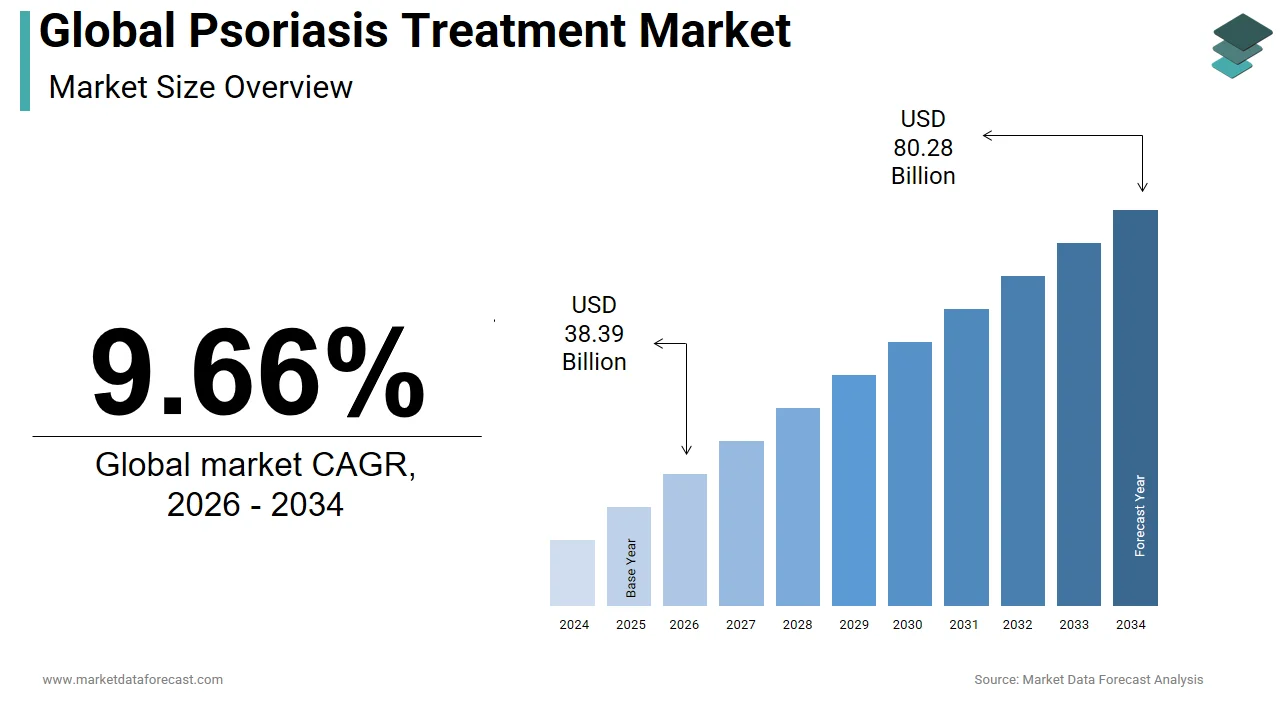
The global psoriasis treatment market was valued at USD 35.01 billion in 2025, is estimated to reach USD 38.39 billion in 2026, and is projected to reach USD 80.28 billion by 2034, growing at a CAGR of 9.66% from 2026 to 2034.
Psoriasis is a chronic skin condition that does not have any cure. It is a non-transmittable autoimmune condition that causes inflammation and discoloration on the skin in patches in different areas. There are different types of psoriasis-like, plaque psoriasis, nail psoriasis, sebopsoriasis, pustular psoriasis, guttate psoriasis, inverse psoriasis, etc., among which plaque psoriasis is the most common type. Psoriasis is a condition without any permanent cure, but the relief of the symptoms can be provided through treatment via ointments and oral medications. The chances of contracting psoriasis increase when you have a genetically affected family member like your parents. Psoriasis causes itching, pain, and disturbances in sleep.
MARKET DRIVERS
The growing number of patients suffering from patients and novel growing number of novel pipeline drugs are majorly promoting the psoriasis treatment market growth.
The increasing prevalence of the disease and the need to find a permanent solution drive the growth of this market. Psoriasis is commonly not a life-threatening disease but can become a significant inconvenience to a person's everyday life and develop into more severe conditions like psoriasis arthritis if not kept under control. Aside from the physical inconveniences, the disease is often prone to social stigma due to the taboo associated with skin conditions and how people are automatically skeptical and distant when they notice a skin allergy.
Ignorance of psoriasis can lead to other significant consequences. According to the statistics published by National Psoriasis Foundation, an estimated 8 million people in the United States suffer from psoriasis. It has been proven that psoriasis is not just s skin condition but can lead to several severe conditions known as comorbidities. In addition, psoriasis can spread through the body and cause many problems like psoriatic arthritis, heart disease, obesity, diabetes, and depression. According to the National Psoriasis Foundation, the inflammation of psoriasis can affect various body parts based on the severity of the condition. The problem can even lead to mental conditions down the line of time. Therefore, the need to feel confident in one's skin and eradicate the possibility of contracting severe diseases, especially in the elderly population as the senior population is rising, is essential to root for the market's rise.
Additionally, there have been rising cases of psoriasis arthritis leading to more demand for the market. For instance, according to statistics, 125 million people worldwide and 2 to 3 percent of the total population have psoriasis in the United States. Therefore, the rising disease prevalence coupled with the intensity of the problem has proven to be a market driver.
The latest research and developments in the field of psoriasis to support psoriasis treatment market expansion.
There has been research and development around new treatments and therapeutics for psoriasis, and attempts have been made to find a permanent cure for the problem. For instance, a study from the Michigan University speculated that targeting a particular protein in the skin may help relieve the symptoms of psoriasis. There was also research stating that with the latest class of biologic drugs targeting interleukin (IL)-23p19, three new, highly effective drugs can be used to treat chronic plaque psoriasis. Therefore, the clinical research activity surrounding psoriasis was rising from key market players leading as a driving factor for the market. Furthermore, the latest research study from the Medical University of Vienna showed that the severity of psoriasis (PS) and psoriatic arthritis (PsA) could be reduced by inhibiting the S100A9 gene systemically throughout the whole body rather than locally on the skin. Therefore, the growing interest and research towards the medical condition support the market's rise.
Growing usage of biologics to further accelerate the growth of the psoriasis treatment market.
Biologics as a treatment option for psoriasis is being considered more often in recent times due to its advantages over traditional medications. Biologics medications can target only the affected immune system and thus cause minimal damage to other organs like kidneys, liver, and others. Biologics have also proven to be highly effective in treating psoriasis from moderate to severe. Biologics have been proven to reduce pain, itching, inflammation, swelling, stiffness, etc. It is supposed to be helpful for both psoriasis and psoriasis arthritis patients. There has been continuous research in the field of biologics to find a cure for psoriasis due to these advantages, and therefore, the field of study promotes the rise of the market.
MARKET RESTRAINTS
The market is hindered by the side effects associated with using psoriasis medication and the high costs of medications for treatment procedures. The psoriasis medications are often based on immunosuppressant formulas to prevent the immune system from attacking its own body. However, the medication can affect other body parts like the kidneys, liver, heart, etc., and cause an imbalance in the body. Although biologics can reduce the side effects, biologics also have problems like patients developing infections after consumption. Therefore, the risks that come with the medication are a drawback to the market. In addition, the medications are also costly, and it is difficult, especially for the populations of lower economies, to afford the treatment. Therefore, the lack of affordable treatment curbs the growth of the market.
REPORT COVERAGE
| REPORT METRIC | DETAILS |
| Market Size Available | 2025 to 2034 |
| Base Year | 2025 |
| Forecast Period | 2026 to 2034 |
| Segments Covered | By Drug Class, Type, Route of Administration, Distribution Channel, and Region |
| Various Analyses Covered | Global, Regional, and Country-Level Analysis, Segment-Level Analysis, Drivers, Restraints, Opportunities, Challenges; PESTLE Analysis; Porter’s Five Forces Analysis, Competitive Landscape, Analyst Overview of Investment Opportunities |
| Regions Covered | North America, Europe, Asia Pacific, Latin America, Middle East & Africa |
| Market Leaders Profiled | Pfizer Inc., LEO Pharma A/S, Novartis AG, Merck & Co., Inc., UCB S.A., AbbVie Inc., Sun Pharmaceutical Industries Ltd., Eli Lilly and Company, Amgen Inc., Evelo Biosciences, Inc., and Johnson & Johnson Services, Inc. |
SEGMENT ANALYSIS
By Drug Class Insights
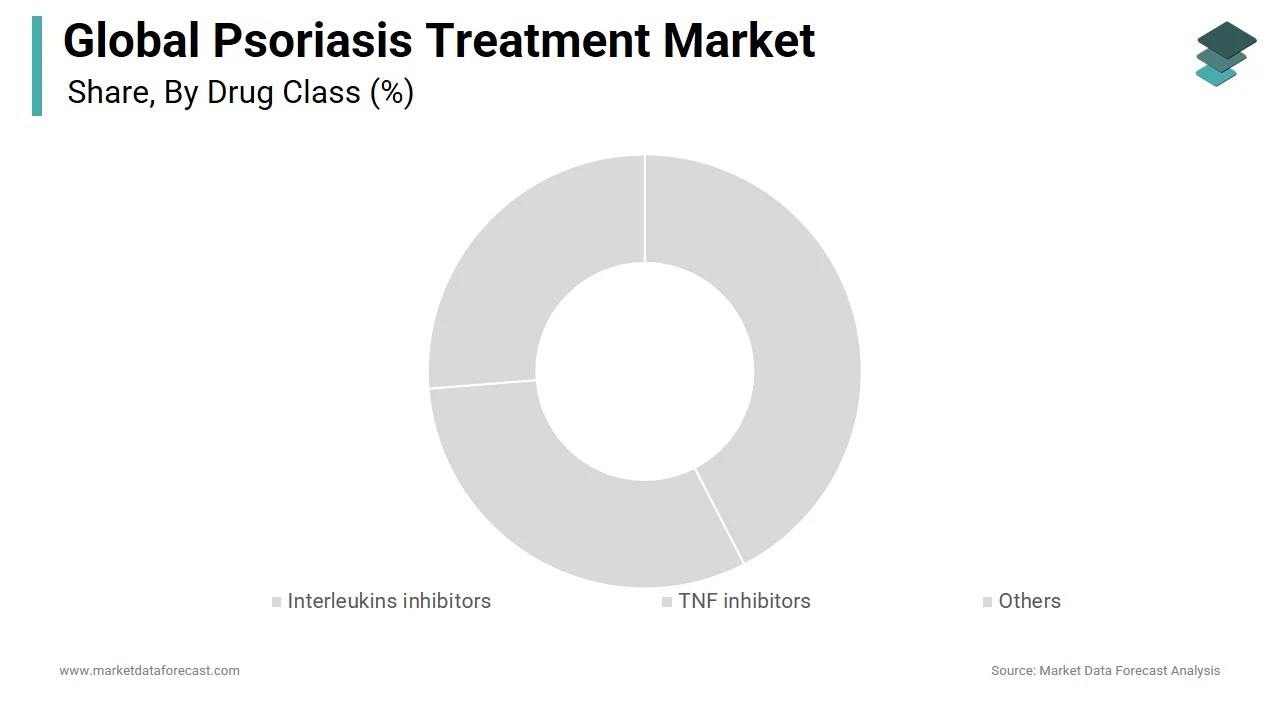
The TNF inhibitors segment is expected to dominate the market during the forecast period due to the advantages associated with the medications of TNF inhibitors like infliximab, etanercept, and adalimumab which have been approved by the FDA for certified use and cause minimal to no side effects upon short term use. Although long-term usage can lead to some side effects like infections and heart problems, all these problems are detectable and can easily be kept under control with proper monitoring. Therefore, the prevalence of the medications supports the dominance of the segment.
However, the interleukins segment is also expected to grow significantly during the forecast period as an alternative to TNF inhibitors. Interleukins are important anti-inflammatory cytokines and thus are being used effectively as psoriasis medication.
By Type Insights
The plaque psoriasis segment is expected to dominate the market during the forecast period due to the condition's prevalence worldwide. In addition, the rising cases of plaque psoriasis and the need to treat the condition support the market's high revenue.
However, in recent times the psoriatic arthritis segment is also expected to grow due to the cases of severe psoriasis resulting from negligence toward the condition.
By Route of Administration Insights
The parenteral segment is expected to dominate the market during the forecast period as injections are the most effective, fast, and direct treatment method for psoriasis patients. Therefore, the healthcare professionals supporting the segment prefer the parenteral mode of treatment.
However, the oral segment is also showing significant growth due to the newly produced effective drugs which are now being used in treatment procedures.
By Distribution Channel Insights
The retail pharmacies segment is expected to dominate the market during the forecast period due to the rising number of retail pharmacies worldwide, like CVS and Walgreens. Additionally, populations often prefer to go for a pharmacist's recommendation for skin diseases rather than having to visit a dermatologist, further supporting the revenue of the segment.
However, the online pharmacies segment is expected to show fast growth due to the gradual shift of the world and the healthcare sectors toward modern technologies and IT.
REGIONAL ANALYSIS
The market is expected to dominated by the North American region during the forecast period due to factors like the prevalence of this condition is increasing in the region, there being significant market players, a large population suffering from this autoimmune disorder, a well-developed healthcare infrastructure, increased efforts to raise public awareness, a rise in the number of older people, the adoption of cutting-edge treatment therapies, and high disposable incomes for people in the U.S. and Canada. Additionally, the increasing R&D efforts, expanding clinical studies, and better healthcare reforms are also supporting the market growth in the region.
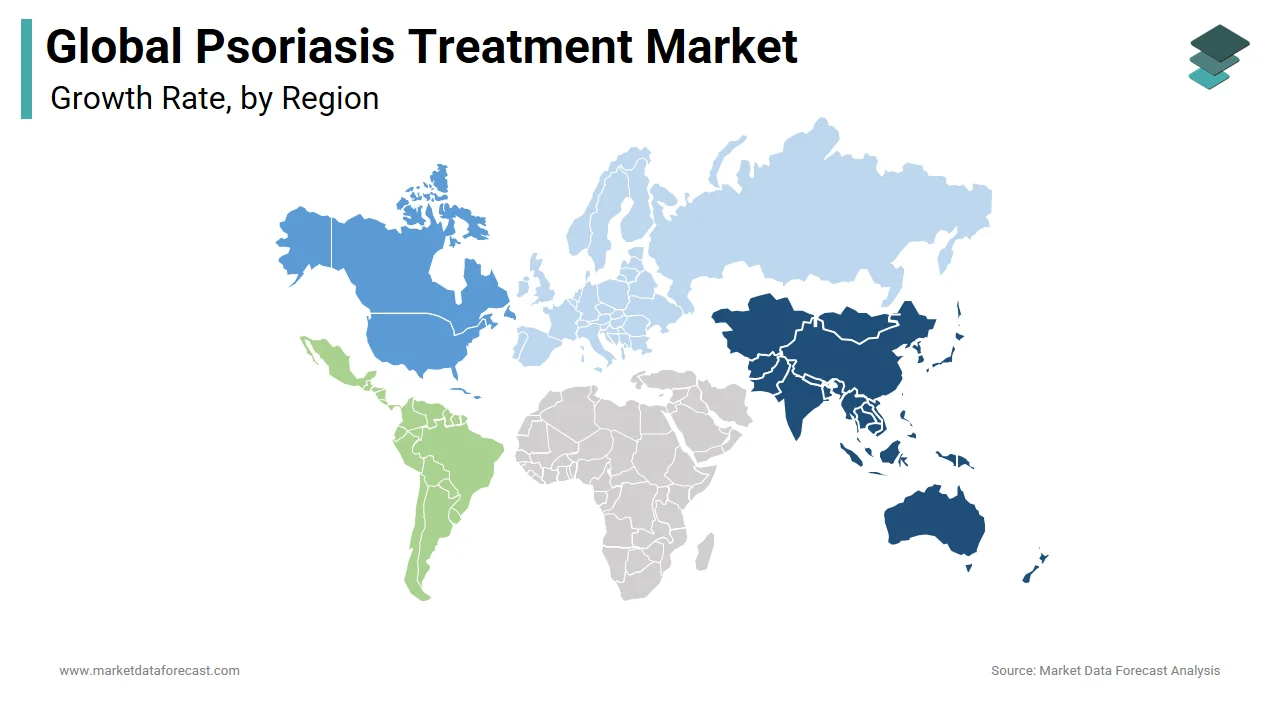
The European market is also expected to show significant growth due to the rising demand from the populations for better treatment regimens for diseases like psoriasis. In addition, the rising advancement in healthcare in the countries like the U.K., Italy, France, Germany, etc., supports this revenue for the market.
The market in Asia-Pacific is also expected to show fast growth due to factors like Growing government funding, increased psoriasis product production, a sizable population, more knowledge of the adverse effects of chronic psoriasis, and an increase in the prevalence of skin conditions in countries like India, China, Japan, South Korea, etc. are helping the revenue of the market in the region.
The market in Latin America, the middle east, and Africa are also showing progress in revenue. Still, the markets are significantly hindered by the high costs of the treatment regimens and the need for proper awareness regarding the severity of psoriasis in countries like Brazil, Spain, UAE, Zimbabwe, Kenya, etc.
KEY MARKET PARTICIPANTS
Some of the companies that are playing a dominating role in the global psoriasis treatment market include
- Pfizer Inc.
- LEO Pharma A/S
- Novartis AG
- Merck & Co., Inc.
- UCB S.A.
- AbbVie Inc.
- Sun Pharmaceutical Industries Ltd.
- Eli Lilly and Company
- Amgen Inc.
- Evelo Biosciences, Inc.
- Johnson & Johnson Services, Inc.
GLOBAL PSORIASIS TREATMENT MARKET NEWS
- In October 2022, the 42nd Annual Fall Clinical Dermatology Conference® will be held October 20–23, 2022, in Las Vegas, Nevada. Novan, Inc., EPI Health, a Novan Company, and MC2 Therapeutics today announced that data from a 17-question survey sponsored by the Company was published in a poster titled, "Improving Patient Acceptability and Adherence in Psoriasis Treatment," at the conference. The data demonstrates the significance of medication formulation parameters and the rate of psoriasis symptom improvement to patient treatment adherence.
- In October 2022, Aditxt, Inc. (Nasdaq: ADTX) ("Aditxt" or the "Company"), a biotech innovation company focused on monitoring and modulating the immune system; today announced that its program AdimuneTM has started GMP manufacturing of drug candidate ADITM-100 as a significant step toward its objective to start first-in-human trials in the second half of 2023. Adimune's treatment aims to stop immune system assaults by reestablishing immunological tolerance and addressing the underlying cause of skin cell accumulations. Throughout a 10-day trial period, treatment with ADITM-100 decreased skin thickness by 69% and scaling by 38% in a known psoriasis model.
- In October 2022, to advance the Phase 2a clinical development of SGX302 (synthetic hypericin) for the treatment of mild-to-moderate psoriasis, Soligenix, Inc. (Nasdaq: SNGX) (Soligenix or the Company), a late-stage biopharmaceutical company focused on developing and commercializing products to treat rare diseases where there is an unmet medical need, announced today the formation of a Medical Advisory Board ( The MAB wholeheartedly endorses Soligenix's efforts to better the results for people living with psoriasis, who account for more than 7.5 million people in the United States alone.
MARKET SEGMENTATION
This research report on the global psoriasis treatment market has been segmented & sub-segmented based on drug class, type, route of administration, distribution channel, and region.
By Drug Class
- Interleukins inhibitors
- TNF inhibitors
- Others
By Type
- Psoriatic Arthritis
- Plaque psoriasis
- Others
By Route of Administration
- Parenteral/Systemic
- Oral
- Topical
By Distribution Channel
- Retail Pharmacies
- Online Pharmacies
- Hospital Pharmacies
By Region
- North America
- Europe
- Asia-Pacific
- Latin America
- Middle East and Africa