- Product Description Description
- Table of Contents TOC
- List of Table & Figure LOT
- Get Free Sample PDF Sample PDF
Market Size, 2025
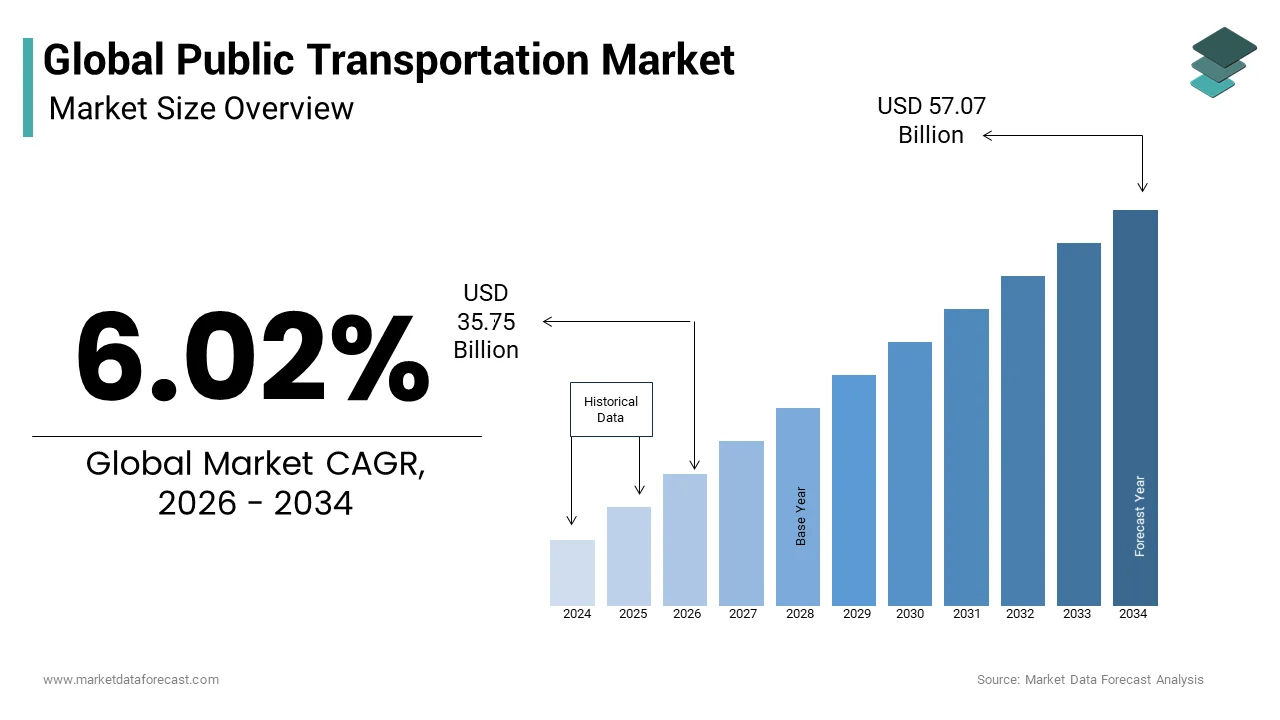
$33.72 BnMarket Estimate, 2026
$35.75 BnMarket Forecast, 2034
$57.07 BnCAGR, 2026–2034
6.02%Executive Summary: Public Transportation Market
- Market Scope: Comprehensive global public transportation market analysis covering distribution channels, transportation modes, regional leadership frameworks, urbanization drivers, and smart mobility advancements.
- Market Valuation: Valued at USD 33.72 billion (2025), estimated at USD 35.75 billion (2026), and projected to reach USD 57.07 billion by 2034, registering a steady CAGR of 6.02% (2026–2034).
- Primary Growth Drivers: Rising urban migration, economic development increasing disposable income for transit fares, and technological advancements in electric vehicles, smart fare collection, and data-driven efficiency systems.
Key Market Segment Metrics (2026–2034)
| Category | Leading Segment (2024/2025 Position) | Fastest-Growing Segment |
|---|---|---|
| By Distribution Channel | Offline Segment (dominated the market in 2024) | Online Segment (expected to project a healthy CAGR during the forecast period) |
| By Transportation Mode | Road Transport (held the largest share in 2024) | Rail Systems (anticipated to grow at a decent CAGR via infrastructure modernization) |
| By Region | Asia-Pacific (held the dominating share in 2024, led by India, China, Japan, and South Korea) | Middle East & Africa (emerging as high-growth regions supported by government transit initiatives) |
Major Market Players & Market Structure
Market Structure: Highly strategic global public transit landscape featuring major regional operators, municipal authorities, and transport networks competing on service accessibility, fleet electrification, and smart ticketing innovations.
Key Companies: Metrolink, Transdev, Tobu Railway Co. Ltd., Trenitalia c2c Limited, Berliner Verkehrsbetriebe, Transportation for London, BC Transit Corporation, Transport International Holdings Limited, and The Brussels Transport Company.
 Download Free Sample Report
Global Public Transportation Market Size
The global public transportation market size was valued at USD 33.72 billion in 2025 and is anticipated to reach a valuation of USD 35.75 billion in 2026 and USD 57.07 billion by 2034, growing at a CAGR of 6.02% from 2026 to 2034.
Public transportation serves as the backbone of modern mobility, reducing traffic congestion and environmental impact while ensuring equitable access to economic opportunities. As per the International Association of Public Transport, over 50 billion trips are taken annually on public transport worldwide, highlighting its critical role in daily life. According to the United Nations Department of Economic and Social Affairs, by 2050 approximately 68% of the world population will live in urban areas, necessitating robust transit infrastructure to manage density. In Europe, according to the European Environment Agency, public transport produces 90% less carbon dioxide per passenger kilometers compared to private cars, driving policy support for expansion. According to the World Bank, efficient public transit can reduce travel time by up to 30% in congested cities, thereby boosting productivity. Governments are increasingly prioritizing multimodal integration where digital platforms connect various transit options seamlessly. The shift towards electrification is evident with many cities committing to zero-emission fleets by 2030. Safety and reliability remain paramount as agencies invest in real-time tracking and automated signalling systems. The market is evolving from simple point-to-point movement to comprehensive mobility-as-a-service models. This transformation aims to provide personalized, flexible, and sustainable travel solutions that compete effectively with private vehicle ownership while addressing the growing demands of urbanization and climate change mitigation.
MARKET DRIVERS
Urbanization and Population Density Drive Infrastructure Expansion
The rapid pace of global urbanization and increasing population density in metropolitan areas propels the global public transportation market expansion. Cities are expanding vertically and horizontally, creating a critical need for high-capacity transit systems to move large numbers of people efficiently. According to the United Nations Department of Economic and Social Affairs, the number of megacities with populations exceeding 10 million is projected to reach 43 by 2030, up from 33 in 2018. This concentration of people intensifies traffic congestion and pollution, making private vehicle ownership unsustainable. According to the World Bank, traffic congestion costs major economies up to 4% of their gross domestic product annually due to lost productivity and fuel waste. Public transportation offers a viable solution by moving thousands of passengers simultaneously in dedicated lanes or on rails. According to the Asian Development Bank, urban populations are growing at an annual rate of 2.5%, requiring massive investments in metro and bus rapid transit systems. Cities like Tokyo and Seoul demonstrate that high-density living is compatible with high quality of life when supported by extensive rail networks. According to the European Commission, compact city planning combined with robust public transit reduces per capita energy consumption by 20%. As land becomes scarce and expensive in city centers, vertical development relies heavily on underground and elevated transit options. The necessity to connect suburban sprawl with central business districts further drives the expansion of commuter rail and light rail services. This demographic shift ensures sustained demand for public transit infrastructure as cities strive to maintain livability and economic vitality amidst growing populations.
Government Policies and Environmental Sustainability Mandates
Stringent government policies and global mandates for environmental sustainability are further contributing to the public transportation market growth. Nations are committing to aggressive carbon reduction targets under the Paris Agreement, which necessitates a shift away from fossil fuel-dependent private vehicles. According to the International Energy Agency, the transport sector accounts for 24% of direct carbon dioxide emissions from fuel combustion globally. Public transit agencies are responding by transitioning to electric and hydrogen-powered fleets to meet these regulatory requirements. According to the European Union, Green Deal aims to reduce transport emissions by 90% by 2050, prompting member states to invest billions in rail electrification and zero-emission buses. According to the International Association of Public Transport, over 50 cities worldwide have committed to purchasing only zero-emission buses by 2030. Financial incentives such as subsidies for ticket purchases and tax breaks for transit-oriented development further encourage usage. According to the World Health Organization, air pollution causes 7 million premature deaths annually, driving municipalities to promote cleaner transport modes. Low-emission zones in cities like London and Paris restrict internal combustion engine vehicles, making public transit the most convenient option for many commuters. Additionally, governments are integrating public transport into national climate strategies, recognizing its role in achieving net-zero goals. The allocation of substantial public funds for infrastructure projects reflects this political priority. As environmental awareness grows among citizens, the social license for private car use diminishes while support for public transit strengthens. These policy frameworks create a favorable environment for long-term investment and innovation in the public transportation sector.
MARKET RESTRAINTS
High Capital Investment and Fiscal Constraints Restrain Growth
The substantial capital investment required for building and maintaining public transportation infrastructure impedes the public transportation market growth. Constructing metro lines, light rail systems, and bus depots involves billions of dollars in upfront costs, which often exceed the budgetary capabilities of local governments. According to the American Public Transportation Association, the average cost of building one mile of heavy rail in the United States ranges from 250 million to 500 million dollars. These high costs lead to prolonged planning and approval processes, delaying project implementation. Many municipalities face fiscal constraints due to competing priorities such as healthcare, education, and housing, limiting the funds available for transit expansion. According to the International Monetary Fund, public debt levels in many developed nations have risen sharply post-pandemic, reducing fiscal space for large infrastructure projects. Maintenance of existing assets also consumes a large portion of operating budgets, leaving little room for new initiatives. The depreciation of rolling stock and track infrastructure requires continuous funding, which is often subject to political cycles and budget cuts. In developing countries, the lack of access to affordable long-term financing further hampers development. According to the World Bank, many transit projects in emerging markets fail due to inadequate financial planning and revenue models. Farebox recovery rates rarely cover full operational costs, necessitating ongoing subsidies which are vulnerable to economic downturns. This financial burden discourages private sector participation and limits the scale of network expansion. Until more sustainable funding mechanisms, such as value-capture financing, are widely adopted, high capital costs will continue to restrain the growth of public transportation systems globally.
Operational Inefficiencies and Legacy Infrastructure Issues
Operational inefficiencies and the burden of maintaining aging legacy infrastructure are further hindering the expansion of the public transportation market. Many established transit systems in North America and Europe were built decades ago and suffer from frequent breakdowns, delays, and safety concerns. According to the American Society of Civil Engineers, the infrastructure grade for public transit in the United States remains poor, with many systems requiring urgent rehabilitation. Aging signaling systems and tracks lead to service disruptions that erode passenger confidence and ridership. According to the European Railway Agency, maintenance backlogs in older rail networks result in an average of 15% service delays annually. Retrofitting these systems with modern technology is complex and costly, often requiring service suspensions that inconvenience users. Labor shortages and skilled worker gaps further exacerbate operational issues as experienced technicians retire without adequate replacements. According to the International Labour Organization, the transport sector faces a significant skills mismatch, particularly in digital maintenance and automation. Inefficient scheduling and lack of real-time data integration contribute to poor service quality and overcrowding during peak hours. Passengers increasingly demand seamless digital experiences, including mobile ticketing and real-time updates, which legacy systems struggle to provide. The rigidity of fixed-route services also limits flexibility in adapting to changing travel patterns. Upgrading to smart infrastructure requires significant downtime and investment, which many agencies cannot afford. These operational hurdles make it difficult for public transit to compete with the convenience and reliability of ride-hailing services and private vehicles. Addressing these inefficiencies requires a holistic approach to modernization that balances immediate service needs with long-term strategic upgrades.
MARKET OPPORTUNITIES
Integration of Mobility as a Service and Digital Platforms
The integration of Mobility as a Service (MaaS) platforms and advanced digital technologies presents a substantial opportunity for the public transportation market to enhance user experience and efficiency. MaaS applications combine various transport modes—including buses, trains, bikes, and ride-sharing—into a single interface, allowing users to plan, book, and pay for journeys seamlessly. According to the International Association of Public Transport, cities implementing MaaS solutions have seen a 10 to 15% increase in public transit usage due to improved convenience. Digital platforms enable real-time data sharing, which helps optimize routes and reduce wait times. According to the World Economic Forum, digitalization can improve asset utilization by 20% through predictive maintenance and dynamic scheduling. Artificial intelligence algorithms analyze passenger flow patterns to adjust service frequency automatically, ensuring resources are allocated where needed most. Contactless payment systems and mobile ticketing reduce boarding times and operational costs associated with cash handling. According to the European Commission, integrated digital ticketing can increase revenue collection efficiency by 25%. Furthermore, open-data initiatives allow third-party developers to create innovative apps that enhance the transit experience. The rise of 5G connectivity supports the Internet of Things, enabling smarter stations and vehicles that communicate with each other. This technological convergence transforms public transit from a rigid service into a flexible, responsive network. By offering a user-centric approach, public transportation can attract younger demographics who prioritize digital convenience. Partnerships with tech companies facilitate rapid innovation without heavy upfront investment. This digital transformation opens new revenue streams through data analytics and targeted advertising while improving overall system performance.
Expansion into Emerging Markets with Untapped Potential
The expansion of public transportation networks in emerging markets offers a lucrative opportunity for growth as these regions undergo rapid urbanization and economic development. Countries in Asia-Pacific, Latin America, and Africa are investing heavily in transit infrastructure to support their growing urban populations and reduce congestion. According to the Asian Development Bank, the region requires 1.7 trillion dollars in annual infrastructure investment through 2030, with a significant portion allocated to transport. New metro systems in cities like Mumbai, Bangkok, and Lagos are transforming urban mobility and creating new economic corridors. According to the World Bank, every dollar invested in public transit yields four dollars in economic returns through increased productivity and property values. These markets offer greenfield opportunities where modern technologies can be implemented from the start, avoiding the pitfalls of legacy systems. Governments are increasingly partnering with private entities through public-private partnerships to share risks and accelerate project delivery. According to the Inter-American Development Bank, bus rapid transit systems in Latin America have reduced travel times by 30% and emissions by 20%. The rising middle class in these regions demands higher quality and reliable transport options, driving demand for modern rolling stock and stations. Local manufacturing initiatives are also emerging, reducing dependency on imports and lowering costs. As these economies grow, the scale of transit projects increases, attracting global suppliers and operators. The potential for leapfrogging traditional development stages allows emerging markets to adopt sustainable and smart transit solutions directly. This expansion not only addresses immediate mobility needs but also lays the foundation for sustainable urban growth in coming decades.
MARKET CHALLENGES
Funding Volatility and Political Uncertainty
Funding volatility and political uncertainty present significant challenges to the public transportation market, as projects often span multiple election cycles and administrations. Changes in government leadership can lead to shifts in priority, resulting in cancelled, delayed, or underfunded transit projects. According to the Brookings Institution, approximately 30% of major infrastructure projects in the United States have faced delays due to political disagreements over funding sources. Reliance on fluctuating tax revenues and federal grants makes long-term financial planning difficult for transit agencies. According to the International Monetary Fund, fiscal consolidation efforts in many countries have led to cuts in public spending, affecting transit operations. Political polarization often stalls consensus on necessary fare increases or tax measures to support transit systems. In some regions, corruption and mismanagement further undermine public trust and the financial integrity of transit authorities. According to Transparency International, the construction sector, including transport infrastructure, is among the most prone to corruption risks. This uncertainty discourages private investors, who seek stable regulatory environments and predictable returns. The lack of dedicated funding streams means that transit budgets are often the first to be cut during economic downturns. Additionally, public opposition to construction disruptions and tax hikes can derail projects despite their long-term benefits. Navigating this complex political landscape requires strong advocacy and transparent communication, which many agencies struggle to maintain. Without stable and bipartisan support, public transportation systems remain vulnerable to abrupt changes in policy and funding.
Security Concerns and Passenger Safety Perception
Security concerns and the perception of passenger safety significantly impact the attractiveness and usage of public transportation systems. Incidents of crime, harassment, and terrorism in transit environments deter potential riders and damage the reputation of public transport. According to the United Nations Office on Drugs and Crime, urban areas with high crime rates see a 20% lower usage of public transit due to safety fears. The visibility of security personnel and surveillance cameras is crucial but often insufficient to reassure passengers, especially during night hours. According to the World Health Organization, fear of violence is a major barrier to mobility for women and vulnerable groups, limiting their access to economic opportunities. Recent global events have heightened awareness of health security, with pandemics exposing the risks of crowded, enclosed spaces. According to the International Association of Public Transport, ridership dropped by 60% during the peak of the COVID-19 pandemic due to health concerns. While numbers have recovered, anxiety about hygiene and close contact persists among certain demographics. Cybersecurity threats also pose a new challenge as transit systems become more digitized and connected. Hacks on signaling or payment systems can disrupt services and compromise personal data. The cost of implementing comprehensive physical and cyber security measures is substantial and often strains limited budgets. Addressing these concerns requires a multi-faceted approach involving community engagement, improved lighting, and emergency response protocols. Until passengers feel consistently safe and secure, public transportation will struggle to reach its full potential.
REPORT COVERAGE
| REPORT METRIC | DETAILS |
| Market Size Available | 2025 to 2034 |
| Base Year | 2025 |
| Forecast Period | 2026 to 2034 |
| CAGR | 6.02% |
| Segments Covered | By Distribution Channel, Transportation Mode, and Region. |
| Various Analyses Covered | Global, Regional, and Country-Level Analysis, Segment-Level Analysis, DROC, PESTLE Analysis, Porter’s Five Forces Analysis, Competitive Landscape, Analyst Overview of Investment Opportunities |
| Regions Covered | North America, Europe, APAC, Latin America, Middle East & Africa |
| Market Leaders Profiled | Metrolink, Transdev, Tobu Railway Co., Ltd., Trenitalia c2c Limited, Berliner Verkehrsbetriebe, Transportation for London, BC Transit Corporation, Transport International Holdings Limited, The Brussels Transport Company, and Others. |
SEGMENTAL ANALYSIS
By Distribution Channel Insights
The offline segment had the major share of the global market in 2025 due to the persistent reliance on cash transactions and the need for inclusive access among diverse demographic groups. A significant portion of the global population remains unbanked or underbanked, making physical ticket counters and onboard cash payments essential for daily mobility. According to the World Bank, approximately 1.4 billion adults worldwide remain unbanked, limiting their ability to use digital payment methods for transit fares. In many developing regions and even within developed nations, elderly passengers and tourists prefer tangible tickets or smart cards purchased at physical kiosks. According to the International Association of Public Transport, over 60% of fare collection in emerging markets still occurs through cash-based offline channels. Physical infrastructure, such as station booths and vending machines, provides a sense of security and immediate assistance for users unfamiliar with digital interfaces. Additionally, offline channels are critical during technical outages or network failures, ensuring continuity of service. Many municipal transit agencies maintain robust offline networks to comply with regulatory requirements for universal access. The tactile nature of paper tickets also serves as proof of purchase for expense claims or legal purposes, which digital receipts sometimes fail to satisfy adequately. Furthermore, the initial setup cost for comprehensive digital systems can be prohibitive for smaller transit operators who rely on traditional manual collection methods. This widespread accessibility and reliability ensure that offline distribution remains the backbone of fare collection globally despite the rise of digital alternatives.
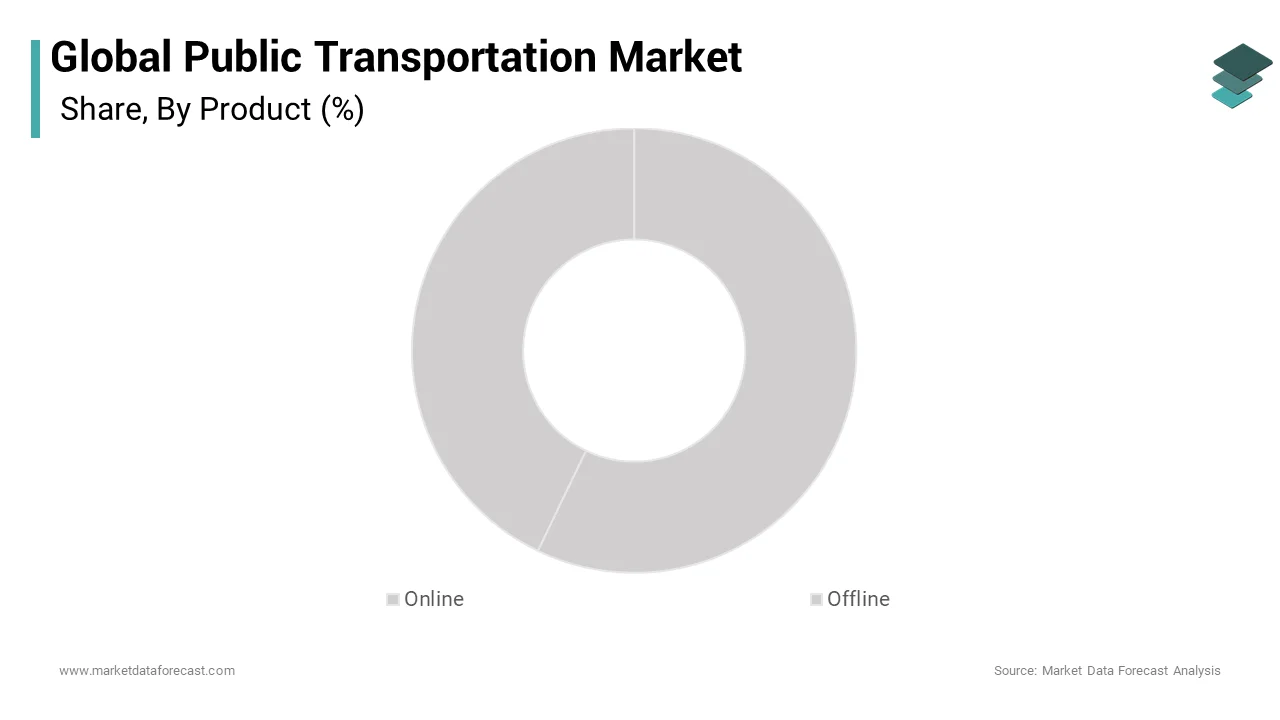
However, the online segment is anticipated to exhibit a CAGR of 13.5% over the forecast period in the global market owing to the proliferation of smartphones and contactless payment technologies. Commuters increasingly prefer the convenience of purchasing tickets via mobile apps, avoiding long queues and enabling seamless multimodal journeys. According to the International Telecommunication Union, global mobile broadband subscriptions reached 6.3 billion in recent years, facilitating widespread access to digital transit services. Mobile ticketing allows for real-time updates, dynamic pricing, and integrated journey planning, which enhances the overall user experience. According to the European Commission, cities implementing fully digital ticketing systems have seen a 25% reduction in operational costs associated with ticket printing and maintenance. The adoption of near-field communication technology enables users to tap their phones or wearables to pay fares instantly, further accelerating this trend. Younger demographics, particularly millennials and Gen Z, show a strong preference for cashless transactions, driving demand for app-based solutions. Transit agencies are partnering with fintech companies to offer subscription models and loyalty rewards through digital platforms. The COVID-19 pandemic also accelerated the shift towards contactless interactions, reducing health risks associated with handling cash or paper tickets. As 5G networks expand, the speed and reliability of online transactions improve, making digital channels more attractive. This technological evolution positions online distribution as the primary growth engine for future fare collection strategies.
By Mode of Transport Insights
The road transportation segment held the largest share of the global market in 2025 due to its extensive network coverage, flexibility, and lower infrastructure costs compared to rail systems. Buses can navigate complex urban streets and reach suburban areas where rail lines are not economically viable. According to the International Association of Public Transport, buses account for approximately 55% of all public transport trips globally, serving as the primary mode of mass transit in most cities. The versatility of road transport allows for frequent service adjustments and route modifications based on changing demand patterns. According to the World Bank, bus rapid transit systems can be implemented at one-tenth the cost of metro systems, making them an attractive option for budget-constrained municipalities. The widespread availability of roads ensures that road-based transit can serve both dense urban centers and rural communities effectively. Advances in electric bus technology are further enhancing the appeal of road transport by reducing emissions and operating costs. According to the European Environment Agency, electric buses produce zero tailpipe emissions, contributing to cleaner urban air quality. Additionally, road transport offers door-to-door connectivity when integrated with last-mile solutions such as bike-sharing. The ability to scale operations quickly by adding more vehicles without major construction projects provides a strategic advantage. This combination of accessibility, affordability, and adaptability ensures that road transportation remains the most widely used mode of public transit worldwide.
The rail transportation segment is expected to expand at a prominent CAGR of 10.2% during the forecast period in the global market owing to the rising need for high capacity and efficient long-distance travel. Rail systems offer superior speed and reliability compared to road transport, especially in congested urban environments. According to the International Union of Railways, global rail passenger traffic increased by 8% in recent cycles, reflecting rising demand for sustainable mass transit. High-speed rail networks in countries like China and Japan demonstrate the potential of rail to compete with air travel for intercity connections. According to the Asian Development Bank, metro expansions in major Asian cities have reduced average commute times by 30%, improving productivity and quality of life. Rail transport is highly energy-efficient, moving large volumes of passengers with minimal environmental impact per capita. According to the European Commission, rail produces 75% less carbon dioxide than car travel for equivalent distances. Governments are investing heavily in rail infrastructure to reduce road congestion and meet climate goals. Automated signaling systems and modern rolling stock enhance safety and frequency, attracting more riders. The integration of rail with other modes through multimodal hubs further boosts its attractiveness. As urban populations grow, the capacity advantages of rail become increasingly critical for sustainable mobility. This focus on efficiency and sustainability drives the rapid expansion of rail networks globally.
REGIONAL ANALYSIS
Europe Market Analysis
Europe led the market with 36.7% of the global market share in 2025. The dominance of Europe in the global public transportation market is attributed to its well-established rail networks and strong policy support for sustainable mobility. The region is home to some of the most advanced and extensively used public transit systems in the world, particularly in countries like Germany, France, and the United Kingdom. According to the European Railway Agency, rail transport accounts for 8% of all passenger kilometers in the EU, significantly higher than the global average. The European Green Deal mandates a 90% reduction in transport emissions by 2050, prompting massive investments in electrification and high-speed rail. According to the International Union of Railways, Europe operates over 200,000 kilometers of rail track, facilitating efficient cross-border travel. Urban centers like Paris, London, and Berlin have dense metro networks that serve millions of passengers daily. Government subsidies and integrated ticketing systems encourage high ridership rates. The region also leads in adopting electric buses, with many cities committing to zero-emission fleets by 2030. Strong regulatory frameworks ensure high standards of safety and accessibility. The cultural preference for public transit combined with robust infrastructure ensures Europe remains the global leader in public transportation usage and innovation. Continued investment in digitalization and multimodal integration further strengthens its market position.
Asia Pacific Market Analysis
Asia-Pacific is likely to display accelerated market expansion over the next few years, driven by Countries like China, India, and Japan are expanding their transit networks to accommodate growing urban populations and reduce congestion. According to the Asian Development Bank, the region requires 1.7 trillion dollars in annual infrastructure investment through 2030, with a significant portion allocated to public transport. China has built the world's largest high-speed rail network, covering over 40,000 kilometers as reported by the China State Railway Group. India is aggressively expanding its metro systems in cities like Delhi, Mumbai, and Bangalore to address mobility challenges. According to the International Association of Public Transport, bus rapid transit systems in Southeast Asia are gaining traction as cost-effective solutions. The rising middle class demands reliable and comfortable transit options, driving modernization efforts. Governments are promoting public-private partnerships to accelerate project delivery. The adoption of smart ticketing and electric vehicles is increasing across the region. As urbanization continues at an unprecedented pace, Asia-Pacific is poised to become the largest market for public transportation infrastructure and services in the coming decades.
COMPETITIVE LANDSCAPE
The competition in the Public Transportation Market is characterized by intense rivalry among established global manufacturers and regional specialists who strive to differentiate through technological innovation and service quality. Major players compete on the basis of product reliability energy efficiency digital integration and total cost of ownership. The market sees frequent bids for large infrastructure projects where price and technical capability are critical decision factors. State owned enterprises in Asia often benefit from government support allowing them to offer competitive pricing in international tenders. European manufacturers focus on premium quality and advanced sustainability features to maintain their edge. Intellectual property protection plays a vital role as companies patent unique propulsion systems and signaling technologies. The shift towards digital mobility solutions has introduced new competitors from the tech sector creating a dynamic competitive landscape. Customers increasingly prioritize holistic solutions that include financing maintenance and digital services rather than just hardware. This trend forces traditional manufacturers to adapt their business models and form strategic alliances. The fragmentation of the market across different regions and transport modes ensures that no single player dominates globally. Continuous investment in research and development is essential to stay ahead in this rapidly evolving industry.
KEY MARKET PLAYERS
The global public transportation market is concentrated with well-established players. Key players in the market include
- Metrolink
- Transdev
- Tobu Railway Co., Ltd.
- Alstom SA
- Siemens Mobility GmbH
- Trenitalia c2c Limited
- CRRC Corporation Limited
- Berliner Verkehrsbetriebe
- Transportation for London
- BC Transit Corporation
- Transport International Holdings Limited
- The Brussels Transport Company.
Top Players In The Market
- Alstom SA is a global leader in sustainable and smart mobility solutions providing comprehensive services for rail transport including high speed trains metros and signaling systems. The company plays a pivotal role in modernizing public transportation infrastructure across Europe Asia and the Americas. Recent actions include the successful integration of Bombardier Transportation which significantly expanded its product portfolio and global footprint. Alstom actively invests in hydrogen train technology and digital maintenance solutions to enhance operational efficiency. Their commitment to green mobility is evident in the development of zero emission rolling stock. By securing major contracts for metro expansions in cities like Paris and Sydney Alstom strengthens its market position. The company focuses on innovation through research and development centers worldwide ensuring it remains at the forefront of technological advancements in public transit.
- Siemens Mobility GmbH is a key player in the Public Transportation Market offering advanced rail vehicles automation and digitalization services. The company integrates hardware and software to create intelligent transport systems that improve safety and reliability. Recent initiatives include the expansion of its digital twin technology for predictive maintenance and the launch of new battery electric trains. Siemens Mobility collaborates with cities globally to implement smart traffic management solutions reducing congestion and emissions. Their involvement in high profile projects such as the California High Speed Rail demonstrates their capability in large scale infrastructure. The company emphasizes sustainability by developing energy efficient propulsion systems. Through strategic partnerships and continuous innovation Siemens Mobility enhances its reputation as a provider of future ready public transportation solutions.
- CRRC Corporation Limited is the world’s largest rolling stock manufacturer playing a critical role in supplying trains and buses for public transportation systems globally. The company provides a wide range of products including high speed rail metros light rail and electric buses. Recent actions include the export of advanced metro trains to markets in Southeast Asia and Latin America expanding its international presence. CRRC invests heavily in research and development for autonomous driving technologies and smart rail systems. The company supports global sustainability goals by producing electric and hybrid vehicles. By leveraging its massive manufacturing capacity and cost advantages CRRC secures significant contracts in emerging markets. Their focus on technological innovation and global expansion solidifies their position as a dominant force in the public transportation industry.
Top Strategies Used By Key Market Participants
Key players in the Public Transportation Market primarily employ strategies centered on technological innovation strategic mergers and sustainability initiatives to maintain competitive advantage. Companies heavily invest in digitalization and automation to enhance operational efficiency and passenger experience through real time data analytics. Integrating artificial intelligence for predictive maintenance reduces downtime and lowers lifecycle costs for transit agencies. Strategic acquisitions allow firms to expand their product portfolios and enter new geographic markets rapidly. Additionally companies focus on developing zero emission vehicles such as electric buses and hydrogen trains to comply with stringent environmental regulations. Partnerships with technology firms facilitate the creation of smart mobility ecosystems including mobility as a service platforms. Providing comprehensive lifecycle services from design to maintenance ensures long term customer retention. These multifaceted approaches enable market participants to address evolving urban mobility needs while capturing growth opportunities in the global public transportation sector.
MARKET SEGMENTATION
This research report on the global public transportation market has been segmented and sub-segmented based on distribution channel, transportation mode, and region
By Distribution Channel
- Online
- Offline
By Transportation Mode
- Road
- Rail
- Others
By Region
- North America
- Europe
- APAC
- Latin America
- Middle East and Africa