- Product Description Description
- Table of Contents TOC
- List of Table & Figure LOT
- Get Free Sample PDF Sample PDF
Market Size, 2025
$733.54 MnMarket Estimate, 2026
$761.78 MnMarket Forecast, 2034
$1030 MnCAGR, 2026–2034
3.85%Global Silage Additives Market Size, Growth, Trends & Forecast (2026–2034)
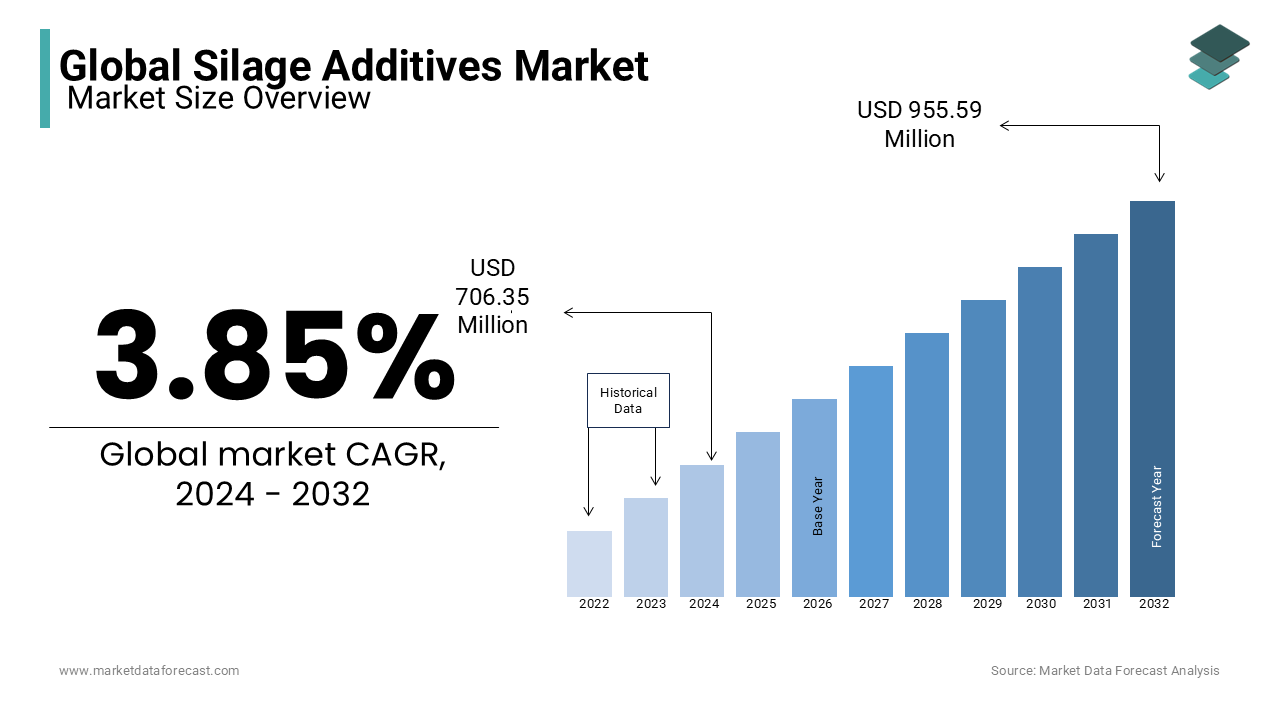
The global silage additives market size was valued at USD 733.54 million in 2025, is anticipated to reach USD 761.78 million in 2026, and is projected to expand up to USD 1,030.58 million by 2034, registering a compound annual growth rate (CAGR) of 3.85% over the forecast period from 2026 to 2034. Driven by increasing consumption of meat and dairy proteins, rising demand for high-quality animal nutrition, and advancements in microbial inoculants, the market continues to expand steadily worldwide.
Key Executive Metrics (At-a-Glance)
- 2025 Base Valuation: USD 733.54 Million
- 2026 Current Valuation: USD 761.78 Million
- 2034 Forecast Valuation: USD 1,030.58 Million
- Compound Annual Growth Rate (CAGR): 3.85% (2026–2034)
- Dominant Type Segment: Inoculants (led by Lactic Acid Bacteria)
- Fastest-Growing Type Segment: Enzymes
- Dominant Application Segment: Cereal Crops / Corn (due to high energy content and adaptability)
- Fastest-Growing Application Segment: Legumes (Alfalfa)
- Dominant Geographic Region: North America (spearheaded by the U.S.)
- Fastest-Growing Geographic Region: Asia-Pacific
Core Market Drivers & Restraints
- Drivers: Surging global demand for animal protein, industrialization of meat production, and heightened focus on feed efficiency, sustainability, and reduced methane emissions.
- Restraints & Challenges: Significant dry matter and forage losses from poor management or aerobic deterioration, alongside climate variability affecting forage quality and availability.
Global Silage Additives Market Segmentation Breakdown
| Segment Category | Largest Segment | Fastest-Growing Segment |
|---|---|---|
| By Type | Inoculants | Enzymes |
| By Application | Cereal Crops (Corn) | Legumes (Alfalfa) |
| By Region | North America | Asia-Pacific |
Major Industry Players Profiled
Key global market leaders include BASF SE (Germany), ADDCON (Germany), Novozymes A/S (Denmark), DSM N.V. (The Netherlands), Cargill Inc. (U.S.), Evonik Industries AG (Germany), Selko Feed Additives (The Netherlands), Volac International Limited (U.K.), Schaumann BioEnergy GmbH (Germany), and CHR. Hansen Holdings A/S (Denmark).
Global Silage Additives Market Size
The global silage additives market size was valued at USD 733.54 million in 2025 and is anticipated to reach USD 761.78 million in 2026 to reach USD 1030.58 million by 2034, growing at a CAGR of 3.85% during the forecast period from 2026 to 2034.
Silage additives have been used to increase the ensiling procedure with successive enhancements in animal performance. Its advantages have created an opportunity for the Silage Additives Market.
Silage additives are essential in animal nutrition as they are worth increasing silage quality and regulating the conservation process so that by the time of nurturing, it has maintained as many of the nutrients existing in the original fresh forage as possible. That, in turn, enhances animal performance and fitness, consequently refining the yield and value of food from animal origin. Silage additive thus helps make superior forage into good quality silage. The demand for meat has accelerated due to the continuous increase in population, lifestyle variations, and cultural inclinations.
The industrialization of animals and meat production is the driving factor of the market. An increase in demand for animal protein all around the globe has put pressure on livestock farmers for better quality and quantity. This condition has created an opportunity for silage additive producers.
However, the low efficiency of silage additives compared with other additives is likely to obstruct the growth of the market.
Current Scenario Of The Global Silage Additives Market
Presently, the silage additives market is experiencing moderate to steady growth. Considering the existing internal and external factors, it is expected to see a gradual increase in demand propelled by aspects such as rising meat and dairy consumption. Moreover, North America currently spearheads the market, accounting for a significant share, while regions like the Asia Pacific are anticipated to grow at higher rates, contributing to overall market expansion, as per today’s business dynamics.
MARKET DRIVERS
The increasing demand for high-quality animal feed drives the growth of the silage additives market. The livestock sector must change or evolve in conjunction with other aspects of agri-food systems worldwide to be more productive, as stated by the Food and Agriculture Organization of the United Nations (FAO). It stresses the fact that the consumption of animal protein, especially pork and poultry, is surging mainly because of the enhanced purchasing power, urbanisation, and population growth. On the other hand, it warned that this demand needs to be well proportioned with ecological concerns, socio-economic issues, and a range of safety problems impacting both humans and animals. Ensuring the security, quality, accessibility, and availability of livestock feed is also an important aspect. Achieving this needs a commitment to restoring and managing grasslands and pastures for the production of fodder and feed ingredients, coupled with effective processing and application of compound feed. Therefore, as industrial-scale livestock production grows, so does the demand for high-quality feed and silage additives.
- Around the world, over 130 countries are involved in the commercial production and sale of animal feed, with approximately 8,000 facilities generating more than 600 million tons of this each year. Additionally, about 300 million tons are produced directly on farms.
Rising awareness of silage feed efficiency and sustainability also influences the market growth rate. Maximizing livestock food effectiveness relies heavily on superior-quality silage. When animals receive good-quality and uniform silage throughout the year, it can significantly improve their health and productivity.
Another factor fueling the market expansion is that modern silage technology supports and promotes ecological sustainability by enhancing feed efficiency. This results in the reduction of methane discharge per unit of milk yield, lower land necessity for animal food production, better utilization of nutrients, and a notable decrease in water consumption in silage crop cultivation.
MARKET RESTRAINTS
Fodder or forage loss is one of the key restraints impeding the expansion of the silage additives market. Research shows that poor management practices can lead to losses of up to 30 per cent in silage. It can significantly impact profitability and sustainability by increasing the demand for additional forage.
- As per a study, typically, even well-prepared silage experiences dry matter losses of around 8 per cent to 10 per cent, or sometimes more. If attention to detail wanes, those losses can jump to over 30 per cent. In instances where silage suffers from major aerobic deterioration, total losses can be greater than 50 per cent. Since a lot of these wastes are in the form of carbon dioxide, they often remain unnoticed.
MARKET OPPORTUNITIES
Microbial inoculants are one of the key innovations presenting potential opportunities for the expansion of the silage additives market. A breakthrough in silage technology is the development of specialized microbial cultures, particularly lactic acid bacteria (LAB). These inoculants enhance fermentation quality, improve aerobic stability, and raise the nutritional value of forage or fodder. For instance, using LAB alongside other additives like cellulase and glucose has been shown to considerably increase both dry matter and crude protein contents in mixed silage. Therefore, it augments the overall quality of the feed.
MARKET CHALLENGES
Climate variability is among the major challenges hindering the progress of the silage additives market. Frequent weather changes lead to unpredictable climate patterns that can impact both the availability and quality of forage. Factors like extreme heat, droughts, or too much rain can interfere with the fermentation process, ultimately reducing silage quality. It’s essential for companies to design adaptable products that perform well across different environmental scenarios.
Maintaining the silage quality is another complicated problem, affecting the efficacy, safety, and value of feed. It’s crucial to recognise that proper storage is equally important as the ensiling process.
- According to the Minnesota Crop News, losses of up to 20 per cent can take place in silage and hay without anyone realizing it. Hay storage issues are generally related to moisture content, whereas silage losses are more commonly due to oxygen exposure during storage and feeding.
REPORT COVERAGE
| REPORT METRIC | DETAILS |
| Market Size Available | 2025 to 2034 |
| Base Year | 2025 |
| Forecast Period | 2026 to 2034 |
| CAGR | 3.85% |
| Segments Covered | By Type, Application, and Region |
| Various Analyses Covered | Global, Regional, and Country Level Analysis; Segment-Level Analysis; DROC; PESTLE Analysis; Porter’s Five Forces Analysis; Competitive Landscape; Analyst Overview of Investment Opportunities |
| Regions Covered | North America, Europe, APAC, Latin America, Middle East & Africa |
| Market Leaders Profiled | BASF SE (Germany), ADDCON (Germany), Novozymes A/S (Denmark), DSM N.V. (The Netherlands), Cargill Inc. (U.S.), Evonik Industries AG (Germany), Selko Feed Additives (The Netherlands), Volac International Limited (U.K.), Schaumann BioEnergy GmbH (Germany), CHR. Hansen Holdings A/S (Denmark) |
SEGMENT ANALYSIS
By Type Insights
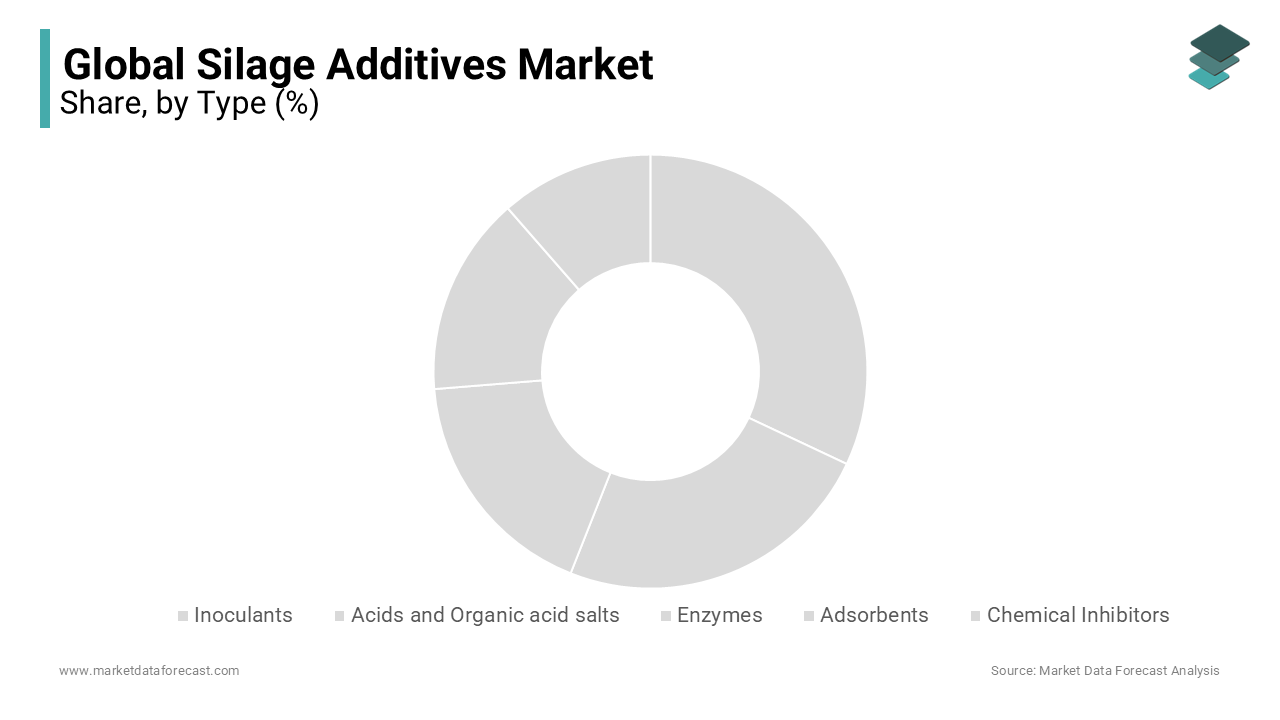
The inoculant segment gained the top spot in the silage additives market. It is expected to maintain its position during the forecast period. These are recognised for their effectiveness in boosting feed quality and livestock productivity and have become the most popular choice among silage supplements owing to the benefits they bring. Moreover, these are mainly composed of lactic acid bacteria (LAB) and are extensively used to enhance fermentation processes, which also contributes to the increase in the segment’s market share.
By Application Insights
Cereal crops are the most dominant segment of the silage additives market. Under this, the corn sub-segment is leading with a substantial share, and considering its consumption pattern, it is believed to be on the same course throughout the estimation period. High energy content, fermentation quality, adaptability, and research support are the reasons behind its supremacy over the years. In addition, technological advancements are fueling the segment's market size.
- A study published in the Farmonut stated that innovative inoculants applied in shorthage processing have the potential to elevate acetate levels in corn silage fermentation by a maximum of 15 per cent.
REGIONAL ANALYSIS
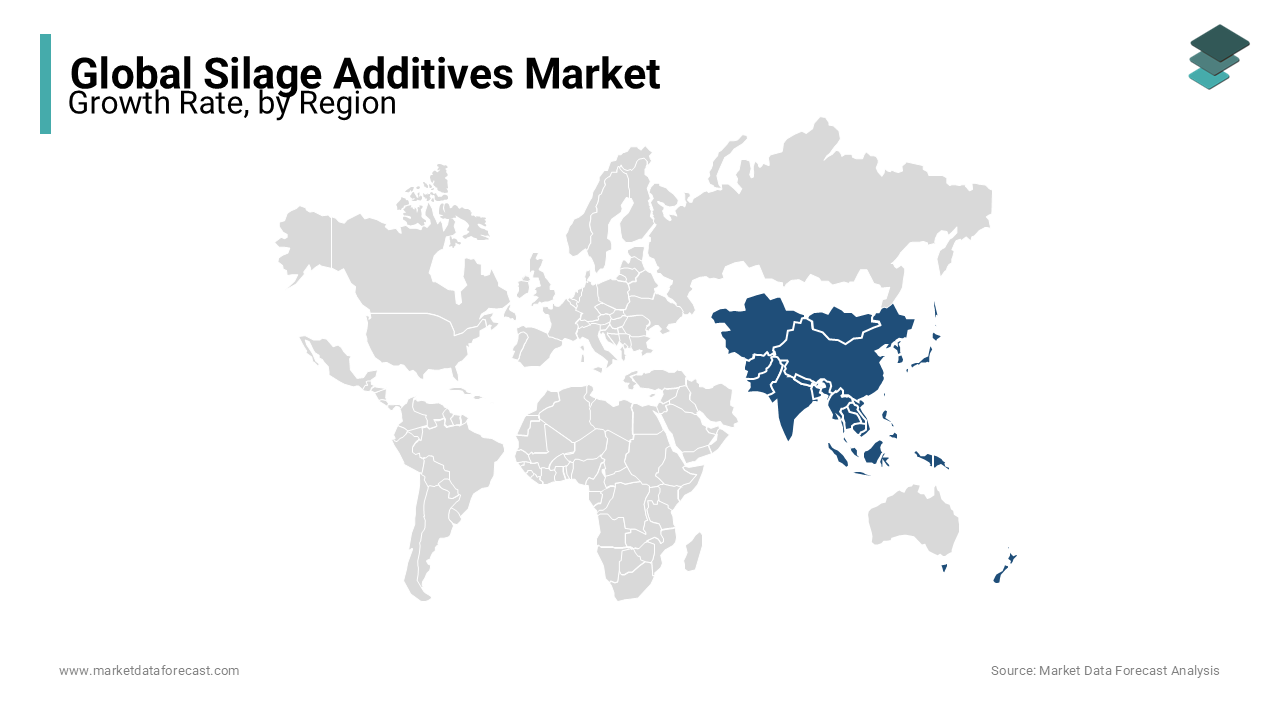
Asia-Pacific is the fastest-growing market in silage additives during the forecast period. The Guidelines from the Government in this region to decrease imports of meat & escalate home production and funding to livestock farmers are projected to give an increase to the livestock industry.
North America commands the silage additives market and is likely to continue its growth trajectory over the forecast period. The United States drives the regional market and is the world’s top-most country in silage production. According to research, the U.S. produced about 130 million tons of corn for silage in 2023. For the upcoming 2023-2024 season, it’s anticipated that the nation will remain the largest corn cultivator in the world, with an estimated production of about 389.7 million tons. Besides this, Canada is a global leader in the production of forage seed.
Europe holds a notable place in the silage additives market. The region’s progress in this market is projected to be stable during the forecast period. Moreover, the growth and maturation of the AD industry led to improved operational standards across plants. In fact, there are far fewer sites that require emergency interventions to manage their biological processes compared to five years ago.
KEY MARKET PLAYERS
Some of the major key players are involved in the global silage additives market.
- BASF SE (Germany)
- ADDCON (Germany)
- Novozymes A/S (Denmark)
- DSM N.V. (The Netherlands)
- Cargill Inc. (U.S.)
- Evonik Industries AG (Germany)
- Selko Feed Additives (The Netherlands)
- Volac International Limited (U.K.)
- Schaumann BioEnergy GmbH (Germany)
- CHR. Hansen Holdings A/S (Denmark)
MARKET SEGMENTATION
This research report on the global pet food nutraceuticals market has been segmented and sub-segmented based on type, application, and region.
By Type
- Inoculants
- Acids and Organic acid salts
- Enzymes
- Adsorbents
- Chemical Inhibitors
By Application
- Cereal crops
- Corn
- Barle
- Oats
- Wheat
- Sorghum
- Legumes
- Peas
- Fava beans
- Alfalfa
- Clover
- Others
- Ornamental Grass
- Canola
By Region
- North America
- Europe
- Asia-Pacific
- Latin America
- Middle East and Africa