- Product Description Description
- Table of Contents TOC
- List of Table & Figure LOT
- Get Free Sample PDF Sample PDF
Market Size, 2025
$26.22 BnMarket Estimate, 2026
$27.88 BnMarket Forecast, 2034
$45.51 BnCAGR, 2026–2034
6.32%Global Smart Packaging Market Summary
The global smart packaging market was valued at USD 26.22 billion in 2025, is estimated to reach USD 27.88 billion in 2026, and is projected to reach USD 45.51 billion by 2034, growing at a CAGR of 6.32% from 2026 to 2034. Growth is driven by food safety concerns, anti-counterfeiting regulations, e-commerce expansion, pharmaceutical serialization mandates, and increasing demand for traceability and sustainability across global supply chains.
Key Market Highlights
- 2025 Market Size: USD 26.22 Billion
- 2026 Estimate: USD 27.88 Billion
- 2034 Forecast: USD 45.51 Billion
- CAGR (2026–2034): 6.32%
- Largest Application: Food & Beverages (58.3% share in 2025)
- Fastest-Growing Application: E-commerce (15.2% CAGR)
- Largest Region: Asia Pacific (37% share in 2025)
Quick Growth Drivers
- Rising foodborne illness awareness and spoilage reduction needs
- Pharmaceutical serialization mandates (DSCSA, EU traceability rules)
- Rapid growth of online grocery and temperature-sensitive deliveries
- Luxury goods authentication & anti-counterfeiting technologies
- Regulatory push for digital product passports
Principal Restraints
- High cost of RFID tags, sensors, and embedded electronics
- Recycling incompatibility of electronic-integrated packaging
- Lack of economies of scale in emerging markets
- Short sensor lifespan vs. product shelf-life mismatch
High-Value Opportunities
- Digital Product Passport (DPP) implementation in Europe
- Smart cold-chain logistics for biologics & vaccines
- Blockchain-linked authentication ecosystems
- Compostable smart labels & printed electronics
- Direct-to-consumer engagement via QR/NFC-enabled packaging
Key Market Challenges
- Interoperability gaps across RFID and QR platforms
- Consumer privacy concerns under data protection laws
- Fragmented global serialization standards
- Regulatory pressure to ensure recyclability by 2030
What Wins Commercially (Competitive Edge)
- Integration of sustainability + intelligence
- Scalable RFID/NFC cost optimization
- Blockchain-enabled traceability
- Compliance-ready packaging platforms
- Recyclable smart label innovation
Top Strategic Ask for Executives
- Align smart packaging strategies with regulatory timelines (DPP, DSCSA)
- Develop recyclable smart materials to meet 2030 mandates
- Build interoperable platforms across supply chain partners
- Prioritize food & pharma segments for near-term ROI
- Invest in cost-down sensor manufacturing for mass adoption
Leading Players
Some of the companies that are playing a dominating role in the global smart packaging market include:
- Amcor plc
- Avery Dennison Corporation
- Sealed Air
- Zebra Technologies Corporation
- 3M Company
- Smurfit Kappa Group plc
- DuPont de Nemours, Inc.
Global Smart Packaging Market Size
The global smart packaging market was valued at USD 26.22 billion in 2025, is estimated to reach USD 27.88 billion in 2026, and is projected to reach USD 45.51 billion by 2034, growing at a CAGR of 6.32% from 2026 to 2034.
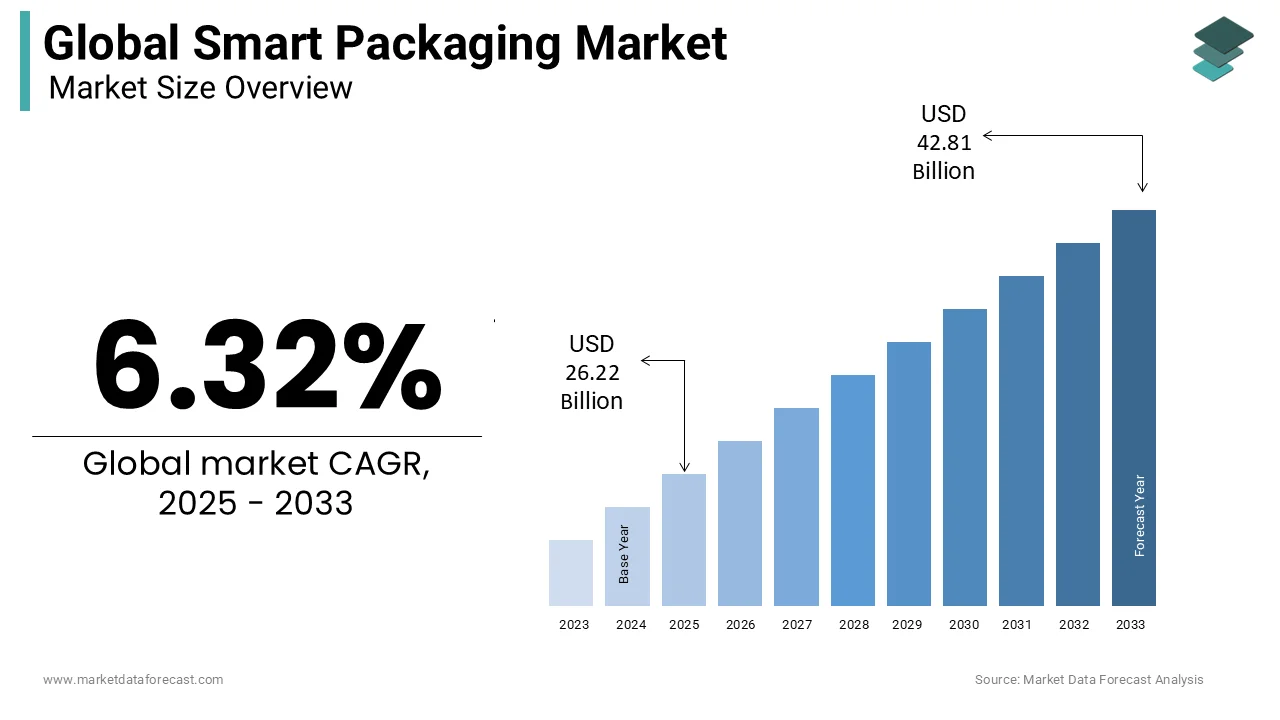
Smart packaging refers to intelligent and interactive systems integrated into packaging structures to monitor, communicate, and enhance the safety, authenticity, and usability of products across supply chains. Unlike conventional packaging, it incorporates technologies such as time-temperature indicators, oxygen scavengers, radio-frequency identification (RFID) tags, and QR codes to provide real-time data on product condition, origin, and handling. These innovations are increasingly vital in sectors like pharmaceuticals, perishable foods, and luxury goods, where traceability and spoilage prevention are paramount. According to the World Health Organization, approximately 600 million people fall ill annually due to contaminated food, emphasizing the urgency for smarter preservation and monitoring solutions. As per the U.S. Department of Agriculture, nearly 30–40% of the food supply in the United States is wasted each year, much of it due to unclear freshness indicators. Smart packaging directly addresses these systemic inefficiencies by extending shelf life and improving consumer decision-making through enhanced transparency and connectivity.
MARKET DRIVERS
Escalating Demand for Food Safety and Spoilage Reduction
The growing global emphasis on food safety and the reduction of spoilage is surging the growth of smart packaging adoption. Real-time monitoring technologies are becoming indispensable because perishable goods such as dairy, meat, and ready-to-eat meals are highly susceptible to temperature fluctuations and microbial contamination. Time-temperature indicators (TTIs) and freshness sensors now enable retailers and consumers to assess product integrity without opening the package. According to the Food and Agriculture Organization, one-third of all food produced globally, approximately 1.3 billion tons, is lost or wasted annually, with spoilage during distribution being a major contributor. In the European Union, cold chain breaches account for a portion of refrigerated food spoilage, as per the study. Companies have begun deploying smart labels on premium chilled products to ensure compliance with storage conditions.
Rising Integration of Digital Authentication and Anti-Counterfeiting Measures
The proliferation of counterfeit goods, particularly in pharmaceuticals and luxury consumer products, is accelerating the expansion of the smart packaging market. According to the study, counterfeit and pirated goods accounted for a notable share in global trade, with pharmaceuticals being among the most targeted sectors. According to the research, a portion of medicines in low- and middle-income countries are falsified, posing severe public health risks. To combat this, brands are adopting NFC (Near Field Communication) tags, holograms, and unique QR codes that allow consumers to verify product authenticity via smartphones. In India, major pharmaceutical companies like Cipla and Sun Pharma were required to integrate QR codes for their listed brands; this was a compliance requirement mandated for all companies producing the designated drugs, not a unique voluntary action.
MARKET RESTRAINTS
High Production Costs and Limited Economies of Scale
The elevated cost of integrating smart technologies into packaging remains a significant barrier, which impedes the rise of the smart packaging market. Active and intelligent components such as RFID tags, biosensors, and printed electronics substantially increase unit packaging costs. Small and medium enterprises (SMEs) in emerging markets face even greater constraints due to a lack of access to capital-intensive smart packaging infrastructure. Apart from these, the absence of standardized platforms and fragmented supplier ecosystems prevents economies of scale, which limits the cost reduction trajectories and slows mass-market penetration beyond premium and regulated product categories.
Technical and Environmental Limitations of Embedded Electronics
The integration of electronic components into packaging introduces technical and environmental challenges that hamper the growth of the smart packaging market. Many smart packaging solutions rely on non-recyclable materials or contain microelectronics that contaminate waste streams, conflicting with circular economy goals. According to the research, a smaller share of plastic packaging in Europe is effectively recycled, and the presence of conductive inks, batteries, or silicon chips further complicates sorting and reprocessing. In Japan, as per a study, a portion of municipalities reject packaging with embedded electronics from standard recycling streams due to contamination risks. Apart from these, the lifespan of sensors and indicators often does not align with product shelf life, which leads to premature failure or false readings. Power requirements for active systems, such as Bluetooth-enabled trackers, also limit practicality. These limitations are prompting regulatory scrutiny, with the EU's Packaging and Packaging Waste Regulation (PPWR) aiming to make all packaging recyclable by 2030.
MARKET OPPORTUNITIES
Expansion of E-Commerce and Direct-to-Consumer Supply Chains
The rapid growth of e-commerce, particularly in food, pharmaceuticals, and premium goods, is creating new opportunities for the growth of the smart packaging market. Online retail eliminates direct consumer interaction with products by increasing reliance on packaging to convey freshness, authenticity, and handling history. According to the study, global e-commerce sales surged notably, with food and personal care products among the fastest-growing categories. In China, JD.com implemented smart cold-chain boxes with real-time GPS and temperature tracking for pharmaceutical deliveries, reducing spoilage, as per research. Similarly, direct-to-consumer brands like Imperfect Foods and Harry’s Razors use QR codes to provide sourcing stories and usage guidance, which deepens engagement. Thus, smart packaging is evolving into a vital tool for quality assurance and brand differentiation in digital retail ecosystems as last-mile logistics grow more complex.
Regulatory Push for Enhanced Product Traceability and Sustainability
Governments worldwide are enacting regulations that mandate greater product traceability and environmental accountability, providing a potential opportunity for the smart packaging market. The European Union’s Digital Product Passport (DPP), set for phased implementation from 2025, will require all regulated products to carry digital identifiers detailing composition, origin, and recyclability—directly enabling smart label integration. According to the European Commission, the DPP will initially cover batteries, textiles, and electronics, sectors where counterfeit prevention and material recovery are crucial. In the United States, the FDA’s Drug Supply Chain Security Act (DSCSA) promotes full serialization of prescription drugs, compelling pharmaceutical firms to embed unique identifiers in packaging. As per the study, a portion of U.S. drug manufacturers have already adopted smart labeling systems to meet these requirements. This signals a broader trend where regulatory mandates are transforming smart packaging from an innovation to a compliance necessity.
MARKET CHALLENGES
Fragmented Standardization and Interoperability Across Technologies
The lack of universal standards, leading to interoperability issues between technologies, platforms, and supply chain partners, is degrading the expansion of the mart packaging market. Different manufacturers use proprietary RFID frequencies, QR code formats, or cloud-based verification systems, preventing seamless data exchange. According to research, a portion of retailers reported integration challenges when deploying smart packaging from multiple suppliers. In the pharmaceutical sector, incompatible serialization systems across countries complicate global distribution, as per a study. Apart from these, varying data encryption and authentication protocols weaken consumer trust. For instance, a portion of NFC-enabled product tags could be cloned using low-cost equipment, exposing security flaws. Therefore, scalability remains constrained due to the lack of harmonized protocols for data structure, communication, and verification, which limits the potential for cross-industry platforms and reduces return on investment for early adopters.
Consumer Skepticism and Data Privacy Concerns
Consumer hesitation around data privacy and perceived utility is challenging the rise of the mart packaging market. Many interactive labels require smartphone access, internet connectivity, and permission to collect usage data, raising concerns about surveillance and data misuse. According to research, a portion of U.S. consumers expressed discomfort with brands tracking product interactions via embedded digital tags. In Europe, the General Data Protection Regulation (GDPR) imposes strict limits on data collection from consumer scanning activities, complicating marketing and analytics use cases. Moreover, older demographics and populations in developing regions often lack the digital literacy or infrastructure to engage with smart features. These behavioral and regulatory constraints force brands to balance innovation with transparency by limiting the depth of interactivity and slowing mass-market behavioral adoption.
REPORT COVERAGE
| REPORT METRIC | DETAILS |
| Market Size Available | 2025 to 2034 |
| Base Year | 2025 |
| Forecast Period | 2026 to 2034 |
| Segments Covered | By Technology Type, Application, End-Use Sector, and Region. |
| Various Analyses Covered | Global, Regional, and Country-Level Analysis, Segment-Level Analysis, Drivers, Restraints, Opportunities, Challenges; PESTLE Analysis; Porter’s Five Forces Analysis, Competitive Landscape, Analyst Overview of Investment Opportunities |
| Countries Covered | Asia Pacific North America Europe Latin America Middle East & Africa |
| Market Leaders Profiled | Amcor plc, Avery Dennison Corporation, Sealed Air, Zebra Technologies Corporation, 3M Company, International Paper Company, Smurfit Kappa Group plc, Constantia Flexibles, Dupont De Nemours Inc, Linde plc. |
SEGMENTAL ANALYSIS
By Technology Type Insights
The Modified Atmosphere Packaging (MAP) segment holds the largest share of 45.3% of the global smart packaging market in 2025. The domination of the Modified Atmosphere Packaging (MAP) segment is majorly attributed to its widespread adoption in the fresh food industry, where it extends shelf life by altering the internal gas composition—typically reducing oxygen and increasing carbon dioxide or nitrogen. As per the study, spoilage-related losses in fresh produce, meat, and seafood account for a notable billion annually in the United States, making shelf-life extension a vital economic priority. MAP has been shown to extend the freshness of packaged meat and leafy greens for days. Its cost-effectiveness, scalability, and compatibility with existing packaging lines further strengthen its prominence in the smart packaging landscape.
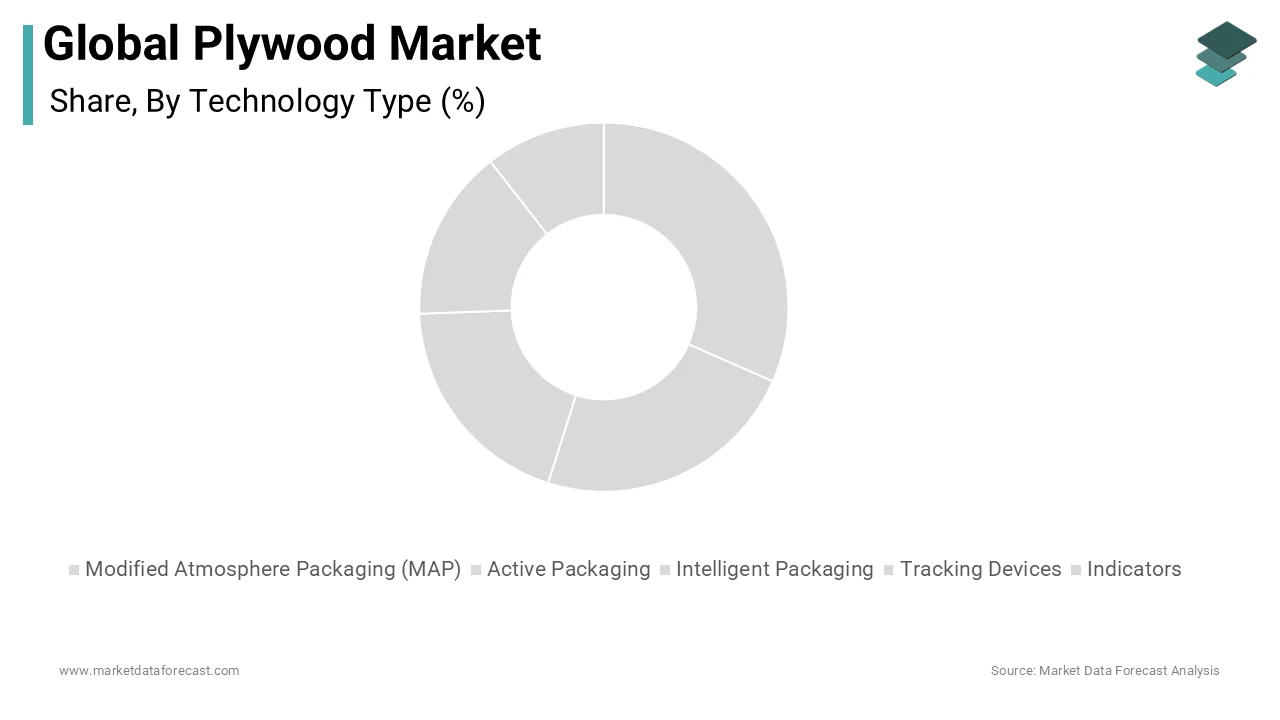
The Intelligent packaging segment is expected to exhibit a noteworthy CAGR of 13.6% from 2025 to 2033. The segment’s rapid growth is propelled by the rising demand for real-time product monitoring and digital traceability across high-value sectors. Technologies such as time-temperature indicators (TTIs), freshness sensors, and QR/NFC tags enable consumers and supply chain operators to verify product integrity, storage conditions, and authenticity. According to the study, the number of people who die annually from foodborne diseases linked to improper storage highlights the need for intelligent monitoring. Companies have commercialized printed sensors that change color upon temperature deviation. The convergence of IoT, blockchain, and consumer demand for transparency is propelling this segment beyond niche applications into mainstream use.
By Application Insights
In 2025, the food and beverages segment led the smart packaging market by occupying a share of 58.3% in the global market. The urgent need to reduce food spoilage and meet evolving consumer expectations for freshness and transparency has significantly contributed to the domination of the segment in the global market. According to the Food and Agriculture Organization, nearly one-third of all food produced globally, over 1.3 billion tons, is lost or wasted annually, with perishable goods being the most affected. Smart packaging solutions like MAP, oxygen scavengers, and freshness indicators are now standard in premium meat, dairy, and ready-to-eat meals. In Europe, improved packaging could reduce food waste, prompting retailers to adopt smart labels. Apart from these, the rise of premium convenience foods has increased demand for packaging that ensures both safety and brand differentiation. Hence, the sector remains the primary engine of smart packaging adoption.
The e-commerce application segment is on the rise and is expected to be the fastest-growing segment in the global market by witnessing a CAGR of 15.2% from 2025 to 2030. This surge is driven by the structural shift in consumer purchasing behavior and the logistical complexities of direct-to-consumer delivery. According to the research, global e-commerce sales surged, with a significant portion involving temperature-sensitive goods like pharmaceuticals, cosmetics, and gourmet foods. The absence of in-store quality checks increases reliance on packaging to ensure product integrity. In China, Alibaba’s Cainiao Network deployed millions of smart shipping labels, incorporating QR codes for real-time tracking and authenticity verification. Thus, smart packaging is becoming essential for trust, traceability, and operational efficiency in digital commerce because last-mile logistics is growing more complex.
REGIONAL ANALYSIS
Asia-Pacific Smart Packaging Market Insights
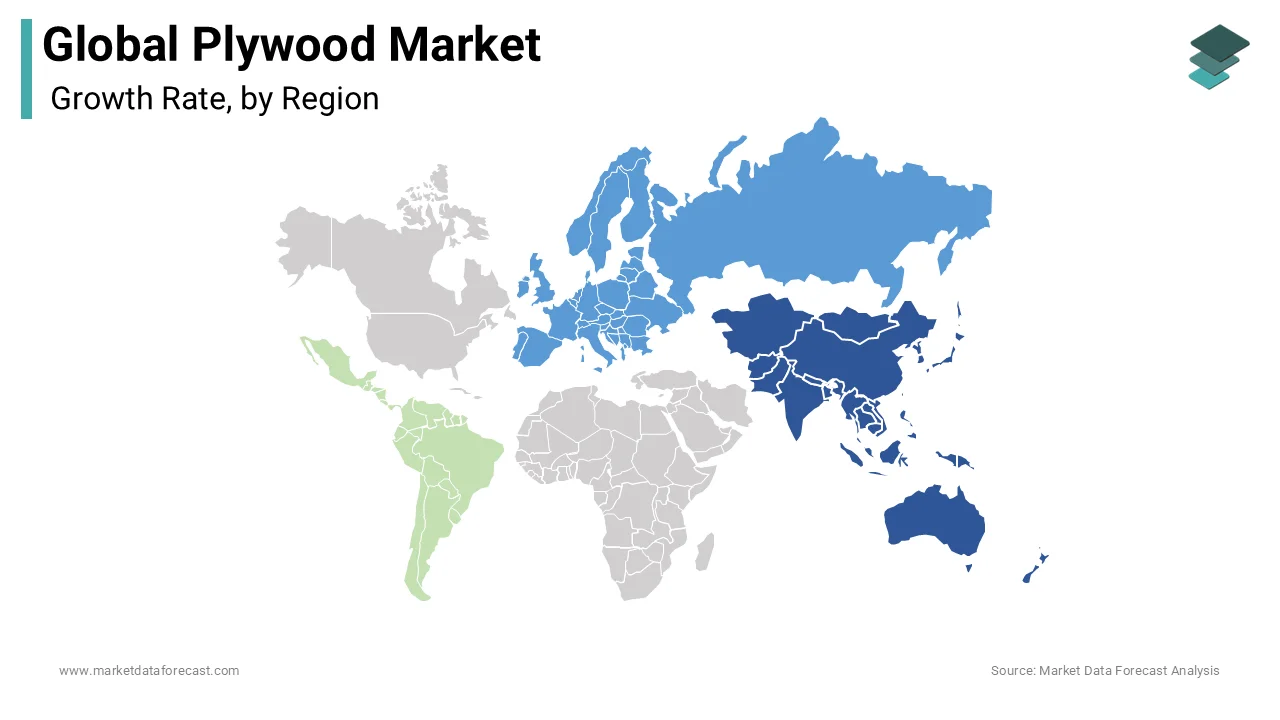
Asia-Pacific dominated the smart packaging market by accounting for 37% of the global market in 2025. The Asia Pacific is also the fastest-growing region. China, India, and South Korea are at the forefront, driven by rapid urbanization, rising disposable incomes, and expanding e-commerce ecosystems. According to the study, online retail in the region reached a notable market, accounting for a portion of global digital sales. This surge has prompted logistics giants like JD.com and Flipkart to adopt smart labels with real-time tracking and tamper detection. In India, the government’s Digital India initiative has accelerated QR code integration across food and pharmaceutical packaging. Apart from these, Japan’s aging population is increasing demand for easy-open, medication-tracking packaging. These converging trends are transforming Asia-Pacific into a testbed for next-generation smart packaging innovation.
North America Smart Packaging Market Insights
North America is another key region in the smart packaging market, occupying 28.1% share of the global market in 2025. Factors such as high technological maturity and strong regulatory enforcement are largely attributed to the domination in the global market. The United States is the primary driver, with a well-established cold chain infrastructure and stringent food and drug safety regulations. The Drug Supply Chain Security Act (DSCSA) mandates full serialization and uses technologies like barcodes for tracking. The final compliance deadlines for all trading partners extend into 2025 and 2026. As per research, a portion of the top 100 drug manufacturers have already implemented serialization systems. In the food sector, Walmart and Amazon Fresh have adopted blockchain-linked smart packaging to enhance traceability, reducing recall response times, as per the study. Thus, smart packaging is becoming a vital tool for quality assurance and consumer engagement, as a portion of U.S. households are shopping online for groceries.
Europe Smart Packaging Market Insights
Europe is rising steadily in the smart packaging market owing to its regulatory dominance and commitment to sustainability. The European Union’s Green Deal and the upcoming Packaging and Packaging Waste Regulation (PPWR) are reshaping packaging design, mandating digital product passports and recyclability by 2030. As per the study, only a portion of plastic packaging was recycled in 2022, prompting the integration of QR codes to guide consumers on proper disposal. France's Anti-Waste for a Circular Economy Law (AGEC) is accelerating environmental labeling, particularly in the textile industry. In Germany, a portion of supermarkets use time-temperature indicators for chilled foods, reducing spoilage and supporting the country’s food waste reduction target. The Netherlands has emerged as a hub for smart packaging innovation, hosting R&D centers for companies. Apart from these, the EU’s Digital Product Passport initiative will require RFID or QR tags on electronics, batteries, and textiles, which creates a regulatory-driven expansion of intelligent packaging across multiple sectors.
Latin America Smart Packaging Market Insights
Latin America is growing progressively in the smart packaging market. Brazil and Mexico are emerging as key growth centers despite infrastructural challenges. As per the study, a portion of high-risk medications is traceable through digital codes, improving counterfeit detection. In Mexico, the rise of e-commerce, growing annually, according to the research, has increased demand for tamper-evident and trackable packaging. In 2022, Mercado Libre implemented a different initiative in Brazil to reduce packaging waste. On the other hand, recycling infrastructure remains limited. But the push for regulatory compliance and digital retail is creating niche opportunities for smart packaging in high-value and health-essential applications.
Middle East and Africa Smart Packaging Market Insights
The Middle East and Africa are predicted to expand in the smart packaging market from 2025 to 2033. Strategic investments are laying the foundation for future growth, which drives the growth of the Middle East and Africa in the global market. The United Arab Emirates leads the region, with Dubai’s Smart City initiative promoting digital integration across supply chains. The Dubai Health Authority mandated serialization for all imported pharmaceuticals, aligning with international traceability standards. As per the study, the number of pharmaceutical SKUs was registered with digital identifiers. In Saudi Arabia, Vision 2030 includes investments in cold chain logistics and food security, with the Ministry of Environment launching a pilot using QR codes to track date palm exports. South Africa's Council for Scientific and Industrial Research (CSIR) has developed low-cost sensors for various applications and food packaging technologies. Therefore, the region’s focus on food security and digital transformation is creating fertile ground for smart packaging adoption
COMPETITIVE LANDSCAPE
KEY MARKET PLAYERS
Some of the major companies active in global smart packaging
- Amcor plc
- Avery Dennison Corporation
- Sealed Air
- Zebra Technologies Corporation
- 3M Company
- International Paper Company
- Smurfit Kappa Group plc
- Constantia Flexibles
- Dupont De Nemours Inc
- Linde plc
TOP LEADING PLAYERS IN THE MARKET
Avery Dennison Corporation
Avery Dennison has established a dominant presence in the Asia-Pacific smart packaging landscape through its innovative labeling and RFID solutions. The company’s AD Easy Check and AD Traceability platforms are widely adopted in China, India, and Japan for brand authentication and supply chain transparency. Avery Dennison continues to shape the evolution of intelligent packaging across diverse consumer sectors in the region through localized R&D and digital integration.
Amcor plc
Amcor has emerged as a key innovator in active and intelligent packaging across the Asia-Pacific region, leveraging its integrated design and manufacturing capabilities to serve the food, pharmaceutical, and healthcare sectors. The company introduced oxygen-scavenging packaging for ready-to-eat meals. Its emphasis on combining functionality with recyclability has strengthened its reputation as a forward-thinking supplier. These initiatives emphasize Amcor’s strategic focus on solving real-world supply chain and consumer engagement challenges.
Mondi Group
Mondi has significantly advanced smart packaging adoption in Asia-Pacific by integrating digital functionalities into sustainable paper-based solutions, particularly for e-commerce and food applications. Mondi has collaborated with a tea brand on compostable packaging and has developed scannable technology. Its SmartPackLab in Vienna supports regional clients in testing sensor integration, moisture barriers, and print electronics for customized applications. Mondi is actively involved in circular economy and sustainability initiatives, and the SEA circular initiative promotes similar goals. Mondi ensures that intelligence does not compromise sustainability by prioritizing circular design principles. These efforts position Mondi as a leader in environmentally responsible innovation across the region’s evolving packaging ecosystem.
TOP STRATEGIES USED BY THE KEY MARKET PARTICIPANT
Key players in the smart packaging market are leveraging technology integration, strategic partnerships, and regional customization to strengthen their competitive edge. Companies are embedding digital identifiers such as NFC, RFID, and QR codes into packaging to enable traceability, anti-counterfeiting, and consumer engagement. Collaborations with e-commerce platforms, logistics providers, and regulatory bodies ensure early adoption in high-growth sectors. Firms are investing in sustainable smart materials, developing recyclable or compostable substrates with functional inks and sensors to meet tightening environmental regulations. Localization of production and R&D centers in Asia and Latin America reduces lead times and enhances responsiveness to regional compliance requirements. Apart from these, players are adopting data-driven service models, offering analytics dashboards that track consumer scanning behavior and supply chain performance. Mergers and acquisitions targeting sensor technology startups are accelerating innovation, while participation in circular economy initiatives strengthens brand credibility and long-term market relevance in an increasingly regulated and transparent global landscape.
COMPETITION OVERVIEW
The competition in the smart packaging market is intensifying as traditional packaging giants, tech innovators, and material science specialists converge to capture value in a rapidly evolving ecosystem. Established players dominate through scale and integration. On the other hand, nimble startups are disrupting with novel sensor technologies and digital platforms. Differentiation is increasingly based on functionality, sustainability, and system compatibility rather than cost alone. The absence of universal standards creates both fragmentation and opportunity, allowing companies to establish proprietary ecosystems. Geopolitical shifts in regulatory frameworks, such as the EU’s Digital Product Passport and India’s barcode mandates, are reshaping competitive dynamics, favoring firms with agile compliance capabilities. Regional customization, especially in Asia-Pacific and Africa, is becoming a decisive factor. Thus, the race is on to deliver intelligent, eco-conscious, and interoperable packaging solutions that balance innovation with practicality and regulatory alignment as brands demand end-to-end visibility and consumers expect transparency.
MARKET SEGMENTATION
This research report on the Global Smart Packaging Market is segmented and sub-segmented into the following categories.
By Technology Type
-
Modified Atmosphere Packaging (MAP)
-
Active Packaging
-
Intelligent Packaging
-
Tracking Devices
-
Indicators
By Application
-
Food & Beverages
-
Personal Care & Cosmetics
-
Pharmaceuticals
-
Electronics
-
E-commerce
-
Others
By End-Use Sector
-
Retail & E-commerce
-
Food & Beverage Industry
-
Healthcare & Pharmaceuticals
-
Consumer Electronics
-
Logistics & Supply Chain
-
Others
By Region
-
Asia Pacific
-
North America
-
Europe
-
Latin America
-
Middle East & Africa