- Product Description Description
- Table of Contents TOC
- List of Table & Figure LOT
- Get Free Sample PDF Sample PDF
Market Size, 2025
$1.53 BnMarket Estimate, 2026
$1.71 BnMarket Forecast, 2034
$4.09 BnCAGR, 2026–2034
11.5%Global Sodium Reduction Ingredients Market Size, Trends, and Forecast (2026–2034)
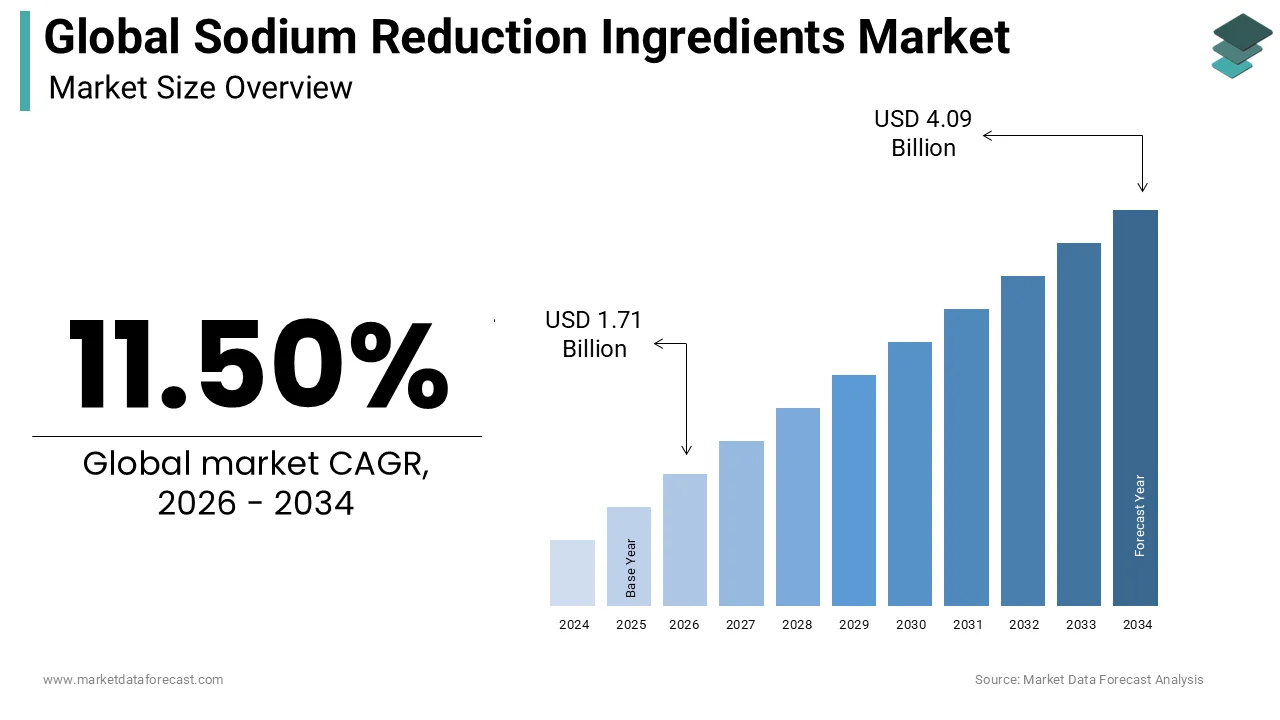
The global sodium reduction ingredients market size was valued at USD 1.53 billion in 2025, stands at USD 1.71 billion in 2026, and is anticipated to reach USD 4.09 billion by 2034, expanding at a compound annual growth rate (CAGR) of 11.5% during the forecast period from 2026 to 2034. Growth is primarily propelled by escalating health awareness regarding cardiovascular diseases caused by excessive sodium intake, strict government interventions, and rising consumption of processed and packaged foods worldwide.
Key Executive Metrics (At-a-Glance)
- 2025 Base Valuation: USD 1.53 Billion
- 2026 Current Valuation: USD 1.71 Billion
- 2034 Forecast Valuation: USD 4.09 Billion
- Forecast Period: 2026–2034
- Compound Annual Growth Rate (CAGR): 11.5%
- Dominant Type Segment: Mineral Salts (40.4% share in 2025)
- Fastest-Growing Type Segment: Yeast Extracts (10.8% CAGR)
- Dominant Application Segment: Sauces, Seasonings & Snacks
- Fastest-Growing Application Segment: Dairy Products
- Leading Regional Markets: North America and Europe
Core Market Drivers
- Health Awareness & Chronic Illnesses: Increasing global consumer awareness surrounding high blood pressure and heart disease linked to excess sodium consumption.
- Regulatory Mandates: Government and WHO initiatives driving food manufacturers to reformulate processed foods and reduce sodium content.
Primary Market Restraints & Challenges
- Flavor Compromise: Consumer resistance due to potential changes in food taste and flavor profiles.
- High Ingredient Costs: Elevated production and sourcing expenses impacting supplier profit margins and retail pricing.
Global Sodium Reduction Ingredients Market Segmentation Breakdown
| Segment Category | Leading / Dominant Sub-Segment | Fastest-Growing / Key Highlight |
|---|---|---|
| By Type | Mineral Salts (40.4% share in 2025) | Yeast Extracts (10.8% CAGR) |
| By Application | Sauces, Seasonings & Snacks | Dairy Products (Cheese & Yogurt) |
| By Region | North America & Europe | Asia-Pacific (Driven by China & India) |
Major Industry Players Profiled
Key market leaders shaping the global landscape include Cargill, Incorporated, Kerry Group Plc, Royal DSM N.V., Angel Yeast Co. Ltd., E.I. du Pont de Nemours & Co., Cambrian Solutions Inc., Associated British Foods plc, Givaudan SA, Innophos Holdings, Inc., Jungbunzlauer Suisse A.G., Sensient Technologies Corporation, and Tate & Lyle PLC.
Global Sodium Reduction Ingredients Market Size
The size of the global sodium reduction ingredients market was expected to be worth USD 1.53 billion in 2025 and is anticipated to be worth USD 4.09 billion by 2034 from USD 1.71 billion in 2026, growing at a CAGR of 11.5% during the forecast period. Growth in the food industry, especially in the packaging and processed food sector, increases sodium consumption among consumers.
Sodium is widely used as an essential nutrient for the proper functioning of the human body. Intake of sodium is necessary for the regular operation of the human body. However, excessive sodium intake causes high blood pressure and cardiovascular disease. In order to limit excess sodium content in the body, several sodium reduction ingredients are added to foods. According to the World Health Organization (WHO), foods high in sodium are known to cause severe health disorders. The average intake of 1500mg to 2300mg per day of sodium is considered acceptable. However, several studies have found that Americans and Canadians consume approximately 3,400 mg of sodium per day and are one of the leading causes of many chronic illnesses experienced by people living in this area.
Therefore, to reduce overall sodium intake, many companies are introducing some products that tend to act as sodium-reducing ingredients. Some of the sodium-reducing components include mineral salts, amino acids, and yeast extracts. It also contains trehalose, hydrolyzed plant proteins, and nucleotides. Sodium reducing ingredients are becoming more common in meat products, dairy products, bakeries, sweets, sauces, snacks, and condiments. Therefore, the sodium reducing component is an integral part of the food additive industry, either completely replacing sodium or reducing salt in food.
Market growth is accelerating as the health-sensitive population increases. Government intervention to reduce the sodium content in foods available to consumers is affecting the growth of the Sodium Reduction Ingredients market.
MARKET DRIVERS
Increased awareness of the health effects of excessive sodium consumption is supposed to remain a key driver of growth in the global sodium reduction ingredients market.
Excessive sodium intake has been found to cause chronic heart disease. As mentioned above, sodium reducing ingredients are prominent in functional foods and related products. This trend is assumed to have a positive impact on the growth of the global market during the forecast period. Global market growth is expected to accelerate further as demand for processed foods increases, especially in the Asia Pacific and Latin America markets. Sodium reducing ingredients are widely used as substitutes for salt in food production. The increase in applications for confectionery, bakery products, frozen foods and dairy products is presumed to complement the growth of the global market further.
The primary sodium reducing ingredients on the market include mineral salts, yeast extract, and amino acids. Inorganic salt is the most consumed sodium reducing component due to its prepared solubility and low cost compared to other products. Other ingredients that are supposed to show significant growth during the outlook period include trehalose, nucleotides, and hydrolyzed plant proteins. These products are becoming important as masking agents that remove bitterness and post-metallic taste from foods. Sodium reducing ingredients are prominent in food flavors and formulations like condiments and sauces. Accordingly, demand is expected to strengthen further. Increasing R&D to develop better materials is suspected of giving market participants a competitive advantage.
The sodium-reducing ingredient market is assumed to grow significantly over the anticipated period as awareness of the challenges caused by lifestyle changes and increased preference for processed foods increases. They are widely used in confectionery, dairy, frozen foods, and bakery products. They are divided into sauces, meat products, bakeries, confectionery, dairy products and condiments according to their use. To increase public awareness of the destructive effects of excess sodium, increasing penetration rates as a vital component of the food additive industry, as well as private companies and government intervention, will drive market growth.
MARKET RESTRAINTS
However, limited consumer commitment to food flavor is expected to hamper the overall growth of the sodium reduction ingredient market.
The high cost of these ingredients can hinder the market growth. Furthermore, problems related to distribution channels, fierce competition, price problems, and changing consumer preferences will continue to press suppliers' profit margins.
REPORT COVERAGE
| REPORT METRIC | DETAILS |
| Market Size Available | 2025 to 2034 |
| Base Year | 2025 |
| Forecast Period | 2026 to 2034 |
| CAGR | 11.5% |
| Segments Covered | By Type, Application, and Region |
| Various Analyses Covered | Global, Regional & Country Level Analysis; Segment-Level Analysis, DROC, PESTLE Analysis, Porter’s Five Forces Analysis, Competitive Landscape, Analyst Overview of Investment Opportunities |
| Regions Covered | North America, Europe, APAC, Latin America, Middle East & Africa |
| Market Leaders Profiled | Cargill, Incorporated, Kerry Group Plc, Royal DSM N.V, Angel Yeast Co. Ltd, E.I. du Pont de Nemours & Co, Cambrian Solutions Inc, Associated British Foods plc, Givaudan SA, Innophos Holdings, Inc, Jungbunzlauer Suisse A.G., Sensient Technologies Corporation, Tate & Lyle PLC |
SEGMENTAL ANALYSIS
By Type Insights
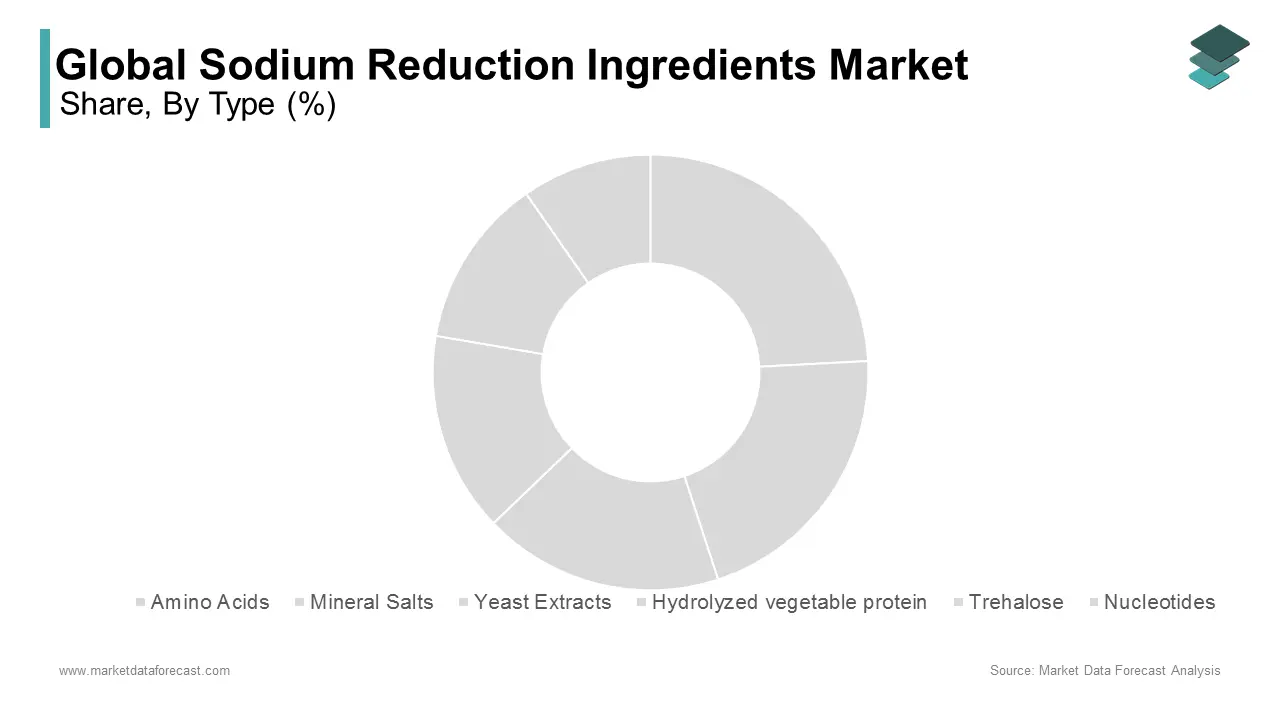
The mineral salts segment dominated the sodium reduction ingredients market by occupying 40.4% of the global market share in 2025 due to its cost-effectiveness and ability to directly replace sodium chloride while maintaining taste and functionality. The WHO recommends reducing sodium intake to <2g/day to combat hypertension, which affects 1.28 billion adults globally (WHO, 2023). Potassium chloride also addresses potassium deficiency, a concern for 98% of Americans (CDC, 2021), making it a dual-purpose solution.
The yeast extracts segment is on the rise and is projected to grow at a CAGR of 10.8% during the forecast period owing to the increasing demand for clean-label, natural flavor enhancers in processed foods. Their ability to provide umami flavor without added sodium aligns with consumer preferences for healthier, natural ingredients, making them essential in soups, snacks, and ready-to-eat meals.
By Application Insights
The Sauces & Seasonings and Snacks segment were major segments in the global market and together accounted for the largest share of the global sodium reduction ingredients (SRI) market in 2025 due to the high sodium content typically found in these products. With a growing global preference for healthier, low-sodium alternatives, manufacturers in this sector are adopting sodium reduction ingredients to cater to consumer demand. The need for preserving flavor while lowering sodium levels drives the market in this segment, making it crucial for both health-conscious consumers and food producers.
The dairy segment is predicted to be the fastest growing segment in the global SRI market during the forecast period owing to the increasing consumer awareness about the health risks of excessive sodium. Dairy products, such as cheese and yogurt, often contain high sodium levels, which has prompted a surge in demand for sodium reduction solutions. This segment’s growth is fueled by the shift towards healthier dietary habits, with sodium reduction ingredients playing a key role in meeting both regulatory standards and consumer preferences. The dairy market’s expansion reflects broader trends in health and wellness.
REGIONAL ANALYSIS
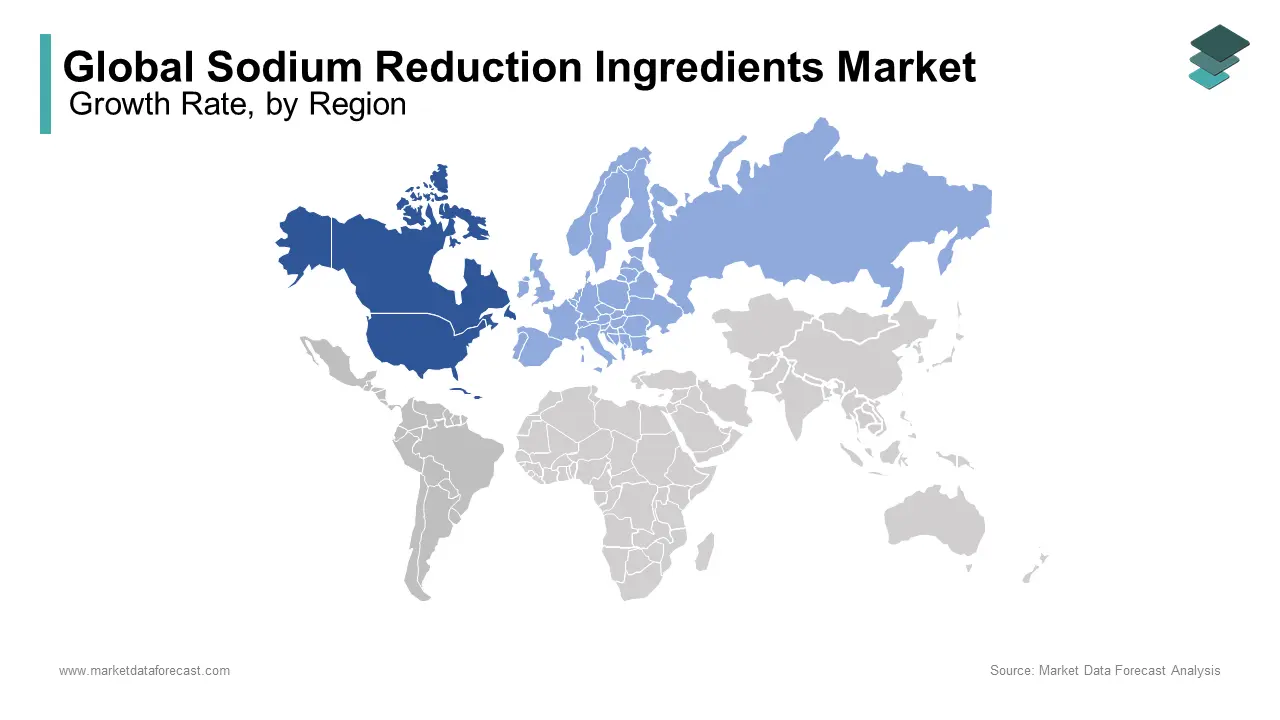
North America and Europe are the leading local markets and are foreseen to grow due to high consumer awareness of salt substitutes. North America occupies an integral part of the sodium reducing ingredients market due to the presence of various fast food and other food processing industries in the region. In addition, government initiatives to increase consumer awareness of the benefits of sodium-reducing ingredients are expected to strengthen the entire market in the area.
Europe is the second-largest market because there are health-conscious people in the region. The high demand for processed foods in the United States and the United Kingdom is anticipated to complement the growth of each regional market further. The Asia-Pacific region is expected to post significant growth during the forecast period due to increased demand for processed foods in China and India. The need for sodium reducing ingredients has increased, mainly as the diagnosis of heart disease in India increases. This trend is likely further to strengthen regional market growth during the projection period. In the coming years, demand in other parts of the world is suspected of showing slow growth.
KEY PLAYERS IN THE GLOBAL SODIUM REDUCTION INGREDIENTS MARKET
Major Key Players in the global sodium reduction ingredients market are Cargill, Incorporated, Kerry Group Plc, Royal DSM N.V, Angel Yeast Co. Ltd, E.I. du Pont de Nemours & Co, Cambrian Solutions Inc, Associated British Foods plc, Givaudan SA, Innophos Holdings, Inc, Jungbunzlauer Suisse A.G., Sensient Technologies Corporation, Tate & Lyle PLC
RECENT HAPPENINGS IN THE MARKET
- Nestlé SA has announced a partnership with life science company Chromocell Corp. Through this collaboration, the company will use Chromocell's patented Chromovert technology to discover sodium-reducing ingredients that provide a salt-like flavor even with low content of sodium.
- The Argentine government has established a voluntary initiative for less salt, more life. This initiative involves optional contracts with major food manufacturing companies to gradually reduce the salt content in processed foods.
- Food and Beverage Ingredient Resolve Startup Company has launched a new MSE brand using salt reducing ingredient technology. The company discovers new ingredient technologies and manufactures custom ingredient blends.
DETAILED SEGMENTATION OF THE GLOBAL SODIUM REDUCTION INGREDIENTS MARKET INCLUDED IN THIS REPORT
This research report on the global sodium reduction ingredients market has been segmented and sub-segmented based on type, application, and region.
By Type
- Amino Acids
- Mineral Salts
- Yeast Extracts
- Hydrolyzed vegetable protein
- Trehalose
- Nucleotides
By Application
- Dairy
- Bakery & Confectionary
- Meat Products
- Sauces
- Seasonings & Snacks
- Others
By Region
- North America
- Europe
- The Asia Pacific
- Latin America
- The Middle East and Africa