- Product Description Description
- Table of Contents TOC
- List of Table & Figure LOT
- Get Free Sample PDF Sample PDF
Market Size, 2025
$2.5 BnMarket Estimate, 2026
$2.62 BnMarket Forecast, 2034
$3.84 BnCAGR, 2026–2034
4.88%Executive Summary: Global Southern Blotting Market
- Market Scope: Comprehensive global market assessment of the Southern blotting sector, tracking essential reagent consumables, hybridization and electrophoresis instruments, scientific and medical diagnostic applications, and regional market adoption.
- Market Valuation: Valued at USD 2.50 billion in 2025, estimated at USD 2.62 billion in 2026, and projected to reach USD 3.84 billion by 2034, registering a steady CAGR of 4.88% from 2026 to 2034.
- Primary Growth Drivers: Strict regulatory mandates for gene therapy vector integration and biologic characterization, rising prevalence of genetic disorders requiring confirmatory diagnostics, and the ongoing demand for high-specificity structural DNA analysis.
Key Market Segment Metrics (2026–2034)
| Category | Leading Segment Position | Fastest-Growing / Key Growth Segment |
|---|---|---|
| By Product | Consumables (dominant share in 2025 due to recurring requirements for restriction enzymes, labeled probes, and membranes) | Instruments (projected at the fastest CAGR of 6.2% driven by laboratory automation, digital imaging, and workflow efficiency) |
| By Application | Scientific Research (held the majority share in 2025, anchored by genomic mapping, gene function studies, and transgenic verification) | Medical Diagnosis (anticipated at the fastest CAGR of 5.8% fueled by rising genetic disorders and gene therapy monitoring) |
| By Region | North America (dominated the global market with a 35.2% share in 2025 via advanced infrastructure and heavy NIH funding) | Asia Pacific (promising regional player scaling rapidly through biotechnology investments across China, Japan, and India) |
Major Market Players & Market Structure
Market Structure: Established global market landscape driven by major analytical instrumentation providers and life sciences reagent manufacturers focusing on digital workflow integration and regulatory compliance.
Key Companies: Agilent Technologies, Thermo Fisher Scientific, Applied Biosystems, Aplegan, Bio-Rad Laboratories, PerkinElmer Inc., Cleaver Scientific Ltd, and Pall Life Science Laboratories.
 Download Free Sample Report
Global Southern Blotting Market Size
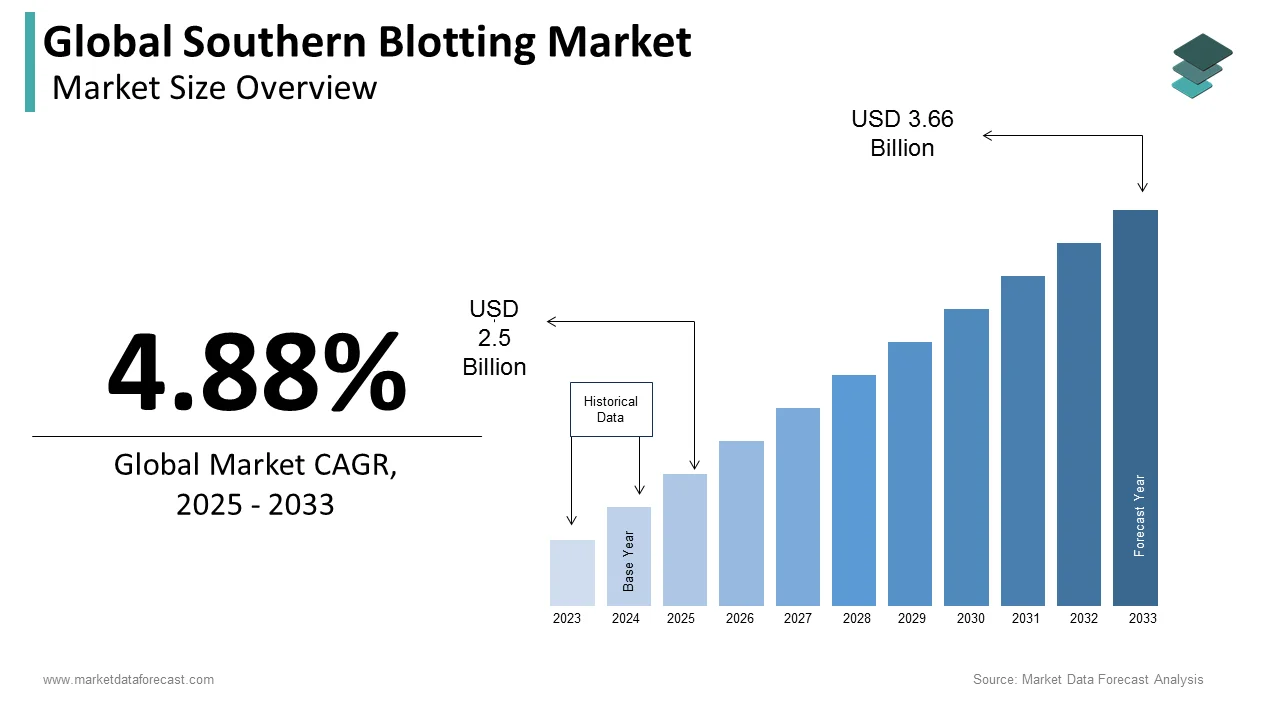
The global southern blotting market was valued at USD 2.5 billion in 2025. The global market is estimated to grow at a CAGR of 4.88% from 2026 to 2034 and be worth USD 3.84 billion by 2034 from USD 2.62 billion in 2026.
Southern blotting is a molecular biology laboratory technique used to detect, identify, and quantify a specific DNA sequence within a complex mixture of DNA fragments. This technique, originally developed by Edwin Southern in 1975, remains a gold standard for verifying gene integration, analyzing gene rearrangements, and diagnosing genetic disorders despite the emergence of newer molecular methods. The market includes reagents such as restriction enzymes, labeled probes, membranes, and detection kits, as well as instrumentation for electrophoresis and hybridization. According to the National Institutes of Health, the National Human Genome Research Institute actively manages a $600 million annual budget to fund genomic research grants investigating human genetic variations and complex disease architectures. As per the World Health Organization, public health testing facilities are shifting diagnostics away from manual blotting toward automated digital platforms to handle active clinical sequencing data for infectious vector control. Furthermore, according to the United States Food and Drug Administration, manufacturers of gene therapies are actively executing quantitative polymerase chain reaction and next-generation sequencing assays to verify vector copy number profiles in cellular products. As per the Centers for Disease Control and Prevention, the National SARS-CoV-2 Strain Surveillance program relies on high-throughput next-generation sequencing technologies to track pathogen variant mutations and outbreak evolution. The increasing prevalence of chronic diseases linked to genetic factors drives the need for reliable diagnostic tools. Academic institutions and pharmaceutical companies continue to utilize Southern blotting for its high specificity and ability to provide quantitative data on DNA structure. These scientific and regulatory necessities ensure that the market remains integral to molecular biology laboratories worldwide, supporting advancements in personalized medicine and biotechnology.
MARKET DRIVERS
Regulatory Mandates For Gene Therapy And Biologic Characterization
Regulatory mandates for gene therapy and biologic characterization fuel the sustained demand in the Southern blotting market. As the field of gene therapy expands, regulatory agencies such as the United States Food and Drug Administration and the European Medicines Agency require comprehensive data on the integration site, copy number, and structural integrity of viral vectors used in therapeutic applications. According to the Alliance for Regenerative Medicine, global investment in the cell and gene therapy sector reached a record total of $23.1 billion to support advanced therapeutic engineering and multi-phase clinical validation. Southern blotting is often mandated as the confirmatory assay to detect unintended insertions or rearrangements that next-generation sequencing might miss due to bioinformatic limitations. The International Council for Harmonisation of Technical Requirements for Pharmaceuticals for Human Use provides guidelines that emphasize the need for orthogonal methods to validate genetic modifications, reinforcing the role of Southern blotting in quality control. Pharmaceutical companies must demonstrate the stability of genetically modified cell lines used in biologics production, a process that relies heavily on this technique. The stringent requirements for biosimilars also drive the need for detailed structural analysis of host cell DNA. These regulatory frameworks create a non-negotiable demand for high-quality reagents and standardized protocols, ensuring that Southern blotting remains an essential component of the regulatory submission package for advanced therapies.
Increasing Prevalence of Genetic Disorders and Need For Accurate Diagnosis
The increasing prevalence of genetic disorders and the consequent need for accurate diagnosis further contribute to the growth of the Southern blotting market. This drives significant adoption of Southern blotting in clinical and research laboratories. Genetic conditions such as Huntington’s disease, Fragile X syndrome, and various forms of muscular dystrophy require precise detection of repeat expansions and large deletions that are difficult to identify using polymerase chain reaction-based methods alone. As per the World Health Organization, there are currently over 7,000 known rare diseases impacting more than 300 million people globally, with 70% of these genetic rare conditions starting in childhood. As per the Centers for Disease Control and Prevention, the Newborn Screening Quality Assurance Program continuously distributes blind quality control samples to over 600 domestic and international laboratories to minimize analytical variability. Southern blotting offers superior resolution for detecting large structural variants and methylation patterns, which are critical for diagnosing imprinting disorders. Academic medical centers and reference laboratories rely on this technique for its high specificity and low false positive rate, which is crucial for making life-altering diagnostic decisions. The growing awareness of genetic health among patients and healthcare providers leads to increased testing volumes. Furthermore, the integration of Southern blotting into diagnostic algorithms for complex genetic cases ensures its continued relevance. As genetic counseling becomes more widespread, the demand for reliable and validated diagnostic tools grows. This trend supports the market for Southern blotting reagents and services.
MARKET RESTRAINTS
Emergence Of Advanced Molecular Techniques Such As PCR And NGS
The emergence of advanced molecular techniques, such as polymerase chain reaction and next-generation sequencing, is a significant restraint on the expansion of the Southern blotting market. These newer technologies offer faster turnaround times, higher throughput, and greater sensitivity, allowing for the analysis of multiple genes simultaneously without the labor-intensive steps required for Southern blotting. As per the National Human Genome Research Institute, the baseline cost associated with sequencing a human genome plummeted from roughly $95 million in 2001 down to approximately $500 per genome due to the introduction of next-generation technologies. Polymerase chain reaction-based assays can detect specific DNA sequences in hours rather than days, reducing the operational burden on laboratories. Next-generation sequencing provides detailed information on sequence variations and mutations that Southern blotting cannot resolve, offering a more complete picture of the genomic landscape. The ease of automation and digital data analysis associated with these modern techniques makes them more attractive to high-volume diagnostic labs and research facilities. Many laboratories are transitioning away from manual blotting procedures to streamline workflows and reduce hands-on time. The perception of Southern blotting as outdated and cumbersome further limits its adoption in new applications. While it remains a gold standard for certain validations, the broader shift towards rapid and high-throughput technologies restricts the expansion of the Southern blotting market to niche applications where its unique capabilities are indispensable.
Labor-Intensive Nature and Long Turnaround Times Limit Efficiency
The labor-intensive nature and long turnaround times of Southern blotting are also a formidable limitation to its efficiency and widespread adoption in modern laboratory settings, which hinders the expansion of the global market. The procedure involves multiple complex steps including DNA digestion, gel electrophoresis, denaturation, transfer to membranes, hybridization with labeled probes, and detection, which can take several days to complete. According to the Association for Biomolecular Resource Facilities, academic and commercial core laboratories are actively implementing automated liquid handling instrumentation to systematically eliminate manual operator variability in high-throughput genomic extraction workflows. The use of radioactive isotopes for probe labeling, although highly sensitive, poses safety hazards and requires specialized disposal protocols, adding to the operational complexity and cost. Non-radioactive alternatives exist but may lack the same level of sensitivity or require longer exposure times. The lengthy process delays decision-making in clinical diagnostics and slows down research progress, prompting laboratories to seek faster alternatives. High-throughput environments find it difficult to integrate Southern blotting into their workflows due to its bottleneck effect on sample processing. The need for large amounts of high-quality DNA also limits its applicability in cases where sample material is scarce. These operational inefficiencies make Southern blotting less attractive compared to automated and rapid molecular methods, restraining its market growth in sectors prioritizing speed and scalability.
MARKET OPPORTUNITIES
Integration With Digital Imaging and Automated Analysis Systems
The integration with digital imaging and automated analysis systems provides a clear path for innovation and growth in the Southern blotting market. Traditional film-based detection is being replaced by chemiluminescent and fluorescent detection methods coupled with high-resolution digital imagers, which offer quantitative data and improved reproducibility. According to the American Society for Biochemistry and Molecular Biology, academic journals are enforcing mandatory raw data deposition policies into community-endorsed public repositories as a prerequisite for processing structural and molecular manuscripts. Automated blotting processors are now available that handle hybridization and washing steps with minimal human intervention, reducing variability and improving throughput. These systems allow for multiplexing, where multiple probes can be detected on the same membrane, enhancing the informational yield of each experiment. Software advancements enable sophisticated image analysis algorithms that accurately quantify band intensity and size, reducing subjective interpretation errors. The integration of laboratory information management systems with digital imagers facilitates seamless data tracking and compliance with regulatory requirements. Manufacturers who develop user-friendly automated platforms and advanced analysis software can differentiate their offerings and appeal to laboratories seeking to modernize their workflows. This technological evolution transforms Southern blotting from a purely manual technique into a more efficient and data-rich process, opening new avenues for application in high-precision research and diagnostics.
Expansion In Forensic Science and Paternity Testing Applications
The expansion in forensic science and paternity testing applications offers significant opportunities for the Southern blotting market. This is due to its high specificity and reliability in analyzing complex DNA profiles. While short tandem repeat analysis via polymerase chain reaction is common, Southern blotting remains valuable for analyzing variable number tandem repeats and other structural markers that provide additional discriminatory power in challenging cases. As per the Federal Bureau of Investigation, forensic biology laboratories are actively deploying multiplex capillary electrophoresis systems and next-generation sequencing to isolate short tandem repeat loci from degraded skeletal evidence. The technique is particularly useful in kinship analysis involving distant relatives or complex family structures where standard markers may be inconclusive. As per the International Society for Forensic Genetics, the DNA Commission publishes binding sequence-based nomenclature guidelines to standardize global short tandem repeat alleles across multi-jurisdictional offender profile databases. Paternity testing laboratories utilize Southern blotting for resolving ambiguous results and verifying rare genetic variants. The increasing legal recognition of genetic evidence and the growing demand for accurate familial relationship verification drive the need for reliable and defensible testing methods. As forensic databases expand and legal standards evolve, the role of Southern blotting in providing definitive structural DNA analysis is growing. This creates a niche but stable market opportunity for specialized reagents and services tailored to forensic applications.
MARKET CHALLENGES
Safety Concerns Associated With Radioactive Labeling Materials
Safety concerns associated with radioactive labeling materials are a significant challenge to the Southern blotting market. This constrains the widespread use of Southern blotting in many laboratory environments. Historically, radioactive isotopes such as phosphorus 32 have been the preferred labels for probes due to their high sensitivity and signal-to-noise ratio. However, the handling, storage, and disposal of radioactive materials require strict adherence to safety regulations and specialized infrastructure, which many laboratories lack. As per the Nuclear Regulatory Commission, the agency finalized a comprehensive annual fee rule overhaul requiring licensed entities to cover approximately 100 percent of its operating budget through statutory applicant service charges. The potential health risks to laboratory personnel from radiation exposure necessitate extensive training and protective measures, which can deter new users from adopting the technique. Many institutions are moving towards banning radioactive materials entirely to simplify safety compliance and reduce liability. While non-radioactive alternatives such as biotin and digoxigenin-labeled probes are available, they often suffer from lower sensitivity or higher background noise, requiring optimization that can be time-consuming. The transition away from radioactivity forces laboratories to invest in new detection systems and revalidate their protocols, creating a barrier to entry. The lingering preference for radioactive labels among experienced researchers conflicts with institutional safety policies, creating a dichotomy that hinders standardization and broad adoption of the technique in modern regulated environments.
High Cost of Specialized Reagents and Equipment Maintenance
The high cost of specialized reagents and equipment maintenance is a persistent obstruction to affordability and accessibility in the Southern blotting market. This trend is particularly true for smaller laboratories and resource-limited settings. The technique requires high-purity restriction enzymes, specific labeled probes, high-quality membranes, and sensitive detection kits, all of which contribute to high per-sample costs. According to the National Science Foundation, major public research institutions are executing resource-sharing agreements to pool high-end laboratory instrumentation access amid shifting federal infrastructure cost-sharing requirements. The maintenance of electrophoresis units, hybridization ovens, and digital imaging systems adds to the total cost of ownership, requiring regular calibration and service contracts. The need for large quantities of high molecular weight DNA also increases the cost of sample preparation. Compared to polymerase chain reaction-based methods, which use inexpensive synthetic primers, Southern blotting reagents are often proprietary and costly. The economic pressure to reduce experimental costs drives many laboratories to adopt cheaper high-throughput technologies, marginalizing Southern blotting to only essential applications. Small diagnostic labs in developing regions may find the initial investment and recurring costs prohibitive, limiting global market penetration. Manufacturers face the challenge of balancing quality with affordability to make the technique more accessible without compromising the reliability that defines its value proposition.
REPORT COVERAGE
| REPORT METRIC | DETAILS |
| Market Size Available | 2025 to 2034 |
| Base Year | 2025 |
| Forecast Period | 2026 to 2034 |
| Segments Covered | |
| Various Analyses Covered | Global, Regional and Country-Level Analysis, Segment-Level Analysis, Drivers, Restraints, Opportunities, Challenges; PESTLE Analysis; Porter’s Five Forces Analysis, Competitive Landscape, Analyst Overview of Investment Opportunities |
| Regions Covered | North America, Europe, Asia Pacific, Latin America, Middle East & Africa |
| Market Leaders Profiled | Agilent Technologies, ThermoFisher Scientific, Applied Biosystems, Aplegan, BioRad Laboratories, Perkin Elmer Inc., Cleaver Scientific Ltd, and Pall Life Science Laboratories. |
SEGMENTAL ANALYSIS
By Product Insights
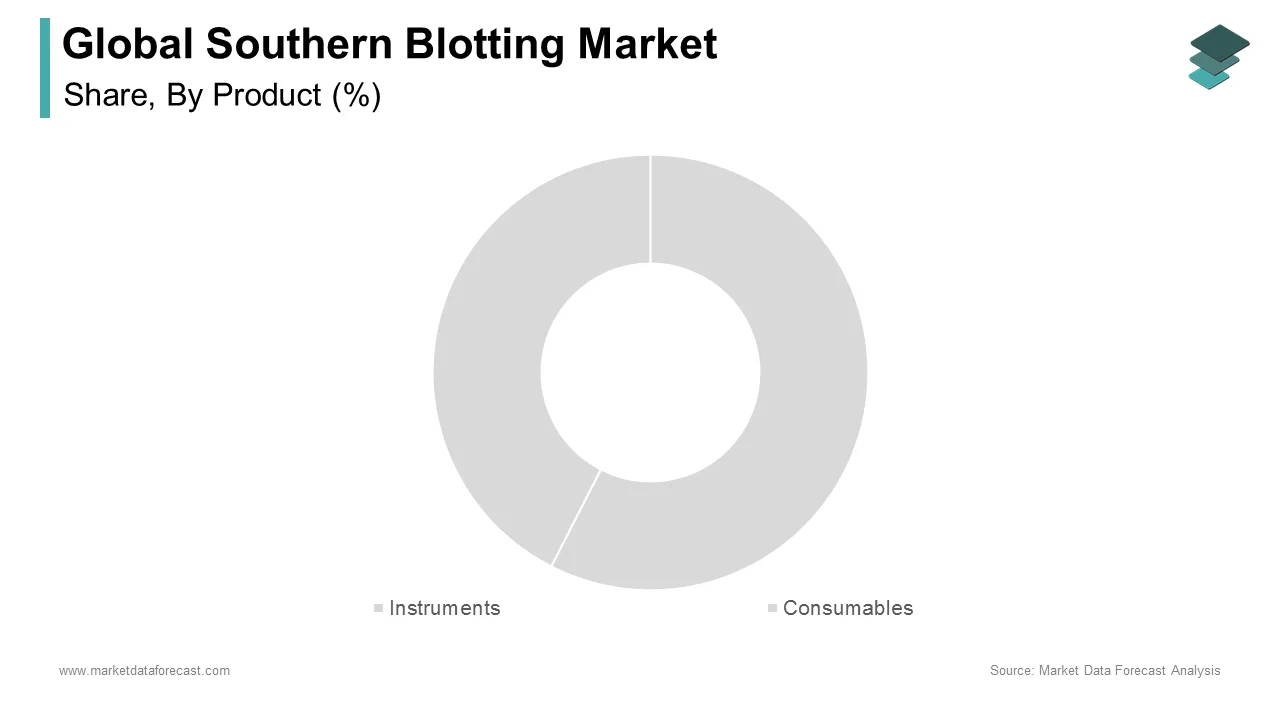
The consumables segment dominated the Southern blotting market and accounted for a substantial share in 2025. This dominance of the segment was driven by the recurring and high-volume demand for essential reagents such as restriction enzymes, labeled probes, membranes, and detection kits. Unlike instruments, which are capital expenditures purchased infrequently, consumables are required for every single experiment, creating a steady and predictable revenue stream for manufacturers. According to the National Institutes of Health, the federal agency administers an annual extramural research budget exceeding $38 billion to finance comprehensive genomic sequencing and biomedical projects across university laboratories. The complexity of Southern blotting necessitates specific high-purity materials, such as nylon or nitrocellulose membranes with optimal binding capacities, which must be replaced regularly. Additionally, the shift towards non-radioactive detection methods has increased the consumption of chemiluminescent substrates and enzyme conjugates, which have shorter shelf lives and require frequent replenishment. The global expansion of genomic research facilities further amplifies this demand, as new labs stock up on essential buffers and hybridization solutions. This continuous cycle of usage ensures that the consumables segment remains the largest contributor to market revenue, supported by the indispensable nature of these materials in daily laboratory operations.
This segment stays dominant due to the high turnover rate and standardized inventory management practices adopted by research and clinical laboratories. Southern blotting involves multiple steps including DNA digestion, electrophoresis, and transfer, each requiring specific chemical agents that degrade or get depleted after use. According to the Association for Biomolecular Resource Facilities, shared resource core laboratories are actively transitioning to institutional electronic billing networks to manage multi-user reagent procurement recharge cycles. The sensitivity of labeled probes means they often have limited stability once prepared, necessitating regular purchases of fresh stocks to maintain signal intensity. Furthermore, the increasing adoption of automated blotting systems requires compatible proprietary consumables, locking users into specific supplier ecosystems and ensuring repeat business. The rise in outsourcing of molecular testing to contract research organizations also drives bulk purchasing of consumables, as these entities handle high sample volumes. Educational institutions and training centers contribute to this volume by using large quantities of reagents for student practicals. The economic model of selling instruments at competitive prices while generating profit through consumables is well established in the life sciences industry. This strategic approach ensures that manufacturers prioritize the development and distribution of high-quality consumables, sustaining their market leadership through reliable performance and customer loyalty.
The instruments segment is estimated to register the fastest CAGR of 6.2% during the forecast period, due to the increasing adoption of automated blotting systems that enhance efficiency and reduce human error. Traditional manual Southern blotting is labor-intensive and prone to variability, prompting laboratories to invest in automated processors that standardize hybridization and washing steps. Automated instruments offer precise temperature control and uniform agitation, which are critical for consistent probe binding and background reduction. The integration of these systems into high-throughput laboratories allows for the processing of multiple samples simultaneously, significantly reducing turnaround times. According to the National Science Foundation, the agency is investing $100 million into its new national network of AI-programmable cloud laboratories to modernize remote biotechnological instrumentation infrastructure. These systems also minimize exposure to hazardous chemicals, addressing safety concerns associated with traditional methods. As laboratories seek to optimize operational efficiency and comply with good laboratory practice standards, the investment in sophisticated blotting instruments continues to rise, driving rapid growth in this segment.
The rapid growth of the instruments segment is also accelerated by the integration of advanced digital imaging and data analysis technologies that improve data quality and regulatory compliance. Modern Southern blotting instruments are increasingly equipped with high-resolution digital cameras and software capable of quantitative band analysis, replacing outdated film-based detection methods. As per the International Council for Harmonisation of Technical Requirements for Pharmaceuticals for Human Use, the electronic Common Technical Document specification mandates electronic drug applications to guarantee standardized clinical auditing workflows. These integrated instruments provide immediate visual feedback and automated quantification, reducing subjective interpretation errors and enhancing data integrity. The ability to store and retrieve digital images facilitates collaboration and long-term data management, which is essential for longitudinal studies and clinical trials. Manufacturers are developing user-friendly interfaces that simplify complex protocols, making the technology accessible to a broader range of users. As per the European Medicines Agency, human medicine developers are implementing validated electronic data capture tools to secure complete trace documentation for advanced therapy biological cell lines. This technological convergence transforms Southern blotting into a more robust and data-rich technique, attracting investments from laboratories seeking to modernize their molecular biology capabilities and meet evolving regulatory expectations.
By Application Insights
In 2025, the scientific research segment held the majority share in the Southern blotting market because of its extensive use in genomic mapping, gene function studies, and transgenic organism verification. Researchers rely on Southern blotting to confirm the presence and orientation of inserted genes in genetically modified organisms, a critical step in basic and applied biological research. According to the National Human Genome Research Institute, the federal agency maintains an active portfolio of advanced animal models and distributes research grants to discover novel candidate cis-regulatory sequences within mammalian genomes. The ability of Southern blotting to detect large structural variations and copy number changes makes it indispensable for characterizing complex genetic modifications that other methods may miss. Academic institutions and government-funded research centers constitute a large portion of the user base, conducting fundamental studies on gene regulation and expression. The technique’s high specificity ensures reliable results in peer-reviewed publications, maintaining its status as a gold standard in scientific inquiry. The continuous influx of new researchers and the expansion of genomic databases drive sustained demand for Southern blotting reagents and services in the research sector.
The supremacy of the scientific research segment is further sustained by the foundational role of Southern blotting in the development of transgenic animals and plants for agricultural and biomedical applications. Before genetically modified crops or animal models can be advanced to field trials or clinical studies, their genetic integrity must be verified to ensure stable integration of trait genes. According to the United States Department of Agriculture, agricultural developers are submitting detailed environmental and field trial documentation under the Animal and Plant Health Inspection Service to clear biotechnology crop permits. Research laboratories working on crop improvement use this technique to confirm the absence of unintended rearrangements that could affect plant performance or safety. Similarly, in biomedical research, transgenic mice and other model organisms are validated using Southern blotting to ensure accurate genotype representation. As per the International Service for the Acquisition of Agri-biotech Applications, the organization manages an online GM Approval Database compiling official national notifications to track global commercial trade approvals for biotechnology traits. This requirement ensures that Southern blotting remains a critical tool in the early stages of product development. The ongoing innovation in genetic engineering techniques continues to generate new research questions that require the precise analytical capabilities of Southern blotting, securing its position in the scientific community.
The medical diagnosis segment is anticipated to witness the fastest CAGR of 5.8% from 2026 to 2034 owing to the rising incidence of genetic disorders and the need for confirmatory testing in clinical settings. While screening tests often use faster methods, Southern blotting remains the definitive assay for diagnosing conditions involving large repeat expansions or complex rearrangements, such as Fragile X syndrome and certain types of muscular dystrophy. According to the Centers for Disease Control and Prevention, inherited genetic disease tracking programs emphasize universal family health histories to identify at-risk populations and execute early preventive clinical screenings. Clinical laboratories utilize Southern blotting to resolve ambiguous results from polymerase chain reaction-based screens, ensuring high diagnostic accuracy. As awareness of genetic health increases, more patients seek testing for hereditary conditions, expanding the patient pool for diagnostic laboratories. The integration of Southern blotting into diagnostic algorithms for complex cases ensures its continued relevance. This clinical necessity drives steady growth in the demand for standardized diagnostic kits and validated protocols tailored for medical use.
The swift expansion of the medical diagnosis segment is also supported by regulatory requirements for monitoring gene therapy patients and assessing vector integration safety. As gene therapies become more common, clinicians must monitor patients for potential adverse events related to vector integration, such as insertional mutagenesis. According to the United States Food and Drug Administration, human gene therapy regulations mandate strict viral shedding risk assessments and structural sequencing metrics to analyze long-term vector stability in recipient cell matrices. Southern blotting provides the necessary sensitivity and specificity to identify integration sites and assess clonal expansion, which is critical for patient safety. As per the European Medicines Agency, current regulatory standards for advanced therapy medicinal products mandate rigorous validation of genome editing outcomes, specifically monitoring long-term genomic stability and off-target structural mutations. Diagnostic laboratories are expanding their capabilities to support these regulatory obligations, investing in specialized equipment and trained personnel. The growing pipeline of gene therapy candidates ensures a sustained need for these monitoring services. As more therapies reach the market, the volume of patient samples requiring Southern blotting analysis will increase, driving significant growth in the medical diagnosis application segment.
REGIONAL ANALYSIS
North America Southern Blotting Market Analysis
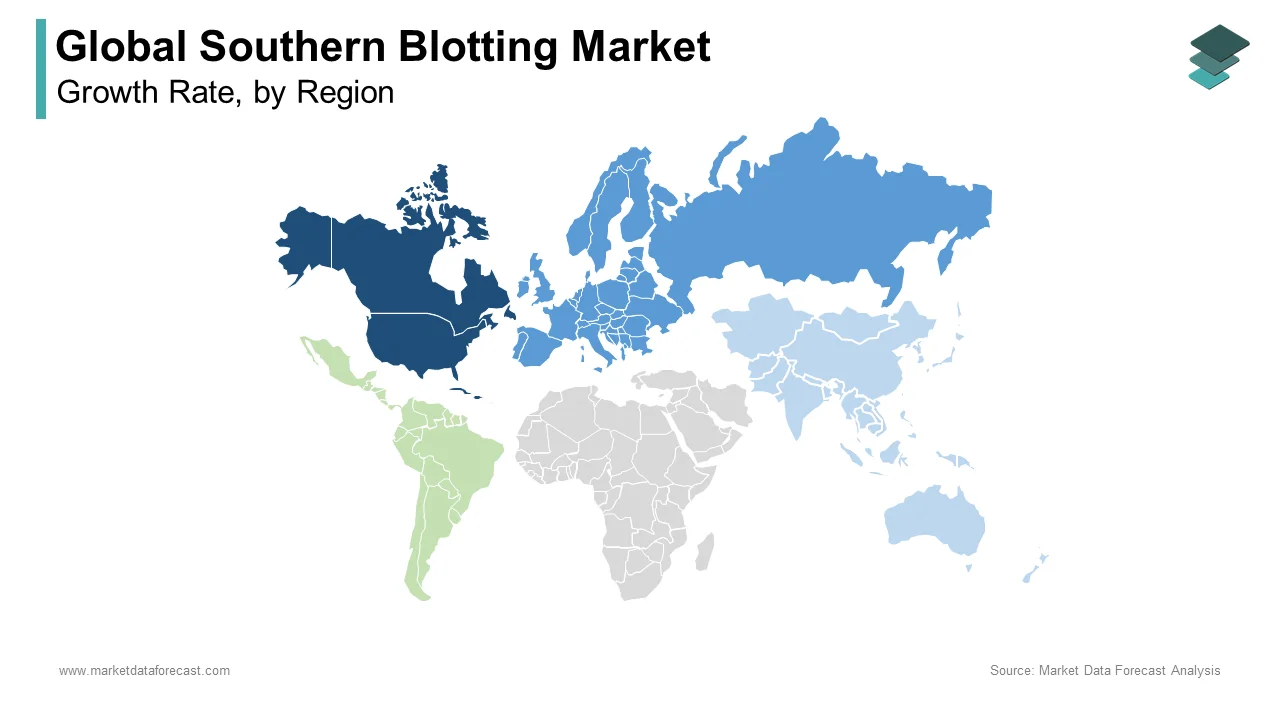
North America dominated the global Southern blotting market and accounted for a 35.2% share in 2025. This dominance of the North American market was driven by advanced healthcare infrastructure, substantial research funding, and stringent regulatory requirements. A high density of premier pharmaceutical firms, university research units, and diagnostic facilities defines the market. According to the National Institutes of Health, the National Human Genome Research Institute distributes over $600 million annually to fund advanced genomic sequencing and molecular mapping research across major academic research facilities. The United States Food and Drug Administration’s rigorous guidelines for gene therapy and biologic approvals mandate the use of robust molecular characterization methods, sustaining demand for high-quality reagents and instruments. The presence of major market players and innovative startups fosters a competitive environment that drives technological advancements. Canada also contributes to the market through its strong public health system and research councils that fund genetic disease studies. The high prevalence of chronic and genetic diseases in the region further stimulates diagnostic testing. The well-established supply chain and availability of skilled professionals ensure efficient market operations. These factors combine to make North America the primary engine of growth and innovation in the Southern blotting market.
Europe Southern Blotting Market Analysis
Europe was positioned second in the global Southern blotting market and held a 28.1% share in 2025. This position of the European market was attributed to robust regulatory frameworks, strong academic research networks, and a focus on personalized medicine. Strict adherence to guidelines from the European Medicines Agency defines the current market status. Such approvals require comprehensive molecular data for all therapies. As per the European Commission, the Horizon Europe research framework allocates €95.5 billion to actively support large-scale biotechnology infrastructure and clinical research consortia evaluating genetic anomalies. Countries such as Germany, the United Kingdom, and France are hubs for pharmaceutical innovation and diagnostic services, creating steady demand for high-quality reagents. The European Union’s General Data Protection Regulation influences data management practices, encouraging the adoption of digital imaging systems integrated with blotting instruments. The region’s aging population increases the prevalence of genetic disorders, boosting diagnostic testing volumes. Strong intellectual property protections encourage investment in new technologies. The harmonization of regulatory standards across member states facilitates cross-border trade and collaboration. These dynamics ensure that Europe remains a key market for Southern blotting products and services.
Asia Pacific Southern Blotting Market Analysis
The Asia Pacific is a promising player in the global Southern blotting market due to rapid industrialization, increasing healthcare expenditure, and growing research capabilities. Countries like China, Japan, and India are investing heavily in biotechnology. Consequently, the market status is evolving from basic research to advanced clinical applications. According to the Chinese Academy of Sciences, major genomic research centers are processing millions of biological samples annually to actively scale up high-throughput whole-genome sequencing capabilities for nationwide oncology and population health initiatives. Japan’s advanced healthcare system drives demand for precise genetic diagnostics, while India’s large population provides a vast base for genetic disease studies. The rising middle class and increasing awareness of genetic health contribute to higher diagnostic testing volumes. Local manufacturing of reagents is expanding, reducing costs and improving accessibility. International collaborations and technology transfers bring advanced blotting techniques to the region. The growing number of clinical trials for gene therapies in Asia Pacific further stimulates demand. While price sensitivity remains a factor, the focus on quality and regulatory compliance is increasing. These trends position Asia Pacific as a high-growth market with significant future potential.
Latin America Southern Blotting Market Analysis
Latin America occupied a noteworthy position in the global Southern blotting market share owing to improving healthcare infrastructure and increasing focus on genetic research. The market status is characterized by gradual adoption of advanced molecular techniques in major economies such as Brazil and Mexico. As per the Pan American Health Organization, regional health ministries are executing laboratory network upgrades to scale up standardized multiplex polymerase chain reaction and enzyme-linked immunosorbent assays for endemic vector-borne disease tracking. Universities and research institutes in the region are expanding their genomic research programs, supported by international funding and collaborations. The prevalence of certain genetic disorders in specific populations drives local diagnostic demand. Economic challenges and currency fluctuations can impact purchasing power, but the essential nature of diagnostic testing ensures steady demand. Government initiatives to promote biotechnology and local production are beginning to take shape. The increasing presence of multinational diagnostic companies improves access to high-quality reagents. As healthcare spending rises and regulatory frameworks mature, the market for Southern blotting products is expected to grow steadily.
Middle East and Africa Southern Blotting Market Analysis
The Middle East and Africa region is likely to grow significantly in the global Southern blotting market during the forecast period. It is an emerging market with significant long-term potential. Local production in this market is quite limited. On the other hand, import demand for specialized research and diagnostic tools continues to grow. According to the World Health Organization, international laboratory assistance frameworks are actively deploying advanced molecular point-of-care diagnostics to decentralize pathogen surveillance and reduce clinical reporting delays across rural medical centers. Countries in the Gulf Cooperation Council are investing in advanced healthcare facilities and genetic research centers to diversify their economies. South Africa serves as a hub for molecular diagnostics in the region, with growing capacity for genetic testing. Awareness of genetic disorders is increasing, leading to higher demand for diagnostic services. International aid and partnerships support the development of laboratory capabilities. While challenges such as limited skilled personnel and infrastructure persist, the focus on improving healthcare outcomes is driving gradual market growth. As economic conditions improve and local expertise develops, the region is poised for increased adoption of Southern blotting technologies.
COMPETITIVE LANDSCAPE
The competition in the Southern blotting market is characterized by the presence of established life science giants and specialized niche providers who compete on product quality and technical support. Large multinational corporations leverage their extensive portfolios and global reach to offer integrated solutions that include reagents, instruments, and software. They benefit from strong brand recognition and established relationships with academic and pharmaceutical customers. Smaller specialized companies compete by offering unique high-performance reagents or customized services that address specific experimental challenges. The market sees continuous innovation in detection technologies as companies strive to replace radioactive methods with safer and more sensitive alternatives. Differentiation is achieved through ease of use, reproducibility, and compliance with regulatory standards. Price competition is moderate as buyers prioritize reliability and data integrity over cost for critical applications. The entry of new digital tools and automation platforms adds another layer of complexity to the competitive landscape. Companies must balance innovation with cost-effectiveness to retain customers in a market that values precision and consistency above all else.
KEY MARKET PLAYERS
The leading companies operating in the global southern blotting market include:
- Agilent Technologies
- Thermo Fisher Scientific Inc.
- Applied Biosystems
- Merck KGaA
- Aplegan
- Bio-Rad Laboratories
- PerkinElmer Inc.
- Cleaver Scientific Ltd
- Pall Life Science Laboratories
TOP PLAYERS IN THE MARKET
- Thermo Fisher Scientific Inc. maintains a dominant position in the global Southern blotting market through its comprehensive portfolio of high-quality reagents and advanced instrumentation. The company provides essential components such as restriction enzymes, labeled probes, and hybridization buffers under trusted brands like Invitrogen and Pierce. Recent actions include the expansion of its manufacturing facilities to ensure a consistent supply of critical molecular biology consumables. Thermo Fisher actively invests in research and development to improve the sensitivity and specificity of detection kits. The company collaborates with academic and pharmaceutical institutions to validate new protocols for gene therapy characterization. By integrating digital imaging solutions with traditional blotting workflows, Thermo Fisher enhances data accuracy and regulatory compliance. Its global distribution network ensures timely delivery of products to laboratories worldwide. These strategic initiatives strengthen its reputation as a reliable partner for complex molecular analyses and sustain its leadership in the life sciences sector.
- Merck KGaA contributes significantly to the Southern blotting market by offering specialized chemicals and biologicals that meet rigorous scientific standards. The company’s MilliporeSigma brand provides high-purity membranes, blocking agents, and detection substrates essential for successful blotting experiments. Recent efforts include the launch of optimized non-radioactive detection systems that address safety concerns while maintaining high sensitivity. Merck has strengthened its digital capabilities by introducing software tools for image analysis and data management. The company actively engages with regulatory bodies to ensure its products comply with evolving guidelines for genetic testing. By focusing on sustainability and waste reduction, Merck appeals to environmentally conscious laboratories. Its commitment to quality control and technical support helps researchers achieve reproducible results. These actions reinforce its position as a key supplier of premium materials for molecular biology applications globally.
- Bio Rad Laboratories Inc. plays a pivotal role in the Southern blotting market by providing innovative instruments and reagents designed for efficiency and precision. The company offers automated blotting processors and high-resolution imaging systems that streamline laboratory workflows. Recent actions include the introduction of new chemiluminescent substrates that offer superior signal-to-noise ratios for low-abundance targets. Bio Rad has expanded its educational resources and technical training programs to support users in optimizing their protocols. The company collaborates with key opinion leaders to develop standardized methods for gene integration analysis. By focusing on user-friendly design and robust performance, Bio Rad addresses the challenges of manual variability. Its strong presence in both research and clinical diagnostics sectors ensures broad market reach. These strategic developments enhance customer loyalty and drive growth in the competitive molecular diagnostics landscape.
TOP STRATEGIES USED BY KEY MARKET PARTICIPANTS
Key players in the Southern blotting market employ several strategic initiatives to maintain competitiveness and drive growth. Product innovation focuses on developing safer non-radioactive detection methods and automated systems to improve efficiency. Strategic partnerships with research institutions facilitate the validation of new protocols and expand application areas. Companies invest in digital integration to enhance data analysis and regulatory compliance capabilities. Expansion of global distribution networks ensures reliable access to critical reagents for laboratories worldwide. Marketing efforts emphasize technical support and educational resources to build customer loyalty. Regulatory alignment is prioritized to meet stringent requirements for gene therapy and diagnostic approvals. These multifaceted strategies enable participants to adapt to changing scientific needs and secure long-term success in the specialized market environment.
MARKET SEGMENTATION
This research report on the global southern blotting market has been segmented and sub-segmented based on the product, end-user, application, and region.
By Product
- Instruments
- Manual
- Automated
- Semi-Automated
- Consumables
- Reagents
- Kits
By End User
- Pharmaceutical and Biotechnology Industry
- Academic Research Institute
- Contract Research Organizations
- Forensic labs
By Application
- Scientific Research
- Medical Diagnosis
- Agricultural Applications
- Genetic Fingerprinting and Sex Determination
By Region
- North America
- Europe
- Asia Pacific
- Latin America
- Middle East and Africa