Global Succinic Acid Market Research Report - Segmentation by Origin (Petro-Based Succinic Acid, Bio-Based Succinic Acid), End-Use Industry (Food & Beverages, Industrial, Pharmaceutical) and Region (Latin America, North America, Asia Pacific, Europe, Middle East and Africa) - Industry Analysis,Size,Share,Growth,Trends, and Forecast-(2026 to 2034)
Market Size, 2025
$204.8 MnMarket Estimate, 2026
$223.4 MnMarket Forecast, 2034
$449.23 MnCAGR, 2026–2034
3.85%Global Succinic Acid Market Report Summary
The global succinic acid market was valued at USD 204.80 million in 2025, is estimated to reach USD 223.48 million in 2026, and is projected to reach USD 449.23 million by 2034, growing at a CAGR of 3.85% during the forecast period. Market growth is driven by increasing demand across industrial applications, rising use in biodegradable plastics, and expanding adoption in food, pharmaceuticals, and personal care sectors. Succinic acid is widely used as a chemical intermediate due to its versatility and functionality. The shift toward bio based chemicals and sustainable production processes is further supporting steady market expansion globally.
Key Market Trends
- Rising demand for bio based and sustainable chemicals is driving market growth.
- Increasing use in biodegradable plastics and polymers is boosting demand.
- Growing applications in food, pharmaceuticals, and personal care industries are supporting market expansion.
- Expansion of industrial manufacturing is enhancing demand for chemical intermediates.
- Technological advancements in bio based production processes are improving efficiency.
Segmental Insights
- Based on origin, the petro segment held a significant share of the global succinic acid market in 2025. This dominance is attributed to cost efficiency and well established manufacturing infrastructure.
- Based on end user, the industrial segment accounted for 55.4% of the global succinic acid market share in 2025, driven by widespread use in chemicals, coatings, resins, and plastics.
Regional Insights
- The global succinic acid market is experiencing steady growth across regions, supported by industrial demand and production capabilities.
- Asia Pacific was the largest contributor, accounting for 40.5% of the global succinic acid market share in 2025, driven by strong manufacturing base, increasing chemical production, and rising demand across multiple industries.
Competitive Landscape
The global succinic acid market is moderately competitive, with key players focusing on production efficiency, technological innovation, and expansion of distribution networks to strengthen their market position. Companies are investing in bio based production technologies, capacity expansion, and strategic collaborations. Prominent players in the global succinic acid market include Nippon Shokubai, Kawasaki Kasei Chemicals, Shandong Lixing Chemical, Anhui Sensing Chemicals, Gadiv Petrochemical Industries, Anqing Hexing Chemical, Reverdia, Succinity GmbH, BioAmber, and GC Innovation America.
Global Succinic Acid Market Size
The global succinic acid market size was valued at USD 204.80 million in 2025 and is projected to reach USD 449.23 million by 2034 from USD 223.48 million in 2026, growing at a CAGR of 3.85%.
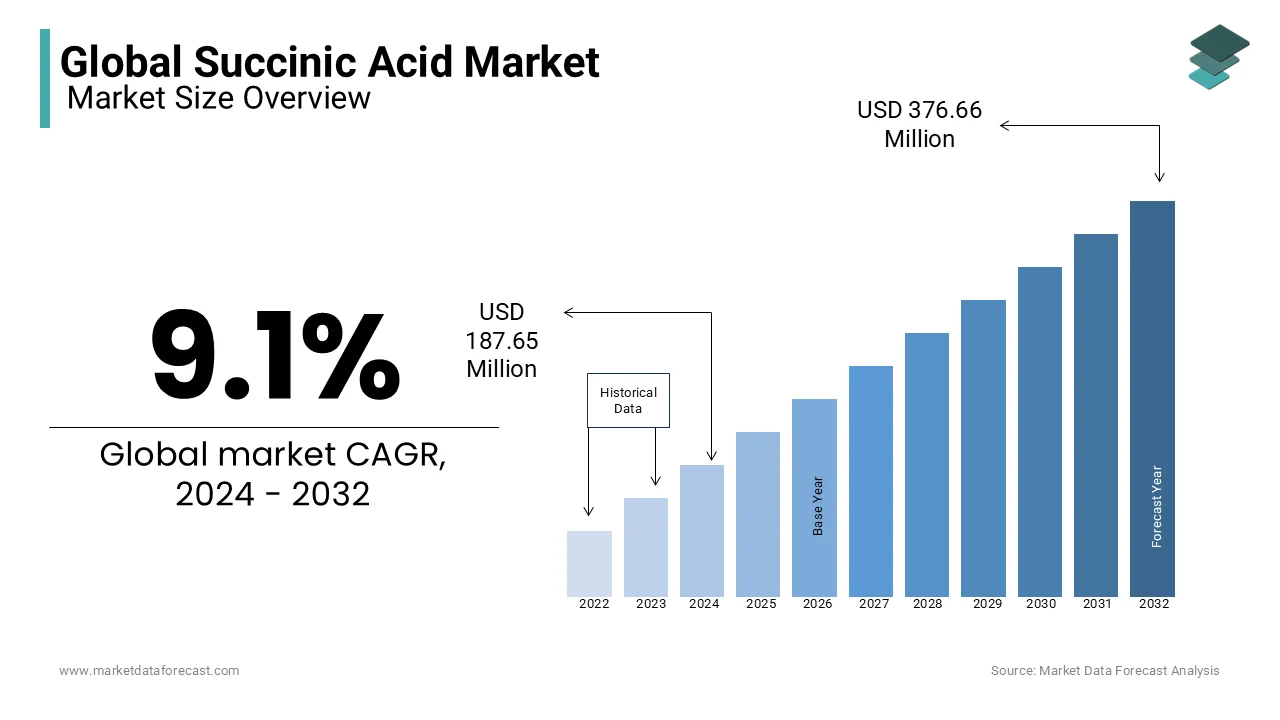
The succinic acid is a dicarboxylic acid that serves as a building block for various industrial applications, including bioplastics resins solvents and pharmaceuticals. Traditionally derived from petrochemical sources succinic acid is increasingly produced through bio-based fermentation processes using renewable feedstocks, such as corn sugarcane and wheat. This shift aligns with global sustainability goals and the transition towards a circular economy. As per the Food and Agriculture Organization of the United Nations, global production of major cereals exceeded 2.8 billion metric tons in recent years providing an abundant supply of raw materials for bio based chemical synthesis. The versatility of succinic acid allows it to replace maleic anhydride and other petroleum derived intermediates in numerous manufacturing processes. The European Union’s Green Deal and similar initiatives worldwide are accelerating the adoption of bio based chemicals by setting stringent targets for carbon neutrality. Furthermore, the growing demand for biodegradable plastics in packaging and agriculture drives the consumption of succinic acid derivatives such as polybutylene succinate. Manufacturers are investing heavily in research and development to improve fermentation yields and reduce production costs.
MARKET DRIVERS
Stringent Environmental Regulations And Carbon Neutrality Goals Accelerate Adoption
The implementation of stringent environmental regulations and ambitious carbon neutrality goals by governments worldwide is propelling the growth of succinic acid market. Policies, such as the European Green Deal and the United States Inflation Reduction Act incentivize the use of bio based chemicals to reduce greenhouse gas emissions. As per the Intergovernmental Panel on Climate Change, limiting global warming to 1.5 degrees Celsius requires rapid and far reaching transitions in energy land urban and infrastructure and industrial systems. Succinic acid produced via bio fermentation offers a significantly lower carbon footprint compared to its petrochemical counterpart. This regulatory pressure forces manufacturers to seek sustainable alternatives thereby boosting demand for bio based succinic acid. Additionally, carbon pricing mechanisms, such as emissions trading systems increase the cost of fossil fuel based production making bio based options more competitive. Companies are increasingly incorporating sustainability metrics into their corporate strategies to comply with these regulations and enhance their brand reputation. The alignment of succinic acid production with circular economy principles further supports its adoption.
Growing Demand For Biodegradable Plastics And Polymers Drives Consumption
The escalating demand for biodegradable plastics and polymers due to its role as a key precursor in the synthesis of polybutylene succinate and other biopolymers is fuelling the growth of succinic acid market. Global concerns over plastic pollution and the accumulation of non-degradable waste in landfills and oceans have prompted a shift towards compostable alternatives. As per the United Nations Environment Programme only 9% of plastic waste is successfully recycled globally with the majority ending up in the environment or incinerators. This crisis has led to bans on single use plastics in many jurisdictions creating a vacuum that biodegradable plastics are poised to fill. Succinic acid is essential in producing polybutylene succinate which exhibits excellent biodegradability mechanical strength and thermal stability. According to the Organisation for Economic Co operation and Development the global production of bioplastics is expected to triple by 2030 driven by policy interventions and consumer awareness. The packaging industry is a major consumer of these materials seeking solutions that meet performance requirements while minimizing environmental impact. Agricultural films food containers and disposable cutlery are increasingly manufactured using succinic acid based polymers. The ability of these materials to decompose under industrial composting conditions appeals to environmentally conscious brands and retailers. Furthermore advancements in polymerization technologies have improved the cost competitiveness of bio based plastics.
MARKET RESTRAINTS
High Production Costs Compared To Petrochemical Alternatives Limit Competitiveness
The high production costs associated with bio-based succinic acid compared to traditional petrochemical alternatives is restricting the growth of succinic acid market. The fermentation process required to produce bio succinic acid involves complex downstream processing including separation purification and drying, which are energy intensive and expensive. As per the International Energy Agency, the cost of bio-based chemicals remains higher than their fossil fuel based counterparts due to immature technologies and limited economies of scale. Petroleum derived succinic acid benefits from established infrastructure and optimized production processes that have been refined over decades. Manufacturers of bio succinic acid struggle to compete on price alone requiring them to rely on premium positioning or regulatory mandates to secure market share. The capital expenditure required to build and operate bio refineries is substantial posing a barrier to entry for new players. Additionally, the cost of renewable feedstocks such as corn and sugarcane is subject to agricultural volatility weather conditions and competition with food markets. These factors contribute to inconsistent raw material pricing, which complicates financial planning and risk management. Without significant technological breakthroughs or government subsidies bio based succinic acid may remain niche.
Volatility In Raw Material Prices And Supply Chain Disruptions Impact Stability
The volatility in raw material prices and frequent supply chain disruptions by creating uncertainty in production costs and availability is additionally hampering the growth of succinic acid market. Bio based succinic acid relies heavily on agricultural commodities, such as glucose, corn starch, and molasses, which are subject to price fluctuations driven by weather events geopolitical tensions and trade policies. Droughts floods and pests can lead to sudden shortages of key feedstocks causing spikes in input costs for manufacturers. These disruptions affect the timely availability of raw materials forcing producers to maintain higher inventory levels which ties up capital. The dependence on specific geographic regions for feedstock production increases vulnerability to local disruptions. A poor harvest in a major corn producing region can have ripple effects, across the global bio-chemical industry. Furthermore, the competition for biomass between food fuel and chemical industries intensifies price pressure. Manufacturers face difficulties in passing these increased costs onto customers who often have fixed contracts or limited budgets. This instability undermines long term planning and investment decisions.
MARKET OPPORTUNITIES
Expansion Into Pharmaceutical And Personal Care Applications Offers High Value Growth
The expansion of succinic acid into pharmaceutical and personal care applications into high value segments with stringent quality requirements is certainly to create new opportunities for the growtg of succinic acid market. Succinic acid and its derivatives are used as excipients pH adjusters and active ingredients in various drug formulations and cosmetic products. This trend boosts demand for high purity chemical intermediates that meet rigorous regulatory standards. Succinic acid is valued for its safety profile and compatibility with biological systems making it ideal for topical creams lotions and oral medications. The use of bio based succinic acid aligns with the clean beauty movement which emphasizes transparency and sustainability. Manufacturers can differentiate their offerings by providing certified organic or non-GMO grades of succinic acid. Furthermore, the development of novel drug delivery systems utilizing succinate esters opens new avenues for application. The pharmaceutical industry’s willingness to pay for quality and compliance offers higher margins compared to bulk industrial applications. Strategic partnerships with pharmaceutical companies can facilitate the approval and adoption of succinic acid based ingredients.
Development Of Advanced Bio Refineries And Integrated Production Models Enhances Efficiency
The development of advanced bio refineries and integrated production models to improve the economic viability and sustainability of succinic acid production is also creating new opportunities for the growth of succinic acid market. Bio refineries utilize biomass to produce a range of valuable products including fuels chemicals and materials maximizing resource efficiency and minimizing waste. As per the International Renewable Energy Agency, integrated biorefining can significantly reduce production costs by sharing infrastructure and utilities across multiple product lines. This approach allows manufacturers to convert various components of biomass into different outputs thereby optimizing yield and profitability. These facilities can process diverse feedstocks, such as agricultural residues forestry waste and municipal solid waste reducing reliance on food crops. The integration of succinic acid production with other bio-based processes enables the utilization of byproducts, such as lignin and hemicellulose for energy generation or material synthesis. This circular approach enhances the overall sustainability profile of the operation. Furthermore, technological advancements in enzyme engineering and fermentation techniques are improving conversion rates and reducing energy consumption. Collaborative projects between academia industry and government are accelerating the commercialization of next generation bio refineries.
MARKET CHALLENGES
Technical Barriers In Downstream Processing And Purification Hinder Scalability
The technical barriers associated with downstream processing and purification of bio based succinic acid is one of the challenges for the growth of succinic acid market. Fermentation broths contain low concentrations of succinic acid along with various impurities, such as cells proteins and other organic acids, which require complex separation techniques. The sensitivity of succinic acid to heat and pH changes further complicates the purification process requiring precise control conditions. Achieving the high purity levels required for pharmaceutical and food applications adds another layer of complexity and expense. Manufacturers must invest heavily in research and development to optimize these processes and reduce energy consumption. The lack of standardized protocols for downstream processing leads to variability in product quality and yield. Furthermore, the scaling up of laboratory success to industrial scale often encounters unforeseen technical hurdles. These challenges delay commercialization and increase the risk of project failure.
Limited Consumer Awareness And Acceptance Of Bio Based Chemicals Slows Adoption
The limited consumer awareness and acceptance of bio based chemicals by slowing down the transition from conventional petrochemical products is another attribute to hinder the growth of succinic acid market. Many end users and consumers are unfamiliar with the benefits and properties of bio based succinic acid leading to hesitation in adopting these alternatives. The public understanding of bio based products remains low with misconceptions about performance durability and cost prevailing. This lack of knowledge hinders the creation of strong market pull for sustainable chemicals. The absence of recognizable labeling or certification schemes for bio based chemicals further complicates consumer decision making. Manufacturers face the challenge of educating customers and demonstrating the value proposition of bio succinic acid. This requires significant investment in marketing and communication campaigns which may be beyond the reach of smaller producers. Additionally, the inertia of established supply chains and longstanding relationships with petrochemical suppliers creates resistance to change.
REPORT COVERAGE
| REPORT METRIC | DETAILS |
| Market Size Available | 2025 to 2034 |
| Base Year | 2025 |
| Forecast Period | 2026 to 2034 |
| CAGR | 9.12% |
| Segments Covered | By Origin, End-user, and Region. |
| Various Analyses Covered | Global, Regional and Country Level Analysis, Segment-Level Analysis, DROC, PESTLE Analysis, Porter’s Five Forces Analysis, Competitive Landscape, Analyst Overview of Investment Opportunities |
| Regions Covered | North America, Europe, Asia Pacific, Latin America, Middle East & Africa. |
| Market Leaders Profiled | Nippon Shokubai (Japan), Kawasaki Kasei Chemicals (Japan), Shandong Lixing Chemical (China), Anhui Sunsing Chemicals (China), Gadiv Petrochemical Industries (Israel), Anqing Hexing Chemical (China), Reverdia (Netherlands), Succinity GmbH (Germany), BioAmber (Canada), and GC Innovation America (US). |
SEGMENTAL ANALYSIS
By Origin Insights
The petro segment was the largest by holding a significant share of the succinic acid market with its cost competitiveness and the maturity of existing manufacturing infrastructure which has been optimized over decades of industrial use. As per the International Energy Agency, the petrochemical industry benefits from established supply chains and economies of scale that significantly reduce production costs compared to emerging bio based alternatives. The maleic anhydride hydrogenation process used to produce petro based succinic acid is highly efficient and yields consistent quality suitable for a wide range of industrial applications. This structural advantage makes petro based succinic acid the preferred choice for price sensitive sectors such as plastics resins and coatings where margin pressures are high. The availability of raw materials like benzene and butane remains stable in many regions ensuring uninterrupted production. Furthermore, the technical expertise required for operating these facilities is widely available reducing operational risks. Manufacturers continue to invest in incremental improvements to existing plants rather than building new bio refineries due to lower capital expenditure requirements.
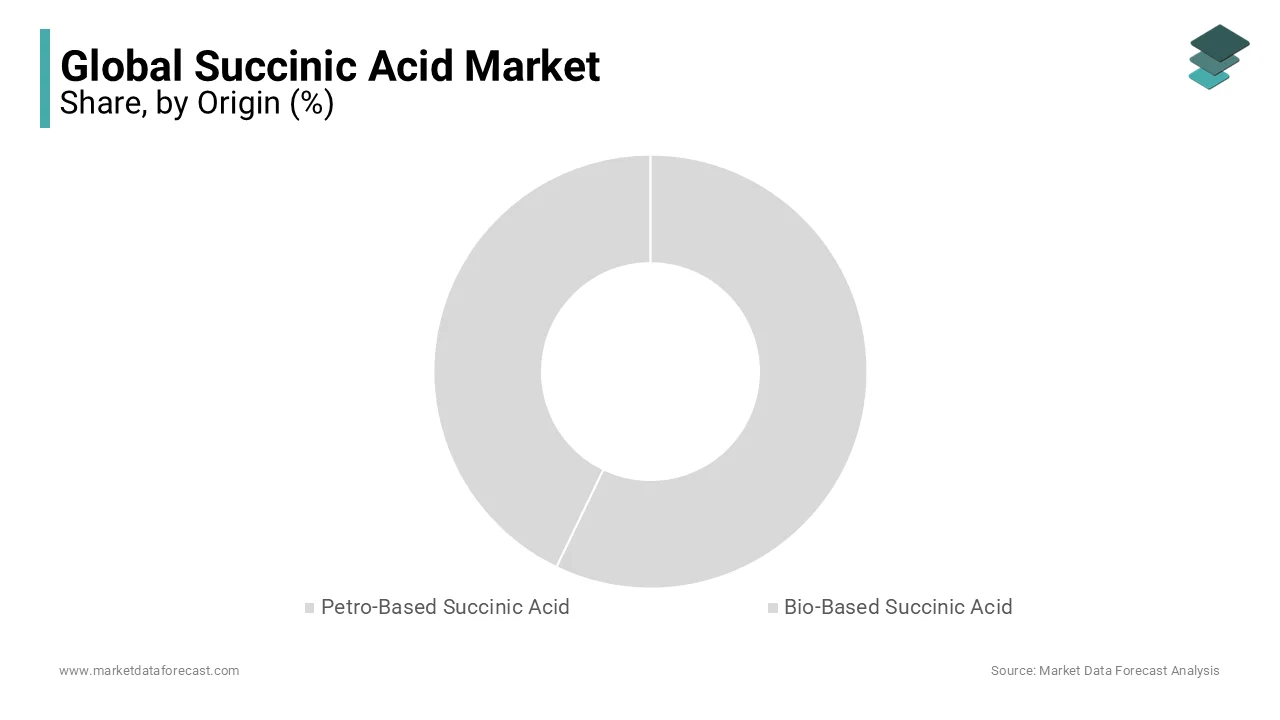
The bio based segment is projected to be the fastest at an anticipated CAGR of 18.5% from 2026 to 2034 with the stringent regulatory frameworks and government incentives aimed at promoting carbon neutral chemical solutions. As per the European Commission, the European Green Deal sets ambitious targets for reducing greenhouse gas emissions by 55% by 2030 compelling industries to adopt sustainable alternatives. Bio based succinic acid produced through fermentation of renewable biomass offers a significantly lower carbon footprint compared to its petrochemical counterpart. These policy measures reduce the financial burden on producers and encourage investment in bio refineries. Many multinational corporations have also committed to science-based targets for emission reductions driving demand for green chemicals in their supply chains. The ability of bio based succinic acid to qualify for eco labels and sustainability certifications enhances its appeal to environmentally conscious brands. Regulatory bans on certain single use plastics further boost the demand for bio based polymers derived from succinic acid.
By End User Insights
The industrial segment was accounted in holding 55.4% of the succinic acid market share in 2025 with the extensive application of succinic acid and its derivatives in the manufacturing of polymers resins solvents and plasticizers. These materials are widely used in packaging automotive components and consumer goods due to their favorable mechanical properties and environmental profile. According to the Society of the Plastics Engineers, the demand for engineering plastics that offer durability and heat resistance is rising in the automotive and electronics sectors. Succinic acid based polymers meet these requirements while offering enhanced sustainability credentials. The industrial sector also utilizes succinic acid in the production of alkyd resins for coatings and paints which are essential for infrastructure and construction projects. The versatility of succinic acid allows it to replace traditional petrochemical intermediates in various formulations without compromising performance. Large scale industrial consumers prioritize consistent supply and cost effectiveness which petro based succinic acid currently provides.
The pharmaceutical sector is lucratively to grow at a fastest CAGR of 12.3% from 2026 to 2034 with the increasing demand for high purity succinic acid as an excipient and active ingredient in various drug formulations. Succinic acid is used in the production of salts for active pharmaceutical ingredients to improve solubility stability and bioavailability. According to the International Federation of Pharmaceutical Manufacturers and Associations, the industry is investing heavily in research and development to create more effective and patient friendly drug delivery systems. The safety profile and regulatory approval of succinic acid make it a preferred choice for oral and topical medications. The trend towards personalized medicine and complex biologics also drives the need for specialized excipients that can stabilize sensitive molecules. Succinic acid's ability to act as a buffering agent and pH modifier is critical in these applications. Furthermore, the shift towards bio based pharmaceutical ingredients aligns with the industry's sustainability goals.
REGIONAL ANALYSIS
Asia Pacific Succinic Acid Market Analysis
Asia Pacific was the largest contributor in the succinic acid market globally by capturing 40.5% of the share in 2025 with the rapid industrialization and a booming chemical manufacturing sector particularly in China, India, and Japan. As per the study, the region continues to drive global economic growth with significant investments in infrastructure and manufacturing capabilities. China is the dominant producer and consumer of succinic acid leveraging its vast petrochemical infrastructure and growing bio-based industry. The presence of major pharmaceutical and plastics manufacturers in the region creates substantial demand for succinic acid. The growing middle class is driving consumption of packaged goods and automobiles, which rely on succinic acid based materials. The availability of agricultural feedstocks such as corn and sugarcane supports the development of bio refineries.
North America Succinic Acid Market Analysis
North America Succinic Acid Market was positioned second by holding 25.3% of share in 2025 with the advanced technological capabilities and strong regulatory support for bio-based chemicals. As per the United States Department of Energy, federal initiatives such as the BioPreferred Program encourage the use of bio based products in various industries. According to the American Chemistry Council, the chemical industry in North America benefits from access to affordable shale gas, which supports petro based production, while bio based sectors grow. The presence of major pharmaceutical and automotive companies drives demand for high quality succinic acid derivatives. Investment in research and development by universities and private companies fosters innovation in bio refining. The regulatory framework encourages transparency and certification of bio based content enhancing market confidence. Furthermore, the focus on circular economy principles drives the adoption of recyclable and biodegradable plastics.
Europe Succinic Acid Market Analysis
Europe succinic acid market growth is driven by the stringent environmental regulations and a strong commitment to sustainability. As per the European Environment Agency, industries are under pressure to adopt sustainable practices driving demand for bio based succinic acid. Countries such as Germany, France, and the Netherlands are leading the way in bio refinery development and green chemistry innovation. According to Eurostat, the region has high levels of awareness and acceptance of sustainable products among consumers and businesses. The pharmaceutical and automotive sectors in Europe are major consumers of succinic acid demanding high purity and performance standards. The regulatory environment supports the certification and labeling of bio based products facilitating market entry for sustainable alternatives. Collaboration between industry academia and government fosters a robust innovation ecosystem. The ban on single use plastics in many European countries further boosts demand for biodegradable polymers derived from succinic acid.
Latin America Succinic Acid Market Analysis
Latin America succinic acid market growth is driven by the abundant agricultural resources and increasing industrial activity. As per the Economic Commission for Latin America and the Caribbean, the region is a major producer of sugarcane and corn, which are key feedstocks for bio based succinic acid production. Brazil and Argentina are emerging as potential hubs for bio refining due to their agricultural prowess and growing chemical industries. The investment in sustainable infrastructure and green technologies is increasing supporting the development of bio based chemical sectors. The local demand for plastics and pharmaceuticals is rising with urbanization and economic development. Government policies in some countries are beginning to support bio economy initiatives although regulatory frameworks are less mature than in Europe or North America. The potential for exporting bio based succinic acid to global markets is significant given the competitive advantage in raw material costs.
Middle East and Africa Succinic Acid Market Analysis
The Middle East and Africa succinic acid market growth is likely growing with the varying levels of industrial development and economic stability. In the Middle East, countries like Saudi Arabia and the United Arab Emirates are investing in diversifying their economies beyond oil, which includes developing chemical and pharmaceutical sectors. As per the study, infrastructure projects and industrial zones are being established to attract foreign investment and technology. The African market is characterized by a young and growing population which is increasing consumption of basic consumer goods and medicines. The demand for succinic acid is primarily driven by the pharmaceutical and packaging sectors which are expanding in key markets. However, the lack of local production capacity means that most succinic acid is imported.
COMPETITIVE LANDSCAPE
The competition in the Succinic Acid Market is characterized by a dynamic interplay between established petrochemical producers and emerging bio based manufacturers. Traditional players leverage economies of scale and existing infrastructure to maintain cost leadership while bio based companies focus on sustainability and innovation to capture niche markets. The industry faces intense pressure to reduce carbon footprints driving investment in green technologies and efficient fermentation processes. Strategic alliances between chemical giants and biotech firms are common as they seek to combine expertise and resources. Price competitiveness remains a critical factor although premium pricing for bio based variants is accepted in regulated sectors. Regulatory frameworks in Europe and North America favor sustainable alternatives creating opportunities for bio based producers. However high production costs and technical barriers to entry limit the number of significant competitors. The market is fragmented with regional players specializing in specific applications or geographies. Innovation in downstream applications such as biodegradable plastics drives differentiation. Companies must balance cost efficiency with environmental credentials to succeed.
Key Market Players
Companies playing a key role in the global succinic acid market include
- Nippon Shokubai
- Kawasaki Kasei Chemicals
- Shandong Lixing Chemical
- Anhui Sensing Chemicals
- Gadiv Petrochemical Industries
- Anqing Hexing Chemical
- Reverdia
- Succinity GmbH
- BioAmber
- GC Innovation America
Top Players in the Market
- Reverdia is a joint venture between DSM and Roquette that specializes in the production of bio based succinic acid using proprietary fermentation technology. The company contributes significantly to the global market by offering sustainable alternatives to petrochemical derivatives for various industrial applications. Reverdia focuses on developing high performance solutions for the food pharmaceutical and personal care sectors. Recent actions include expanding its production capacity in Europe to meet growing demand for green chemicals. The company actively collaborates with downstream partners to create innovative formulations that leverage the unique properties of bio succinic acid. Their commitment to reducing carbon footprints aligns with global regulatory trends and consumer preferences. This strategic focus ensures long term growth and relevance in the evolving chemical landscape.
- Myriant Corporation is a leading producer of bio based chemicals including succinic acid derived from renewable feedstocks such as corn sugar. The company plays a vital role in the global market by providing cost effective and environmentally friendly solutions for diverse industries. Myriant utilizes advanced biotechnology to convert biomass into high value chemicals with lower greenhouse gas emissions. Recent initiatives involve optimizing manufacturing processes to enhance yield and reduce operational costs. The company has strengthened its supply chain by securing long term agreements with agricultural suppliers. Myriant also invests in research and development to expand its product portfolio and application scope. Their strategic partnerships with major industrial players facilitate market penetration and adoption of bio based alternatives. This approach positions Myriant as a key innovator in the sustainable chemistry sector.
- Bartek Ingredients Inc. is a prominent manufacturer of food grade acids including succinic acid serving the global food and beverage industry. The company contributes to the market by providing high purity products that meet strict safety and quality standards. Bartek focuses on consistent supply and technical support for customers in North America and international markets. Recent actions include upgrading production facilities to increase capacity and improve energy efficiency. The company has expanded its distribution network to reach new customers in emerging markets. Bartek also engages in product innovation to develop specialized grades for specific culinary and industrial applications. Their emphasis on quality control and regulatory compliance enhances their reputation as a trusted supplier. This customer centric strategy allows Bartek to maintain a competitive edge in the specialized food ingredient segment.
Top Strategies Used by the Key Market Participants
Key players in the Succinic Acid Market primarily focus on technological innovation and strategic partnerships to enhance competitiveness. Companies invest heavily in research and development to improve fermentation yields and reduce production costs of bio based succinic acid. Expansion of production capacity in regions with abundant raw materials is a common strategy to ensure supply chain stability. Collaborations with downstream manufacturers help integrate succinic acid into new applications such as bioplastics and pharmaceuticals. Diversification of feedstock sources reduces dependency on single agricultural commodities and mitigates price volatility. Sustainability certifications and eco labeling are utilized to differentiate products in environmentally conscious markets. These strategies enable companies to address cost challenges while capturing growth opportunities in the transitioning chemical industry.
MARKET SEGMENTATION
This research report on the global succinic acid market has been segmented and sub-segmented based on origin, end-user and region.
By Origin
- Petro-Based Succinic Acid
- Bio-Based Succinic Acid
By End-User
- Food & Beverages
- Industrial
- Pharmaceutical sectors
By Region
- North America
- Europe
- Asia Pacific
- Latin America
- Middle East and Africa
Frequently Asked Questions
1.What is the succinic acid market?
The succinic acid market covers the production and commercialization of succinic acid derived from bio based fermentation and petrochemical routes for use in industrial and consumer applications.
2.What are the key growth drivers of the succinic acid market?
Market growth is driven by increasing demand for bio based chemicals, rising use in biodegradable plastics, and growing applications in food, pharmaceuticals, and coatings.
3.What are the main production methods for succinic acid?
Succinic acid is produced through petrochemical synthesis and bio based fermentation using renewable feedstocks such as sugar and corn.
4.What are the major applications of succinic acid?
Key applications include biodegradable polymers, plasticizers, solvents, food additives, pharmaceuticals, and resins.
5.How is succinic acid used in the food industry?
In the food industry, succinic acid is used as an acidity regulator, flavor enhancer, and preservative.
6.What role does succinic acid play in biodegradable plastics?
Succinic acid serves as a building block for bio based polymers such as polybutylene succinate used in sustainable packaging.
7.Which industries are the largest consumers of succinic acid?
Major consuming industries include plastics, chemicals, food and beverages, pharmaceuticals, and personal care.
8.What regions dominate the global succinic acid market?
Asia Pacific, Europe, and North America dominate the market due to strong chemical manufacturing capacity and sustainability initiatives.
9.Who are the key players in the succinic acid market?
Key players include BASF, Roquette, Mitsubishi Chemical, BioAmber, and Myriant.
10.What challenges does the succinic acid market face?
Challenges include high production costs, feedstock price fluctuations, and competition from conventional petrochemical alternatives.
Related Reports
Access the study in MULTIPLE FORMATS
Purchase options starting from
$ 2500
Didn’t find what you’re looking for?
TALK TO OUR ANALYST TEAM
Need something within your budget?
NO WORRIES! WE GOT YOU COVERED!
Call us on: +1 888 702 9696 (U.S Toll Free)
Write to us: sales@marketdataforecast.com