- Product Description Description
- Table of Contents TOC
- List of Table & Figure LOT
- Get Free Sample PDF Sample PDF
Market Size, 2025
$23.56 BnMarket Estimate, 2026
$24.60 BnMarket Forecast, 2034
$34.77 BnCAGR, 2026–2034
4.42%Global Sunflower Market Size, Trends, and Growth Forecast (2026–2034)
- Market Scope: Comprehensive global industry analysis of the sunflower market covering product categories, distribution channels, applications, regional frameworks, and the expanding high-oleic oil and cosmetic sectors.
- Market Valuation: The global sunflower market size was valued at USD 23.56 billion in 2025, is estimated at USD 24.60 billion in 2026, and is projected to reach USD 34.77 billion by 2034, registering a compound annual growth rate (CAGR) of 4.42% from 2026 to 2034.
- Primary Growth Drivers: Escalating demand for heart-healthy, low-saturated-fat edible oils, integration of drought-resilient sunflower cultivation in semi-arid zones, and rising popularity of plant-based snacks and sustainable proteins.
Key Global Sunflower Market Segment Metrics (2026–2034)
| Category | Leading Segment (2025 Position) | Fastest-Growing Segment |
|---|---|---|
| By Product | Sunflower oil segment (captured 63.3% share driven by extensive culinary, foodservice, and industrial food processing use) | Sunflower seeds segment (projected at a 6.7% CAGR fueled by healthy plant-based snacking trends) |
| By Distribution Channel | Supermarkets (held 58.3% share supported by organized retail formats and private-label expansions) | Online distribution channel (estimated at the highest 9.3% CAGR via e-grocery adoption and specialty e-commerce) |
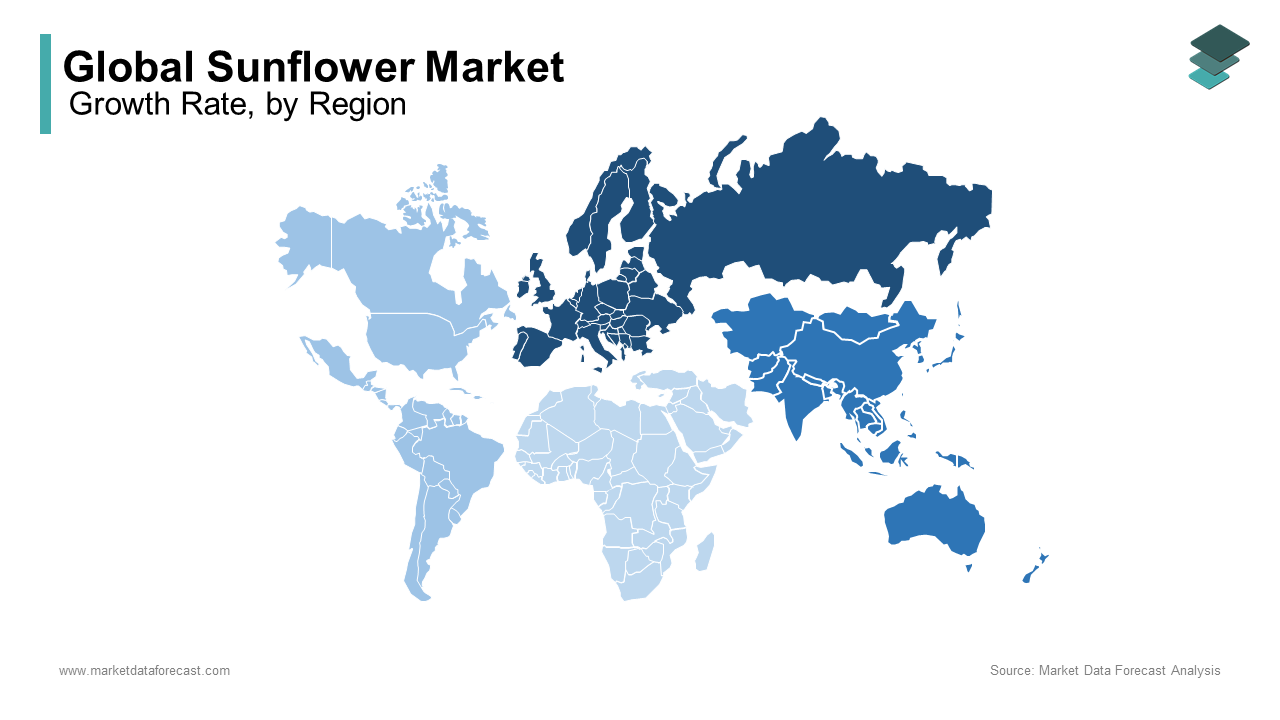
| By Application / Region | Food & beverages / Europe (led with 49.3% global share anchored by Black Sea basin production) | Cosmetics segment (advancing at an 8.1% CAGR via natural emollients and skincare applications) |
Major Market Players & Competitive Landscape
Market Structure: Highly competitive global landscape featuring multinational agribusinesses, regional processors, and cooperative networks competing on quality differentiation, high-oleic variants, and supply chain resilience.
Key Companies: Cargill, Archer Daniels Midland Company, Bunge Limited, Wilmar International, CHS Inc., ConAgra Brands, Kernel Holding, Euralis Semences, Nuseed, Groupe Avril, Advanta Seeds, Corteva Agriscience, and Limagrain.
Global Sunflower Market Size
The global sunflower market size was valued at USD 23.56 billion in 2025 and is anticipated to reach USD 24.60 billion in 2026 and USD 34.77 billion by 2034, growing at a CAGR of 4.42% during the forecast period from 2026 to 2034.
The sunflower is primarily for oil extraction, food consumption, and animal feed. Ukraine and Russia collectively contributed over 50% of the world's sunflower seed output before 2022, establishing the Black Sea region as the epicenter of supply. The crop thrives in temperate continental climates with well-distributed rainfall during its growing phase, requiring between 450 and 600 millimeters of water, as documented by the International Institute of Water Management.
MARKET DRIVERS
The escalating demand for heart-healthy edible oils with favorable fatty acid profiles for those low in saturated fats and high in linoleic acid is hindering the growth of the Sunflower market. Sunflower oil contains approximately 68% linoleic acid, an essential omega-6 fatty acid linked to reduced LDL cholesterol levels, as confirmed in a 2022 clinical review published in The American Journal of Clinical Nutrition. In Germany, sales of high-oleic sunflower oil increased by 24% between 2020 and 2023, driven by its stability at high temperatures and clean-label appeal, according to the German Oilseed Processors Association. Additionally, the U.S. Food and Drug Administration authorized a qualified health claim in 2021 stating that replacing saturated fats with unsaturated fats from sunflower oil may reduce coronary heart disease risk.
The integration of sunflower cultivation into drought-resilient and low-input agricultural systems in semi-arid zones where water scarcity limits other oilseed crops is propelling the growth of the sunflower market. Sunflower demonstrates superior drought tolerance compared to soybean and rapeseed, with root systems capable of extracting moisture from depths exceeding 2 meters, as documented by the International Crops Research Institute for the Semi-Arid Tropics. In Kazakhstan, sunflower acreage expanded by 32% between 2018 and 2023, reaching 1.8 million hectares, due to its adaptability to the country’s continental climate and marginal soils, according to the Ministry of Agriculture of the Republic of Kazakhstan. The crop requires 30% less irrigation than soybeans and exhibits strong resistance to salinity, making it ideal for regions affected by climate-induced aridity. Furthermore, sunflower fits efficiently into crop rotation with wheat, reducing pest buildup and improving soil structure.
MARKET RESTRAINTS
The geopolitical vulnerability of key producing regions such as Ukraine and southern Russia is hampering the growth of the sunflower market. Port blockades and infrastructure damage have constrained Black Sea shipments, forcing global buyers to seek alternatives and triggering price volatility. In 2022, global sunflower oil prices surged by 48% year-on-year, which destabilized food supply chains in import-dependent nations. Additionally, insurance and freight costs for Black Sea cargoes have doubled, discouraging trade. This concentration of supply in a conflict-prone zone undermines long-term market stability and erodes confidence among processors and retailers reliant on consistent sourcing.
The susceptibility of sunflower crops to pests and diseases, which is particularly downy mildew and sunflower moth infestations, is also degrading the growth of the Sunflower market. The pathogen Plasmopara halstedii has developed resistance to several fungicides, limiting control options. Similarly, in South Africa, the sunflower bud moth caused an estimated 15% production loss in 2023, as reported by the Agricultural Research Council. Limited availability of resistant hybrid varieties and inconsistent access to effective crop protection products in developing regions further exacerbate these challenges.
MARKET OPPORTUNITIES
The development of high-oleic sunflower oil for premium food and industrial applications is creating new opportunities for the growth of the Sunflower market. High-oleic varieties contain over 80% oleic acid, making them suitable for frying, margarine production, and extended-shelf-life products without requiring hydrogenation, which generates trans fats. In Turkey, high-oleic sunflower oil now represents 38% of domestic oilseed processing capacity, with investments exceeding $220 million since 2020, as reported by the Turkish Grain Board. As per the U.S. Department of Agriculture, high-oleic sunflower oil usage in snack food manufacturing rose by 31% from 2019 to 2023. Additionally, its biodegradability and lubricity have opened non-food applications in bio-lubricants and cosmetics.
The expansion of sunflower meal as a sustainable protein source in aquaculture and monogastric feed is likely to create new opportunities for the growth of the Sunflower market. Sunflower meal contains 28–36% protein with a favorable amino acid profile for poultry and swine, and recent processing innovations have reduced fiber content, enhancing digestibility. As per the Food and Agriculture Organization, replacing 15% of soybean meal with sunflower meal in broiler diets reduced feed costs by 12% without compromising growth performance. Additionally, the European Union’s Delegated Act on Sustainable Animal Feed promotes non-GMO, locally sourced proteins, favoring sunflower meal from regional production.
MARKET CHALLENGES
The limited genetic diversity in commercial hybrids, which increases vulnerability to evolving pathogens and climate stressors, is a challenge to the growth of the Sunflower market. The rising Sclerotinia incidence compared to the previous decade is linked to warmer, wetter flowering periods. Breeding programs are constrained by slow trait integration and limited access to wild Helianthus species. The crop’s long-term adaptability remains at risk, which is threatening yield security in core production zones.
The post-harvest losses due to inadequate storage and handling infrastructure in developing producer countries also degrade the growth of the sunflower market. Sunflower seeds are highly susceptible to aflatoxin contamination when stored under humid conditions, with moisture levels above 9% triggering fungal growth. The absence of centralized collection points and modern silos forces smallholders to sell immediately after harvest at depressed prices, undermining profitability.
REPORT COVERAGE
| REPORT METRIC | DETAILS |
| Market Size Available | 2025 to 2034 |
| Base Year | 2025 |
| Forecast Period | 2026 to 2034 |
| CAGR | 4.42% |
| Segments Covered | By Product, Distribution Channel, Application, and Region |
| Various Analyses Covered | Global, Regional, and Country Level Analysis; Segment-Level Analysis; DROC; PESTLE Analysis; Porter’s Five Forces Analysis; Competitive Landscape; Analyst Overview of Investment Opportunities |
| Regions Covered | North America, Europe, APAC, Latin America, Middle East & Africa |
| Market Leaders Profiled | Cargill, Archer Daniels Midland Company, Bunge Limited, Wilmar International, CHS Inc., ConAgra Brands, Kernel Holding, Euralis Semences, Nuseed, Groupe Avril, Advanta Seeds, Corteva Agriscience, Limagrain |
SEGMENTAL ANALYSIS
By Product Insights
The sunflower oil segment dominated the global sunflower market by capturing 63.3% the market share in 2025 with its widespread use as a primary edible oil across households, foodservice, and industrial food processing. Sunflower oil accounts for over 18 million metric tons of global vegetable oil consumption annually, with Eastern Europe and the Middle East exhibiting the highest per capita intake, according to the Food and Agriculture Organization of the United Nations.
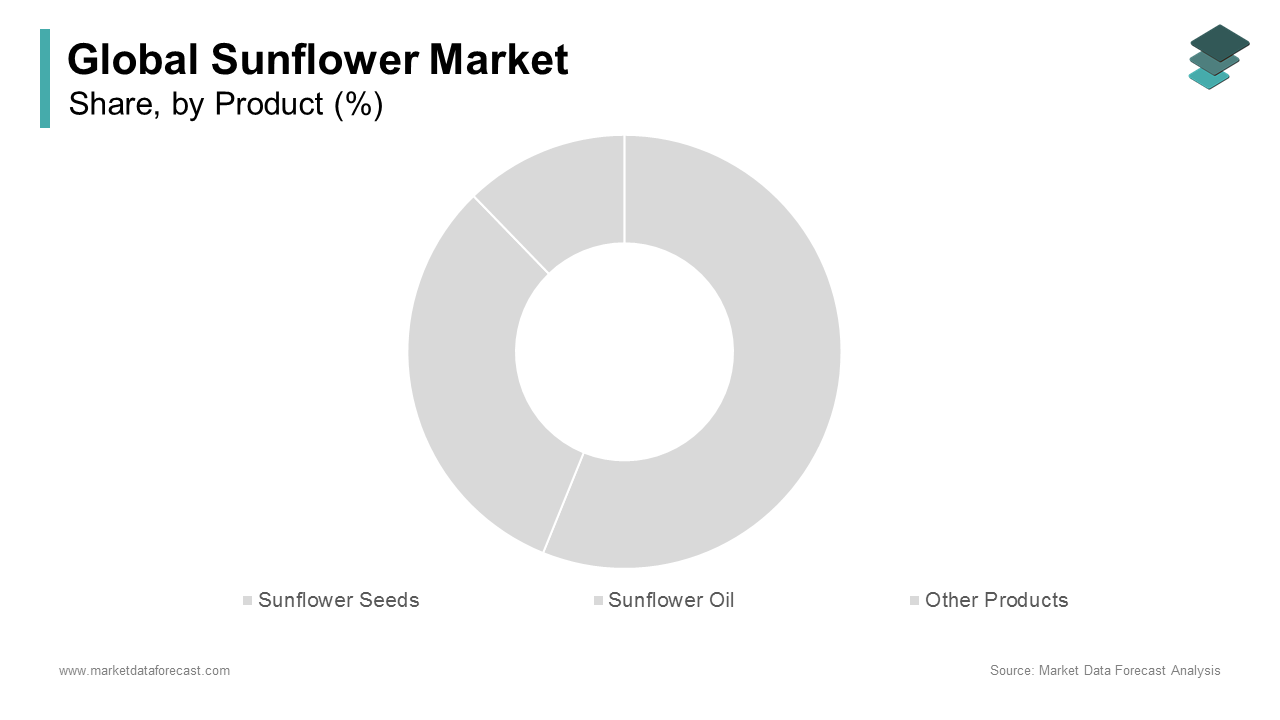
The sunflower seeds segment is projected to grow at a CAGR of 6.7% during the forecast period, with rising consumer demand for healthy, plant-based snacks rich in protein, fiber, and essential micronutrients. Roasted and salted sunflower seeds have become a staple food, with retail sales in the United States reaching $1.4 billion in 2023, a 22% increase from 2020. The seeds contain 580 mg of magnesium per 100 grams, supporting metabolic and cardiovascular health, according to the National Institutes of Health.
By Distribution Channel Insights
The supermarkets segment was the largest and held 58.3% of the sunflower market share in 202,4, with the structured supply chains, wide product assortment, and consumer trust associated with organized retail formats in urban and semi-urban areas. These outlets benefit from cold chain integration, promotional visibility, and loyalty programs that drive repeat purchases. Additionally, private-label sunflower products have gained traction, with Tesco and Carrefour reporting a 30% year-on-year increase in own-brand sunflower oil sales across Europe between 2021 and 2023, as per Kantar Worldpanel.
The online distribution channel is likely to grow with an expected CAGR of 9.3% throughout the forecast period, driven by the digital penetration, e-grocery adoption, and shifting consumer behavior toward convenience and specialty sourcing. In India, online sales of sunflower oil and seeds surged by 41% in 2023 compared to the previous year, as reported by the Indian E-Commerce Association. Similarly, in the United States, Amazon Fresh recorded a 35% rise in bulk sunflower seed orders from 2020 to 2023, catering to home baking and DIY snack trends. The internet access in Sub-Saharan Africa reached 46% in 2023 by enabling e-commerce platforms such as Jumia to expand into packaged food delivery, including sunflower products.
By Application Insights
The food and beverages segment held a dominant share of the sunflower market in 2025, with the integral role of sunflower oil and seeds in daily nutrition and commercial food production. Sunflower oil is used in margarine, bakery products, fried snacks, and ready-to-eat meals due to its oxidative stability and low saturated fat content. Additionally, sunflower seeds are incorporated into breads, cereals, and energy bars for texture and nutritional enhancement. The European Bakery Industry Confederation confirms that over 60% of whole-grain artisanal loaves in Germany contain sunflower seeds as a standard ingredient.
The cosmetics segment is likely to grow with an expected CAGR of 8.1% during the forecast period, with the increasing use of sunflower oil as a natural emollient, carrier oil, and antioxidant in skincare, haircare, and makeup formulations. Sunflower oil is rich in linoleic acid and vitamin E, which help maintain skin barrier function and reduce transepidermal water loss, as confirmed in a 2022 dermatological study published in Skin Pharmacology and Physiology. Additionally, its non-comedogenic and hypoallergenic properties make it suitable for sensitive skin, enhancing its appeal in premium and clinical skincare lines. L’Oréal reported a 26% increase in sunflower-derived ingredients across its product portfolio between 2020 and 2023, aligning with its sustainability roadmap.
REGIONAL ANALYSIS
Europe Sunflower Market Insights
Europe was the top performer in the global sunflower market by accounting for 49.3% of the share in 2025, with Ukraine and Russia, which together produced over 28 million metric tons of sunflower seeds in 2022, despite logistical disruptions. The crop’s adaptability to the chernozem soils and continental climate of the Black Sea basin provides a natural advantage. Additionally, sunflower meal is a critical protein source in Eastern European livestock farming, with Romania using over 60% of its domestic output in poultry feed, as per the Romanian National Institute of Animal Science.
Asia Pacific Sunflower Market Insights
Asia Pacific sunflower market growth is expected to grow with prominent growth opportunities during the forecast period, with China, India, and Kazakhstan emerging as key players. China has boosted domestic oilseed programs to reduce dependency on foreign oils, with Inner Mongolia becoming a focal zone for mechanized sunflower farming. In India, sunflower cultivation remains limited to semi-arid regions like Karnataka and Andhra Pradesh, where water scarcity restricts alternatives.
North America Sunflower Market Insights
North American sunflower market is expected to grow in the coming years. The U.S. cultivated approximately 1.3 million acres of sunflowers in 2023, primarily in North Dakota, South Dakota, and Minnesota, yielding over 1.8 million tons of seeds, according to the National Agricultural Statistics Service. The market status is defined by a shift toward high-oleic varieties, which now constitute 85% of U.S. sunflower acreage due to demand from the snack and frying oil sectors. ConAgra and Cargill have invested heavily in high-oleic processing lines to meet foodservice specifications. Additionally, the USDA’s BioPreferred Program has spurred interest in sunflower-based biolubricants and industrial oils.
Latin America Sunflower Market Insights
Latin America's sunflower market is expected to grow, with Argentina and Paraguay as the principal producers. Argentina produced 3.2 million tons of sunflower seeds in 2023, making it the fourth-largest global producer, according to the Argentine Ministry of Agriculture. The Pampas region offers ideal agro-climatic conditions, and sunflower fits well into crop rotation with soybeans, reducing soil degradation. However, domestic crushing capacity has declined due to energy shortages and export taxes, leading to increased raw seed exports. Paraguay has emerged as a secondary hub by expanding sunflower cultivation by 25% since 2020 to supply both regional and Asian markets, as noted by the Paraguayan Agricultural Chamber.
Middle East & Africa Sunflower Market Insights
Middle East & Africa sunflower market is expected to have significant growth in the coming years. South Africa is the largest producer in Sub-Saharan Africa, cultivating 120,000 hectares of sunflowers in 2023, yielding 380,000 tons, according to Grain SA, a local industry body. The crop is favored for its drought tolerance and suitability for smallholder farming. Egypt, despite limited cultivation, is one of the world’s largest importers, bringing in over 1.5 million tons of sunflower oil annually, as reported by the Egyptian General Organization for Export and Import Control. Sudan and Tanzania are expanding production to meet regional demand, but post-harvest losses exceed 20% due to inadequate storage, according to the African Development Bank. With urbanization driving edible oil consumption, the region remains a critical growth market, contingent on improved logistics and processing.
COMPETITIVE LANDSCAPE
KEY MARKET PLAYERS
Some of the companies that are playing a dominating role in the global sunflower market include
- Cargill
- Archer Daniels Midland Company
- Bunge Limited
- Wilmar International
- CHS Inc
- ConAgra Brands
- Kernel Holding
- Euralis Semences
- Nuseed
- Groupe Avril
- Advanta Seeds
- Corteva Agriscience
- Limagrain
Top Strategies Used By Key Market Participants
Key players in the sunflower market are adopting vertical integration, product differentiation, sustainable sourcing, technological innovation, and regional expansion to strengthen their market positions. Companies are securing upstream control through farmer partnerships and contract farming to ensure quality and traceability. Others are developing high-oleic and organic variants to cater to health-conscious consumers. Investment in refining efficiency and cold-chain logistics enhances distribution reliability. Strategic collaborations with food brands and retailers drive brand visibility, while compliance with global sustainability standards improves access to regulated markets. These strategies collectively enable firms to navigate supply volatility, meet evolving consumer demands, and expand into high-growth applications across food, cosmetics, and industrial sectors.
COMPETITION OVERVIEW
The competitive landscape of the sunflower market is shaped by a mix of multinational agribusinesses, regional processors, and cooperative networks operating in a geographically concentrated yet globally interconnected environment. Unlike commoditized oils, competition is increasingly defined by quality differentiation, supply chain resilience, and sustainability credentials. While Black Sea producers dominate volume, Asian and Western firms compete on value-added processing, branding, and health positioning. Price volatility due to geopolitical disruptions has intensified strategic stockpiling and diversification efforts. Technological advancements in seed breeding and refining are creating entry barriers for smaller players.
LEADING PLAYERS IN THE SUNFLOWER MARKET
Cargill
Cargill plays a pivotal role in the Asia Pacific sunflower market through its integrated supply chain and strategic partnerships with food manufacturers and edible oil processors. The company sources sunflower seeds from Australia and Central Asia, channeling them into regional refining hubs in India and Southeast Asia to meet rising demand for high-quality, non-GMO oils. In 2023, Cargill launched a specialty high-oleic sunflower oil variant in Singapore, tailored for premium frying applications in the fast-food and snack sectors. It has also collaborated with local bakeries in Thailand and Malaysia to reformulate products using cleaner-label oils, aligning with regional health regulations.
Wilmar
Wilmar International is a leading agribusiness conglomerate based in Singapore, and it exerts significant influence on the Asia Pacific sunflower market through its vast refining, branding, and distribution network across China, India, and Indonesia. The company imports bulk sunflower oil from Black Sea producers and processes it in its advanced refineries in Guangzhou and Surabaya, ensuring compliance with stringent regional food standards. In 2022, Wilmar introduced a fortified sunflower oil line in India under the “Saffola” brand, enriched with plant sterols to support heart health, in response to rising cardiovascular concerns.
Nestlé
Nestlé Professional has emerged as a key demand driver in the Asia Pacific sunflower market by incorporating sunflower oil into its culinary formulations for institutional and retail food products. The company transitioned over 70% of its ready-to-eat meals and infant cereals in the region to use sunflower oil as the primary fat source by 2023, in alignment with its global trans-fat elimination commitment, as confirmed by Nestlé’s Sustainability Report. In Japan and South Korea, Nestlé Professional supplies foodservice operators with ready-mix products that utilize sunflower oil for its neutral flavor and frying stability. Additionally, the company supports sustainable sourcing by engaging with Australian sunflower growers through direct procurement agreements that emphasize water efficiency and low-carbon practices.
MARKET SEGMENTATION
This research report on the global sunflower market is segmented and sub-segmented into the following categories.
By Product
- Sunflower Seeds
- Sunflower Oil
- Other Products
By Distribution Channel
- Supermarkets
- Retail Shops, Online
By Application
- Food and Beverages
- Ornaments
- Pharmaceuticals
- Cosmetics
- Other Applications
By Region
- North America
- Europe
- Latin America
- Asia Pacific
- Middle East & Africa