- Product Description Description
- Table of Contents TOC
- List of Table & Figure LOT
- Get Free Sample PDF Sample PDF
Market Size, 2025
$6.06 BnMarket Estimate, 2026
$6.96 BnMarket Forecast, 2034
$20.95 BnCAGR, 2026–2034
14.78%Global Telerehabilitation Services Market Report Summary
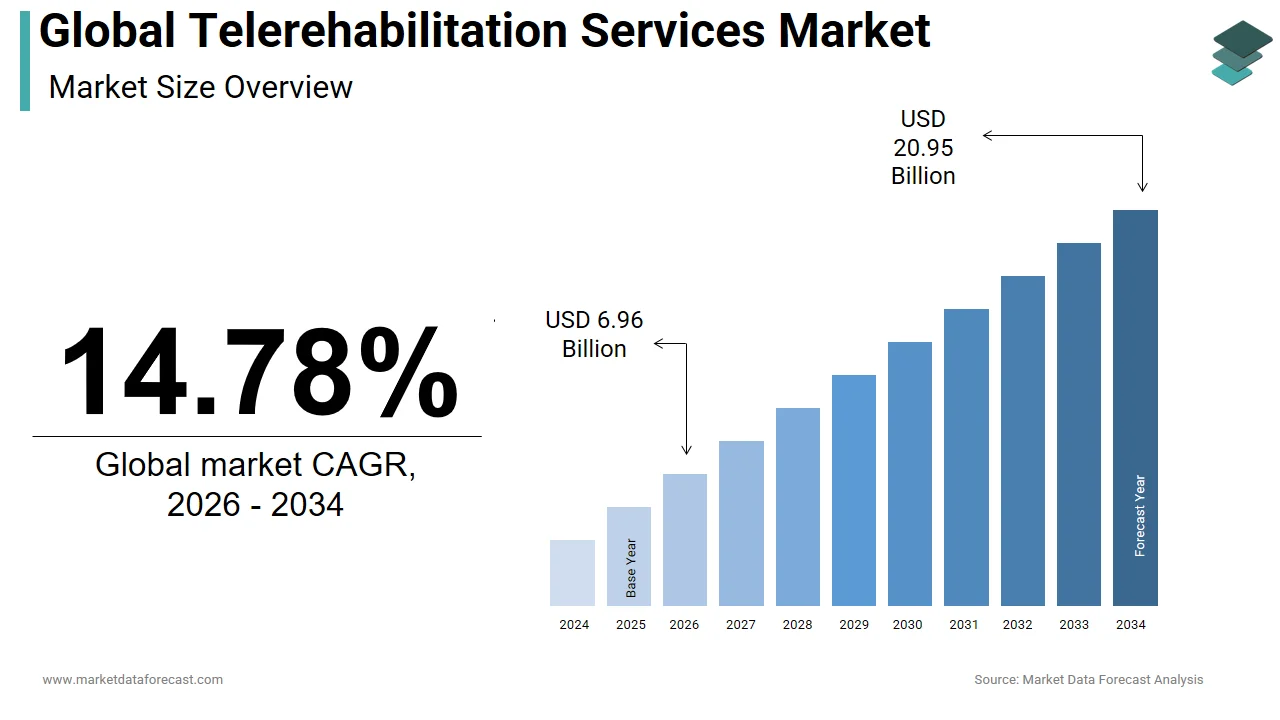
The global telerehabilitation services market was valued at USD 6.06 billion in 2025 and is projected to grow from USD 6.96 billion in 2026 to USD 20.95 billion by 2034, registering a CAGR of 14.78% from 2026 to 2034. Market growth is driven by the increasing adoption of digital healthcare, rising demand for remote rehabilitation services, and growing prevalence of chronic diseases, neurological disorders, and musculoskeletal conditions. Advancements in telehealth platforms, wearable monitoring technologies, artificial intelligence (AI), and virtual rehabilitation solutions are further accelerating market expansion. Increasing healthcare accessibility and the need for cost-effective rehabilitation services continue to strengthen demand worldwide.
Key Market Trends
- Increasing adoption of telehealth and remote rehabilitation services.
- Growing integration of AI, wearable devices, and virtual rehabilitation platforms.
- Rising demand for home-based rehabilitation and remote patient monitoring.
- Expansion of digital healthcare infrastructure and connected care solutions.
- Increasing focus on personalized rehabilitation programs and patient engagement technologies.
Segmental Insights
Based on therapy type, the physical therapy segment dominated the global telerehabilitation services market in 2025, driven by the growing demand for remote musculoskeletal rehabilitation, post-operative recovery programs, and chronic pain management services.
Based on end user, the healthcare facilities segment accounted for the largest market share in 2025, supported by the availability of specialized rehabilitation professionals, established telehealth infrastructure, and increasing integration of virtual rehabilitation services into routine patient care.
Regional Insights
The global telerehabilitation services market continues to expand across major regions, supported by digital health initiatives, increasing internet connectivity, and growing adoption of virtual healthcare services.
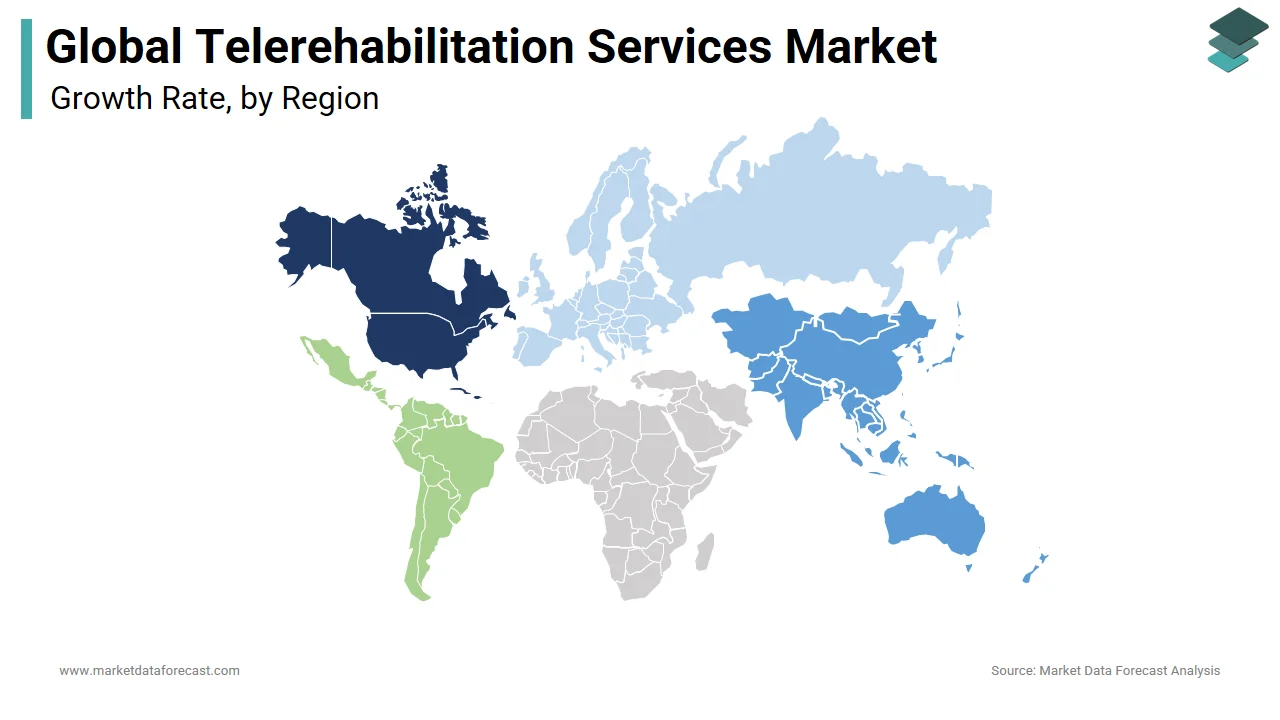
- North America dominated the global market by accounting for 41.2% share in 2025, driven by advanced healthcare infrastructure, widespread adoption of telehealth technologies, favorable reimbursement policies, and continuous investments in digital healthcare solutions.
- Europe held a significant share of the global market and is expected to witness steady growth, supported by increasing integration of digital health technologies, government initiatives to improve healthcare accessibility, and the growing need for rehabilitation services among aging populations.
- Asia-Pacific is projected to register the fastest growth during the forecast period, driven by expanding healthcare infrastructure, rapid digitalization, increasing smartphone and internet penetration, and rising investments in telemedicine and remote patient care across emerging economies.
Competitive Landscape
The global telerehabilitation services market is highly competitive, with leading healthcare technology providers focusing on virtual rehabilitation platforms, AI-enabled therapy solutions, wearable monitoring devices, and integrated telehealth ecosystems. Market participants are investing in product innovation, strategic partnerships, acquisitions, and expansion of digital healthcare services to strengthen their competitive position. Continuous advancements in remote monitoring, cloud-based rehabilitation platforms, and personalized digital therapy continue to shape the market landscape.
Prominent companies operating in the global telerehabilitation services market include American Well, Doctor On Demand, Inc., Hinge Health, Inc., SWORD Health Inc., MIRA Rehab Limited, Koninklijke Philips N.V., Kaia Health Inc., Cisco, NeoRehab, Jintronix, C3O Telemedicine, Care Innovation, LLC, Bosch Healthcare, and Cloud Physio–Medvivo Group.
 Download Free Sample Report
Global Telerehabilitation Services Market Size
The global telerehabilitation services market was valued at USD 6.06 billion in 2025, is estimated to reach USD 6.96 billion in 2026, and is projected to reach USD 20.95 billion by 2034, growing at a CAGR of 14.78% from 2026 to 2034.
Telerehabilitation services represent a transformative subset of telehealth that utilizes information and communication technologies to deliver rehabilitation care remotely to patients with physical, cognitive, or psychological impairments. This modality encompasses video conferencing, remote monitoring devices, and mobile health applications to facilitate assessments, interventions, and progress tracking for conditions such as stroke, spinal cord injuries, and orthopedic disorders. The significance of this sector is underscored by the global burden of disability; according to the World Health Organization, an estimated 1.3 billion people, or 16% of the global population, experience significant disability. Furthermore, as per the American Heart Association, stroke is a leading cause of long-term disability in the United States, with nearly 795,000 individuals suffering a new or recurrent stroke each year. The traditional model of in-person therapy often faces barriers related to geographic distance, transportation costs, and provider shortages. Telerehabilitation addresses these challenges by enabling continuous care in the patient’s home environment, which has been shown to improve adherence and outcomes. Regulatory bodies have increasingly recognized the efficacy of these services, leading to expanded reimbursement policies. The integration of wearable sensors and artificial intelligence further enhances the precision of remote therapy, allowing clinicians to monitor movement quality and adjust treatment plans in real time. This technological evolution is reshaping the landscape of rehabilitative medicine, making it more accessible and patient-centric.
MARKET DRIVERS
Rising Prevalence of Chronic Conditions and Aging Population
The escalating prevalence of chronic diseases and the rapid aging of the global population are majorly fuelling the expansion of the telerehabilitation services market, and the market is poised to see sustained demand as healthcare systems adapt to these demographic shifts over the coming years. As life expectancy increases, so does the incidence of age-related conditions such as osteoarthritis, Parkinson’s disease, and post-surgical recovery needs that require ongoing therapeutic intervention. According to the United Nations Department of Economic and Social Affairs, the number of people aged 65 years or older is projected to double from 727 million in 2020 to 1.5 billion by 2050. This demographic shift creates an unprecedented demand for rehabilitative care that traditional healthcare systems struggle to meet due to capacity constraints. As per the Global Burden of Disease study published in The Lancet, musculoskeletal disorders are the second largest contributor to years lived with disability worldwide, necessitating long-term management strategies. Telerehabilitation offers a scalable solution by allowing therapists to manage larger patient caseloads efficiently without compromising care quality. Remote monitoring enables early detection of complications and timely adjustments to therapy protocols, reducing hospital readmissions. The convenience of receiving care at home is particularly beneficial for elderly patients with mobility limitations. This alignment between demographic trends and service delivery models ensures sustained growth in the adoption of telerehabilitation solutions across diverse healthcare settings.
Shortage of Healthcare Professionals in Rural and Underserved Areas
The critical shortage of qualified rehabilitation professionals in rural and underserved regions is further boosting the telerehabilitation services market expansion as these areas seek to stabilize their clinical capacity over the next several years. Many geographic areas face a severe maldistribution of physical therapists, occupational therapists, and speech-language pathologists, leaving patients with limited access to essential care. According to the Health Resources and Services Administration, the demand for physical therapists is projected to grow significantly through 2030, with persistent shortages anticipated in medically underserved rural communities. This gap is even more pronounced in rural communities where recruitment and retention of specialists are challenging. As per the National Rural Health Association, individuals residing in rural areas experience reduced access to specialized rehabilitation services, which contributes to higher rates of long-term disability. Telerehabilitation bridges this geographic divide by connecting patients with specialists located in urban centers or other regions. Virtual consultations eliminate travel burdens and reduce wait times, ensuring that patients receive consistent and expert guidance. This technology also allows local general practitioners to collaborate with remote specialists, enhancing the overall quality of care. By leveraging digital platforms, healthcare systems can optimize their workforce distribution and extend their reach to populations that would otherwise remain underserved. This strategic utilization of technology addresses a fundamental structural weakness in the healthcare infrastructure.
MARKET RESTRAINTS
Reimbursement Uncertainty and Regulatory Variability
Inconsistent reimbursement policies and regulatory variability across different jurisdictions are major impediments to the telerehabilitation services market growth. While many countries have expanded coverage during public health emergencies, the long-term sustainability of these payment models remains uncertain. According to the Kaiser Family Foundation, reimbursement rates for telehealth services vary widely among private insurers and government programs, creating financial unpredictability for providers. In some regions, strict parity laws requiring equal payment for virtual and in-person visits are not fully enforced, discouraging clinics from investing in telerehabilitation infrastructure. As per the Centers for Medicare and Medicaid Services, specific billing requirements and limitations on eligible provider types continue to restrict the scope of reimbursable telerehabilitation sessions in various settings. Additionally, cross-state or cross-border licensing requirements complicate the delivery of services to patients in different locations. Providers must navigate a complex web of regulations that differ by region, increasing administrative burdens and compliance costs. This regulatory fragmentation hinders the development of standardized national or international telerehabilitation networks. Until clear and consistent reimbursement frameworks are established, many healthcare organizations may hesitate to fully integrate telerehabilitation into their standard care pathways, which is limiting global market growth.
Technological Barriers and Digital Divide Among Patients
The technological barriers and the digital divide among patient populations are further hampering the expansion of the global telerehabilitation services market. Effective telerehabilitation requires reliable high-speed internet access, compatible devices, and digital literacy, which are not universally available. According to the Federal Communications Commission, approximately 14.5 million people in the United States lack access to broadband internet, with higher concentrations in rural and low-income urban areas. As per the Pew Research Center, roughly 25% of adults in lower-income households do not own a smartphone, and a significant portion of older adults still report difficulty navigating digital interfaces. This disparity excludes vulnerable populations who often have the greatest need for rehabilitation services. Furthermore, patients with cognitive impairments or severe physical disabilities may struggle to operate digital interfaces without assistance. The lack of user-friendly designs tailored to these specific needs further exacerbates the issue. Without adequate technical support and training, patients may experience frustration and disengagement, leading to poor adherence and suboptimal outcomes. Addressing this digital divide requires significant investment in infrastructure and educational programs, which many healthcare systems are currently ill-equipped to provide. This limitation restricts the potential reach of telerehabilitation and perpetuates health inequities.
MARKET OPPORTUNITIES
Integration of Artificial Intelligence and Wearable Technology
The integration of artificial intelligence and advanced wearable technology presents a major opportunity for the global telerehabilitation services market. AI algorithms can analyze movement data captured by sensors to provide real-time feedback on exercise form and progress, reducing the need for constant therapist supervision. According to a study published in the Journal of NeuroEngineering and Rehabilitation, AI systems integrated with sensor technology have demonstrated the ability to provide automated movement feedback with high clinical agreement. Wearable devices such as smart gloves, inertial measurement units, and haptic feedback suits allow for precise monitoring of range of motion and muscle activity. As per Grand View Research, the global wearable medical device market is expanding rapidly, facilitating the adoption of these tools in home-based therapy. These technologies enable personalized treatment plans that adapt dynamically to patient performance, improving engagement and outcomes. Furthermore, the data collected can be used for predictive analytics to identify risks of regression or injury. This technological synergy transforms telerehabilitation from a simple communication tool into a comprehensive diagnostic and therapeutic platform. By leveraging these innovations, providers can offer higher value care and differentiate their services in a competitive market.
Expansion into Mental Health and Cognitive Rehabilitation
The expanding application of telerehabilitation into mental health and cognitive rehabilitation offers significant growth opportunities for the telerehabilitation services market. Conditions such as traumatic brain injury, dementia, and post-traumatic stress disorder require consistent cognitive and behavioural interventions that can be effectively delivered remotely. According to the World Health Organization, the global prevalence of anxiety and depression increased by 25% during the first year of the COVID-19 pandemic, creating an urgent need for scalable remote interventions. Telerehabilitation platforms equipped with cognitive training modules and virtual reality environments can provide immersive therapeutic experiences that stimulate neural plasticity. As per clinical evidence reviewed by the American Psychological Association, telepsychology and cognitive telerehabilitation show efficacy levels comparable to face-to-face therapy for a wide range of mental health conditions. This diversification allows providers to address holistic patient needs and capture new revenue streams. The stigma associated with visiting mental health clinics is also reduced when care is delivered privately at home. Furthermore, insurance coverage for mental health telehealth services is often more robust than for physical therapy, providing a favorable financial environment. By broadening the scope of services, telerehabilitation providers can enhance patient retention and contribute to comprehensive wellness outcomes.
MARKET CHALLENGES
Data Privacy and Security Concerns
Ensuring data privacy and security remains a critical challenge for the growth of the telerehabilitation services market due to the sensitive nature of health information transmitted over digital networks. Cyberattacks on healthcare systems have increased significantly, posing risks to patient confidentiality and trust. According to the HIPAA Journal, there were 725 large-scale healthcare data breaches reported in the United States in 2022, exposing the records of millions of individuals. Telerehabilitation platforms must comply with stringent regulations such as the Health Insurance Portability and Accountability Act in the US and the General Data Protection Regulation in Europe. As per industry security standards, implementing robust encryption, secure authentication, and regular security audits requires substantial financial and technical resources. Small practices may struggle to meet these requirements, limiting their ability to offer compliant services. Additionally, patients may be hesitant to share personal health data due to fears of unauthorized access or misuse. Any breach can result in severe legal penalties and reputational damage for providers. Building a secure infrastructure is not a one-time effort but an ongoing commitment that demands continuous vigilance. This persistent threat landscape complicates the adoption of telerehabilitation, particularly among privacy-conscious populations and institutions.
Limited Clinical Standardization and Evidence Base
The lack of standardized clinical protocols and a comprehensive evidence base for specific telerehabilitation interventions poses a significant challenge to its widespread acceptance. While general telehealth efficacy is well documented, specific guidelines for remote delivery of complex rehabilitation techniques are still evolving. According to systematic reviews in the Cochrane Library, the existing body of research shows significant heterogeneity in study designs, which limits the ability to establish universal clinical best practices. As per clinical surveys, many healthcare providers report uncertainty regarding the adaptation of hands-on manual therapy techniques to virtual formats, which can lead to inconsistent quality of care. Furthermore, the rapid pace of technological change outpaces the development of clinical guidelines, leaving practitioners without clear direction. Professional organizations are working to establish standards, but the process is slow and complex. Without uniform standards, payers may be reluctant to cover new services, and providers may hesitate to adopt them. Bridging this gap requires extensive research and collaboration among clinicians, researchers, and policymakers to develop evidence-based protocols that ensure safety and efficacy.
REPORT COVERAGE
| REPORT METRIC | DETAILS |
| Market Size Available | 2025 to 2034 |
| Base Year | 2025 |
| Forecast Period | 2026 to 2034 |
| Segments Covered | By Component, Therapy, Application, End-user, and Region. |
| Various Analyses Covered | Global, Regional, and Country-Level Analysis, Segment-Level Analysis, Drivers, Restraints, Opportunities, Challenges; PESTLE Analysis; Porter’s Five Forces Analysis, Competitive Landscape, Analyst Overview of Investment Opportunities |
| Regions Covered | North America, Europe, Asia Pacific, Latin America, Middle East & Africa |
| Market Leaders Profiled | American Well, Doctor On Demand, Inc., Hinge Health, Inc., MIRA Rehab Limited, Koninklijke Philips N.V, Cisco, NeoRehab, Jintronix, C3O telemedicine, Care Innovation, LLC., Bosch Healthcare, Cloud Physio-Medvivo Group. |
SEGMENT ANALYSIS
By Component Type Insights
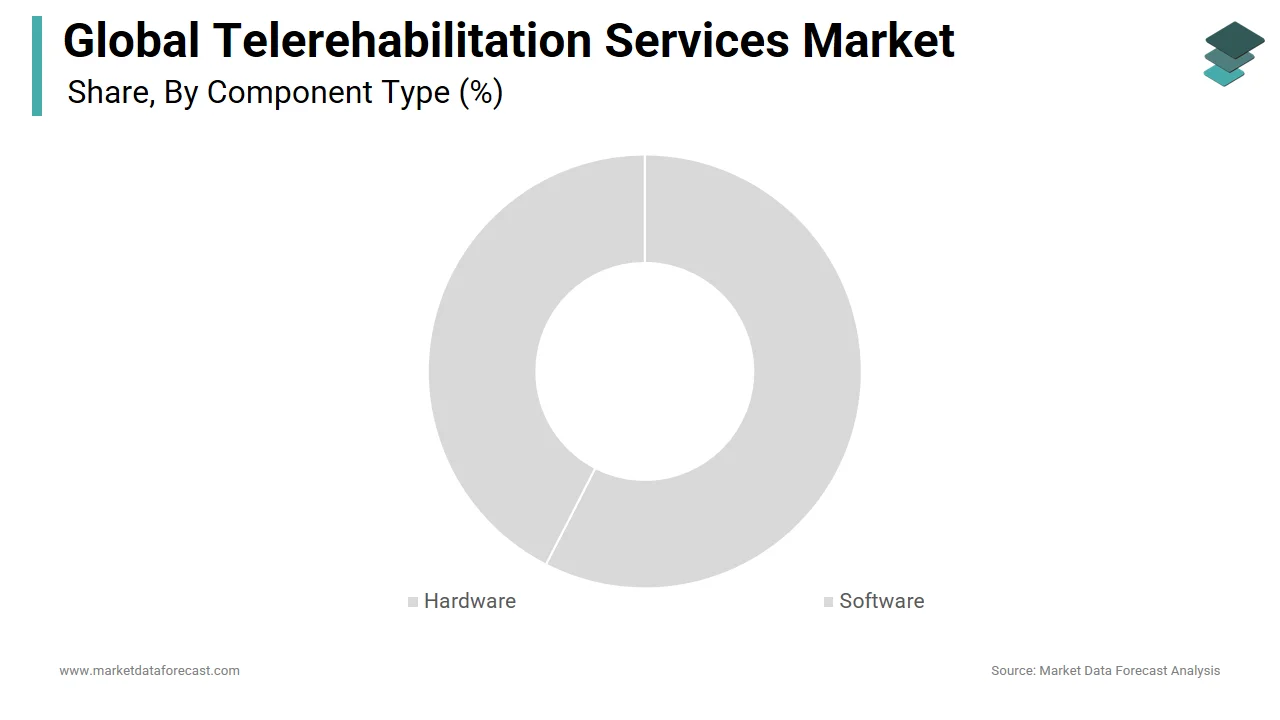
Based on the component type, the software segment held a market share of 61.7% in 2022. The rising adoption of various software has significantly risen to assist the healthcare system. The software also helps to achieve greater engagement and improved outcomes. Thus this segment is expected to grow at the fastest CAGR due to rising demand for reducing the rapidly rising medical cost, the growing need for accurate and timely information procurement, and rising patient care costs.
The hardware segment is also anticipated to grow at a healthy CAGR and anticipated to boost market growth during the projected period.
By Therapy Type Insights
The physical therapy segment led the market by capturing the highest share of the global market in 2025 due to the high prevalence of musculoskeletal disorders and post-surgical recovery needs. Conditions such as back pain, arthritis, and sports injuries require regular exercise and monitoring that can be effectively delivered remotely. According to the Global Burden of Disease study, musculoskeletal conditions represent the second-largest contributor to disability across the globe. As per the World Health Organization, low back pain remains the single leading cause of disability worldwide, driving a massive requirement for accessible therapeutic interventions. Telerehabilitation allows physical therapists to guide patients through strengthening and stretching exercises via video conferencing, ensuring proper form and progression. The convenience of remote sessions reduces barriers related to transportation and scheduling, improving adherence. Furthermore, the aging population is more susceptible to joint issues, sustaining long-term demand for physical therapy services. The established protocols for remote assessment of range of motion and strength make this application highly scalable. Healthcare systems prioritize physical therapy to manage chronic pain and reduce opioid reliance. This broad applicability and clinical validity secure the dominant position of physical therapy in the telerehabilitation landscape.
On the other hand, the chronic diseases segment is anticipated to record a promising CAGR of 18.8% during the forecast period owing to the rising burden of cardiovascular and respiratory conditions that require long-term management. Patients with heart failure, chronic obstructive pulmonary disease, and diabetes benefit from continuous monitoring and lifestyle coaching provided through telerehabilitation. According to the Centers for Disease Control and Prevention, approximately 60% of adults in the United States live with at least one chronic disease, while 40% manage two or more. As per a study published in the American Heart Association journals, remote monitoring of physiological parameters can reduce hospital readmissions for patients with heart failure by approximately 50%. Telerehabilitation platforms integrate with wearable devices to track parameters such as heart rate, oxygen saturation, and physical activity, alerting clinicians to early signs of deterioration. This proactive approach prevents acute episodes and improves quality of life. The shift toward value-based care incentivizes providers to adopt these technologies to manage population health effectively. The scalability of remote monitoring allows for the management of large patient cohorts with minimal resource intensity. This clinical and economic value drives the rapid expansion of telerehabilitation services for chronic disease management.
By End-User Insights
The healthcare facilities segment held the highest share of the global market in 2025 because they possess the necessary infrastructure, licensed professionals, and established patient bases to deliver these services effectively. Hospitals, clinics, and rehabilitation centers have the capital to invest in secure platforms and training required for compliant telehealth delivery. According to the American Hospital Association, over 90% of hospitals in the United States have implemented some form of telehealth technology, facilitating the integration of telerehabilitation into their service offerings. As per the National Association of Community Health Centers, federally qualified health centers are increasingly leveraging telehealth to provide specialized rehabilitation care to underserved populations. These facilities can bundle telerehabilitation with other medical services, providing coordinated care that improves outcomes. The presence of multidisciplinary teams allows for comprehensive assessments and referrals within the same system. Furthermore, healthcare facilities have established billing and administrative processes that streamline reimbursement for telehealth services. Patients often prefer receiving care from trusted institutions rather than independent providers. This institutional backing ensures quality assurance and continuity of care. The ability to scale operations across multiple locations further strengthens the dominance of healthcare facilities in the market.
However, the homecare segment is estimated to showcase the fastest CAGR of 20.3% during the forecast period in the global market owing to the strong patient preference for receiving rehabilitation services in the comfort and convenience of their own homes. Many patients, particularly the elderly and those with mobility issues, find traveling to clinics burdensome and stressful. According to a survey by the University of Michigan National Poll on Healthy Aging, approximately 75% of older adults express a preference for receiving care in their own home rather than in a clinic setting. As per the National Association for Home Care & Hospice, home health agencies are increasingly integrating telerehabilitation to extend their operational reach and improve patient engagement. Receiving care at home allows for therapy to be contextualized to the patient’s actual living environment, enhancing functional relevance. Patients can practice exercises using their own furniture and spaces, which improves transfer of skills to daily activities. The flexibility of scheduling remote sessions also accommodates work and family commitments, increasing adherence. This patient-centric approach aligns with the broader trend toward decentralized healthcare. The emotional comfort of being in a familiar setting also reduces anxiety and promotes engagement. These factors collectively drive the rapid adoption of telerehabilitation in the homecare sector.
REGIONAL ANALYSIS
North America Telerehabilitation Services Market Analysis
North America accounted for 41.2% of the global market share in 2025, and the region is expected to continue its growth trajectory over the next several years due to ongoing digital health adoption and infrastructure investments. The United States is the primary contributor, with widespread adoption of telehealth technologies across hospitals and home care agencies. According to the American Telemedicine Association, the United States continues to lead in telehealth utilization, supported by high-speed broadband availability across the country. As per the Centers for Medicare and Medicaid Services, permanent expansions in telehealth billing codes have solidified the financial viability of remote rehabilitation services. Canada also contributes significantly, with provincial health systems investing in digital health to address geographic disparities. The presence of major technology companies and healthcare providers fosters innovation and competition. High healthcare expenditure allows for investment in advanced tools such as VR and wearables. Regulatory frameworks like HIPAA ensure data security, building patient trust. The aging population and high prevalence of chronic diseases further fuel demand. North America’s leadership is maintained through continuous technological advancement and policy support, setting global standards for telerehabilitation delivery and integration.
Europe Telerehabilitation Services Market Analysis
Europe accounts for a prominent share of the global telerehabilitation market, and the market in this region is likely to witness steady expansion as countries prioritize digital health integration to meet the needs of aging populations over the next few years. Countries such as Germany, France, and the United Kingdom are leading adopters, driven by government initiatives to improve healthcare efficiency and accessibility. According to the European Commission, the EU Digital Single Market strategy actively promotes cross-border telehealth services, facilitating collaboration and standardization. As per reports from the National Health Service in the UK, digital therapy programs have been significantly scaled to reduce patient waiting times. The General Data Protection Regulation ensures high privacy standards, although it adds compliance complexity. The aging population in Europe creates substantial demand for remote care solutions. Reimbursement models vary by country but are increasingly supportive of digital health. Strong research institutions contribute to the evidence base for telerehabilitation efficacy. Public-private partnerships drive innovation in wearable technology and AI. Europe’s focus on equity and quality ensures sustainable growth. The region balances technological adoption with regulatory caution, creating a stable and mature market environment.
Asia Pacific Telerehabilitation Services Market Analysis
Asia Pacific represents the fastest-growing region, and the area is expected to experience robust growth as rapid digitalization and smartphone penetration continue to enhance healthcare delivery over the coming years. Countries like China, India, Japan, and Australia are key drivers, with significant investments in telehealth infrastructure. According to the World Health Organization, mobile health adoption is surging across the Asia Pacific region due to extremely high smartphone penetration rates. As per government data from China, the country has successfully integrated internet hospitals into its national healthcare system, enabling the delivery of large-scale telerehabilitation services. Japan’s super-aging society creates urgent demand for remote care solutions to support elderly independence. India’s vast rural population benefits from telerehabilitation in bridging the specialist gap. Government initiatives such as Digital India support technology deployment. Lower costs of labor and technology development attract global players. The region faces challenges in infrastructure uniformity but shows immense potential. Rising middle-class incomes increase affordability of digital health services. Asia Pacific’s dynamic growth is driven by necessity and innovation, positioning it as a future leader in the telerehabilitation market.
Latin America Telerehabilitation Services Market Analysis
Latin America holds a notable share of the global telerehabilitation market, and the regional market is likely to see gradual growth as internet accessibility improves and local governments expand digital health policies during the next few years. Brazil and Mexico are the primary markets, driven by increasing internet access and government health initiatives. According to the Pan American Health Organization, telehealth is being actively promoted as a strategy to improve access to care in remote and underserved areas. As per regional health reports, Brazil has implemented national telehealth guidelines to support primary care and rehabilitation services. Economic constraints limit widespread adoption of high-end technologies, but mobile-based solutions are gaining traction. The private sector is leading innovation, offering affordable telerehabilitation packages. Urbanization and rising chronic disease rates drive demand. Regulatory frameworks are evolving to support digital health licensing and reimbursement. Cultural acceptance of mobile technology is high, facilitating user adoption. Challenges include uneven broadband distribution and economic volatility. However, the need for efficient healthcare delivery drives steady progress. Latin America’s market is characterized by grassroots innovation and gradual institutional integration, offering opportunities for scalable low-cost solutions.
Middle East and Africa Telerehabilitation Services Market Analysis
The Middle East and Africa is expected to exhibit a moderate CAGR in the global telerehabilitation market over the forecast period, and this region is expected to demonstrate significant potential for growth as major infrastructure projects and digital health strategies mature over the next several years. Gulf Cooperation Council countries like Saudi Arabia and the United Arab Emirates are leading adoption through significant investments in smart healthcare infrastructure. According to the Saudi Ministry of Health, Vision 2030 includes digital health transformation as a key pillar, supporting telerehabilitation development. As per regional health authority reports, the United Arab Emirates has launched comprehensive telehealth platforms connecting patients with global specialists. In Africa, South Africa and Kenya are pioneers, using mobile technology to overcome infrastructure gaps. The lack of specialists in rural areas makes telerehabilitation a critical solution. Internet penetration is increasing, enabling broader access. Challenges include limited funding and regulatory fragmentation. International partnerships and aid organizations support pilot projects. The young population in Africa offers long-term potential as digital literacy improves. The Middle East focuses on premium high-tech solutions, while Africa leverages mobile simplicity. Both subregions are laying the groundwork for future expansion in telerehabilitation services.
COMPETITIVE LANDSCAPE
The competition in the global telerehabilitation services market is characterized by intense rivalry among specialized digital health startups, established telehealth providers, and traditional healthcare institutions. Major players compete primarily based on clinical efficacy, user experience, and technological innovation. The market features a mix of pure-play digital therapy companies and diversified health tech firms offering broader virtual care suites. Innovation drives competitive advantage as companies strive to integrate artificial intelligence, computer vision, and wearable sensors to enhance remote monitoring and feedback. Pricing strategies play a crucial role, particularly in business-to-business models where employers and insurers seek cost-effective solutions for musculoskeletal and chronic care. Companies invest significantly in clinical validation and peer-reviewed studies to build trust and secure reimbursement. Regulatory compliance and data security are critical differentiators influencing purchasing decisions by healthcare systems. Collaborations with medical device manufacturers and pharmaceutical companies are becoming increasingly common to create integrated care ecosystems. This multifaceted competition ensures continuous improvement in service quality but requires substantial investment in technology and clinical evidence generation.
KEY MARKET PLAYERS
The prominent key players in the global Telerehabilitation services market are
- American Well
- Doctor On Demand, Inc.
- Hinge Health, Inc.
- SWORD Health Inc
- MIRA Rehab Limited
- Koninklijke Philips N.V.
- Kaia Health Inc
- Cisco
- NeoRehab
- Jintronix
- C3O Telemedicine
- Care Innovation, LLC
- Bosch Healthcare
- Cloud Physio–Medvivo Group
TOP PLAYERS IN THE MARKET
- Hinge Health Inc is a leading digital musculoskeletal care provider that combines physical therapy with behavioral health support through its comprehensive telerehabilitation platform. The company partners with employers and health plans to deliver personalized exercise programs and virtual coaching for back and joint pain. Recent strategic initiatives include expanding its network of licensed physical therapists and integrating advanced motion tracking technology using smartphone cameras. Hinge Health actively publishes clinical data demonstrating reduced surgery rates and lower healthcare costs for its members. The company also invests in artificial intelligence to personalize treatment plans and predict patient adherence. By focusing on whole-person care and measurable outcomes, Hinge Health strengthens its position as a preferred solution for large enterprises seeking to manage musculoskeletal benefits effectively and improve employee well-being.
- SWORD Health Inc contributes significantly to the global telerehabilitation market by offering a digital physical therapy platform powered by computer vision and artificial intelligence. The company provides patients with real-time feedback on their exercise form, ensuring safety and efficacy during remote sessions. Recent actions include securing substantial funding to expand its operations across Europe and North America and partnering with major health systems. SWORD Health focuses on treating a wide range of conditions from post-surgical recovery to chronic pain. The company emphasizes data-driven care by collecting detailed movement metrics to optimize treatment protocols. By leveraging proprietary AI technology, SWORD Health enhances therapist productivity and patient engagement. This technological edge allows the company to scale its services efficiently while maintaining high clinical standards. Its commitment to innovation and accessibility positions it as a key disruptor in the traditional rehabilitation landscape.
- Kaia Health Inc is a prominent player in the digital therapeutics space specializing in telerehabilitation for musculoskeletal conditions and chronic obstructive pulmonary disease. The company utilizes computer vision technology to guide patients through therapeutic exercises without the need for wearable sensors. Recent strategic moves include collaborations with pharmaceutical companies and insurers to integrate its solutions into broader care pathways. Kaia Health actively engages in clinical trials to validate the effectiveness of its digital interventions. The company also expands its geographic presence by launching localized versions of its platform in multiple languages. By focusing on evidence-based treatments and user-friendly design, Kaia Health improves patient adherence and outcomes. Its ability to address both physical and respiratory rehabilitation needs diversifies its market appeal. This dual focus strengthens its competitive position and drives growth in the global digital health sector.
TOP STRATEGIES USED BY KEY MARKET PARTICIPANTS
Key players in the telerehabilitation services market employ several strategic approaches to maintain and enhance their competitive positions. Product innovation remains a primary strategy with companies investing heavily in research and development to create novel formulations with improved efficacy and safety profiles. Expansion into digital health solutions is another critical tactic as firms integrate telemedicine and mobile applications to support patient engagement and adherence. Strategic partnerships with healthcare providers and insurance companies help facilitate better access to treatments and improve reimbursement coverage. Marketing campaigns focused on disease awareness and education are widely used to drive diagnosis rates and encourage early intervention. Companies also pursue geographic expansion within the region to tap into underserved markets and increase their customer base. Additionally, many firms focus on portfolio diversification by adding combination therapies that address multiple symptoms simultaneously. These strategies collectively enable market participants to navigate regulatory challenges, meet evolving patient needs, and sustain growth in a dynamic healthcare environment.
MARKET SEGMENTATION
This research report on the global Telerehabilitation Services Market has been segmented and sub-segmented based on the Component, Therapy, Application, and region.
By Component Type
- Hardware
- Software
By Therapy Type
- Clinical Therapy
- Physical Therapy
- Chronic Diseases
- Occupational Therapy
- Others
By Application Type
- Cardiovascular
- Orthopedic
- Neurology
- Pediatric
- Others
By End-user
- Healthcare Facilities
- Homecare
By Region
- North America
- Europe
- Asia-Pacific
- Latin America
- Middle East and Africa