- Product Description Description
- Table of Contents TOC
- List of Table & Figure LOT
- Get Free Sample PDF Sample PDF
Market Size, 2025
$43.78 BnMarket Estimate, 2026
$47.46 BnMarket Forecast, 2034
$90.48 BnCAGR, 2026–2034
8.40%U.S. Vaccine Market Report Summary
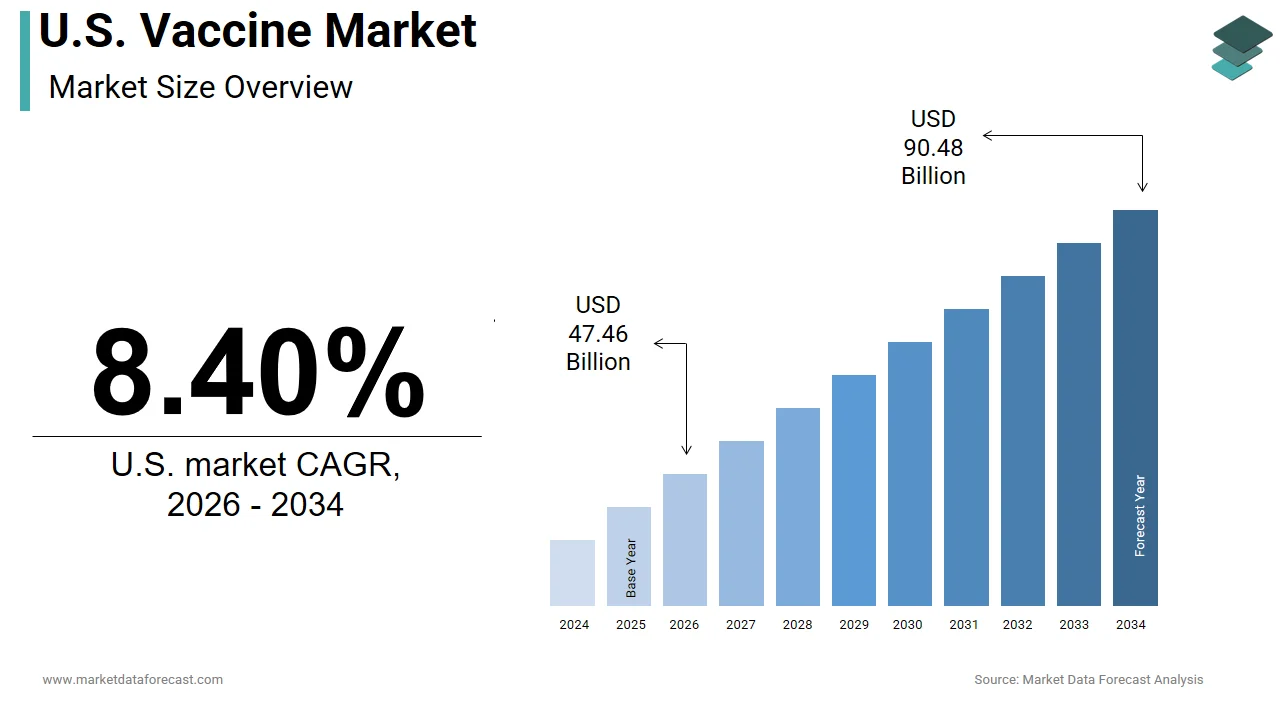
The U.S. vaccine market was valued at USD 43.78 billion in 2025, is estimated to reach USD 47.46 billion in 2026, and is projected to reach USD 90.48 billion by 2034, growing at a CAGR of 8.40% from 2026 to 2034. Market growth is driven by increasing investments in vaccine research and development, rising prevalence of infectious diseases, and growing government initiatives to strengthen immunization programs. Advancements in mRNA technologies, recombinant vaccines, and next-generation vaccine platforms are significantly transforming the vaccine landscape in the United States. Additionally, expanding adult vaccination programs, increasing awareness regarding preventive healthcare, and strong public-private collaborations are accelerating market growth across the country.
Key Market Trends
- Rising investments in vaccine research and biotechnology innovation.
- Increasing adoption of mRNA and next-generation vaccine technologies.
- Growth in preventive healthcare and immunization programs.
- Expansion of adult and pediatric vaccination coverage.
- Increasing government and private sector collaboration in vaccine development.
Segmental Insights
- Based on type, the live-attenuated vaccines segment dominated the United States vaccine market in 2025, driven by strong efficacy and long-lasting immune response capabilities.
- Based on route of administration, the parenteral administration segment held the leading share in 2025, supported by widespread use of injectable vaccines across immunization programs.
- Based on disease indication, the viral disease vaccines segment accounted for the highest share in 2025, driven by increasing focus on influenza, COVID-19, HPV, and other viral disease prevention.
Country-Level Insights
- The United States is expected to maintain its dominant position as a global hub for vaccine innovation and revenue generation, supported by advanced biotechnology infrastructure, strong pharmaceutical presence, and extensive immunization initiatives.
Competitive Landscape
The U.S. vaccine market is highly competitive, with companies focusing on next-generation vaccine technologies, clinical research expansion, and strategic partnerships. Investments in mRNA platforms, pandemic preparedness, and advanced biologics manufacturing are shaping the competitive landscape.
Prominent companies operating in the U.S. vaccine market include GSK, Sanofi, Pfizer Inc., Merck & Co., Novartis, Emergent BioSolutions, CSL Limited, Inovio Pharmaceuticals, Bavarian Nordic, and Mitsubishi Tanabe Pharma Corporation.
U.S. Vaccine Market Size
The U.S. vaccine market was valued at USD 43.78 billion in 2025, is estimated to reach USD 47.46 billion in 2026, and is projected to reach USD 90.48 billion by 2034, growing at a CAGR of 8.40% from 2026 to 2034.
According to the Centers for Disease Control and Prevention, vaccines have reduced preventable infectious diseases to an all-time low, and now few people experience the devastating effects of measles, pertussis, and other illnesses. According to the Centers for Disease Control and Prevention, influenza vaccination coverage among adults aged 18 years and older reached 41.9% during the 2024 to 2025 season, which represents a decline of 3.0 percentage points from the prior year. The Advisory Committee on Immunization Practices develops evidence-based recommendations for vaccine utilization across age groups and risk categories, which subsequently guide clinical practice nationwide. According to the Centers for Disease Control and Prevention, flu vaccination coverage among children aged 6 months through 17 years stood at 50.2% in the 2024 to 2025 season. The regulatory pathway for vaccine approval includes preclinical research, clinical trials, biologics license application submission, and post-licensure safety monitoring through systems like the Vaccine Adverse Event Reporting System. This comprehensive framework ensures that vaccines entering the U.S. market meet stringent scientific and public health standards.
MARKET DRIVERS
Aging Population Demographics Amplify Preventive Immunization Demand
The expanding cohort of older adults in the United States significantly elevates demand for vaccines targeting age-associated infectious diseases and complications, which is a key market driver. According to the U.S. Census Bureau, the population aged 65 years and older is projected to reach 80.8 million by 2040, representing nearly 22% of the total population. According to the Centers for Disease Control and Prevention, adults aged 65 years and older account for approximately 57% of influenza-associated hospitalizations and 71% of influenza-related deaths annually. This demographic reality drives utilization of high-dose, adjuvanted, and recombinant influenza vaccines specifically formulated for enhanced immune response in older populations. The Advisory Committee on Immunization Practices recommends pneumococcal vaccination for all adults aged 65 years and older, given that invasive pneumococcal disease incidence increases substantially with advancing age. According to the Centers for Disease Control and Prevention, the respiratory syncytial virus causes an estimated 110,000 to 180,000 hospitalizations among adults aged 50 years and older each year, prompting recent licensure of RSV vaccines for this age group. The convergence of population aging, heightened disease vulnerability, and targeted vaccine availability creates sustained demand momentum for immunization products designed to protect older adults from preventable morbidity and mortality.
Persistent Infectious Disease Burden Sustains Routine and Emergency Vaccine Utilization
The ongoing circulation of vaccine-preventable pathogens within the United States maintains consistent demand for both routine immunization and outbreak response vaccines, which is further boosting the vaccines market growth in the U.S. According to the Centers for Disease Control and Prevention, measles cases in the United States reached 800 confirmed infections between January and April of 2025, representing a significant increase in annual case counts. According to the Centers for Disease Control and Prevention, pertussis incidence reached approximately 43,321 reported cases in 2024, despite childhood vaccination efforts. The emergence of novel pathogens, such as SARS-CoV-2, demonstrated the critical importance of rapid vaccine development platforms capable of responding to emerging threats. According to the National Institutes of Health, the U.S. government invested at least 31.9 billion dollars to develop, produce, and purchase mRNA-based COVID-19 vaccines, underscoring the scale of public health commitment to emergency immunization. According to the Centers for Disease Control and Prevention, seasonal influenza caused an estimated 51 million illnesses, 710,000 hospitalizations, and 45,000 deaths during the 2024 to 2025 season. This persistent disease burden, combined with evolving pathogen characteristics and population immunity gaps, ensures continued utilization of existing vaccines and accelerated development of next-generation immunization products.
MARKET RESTRAINTS
Vaccine Hesitancy and Misinformation Undermine Public Confidence and Uptake
Widespread skepticism regarding vaccine safety and efficacy represents a significant barrier to the expansion of the U.S. vaccine market. For instance, approximately 19.5% of U.S. parents expressed hesitancy specifically toward childhood vaccinations for their children. According to Gallup polling data, only 40% of adults in 2024 stated that childhood vaccination was extremely important, representing a substantial decline from 58% in 2019. Misinformation disseminated through digital platforms amplifies unfounded concerns and erodes trust in scientific consensus regarding vaccine benefits. According to the National Immunization Survey, hesitancy levels for routine childhood vaccines ranged from 6% to 25% among U.S. parents, depending on the specific vaccine and demographic subgroup. The Centers for Disease Control and Prevention notes that the most commonly reported reasons for declining influenza vaccination include concerns about side effects, belief that the vaccine is ineffective, and perception of low personal risk. According to the Centers for Disease Control and Prevention, kindergarten exemption rates for state-required vaccines increased to 3.6% during the 2024 to 2025 school year. Addressing this restraint requires coordinated public health communication, community engagement, and transparent evidence dissemination to rebuild confidence in immunization programs.
Complex Regulatory Pathways and Manufacturing Requirements Constrain Product Development Timelines
The stringent regulatory framework governing vaccine development in the United States, while essential for safety, introduces significant time and resource constraints for manufacturers, which is further impeding the U.S. vaccines market growth. According to the Food and Drug Administration, the typical vaccine development process spans 10 to 15 years from initial research through licensure, reflecting the extensive preclinical and clinical evaluation required. As per FDA guidance documents, biologics license applications for vaccines must include comprehensive data on manufacturing processes, quality control procedures, and clinical trial outcomes across diverse populations. The Center for Biologics Evaluation and Research conducts facility inspections and lot release testing to ensure consistent product quality, which adds additional layers of oversight to the commercialization pathway. According to industry analyses, the capital investment required to establish vaccine manufacturing capacity capable of meeting U.S. regulatory standards often exceeds 500 million dollars per facility. Furthermore, the requirement for post-licensure safety monitoring through systems like the Vaccine Safety Datalink necessitates ongoing resource allocation for pharmacovigilance activities. These regulatory demands, while critical for public protection, can delay market entry for innovative vaccine platforms and increase development costs that may limit participation by smaller biotechnology firms.
MARKET OPPORTUNITIES
Advancement of mRNA and Novel Platform Technologies Enables Rapid Response Capabilities
The maturation of messenger RNA and other innovative vaccine platforms is a promising opportunity for the U.S. vaccines market. According to the National Institute of Allergy and Infectious Diseases, decades of federal investment in basic mRNA research enabled the unprecedented speed of COVID-19 vaccine development and licensure. As per FDA regulatory guidance, the agency has established expedited pathways, including priority review and rolling submission processes, specifically designed to facilitate the evaluation of novel vaccine technologies. The flexibility of mRNA platforms allows for rapid sequence modification to address emerging viral variants or novel pathogens, reducing development timelines from years to months. According to industry reports, the U.S.-based mRNA vaccine market is projected to expand significantly as manufacturers pursue applications beyond infectious diseases, including oncology, autoimmune conditions, and personalized medicine. The integration of artificial intelligence and computational modeling further enhances antigen design and immune response prediction capabilities. This technological convergence positions the United States to maintain leadership in next-generation vaccine innovation while addressing unmet medical needs across diverse therapeutic areas.
Expansion of Adult Immunization Programs Addresses Growing Preventive Health Needs
The increasing recognition of vaccine-preventable disease burden among adults is another significant opportunity for market growth through expanded immunization recommendations and utilization. According to the Centers for Disease Control and Prevention, only 41.9% of U.S. adults received influenza vaccination during the 2024 to 2025 season, indicating substantial room for coverage improvement. As per Advisory Committee on Immunization Practices guidelines, recent additions, including respiratory syncytial virus vaccines for older adults and expanded pneumococcal recommendations, have broadened the adult immunization portfolio. The integration of vaccination services within primary care, pharmacies, and workplace health programs enhances accessibility for working-age populations. According to the Centers for Disease Control and Prevention, adults with chronic conditions, such as diabetes, cardiovascular disease, or immunocompromised, experience disproportionately higher rates of vaccine-preventable complications, creating targeted opportunities for risk-based immunization strategies. The growing emphasis on preventive health within value-based care models further incentivizes provider adoption of comprehensive adult vaccination protocols. This convergence of clinical evidence, policy support, and healthcare system alignment positions adult immunization as a high-growth segment within the U.S. vaccine market.
MARKET CHALLENGES
Supply Chain Vulnerabilities and Cold Chain Requirements Complicate Distribution Logistics
Maintaining product integrity throughout the vaccine distribution network is a major challenge to the U.S. vaccine market expansion. According to the Centers for Disease Control and Prevention, many vaccine products require storage within narrow temperature ranges, typically between 2 degrees Celsius and 8 degrees Celsius, to preserve potency. As per FDA guidance, manufacturers must demonstrate stability under specified storage conditions and provide detailed handling instructions to ensure product efficacy reaches end users. The emergence of ultra-cold chain requirements for certain mRNA-based vaccines introduced additional complexity, requiring specialized freezers capable of maintaining temperatures below- 60 degrees Celsius. According to industry analyses, approximately 25% of vaccine shipments experience temperature excursions during transit, potentially compromising product quality and necessitating costly replacements. Rural and underserved communities face particular challenges in accessing reliable cold chain infrastructure, which can exacerbate health equity gaps in immunization coverage. The logistical demands of maintaining product viability across diverse geographic and climatic conditions increase operational costs and require continuous investment in monitoring technologies and contingency planning.
Evolving Pathogen Characteristics and Immune Escape Mechanisms Challenge Long Term Vaccine Efficacy
The capacity of infectious agents to undergo genetic mutation and antigenic variation is further challenging the U.S. vaccines market expansion. According to the Centers for Disease Control and Prevention, influenza viruses undergo continuous antigenic drift, requiring annual reformulation of seasonal vaccines to match circulating strains. As per surveillance data, the emergence of SARS-CoV-2 variants with altered spike protein configurations necessitated multiple updates to COVID-19 vaccine compositions to maintain protective immunity. The phenomenon of immune escape, wherein pathogens evolve to evade vaccine-induced antibodies, requires ongoing genomic surveillance and rapid response manufacturing capabilities. According to research published in Clinical Infectious Diseases, the rate of antigenic change varies significantly among pathogens, with some viruses like norovirus exhibiting substantial strain diversity that complicates universal vaccine development. Furthermore, waning immunity over time necessitates booster dose strategies, which increase program complexity and resource requirements. Addressing this challenge demands sustained investment in basic virology research, advanced surveillance systems, and flexible manufacturing platforms capable of rapid product adaptation to evolving pathogen landscapes.
REPORT COVERAGE
| REPORT METRIC | DETAILS |
| Market Size Available | 2025 to 2034 |
| Base Year | 2025 |
| Forecast Period | 2026 to 2034 |
| Segments Covered | By Type, Route of Administration, Disease Indication, Age Group, Distribution Channel, and Region. |
| Various Analyses Covered | Global, Regional and Country-Level Analysis, Segment-Level Analysis, Drivers, Restraints, Opportunities, Challenges; PESTLE Analysis; Porter’s Five Forces Analysis, Competitive Landscape, Analyst Overview of Investment Opportunities |
| Countries Covered | New York, Massachusetts, Pennsylvania, Illinois, Ohio, Michigan, Texas, Florida, Georgia, California, Washington, Colorado. |
| Market Leaders Profiled | GSK plc. (U.K.), Sanofi (France), Pfizer Inc. (U.S.), Merck & Co., Inc. (U.S.), Novartis AG (Switzerland), Emergent BioSolutions, Inc. (U.S.), CSL Limited (Australia), Inovio Pharmaceuticals, Inc. (U.S.), Bavarian Nordic (Denmark), Mitsubishi Tanabe Pharma Corporation (Japan) |
SEGMENTAL ANALYSIS
By Type Insights
The live-attenuated vaccines segment accounted for the largest share of the U.S. vaccines market in 2025. The dominance of this segment in the U.S. market is attributed to its established clinical utility, broad disease coverage, and proven long-term immunogenicity profiles. The entrenched position of live attenuated vaccines within national immunization recommendations significantly sustains their market dominance. According to the Centers for Disease Control and Prevention, the childhood immunization schedule includes live attenuated vaccines for measles, mumps, rubella, varicella, and rotavirus, representing foundational preventive interventions for pediatric populations. According to the National Foundation for Infectious Diseases, the United States maintains a measles immunization coverage rate of 91% for one dose of the MMR vaccine. The Advisory Committee on Immunization Practices continues to endorse these vaccines, based on decades of safety monitoring and effectiveness data that reinforce provider confidence. According to the National Immunization Survey, varicella vaccination coverage exceeded 90% among adolescents aged 13 to 17 years, reflecting sustained demand for this live attenuated product. The integration of these vaccines into school entry requirements and well-child visit protocols creates predictable, recurring demand that stabilizes market position. Furthermore, the cost-effectiveness of live attenuated platforms, compared to newer technologies, enables broad accessibility across diverse healthcare settings. This combination of clinical validation, policy support, and economic accessibility creates enduring momentum for the live attenuated vaccine segment.
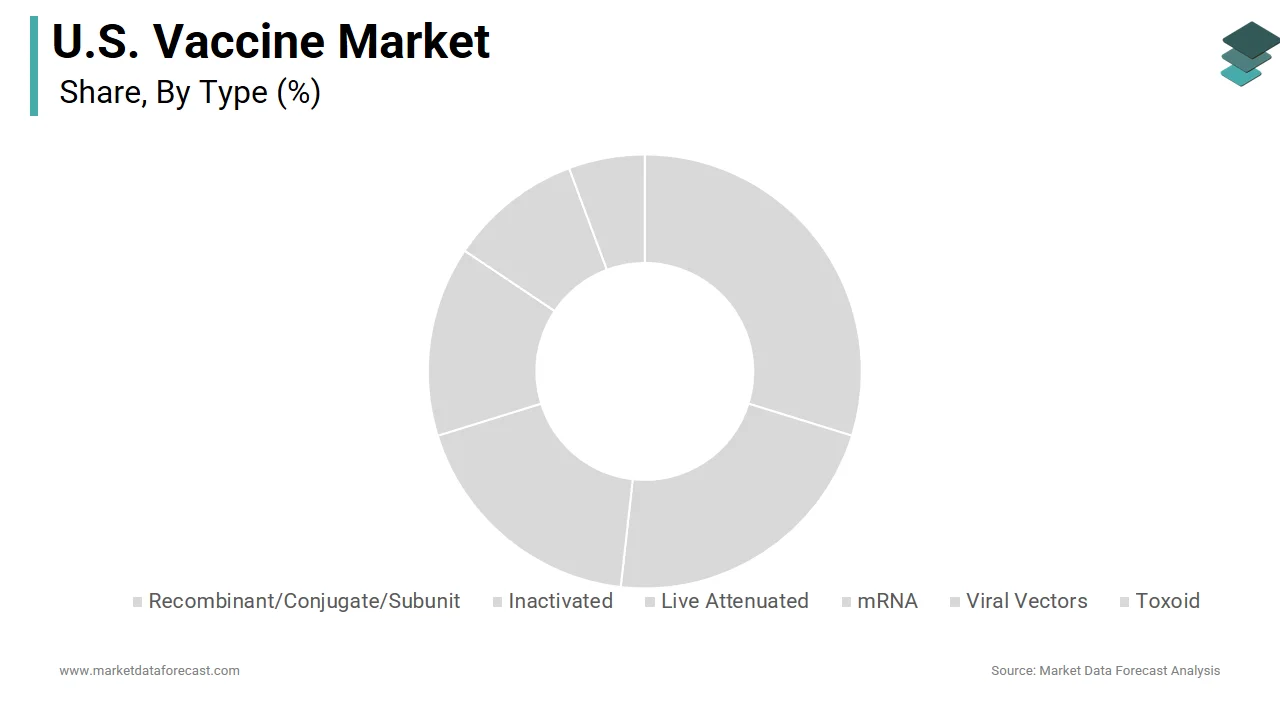
However, the mRNA vaccine segment is anticipated to record a 25.5% of the U.S. market share in 2025. This rapid expansion reflects the transformative potential of nucleic acid-based platforms for rapid development and adaptable immunization strategies. The capacity for rapid antigen design and manufacturing scalability drives exceptional growth within the mRNA vaccine segment. According to the Food and Drug Administration, mRNA vaccines can be designed and produced within weeks of pathogen sequence identification, enabling a swift response to emerging infectious threats. As per National Institutes of Health data, the initial COVID-19 mRNA vaccines progressed from sequence identification to emergency use authorization in less than 11 months, demonstrating unprecedented development velocity. The modular nature of mRNA platforms allows for straightforward sequence updates to address viral variants without reformulating entire production processes. According to industry reports, mRNA vaccine manufacturers can produce clinical-grade batches in approximately 60 days, compared to 6 to 12 months required for traditional egg-based influenza vaccines. This agility positions mRNA technology as the preferred approach for pandemic preparedness and seasonal pathogen adaptation. Furthermore, the absence of live virus handling during manufacturing enhances biosafety and simplifies facility requirements. According to the Biomedical Advanced Research and Development Authority, federal investments, including a 47 million dollar increase in the 2024 budget, support domestic mRNA manufacturing infrastructure expansion. This convergence of speed, flexibility, and strategic support creates powerful growth momentum for the mRNA vaccine segment.
By Route of Administration Insights
The parenteral administration segment held the leading share of the U.S. vaccines market in 2025 due to its compatibility with diverse vaccine formulations and established clinical protocols. The technical suitability of parenteral delivery for a broad spectrum of vaccine technologies significantly sustains its market dominance. According to the Food and Drug Administration, most licensed vaccines in the United States, including protein subunit, conjugate, viral vector, and mRNA formulations, require parenteral administration to ensure optimal antigen presentation and immune activation. As per CDC immunization guidelines, intramuscular injection is the recommended route for influenza, hepatitis B, human papillomavirus, and pneumococcal vaccines, reflecting standardized clinical practice. The parenteral route enables precise dosing, controlled delivery, and avoidance of gastrointestinal degradation that can compromise oral vaccine efficacy. According to research published in the Vaccine journal, parenteral administration achieves higher and more consistent bioavailability for many antigen types, compared to mucosal delivery systems. The infrastructure for parenteral vaccination, including syringes, needles, safety devices, and trained personnel, is deeply embedded within U.S. healthcare settings, from pediatric clinics to mass immunization sites. According to the National Association of County and City Health Officials, over 95% of local health departments maintain capacity for injectable vaccine administration. This widespread compatibility, combined with established training protocols and supply chains, creates enduring momentum for the parenteral administration segment.
On the other side, the oral vaccine administration segment is expected to grow at the fastest CAGR of 20.9% during the forecast period in the U.S. market owing to the growing interest in needle-free delivery and mucosal immunity strategies. The elimination of injection-related barriers drives rapid expansion within the oral vaccine administration segment. According to research published in Pediatrics, needle fear affects approximately 25% of adults and 63% of children, potentially compromising vaccination compliance and timely immunization. As per CDC survey data, parental concerns about injection pain represent a documented factor in vaccine hesitancy, particularly for pediatric schedules requiring multiple doses. Oral vaccines circumvent these concerns by providing painless administration that improves the patient experience and reduces clinic visit complexity. According to industry analyses, oral rotavirus vaccine coverage among U.S. infants exceeded 70% within five years of licensure, demonstrating strong acceptance of needle-free formats. The oral route also enables administration by non-clinical personnel in community settings, expanding access beyond traditional healthcare facilities. According to the National Association of Pediatric Nurse Practitioners, oral vaccines simplify mass immunization campaigns and school-based programs by reducing training requirements and safety precautions. This enhanced accessibility, combined with improved patient comfort, creates powerful growth momentum for oral vaccine delivery, particularly in pediatric and preventive care contexts.
By Disease Indication Insights
The viral disease vaccines segment accounted for the highest share of the U.S. vaccines market in 2025. The dominance of the viral disease vaccine segment is attributed to the high disease burden, extensive immunization recommendations, robust product portfolios, and substantial morbidity and mortality associated with vaccine-preventable viral infections. According to the Centers for Disease Control and Prevention, seasonal influenza caused an estimated 51 million illnesses, 710,000 hospitalizations, and 45,000 deaths during the 2024 to 2025 season in the United States. As per CDC surveillance data, hepatitis B virus infection affects approximately 862,000 individuals in the United States, with chronic infection leading to cirrhosis and hepatocellular carcinoma if untreated. The Advisory Committee on Immunization Practices recommends annual influenza vaccination for all persons aged 6 months and older, creating recurring demand across the entire population. According to the HPV Vaccination Roundtable, 76.8% of adolescents aged 13 to 17 years had received at least one dose of the HPV vaccine as of 2023. The herpes zoster vaccine recommendation for adults aged 50 years and older addresses a condition affecting approximately 1 million Americans annually, with substantial pain and healthcare utilization. According to CDC modeling, vaccination against viral diseases prevents millions of outpatient visits and hospitalizations each year, generating sustained demand for preventive immunization products. This convergence of high disease incidence, broad eligibility criteria, and proven effectiveness creates enduring momentum for viral disease vaccines.
However, the human papillomavirus vaccine is estimated to witness the fastest CAGR of 16.1% during the forecast period in the U.S. market due to the increasing recognition of cancer prevention benefits and expanding eligibility recommendations. The positioning of human papillomavirus vaccination as a cancer-preventive intervention significantly accelerates market growth. According to the Centers for Disease Control and Prevention, human papillomavirus infection causes approximately 36,000 cases of cancer annually in the United States, including cervical, anal, oropharyngeal, and other genital malignancies. According to the HPV Vaccination Roundtable, human papillomavirus vaccination coverage among adolescents reached 76.8% for at least one dose and 61.4% for being up-to-date in 2023. The Advisory Committee on Immunization Practices expanded human papillomavirus vaccine recommendations to include adults through age 45 years in 2019, broadening the eligible population and creating new utilization opportunities. According to research published in JAMA Oncology, human papillomavirus vaccination has already reduced the prevalence of vaccine-type infections by 86% among teenage girls and 71% among young women in the United States. This demonstrated effectiveness, combined with compelling cancer prevention messaging, enhances provider recommendation strength and patient acceptance. According to a national survey conducted by the American Cancer Society, over 80% of parents express willingness to vaccinate their children against human papillomavirus when informed of its cancer prevention benefits. This convergence of clinical evidence, policy support, and public awareness creates powerful growth momentum for human papillomavirus vaccines.
COUNTRY ANALYSIS
U.S. Vaccine Market Analysis
The United States is likely to maintain its dominant position as a leading global hub for vaccine innovation and market revenue over the next few years. The comprehensive evaluation and approval system administered by the Food and Drug Administration represents a key factor for the United States vaccine market dominance. According to the Center for Biologics Evaluation and Research, the agency reviews approximately 15 to 20 vaccine applications annually, employing rigorous scientific standards that ensure product safety and efficacy. According to National Institutes of Health data, federal funding for vaccine research and development reached 3.2 billion dollars in fiscal year 2024, supporting innovation across academic, industry, and government laboratories. The Advisory Committee on Immunization Practices evidence-based recommendation process creates predictable demand pathways that guide manufacturer investment and production planning. According to the Centers for Disease Control and Prevention surveillance, the United States maintains one of the most comprehensive vaccine safety monitoring systems globally, including the Vaccine Adverse Event Reporting System and Vaccine Safety Datalink. This regulatory credibility, combined with substantial public investment, creates an environment conducive to vaccine innovation and commercialization. Furthermore, the integration of vaccines into Medicare, Medicaid, and private insurance coverage ensures broad patient access and sustainable reimbursement. According to industry analyses, this ecosystem of scientific rigor, policy support, and financial infrastructure positions the United States as the world's most influential vaccine market.
COMPETITIVE LANDSCAPE
The United States vaccine market features dynamic competition among established pharmaceutical corporations, specialized biotechnology firms, and emerging platform technology developers. Incumbent players leverage extensive clinical experience, regulatory expertise, and distribution networks to maintain leadership in routine immunization categories while innovators differentiate through novel mechanisms, rapid development capabilities, and targeted therapeutic applications. Competition intensifies around scientific validation as companies conduct head-to-head trials and real-world evidence studies to demonstrate superior efficacy, safety, or convenience. Pricing dynamics remain influenced by government procurement programs, value-based contracts, and formulary placement decisions that balance affordability with innovation incentives. Manufacturing excellence represents a critical competitive dimension as companies invest in flexible production platforms, quality systems, and supply chain transparency to ensure reliable product availability. Strategic collaborations with public health agencies, academic centers, and healthcare systems extend market reach while strengthening evidence generation and implementation support. The competitive landscape continues evolving through mergers, acquisitions, and licensing agreements that consolidate capabilities, accelerate pipeline advancement, and expand geographic footprint across diverse prevention and treatment indications.
KEY MARKET PLAYERS
Some of the companies that are playing a dominating role in the U.S. vaccine market include
- GSK plc.
- Sanofi
- Pfizer Inc.
- Merck & Co., Inc.
- Novartis AG
- Emergent BioSolutions, Inc.
- CSL Limited
- Inovio Pharmaceuticals, Inc.
- Bavarian Nordic
- Mitsubishi Tanabe Pharma Corporation
TOP PLAYERS IN THE MARKET
- Pfizer Inc maintains a prominent position in the United States vaccine market through its comprehensive portfolio addressing infectious diseases across the lifespan. The company leverages its mRNA platform expertise to advance next-generation immunization products and recently strengthened its market position through strategic collaborations with BioNTech for respiratory syncytial virus vaccine development. Pfizer actively engages with the Centers for Disease Control and Prevention to support immunization policy development and participates in federal preparedness initiatives. The company expanded its manufacturing capacity in North Carolina to enhance domestic supply chain resilience for critical vaccine products. Pfizer also invests in real-world evidence generation to demonstrate vaccine effectiveness across diverse populations and healthcare settings. These efforts reinforce the company's commitment to public health while advancing innovation in preventive medicine.
- Merck and Co contributes significantly to the United States vaccine market through its established portfolio, including vaccines for human papillomavirus, measles, mumps, rubella, and varicella. The company recently announced the expansion of its West Point, Pennsylvania, manufacturing facility to increase production capacity for priority vaccines. Merck collaborates with academic institutions and public health agencies to conduct post-licensure safety studies that inform clinical practice guidelines. The company also pursues innovative delivery technologies, including thermostable formulations that reduce cold chain dependencies. Merck engages in global health initiatives that strengthen pandemic preparedness while supporting domestic vaccine security. Through sustained investment in research and development, the company advances novel candidates targeting emerging infectious threats and unmet medical needs.
- Moderna Inc has rapidly established itself within the United States vaccine market through its messenger RNA platform technology and agile development capabilities. The company recently secured federal contracts to advance pandemic preparedness vaccines, including candidates for Nipah virus and other high-consequence pathogens. Moderna expanded its manufacturing footprint through partnerships with domestic contract development and manufacturing organizations to ensure scalable production. The company actively collaborates with the Biomedical Advanced Research and Development Authority to accelerate clinical evaluation of novel vaccine candidates. Moderna also invests in digital health tools that support vaccine distribution monitoring and patient engagement. These strategic initiatives strengthen the company's ability to respond to public health priorities while advancing its pipeline of preventive and therapeutic immunization products.
TOP STRATEGIES USED BY KEY MARKET PARTICIPANTS
Key players in the United States vaccine market employ strategic approaches to strengthen competitive positioning and address evolving public health needs. Companies invest substantially in platform technologies, including messenger RNA viral vector and protein subunit systems that enable rapid adaptation to emerging pathogens. Strategic partnerships with academic institutions, government agencies, and biotechnology firms accelerate innovation while sharing development risks. Manufacturers pursue regulatory engagement through expedited pathways such as priority review and rolling submission to shorten the time to market for critical vaccines. Capacity expansion through domestic manufacturing investments enhances supply chain resilience and aligns with national security objectives. Portfolio diversification across infectious disease oncology and autoimmune indications reduces dependence on seasonal products and creates multiple revenue streams. Digital health integration, including electronic health record connectivity and patient reminder systems, improves vaccination coverage and adherence. These coordinated strategies enable market participants to navigate complex regulatory environments while delivering impactful preventive health solutions.
MARKET SEGMENTATION
This research report on the U.S. vaccine market has been segmented and sub-segmented into the following categories.
By Type
- Recombinant/Conjugate/Subunit
- Inactivated
- Live Attenuated
- mRNA
- Viral Vectors
- Toxoid
- Others
By Route of Administration
- Parenteral
- Oral
By Disease Indication
- Viral Diseases
- Hepatitis
- Influenza
- Human Papillomavirus
- Measles/Mumps/Rubella
- Rotavirus
- Herpes Zoster
- Others
- Bacterial Diseases
- Meningococcal Disease
- Pneumococcal Disease
- Diphtheria/Tetanus/Pertussis
- Others
By Age Group
- Pediatrics
- Adults
By Distribution Channel
- Hospital & Retail Pharmacies
- Government Suppliers
- Others
By Country
- New York
- Texas
- Florida
- Georgia
- California
- Rest of U.S.