- Product Description Description
- Table of Contents TOC
- List of Table & Figure LOT
- Get Free Sample PDF Sample PDF
Market Size, 2025
$1.20 BnMarket Estimate, 2026
$1.48 BnMarket Forecast, 2034
$7.96 BnCAGR, 2026–2034
23.40%Executive Summary: United Kingdom Buy Now Pay Later (BNPL) Market
- Market Scope: Comprehensive market evaluation of the UK BNPL sector, analyzing payment methods (online payment channels, mobile applications), end users (retail consumers, e-commerce platforms), provider types (fintech companies, financial institutions), loan durations, and regional breakdown across England, Scotland, Wales, and Northern Ireland.
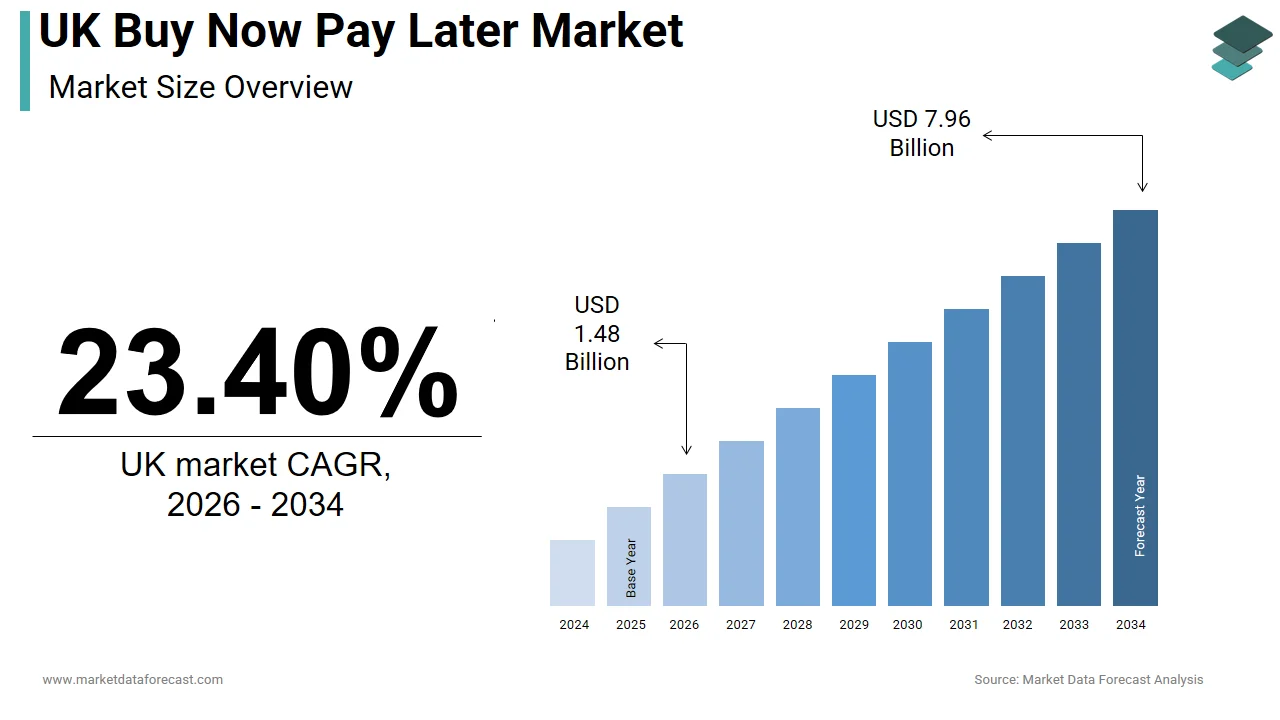
- Market Valuation: Valued at USD 1.20 billion in 2025, reaching USD 1.48 billion in 2026, and projected to expand up to USD 7.96 billion by 2034, registering a robust CAGR of 23.40% throughout the forecast period from 2026 to 2034.
- Primary Growth Drivers: Rising cost of living and inflationary pressures compelling households to seek flexible budgeting alternatives; seamless digital integration into e-commerce checkout platforms driving conversion rates and average order values; and widespread preference among younger demographics for interest-free deferred payments.
Key Market Segment Metrics
| Category | Leading Segment (Base Year Position) | Fastest-Growing / High-Impact Segment |
|---|---|---|
| By Method, End User & Provider | Online Payment Channels (leading with 67.5% share), Retail Consumers (dominant end user with 84.2% share), & Fintech Companies (leading provider type holding 58.6% share) | Mobile Applications Segment (fastest-growing payment method at a 23.1% CAGR), E-commerce Platforms Segment (fast-growing end user at a 17.6% CAGR), & Financial Institutions Segment (expanding at a 16.3% CAGR) |
| By Region / Country | England (commands the largest market share driven by high urban retail density, London's fintech hub, and extensive digital penetration) | Scotland, Wales, and Northern Ireland (expanding markets benefiting from improved rural digital infrastructure and localized financial literacy initiatives). |
Major Market Players & Market Structure
Market Structure: A highly competitive and rapidly evolving ecosystem featuring specialized global fintech giants, digital payment challengers, and traditional financial institutions adapting to upcoming regulatory frameworks under the Financial Conduct Authority (FCA).
Key Companies: Klarna, Clearpay, Laybuy, Affirm, Openpay, Zilch, PayPal Credit, Splitit, and others.
UK Buy Now Pay Later Market Size
The UK buy now pay later market was valued at USD 1.20 billion in 2025, is estimated to reach USD 1.48 billion in 2026, and is projected to reach USD 7.96 billion by 2034, growing at a CAGR of 23.40% from 2026 to 2034.
As per the Financial Conduct Authority, approximately 5.6 million adults in the UK utilized buy now pay later services in recent years, indicating widespread adoption across demographic groups. The regulatory landscape is evolving rapidly, with the government moving to bring these products under formal consumer credit regulation to ensure borrower protection. Digital integration remains seamless, as major e-commerce platforms embed these payment options directly at checkout, reducing friction in the purchasing journey. The social commerce phenomenon further accelerates usage among younger consumers, who prioritize flexibility and transparency in financial commitments. Retailers benefit from increased conversion rates and higher average order values, while consumers gain budgeting control. However, the ease of access raises concerns about debt accumulation among vulnerable populations. The market operates at the intersection of technology, retail, and finance, creating a unique ecosystem where instant gratification meets deferred payment obligations. This structural change in consumption patterns reflects broader economic pressures and changing attitudes toward traditional banking products in the digital age.
MARKET DRIVERS
Rising Cost of Living Pressures Drive Consumer Adoption
Escalating inflation and stagnant wage growth have compelled UK households to seek alternative financing methods to maintain their standard of living without depleting savings, which is primarily driving the expansion of the UK buy now pay later market. According to the Office for National Statistics, consumer price inflation reached double-digit levels in recent periods, significantly eroding purchasing power for essential and discretionary goods. This economic strain has made buy now, pay later an attractive tool for managing cash flow fluctuations and spreading costs over time. Data from the Money and Pensions Service indicates that 40% of users cite budget management as their primary reason for using these services, rather than an inability to afford items outright. The psychological appeal of splitting payments into four equal installments allows consumers to acquire higher-value items, such as appliances or winter clothing, without immediate financial burden. Younger demographics aged 18 to 34 are particularly susceptible to this trend, with 60% reporting usage during periods of financial tightness. The absence of interest charges distinguishes these products from credit cards, making them appear safer despite potential late fees. Retailers actively promote these options during seasonal sales, amplifying their visibility and utility. The normalization of deferred payment has shifted consumer expectations, making upfront full payment less appealing for non-essential purchases. This behavioural shift is entrenched in the current economic climate, where financial flexibility is valued over traditional ownership models.
Seamless Digital Integration Enhances Retailer Conversion Rates
The frictionless integration of buy now pay later options into online and offline retail environments is further propelling the UK market expansion and merchant adoption. E-commerce platforms recognize that offering flexible payment methods reduces cart abandonment rates, which average 70% across the industry according to Baymard Institute research. By embedding these services directly at checkout, retailers remove barriers that typically deter price-sensitive shoppers from completing transactions. Major UK retailers, including Next, Marks and Spencer, and ASOS, have reported significant uplifts in average order value when buy now pay later is available, often increasing basket size by 20 to 30%. The technological sophistication of modern providers ensures instant approval decisions using soft credit checks that do not impact consumer credit scores initially. This speed and convenience align with the expectations of digital-native consumers, who prioritize efficiency in their shopping experiences. Mobile commerce growth further amplifies this driver, as smartphone users benefit from one-click payment solutions stored within digital wallets. The data analytics provided by buy now pay later firms help merchants understand customer preferences and tailor marketing strategies effectively. Physical stores are also adopting point-of-sale integration, allowing in-person shoppers to access the same flexibility. This omnichannel availability ensures that the payment method is ubiquitous, reinforcing its role as a standard retail expectation rather than a niche alternative.
MARKET RESTRAINTS
Regulatory Uncertainty Creates Operational Compliance Burdens
The impending regulatory overhaul of the buy now pay later sector introduces significant compliance challenges for providers and retailers operating in the UK market, which is a significant market restraint. The government has confirmed plans to bring these products under the jurisdiction of the Financial Conduct Authority, requiring firms to adhere to strict responsible lending standards. According to HM Treasury consultations, this transition mandates comprehensive affordability checks and clearer disclosure of terms, which may increase operational costs substantially. Providers must invest in advanced risk assessment technologies to evaluate consumer creditworthiness more rigorously, potentially slowing down the instant approval process that defines the user experience. Smaller fintech entrants face disproportionate burdens, as they lack the resources of established players to navigate complex regulatory frameworks efficiently. The uncertainty surrounding final rule implementation causes hesitation in strategic planning and product development cycles. Retailers may reconsider partnerships if compliance requirements become too onerous or if approval rates drop significantly due to stricter checks. Consumer confusion may arise during the transition period, as terms and conditions change across different providers. The need to train staff and update digital interfaces to meet new transparency standards requires considerable time and financial investment. This regulatory tightening aims to protect consumers but risks stifling innovation and reducing accessibility for legitimate users, who benefit from the responsible use of these financial tools.
Consumer Debt Accumulation Risks Damage Market Reputation
The ease of accessing multiple buy-now-pay-later agreements simultaneously poses serious risks of over-indebtedness among vulnerable consumers, which is threatening the long-term sustainability of the market and further hampering the UK market expansion. Unlike traditional credit products, these agreements often do not appear on standard credit files initially, leading individuals to underestimate their total financial commitments. As per StepChange Debt Charity data, thousands of clients seek advice annually due to difficulties managing multiple installment plans alongside other debts. The fragmentation of payments across various providers makes it difficult for consumers to track their total outstanding liabilities effectively. Late fees and missed payments can escalate quickly, turning small purchases into significant financial burdens, especially for those with irregular incomes. Mental health impacts are increasingly recognized, with studies linking excessive use of deferred payment schemes to anxiety and stress related to money management. The lack of a centralized database means lenders cannot always see a consumer’s full exposure across competing platforms. This opacity allows aggressive marketing to target financially distressed individuals, who may view these services as lifelines rather than debt instruments. Public perception is shifting as media coverage highlights cases of financial harm, prompting calls for stricter controls. If debt distress becomes widespread, it could trigger a backlash, leading to reduced consumer trust and lower adoption rates. Protecting vulnerable users while maintaining accessibility remains a delicate balance that the industry must address proactively to avoid reputational damage.
MARKET OPPORTUNITIES
Expansion into Business-to-Business Transactions Opens New Revenue Streams
The applications of buy now pay later principles to business-to-business transactions is a substantial opportunity for the UK market. Small and medium-sized enterprises in the UK often face cash flow constraints when purchasing inventory, equipment, or software services. According to the Federation of Small Businesses, late payments and cash flow issues remain top concerns for nearly 50% of small firms. B2B buy now pay later solutions offer suppliers immediate payment while allowing buyers to spread costs over 30, 60, or 90 days, improving working capital management. This model reduces credit risk for suppliers, who no longer need to chase invoices or manage bad debt provisions. The market for B2B flexible payments is less saturated than the consumer segment, offering first-mover advantages to innovative providers. Integration with accounting software enables automated reconciliation and real-time visibility into payable obligations for finance teams. Larger enterprises are also exploring these tools for procurement efficiency, reducing the administrative overhead associated with traditional purchase orders and credit applications. The global nature of supply chains means cross-border B2B solutions can facilitate international trade by mitigating currency and credit risks. As digital transformation accelerates in the corporate sector, the demand for seamless embedded finance solutions will grow. Providers who develop robust risk models for commercial entities can capture significant value in this emerging vertical.
Integration with Loyalty Programs Enhances Customer Retention
Combining buy now pay later services with existing retailer loyalty programs creates a powerful synergy that drives repeat purchases and deepens customer engagement, which is another noteworthy opportunity for the UK market. Retailers can offer exclusive financing terms or extended repayment periods to high-value loyalty members, incentivizing brand allegiance and higher spending thresholds. According to Accenture research, personalized financial offers increase customer retention rates by up to 15% compared to generic promotions. This integration allows brands to collect richer data on purchasing behavior, enabling more targeted marketing campaigns and product recommendations. Consumers benefit from added value, such as cashback rewards or points acceleration, when using specific payment partners, enhancing the perceived benefit of the transaction. The seamless experience of earning rewards while managing cash flow appeals to savvy shoppers, who maximize every aspect of their spending. Technical APIs now allow real-time synchronization between loyalty databases and payment platforms, ensuring accurate reward allocation instantly. This strategy differentiates retailers in a crowded market where price competition alone is insufficient to maintain margins. Partnerships between fintech providers and retail loyalty schemes create ecosystem lock-in, making it harder for consumers to switch to competitors. The data generated helps retailers predict future demand and optimize inventory levels based on financed purchase trends. As privacy regulations evolve, transparent value exchange models, where consumers trade data for financial flexibility, will become increasingly important for sustainable growth.
MARKET CHALLENGES
Data Privacy Concerns Threaten Consumer Trust Levels
The extensive data collection practices inherent in buy now pay later models raise significant privacy concerns that could undermine consumer confidence and invite regulatory scrutiny, which is majorly challenging the UK market expansion. Providers rely on detailed transaction histories, browsing behavior, and personal information to assess risk and personalize offers, creating vast datasets that attract cybercriminal attention. According to the Information Commissioner’s Office, data breaches in the financial technology sector have increased by 20% in recent years, highlighting vulnerabilities in digital infrastructure. Consumers are becoming more aware of how their data is used, shared, and sold to third parties for marketing purposes, leading to heightened sensitivity around privacy rights. The lack of transparency in algorithmic decision-making processes means users often do not understand why they are approved or declined, causing frustration and distrust. General Data Protection Regulation compliance requires rigorous consent mechanisms, which can add friction to the user experience if not implemented smoothly. Any misuse of data or unauthorized sharing can result in substantial fines and lasting reputational damage for providers. The aggregation of financial and lifestyle data creates detailed profiles that could be exploited for discriminatory pricing or exclusionary practices. Ensuring robust cybersecurity measures and clear privacy policies is essential but costly. As public awareness grows, companies must prioritize ethical data handling to maintain legitimacy. Failure to address these concerns proactively could lead to consumer boycotts or stricter legislative interventions, limiting data usage capabilities.
Intense Competition Compresses Profit Margins
The saturation of the UK buy now pay later market has led to fierce competition among numerous providers, compressing profit margins and challenging long-term viability. With over 50 active players, including global giants like Klarna and Clearpay alongside domestic challengers, differentiation becomes increasingly difficult. According to industry analysis, merchant discount rates have fallen by 15% over the past two years as providers undercut each other to secure retail partnerships. This race to the bottom forces companies to operate at thin margins, relying heavily on volume growth and ancillary revenue streams, such as late fees or advertising. The cost of customer acquisition has risen sharply as digital advertising becomes more expensive and competitive. Providers must continuously invest in technology, marketing, and compliance to stay relevant, straining financial resources, particularly for smaller firms. The reliance on late fees for profitability is unsustainable and ethically questionable, drawing criticism from consumer advocates and regulators. Consolidation is likely as weaker players exit the market or are acquired by larger entities seeking scale. The pressure to innovate constantly while maintaining low costs creates operational stress. Retailers hold significant bargaining power, demanding better terms and exclusive features, further squeezing provider revenues. Sustainable business models require moving beyond simple payment facilitation to value-added services, but this transition is complex and resource-intensive. The market maturity phase will likely see fewer but stronger players surviving the current competitive onslaught.
REPORT COVERAGE
| REPORT METRIC | DETAILS |
| Market Size Available | 2025 to 2034 |
| Base Year | 2025 |
| Forecast Period | 2026 to 2034 |
| Segments Covered | By Payment Method, End User, Provider Type, Loan Duration, and Country. |
| Various Analyses Covered | Global, Regional, and Country-Level Analysis, Segment-Level Analysis, Drivers, Restraints, Opportunities, Challenges; PESTLE Analysis; Porter’s Five Forces Analysis, Competitive Landscape, Analyst Overview of Investment Opportunities |
| Countries Covered | United Kingdom |
| Market Leaders Profiled | Klarna, Clearpay, Laybuy, Affirm, Openpay, Zilch, PayPal Credit, Splitit, and Others. |
SEGMENTAL ANALYSIS
By Payment Method Insights
The online payment channels segment accounted for 67.5% of the UK market share in 2025. This dominance is primarily driven by the seamless integration of buy now, pay later options into major e-commerce checkout processes, which reduces friction and encourages impulse purchases. According to data from the Office for National Statistics, online retail sales in the UK reached record levels with over 25% of total retail spending occurring digitally, creating a vast addressable market for deferred payment solutions. Major retailers, such as ASOS and Boohoo, have reported that offering buy now pay later at checkout increases conversion rates by up to 30%, as it lowers the immediate financial barrier for shoppers. The ability to split costs without interest appeals strongly to digital-native consumers, who prioritize cash flow management. Technical APIs allow for instant credit decisions using soft checks, which do not impact credit scores initially, making the process attractive for younger demographics. The widespread adoption of mobile-friendly web interfaces ensures that online transactions are accessible across devices, further boosting volume. Retailers benefit from higher average order values, as customers feel empowered to purchase premium items when payments are staggered. The infrastructure supporting online buy now pay later is mature, with robust fraud detection and automated repayment systems ensuring reliability. This entrenched presence in the digital retail ecosystem solidifies online channels as the primary driver of market activity.
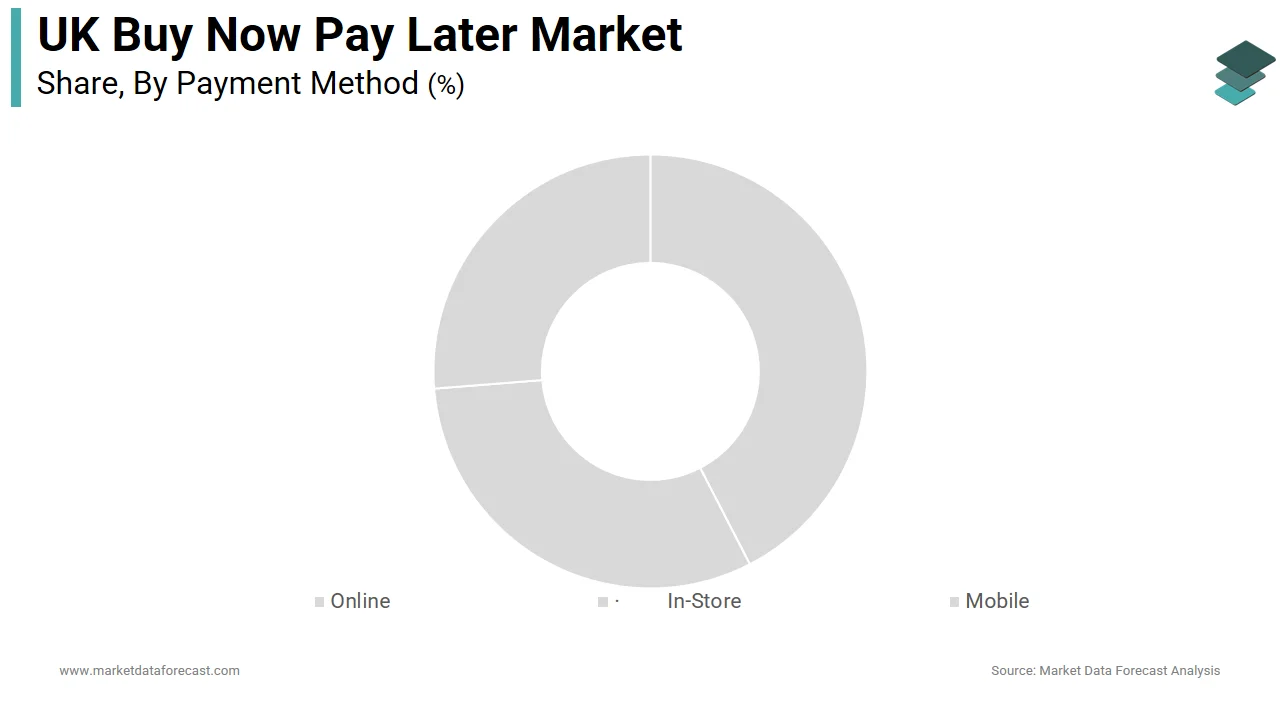
However, the mobile applications segment is estimated to record a CAGR of 23.1% during the forecast period in the UK market, owing to the increasing reliance on smartphones for financial management and the superior user experience offered by dedicated apps. According to App Annie data, finance-related app usage in the UK has increased by 40% annually, as consumers seek centralized platforms for budgeting and spending tracking. Buy now, pay later providers leverage push notifications to remind users of upcoming payments, reducing late fees and improving customer retention. The integration of digital wallets, such as Apple Pay and Google Pay, within these apps enables one-tap purchases both online and in physical stores through QR codes. This Omnichannel capability bridges the gap between digital and physical retail, expanding the utility of buy now, pay later beyond e-commerce. Gamification features, including spending insights and reward points, enhance engagement, particularly among Millennials and Gen Z users, who constitute 60% of the mobile user base. The ability to manage multiple installment plans in a single interface provides clarity and control, addressing concerns about debt fragmentation. Providers invest heavily in app security and biometric authentication to build trust. The convenience of managing finances on the go, combined with personalized offers, drives the rapid adoption of mobile-first buy now pay later solutions.
By End User Insights
The retail consumers segment held the leading position in the UK buy now pay later market by holding 84.2% of the UK market share in 2025. This dominance is primarily driven by the widespread appeal of interest-free credit for everyday purchases ranging from fashion to electronics. According to the Financial Conduct Authority, millions of adults in the UK have used buy now pay later services, with the majority citing affordability and budget management as key motivators. The demographic profile skews younger, with individuals aged 18 to 34 being the most active users due to their comfort with digital finance and limited access to traditional credit products. The psychological benefit of splitting payments allows consumers to maintain liquidity while acquiring desired goods immediately. Retail marketing campaigns heavily target this segment through social media influencers and seasonal promotions, normalizing the use of deferred payments. The ease of sign-up, requiring minimal documentation, lowers entry barriers, enabling rapid acquisition of new users. Consumer protection awareness is growing, but the perceived safety of interest-free models continues to attract first-time users. The recurring nature of retail shopping creates habitual usage patterns, where consumers return to familiar providers for subsequent purchases. This large and engaged user base provides the transaction volume necessary for providers to sustain operations and negotiate favorable terms with merchants. The centrality of retail consumers to the business model ensures they remain the primary focus of product development and marketing efforts.
However, the e-commerce platforms segment is estimated to witness a prominent CAGR of 17.6% during the forecast period, owing to the strategic imperative for online retailers to differentiate themselves in a crowded digital marketplace by offering flexible payment options. According to industry reports, merchants who integrate buy now pay later see an average increase of 20% in basket size, as customers feel emboldened to add more items to their carts. Platforms, such as Shopify and Magento, have developed native integrations with major buy now pay later providers, simplifying the technical deployment for small and medium-sized enterprises. This democratization of access allows smaller retailers to compete with larger chains by offering similar financial flexibility. The data-sharing agreements between platforms and providers enable targeted marketing based on purchasing history, enhancing conversion rates. E-commerce platforms also benefit from reduced cart abandonment rates, which historically hover around 70% according to Baymard Institute research. By removing price friction at the final stage of the journey, these platforms significantly improve overall sales performance. The shift toward headless commerce and modular retail architectures facilitates deeper embedding of financial services directly into the shopping experience. As online retail continues to grow, the symbiotic relationship between platforms and buy now pay later providers strengthens, driving mutual expansion and innovation in the digital retail landscape.
By Provider Type Insights
The fintech companies segment captured the leading share of 58.6% of the UK market in 2025. This dominance is attributed to their agile operational models, specialized technology stacks, and customer-centric product designs that traditional financial institutions struggle to replicate. According to industry analysis, firms like Klarna, Clearpay, and Laybuy have captured significant market share by focusing exclusively on the point-of-sale financing experience. These companies leverage advanced algorithms for real-time credit assessment, allowing for instant approvals that enhance the shopping experience. Their ability to partner rapidly with a wide range of retailers, from high street brands to niche online stores, creates extensive network effects. Fintech providers invest heavily in user interface design, ensuring that the application and repayment processes are intuitive and engaging. They also utilize data analytics to personalize offers and manage risk more effectively than legacy banks. The brand identity of fintech companies resonates strongly with younger consumers, who view them as modern and transparent alternatives to traditional credit. Regulatory adaptation has been swift, with many fintechs proactively engaging with the Financial Conduct Authority to shape upcoming rules. Their focus on technology, rather than balance sheet lending, allows for scalable growth without the capital constraints faced by banks. This combination of speed, innovation, and customer focus cements fintech companies as the primary drivers of the buy now, pay later ecosystem.
On the other side, the financial institutions segment is predicted to expand at a CAGR of 16.3% during the forecast period owing to their inherent regulatory compliance frameworks, established trust credentials, and access to low-cost capital. As the government moves to bring buy now pay later under Financial Conduct Authority regulation, traditional banks and building societies are well-positioned to enter the market with minimal additional overhead. According to banking sector reports, major lenders are launching proprietary buy now pay later products, leveraging their existing customer bases and mobile banking apps. The trust associated with established financial brands appeals to older demographics and risk-averse consumers, who are hesitant to use standalone fintech apps. Banks can offer competitive rates due to lower funding costs compared to fintechs that rely on warehouse lines of credit. Integration with current accounts allows for seamless automatic repayments, reducing default risks and improving customer convenience. The comprehensive data held by banks on income and spending habits enables more accurate affordability assessments, aligning with responsible lending standards. Strategic acquisitions of fintech startups allow traditional institutions to acquire technology and talent quickly, accelerating their market entry. The convergence of banking and retail finance creates opportunities for bundled products, such as insurance and savings, alongside buy-now-pay-later. This holistic approach positions financial institutions for sustained growth as the market matures and regulatory scrutiny intensifies.
COUNTRY ANALYSIS
England Buy Now Pay Later Market Analysis
England commands the largest share of the UK buy now pay later market. The region benefits from high population density in major urban centers, such as London, Manchester, and Birmingham, where digital retail penetration is highest. According to the Office for National Statistics, London alone accounts for a disproportionate share of online retail spending, driving demand for flexible payment options. The concentration of fintech headquarters in London facilitates rapid product innovation and partnership formation with major retailers. High living costs in southern England exacerbate the need for budget management tools, making buy now pay later particularly attractive to young professionals and students. The advanced digital infrastructure, including widespread high-speed internet and smartphone ownership, supports seamless transaction processing. Major retail chains headquartered in England actively promote buy now pay later options both online and in-store, influencing national trends. The regulatory environment is centered in London, with the Financial Conduct Authority overseeing market conduct, ensuring consumer protection standards are met. Competition among providers is fiercest in England, leading to better terms and features for consumers. The diverse economic landscape, from affluent suburbs to deprived areas, creates varied usage patterns, but overall volume remains highest due to sheer population size. England's role as the economic engine of the UK ensures it remains the primary market for buy now pay later expansion and innovation.
Scotland Buy Now Pay Later Market Analysis
Scotland holds a significant position in the UK buy now pay later market, characterized by high digital engagement and strong consumer protection advocacy. The region accounts for approximately 8% of total UK transactions, with Glasgow and Edinburgh serving as key hubs for adoption. According to Scottish Government statistics, digital literacy rates are among the highest in the UK, facilitating widespread use of fintech services. The presence of several innovative fintech startups in Edinburgh contributes to local market dynamism and awareness. Scottish consumers are increasingly conscious of debt sustainability, leading to responsible usage patterns monitored by local advice agencies. The retail sector in Scotland has embraced buy now, pay later to compete with online giants, offering flexible payment options in physical stores. Rural connectivity improvements have expanded access to digital finance in remote areas, though urban centers remain the primary drivers of volume. The Scottish Financial Education Enterprise plays a vital role in promoting responsible borrowing, ensuring that users understand the implications of deferred payments. Cultural factors emphasizing community and transparency influence how providers market their services in the region. Collaboration between local authorities and fintech firms aims to address financial inclusion gaps, ensuring equitable access to credit alternatives. Scotland's focused approach to digital finance and consumer welfare creates a stable and growing market segment within the broader UK landscape.
Wales Buy Now Pay Later Market Analysis
Wales occupies a specialized niche in the UK buy now pay later market, with a focus on financial inclusion and accessible credit solutions. The region accounts for approximately 4% of total UK transactions, with Cardiff and Swansea leading adoption rates. According to Welsh Government data, initiatives to improve digital skills and financial literacy have increased confidence in using online payment methods among diverse demographic groups. Buy now, pay later serves as an alternative to high-cost, short-term credit for many households, helping to manage essential purchases without accruing excessive interest. Local retailers are increasingly integrating these options to support community spending and retain customers against online competitors. The compact geography of Wales facilitates efficient logistics for retail partners, enhancing the overall shopping experience. Community organizations work closely with providers to educate users on responsible usage, preventing debt distress. The devolved administration supports policies that encourage fair lending practices, ensuring vulnerable consumers are protected. Digital infrastructure investments have improved internet access in rural valleys, expanding the potential user base. Wales benefits from cross-border interactions with England, allowing residents to access a wide range of providers. The emphasis on social value and community well-being shapes the market dynamics in Wales, creating a supportive environment for sustainable growth in the buy now pay later sector.
Northern Ireland Buy Now Pay Later Market Analysis
Northern Ireland maintains a developing position in the UK buy now pay later market, with growing adoption driven by improving digital infrastructure. The region accounts for approximately 3% of total UK transactions, with Belfast serving as the primary center of activity. According to the Department for the Economy, investment in broadband and mobile networks has enhanced connectivity, enabling more residents to participate in the digital economy. Retailers in Northern Ireland are gradually adopting buy now, pay later solutions to align with trends in Great Britain and the Republic of Ireland. Cross-border shopping influences consumer expectations, with many residents familiar with flexible payment options available in neighboring jurisdictions. Local fintech collaborations are emerging to tailor services to the specific needs of the Northern Ireland market. Financial education programs aim to raise awareness about the benefits and risks of deferred payment schemes, ensuring informed decision-making. The smaller market size means providers often bundle Northern Ireland with broader UK-wide strategies, but localized customer service and targeted marketing are becoming more prevalent as the market expands.
COMPETITIVE LANDSCAPE
The UK buy now pay later market features intense competition among global fintech giants, domestic challengers, and traditional banks entering the market. Differentiation is increasingly difficult as core offerings become standardized, leading to competition based on user experience and merchant network breadth. Providers vie for exclusive partnerships with major retailers, creating high barriers to entry for new participants. Price competition manifests through lower merchant fees and waived late charges to attract volume. Regulatory changes are reshaping the competitive landscape as compliance costs favor larger, established entities with greater resources. Consumer trust becomes a critical differentiator, with transparent practices and responsible lending standards gaining importance. Innovation in areas such as open banking integration and personalized financial management tools drives engagement. The threat of substitution from credit cards and personal loans remains present but buy now pay later providers counter with convenience and interest-free appeals. Consolidation is expected as weaker players struggle with profitability pressures and regulatory burdens. Success depends on balancing growth with sustainable unit economics and robust risk management frameworks in this maturing sector.
KEY MARKET PLAYERS
The major players in the UK buy now pay later market include
- Klarna
- Clearpay
- Laybuy
- Affirm
- Openpay
- Zilch
- PayPal Credit
- Splitit
TOP PLAYERS IN THE MARKET
- Klarna operates as a global financial technology leader with a substantial presence in the UK market, offering flexible payment solutions to millions of consumers. The company partners with major retailers, including ASOS and H&M, to provide seamless checkout experiences that enhance customer satisfaction. Recent strategic initiatives include the launch of advanced shopping features within its mobile application, allowing users to track orders and manage budgets effectively. Klarna has invested heavily in artificial intelligence to improve credit decisioning accuracy while maintaining instant approval speeds. The firm actively engages in sustainability efforts by promoting conscious consumption through its platform. By expanding its merchant network and enhancing user interface design, Klarna strengthens its position as a preferred payment partner for both shoppers and retailers seeking innovative financial tools.
- Clearpay maintains a strong foothold in the UK buy now pay later sector by focusing on responsible lending practices and extensive retail partnerships. The company collaborates with high street brands and online platforms to offer interest-free installment plans that appeal to budget-conscious consumers. Recent actions include the introduction of in-store payment options via QR codes, which bridges the gap between digital and physical retail environments. Clearpay has enhanced its app functionality with spending insights and reminders to help users manage their finances responsibly. The provider also invests in marketing campaigns targeting younger demographics to build brand loyalty. By prioritizing regulatory compliance and customer education, Clearpay ensures sustainable growth while reinforcing trust among users and merchant partners across the national retail landscape.
- Laybuy distinguishes itself in the UK market through its unique six-payment model, which spreads costs over six weeks instead of four. This approach reduces individual installment amounts, making higher-value items more accessible to a broader range of consumers. The company partners with diverse retailers from fashion to electronics, ensuring wide availability of its services. Recent developments include the integration of open banking technology to streamline affordability checks and enhance security. Laybuy focuses on transparency by clearly displaying payment schedules at checkout to prevent consumer confusion. The firm actively supports financial literacy initiatives to promote responsible usage among its user base. By offering a differentiated product structure and prioritizing user experience, Laybuy continues to attract merchants and customers seeking alternatives to traditional short-term credit options.
MAJOR STRATEGIES USED BY KEY MARKET PARTICIPANTS
Key players in the UK buy now pay later market primarily focus on expanding merchant partnerships to increase transaction volume and brand visibility. Companies invest heavily in technology infrastructure to ensure seamless integration with e-commerce platforms and point of sale systems. Regulatory compliance is a central strategy as firms adapt to upcoming Financial Conduct Authority rules by implementing stricter affordability checks. Customer retention is enhanced through personalized offers and loyalty rewards embedded within mobile applications. Data analytics are utilized to refine risk models and reduce default rates while improving approval accuracy. Marketing efforts target specific demographics, particularly younger consumers, through social media channels and influencer collaborations. Diversification into business-to-business services and international markets provides additional revenue streams. Strategic acquisitions of smaller fintech firms allow larger players to acquire talent and technology quickly. These combined approaches help participants maintain a competitive advantage in a rapidly evolving financial landscape.
MARKET SEGMENTATION
This research report on the UK buy now pay later market has been segmented and sub-segmented based on the following categories.
By Payment Method
- Online
- In-Store
- Mobile
By End User
- Retail Consumers
- E-commerce Platforms
- Small Businesses
By Provider Type
- Financial Institutions
- Fintech Companies
- Credit Card Companies
By Loan Duration
- Short-Term
- Medium-Term
- Long-Term