- Product Description Description
- Table of Contents TOC
- List of Table & Figure LOT
- Get Free Sample PDF Sample PDF
Market Size, 2025
$5.18 BnMarket Estimate, 2026
$5.48 BnMarket Forecast, 2034
$8.64 BnCAGR, 2026–2034
5.86%UK Contract Catering Market Size, Growth, Trends & Forecast (2026–2034)
The UK contract catering market size was valued at USD 5.18 billion in 2025, is anticipated to reach USD 5.48 billion in 2026, and is projected to be worth USD 8.64 billion by 2034, registering a compound annual growth rate (CAGR) of 5.86% during the forecast period from 2026 to 2034. Driven by a rising focus on employee well-being, corporate sustainability mandates, and the integration of digital technologies, the market continues steady expansion.
Key Executive Metrics (At-a-Glance)
- 2025 Base Valuation: USD 5.18 Billion
- 2026 Current Valuation: USD 5.48 Billion
- 2034 Forecast Valuation: USD 8.64 Billion
- Compound Annual Growth Rate (CAGR): 5.86% (2026–2034)
- Dominant Menu Type Segment: Standard menu segment (holding 55.4% of the market share in 2025)
- Fastest-Growing Menu Type Segment: Customized and bespoke menus segment (anticipating a CAGR of 6.8% during the forecast period)
- Dominant End-User Sector Segment: Corporate and office catering sector (accounting for 40.3% of the market share in 2025)
- Fastest-Growing End-User Sector Segment: Healthcare catering segment (registering a CAGR of 7.5% during the forecast period)
Core Market Drivers
- Employee Well-Being: Growing emphasis on workplace dining experiences, nutrition, and mental health initiatives to enhance staff retention.
- Sustainability & Regulation: Strict food safety standards and corporate net-zero commitments accelerating the outsourcing of non-core dining operations.
Primary Market Restraints & Challenges
- Cost & Labor Pressures: Volatile global food prices, supply chain instability, and acute labor shortages driving up operating overheads.
UK Contract Catering Market Segmentation Breakdown
| Segment Category | Leading Sub-Segment (Base Year) | Fastest-Growing Sub-Segment |
|---|---|---|
| By Menu Type | Standard Menu (55.4% share in 2025) | Customized/Bespoke Menu (CAGR of 6.8%) |
| By End User Sector | Corporate/Office Catering (40.3% share in 2025) | Healthcare Catering (CAGR of 7.5%) |
Major Industry Players Profiled
Key market leaders shaping the United Kingdom contract catering industry include Compass Group PLC, Sodexo UK & Ireland, Elior UK, Aramark UK, BaxterStorey, ISS Facility Services UK, CH&CO Group, Wilson Vale, Lexington Catering, Accent Catering Services Ltd., Caterlink, Holroyd Howe, Thomas Franks Ltd., Harrison Catering Services Ltd., Vacherin Ltd., and Impact Food Group.
UK Contract Catering Market Size
The UK Contract Catering market size was valued at USD 5.18 billion in 2025, and is projected to reach USD 8.64 billion by 2034 from USD 5.48 billion in 2026, growing at a CAGR of 5.86%.
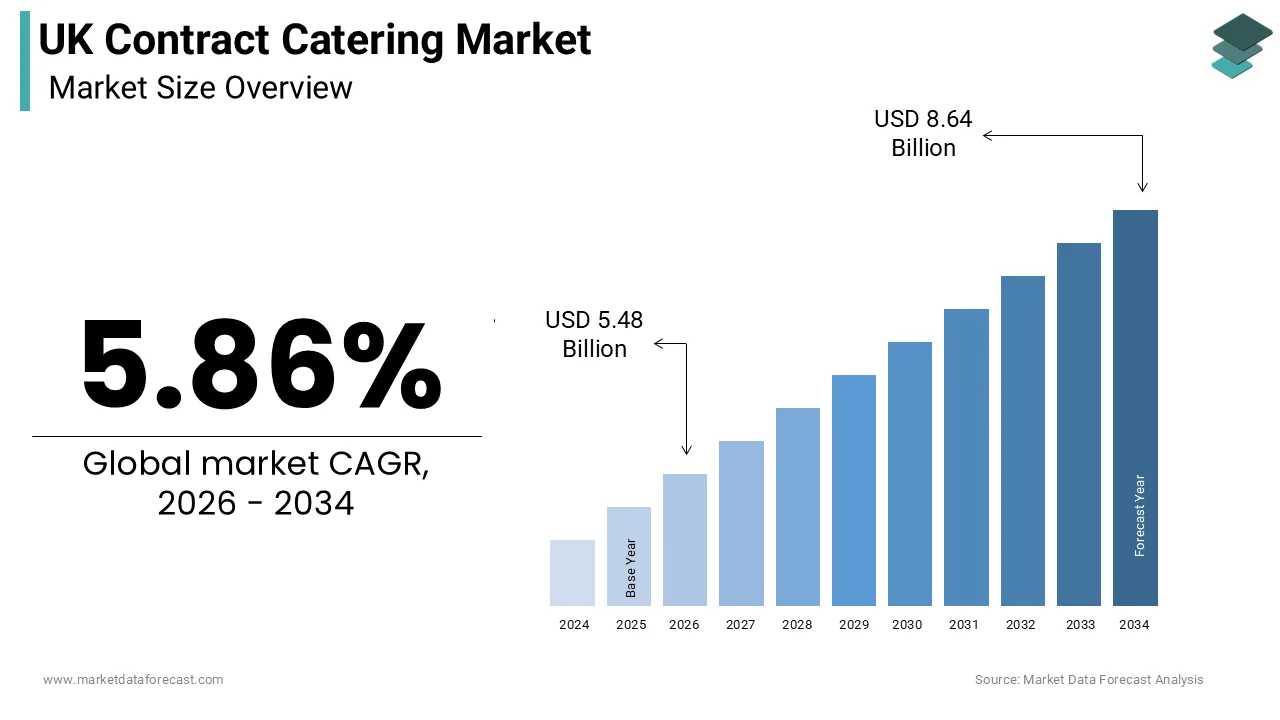
The contract catering is food and beverage services to organizations on a contractual basis rather than through direct consumer retail channels. The long term partnerships, where providers manage entire dining operations, including menu planning procurement staffing and facility management. The shift toward outsourced non-core activities has driven many organizations to partner with specialized catering firms to enhance efficiency and reduce operational burdens. Consumer expectations have evolved significantly with a growing demand for nutritious sustainable and ethically sourced meals. The integration of digital technologies, such as cashless payment systems and mobile ordering apps has transformed the service delivery model enhancing convenience and data collection capabilities. Environmental sustainability is increasingly central to contracts with clients demanding reduced food waste and lower carbon footprints.
MARKET DRIVERS
Rising Focus on Employee Well-Being and Workplace Experience
The increasing emphasis on employee well-being and holistic workplace experience is leveraging the growth of the United Kingdom contract catering market. Organizations recognize that high quality dining options contribute significantly to staff morale productivity and retention. Contract caterers are responding by designing menus that prioritize nutritional balance incorporating fresh fruits vegetables and whole grains, while reducing sugar salt and saturated fats. The rise of mental health awareness has led to the inclusion of mood boosting foods and mindful eating initiatives within corporate dining halls. Companies are investing in attractive dining spaces that encourage social interaction and breaks from work screens fostering a sense of community. This demand drives contracts that go beyond basic sustenance to offer culinary experiences, including live cooking stations international cuisine themes and dietary specific options such as vegan and gluten free meals. The competitive labor market forces employers to differentiate themselves through superior perks making premium catering services a strategic investment. Catering providers leverage this trend by offering wellness programs nutrition workshops and personalized dietary consultations.
Strict Regulatory Standards and Sustainability Mandates
The stringent regulatory requirements and corporate sustainability mandates compel organizations to outsource catering to specialized providers, who possess the expertise and infrastructure to comply with complex standards, which is accelerating the growth of the United Kingdom contract catering market. The UK government has implemented rigorous food safety regulations under the Food Standards Agency requiring detailed traceability and hygiene protocols that can be burdensome for in house teams. Additionally, the net zero carbon target by 2050 has pressured businesses to reduce their environmental impact including food related emissions. Contract caterers offer advanced systems for tracking food waste sourcing local ingredients and implementing plant-based menus, which significantly lower carbon footprints. Many large corporations have signed up to initiatives like the Courtauld Commitment 2030, which aims to reduce food waste and water usage across the supply chain. Professional providers have established relationships with sustainable suppliers and certifications, such as Soil Association Organic ensuring compliance with ethical sourcing standards. The ability to report on sustainability metrics provides clients with valuable data for their corporate social responsibility disclosures. This regulatory and ethical pressure makes outsourcing an attractive option for organizations seeking to mitigate risk and demonstrate environmental stewardship.
MARKET RESTRAINTS
Volatile Food Prices and Supply Chain Instability
The volatility of global food prices and ongoing supply chain disruptions is hindering the growth of the United Kingdom contract catering market. Inflationary pressures have caused the cost of key ingredients, such as wheat meat dairy and cooking oils to fluctuate unpredictably. Long term contracts may include escalation clauses but these frequently lag behind real time market spikes leading to financial strain. Supply chain bottlenecks resulting from geopolitical tensions and labor shortages in logistics have led to inconsistent availability of certain products. This instability forces caterers to frequently adjust menus and substitute ingredients, which can disappoint clients and end users accustomed to specific offerings. The reliance on imported goods for items like exotic fruits and specialty cheeses exposes the sector to currency fluctuations and trade barriers post Brexit. Smaller catering firms lack the purchasing power of large multinational competitors making them more vulnerable to price hikes. The inability to fully pass on costs to clients due to competitive bidding processes further exacerbates the challenge. These economic headwinds require sophisticated hedging strategies and flexible procurement models, which increase administrative overheads.
Acute Labor Shortages and Rising Wage Costs
The contract catering sector faces severe labor shortages and rising wage costs, which is another factor declining the growth of the United Kingdom contract catering market. The industry has historically relied on a flexible workforce, including students and migrant labor but changes in immigration policies and demographic shifts have reduced the available talent pool. Many businesses report difficulties in recruiting chefs and kitchen staff. The departure of EU nationals following Brexit has exacerbated this gap particularly in skilled roles, such as head chefs and sous chefs. The National Living Wage increase impacts entry level positions, which form the backbone of catering operations. Training new employees requires time and resources which are scarce in a high turnover environment. Staff shortages lead to increased workload for existing employees contributing to burnout and further attrition. This cycle disrupts service consistency and can result in reduced operating hours or limited menu choices. The competition for talent extends to other hospitality sectors such as restaurants and hotels which often offer more attractive working conditions or tips. Contract caterers struggle to match these incentives due to tighter margin structures. The lack of automation in many kitchen processes means labor remains a critical input.
MARKET OPPORTUNITIES
Integration of Digital Technologies and Data Analytics
The integration of digital technologies and data analytics to enhance efficiency personalize experiences and optimize operations is ascribed to boost the growth of the United Kingdom contract catering market. Mobile applications allow users to pre order meals view nutritional information and provide immediate feedback creating a seamless and convenient dining experience. Data collected from transactions enables caterers to analyze consumption patterns identify popular items and adjust procurement accordingly. Artificial intelligence can predict peak times and suggest menu adjustments based on historical data and weather conditions. Cashless payment solutions speed up service lines reducing wait times and improving throughput during busy periods. Digital platforms also facilitate personalized nutrition advice helping users make healthier choices aligned with their dietary goals. The use of Internet of Things sensors in kitchens monitors equipment performance and energy usage enabling predictive maintenance and cost savings. Virtual reality and augmented reality can be used for staff training simulations improving skills without disrupting live operations. Clients value the transparency and insights provided by digital dashboards, which show real time performance metrics against sustainability and budget targets. This technological transformation differentiates providers in a competitive market and creates new revenue streams through data services.
Expansion into Health Care and Specialized Nutrition Services
The aging population and increasing prevalence of chronic diseases to expand into health care and specialized nutrition services is also to amplify the growth of the United Kingdom contract catering market. Hospitals care homes and private clinics require tailored meal plans that support medical treatments and recovery processes. According to NHS data the number of people aged 65 and over in the UK is projected to reach 16 million by 2040 driving demand for age appropriate nutrition. Contract caterers with expertise in clinical nutrition can offer menus designed for specific conditions such as diabetes heart disease and dysphagia. Partnerships with dietitians and healthcare professionals ensure that meals meet strict medical guidelines while remaining palatable. The focus on preventative health encourages institutions to invest in high quality food as part of patient care pathways. Specialized diets including keto paleo and allergen free options are increasingly requested in both healthcare and corporate settings. Caterers can develop proprietary ranges of functional foods that promote wellness and immunity. The regulatory environment in healthcare is stringent providing a barrier to entry that protects established players with proven compliance records. Long term contracts in the public sector offer stable revenue streams despite lower margins. Innovation in texture modified foods and fortified meals addresses the needs of vulnerable populations. This segment allows caterers to demonstrate social value and contribute to positive health outcomes enhancing their brand reputation.
MARKET CHALLENGES
Maintaining Quality Consistency Across Diverse Sites
Ensuring consistent quality and service standards across a dispersed network of client sites is a primary challenge for the growth of the United Kingdom contract catering market. Each location has unique infrastructure constraints cultural preferences and operational rhythms that complicate standardization. The inconsistency in food temperature portion size and presentation is a common complaint among multi-site organizations. Managing a large workforce spread across hundreds of locations makes uniform training and supervision difficult. Variations in local supplier quality can affect the final product even when central menus are used. The decentralized nature of operations means that site managers have significant autonomy, which can lead to deviations from brand standards. Monitoring performance requires robust auditing mechanisms and regular site visits which are resource intensive. Client expectations vary widely with some prioritizing cost efficiency while others demand premium gourmet experiences. Balancing these diverse requirements within a single contract framework is complex. Communication gaps between central headquarters and site teams can delay the implementation of new initiatives or menu changes. The lack of real time visibility into daily operations hinders proactive issue resolution. High staff turnover exacerbates the problem as new employees require time to reach proficiency.
Adapting to Rapidly Changing Consumer Dietary Preferences
The rapid evolution of consumer dietary preferences and trends, who must constantly innovate their menus to remain relevant, which is likely to hamper the growth of the United Kingdom contract catering market. The rise of veganism flexitarianism and free from diets has fragmented demand requiring greater variety and specialization. Caterers must source diverse ingredients and train staff to handle multiple dietary requirements safely to avoid cross contamination. The speed at which food trends emerge on social media creates pressure to introduce novel items quickly which can disrupt supply chains and kitchen workflows. Balancing trendy options with core staples that appeal to the majority is a delicate act. Misjudging demand can lead to increased waste if niche items do not sell. Educating consumers about new ingredients and preparation methods requires marketing effort within the dining space. The complexity of labeling and allergen information increases with menu diversity raising compliance risks. Customers are more informed and discerning expecting restaurant quality in institutional settings. Meeting these elevated expectations without exceeding budget constraints is difficult. The need for constant menu rotation prevents economies of scale in procurement and preparation.
REPORT COVERAGE
| REPORT METRIC | DETAILS |
| Market Size Available | 2025 to 2034 |
| Base Year | 2025 |
| Forecast Period | 2026 to 2034 |
| CAGR | 5.86% |
| Segments Covered | By Menu Type, End User Sector, and Region. |
| Various Analyses Covered | Global, Regional and Country-Level Analysis, Segment-Level Analysis, Drivers, Restraints, Opportunities, Challenges; PESTLE Analysis; Porter’s Five Forces Analysis, Competitive Landscape, Analyst Overview of Investment Opportunities |
| Market Leaders Profiled | Compass Group PLC, Sodexo UK & Ireland, Elior UK, Aramark UK, BaxterStorey, ISS Facility Services UK, CH&CO Group, Wilson Vale, Lexington Catering, Accent Catering Services Ltd., Caterlink, Holroyd Howe, Thomas Franks Ltd., Harrison Catering Services Ltd., Vacherin Ltd. |
SEGMENTAL ANALYSIS
By Menu Type Insights
The standard menu segment was accounted in holding 55.4% of the United Kingdom contract catering market share in 2025 owing to the cost efficiency and operational simplicity that standardized offerings provide to both providers and clients. Standard menus allow caterers to leverage economies of scale in procurement by purchasing bulk ingredients, which significantly reduces unit costs. The predictability of demand enables precise inventory management minimizing food waste, which is a metric for sustainability goals. In high volume environments, such as large corporate canteens and educational institutions speed of service is paramount and standard menus facilitate faster preparation and serving times. Staff training is simplified as kitchen teams master a consistent set of recipes ensuring uniform quality across multiple sites. Clients in the public sector and industrial segments often prioritize budget adherence over culinary variety making standard menus the most viable option. The ability to rotate a fixed set of popular dishes on a weekly basis maintains consumer interest without requiring constant innovation. This model also simplifies nutritional labeling and allergen management as the ingredient list remains stable.
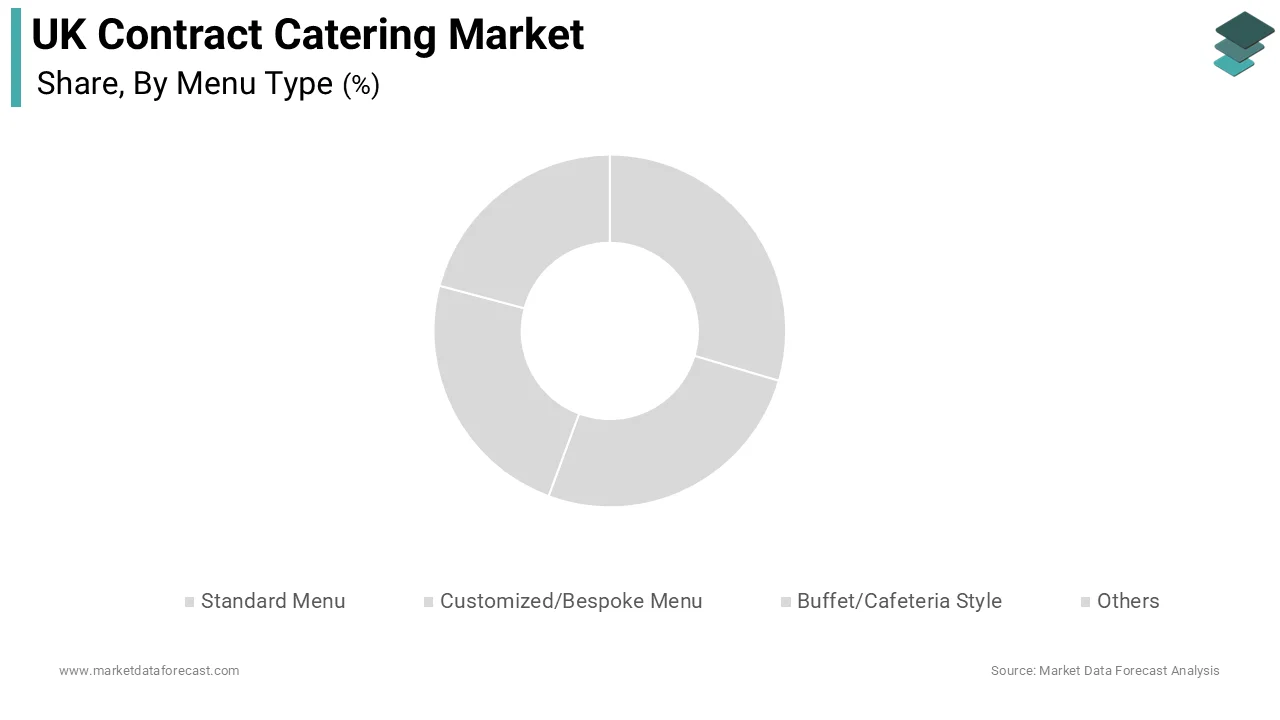
The customized and bespoke menus segment is anticipated to witness a fastest CAGR of 6.8% during the forecast period owing to the increasing demand for personalized dining experiences that reflect diverse cultural preferences and specific dietary requirements. Corporate clients are increasingly using food as a tool for employee retention and brand differentiation leading to requests for unique culinary concepts and chef led initiatives. The rise of health consciousness has driven demand for tailored nutrition plans including keto vegan and gluten free options, which require specialized menu development. Bespoke menus allow caterers to showcase creativity and build stronger relationships with clients through collaborative menu planning. High end corporate offices and luxury residential developments prefer exclusive dining experiences that mimic restaurant quality rather than institutional feeding. The flexibility to adapt menus based on seasonal availability and local produce appeals to sustainability focused organizations. Digital platforms enable real time feedback allowing caterers to refine bespoke offerings continuously.
By End-User Sector Insights
The corporate and office catering sector was the largest by accounting for 40.3% of the United Kingdom contract catering market share in 2025 owing to the high density of office spaces in major urban centers like London Manchester and Birmingham where large workforces require daily meal solutions. The return to office mandates following the pandemic has revitalized demand for high quality workplace dining as employers seek to incentivize physical attendance. The corporate sector typically has higher spending power allowing for premium menu offerings and advanced digital integration. Long term contracts with multinational companies provide stable and predictable revenue streams for catering firms. The emphasis on wellness programs in corporate environments drives demand for nutritious and balanced meal options. Caterers often integrate their services with broader facility management contracts enhancing stickiness and client retention. The professional nature of corporate clients ensures timely payments and adherence to contractual obligations. This sector also leads in adopting innovative technologies, such as AI driven ordering systems and cashless payments.
The healthcare catering segment is expected to register a fastest CAGR of 7.5% during the forecast period owing to the aging population and the increasing complexity of patient care, which requires specialized nutritional support. The National Health Service and private healthcare providers are outsourcing catering services to improve efficiency and focus on core medical activities. Patient experience scores are closely linked to food quality prompting healthcare trusts to invest in improved catering standards. Regulatory requirements for clinical nutrition, such as texture modified diets for dysphagia patients require specialized expertise that external contractors possess. The government commitment to reducing health inequalities includes initiatives to improve hospital food quality creating opportunities for premium contracts. Outsourcing allows healthcare facilities to access advanced food safety protocols and sustainable practices without capital investment. The integration of catering with patient recovery programs highlights the therapeutic role of nutrition. Private hospitals are expanding their facilities to compete on service quality further boosting demand. The recession resistant nature of healthcare spending ensures consistent growth regardless of economic cycles.
COMPETITION OVERVIEW
The competition in the United Kingdom contract catering market is intense and characterized by the presence of large multinational corporations alongside agile independent operators. Major players compete on service quality innovation and sustainability credentials rather than price alone due to the strategic importance of food services. Differentiation is achieved through technological integration, such as AI driven menu planning and digital engagement tools. Independent caterers often compete by offering bespoke personalized services and local sourcing advantages that larger firms may struggle to replicate. Labor availability remains a critical competitive factor with companies investing in employer branding to attract skilled staff. Regulatory compliance and food safety standards serve as baseline requirements while exceeding these benchmarks builds trust. The shift toward health and wellness creates opportunities for niche providers specializing in nutritional expertise. Consolidation through mergers and acquisitions continues as larger entities seek to expand scale and capabilities. Customer retention is prioritized through consistent service delivery and responsive account management.
KEY MARKET PLAYERS
A few major players of the UK contract catering market include
- Compass Group PLC
- Sodexo UK & Ireland
- Elior UK
- Aramark UK
- BaxterStorey
- ISS Facility Services UK
- CH&CO Group
- Wilson Vale
- Lexington Catering
- Accent Catering Services Ltd
- Caterlink
- Holroyd Howe
- Thomas Franks Ltd
- Harrison Catering Services Ltd
- Vacherin Ltd
Major Strategies Used by Key Market Participants
Key players in the United Kingdom contract catering market prioritize digital transformation by implementing mobile ordering apps and cashless payment systems to enhance user experience. Companies focus on sustainability by reducing food waste sourcing local ingredients and adopting plant based menus to meet environmental goals. Talent retention strategies include competitive wages training programs and flexible working conditions to address labor shortages. Diversification into adjacent services such as facilities management and security creates integrated value propositions for clients. Menu innovation involves regular rotation of global cuisines and personalized nutrition options to cater to diverse dietary preferences. Strategic acquisitions allow larger firms to expand their geographic footprint and acquire specialized expertise. Data analytics are leveraged to predict demand optimize inventory and improve operational efficiency. Building strong supplier relationships ensures consistent quality and mitigates supply chain risks. These strategies collectively drive growth resilience and customer loyalty in a competitive landscape.
Leading Players in the United Kingdom Contract Catering Market
- Compass Group UK and Ireland operates as a dominant force in the sector providing food services across business industry education healthcare and remote sites. The company contributes significantly by employing thousands of staff and sourcing ingredients from local British suppliers to support regional economies. Recent actions to strengthen its position include the expansion of its digital ordering platforms which enhance customer convenience and reduce waiting times. Compass has also invested heavily in sustainability initiatives aiming to achieve net zero emissions through waste reduction and plant-based menu innovation. The launch of specialized wellness programs for corporate clients helps improve employee health outcomes. Strategic partnerships with technology firms enable data driven menu planning and personalized nutrition advice.
- Sodexo UK and Ireland is a major provider of quality-of-life services integrating food catering with facilities management to deliver holistic solutions. The company plays a vital role in public sector contracts including hospitals schools and government buildings ensuring high standards of nutrition and safety. Recent actions to strengthen its market position involve the implementation of AI driven analytics to optimize food waste and improve supply chain efficiency. Sodexo has introduced diverse global cuisine concepts to cater to multicultural workforces enhancing employee satisfaction. The company actively promotes social mobility through apprenticeship programs and community engagement initiatives. Investments in energy efficient kitchen equipment align with client sustainability goals.
- Impact Food Group is a leading independent contract caterer specializing in the education sector serving schools colleges and universities throughout the United Kingdom. The company contributes to the market by prioritizing nutritious and affordable meals for students, while supporting educational outcomes through healthy eating initiatives. Recent actions to strengthen its position include the acquisition of smaller regional catering firms to expand its geographic reach and service capabilities. Impact Food Group has developed proprietary cooking methods that retain nutritional value and appeal to younger demographics. The company emphasizes ethical sourcing by partnering with British farmers and producers. Training programs for school chefs ensure consistent quality and adherence to dietary guidelines.
MARKET SEGMENTATION
This research report on the UK contract catering market is segmented and sub-segmented into the following categories.
By Menu Type
- Standard Menu
- Customized/Bespoke Menu
- Buffet/Cafeteria Style
- Others
By End User Sector
- Corporate/Office Catering
- Education Catering
- Healthcare Catering
- Defense and Offshore Catering
- Sports and Leisure Catering
- Travel Catering
- Others