- Product Description Description
- Table of Contents TOC
- List of Table & Figure LOT
- Get Free Sample PDF Sample PDF
Market Size, 2025
$1.85 BnMarket Estimate, 2026
$1.92 BnMarket Forecast, 2034
$2.60 BnCAGR, 2026–2034
3.88%UK Deodorants Market Size, Growth, Trends & Forecast (2026–2034)
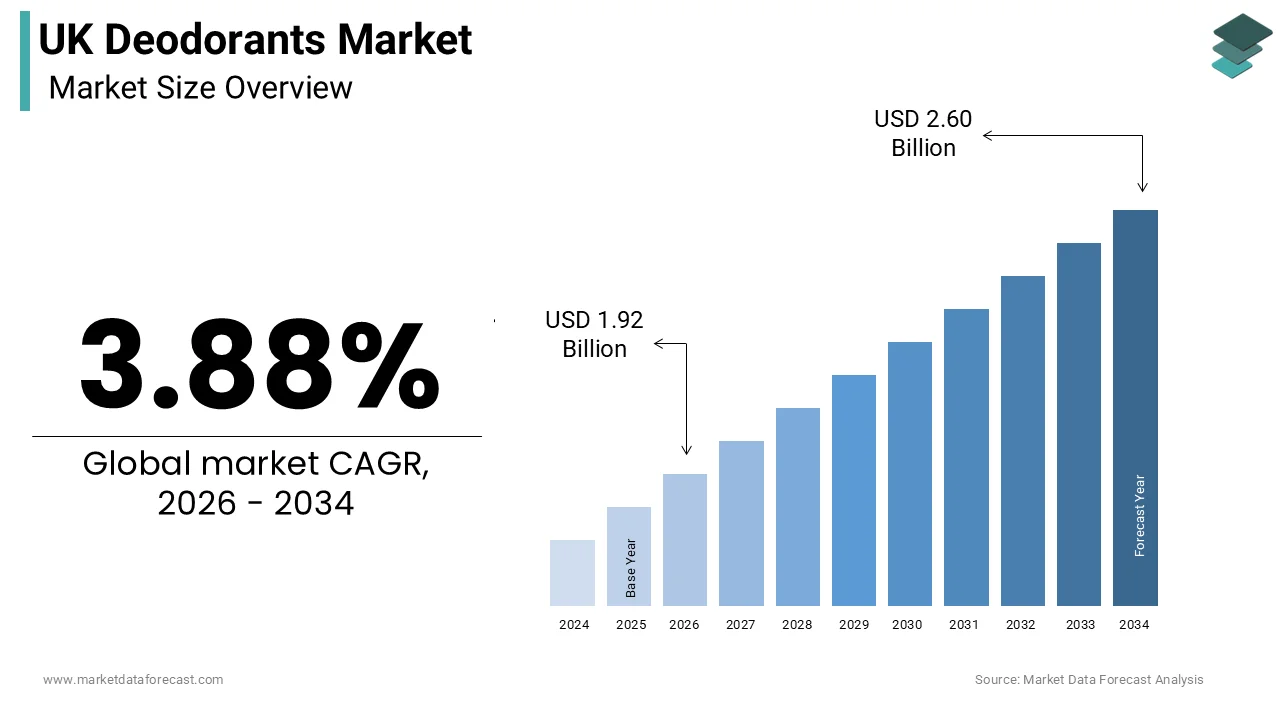
The UK deodorants market size was valued at USD 1.85 billion in 2025, is anticipated to reach USD 1.92 billion in 2026, and is projected to be worth USD 2.60 billion by 2034, registering a compound annual growth rate (CAGR) of 3.88% during the forecast period from 2026 to 2034. Driven by near-universal daily usage, rising health consciousness, and shifting consumer preferences toward natural and sustainable formulations, the market continues steady expansion.
Key Executive Metrics (At-a-Glance)
- 2025 Base Valuation: USD 1.85 Billion
- 2026 Current Valuation: USD 1.92 Billion
- 2034 Forecast Valuation: USD 2.60 Billion
- Compound Annual Growth Rate (CAGR): 3.88% (2026–2034)
- Dominant Product Type Segment: Spray deodorants segment (holding a 58.8% share in 2025)
- Fastest-Growing Product Type Segment: Roll-on formats segment (registering the fastest CAGR of 4.8% from 2026 to 2034)
- Dominant Category Segment: Conventional deodorants segment (holding the majority share in 2025)
- Fastest-Growing Category Segment: Organic and natural deodorants segment (anticipated to witness the fastest CAGR of 9.2% during the forecast period)
- Dominant Distribution Channel: Supermarkets and hypermarkets segment (accounting for a 60.6% share in 2025)
- Fastest-Growing Distribution Channel: Online retail stores segment (experiencing the fastest CAGR of 11.5% between 2026 and 2034)
Core Market Drivers
- Rising Health Consciousness: Increasing consumer preference for aluminum-free, natural, and probiotic-based formulations.
- Personal Grooming & Confidence: Enduring cultural emphasis on hygiene, professional presentation, and social confidence driving regular usage frequency.
Primary Market Restraints & Challenges
- Skin Sensitivity & Environmental Pressures: Skin irritation issues affecting nearly 30% of the population alongside increasing scrutiny over aerosol propellants and packaging waste.
UK Deodorants Market Segmentation Breakdown
| Segment Category | Leading Sub-Segment (Base Year) | Fastest-Growing Sub-Segment |
|---|---|---|
| By Product Type | Spray Deodorants (58.8% share in 2025) | Roll-on Formats (CAGR of 4.8%) |
| By Category | Conventional Deodorants (Majority share in 2025) | Organic and Natural Deodorants (CAGR of 9.2%) |
| By Distribution Channel | Supermarkets and Hypermarkets (60.6% share in 2025) | Online Retail Stores (CAGR of 11.5%) |
Major Industry Players Profiled
Key market leaders shaping the United Kingdom deodorants industry include Unilever PLC, Procter & Gamble, Beiersdorf AG, L'Oréal Group, Henkel AG & Co. KGaA, Coty Inc., Reckitt, Church & Dwight Co., Inc., Edgewell Personal Care, LVMH, Kao Corporation, Lion Corporation, Salt of the Earth Natural Deodorants, Wild Cosmetics, and Fussy.
 Download Free Sample Report
UK Deodorants Market Size
The UK deodorants market size was valued at USD 1.85 billion in 2025, and is projected to reach USD 2.60 billion by 2034 from USD 1.92 billion in 2026, growing at a CAGR of 3.88%.
A deodorant is a personal care product applied to the body to prevent, mask, or neutralize unpleasant body odor. Deodorants and antiperspirants are considered essential daily hygiene products for the vast majority of the British population, serving both functional and social purposes. Deodorants are a routine household purchase. However, data from the Office for National Statistics shows that overall expenditure on personal care and toiletries represents only a small fraction (around 1% to 2%) of total household spending. As per sources, approximately 98 percent of adults in the United Kingdom use deodorant or antiperspirant products regularly, indicating near universal adoption across all demographic groups. The market is influenced by evolving consumer preferences toward natural ingredients, aluminum-free formulations, and sustainable packaging solutions. Regulatory bodies such as the Cosmetic Products Enforcement Regulations ensure strict safety standards for ingredients used in these products. The retail landscape is dominated by major supermarket chains, pharmacies, and increasingly online platforms that offer convenience and a wide product variety. Seasonal variations impact sales volumes, with higher demand observed during summer months and periods of increased social activity. Brand loyalty remains strong but is increasingly challenged by niche players offering specialized benefits such as probiotic protection or zero-waste formats. The intersection of health consciousness, environmental awareness, and personal grooming trends continues to shape product innovation and marketing strategies in this dynamic sector.
MARKET DRIVERS
Rising Health Consciousness Drives Demand For Aluminum-Free And Natural Formulations
Increasing health awareness among consumers has significantly shifted preferences toward aluminum-free and natural deodorant formulations, which fuels the growth of the United Kingdom deodorants market. This transition reflects a growing desire among individuals to minimize their exposure to synthetic chemicals. Shoppers are becoming more informed about ingredient lists and actively avoid substances perceived as harmful, such as parabens, sulfates, and artificial fragrances. Internet discussions regarding potential risks of aluminum-based compounds drive a growing segment of UK consumers to seek out aluminum-free and natural deodorant alternatives. The Soil Association shows robust growth in the broader organic beauty and wellbeing sector, driven by heightened consumer demand for clean, sustainably certified personal care items. Consumers associate natural ingredients like baking soda, arrowroot powder, and essential oils with safer and gentler skin care practices. This trend is particularly pronounced among millennials and Gen Z demographics who prioritize transparency and ethical sourcing in their purchasing decisions. Manufacturers respond by reformulating existing products and launching new lines that emphasize botanical extracts and dermatological testing. Retailers support this shift by dedicating shelf space to natural and organic sections, making these products more accessible. The demand extends beyond efficacy to include holistic wellness benefits, driving innovation in probiotic-based deodorants that balance the skin microbiome. This health-driven movement compels traditional brands to adapt their portfolios to retain relevance in a market where safety and purity are paramount considerations for daily hygiene routines.
Growing Focus On Personal Grooming And Social Confidence Boosts Usage Frequency
The enduring cultural emphasis on personal grooming and social confidence is a powerful driver for consistent deodorant usage, which propels the United Kingdom market. In the country, this is because presentation and hygiene are closely linked to professional and social success. Individuals view fresh scent and odor control as essential components of daily preparation for work, school, and social engagements. As per Ipsos MORI, 70 percent of respondents stated that feeling fresh and confident significantly impacts their self-esteem and interpersonal interactions, reinforcing the psychological value of these products. The rise of remote work has not diminished this trend, as video conferencing and occasional office attendance maintain the need for presentable personal hygiene. Marketing campaigns often leverage emotional appeals related to confidence and attractiveness, resonating with consumers seeking reassurance in social settings. The availability of diverse formats such as sprays, roll-ons, sticks, and creams allows users to choose products that fit their lifestyle and sensitivity levels. Seasonal promotions and new fragrance launches stimulate trial and repeat purchases, keeping the category vibrant. This deep-seated cultural norm ensures steady demand regardless of economic fluctuations, as deodorants remain non-negotiable items in personal care regimens for maintaining social acceptability and individual comfort.
MARKET RESTRAINTS
Skin Sensitivity And Allergic Reactions Limit Product Choice For Consumers
Skin sensitivity and allergic reactions are a major barrier to the United Kingdom deodorants market. Many consumers experience irritation from common ingredients such as alcohol, fragrances, and preservatives. Individuals with sensitive skin or conditions like eczema often struggle to find products that provide effective odor control without causing discomfort or rashes. According to the British Skin Foundation, approximately 30 percent of the population suffers from sensitive skin issues, which restricts their ability to use standard commercial deodorants. Clinical dermatological data indicate that cosmetic formulations, including standard commercial deodorants, remain common triggers for contact dermatitis, necessitating the formulation of hypoallergenic alternatives. This limitation forces affected consumers to either reduce usage frequency or seek expensive hypoallergenic alternatives that may offer inferior performance. The fear of adverse reactions leads to hesitation in trying new products, slowing down innovation adoption and brand switching. Manufacturers face challenges in balancing efficacy with gentleness, as removing irritants can compromise longevity and scent profile. Dermatological testing adds to development costs and time to market, further constraining product launches. The lack of clear labeling regarding potential allergens exacerbates consumer uncertainty, leading to dissatisfaction and reduced loyalty. This health constraint segments the market and limits mass appeal for many conventional products requiring specialized formulations that cater to niche needs rather than broad demographics.
Environmental Concerns Regarding Aerosol Propellants And Packaging Waste
Growing environmental awareness regarding the ecological impact of aerosol propellants and plastic packaging restrains the growth of traditional formats in the United Kingdom deodorant market. Consumers are increasingly critical of single-use plastics and volatile organic compounds released by spray cans, which contribute to air pollution and landfill waste. According to WRAP data, the UK produces over 2 million tonnes of plastic packaging waste annually; while food packaging makes up the majority, plastic personal care containers contribute significantly to this overall environmental footprint. Sources reveal that consumer concern over single-use plastic waste creates intense pressure on personal care manufacturers to adopt reusable, refillable, or highly recyclable packaging designs. Aerosol cans often contain mixed materials that are difficult to recycle, leading to lower recovery rates and higher environmental footprints. The carbon footprint associated with manufacturing and transporting heavy liquid-filled bottles also draws scrutiny from eco-conscious buyers. Regulatory pressures, such as extended producer responsibility schemes, impose additional costs on brands to manage post-consumer waste effectively. These concerns deter environmentally aware consumers from purchasing conventional products, forcing them to seek refillable solid bars or biodegradable options that may be less convenient or widely available. The transition to sustainable packaging requires significant investment in new materials and supply chain adjustments, posing financial and operational challenges for established players. This environmental restraint complicates product development and marketing efforts as companies strive to balance performance with sustainability credentials.
MARKET OPPORTUNITIES
Expansion Of Refillable And Zero Waste Deodorant Formats
The emergence of refillable and zero-waste deodorant formats offers a substantial opportunity for manufacturers to capture the growing segment of environmentally conscious consumers, which is expected to boost the growth of the United Kingdom deodorant market. Innovative designs featuring durable outer casings with compostable or recyclable refills appeal to shoppers seeking to minimize plastic waste and adopt circular economy principles. As per Loop UK, partnerships with major retailers have facilitated the introduction of refill stations for deodorants, allowing customers to purchase product pods instead of entire new units. This model reduces material usage and offers cost savings over time, enhancing customer loyalty and retention. Brands that pioneer these formats gain first-mover advantage and positive media coverage, strengthening brand equity among eco-aware demographics. Social media influencers promote zero-waste lifestyles, amplifying visibility and driving trial among younger audiences. The aesthetic appeal of sleek reusable containers also aligns with premium positioning strategies, enabling higher price points. Manufacturing efficiencies improve as standardized casings reduce complexity in production lines. Retailers benefit from increased foot traffic and engagement through interactive refill experiences. This opportunity allows companies to differentiate themselves in a saturated market while contributing to national waste reduction goals and meeting evolving consumer expectations for responsible business practices.
Integration Of Probiotic and Microbiome-Friendly Technologies
The integration of probiotic- and microbiome-friendly technologies paves the way for manufacturers to innovate beyond traditional odor masking and appeal to health-focused consumers, which is likely to promote the expansion of the United Kingdom deodorant market. Scientific advancements reveal that body odor results from bacterial breakdown of sweat, leading to the development of products that balance skin flora rather than simply killing bacteria. As per sources, launches of microbiome-friendly personal care products increased by 35 percent globally, with the United Kingdom being a key adopter of these advanced formulations. Consumers perceive these products as smarter and more biological solutions that work with the body’s natural processes. Dermatologists endorse these innovations for their gentle action and long-term benefits, reducing irritation risks associated with harsh antimicrobials. Premium pricing is justified by the scientific backing and specialized ingredients attracting discerning buyers willing to invest in superior hygiene solutions. Collaborations with skincare brands enhance credibility and cross-category appeal. Educational campaigns explain the science behind microbiome care, fostering trust and understanding among skeptical consumers. This technological frontier opens new revenue streams and positions brands as leaders in personalized and biological personal care. The opportunity lies in translating complex science into tangible benefits that resonate with everyday users seeking effective and healthy odor control.
MARKET CHALLENGES
Intense Price Competition from Private Label Brands
Fierce price competition from private label brands is a significant challenge to established manufacturers in the United Kingdom deodorant market. This is driven by supermarkets expanding their own-label offerings with comparable quality at lower prices. Retailers leverage their bargaining power to produce cost-effective alternatives that mimic popular branded products in terms of scent format and packaging. As per the Institute of Grocery Distribution, retailer margins on own-brand products are higher, incentivizing aggressive promotion and prominent shelf placement that displaces national brands. This dynamic forces branded manufacturers to engage in price wars, eroding profit margins and limiting resources for innovation and marketing. Consumers increasingly view deodorants as commoditized items where functional performance outweighs brand prestige, making them susceptible to switching for minor price differences. Small and medium-sized brands struggle to compete against the economies of scale enjoyed by large retail chains. The perception gap between premium and private label products narrows as quality improvements in store brands enhance consumer confidence. Established players must invest heavily in differentiation through unique fragrances, advanced technologies, or sustainability claims to justify price premiums. However, price sensitivity remains high during periods of inflation, making it difficult to maintain loyalty. This competitive pressure reshapes market dynamics, requiring strategic agility and cost optimization to sustain viability in a price-driven environment.
Regulatory Scrutiny on Ingredient Safety and Claims
Increasing regulatory scrutiny on ingredient safety and marketing claims creates compliance hurdles for the United Kingdom deodorant market. This affects product development and communication strategies. Authorities enforce strict guidelines under the Cosmetic Products Regulation, requiring comprehensive safety assessments and transparent labeling of all components. According to the Office for Product Safety and Standards, recalls of personal care products due to non-compliant ingredients or unsubstantiated claims have increased by 15 percent in recent years, highlighting the enforcement rigor. As per the Competition and Markets Authority, misleading environmental or health claims, such as natural or detoxifying, face tighter verification requirements to prevent greenwashing. Manufacturers must invest in extensive clinical testing and legal review to ensure compliance, which increases time to market and operational costs. Changes in approved substance lists necessitate frequent reformulations, disrupting supply chains and consumer familiarity. The ambiguity surrounding certain ingredients like triclosan or specific fragrances leads to cautious formulation approaches that may compromise efficacy. Consumer advocacy groups monitor labels closely, reporting violations that damage brand reputation. Navigating this complex regulatory landscape requires dedicated compliance teams and continuous monitoring of legislative updates. Non-compliance risks severe penalties and loss of consumer trust, making adherence a critical but burdensome aspect of business operations. This challenge limits flexibility in innovation and marketing, requiring companies to balance creative freedom with strict legal boundaries in a highly scrutinized industry.
REPORT COVERAGE
| REPORT METRIC | DETAILS |
| Market Size Available | 2025 to 2034 |
| Base Year | 2025 |
| Forecast Period | 2026 to 2034 |
| CAGR | 3.88% |
| Segments Covered | By Product Type, Category, Distribution Channel, and Region. |
| Various Analyses Covered | Global, Regional and Country-Level Analysis, Segment-Level Analysis, Drivers, Restraints, Opportunities, Challenges; PESTLE Analysis; Porter’s Five Forces Analysis, Competitive Landscape, Analyst Overview of Investment Opportunities |
| Market Leaders Profiled | Unilever PLC, Procter & Gamble, Beiersdorf AG, L'Oréal Group, Henkel AG & Co. KGaA, Coty Inc., Reckitt, Church & Dwight Co., Inc., Edgewell Personal Care, LVMH, Kao Corporation, Lion Corporation, Salt of the Earth Natural Deodorants, Wild Cosmetics, Fussy |
SEGMENTAL ANALYSIS
By Product Type insights
The spray deodorants segment led the United Kingdom deodorants market and accounted for a 58.8% share in 2025. This leading position of the segment was attributed to its unparalleled convenience, speed of application, and perceived hygiene benefits. Consumers favor spray formats for their ability to dry instantly without leaving residue on skin or clothing, making them ideal for busy morning routines and post-gym refreshment. According to research, spray deodorants accounted for 55 percent of total unit sales in 2024, reflecting their entrenched position as the default choice for British households. As per a study, 68 percent of consumers cited ease of use and quick drying time as primary reasons for preferring sprays over other formats. The aerosol mechanism ensures even distribution of active ingredients, providing consistent coverage and immediate odor neutralization. Manufacturers have addressed environmental concerns by developing compressed gas technologies that reduce packaging size and propellant usage, appealing to eco-conscious shoppers. The variety of fragrance options available in spray format allows brands to cater to diverse olfactory preferences from fresh citrus to woody notes. Retailers allocate prominent shelf space to sprays due to their high turnover rates and visual appeal through transparent packaging. The format also appeals to younger demographics who value efficiency and modern aesthetics in personal care products. Continuous innovation in nozzle design prevents clogging and ensures precise delivery, enhancing user experience. This combination of functional benefits and sensory appeal sustains the dominance of sprays in a competitive landscape where convenience is paramount.
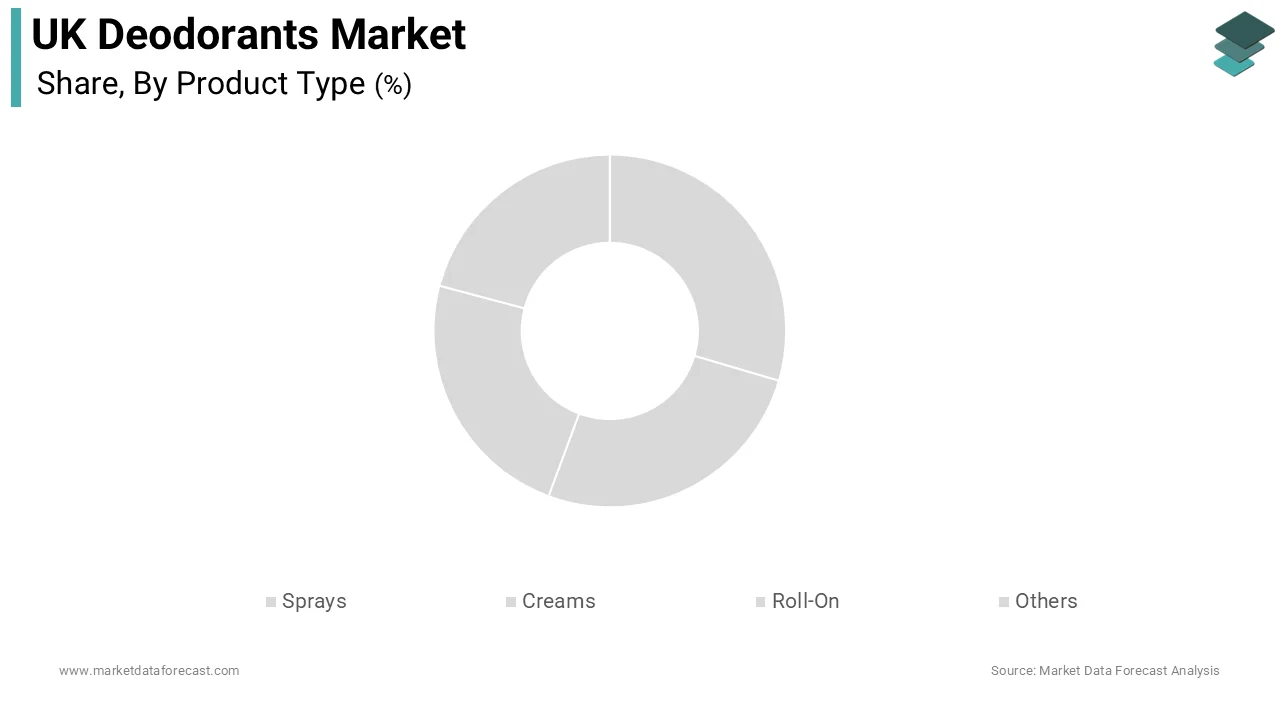
However, the roll-on formats segment is estimated to register the fastest CAGR of 4.8% from 2026 to 2034 due to increasing consumer preference for gentle skin care and precise application. Shoppers are shifting toward roll-ons due to their alcohol free formulations, which minimize irritation and dryness, particularly for individuals with sensitive skin. Clinical dermatological data indicate that aerosol propellants and underlying synthetic fragrances are common triggers for underarm irritation, making hypoallergenic liquid or solid sticks a preferred alternative for individuals with sensitive skin. The ball applicator allows for targeted application, ensuring the product reaches specific areas without waste or overspray. Manufacturers enhance this segment by incorporating moisturizing agents such as aloe vera and vitamin E into formulations, positioning roll-ons as hybrid skincare and hygiene products. The compact size of roll-on bottles makes them travel-friendly and compliant with airline liquid restrictions, boosting popularity among frequent travelers. Premium brands introduce glass bottle variants that convey luxury and sustainability, attracting discerning buyers. The perception of roll-ons as more effective for heavy perspiration further drives adoption among active individuals. This segment benefits from its alignment with health and wellness trends, offering a balanced solution for effective odor control and skin comfort.
By Category Insights
In 2025, the conventional deodorants segment held the United Kingdom deodorants market because of its widespread availability, competitive pricing, and proven efficacy. These products utilize established chemical ingredients such as aluminum salts and synthetic fragrances that deliver reliable odor and sweat protection at accessible price points. According to the Office for National Statistics, conventional personal care products remain the primary choice for budget-conscious households during periods of economic uncertainty. As per sources, 80 percent of shoppers continue to purchase mainstream brands from major supermarkets, citing familiarity and trust in performance as key factors. The extensive distribution network ensures that conventional deodorants are available in every retail outlet, from large hypermarkets to small convenience stores, guaranteeing easy access. Major manufacturers invest heavily in marketing campaigns featuring celebrity endorsements and emotional storytelling that reinforce brand loyalty across generations. The ability to offer multi-pack deals and promotional discounts makes conventional options economically attractive for families. While health trends emerge, the majority of consumers prioritize immediate effectiveness and cost efficiency over niche attributes. Retailers support this segment with prime shelf placement and volume incentives, driving consistent revenue streams. The scale of production allows for lower unit costs, enabling aggressive pricing strategies that deter the entry of smaller competitors. This economic and logistical advantage ensures that conventional deodorants remain the backbone of the market despite rising interest in alternative categories.
On the other hand, the organic and natural deodorants segment is anticipated to witness the fastest CAGR of 9.2% during the forecast period, owing to the clean beauty movement and heightened health awareness. Consumers actively seek products free from aluminum parabens and synthetic additives, believing they offer safer and more holistic hygiene solutions. As per research, 55 percent of United Kingdom consumers stated they prefer personal care products with transparent ingredient lists and ethical sourcing practices. Brands leverage botanical extracts such as coconut oil, shea butter, and essential oils to create appealing scent profiles while providing antimicrobial benefits. The rise of social media influencers promoting zero-waste and non-toxic lifestyles amplifies visibility and drives trial among younger demographics. Retailers respond by expanding dedicated natural beauty sections and partnering with niche brands to capture this engaged audience. Certification labels such as Vegan Society and Cruelty Free International enhance credibility and trust, facilitating purchasing decisions. Although premium pricing remains a barrier, the perceived value of health and environmental benefits justifies the cost for loyal customers. Innovation in formulation has improved performance, addressing previous complaints about efficacy, thus broadening appeal. This segment thrives on its alignment with broader societal shifts toward sustainability and wellness, ensuring sustained growth momentum.
By Distribution Channel Insights
The supermarkets and hypermarkets segment dominated the United Kingdom deodorants market and accounted for a 60.6% share in 2025. This dominance of the segment was driven by its extensive reach, one-stop shopping convenience, and competitive pricing strategies. These retail giants offer comprehensive assortments of mainstream and private-label deodorants, allowing consumers to purchase hygiene products alongside weekly groceries. Promotional activities such as buy one get one free offers and multi-buy discounts are frequently employed to stimulate volume sales and clear inventory. Private label brands gain significant traction in these channels, benefiting from prominent shelf placement and lower price points compared to national brands. The physical presence allows customers to inspect packaging and read labels before purchasing, reducing return rates. Loyalty programs integrated with supermarket apps provide personalized offers, enhancing customer retention. The established supply chain relationships ensure consistent stock levels, preventing out-of-stock situations that could lead to brand switching. This channel remains indispensable for mass market brands seeking volume and visibility in a highly competitive retail environment.
On the contrary, the online retail stores segment is likely to experience the fastest CAGR of 11.5% between 2026 and 2034. This quick surge of the segment is fuelled by digital convenience, personalized recommendations, and subscription services. E-commerce platforms enable consumers to explore a wider range of niche and international brands that may not be available in physical stores. Digital interfaces facilitate detailed product comparisons, reviews, and ingredient transparency, empowering informed purchasing decisions. Social media integration allows brands to engage directly with consumers through targeted ads and influencer collaborations, driving traffic to online storefronts. The ability to access exclusive online bundles and limited edition releases creates urgency and excitement among shoppers. Home delivery eliminates the need for physical store visits, appealing to time-poor urban residents. Data analytics enable retailers to predict demand and optimize inventory, reducing waste and improving service levels. This channel thrives on its agility and ability to cater to specific consumer preferences, fostering a personalized and convenient shopping experience that complements traditional retail.
REGIONAL ANALYSIS
England Deodorants Market Analysis
England was the top performer in the United Kingdom deodorants market and occupied an 84.4% share in 2025. This prominence of the market was driven by its high population density, concentrated urban centers, and robust retail infrastructure. The region benefits from a diverse demographic profile that drives demand across various price points and product types from mass market sprays to premium natural formats. According to the Office for National Statistics, England is home to over 56 million people, representing the primary consumer base for personal care products. As per research, London and the South East exhibit higher per capita spending on premium deodorants, influenced by higher disposable income and exposure to global beauty trends. The presence of major retail headquarters and distribution hubs ensures efficient supply chain operations and widespread product availability. Urban lifestyles characterized by commuting and professional environments reinforce the daily necessity of effective odor control. Marketing campaigns are often tailored to regional preferences, leveraging local influencers and events to build brand affinity. The concentration of manufacturing facilities in the Midlands supports local employment and reduces logistics costs. High street pharmacies and supermarkets in densely populated areas generate significant foot traffic, driving volume sales. This regional dominance is sustained by continuous innovation and adaptation to evolving consumer needs, ensuring that England remains the central engine of growth for the United Kingdom's deodorants industry.
Scotland Deodorants Market Analysis
Scotland maintains consistent growth in the United Kingdom deodorants market due to rising health consciousness and a preference for premium and natural products. Consumers in Scotland are increasingly attentive to ingredient safety and environmental impact, leading to higher adoption rates of organic and aluminum-free deodorants. Scottish Enterprise actively invests in high-growth companies pioneering sustainable and natural personal care ingredients, reflecting a broader UK-wide consumer shift toward green beauty products. As per VisitScotland, tourism influences local retail trends with visitors seeking high quality, sustainable souvenirs, including artisanal personal care items. The cooler climate does not diminish demand as indoor heating and active lifestyles maintain the need for effective odor control. Retailers in cities like Edinburgh and Glasgow dedicate shelf space to independent and eco-friendly brands catering to discerning shoppers. Government initiatives promoting sustainable consumption support the uptake of zero-waste and refillable deodorant formats. The strong sense of community and support for local businesses fosters loyalty toward Scottish-made products. Online penetration is high, allowing rural consumers access to specialized items not available locally. This unique combination of health awareness, environmental stewardship, and regional pride positions Scotland as a dynamic and evolving segment within the broader United Kingdom deodorants market landscape.
COMPETITION OVERVIEW
The United Kingdom deodorants market features intense competition characterized by established multinational corporations and agile niche brands vying for consumer attention in a mature yet evolving landscape. Major players leverage strong brand equity, extensive distribution networks, and significant marketing budgets to dominate shelf space and influence purchasing decisions. However, the rise of private label offerings from major supermarkets poses a constant threat by providing comparable quality at lower price points, attracting budget-conscious shoppers. Innovation serves as a key differentiator, with companies racing to launch aluminum-free probiotic and sustainable formats that align with health and environmental trends. Price sensitivity remains high during economic uncertainty, prompting frequent promotions and multi-buy deals to stimulate volume. Digital engagement becomes crucial as brands utilize social media platforms to connect directly with consumers and foster community. The entry of indie brands focusing on clean beauty and zero-waste principles fragments the market further, challenging traditional dominance. Success depends on the ability to balance cost efficiency with meaningful innovation and authentic sustainability credentials. Companies must continuously adapt to shifting consumer values and regulatory requirements to maintain relevance and profitability in this highly competitive environment.
KEY MARKET PLAYERS
A few major players in the UK deodorants market include
- Unilever PLC
- Procter & Gamble
- Beiersdorf AG
- L'Oréal Group
- Henkel AG & Co. KGaA
- Coty Inc.
- Reckitt
- Church & Dwight Co., Inc.
- Edgewell Personal Care
- LVMH
- Kao Corporation
- Lion Corporation
- Salt of the Earth Natural Deodorants
- Wild Cosmetics
- Fussy
Top Strategies Used By Key Market Participants
Key players in the United Kingdom deodorants market prioritize product innovation by developing aluminum-free and natural formulations to meet evolving health consciousness among consumers. Companies invest in sustainable packaging solutions such as refillable containers and recycled materials to address environmental concerns and regulatory pressures. Digital marketing strategies leverage social media influencers and targeted advertising to engage younger demographics and build brand loyalty. Strategic partnerships with retailers ensure prominent shelf placement and exclusive promotional offers that drive sales volume. Manufacturers focus on dermatological testing and clinical claims to enhance product credibility and appeal to sensitive skin segments. Expansion into niche markets through specialized fragrances and premium positioning helps differentiate brands in a crowded landscape. These multifaceted approaches enable companies to adapt to changing consumer preferences while maintaining competitiveness and driving long-term growth in the dynamic personal care sector.
Leading Players in the United Kingdom Deodorants Market
- Unilever United Kingdom Limited maintains a dominant presence through its extensive portfolio of iconic brands such as Dove, Axe, and Sure, which cater to diverse consumer needs. The company focuses heavily on sustainability by introducing refillable deodorant formats and reducing plastic usage in packaging to align with environmental goals. Recently, Unilever launched aluminum-free variants under established brand names to capture the growing health-conscious segment while retaining loyal customers. Their investment in digital marketing campaigns leverages social media influencers to engage younger demographics effectively. Unilever also prioritizes inclusive advertising that resonates with broad audiences, enhancing brand affinity. By integrating advanced skin care ingredients into deodorant formulations, they bridge the gap between hygiene and wellness. This strategic approach ensures continued relevance and strengthens their position as a leader in personal care innovation across the United Kingdom retail landscape.
- Procter And Gamble United Kingdom contributes significantly to the market with leading brands like Old Spice and Secret that emphasize performance and masculine appeal. The company drives growth through continuous product innovation, including long-lasting protection formulas and premium fragrance collaborations. Recent actions include expanding their natural deodorant range to meet rising demand for clean beauty products without compromising efficacy. Procter And Gamble utilizes data analytics to understand consumer preferences, enabling targeted product development and personalized marketing efforts. They actively support retailer partnerships, ensuring optimal shelf placement and promotional visibility in major supermarkets. The organization emphasizes supply chain resilience to maintain consistent product availability during peak demand periods. By focusing on scientific advancements in odor control technology, they deliver superior user experiences. This commitment to quality and innovation reinforces their competitive edge and sustains strong brand loyalty among consumers seeking reliable daily hygiene solutions.
- Beiersdorf United Kingdom Limited strengthens its market position through trusted brands such as Nivea, which are synonymous with gentle care and reliability. The company focuses on dermatological expertise, developing deodorants suitable for sensitive skin that minimize irritation while providing effective protection. Recently, Beiersdorf introduced eco-friendly packaging initiatives, including recyclable materials and reduced carbon footprint manufacturing processes. They engage consumers through educational content about skin health and ingredient transparency, building trust and credibility. Strategic collaborations with healthcare professionals enhance the scientific validity of their product claims. Beiersdorf also expands its digital presence, offering online consultation tools and personalized recommendations. Their commitment to sustainability and skin care excellence appeals to health-conscious shoppers. By balancing traditional values with modern innovations, Beiersdorf maintains a strong connection with consumers. This approach ensures sustained growth and reinforces their reputation as a premium provider of high-quality personal care products in the United Kingdom.
MARKET SEGMENTATION
This research report on the UK deodorants market is segmented and sub-segmented into the following categories.
By Product Type
- Sprays
- Creams
- Roll-On
- Others
By Category
- Conventional
- Organic/Natural
By Distribution Channel
- Supermarkets/Hypermarkets
- Specialty Stores
- Online Retail Stores
- Others