- Product Description Description
- Table of Contents TOC
- List of Table & Figure LOT
- Get Free Sample PDF Sample PDF
Market Size, 2025
$1.79 BnMarket Estimate, 2026
$1.95 BnMarket Forecast, 2034
$3.80 BnCAGR, 2026–2034
8.71%UK Meal Kits Market Report Summary
The UK meal kits market was valued at USD 1.79 billion in 2025, is estimated to reach USD 1.95 billion in 2026, and is projected to reach USD 3.80 billion by 2034, growing at a CAGR of 8.71% during the forecast period. Market growth is driven by increasing consumer demand for convenient meal preparation solutions, busy lifestyles, rising interest in home cooking, and growing preference for healthy and personalized meal options. The expansion of subscription-based food services, digital ordering platforms, and premium ingredient offerings is further supporting market growth across the United Kingdom.
Key Market Trends
- Growing demand for convenient and time saving meal solutions is driving market growth.
- Increasing consumer interest in healthy, fresh, and portion controlled meals is boosting market expansion.
- Rising adoption of subscription based food delivery services is supporting industry development.
- Expansion of plant based, organic, and specialty meal kit offerings is enhancing market opportunities.
- Growing use of digital platforms and direct to consumer business models is influencing market advancement.
Segmental Insights
- Based on meal type, the non vegetarian meal kits segment accounted for the largest share of the UK meal kits market in 2025, driven by strong consumer demand for protein rich meal options and a broad variety of meat based recipes.
- Based on offering, the ready to cook meal kits segment held the dominant share of the UK meal kits market in 2025 due to their convenience, fresh ingredients, and simplified cooking process.
- Based on distribution channel, the direct to consumer segment accounted for the leading share of the UK meal kits market in 2025, supported by subscription models, online ordering convenience, and home delivery services.
Regional Insights
- England accounted for the largest share of the UK meal kits market in 2025 and is expected to maintain its leading position during the forecast period. The region benefits from high urbanization, strong adoption of online food delivery services, and growing consumer demand for convenient meal solutions.
Competitive Landscape
The UK meal kits market is highly competitive, with companies focusing on menu innovation, subscription flexibility, premium ingredients, and sustainable packaging solutions to strengthen their market position. Market participants continue to invest in personalized meal plans, dietary specific offerings, and digital customer engagement strategies. Major players operating in the UK meal kits market include HelloFresh UK, Gousto, Mindful Chef, Green Chef UK, SimplyCook, Pasta Evangelists, Abel & Cole, Riverford Organic Farmers, GRUBBY, Planthood, Prep Kitchen, and Frive (formerly Lions Prep).
UK Meal Kit Market Size
The UK meal kit market size was valued at USD 1.79 billion in 2025, and is projected to reach USD 3.80 billion by 2034 from USD 1.95 billion in 2026, growing at a CAGR of 8.71%.
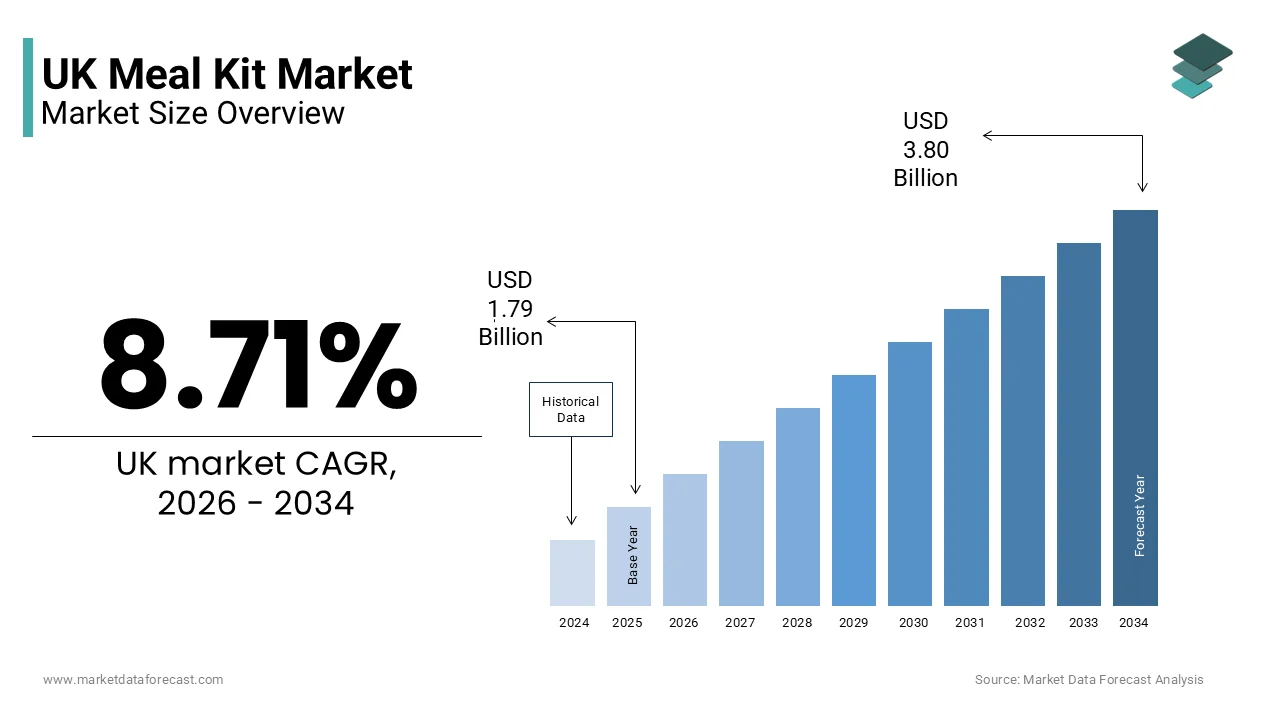
Meal kits represent a specialized segment within the broader food retail and delivery industry, characterized by the subscription-based or on-demand provision of pre-portioned ingredients and recipe cards delivered directly to consumer doorsteps. This service model bridges the gap between grocery shopping and restaurant dining by offering convenience without compromising the culinary experience of home cooking. The sector has evolved from a niche novelty into a mainstream solution for busy households seeking to reduce food waste and simplify meal planning. As per data from the Office for National Statistics, the average time spent on household chores, including cooking has decreased significantly over the past decade, reflecting a societal shift toward time-saving solutions. The demographic profile of users skews towards urban professionals, young families, and health-conscious individuals who value variety and nutritional balance. Regulatory frameworks concerning food safety, packaging sustainability, and cold chain logistics heavily influence operational standards. The market operates in a highly competitive environment where customer retention is paramount due to high acquisition costs. Recent trends indicate a move toward flexibility, with no-commitment subscriptions and integration with retail partnerships allowing consumers to purchase kits in physical stores. This dynamic landscape requires providers to balance logistical efficiency with culinary innovation, while addressing growing consumer expectations for environmental responsibility and dietary customization.
MARKET DRIVERS
Time Poverty among Urban Professionals and Dual-Income Households
The intensifying pace of modern life and the prevalence of dual-income households in the UK are majorly fuelling the adoption of meal kit services and is one of the major factors propelling the UK market growth. Consumers increasingly face time poverty, where the hours available for domestic tasks, such as grocery shopping and meal preparation, are severely constrained. According to data from the Office for National Statistics, the average weekly working hours for full-time employees remain high, with many individuals reporting insufficient time for leisure and household management. This structural lack of time drives demand for solutions that eliminate the decision fatigue associated with meal planning and the logistical burden of visiting supermarkets. Meal kits offer a streamlined alternative by delivering precise ingredients and clear instructions directly to the home, reducing preparation time by up to 50% compared to traditional cooking. The convenience factor is particularly appealing to parents, who seek to provide home-cooked meals for their children without the extensive effort typically required. The ability to bypass the weekly shop while still engaging in the act of cooking provides a sense of accomplishment and control over dietary intake. This alignment with the needs of time-poor yet quality-conscious consumers ensures sustained demand for meal kit services across major urban centers.
Growing Consumer Awareness of Food Waste and Sustainability
The increasing awareness of environmental issues and the desire to reduce household food waste are further boosting the expansion of the UK meal kits market. Consumers are becoming more conscientious about the ecological footprint of their dietary choices and seek ways to minimize waste in their daily lives. According to research from the Waste and Resources Action Programme, households in the UK throw away millions of tonnes of edible food annually, much of which results from over-purchasing and poor meal planning. Meal kits address this issue by providing exact portion sizes for each recipe, thereby eliminating the need to buy bulk ingredients that may spoil before use. This precision reduces organic waste and aligns with the values of environmentally conscious consumers who prioritize sustainability. Providers often highlight their eco-friendly packaging and sourcing practices, further enhancing their appeal to this demographic. The educational aspect of meal kits also encourages consumers to utilize entire ingredients, fostering a culture of respect for food resources. By positioning themselves as a sustainable alternative to traditional grocery shopping, meal kit companies attract customers who view their purchasing decisions as a reflection of their ethical stance. This value-driven motivation creates a loyal customer base committed to reducing their environmental impact.
MARKET RESTRAINTS
High Cost per Serving Compared to Traditional Grocery Shopping
The relatively high cost per serving of meal kits compared to traditional grocery shopping is hampering the growth of the UK meal kits market, particularly during periods of economic uncertainty. While meal kits offer convenience, they often carry a premium price tag that can be prohibitive for budget-conscious households. According to data from the Office for National Statistics, inflationary pressures have increased the cost of living significantly, forcing many families to scrutinize their discretionary spending. For many consumers, the price difference between a meal kit and sourcing ingredients independently from a supermarket is substantial, making the former an unsustainable long-term option. The perception of meal kits as a luxury rather than a necessity limits their appeal to higher-income demographics. Economic downturns exacerbate this sensitivity, leading to higher churn rates as subscribers cancel services to cut costs. Additionally, the lack of economies of scale for smaller providers means they cannot compete on price with large supermarket chains that offer own-brand meal solutions. This financial barrier restricts the total addressable market and prevents meal kits from achieving mass adoption among lower- and middle-income groups, who constitute the majority of the population.
Excessive Packaging Waste and Environmental Concerns
Despite claims of reducing food waste, meal kit services face criticism for generating excessive packaging waste, which is further impeding the UK market expansion among environmentally conscious consumers. Each ingredient is typically packaged individually in plastic bags, boxes, and insulation materials to maintain freshness and prevent damage during transit. According to reports from local councils and environmental groups, the volume of non-recyclable or hard-to-recycle packaging generated by meal kits contributes significantly to household waste streams. Consumers are increasingly aware of the plastic pollution crisis and are reluctant to support businesses that rely heavily on single-use plastics. The complexity of separating different types of packaging materials for recycling further discourages participation. Although some providers have introduced compostable or recyclable options, the transition is slow and often incomplete. This environmental contradiction undermines the sustainability narrative that many meal kit companies promote. Negative public perception regarding packaging waste can lead to brand backlash and subscriber attrition. Until the industry can demonstrate a genuine and comprehensive reduction in packaging impact, it will struggle to retain customers who prioritize ecological responsibility in their purchasing decisions.
MARKET OPPORTUNITIES
Expansion into Retail Partnerships and Supermarket Integration
The integration of meal kit offerings into established retail channels and supermarket partnerships is a significant opportunity for growth in the UK market. By placing meal kits in physical stores, providers can reach a broader audience who may be hesitant to commit to online subscriptions. According to industry observations, major supermarket chains have begun stocking ready-to-cook meal solutions that mimic the meal kit model, offering convenience without the delivery wait. Collaborations between digital meal kit providers and retailers allow for cross-promotion and increased visibility among regular grocery shoppers. This omnichannel approach reduces customer acquisition costs and leverages the existing trust and footfall of established retail brands. It also allows consumers to trial products before committing to a subscription, lowering the barrier to entry. Retail partnerships enable providers to utilize existing supply chain infrastructure, reducing logistical complexities and costs. Furthermore, the presence in stores facilitates impulse purchases and introduces meal kits to older demographics who prefer traditional shopping methods. This strategic expansion diversifies revenue streams and enhances brand accessibility, ensuring sustained growth beyond the limitations of direct-to-consumer models.
Customization for Specific Dietary Needs and Health Goals
The growing demand for personalized nutrition and specific dietary accommodations offers substantial opportunities for meal kit providers to differentiate their offerings and capture niche markets. Consumers are increasingly seeking meals that align with their health goals, such as weight loss, muscle gain, or management of conditions like diabetes and heart disease. According to data from the British Dietetic Association, there is rising interest in specialized diets, including keto, vegan, gluten-free, and low FODMAP plans. Meal kit companies can leverage this trend by developing tailored menus that cater to these specific needs, providing verified nutritional information and expert-curated recipes. This level of customization adds value and justifies premium pricing, as it saves consumers the effort of researching and planning complex dietary requirements. Partnerships with nutritionists and health apps can further enhance credibility and engagement. By offering flexible subscription options that allow users to select meals based on their dietary preferences, providers can improve retention and satisfaction. This focus on personalization transforms meal kits from a general convenience service into a targeted health solution, appealing to a discerning and loyal customer base.
MARKET CHALLENGES
Intense Competition and High Customer Acquisition Costs
The UK meal kits market faces intense competition from both dedicated providers and traditional grocery retailers, which drives up customer acquisition costs and pressures profit margins. Numerous players vie for the attention of a limited pool of subscribers, leading to aggressive marketing campaigns and promotional discounts. According to industry analysis, the cost of acquiring a new customer in the meal kit sector is significantly higher than in other e-commerce segments due to the need for extensive advertising and incentives. This high expenditure makes it difficult for companies to achieve profitability, especially when combined with high churn rates. Subscribers often switch between providers to take advantage of introductory offers, creating a cycle of instability. The entry of supermarkets with their own ready-to-cook ranges further saturates the market, offering lower prices and greater convenience. Differentiating brands in such a crowded landscape requires continuous innovation and investment, which strains financial resources. The pressure to maintain growth while managing acquisition costs creates a challenging operational environment. Companies must constantly optimize their marketing strategies and improve retention mechanisms to survive in this hyper-competitive market.
Logistical Complexities and Cold Chain Management Issues
Managing the intricate logistics of perishable goods and maintaining an unbroken cold chain is further challenging the expansion of the UK market. Ensuring that fresh ingredients arrive in perfect condition requires sophisticated warehousing, packing, and delivery systems that operate with high precision. According to supply chain experts, any disruption in the cold chain can lead to spoilage and customer dissatisfaction, resulting in refunds and reputational damage. The last-mile delivery phase is particularly complex and costly, as it involves coordinating numerous small parcels to individual addresses within narrow time windows. Traffic congestion, weather conditions, and failed delivery attempts further complicate operations and increase costs. Scaling these logistics efficiently is difficult, as demand fluctuates seasonally and weekly. Providers must invest heavily in technology and infrastructure to optimize routes and monitor temperature controls. Failure to manage these logistical nuances effectively can erode margins and undermine customer trust. The inherent difficulty of delivering fresh food reliably and cost-effectively remains a persistent operational hurdle that limits scalability and profitability for many players in the market.
REPORT COVERAGE
| REPORT METRIC | DETAILS |
| Market Size Available | 2025 to 2034 |
| Base Year | 2025 |
| Forecast Period | 2026 to 2034 |
| CAGR | 8.71% |
| Segments Covered | By Meal Type, Offering, Subscription Model, Demographic Type, Distribution Channel, and Region. |
| Various Analyses Covered | Global, Regional and Country-Level Analysis, Segment-Level Analysis, Drivers, Restraints, Opportunities, Challenges; PESTLE Analysis; Porter’s Five Forces Analysis, Competitive Landscape, Analyst Overview of Investment Opportunities |
| Market Leaders Profiled | HelloFresh UK, Gousto, Mindful Chef, Green Chef UK, SimplyCook, Pasta Evangelists, Abel & Cole, Riverford Organic Farmers, GRUBBY, Planthood, Prep Kitchen, and Frive (formerly Lions Prep) |
SEGMENTAL ANALYSIS
By Meal Type Insights
The non-vegetarian meal kits segment dominated the market by capturing the largest share of the UK market in 2025, primarily due to the entrenched cultural preference for meat-based diets among the majority of the population. Despite the rise of plant-based alternatives, meat remains a staple in British culinary traditions, with dishes such as roast chicken, beef stews, and pork chops forming the core of weekly meal planning. According to data from the Department for Environment, Food and Rural Affairs, the average annual consumption of meat per person in the UK remains significantly higher than that of plant-based protein sources, indicating a sustained demand for animal-derived ingredients. Meal kit providers cater to this preference by offering a wide variety of recipes featuring beef, chicken, lamb, and seafood, which appeal to traditional tastes. The perception of meat as a source of high-quality protein and satiety further reinforces its popularity among families and individuals seeking substantial meals. Providers ensure that their non-vegetarian options are diverse and innovative, incorporating global flavors to keep consumers engaged. This alignment with mainstream dietary habits ensures that non-vegetarian kits account for the largest share of subscriptions and sales volume in the market.
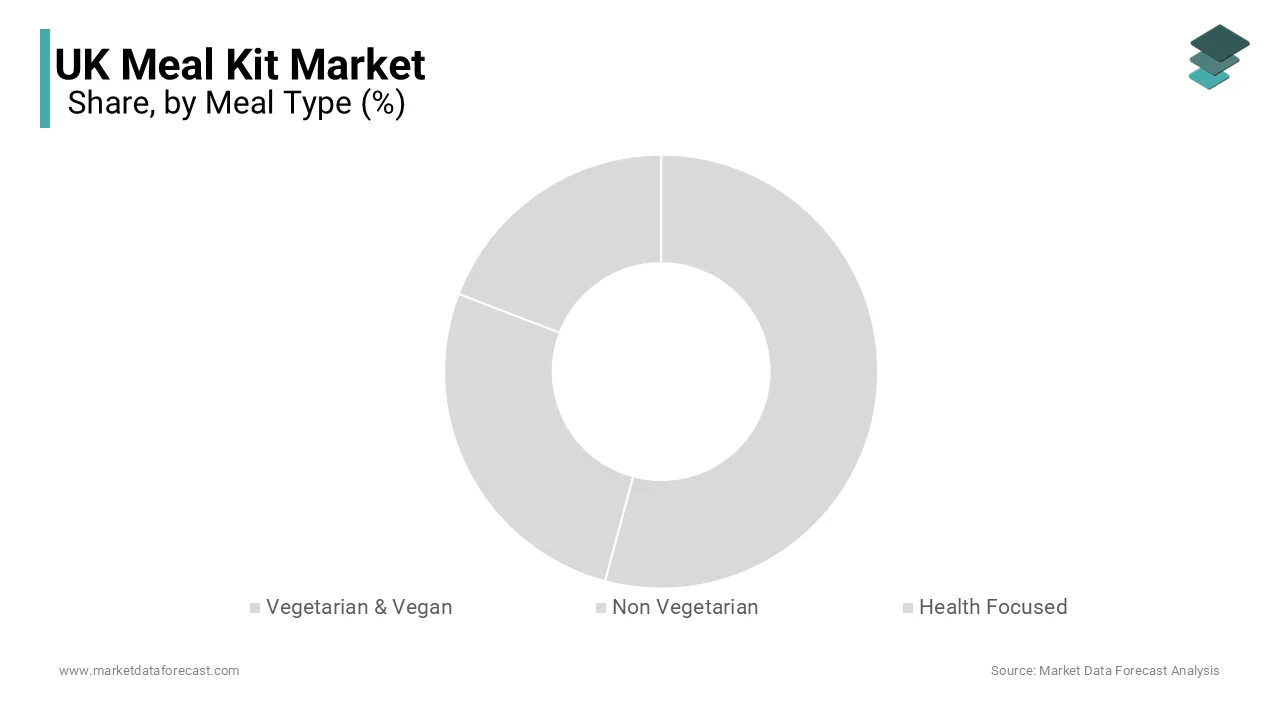
On the other end, the vegetarian and vegan meal kits segment is estimated to record a promising CAGR in the UK market during the forecast period owing to the rising ethical consciousness and environmental concerns among consumers. Individuals are increasingly aware of the impact of animal agriculture on climate change and are choosing plant-based diets to reduce their carbon footprint. According to data from The Vegan Society, the number of vegans in the UK has quadrupled in recent years, with millions more adopting flexitarian lifestyles that significantly reduce meat consumption. Meal kit providers have responded by expanding their plant-based offerings with creative and flavorful recipes that challenge the notion that vegetarian food is bland or limited. Ingredients such as jackfruit, lentils, chickpeas, and tofu are used to create hearty and satisfying meals that appeal to both committed vegans and curious omnivores. The marketing of these kits often highlights sustainability credentials, such as lower water usage and reduced emissions, which resonates with eco-conscious buyers. This values-driven shift in consumer behavior ensures that vegetarian and vegan kits experience rapid adoption and high growth rates compared to traditional meat-based options.
By Offering Insights
The ready-to-cook meal kits segment dominated the market by holding the major share of the UK market in 2025 because they satisfy the consumer desire for culinary engagement, while providing the convenience of pre-portioned ingredients. Many users view cooking as a therapeutic and rewarding activity that allows them to connect with their food and family. According to consumer behavior studies, a significant proportion of meal kit subscribers cite the enjoyment of cooking as a primary reason for their subscription, preferring the hands-on experience over simply reheating a prepared meal. Ready-to-cook kits provide fresh, raw ingredients that retain their nutritional value and texture, offering a superior sensory experience compared to processed alternatives. The step-by-step recipe cards guide users through the cooking process, enabling them to learn new techniques and expand their culinary repertoire. This educational aspect adds value beyond mere sustenance, fostering a sense of achievement. The perception of freshness and quality associated with raw ingredients also justifies the premium pricing model. This combination of convenience, creativity, and quality ensures that ready-to-cook kits remain the preferred choice for the majority of meal kit users.
However, the ready-to-eat meal kits segment is the fastest-growing segment in the UK market and is predicted to register a promising CAGR in the UK market during the forecast period owing to the intensifying demand for ultimate convenience and time-saving solutions among busy consumers. As lifestyles become increasingly hectic, many individuals lack the time or energy to cook, even with pre-portioned ingredients. According to data from the Office for National Statistics, the average time spent on food preparation has declined significantly, prompting a shift toward fully prepared meals. Ready-to-eat options require minimal effort, typically needing only microwaving or brief heating, which appeals to professionals, students, and elderly individuals. This segment captures customers who prioritize speed and ease above all else, viewing meal kits as a substitute for takeout or restaurant dining. The improvement in quality and taste of ready-to-eat meals has reduced the stigma associated with convenience food, making them a viable daily option. The ability to have a hot, nutritious meal ready in minutes fits seamlessly into fast-paced routines. This alignment with the need for efficiency drives the rapid expansion of the ready-to-eat segment.
By Distribution Channel Insights
The direct-to-consumer channels segment led the market by accounting for the leading share of the UK market in 2025, primarily due to the effectiveness of the subscription model in building customer loyalty and ensuring recurring revenue. Subscribers receive regular deliveries of meal kits based on their preferences, creating a seamless and predictable shopping experience. According to industry analysis, subscription-based models result in higher customer lifetime value compared to one-off purchases, as they reduce the friction of repeated ordering decisions. Direct relationships allow providers to gather detailed data on customer preferences, enabling personalized recommendations and targeted marketing. This data-driven approach enhances satisfaction and retention by ensuring that users receive meals they are likely to enjoy. The convenience of automatic deliveries eliminates the need for weekly planning and shopping trips, which is a key value proposition for busy households. Providers can also offer exclusive discounts and flexible pause options to subscribers, further strengthening the bond. This direct engagement fosters a sense of community and brand affinity that is difficult to replicate through third-party retailers. The stability and predictability of the subscription model secure the dominance of direct-to-consumer channels.
On the other side, the online retailers and supermarkets segment is expected grow at a prominent CAGR in the UK market during the forecast period due to the increased accessibility and opportunities for impulse purchasing. Integrating meal kits into existing grocery shopping routines allows consumers to try products without committing to a subscription. According to retail data, major supermarket chains have expanded their online platforms to include a wide range of ready-to-cook and ready-to-eat meal kits from various brands. This integration leverages the high traffic and trust associated with established grocery retailers, attracting customers who may be hesitant to sign up for dedicated meal kit services. The ability to add meal kits to regular grocery orders reduces delivery fees and simplifies logistics for consumers. Prominent placement on homepages and targeted email campaigns drive visibility and trial. The flexibility to purchase single kits rather than bulk subscriptions appeals to occasional users and those testing the concept. This low barrier to entry and convenience of integration with routine shopping drives the rapid growth of this channel.
COUNTRY LEVEL ANALYSIS
England had the leading share of the UK market in 2025 and is likely to maintain the central engine position in the UK meal kits market over the next few years due to its large population, dense urban centers, and high concentration of dual-income households. London serves as the primary hub for meal kit providers, with high demand driven by busy professionals seeking convenient dining solutions. According to data from the Office for National Statistics, England is home to over 58 million people, with a significant proportion residing in cities where time poverty is acute. The well-developed logistics infrastructure, including extensive road networks and courier services, facilitates efficient last-mile delivery across the region. High levels of digital connectivity and smartphone penetration support the adoption of subscription-based services and online ordering. The diverse culinary landscape in English cities encourages experimentation with global flavors offered by meal kits. Major retailers headquartered in England drive the integration of meal kits into mainstream grocery channels. The presence of numerous competitors fosters innovation and competitive pricing. This combination of demographic density, economic activity, and infrastructure ensures England remains the central engine of the UK meal kits market.
Scotland is expected to demonstrate notable market contribution and steady progression for the next few years, with a distinct focus on local sourcing and sustainability. Edinburgh and Glasgow are the main centers of demand, where consumers value high-quality ingredients and ethical production methods. According to statistics from the Scottish Government, there is strong support for local food producers, which influences meal kit providers to source ingredients from Scottish farms. This emphasis on provenance appeals to consumers who prioritize regional identity and environmental responsibility. The rugged geography and dispersed population in some areas present logistical challenges, but also create opportunities for specialized local providers. Digital adoption rates are high, facilitating online subscriptions and deliveries. The tourism sector also contributes to demand, with visitors seeking convenient yet authentic dining experiences. Retail partnerships with local supermarkets help expand reach beyond major cities. The commitment to sustainability and quality ensures that the Scottish market remains resilient and receptive to premium meal kit offerings.
Wales is projected to experience stable development within the UK meal kits market over the next few years, with a market status defined by close-knit communities and growing interest in healthy eating. Cardiff and Swansea are the primary urban hubs where demand is concentrated among young families and professionals. According to data from the Welsh Government, initiatives promoting healthy lifestyles and cooking skills support the adoption of meal kits as educational tools. The compact size of the country facilitates efficient delivery networks, reducing logistical costs for providers. Local producers often collaborate with meal kit companies to feature Welsh ingredients, such as lamb and leeks, enhancing regional appeal. Community-focused marketing strategies resonate well with residents, who value trust and personal connection. The rising awareness of food waste reduction aligns with the core value proposition of meal kits. While smaller in scale, the Welsh market shows steady growth driven by health consciousness and convenience needs. Local retailers play a key role in distributing kits to broader audiences.
COMPETITIVE LANDSCAPE
The competition in the UK meal kits market is intense and characterized by the presence of specialized startups established global giants and traditional supermarket chains. Dedicated meal kit providers leverage their expertise in curation and logistics to offer unique culinary experiences and high quality ingredients. They compete on variety customization and brand storytelling to attract discerning customers. Global players utilize their scale to offer lower prices and extensive marketing campaigns dominating visibility. Supermarkets have entered the fray with own brand ready to cook boxes leveraging existing customer trust and distribution networks. This entry pressures independent providers to differentiate through niche offerings such as organic or diet specific meals. Price sensitivity among consumers drives frequent promotions and discounts eroding margins. Retention becomes critical as acquisition costs rise forcing companies to focus on customer experience and loyalty programs. Innovation in packaging sustainability and digital engagement serves as key differentiators in this crowded and dynamic marketplace.
KEY MARKET PLAYERS
Some of the companies that are playing a dominating role in the UK meal kits market are
- HelloFresh UK
- Gousto
- Mindful Chef
- Green Chef UK
- SimplyCook
- Pasta Evangelists
- Abel & Cole
- Riverford Organic Farmers
- GRUBBY
- Planthood
- Prep Kitchen
- Frive (formerly Lions Prep)
Top Players in the market
- Gousto Limited stands as a leading provider in the UK meal kits market offering a wide variety of recipes and pre portioned ingredients delivered directly to customers. The company leverages advanced data analytics to predict consumer preferences and optimize supply chain efficiency ensuring minimal waste and high satisfaction. Recent actions include expanding its recipe selection to include more plant based and health focused options catering to evolving dietary trends. Gousto has also invested in sustainable packaging initiatives reducing plastic use and enhancing recyclability to align with environmental values. The brand actively engages with customers through digital platforms providing cooking tips and community features. By focusing on personalization and operational excellence Gousto strengthens its reputation for quality and convenience maintaining a strong position in the competitive landscape.
- HelloFresh SE maintains a significant presence in the UK market through its robust logistics network and diverse menu offerings that appeal to a broad demographic. The global giant utilizes economies of scale to provide competitive pricing and consistent service quality across its subscriber base. Recent strategies involve enhancing its digital user experience with improved app functionality and personalized recommendations based on past orders. HelloFresh has expanded its partnerships with local suppliers to source fresh ingredients supporting regional agriculture and reducing carbon footprint. The company also introduces flexible subscription models allowing users to pause or skip deliveries easily which improves retention rates. By prioritizing customer convenience and ingredient quality HelloFresh continues to attract new subscribers and solidify its brand loyalty in the UK.
- Mindful Chef Limited contributes to the UK meal kits market by specializing in health conscious and diet specific meals including gluten free paleo and low carb options. The company targets individuals seeking nutritious and balanced diets without the hassle of meal planning and shopping. Recent actions include launching ready to eat meals alongside traditional cook from scratch kits to cater to time poor consumers. Mindful Chef has strengthened its commitment to sustainability by using fully recyclable packaging and partnering with ethical suppliers. The brand focuses on transparency providing detailed nutritional information and sourcing details for every ingredient. By addressing the growing demand for wellness oriented food solutions Mindful Chef differentiates itself from generalist competitors and builds a loyal niche customer base.
Top Strategies Used by Key Market Participants
Key players in the UK meal kits market employ several strategic approaches to maintain competitiveness and drive growth. Product diversification is central with companies expanding menus to include vegan keto and family friendly options. Sustainability initiatives such as eco friendly packaging and carbon neutral delivery enhance brand image. Digital transformation improves user experience through personalized recommendations and seamless subscription management. Strategic partnerships with local suppliers ensure ingredient quality and support regional economies. Flexible subscription models reduce churn by allowing customers to pause or modify orders easily. Marketing efforts focus on social media engagement and influencer collaborations to reach younger demographics. These combined strategies enable providers to adapt to changing consumer preferences and regulatory requirements while sustaining profitability and market relevance.
MARKET SEGMENTATION
This research report on the UK meal kits market is segmented and sub-segmented into the following categories.
By Meal Type
- Vegetarian & Vegan
- Non Vegetarian
- Health Focused
By Offering
- Ready to Cook
- Ready to Eat
By Subscription Model
- One Time/Single
- Subscription
By Demographic Type
- Individuals
- Households
- Others
By Distribution Channel
- Direct to Consumers
- Online
- Offline