UK Online Dating Market Size, Share, Trends & Growth Forecast Report By Platform Type, User Demographics, Subscription Type, Relationship Type, and Country – Industry Analysis and Forecast, 2026 to 2034
Market Size, 2025
$631.02 MnMarket Estimate, 2026
$678.54 MnMarket Forecast, 2034
$1,212.87 MnCAGR, 2026–2034
7.53%UK Online Dating Market Report Summary
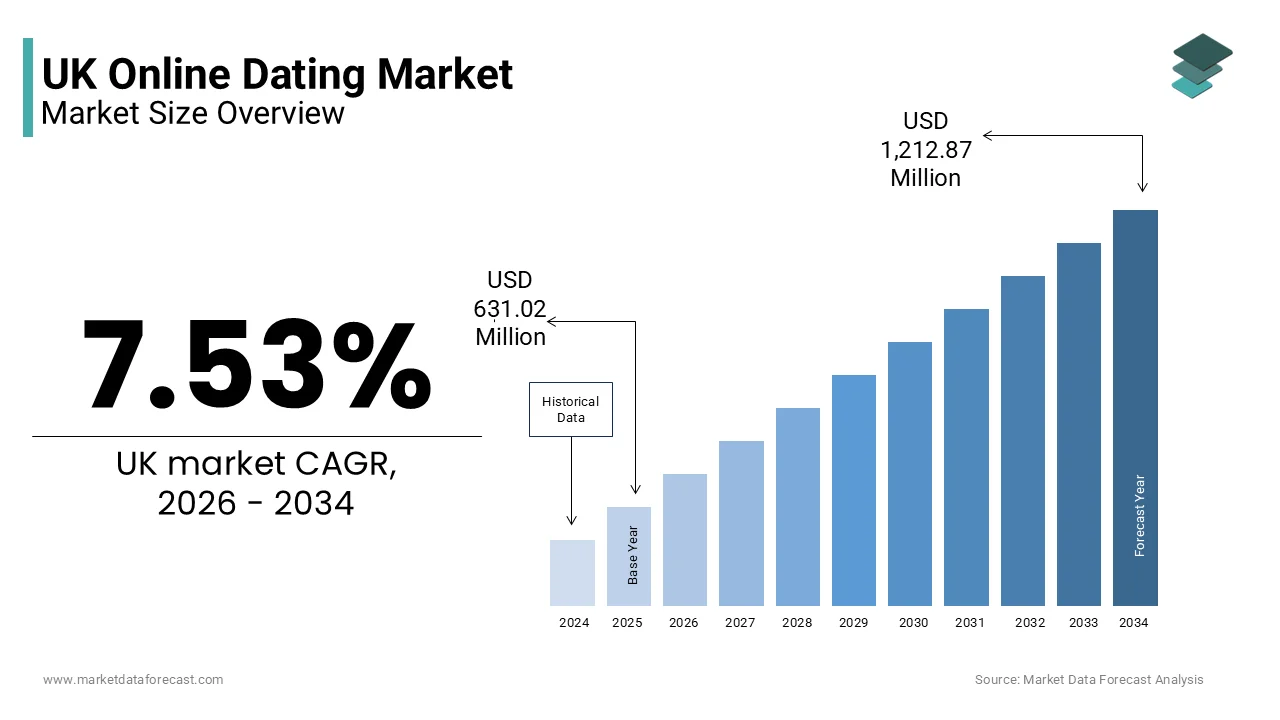
The UK online dating market was valued at USD 631.02 million in 2025, is estimated to reach USD 678.54 million in 2026, and is projected to reach USD 1,212.87 million by 2034, growing at a CAGR of 7.53% during the forecast period. Market growth is driven by increasing smartphone penetration, growing acceptance of digital relationship platforms, expanding internet accessibility, and evolving social interaction patterns. The integration of artificial intelligence, enhanced matching algorithms, and personalized user experiences continues to support the growth of online dating services across the United Kingdom.
Key Market Trends
- Growing adoption of mobile dating applications is driving market growth.
- Increasing acceptance of online platforms for relationship building is boosting market expansion.
- Rising use of artificial intelligence and personalized matchmaking technologies is supporting industry development.
- Expansion of niche and interest based dating platforms is enhancing market opportunities.
- Growing emphasis on user safety, identity verification, and privacy features is influencing market advancement.
Segmental Insights
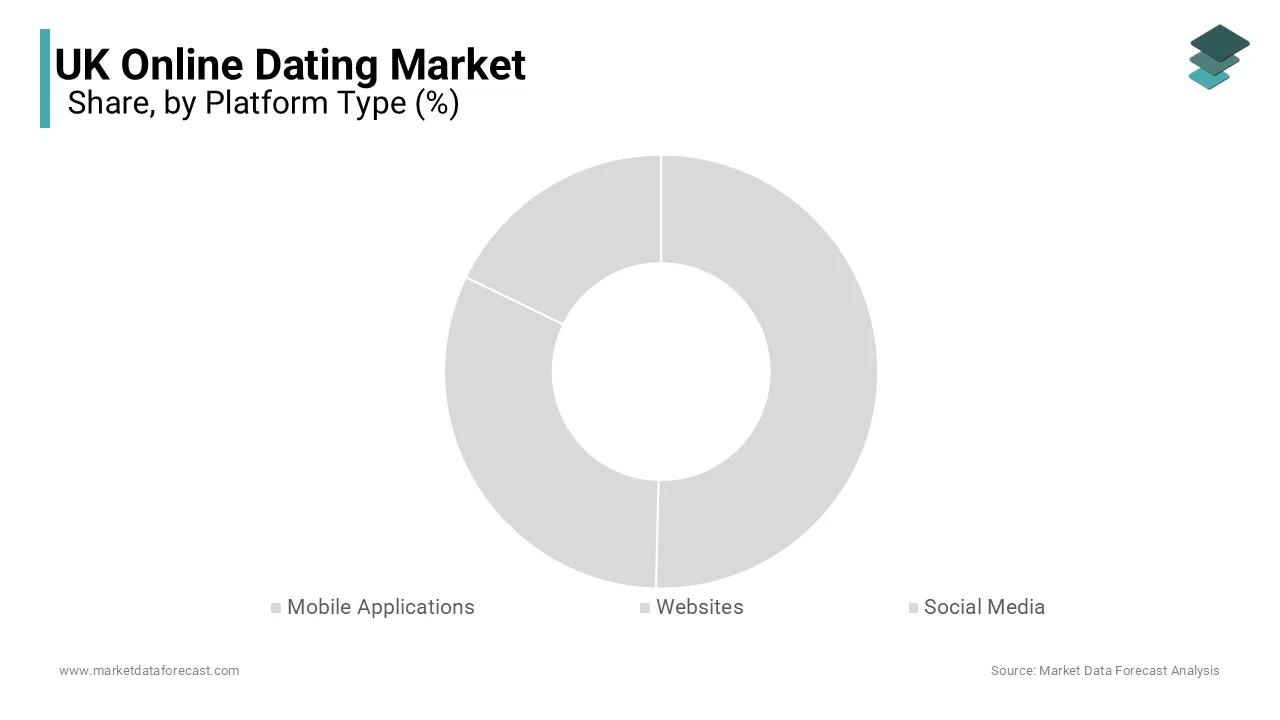
- Based on platform type, the mobile applications segment accounted for the largest share of the UK online dating market in 2025. This dominance is attributed to convenience, ease of access, and the widespread use of smartphones among consumers.
- Based on user demographics, the young adults segment held 58.2% of the UK online dating market share in 2025, driven by high digital engagement, social connectivity preferences, and greater acceptance of online relationship platforms.
- Based on subscription type, the freemium subscription model segment accounted for 60.7% of the UK online dating market share in 2025. The popularity of this model is supported by free access to core features while offering premium upgrades for enhanced functionality.
- Based on relationship type, the casual dating segment held 41.5% of the UK online dating market share in 2025, reflecting changing relationship preferences and growing demand for flexible social interaction platforms.
Regional Insights
- The United Kingdom accounted for 29.9% of the European online dating market share in 2025, making it one of the largest and most developed online dating markets in the region. Strong digital infrastructure, high internet penetration, and widespread mobile application usage continue to support market growth.
Competitive Landscape
The UK online dating market is highly competitive, with platform providers focusing on user engagement, artificial intelligence driven matchmaking, enhanced security measures, and premium service offerings to strengthen their market position. Companies continue to invest in advanced algorithms, identity verification systems, and personalized user experiences.
Key companies operating in the UK online dating market include Match Group, Bumble Inc., eHarmony, OkCupid, Tinder, Plenty of Fish, Happn, Badoo, and Coffee Meets Bagel.
UK Online Dating Market Size
The UK online dating market size was valued at USD 631.02 million in 2025, and is projected to reach USD 1,212.87 million by 2034 from USD 678.54 million in 2026, growing at a CAGR of 7.53%.
Online dating is the practice of using internet-based websites or mobile applications specifically designed to search for, connect with, and establish romantic or sexual relationships. This market has evolved from a niche service into a mainstream social infrastructure driven by shifting societal norms and technological advancements. The market is characterized by high smartphone penetration and a cultural acceptance of digital matchmaking as a primary method for meeting partners. According to research and projections by eHarmony and Imperial College London, online dating has become one of the primary methods for relationship formation in the UK, though official public statistics from the ONS do not track corporate metrics on how couples meet. According to data from Ofcom’s communications reports, approximately 95% of UK adults aged 16 and over have internet access at home, establishing a mature digital infrastructure that supports widespread mobile application usage across the country. The demographic landscape is diversifying with significant growth among older adults and specific interest groups seeking tailored experiences. Regulatory frameworks focus on user safety and data protection ensuring that platforms adhere to strict privacy standards under the General Data Protection Regulation. The industry faces continuous pressure to innovate through artificial intelligence and video integration to enhance user trust and engagement. This dynamic environment requires operators to balance algorithmic efficiency with human centric design to foster meaningful interactions in an increasingly digital society.
MARKET DRIVERS
Shifting Social Norms and Decline of Traditional Meeting Spaces
Shifting social norms and the decline of traditional community spaces are propelling the United Kingdom online dating market forward. This growth is driven by individuals seeking alternative avenues for connection. The erosion of third places such as local pubs community centers and religious institutions has reduced organic opportunities for face to face interaction particularly in urban environments. Macro-level research indicates a general rise in solo living and individual isolation across modern British demographics. According to research, nearly half of UK adults report that hectic daily schedules heavily restrict their ability to form new social connections, compelling a vast majority of active daters to rely on digital platforms due to real-world approach anxiety. This structural change in social behavior has normalized the use of dating apps as a practical solution to loneliness and the desire for companionship. The stigma previously associated with online dating has largely dissipated with mainstream media portraying digital matchmaking as a standard and effective method for finding love. Younger generations particularly Millennials and Generation Z view online platforms as the default starting point for romantic exploration. The convenience of filtering potential matches based on location interests and values appeals to time poor professionals. This cultural acceptance ensures sustained demand for diverse dating services that cater to various relationship goals and demographics.
Advanced Algorithmic Matching and Personalization Technologies
Advanced algorithmic matching and personalization technologies are driving engagement and retention within the United Kingdom online dating market. Users increasingly expect platforms to deliver highly relevant matches based on complex behavioral data rather than simple geographic proximity. According to Tinder’s technical operational data, the platform implements multi-phase machine learning frameworks that evaluate real-time user engagement and messaging cadence to actively optimize recommendation relevance and match-to-conversation conversion rates. These sophisticated algorithms reduce the cognitive load on users by curating a smaller selection of high compatibility candidates thereby enhancing the efficiency of the search process. Natural language processing tools also help detect incompatible communication styles or potential red flags adding a layer of safety and relevance. The ability to learn from user feedback allows platforms to continuously refine their matching criteria creating a more intuitive and rewarding experience. Video profiling and voice note features further enrich user profiles providing deeper insights into personality beyond static images. This technological sophistication differentiates premium services from basic free platforms driving users toward paid subscriptions that promise better outcomes through superior data utilization.
MARKET RESTRAINTS
Prevalence of Fake Profiles and Security Concerns
The prevalence of fake profiles and persistent security concerns are hindering trust and user confidence within the United Kingdom online dating market. Romance scams and catfishing remain pervasive issues causing emotional distress and financial loss for victims which damages the reputation of legitimate platforms. According to Action Fraud UK reports losses due to romance fraud exceeded 90 million pounds in 2023 highlighting the severity of the threat. The anonymity provided by digital platforms makes it easy for malicious actors to create deceptive identities exploiting vulnerable individuals seeking connection. Despite investments in verification systems many users remain wary of sharing personal information or meeting in person due to safety fears. High profile cases of harassment and assault linked to online meetings further exacerbate these concerns prompting stricter scrutiny from regulators and users alike. Platforms struggle to balance ease of sign up with rigorous identity checks as excessive friction can deter new users. The constant arms race between scammers and security teams requires ongoing investment which increases operational costs. This trust deficit limits market growth as potential users hesitate to engage with services perceived as unsafe or unregulated.
Subscription Fatigue and Economic Pressure on Consumers
Subscription fatigue and economic pressure on consumers are formidable restraints to the United Kingdom online dating market. This affects willingness to pay for premium dating services in the country. With the cost of living crisis impacting household budgets discretionary spending on non essential services such as dating app subscriptions is often among the first cuts. According to the Office for National Statistics real household disposable income declined in recent years forcing many individuals to prioritize essential expenses over digital entertainment. The proliferation of multiple dating platforms leads to subscription fatigue where users feel overwhelmed by recurring charges for services that do not guarantee results. Many consumers adopt a rotating strategy subscribing to one service for a month before switching to another to minimize costs which reduces customer lifetime value for operators. The perception that paid features do not significantly improve match quality compared to free tiers further discourages conversion. Price sensitivity is particularly acute among younger demographics who form a large portion of the user base but have lower disposable income. This economic constraint forces platforms to compete aggressively on price or offer limited time discounts eroding profit margins and sustainability.
MARKET OPPORTUNITIES
Expansion into Niche and Community Specific Dating Segments
The expansion into niche and community specific dating segments sets the stage for growth and differentiation within the United Kingdom online dating market. Generalist platforms face saturation prompting developers to create specialized services catering to specific religions ethnicities lifestyles and interests. According to research there is growing demand for dating apps that align with specific values such as sustainability political views or dietary preferences like veganism. Apps targeting seniors have seen significant growth as the aging population seeks companionship and late life romance without the complexities of general dating pools. Professional networking integrated with dating for ambitious career focused individuals offers another lucrative niche. These specialized platforms can charge higher subscription fees due to the perceived value of curated compatible matches and reduced noise from irrelevant profiles. Marketing to these specific communities allows for more targeted and efficient customer acquisition strategies. By fostering a sense of belonging and shared identity niche apps build stronger loyalty and lower churn rates. This segmentation strategy enables smaller players to compete effectively against industry giants by dominating specific verticals.
Integration of Video Dating and Virtual Reality Experiences
The integration of video dating and virtual reality experiences creates a pathway to enhance user engagement and safety in the United Kingdom online dating market. Post pandemic behaviors have normalized video communication making it a preferred method for initial screenings before physical meetings. As per Deloitte technology trends immersive technologies such as virtual reality dates allow users to interact in simulated environments providing a richer sense of presence and chemistry. These features help verify identity and reduce the risk of catfishing addressing major security concerns while adding an element of fun and novelty. Video speed dating events hosted within apps facilitate efficient screening of multiple candidates in a short time frame appealing to busy professionals. The ability to gauge body language tone of voice and conversational flow remotely leads to more informed decisions about proceeding to in person dates. Platforms that seamlessly integrate these multimedia tools create a more holistic and trustworthy user experience. This technological evolution distinguishes modern apps from text based predecessors attracting tech savvy users seeking deeper and safer connections.
MARKET CHALLENGES
Regulatory Compliance and Data Privacy Obligations
Regulatory compliance and stringent data privacy obligations are challenges to operators in the United Kingdom online dating market. This is because they handle sensitive personal and behavioral data. The General Data Protection Regulation imposes strict requirements on how user information is collected stored and shared requiring robust consent mechanisms and transparency. According to Information Commissioner Office guidelines dating apps must provide clear options for users to delete their data and control visibility which complicates platform architecture and operations. As per Cybersecurity firms analysis the high value of personal data makes dating platforms prime targets for breaches necessitating continuous investment in encryption and security protocols. Non compliance can result in severe fines and reputational damage eroding user trust which is foundational to the business model. The introduction of the Online Safety Bill further mandates platforms to protect users from harmful content and abuse requiring advanced moderation tools and human oversight. Balancing user privacy with the need for effective matching algorithms creates technical and ethical dilemmas for developers. Cross border data transfers add complexity for global operators serving UK users. Keeping pace with evolving legal frameworks requires dedicated legal and compliance teams increasing operational overhead. Failure to adequately protect user data can lead to mass exodus of subscribers and regulatory sanctions.
User Burnout and Engagement Retention Issues
User burnout and engagement retention are serious obstacles for these platforms in the country, which constrains the expansion of the United Kingdom online dating market. This occurs as users often experience fatigue from endless swiping and superficial interactions. The paradox of choice where an abundance of options leads to decision paralysis and dissatisfaction is a well documented psychological phenomenon in digital dating. As per Psychology Today articles the gamification of dating can lead to addictive behaviors followed by periods of disillusionment when meaningful connections fail to materialize. High churn rates force platforms to constantly invest in user acquisition to replace departing members which is costly and inefficient. The lack of success stories or perceived progress causes users to take breaks or switch competitors frequently. Maintaining long term engagement requires continuous innovation in features and community building efforts which are resource intensive. Negative experiences such as ghosting or rude messages contribute to emotional exhaustion and negative brand association. Platforms struggle to create sustainable loops that keep users hopeful and active without causing fatigue. Addressing this challenge requires a shift from quantity to quality in matching and fostering healthier interaction norms within the community.
REPORT COVERAGE
| REPORT METRIC | DETAILS |
| Market Size Available | 2025 to 2034 |
| Base Year | 2025 |
| Forecast Period | 2026 to 2034 |
| CAGR | 7.53% |
| Segments Covered | By Platform Type, User Demographics, Subscription Type, Relationship Type, and Region. |
| Various Analyses Covered | Global, Regional and Country-Level Analysis, Segment-Level Analysis, Drivers, Restraints, Opportunities, Challenges; PESTLE Analysis; Porter’s Five Forces Analysis, Competitive Landscape, Analyst Overview of Investment Opportunities |
| Market Leaders Profiled | Match Group (US), Bumble Inc (US), eHarmony (US), OkCupid (US), Tinder (US), Plenty of Fish (CA), Happn (FR), Badoo (GB), Coffee Meets Bagel (US) |
SEGMENTAL ANALYSIS
By Platform Type Insights
The mobile applications segment held the majority share of the United Kingdom online dating market in 2025. This leading position of the segment is because smartphones have become the primary device for digital social interaction and relationship building. The portability and constant connectivity of mobile devices allow users to engage with dating platforms anytime and anywhere fitting seamlessly into daily routines such as commuting or breaks. According to data from Ofcom’s media tracking reports, smartphone adoption among UK adults has achieved mature saturation at approximately 93% to 95%, establishing an pervasive, mobile-first ecosystem for application-based dating services. As per App Annie data mobile apps account for over 85 percent of time spent on online dating platforms compared to desktop websites reflecting strong user preference for native mobile experiences. Push notifications alert users to new matches and messages driving immediate engagement and reducing response times. The integration of camera features for photo verification and video calls enhances trust and safety within the app ecosystem. Location based services enable real time matching with nearby users facilitating quicker transition to offline meetings. The intuitive touch interface simplifies swiping and browsing making the experience effortless and addictive. This convenience and accessibility ensure that mobile applications remain the dominant channel for online dating acquisition and retention.
The leadership of this segment is further strengthened by advanced features and personalized user experiences that leverage device specific capabilities to enhance matchmaking effectiveness. Mobile apps utilize GPS data biometric authentication and accelerometer inputs to create richer user profiles and more accurate matching algorithms. In app purchases for premium features such as unlimited likes or profile boosts are easier to execute through streamlined mobile payment systems like Apple Pay and Google Pay increasing conversion rates. Gamification elements such as streaks and badges encourage daily usage and habit formation. The ability to update profiles instantly with new photos or status changes keeps content fresh and engaging. These sophisticated functionalities create a sticky ecosystem that retains users and drives revenue ensuring mobile apps maintain their dominance over other platforms.
The social media segment is estimated to register the fastest CAGR of 14.5% from 2026 to 2034. This accelerated growth is propelled by the desire for organic discovery and reduced friction, where users can connect with potential partners through mutual friends, interests, and groups without downloading separate apps. According to demographic datasets from YouGov, social media platforms operate alongside dedicated dating apps as a primary vehicle for romantic networking, with over a third of singles routinely using social networks to connect with prospective partners. TikTok has emerged as a significant player with dating related hashtags generating billions of views encouraging users to showcase personality and lifestyle through short form video. The algorithmic nature of social feeds exposes users to potential matches outside their immediate circle expanding the dating pool. The familiarity and comfort of interacting within known social environments reduce anxiety associated with traditional dating apps. This seamless integration of socializing and dating drives rapid adoption and growth in this segment.
The rapid expansion of the social media segment is further fueled by influencer marketing and community based matching which leverage trust and shared values to facilitate connections. Influencers and content creators often share dating advice and personal experiences creating communities where followers feel comfortable seeking relationships. These communities provide a sense of belonging and safety allowing users to vet potential matches through prolonged interaction before moving to private communication. Live streaming features enable real time interaction and personality assessment fostering deeper connections than static profiles. The viral nature of social media content allows successful couple stories to spread quickly inspiring others to use these platforms for dating. This community driven approach reduces the transactional feel of traditional dating apps making social media an attractive and rapidly growing alternative for relationship seekers.
By User Demographics Insights
The young adults segment led the United Kingdom online dating market and captured a 58.2% share in 2025. This demographic is digitally native and actively exploring romantic relationships. Having grown up with internet technology they are comfortable using digital platforms for social interaction and view online dating as a normal part of modern life. According to a study, a definitive majority of young adults under the age of 30 (53%) have utilized online dating services to navigate their romantic lives. Young adults are more open to casual dating and experimenting with different relationship styles which aligns with the diverse offerings of modern dating apps. Their high smartphone usage and social media activity facilitate easy discovery and engagement with dating content. Peer influence plays a significant role as friends share experiences and recommend apps creating network effects. The desire for independence and career focus often limits time for traditional meeting methods making online efficiency appealing. This combination of technological comfort and social behavior ensures young adults remain the core user base for online dating providers.
Visual and interactive elements strengthen this segment's leading position by catering to their natural media consumption habits and shorter attention spans. This demographic favors apps with rich media content such as video profiles voice notes and interactive quizzes that provide deeper insights into personality beyond text. Young adults appreciate gamified elements such as swiping mechanisms and match animations that make the dating process entertaining and less pressured. The integration with music and entertainment platforms allows them to showcase tastes and find common ground easily. Real time chat and instant feedback loops satisfy their expectation for immediate gratification and communication. These feature preferences drive product development and marketing strategies ensuring that platforms remain relevant and engaging for this dominant demographic.
The seniors segment is likely to experience the fastest CAGR of 12.8% during the forecast period. This rapid expansion is fuelled by improving digital literacy and an intensifying desire for companionship. The aging population is becoming more comfortable with technology thanks to targeted education programs and user friendly device designs. According to older adult advocacy and infrastructure data, internet adoption among individuals aged 65 and over has experienced steady, incremental growth over the past several years, expanding digital socialization options for seniors. As per OurTime platform data sign ups from seniors have doubled since 2020 reflecting a surge in demand for age appropriate dating services. Loneliness and the loss of partners drive many seniors to seek meaningful connections and emotional support through digital channels. Specialized platforms cater to this demographic by focusing on serious relationships and shared life experiences rather than casual encounters. The removal of stigma around online dating in older generations encourages broader participation. Family members often assist with setup and safety checks facilitating entry into the digital dating world. This demographic shift ensures sustained rapid growth in the senior online dating segment.
The quick surge of the seniors segment is further fueled by their strong demand for safety and verified profiles which mitigates fears of scams and fraud. Older users are more cautious about sharing personal information and prefer platforms with robust verification processes and customer support. As per SilverSingles user surveys 80 percent of senior daters prioritize security features such as photo verification and background checks before engaging with matches. Platforms that offer guided communication options and safety tips build trust and confidence among this demographic. The emphasis on detailed profiles and compatibility assessments appeals to seniors seeking genuine long term partnerships. Customer service teams trained to assist older users with technical issues enhance the overall experience and retention. Marketing campaigns highlighting success stories of senior couples reassure potential users about the viability and safety of online dating. This focus on security and authenticity drives loyalty and word of mouth referrals within the senior community accelerating market growth.
By Subscription Type Insights
The freemium subscription model segment was the largest in the United Kingdom online dating market and occupied a 60.7% share in 2025. This prominence of the segment is supported by the fact that it allows users to access basic features for free while offering optional paid upgrades for enhanced functionality. Moreover, this model maximizes user acquisition by removing financial barriers enabling a large pool of potential matches which is critical for network effects. According to sources, the vast majority of online dating application users rely entirely on free tiers, with platforms structurally requiring freemium funnel models to demonstrate intrinsic feature value before driving a minority of users to convert to paid tiers. As per Sensor Tower analysis freemium apps generate higher total revenue than paid only apps due to the larger user base driving in app purchases and advertising income. Free features such as profile creation browsing and limited messaging allow users to test the platform before committing financially. This approach reduces churn and builds trust as users can evaluate match quality without upfront cost. Advertising supported models subsidize free usage making the service accessible to students and lower income individuals. The flexibility to upgrade at any time accommodates varying budgets and needs. This inclusive model ensures that freemium remains the dominant strategy for attracting and retaining a diverse user base in the competitive dating market.
Also, a core reason this segment continues to lead is effective conversion strategies that highlight the value of premium features such as unlimited likes profile boosts and see who liked you. Users who become invested in the platform are more likely to pay for tools that increase their visibility and efficiency in finding matches. Features like incognito mode and advanced filters appeal to privacy conscious users and those seeking specific criteria. The psychological principle of loss aversion is leveraged by showing users how many potential matches they are missing out on without premium access. Seamless in app payment processes reduce friction for impulse purchases. Continuous A/B testing of pricing and feature bundles optimizes conversion rates. This strategic monetization ensures sustainable revenue growth while maintaining a large active free user base that supports the ecosystem.
The premium subscription model segment is on the rise and is expected to be the fastest growing segment in the market by witnessing a CAGR of 11.5% over the forecast period owing to users seeking exclusive experiences and demonstrating serious intent. Affluent professionals and individuals tired of casual swiping are willing to pay higher fees for curated matches and dedicated support. According to audience demographic profiles from EliteSingles, the platform's intensive registration process inherently selects for committed dating, with an overwhelming majority of over 85% of its total member base actively seeking long-term relationships regardless of payment tier. Premium platforms often require thorough personality assessments and manual profile verification ensuring a high caliber user base. The absence of ads and priority customer service enhance the user experience appealing to busy executives. Exclusive events and coaching services add value beyond the digital interface fostering community and trust. The perception that paid barriers filter out non serious users drives adoption among those seeking meaningful connections. This trend toward exclusivity and intentionality fuels rapid growth in the premium segment.
The quick expansion of the premium segment is further fueled by enhanced privacy features and personalized coaching services that cater to high net worth individuals and public figures. Premium users demand greater control over their visibility and data protection requiring advanced anonymity tools and discreet billing. These services offer a tailored approach to dating reducing time waste and increasing success probability. Background checks and identity verification provide peace of mind for users concerned about safety. Dedicated account managers ensure immediate resolution of issues enhancing satisfaction. The prestige associated with certain premium brands serves as a status symbol encouraging adoption among aspirational users. This combination of privacy personalization and prestige drives sustained growth in the premium subscription market.
By Relationship Type Insights
The casual dating segment dominated the United Kingdom online dating market and accounted for a 41.5% share in 2025. Societal attitudes toward non-committal relationships have become more accepting and widespread. Many users prefer the flexibility of casual connections without the pressure of immediate long term commitment allowing them to explore compatibility at their own pace. The busy lifestyles of young professionals make casual dating a practical option for maintaining social lives without heavy emotional investment. Apps designed for quick matching and low stakes interactions cater to this demand effectively. The reduction in stigma surrounding hookup culture encourages broader participation across genders. Social media influence normalizes casual dating as a valid lifestyle choice. This cultural acceptance ensures that casual dating remains the largest segment by volume and activity in the online dating landscape.
Next, a key factor cementing this segment's lead is the low commitment required and high volume of interactions which appeal to users seeking variety and excitement. Casual platforms encourage frequent swiping and brief conversations lowering the barrier to entry for new connections. The gamified nature of these apps keeps users engaged through constant novelty and discovery. Lower emotional risk allows users to experiment with different types of partners and experiences. The ease of ending casual connections without formal breakup procedures reduces anxiety. This dynamic environment sustains high daily active user counts and session durations. The abundance of choices creates a feedback loop where users continue searching for better matches. This high velocity interaction model drives the dominance of the casual dating segment.
The serious relationships segment is expected to exhibit a noteworthy CAGR of 10.2 between 2026 and 2034 due to the fact that individuals increasingly seek stability and long term partnership in uncertain times. Economic pressures and social isolation have heightened the desire for meaningful emotional support and shared life goals. Platforms emphasizing detailed profiles personality tests and values alignment attract users ready for commitment. The aging population entering the dating market often seeks companionship for later life stages contributing to this growth. Success stories of marriages and long term unions promote the efficacy of serious dating sites. Word of mouth recommendations from satisfied couples build trust and credibility. This shift toward intentionality and depth fuels rapid growth in the serious relationships segment.
The rapid expansion of the serious relationships segment is further fueled by advanced algorithmic compatibility and verification tools that ensure high quality matches and safety. Users seeking long term partners prioritize authenticity and shared values which these technologies facilitate. Detailed questionnaires assess emotional intelligence life goals and deal breakers providing deeper insights than surface level attributes. Video date features allow for better assessment of chemistry before meeting in person. Background checks and ID verification reduce the risk of fraud appealing to cautious daters. Coaching and relationship advice resources add value for users navigating serious commitments. These robust features differentiate serious platforms from casual apps driving migration of users seeking genuine connections. This focus on quality and security ensures sustained growth in the serious relationships segment.
COUNTRY LEVEL ANALYSIS
The United Kingdom plays a major role in the European online dating market and captured a 29.9% share in 2025 because of high digital adoption liberal social attitudes and a robust regulatory framework. The market status is defined by a diverse ecosystem of global giants and niche local players catering to varied relationship preferences. According to official data published in Ofcom’s Online Nation report, approximately 1 in 10 online adults in the UK (representing 4.9 million people) utilize online dating services, with market trends indicating a recent stabilization or slight decline in overall platform active users. London serves as a hub for dating tech innovation hosting numerous startups and headquarters of major international apps. According to Ofcom's infrastructure reports, while widespread broadband and smartphone deployment have drastically increased baseline digital access across the country, geographic disparities in speed and mobile coverage persist between urban centers and rural areas. The cultural acceptance of online dating has removed historical stigma making it a mainstream method for meeting partners. Regulatory oversight by the Information Commissioner Office ensures strict data privacy compliance building user trust. The market is highly competitive with continuous innovation in AI matching and safety features. Government initiatives promoting digital inclusion support access for older and disadvantaged groups. The UK leads in setting trends for safe and ethical online dating practices influencing global standards. This mature environment supports sustained growth and high user engagement maintaining its leadership position in the European region.
COMPETITIVE LANDSCAPE
The competition within the United Kingdom online dating market is intense and characterized by the presence of global conglomerates alongside niche specialized platforms vying for user attention and subscription revenue. Established players leverage their extensive user bases and brand recognition to dominate generalist segments while smaller apps focus on specific demographics interests or relationship goals to differentiate themselves. Innovation in matching algorithms and user interface design serves as a key battleground with companies striving to offer more accurate and engaging experiences. Safety and privacy features have become critical differentiators as users increasingly prioritize security and authenticity in their online interactions. Marketing strategies rely heavily on digital advertising influencer partnerships and social media campaigns to reach target audiences effectively. Price competition exists but is often secondary to value proposition with users willing to pay for premium features that enhance success rates. The market sees frequent mergers and acquisitions as larger entities seek to consolidate their positions and expand their portfolios. Retention remains a major challenge prompting firms to continuously introduce new content and community features to keep users engaged and reduce churn in a saturated landscape.
KEY MARKET PLAYERS
Some of the companies that are playing a dominating role in the UK online dating market are
- Match Group (US)
- Bumble Inc. (US)
- eHarmony (US)
- OkCupid (US)
- Tinder (US)
- Plenty of Fish (CA)
- Happn (FR)
- Badoo (GB)
- Coffee Meets Bagel (US)
Top Players in the Market
- Match Group International maintains a significant presence in the United Kingdom online dating sector through its portfolio of well known brands including Tinder Hinge and Meetic. The company focuses on delivering diverse relationship experiences ranging from casual connections to serious commitments by leveraging advanced algorithmic matching technologies. Recent strategic initiatives include the integration of artificial intelligence features to enhance user safety and improve match quality across its platforms. Match Group has also invested heavily in video dating capabilities to facilitate safer and more authentic initial interactions for British users. By prioritizing user trust and innovative engagement tools the group aims to deepen customer loyalty and drive subscription growth. These efforts reinforce its position as a leading provider of digital relationship services that adapt to evolving social norms and consumer expectations in the UK market.
- Bumble Inc plays a pivotal role in the United Kingdom online dating market by empowering users to make the first move thereby fostering respectful and equitable connections. The platform distinguishes itself through its women first approach which appeals to individuals seeking safer and more meaningful interactions. Recent actions involve the expansion of its BFF and Bizz modes to cater to friendship and professional networking needs beyond romantic dating. Bumble has introduced enhanced verification processes and anti harassment tools to ensure a secure environment for its growing UK user base. The company actively promotes community guidelines that encourage positive behavior and accountability among members. Bumble has built a strong brand reputation by focusing on inclusivity and user empowerment. As a result, the platform attracts a demographic that highly values integrity and respect in digital socialization.
- The Meet Group contributes significantly to the United Kingdom online dating landscape by operating a suite of social discovery applications that blend dating with live streaming and community interaction. The company targets a broad demographic by offering platforms that facilitate both romantic connections and casual social engagement through interactive features. Recent developments include the enhancement of live video streaming capabilities which allow users to connect in real time and build deeper relationships. The Meet Group has also focused on improving moderation technologies to detect and prevent inappropriate behavior ensuring a safe user experience. By integrating social gaming elements and virtual gifts the company increases user retention and monetization opportunities. These strategies help The Meet Group maintain a vibrant and engaged community while adapting to the changing preferences of digital natives in the UK.
Top Strategies Used by Key Market Participants
Key players in the United Kingdom online dating market predominantly employ algorithmic innovation and safety enhancements to maintain competitive advantage and build user trust. Companies invest heavily in artificial intelligence and machine learning technologies to improve match accuracy and personalize user experiences based on behavioral data. Developing robust verification systems such as photo ID checks and background screenings helps mitigate fraud and ensures a safer environment for members. Strategic partnerships with mental health organizations and safety advocates demonstrate commitment to user well being and responsible dating practices. Expanding feature sets to include video calling voice notes and virtual events caters to diverse communication preferences and reduces friction in initial interactions. Implementing freemium models with tiered subscription options allows platforms to attract large user bases while converting engaged users into paying customers. Continuous investment in mobile app optimization ensures seamless performance and high engagement rates across devices.
MARKET SEGMENTATION
This research report on the UK online dating market is segmented and sub-segmented into the following categories.
By Platform Type
- Mobile Applications
- Websites
- Social Media
By User Demographics
- Young Adults
- Middle Aged Adults
- Seniors
By Subscription Type
- Free
- Freemium
- Premium
By Relationship Type
- Casual Dating
- Serious Relationships
- Friendship
Frequently Asked Questions
1. What is driving the growth of the UK online dating market?
The growth of the UK online dating market is driven by increasing smartphone usage, widespread internet penetration, changing social norms, and growing acceptance of digital matchmaking platforms.
2. Which platform type dominates the UK online dating market?
Mobile applications dominate the market due to their convenience, accessibility, and popularity among younger users.
3. How is artificial intelligence influencing online dating platforms in the UK?
Artificial intelligence is improving matchmaking accuracy, user engagement, profile recommendations, and safety features across dating platforms.
4. Which age group represents the largest user base in the UK online dating market?
Young adults account for the largest share of users, driven by high digital engagement and a preference for app based interactions.
5. How important are premium subscriptions in the online dating industry?
Premium subscriptions play a significant role in revenue generation by offering enhanced features such as unlimited messaging, advanced filters, and profile visibility tools.
6. What role does mobile technology play in the UK online dating market?
Mobile technology enables real time communication, location based matching, and seamless user experiences, contributing to market growth.
7. How are safety and privacy concerns affecting the market?
Dating platforms are investing in identity verification, content moderation, and privacy protection measures to improve user trust and safety.
8. Which relationship type generates the highest demand on UK dating platforms?
Serious relationships represent a major segment, although casual dating and friendship focused platforms also attract substantial user interest.
9. How has social media integration impacted online dating services?
Social media integration helps users verify profiles, share interests, and enhance authenticity, improving overall user engagement.
10. What challenges does the UK online dating market face?
The market faces challenges such as fake profiles, data privacy concerns, intense competition, and user retention issues.
Related Reports
Access the study in MULTIPLE FORMATS
Purchase options starting from
$ 1200
Didn’t find what you’re looking for?
TALK TO OUR ANALYST TEAM
Need something within your budget?
NO WORRIES! WE GOT YOU COVERED!
Call us on: +1 888 702 9696 (U.S Toll Free)
Write to us: sales@marketdataforecast.com