- Product Description Description
- Table of Contents TOC
- List of Table & Figure LOT
- Get Free Sample PDF Sample PDF
Market Size, 2025
$280.35 MnMarket Estimate, 2026
$295.15 MnMarket Forecast, 2034
$445.46 MnCAGR, 2026–2034
5.28%UK Pet Accessories Market Report Summary
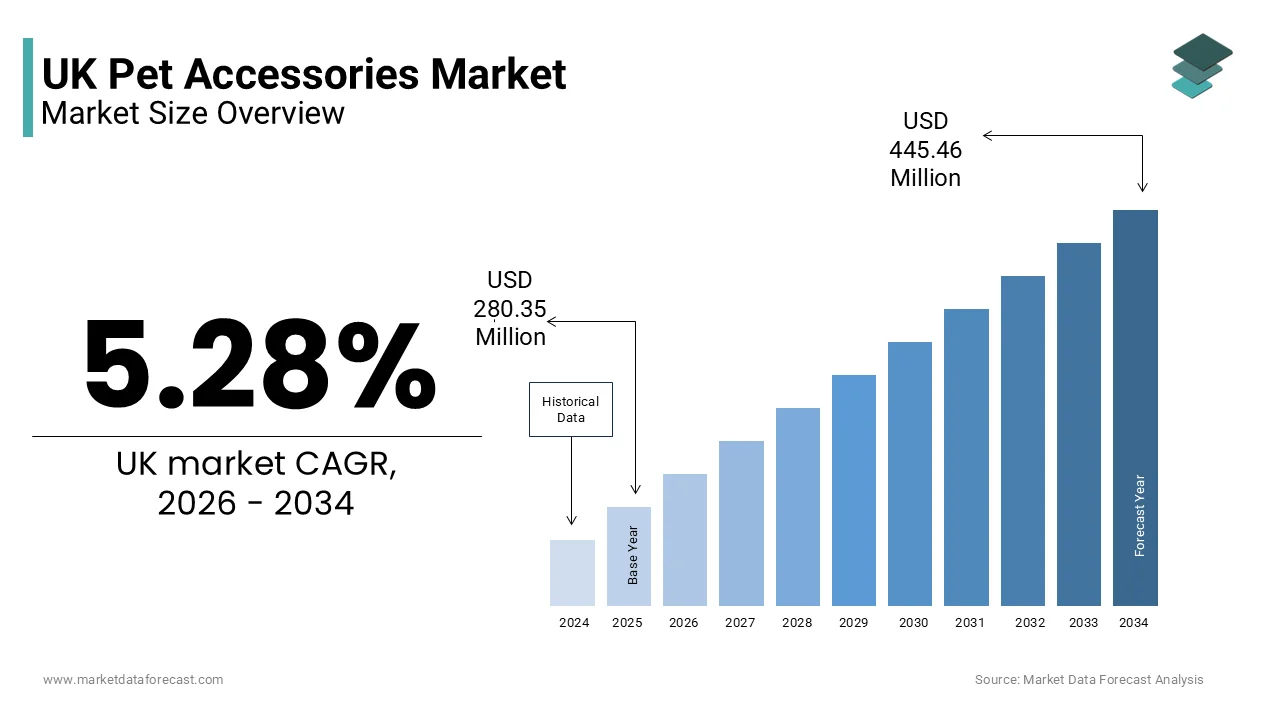
The UK pet accessories market was valued at USD 280.35 million in 2025, is estimated to reach USD 295.15 million in 2026, and is projected to reach USD 445.46 million by 2034, growing at a CAGR of 5.28% during the forecast period. Market growth is driven by increasing pet ownership, rising pet humanization trends, growing consumer spending on pet wellness and comfort, and the expanding availability of premium pet products. The market is also benefiting from product innovation, e-commerce expansion, and growing demand for personalized and high-quality pet accessories.
Key Market Trends
-
Growing pet ownership and pet humanization trends are driving market growth.
-
Increasing demand for premium and customized pet accessories is boosting market expansion.
-
Rising consumer spending on pet comfort, safety, and lifestyle products is supporting industry development.
-
Expansion of online retail channels and direct-to-consumer brands is enhancing market opportunities.
-
Growing innovation in smart pet accessories and sustainable pet products is influencing market advancement.
Segmental Insights
- By Product Type, The collars, leashes, and utility products segment dominated the UK pet accessories market and accounted for 31.7% of the market share in 2025. The segment's leadership is attributed to the essential nature of these products for pet safety, training, identification, and everyday use.
- By Animal Type, The dog accessories segment held the largest share of the UK pet accessories market and accounted for 58.5% of the market share in 2025. The segment is driven by the large dog population in the country and increasing spending on dog care, training, grooming, and recreational products.
Regional Analysis
- The United Kingdom accounted for 22.3% of the European pet accessories market share in 2025, making it one of the leading markets in the region. High pet ownership rates, strong consumer spending on companion animals, and increasing demand for premium pet care products continue to support market growth.
Competitive Landscape
The UK pet accessories market is highly competitive, with manufacturers focusing on product innovation, premium offerings, sustainability, and omnichannel distribution strategies. Companies are investing in smart pet technologies, eco-friendly materials, and customized accessory solutions to strengthen their market presence and meet evolving consumer preferences. Major players operating in the UK pet accessories market include Pets at Home Group plc, Mars Incorporated, Nestlé Purina PetCare, Petmate, Ferplast S.p.A., Rolf C. Hagen Inc., Ancol Pet Products Limited, Rosewood Pet Products, Company of Animals, PetSafe Brands, Bunty Pet Products, and Trixie Heimtierbedarf GmbH & Co. KG.
 Download Free Sample Report
UK Pet Accessories Market Size
The UK pet accessories market size was valued at USD 280.35 million in 2025, and is projected to reach USD 445.46 million by 2034 from USD 295.15 million in 2026, growing at a CAGR of 5.28%.
Pet accessories are non consumable products designed to enhance the comfort safety and lifestyle of companion animals including dogs cats small mammals and birds. This market includes items such as collars leashes beds carriers grooming tools toys and wearable technology that cater to the evolving needs of modern pet owners. The market is deeply intertwined with the cultural phenomenon of pet humanization where animals are increasingly viewed as integral family members rather than mere possessions. According to the trade body UK Pet Food (formerly the Pet Food Manufacturers Association), approximately 62% of households in the United Kingdom owned at least one pet in 2024, mirroring a strong cultural emphasis on companionship. The Office for National Statistics indicate that the number of single-person households in the UK reached 8.6 million by 2025; in parallel, pet market trends suggest this demographic strongly fuels the ongoing demand for companion animals and premium pet products. The aging population also contributes to this trend with many retirees adopting pets for social interaction and routine. Regulatory frameworks concerning animal welfare enforced by the Department for Environment Food and Rural Affairs ensure that products meet strict safety and durability standards. The rise of e commerce has transformed distribution allowing consumers to access specialized and imported goods easily. Sustainability is becoming a key consideration with buyers preferring eco friendly materials and ethical manufacturing processes. This market reflects broader consumer trends towards premiumization personalization and health consciousness extending these values to the care and enrichment of animal companions.
MARKET DRIVERS
Pet Humanization and Emotional Bonding Drive Premium Product Demand
The deepening emotional bond between owners and their pets is the main reason behind the growth of the United Kingdom pet accessories market. This is because consumers increasingly prioritize comfort, style, and well-being for their animal companions. research shows that over 90% of UK owners view their pets as family members, a consumer trend that heavily drives willingness to purchase premium accessories that mirror human lifestyle products. This anthropomorphic trend manifests in the purchase of orthopedic beds designer clothing and luxury carriers that offer both functionality and aesthetic appeal. The psychological benefit of caring for a pet encourages owners to invest in high quality items that enhance the animal's quality of life and strengthen the human animal bond. Social media platforms amplify this behavior by showcasing curated pet lifestyles where accessories play a central role in identity expression. Owners seek products that reflect their personal values such as sustainability or luxury influencing purchasing decisions beyond basic utility. The desire to provide the best possible care drives demand for innovative solutions such as anxiety reducing vests and interactive toys that stimulate mental health. Retailers respond by offering personalized items such as engraved tags and custom fitted harnesses which foster a sense of exclusivity and connection. This emotional investment ensures that price sensitivity is lower for products perceived to enhance the pet's happiness and health sustaining robust demand for premium segments.
Urbanization and Active Lifestyles Increase Need for Functional Gear
Rapid urbanization and the growing emphasis on active lifestyles among the country’s residents further drive the expansion of the United Kingdom pet accessories market. This significantly boosts demand for functional and durable pet accessories suitable for city living and outdoor activities. With over 83% of the UK population living in urban areas according to global demographic indicators, there is an increasing market demand for compact pet gear designed specifically for limited living spaces and public transport use. Compact folding crates portable water bottles and reflective leashes become essential for navigating crowded streets and parks safely. The rise in hiking cycling and running among pet owners has spurred growth in specialized equipment such as hands free leads bike attachments and rugged boots protecting paws from rough terrain. Weather variability in the United Kingdom further drives sales of waterproof coats and cooling mats ensuring pets remain comfortable in diverse conditions. Urban dwellers often live in apartments without gardens increasing reliance on walks for exercise which elevates the importance of reliable walking gear. Safety features such as LED lights and GPS trackers are increasingly popular to prevent loss in busy environments. This shift towards active companionship transforms pet ownership into a shared adventure fostering demand for versatile and high performance accessories that support an energetic and mobile lifestyle.
MARKET RESTRAINTS
Economic Pressure and Cost of Living Crisis Limit Discretionary Spending
Persistent economic instability and the ongoing cost of living crisis are limiting the growth of the United Kingdom pet accessories market. This forces households to prioritize essential expenditures over non-essential items. According to inflation tracking indicators from the ONS, UK living costs rose sharply in early 2024, squeezing household budgets and limiting the disposable income available for non-essential or discretionary pet purchases. Many owners have delayed replacing worn items such as beds and toys or switched to cheaper alternatives impacting revenue for premium brands. Inflationary pressures on raw materials and energy costs increase production expenses for manufacturers limiting their ability to innovate or maintain competitive pricing. Consumers are becoming more price sensitive seeking value for money and durability rather than novelty or brand prestige. The financial strain has led to a decline in impulse buying of decorative or luxury accessories as budgets tighten. Small independent retailers struggle to compete with discount supermarkets offering basic items at lower prices eroding margins for specialized shops. Additionally the reduction in household formation rates due to housing affordability issues slows the acquisition of new pets indirectly affecting accessory demand. Economic uncertainty makes long term planning difficult for businesses leading to cautious inventory management and reduced marketing spend. This environment forces companies to focus on core essentials rather than expansion potentially stifling growth in emerging categories such as smart technology or high-end fashion.
Regulatory Compliance and Safety Standards Increase Operational Costs
Stringent regulatory requirements and safety standards for pet products impose substantial compliance burdens on manufacturers and retailers in the country, which hinders the expansion of the United Kingdom pet accessories market. This increases operational complexity and costs. According to the Department for Business and Trade products must adhere to strict guidelines regarding material safety choking hazards and chemical content to protect animal welfare. The General Product Safety Regulations mandate rigorous testing and documentation which can be time consuming and expensive particularly for small businesses importing goods from overseas. Recent updates to labeling laws require clear information on sizing materials and care instructions adding to packaging design and production costs. Non compliance can result in product recalls legal penalties and reputational damage discouraging innovation and market entry for smaller players. The post Brexit regulatory landscape has introduced additional customs checks and certification requirements for imports from the European Union causing delays and administrative overhead. Manufacturers must stay abreast of evolving standards such as those for electronic devices like GPS trackers which face separate telecommunications regulations. Ensuring supply chain transparency to verify ethical sourcing and labor practices further adds to operational burdens. These regulatory hurdles create barriers to entry and increase the cost of doing business potentially leading to higher retail prices that may dampen consumer demand. Companies must invest heavily in legal and quality assurance teams to navigate this complex landscape effectively.
MARKET OPPORTUNITIES
Expansion of Smart Technology and Connected Devices
The integration of smart technology into pet accessories offers a significant opportunity for the growth of the United Kingdom pet accessories market. This appeals to tech-savvy owners seeking enhanced monitoring and convenience. According to the Office for Communications 93 percent of households in the United Kingdom had internet access in 2024 providing the infrastructure necessary for adopting Internet of Things enabled pet products. Smart collars with GPS tracking activity monitoring and health metrics allow owners to keep tabs on their pets remotely offering peace of mind and valuable health insights. Automated feeders and water fountains with app connectivity enable precise control over diet and hydration supporting veterinary recommended routines. The rise of remote work and travel increases demand for cameras and interactive toys that allow owners to engage with pets while away. Data analytics from these devices can help detect early signs of illness or behavioral changes facilitating proactive veterinary care. Partnerships with veterinary clinics and insurance providers could lead to integrated health management platforms enhancing value propositions. Innovation in battery life and durability addresses previous limitations making these devices more practical for daily use. As artificial intelligence advances personalized recommendations for exercise and nutrition will become more accurate driving repeat engagement and subscription revenues. This technological evolution transforms pet care into a data driven experience attracting younger demographics who value connectivity and efficiency.
Growth of Sustainable and Eco-Friendly Product Lines
The increasing consumer preference for sustainability opens the door for brands to differentiate themselves through eco-friendly materials and ethical manufacturing practices, which fuels the expansion of the United Kingdom pet accessories market. According to the Soil Association annual report, the UK organic landscape rebounded strongly by 7.3% in 2024. Furthermore, parallel consumer trends indicate that pet owners are independently seeking out sustainable, biodegradable, and recycled eco-friendly accessory options. Accessories made from hemp organic cotton recycled plastics and natural rubber appeal to environmentally conscious consumers who wish to minimize their ecological footprint. Brands that obtain certifications such as B Corporation status or use carbon neutral shipping gain credibility and attract loyal customers willing to pay a premium for ethical credentials. The circular economy model is gaining traction with take back schemes for old toys and beds encouraging recycling and reducing waste. Marketing campaigns highlighting environmental benefits resonate strongly with younger generations who prioritize corporate responsibility. Innovation in durable designs extends product lifecycles reducing the frequency of replacement and overall consumption. Retailers are dedicating more shelf space to green products responding to customer demand for transparency and accountability. Collaborations with environmental organizations enhance brand image and support conservation efforts. This segment offers higher profit margins and fosters deeper emotional connections with consumers who view their purchasing decisions as reflections of their values providing a robust avenue for differentiation in a crowded market.
MARKET CHALLENGES
Supply Chain Volatility and Raw Material Price Fluctuations
Global supply chain disruptions and volatility in raw material prices are constraining the growth of the United Kingdom pet accessories market. This affects production consistency and profitability. According to production metrics compiled by the Office for National Statistics, shifting logistics and volatile operating overheads altered input costs for manufacturers, forcing pet accessory producers to adjust their material sourcing budgets for plastics, textiles, and hardware. Dependence on imported materials from Asia and Europe exposes manufacturers to currency exchange risks and trade barriers post Brexit. Delays in shipping containers and port congestion can lead to stockouts of popular items causing customer dissatisfaction and lost sales. Small and medium sized enterprises lack the bargaining power to secure favorable terms with suppliers exacerbating cost pressures. The unpredictability of demand makes inventory management difficult leading to either excess holding costs or missed revenue opportunities. Manufacturers struggle to pass on sudden cost increases to price sensitive consumers resulting in compressed profit margins. Diversifying supplier bases is costly and time consuming requiring rigorous quality checks and compliance verification. Additionally geopolitical tensions can disrupt trade routes unexpectedly forcing rapid adjustments to sourcing strategies. These uncertainties hinder long term planning and investment in new product development as companies prioritize short term survival and cash flow management over strategic growth initiatives in a turbulent operational landscape.
Intense Competition and Market Saturation
Intense competition and high market saturation hold back the expansion of the United Kingdom pet accessories market. These challenging conditions make it difficult for new entrants to gain traction and for existing players to maintain growth. Research shows high sector concentration, where large pet superstores and online retail platforms leverage significant economies of scale to offer aggressive pricing that independent specialty shops struggle to match. Online marketplaces facilitate easy price comparison enabling customers to switch suppliers instantly for marginal savings forcing incumbents to engage in price wars. Private label brands offered by major retailers undercut established branded products capturing price sensitive segments without compromising perceived quality. This dynamic squeezes profitability for manufacturers who must constantly innovate to justify premium pricing. Promotional activities and seasonal discounts further depress average selling prices making it difficult to maintain healthy margins. The low barrier to entry for basic accessories means constant influx of new competitors diluting market share. Loyalty programs and bulk discount schemes lock in large corporate clients leaving independent suppliers with fragmented lower value transactions. Investment in technology and customer service becomes necessary to differentiate but adds to operational costs. Consequently, many smaller players exit the market or consolidate reducing diversity but increasing pressure on remaining entities to optimize efficiency relentlessly. This environment discourages innovation as resources are diverted towards cost cutting rather than product development or market expansion.
REPORT COVERAGE
| REPORT METRIC | DETAILS |
| Market Size Available | 2025 to 2034 |
| Base Year | 2025 |
| Forecast Period | 2026 to 2034 |
| CAGR | 5.28% |
| Segments Covered | By Product Type, Animal Type, and Region. |
| Various Analyses Covered | Global, Regional and Country-Level Analysis, Segment-Level Analysis, Drivers, Restraints, Opportunities, Challenges; PESTLE Analysis; Porter’s Five Forces Analysis, Competitive Landscape, Analyst Overview of Investment Opportunities |
| Market Leaders Profiled | Pets at Home Group plc, Mars Incorporated, Nestlé Purina PetCare, Petmate, Ferplast S.p.A., Rolf C. Hagen Inc., Ancol Pet Products Limited, Rosewood Pet Products, Company of Animals, PetSafe Brands, Bunty Pet Products, and Trixie Heimtierbedarf GmbH & Co. KG. |
SEGMENTAL ANALYSIS
By Product Type Insights
The collars leashes and utility products segment led the United Kingdom pet accessories market and captured a 31.7% share in 2025. This leading position of the segment was attributed to its status as mandatory items for responsible pet ownership and legal compliance. According to the Control of Dogs Order 1992 enforced by the Department for Environment Food and Rural Affairs all dogs must wear a collar with an identification tag when in public places ensuring universal demand across the canine population. The annual population audit released by UK Pet Food (formerly known as the PFMA) states there were approximately 13.5 million dogs in the United Kingdom in 2024, representing a massive installed market base for recurring leash and collar purchases. Durability and safety are primary concerns for owners leading to frequent replacements due to wear and tear or growth of the animal. The rise in urban living has increased the need for specialized utility gear such as reflective leads for night walking and hands free options for active owners. Retailers benefit from the high turnover rate of these items as they are subject to physical stress and environmental exposure. Additionally the trend towards customization allows owners to personalize tags and collars fostering emotional attachment and brand loyalty. Safety innovations such as breakaway clasps and GPS tracker attachments further drive upgrades from basic models. This segment remains resilient to economic downturns as these items are considered non negotiable essentials for daily exercise and legal adherence ensuring consistent revenue streams for manufacturers and retailers alike.
But the pet hygiene products segment is predicted to witness the highest CAGR of 8.2% between 2026 and 2034. This quick surge of the segment is fueled by increasing consumer awareness of animal health and the desire to maintain clean living environments particularly in urban apartments. The humanization of pets has led to higher standards of cleanliness with owners treating grooming as a regular wellness routine rather than an occasional chore. Professional grooming services have become expensive prompting many owners to invest in high quality home grooming tools and organic cleaning solutions. The rise of hypoallergenic and natural ingredient products appeals to health conscious consumers concerned about chemical exposure for both pets and humans. Social media influencers showcasing grooming routines have normalized frequent bathing and teeth brushing encouraging adoption of these practices. Veterinary recommendations for periodontal care have also boosted demand for dental chews and brushes which are classified under hygiene accessories. Innovation in waterless shampoos and eco friendly waste bags addresses convenience and sustainability concerns driving repeat purchases. This segment benefits from higher profit margins and strong customer retention as hygiene becomes integral to the overall pet care regimen.
By Animal Type Insights
The dog accessories segment dominated the United Kingdom pet accessories market and accounted for a 58.5% share in 2025. This dominance of the segment was driven by the large population of canine companions and their high maintenance requirements. According to UK Pet Food metrics, dogs are the most popular companion animal in the UK, with 36% of all households owning at least one dog, which amounts to over 10 million households driving the market for pet accessories. Dogs require extensive gear including walking equipment clothing beds toys and training aids due to their active nature and need for outdoor exercise. The cultural significance of dog walking in British society ensures consistent demand for weather appropriate coats boots and leads throughout the year. Owners often view dogs as family members leading to higher spending on premium and personalized items such as custom harnesses and orthopedic beds. The variety of breeds necessitates specialized products ranging from small chihuahua sweaters to large great dane crates catering to specific physical needs. Training and behavioral management tools such as clickers and puzzle feeders are widely purchased to address common issues like anxiety and boredom. Retailers prioritize dog sections in stores and online platforms reflecting this dominance. The social aspect of dog ownership encourages participation in parks and events where accessories serve as status symbols. This segment benefits from strong brand loyalty and frequent replacement cycles ensuring stable and substantial revenue contributions to the overall market.
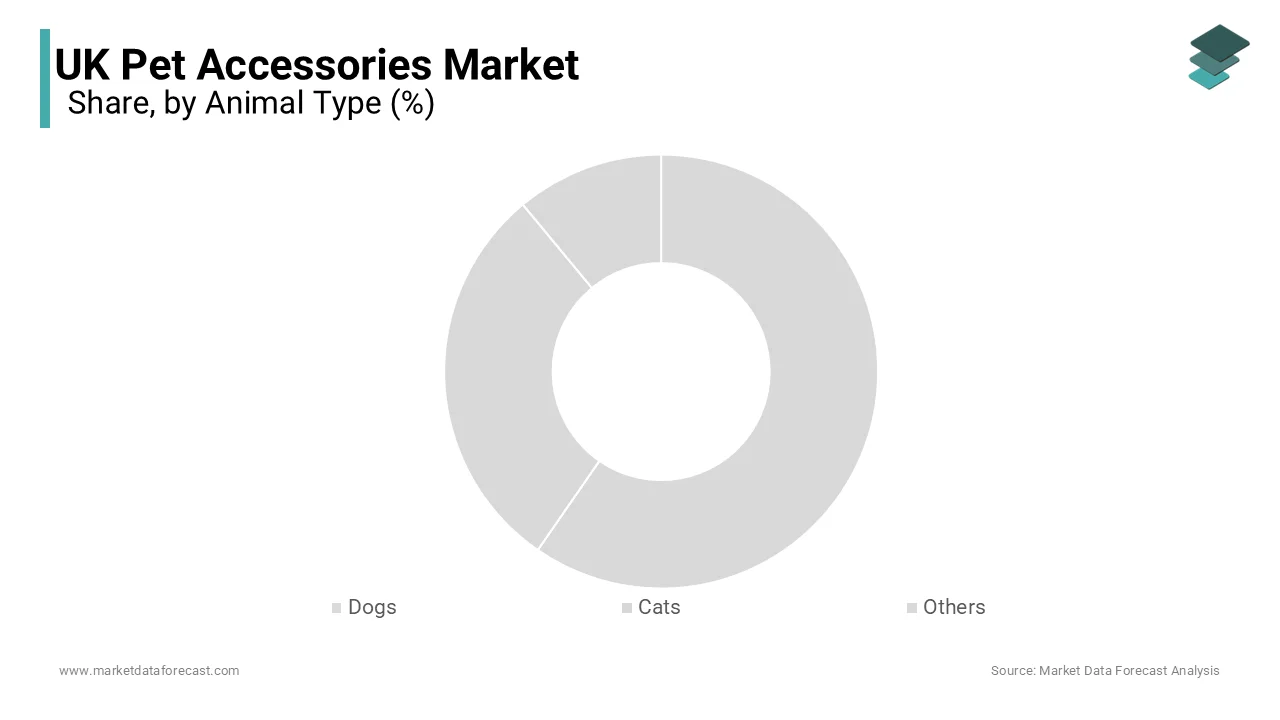
On the other hand, the cat accessories segment is estimated to register the fastest CAGR of 7.5% over the forecast period due to changing lifestyles and increasing cat ownership rates. The Office for National Statistics shows the number of single-person UK households reached 8.4 million in 2024. Concurrently, studies highlight cats as an ideal companion for this demographic due to their suitability for indoor spaces. This demographic shift has spurred demand for space saving furniture such as wall mounted shelves vertical scratching posts and hidden litter boxes that blend with home decor. The trend towards indoor only cats for safety reasons has increased investment in enrichment items like interactive laser toys automated feeders and window perches to prevent boredom. Cat owners are increasingly purchasing premium bedding and heating pads to enhance comfort during colder months. Social media platforms have popularized cat centric content influencing owners to buy aesthetically pleasing and functional accessories. Innovations in self cleaning litter trays and smart water fountains appeal to busy professionals seeking convenience and hygiene. The rise of multi cat households drives bulk purchases of feeding stations and grooming tools. Retailers are expanding cat specific ranges recognizing the untapped potential in this segment. As urbanization continues and work patterns evolve the demand for sophisticated cat care solutions will sustain its rapid growth trajectory offering significant opportunities for specialized brands.
COUNTRY LEVEL ANALYSIS
The United Kingdom followed closely behind in the European pet accessories market, occupying a 22.3% share in 2025. This was driven by a strong culture of pet ownership, where animals are regarded as integral family members, which in turn drove demand for premium and innovative products. The country’s market position shows high penetration rates and sophisticated consumer preferences. High levels of disposable income among pet owners support the adoption of luxury items such as designer clothing and smart technology. The regulatory environment enforced by the Department for Environment Food and Rural Affairs ensures high standards for product safety and animal welfare fostering consumer trust. The widespread availability of veterinary services and pet insurance encourages proactive care and investment in health related accessories. Urbanization trends have influenced product design with compact and multifunctional items gaining popularity in cities like London and Manchester. The strong e commerce infrastructure facilitates access to niche and international brands enhancing competition and choice. Sustainability is a key driver with many UK consumers preferring eco friendly materials and ethical manufacturing processes. The market is resilient to economic fluctuations due to the emotional bond between owners and pets although premium segments may experience volatility. Continuous innovation in digital health and personalized care positions the United Kingdom as a leader in adopting next generation pet accessory solutions.
COMPETITIVE LANDSCAPE
The competition within the United Kingdom pet accessories market is intense characterized by a mix of specialized retailers supermarket chains and direct to consumer brands vying for consumer attention. Established players leverage extensive distribution networks and brand recognition to maintain dominance while niche competitors differentiate through unique designs and sustainability credentials. Price sensitivity remains a factor although emotional bonding often reduces elasticity for premium products perceived to enhance pet well being. Private label brands from major supermarkets offer cost effective alternatives challenging branded players on value propositions. Innovation in smart technology and eco friendly materials provides opportunities for differentiation in a saturated landscape. Online marketplaces facilitate easy price comparison forcing incumbents to compete on service speed and exclusivity. Brand loyalty is cultivated through community engagement and educational content rather than just product features. The market requires continuous adaptation to changing consumer preferences and regulatory standards to maintain relevance. Consolidation through acquisitions allows larger entities to expand portfolios and achieve economies of scale. This dynamic environment demands agility and customer centricity to sustain growth and profitability.
KEY MARKET PLAYERS
Some of the companies that are playing a dominating role in the UK pet accessories market are
- Pets at Home Group plc
- Mars Incorporated
- Nestlé Purina PetCare
- Petmate
- Ferplast S.p.A.
- Rolf C. Hagen Inc.
- Ancol Pet Products Limited
- Rosewood Pet Products
- Company of Animals
- PetSafe Brands
- Bunty Pet Products
- Trixie Heimtierbedarf GmbH & Co. KG
Top Players in the Market
- Pets at Home serves as the leading retailer in the United Kingdom pet accessories market offering a comprehensive range of products through its extensive network of stores and online platforms. The company focuses on providing high quality accessories including beds collars toys and grooming tools that cater to diverse pet needs. Recent initiatives include expanding its VIP loyalty program to enhance customer retention and personalizing shopping experiences through data analytics. Pets at Home has invested in sustainable product lines featuring eco friendly materials to align with consumer values. Partnerships with veterinary practices within stores provide integrated care solutions strengthening trust and convenience for pet owners. The firm continuously updates its digital interface to improve usability and offer exclusive online deals. These strategic efforts reinforce its position as a trusted partner for British pet owners seeking reliable and innovative accessory solutions.
- Joules Limited contributes significantly to the United Kingdom pet accessories market by offering stylish and durable outdoor gear that reflects its heritage brand identity. The company specializes in weather resistant coats leads and bedding designed for active dogs and their owners who enjoy countryside lifestyles. Recent actions involve launching coordinated human and pet clothing collections which appeal to consumers seeking aesthetic harmony and functional design. Joules has expanded its distribution channels through partnerships with premium department stores and enhanced its e commerce capabilities. The brand emphasizes quality craftsmanship and sustainable sourcing using recycled materials in many products. Marketing campaigns highlight the bond between pets and owners during outdoor adventures resonating with target demographics. Joules differentiates itself from mass-market retailers by focusing on niche premium segments. In doing so, the brand strengthens its reputation for fashionable and practical pet accessories.
- Lily’s Kitchen primarily known for natural pet food has strengthened its presence in the United Kingdom pet accessories market by introducing complementary lifestyle products that align with its holistic brand ethos. The company offers eco friendly bowls treats dispensers and toys made from sustainable materials such as bamboo and organic cotton. Recent strategies include bundling accessories with food subscriptions to increase average order value and introduce customers to non consumable items. Lily’s Kitchen emphasizes transparency and ethical production ensuring all accessories meet high safety and environmental standards. Collaborations with animal welfare charities enhance brand credibility and emotional connection with conscious consumers. The brand leverages its strong digital community to showcase product utility and gather feedback for innovation. This expansion allows Lily’s Kitchen to provide a complete wellness ecosystem for pets while diversifying revenue streams beyond nutrition.
Top Strategies Used by Key Market Participants
Key players in the United Kingdom pet accessories market employ product differentiation strategies by developing innovative and sustainable items that appeal to health and environmentally conscious consumers. Digital transformation drives engagement through personalized e commerce platforms and loyalty programs that enhance customer retention and data collection. Strategic partnerships with veterinarians and influencers build trust and amplify brand visibility across targeted demographics. Expansion into private label offerings allows retailers to control margins and provide competitive pricing while maintaining quality standards. Sustainability integration is central with companies adopting recycled materials and plastic free packaging to meet regulatory and consumer expectations. Omnichannel retailing ensures seamless shopping experiences combining physical store convenience with online variety. These combined approaches ensure competitiveness in a mature market characterized by emotional purchasing drivers and evolving lifestyle trends.
MARKET SEGMENTATION
This research report on the UK pet accessories market is segmented and sub-segmented into the following categories.
By Product Type
- Toys and Clothing
- Housing
- Bedding and Feeding
- Collars
- Leashes and Utility
- Pet Hygiene Products
- Others
By Animal Type
- Dogs
- Cats
- Others