U.S. Pet Accessories Market Size, Share, Trends, and Growth Analysis Report, Segmented by Product Type, Pets, Distribution Channel, and Country – Industry Forecast From 2026 to 2034
Market Size, 2025
$14 BnMarket Estimate, 2026
$14.97 BnMarket Forecast, 2034
$25.59 BnCAGR, 2026–2034
6.93%U.S. Pet Accessories Market Report Summary
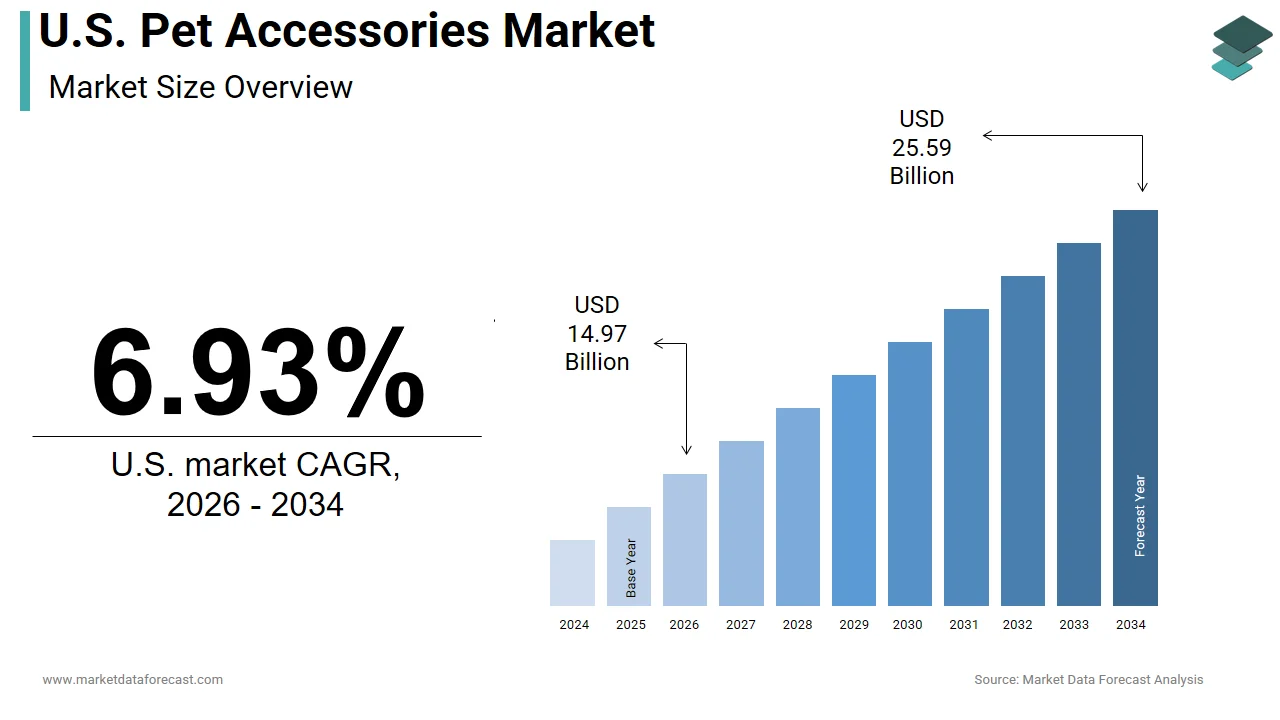
The U.S. pet accessories market was valued at USD 14 billion in 2025, is estimated to reach USD 14.97 billion in 2026, and is projected to reach USD 25.59 billion by 2034, growing at a CAGR of 6.93% from 2026 to 2034. Market growth is driven by increasing pet ownership, rising humanization of pets, and growing consumer spending on premium pet care products. Pet owners are increasingly investing in high-quality accessories such as bedding, furniture, toys, grooming products, and smart pet solutions to improve pet comfort and well-being. Additionally, expanding e-commerce channels, innovation in pet lifestyle products, and rising demand for sustainable and customized accessories are supporting market growth across the United States.
Key Market Trends
- Rising demand for premium and personalized pet accessories.
- Increasing humanization and emotional bonding with pets.
- Growth in smart and technology-enabled pet products.
- Expansion of online and omnichannel pet retail platforms.
- Increasing focus on sustainable and eco-friendly pet accessories.
Segmental Insights
- Based on product type, the pet bedding and furniture segment dominated the United States pet accessories market by accounting for 21.8% share in 2025, driven by increasing consumer spending on pet comfort and home integration products.
- Based on pets, the dog segment led the market with 47.1% share in 2025, supported by high dog ownership rates and increased expenditure on dog-related products.
- Based on distribution channel, the store-based retailers segment held the leading share with 55.1% in 2025, driven by strong consumer preference for in-store product selection and specialty pet retail outlets.
Country-Level Insights
- The United States dominated the North American pet accessories market by capturing 77.4% share in 2025, supported by high pet adoption rates, strong consumer purchasing power, and a well-established pet care industry.
Competitive Landscape
The U.S. pet accessories market is highly competitive, with companies focusing on premium product innovation, sustainable materials, and expansion of omnichannel retail strategies. Smart pet technologies, customized accessories, and partnerships with pet retailers are shaping the competitive landscape.
Prominent companies operating in the U.S. pet accessories market include Spectrum Brands, Inc., Petmate, Unicharm Corporation, Chewy Inc., Inter IKEA Systems B.V., MidWest Homes for Pets, PetSmart LLC, DoggyMan H.A. Co., Ltd, Mars Incorporated, Creature Comforts, COLLAR Company, H&K Pet Supply, LLC, and HPG.
U.S. Pet Accessories Market Size
The U.S. pet accessories market reached USD 14 billion in 2025, is expected to grow to USD 14.97 billion in 2026, and is anticipated to touch USD 25.59 billion by 2034, at a CAGR of 6.93% from 2026 to 2034.
Pet accessories are a diverse array of non-consumable products designed to enhance the comfort, safety, and lifestyle of companion animals, including dogs, cats, birds, and small mammals. This sector includes collars, leashes, beds, carriers, grooming tools, clothing, and interactive toys that serve both functional and aesthetic purposes. The definition of this market has expanded beyond basic utility to include premiumization, where pets are viewed as integral family members deserving of high-quality lifestyle enhancements. According to the American Pet Products Association's (APPA) 2025 National Pet Owners Survey, pet ownership in the U.S. has reached an all-time high with 95 million households owning a pet, offering a massive and expanding consumer base for accessory brands. U.S. Census Bureau data shows that the number of single-person households has risen to over 37 million, making up 29% of all homes. Tracking data indicates that roughly 50% of these solo dwellers live with a pet for companionship, heavily driving the demand for comforting and engaging accessories. Consumer behavior indicates a strong preference for durable and stylish items. The demographic profile of typical buyers includes Millennials and Gen Z, who are more likely to spend on premium items such as orthopedic beds and GPS-enabled collars. The market is characterized by rapid innovation in materials and technology, aiming to improve pet health and owner convenience. Regulatory standards for product safety, particularly regarding choking hazards and toxic materials, influence manufacturing practices. As urbanization continues, the need for compact and portable accessories gains traction among apartment dwellers. This evolution underscores the market's adaptation to changing living arrangements and the deepening human animal bond.
MARKET DRIVERS
Humanization of Pets and Emotional Bonding
The profound humanization of pets and the strengthening of emotional bonds are among the major drivers of the United States pet accessories market. This transforms animals into cherished family members worthy of premium care. Owners increasingly attribute human-like emotions and needs to their pets, leading to higher expenditure on items that enhance comfort and status. A landmark survey from Forbes Advisor reveals that 97% of pet owners consider their pets to be vital members of the family; this profound level of humanization is a direct catalyst for premiumization in retail, driving consistent consumer demand for high-end accessories like orthopedic memory foam beds and designer collars. This emotional connection drives the demand for personalized items, including custom-engraved tags and monogrammed carriers that reflect the unique identity of the pet. The rise of pet-centric social media accounts further amplifies this trend as owners seek photogenic accessories to share online. The psychological benefit of caring for a pet encourages owners to invest in products that promote well-being and happiness. Retailers respond by offering luxury lines that mimic human fashion trends, ensuring a steady stream of new products. This driver ensures consistent growth as consumers prioritize the emotional satisfaction derived from pampering their companions. The willingness to spend on non-essential items highlights the depth of the human animal bond.
Increasing Focus on Pet Health and Safety
The increasing focus on pet health and safety is further boosting the expansion of the United States pet accessories market. This encourages the adoption of protective and monitoring devices. Owners are becoming more aware of potential risks such as traffic accidents, getting lost, and exposure to harsh weather conditions, prompting investments in safety-oriented accessories. According to the American Veterinary Medical Association (AVMA), over 4.5 million dog bites occur annually in the United States; this heightened focus on public safety has significantly increased consumer demand for secure public walking gear, including high-durability leashes, safety harnesses, and preventative training muzzles. Fueled by prominent product showcases at the Consumer Technology Association’s annual CES event, consumer interest in smart pet accessories has surged, with global market data tracking double-digit annual growth in smart collars, GPS trackers, and integrated wearable pet tech. These devices allow owners to monitor location and activity levels, ensuring the physical well-being of their pets. Reflective gear and LED collars are also popular for enhancing visibility during night walks, reducing the risk of accidents. The aging pet population requires supportive accessories such as ramps and orthopedic beds to manage mobility issues. Manufacturers innovate by integrating health monitoring features into everyday items, creating a holistic approach to pet care. This health-driven demand ensures sustained market growth as owners prioritize the longevity and safety of their companions.
MARKET RESTRAINTS
Price Sensitivity and Economic Volatility
Price sensitivity and economic volatility are slowing down the growth of the United States pet accessories market. This limits discretionary spending among lower and middle-income households. While pet owners are willing to spend on essentials such as food and veterinary care, accessories are often viewed as non-essential items that can be deferred during financial uncertainty. According to the Bureau of Labor Statistics, the Consumer Price Index (CPI) for all items increased by 2.7% over the course of 2025; while this reflects a stabilization from post-pandemic highs, persistent price levels continue to strain household budgets and alter consumer purchasing power. High inflation rates force many owners to switch from premium brands to cheaper alternatives or generic products, reducing revenue for high-end manufacturers. The cost of living crisis exacerbates this issue, with renters and homeowners facing higher housing costs that limit disposable income. Small businesses in the pet sector struggle to compete with large retailers who can offer lower prices due to economies of scale. Promotional discounts and clearance sales become necessary to move inventory, impacting profit margins. The perception of accessories as optional goods makes them vulnerable to cuts in household spending. This restraint hinders the adoption of innovative and expensive products such as smart collars and automated feeders. The economic environment requires manufacturers to balance quality with affordability to maintain sales volume.
Product Safety Concerns and Regulatory Compliance
Product safety concerns and strict regulatory compliance are restricting the expansion of the United States pet accessories market. This imposes rigorous standards on manufacturing and labeling. Incidents of choking injuries, ingestion of harmful materials, and defective products have led to increased scrutiny from consumer protection agencies. Regulatory reporting from the Food and Drug Administration (FDA) and the Consumer Product Safety Commission (CPSC) emphasizes a heightened focus on manufacturing safety; strict monitoring for hazards such as toxic materials, structural flaws, or choking components has made transparent quality assurance a primary trust indicator for modern pet consumers. These recalls damage brand reputation and erode consumer trust, leading to hesitation in purchasing new or unknown brands. Manufacturers face high costs associated with testing and certification to meet federal and state regulations. The complexity of complying with varying standards across different states adds to the operational burden. Small and medium-sized enterprises often lack the resources to conduct extensive safety trials, limiting their ability to introduce new products. Legal liabilities associated with product failures can result in significant financial losses. Consumers are increasingly reading labels and seeking certifications, which slows down the decision-making process. This restraint necessitates transparent communication and robust quality control measures. Failure to adhere to safety standards can lead to market exclusion and long-term brand damage.
MARKET OPPORTUNITIES
Integration of Smart Technology and IoT Devices
The integration of smart technology and Internet of Things devices is a key area for growth for the United States pet accessories market. This offers advanced monitoring and interaction capabilities. Smart collars, GPS trackers, and automated feeders allow owners to monitor health metrics, location, and feeding habits remotely, enhancing peace of mind. These devices connect to mobile applications that provide real-time data and alerts, fostering a deeper connection between owners and pets. The Consumer Technology Association (CTA) emphasizes that Millennials are the leading demographic for pet tech adoption; broadly, research indicates that nearly half of these tech-savvy owners are actively seeking wearable solutions to monitor their pets' health and location. Also, the ability to track activity levels helps in managing weight and detecting early signs of illness. Manufacturers can collaborate with tech firms to develop integrated ecosystems that sync with other smart home devices. The collection of health data offers opportunities for veterinary partnerships and personalized care recommendations. Subscription-based services for data storage and analysis add recurring revenue streams. The appeal of convenience and advanced care resonates with tech-savvy consumers. This opportunity allows companies to differentiate themselves and command premium prices. The trend towards digital health management ensures continued innovation and growth in this segment.
Expansion of Sustainable and Eco-Friendly Products
The expanding demand for sustainable and eco-friendly pet accessories opens new pathways for the United States market. This aligns with contemporary consumer values and environmental consciousness. Buyers are increasingly seeking products made from recycled materials, organic fabrics, and biodegradable components, reflecting a broader trend towards responsible consumption. According to the Sustainable Furnishings Council’s consumer research, over 90% of respondents express concern about environmental issues in the home; this awareness is translating into market shifts, with a majority of consumers now factoring sustainability and eco-friendly materials into their purchasing decisions. Accessories such as hemp leashes, recycled plastic beds, and organic cotton toys appeal to eco-conscious pet owners. Certification programs such as the Global Organic Textile Standard provide credibility and help consumers make informed choices. Retailers are dedicating more shelf space to green brands, recognizing their growth potential. Online platforms facilitate access to niche sustainable products that may not be available in traditional stores. The emphasis on ethical sourcing and minimal packaging further enhances brand appeal. This opportunity allows companies to differentiate themselves and build loyal customer bases. The trend towards holistic and responsible living ensures that sustainable accessories will continue to gain traction. Companies are prioritizing environmental impact. In doing so, they capture a growing segment of conscientious consumers.
MARKET CHALLENGES
Supply Chain Disruptions and Raw Material Costs
Supply chain disruptions and fluctuating raw material costs remain a grave challenge to the United States pet accessories market. This affects production timelines and profit margins. Many accessories rely on imported materials such as textiles, plastics, and metals, which are subject to global price volatility and logistical bottlenecks. Data from the Institute for Supply Management (ISM) Manufacturing Reports throughout 2025 highlighted volatile supplier delivery timelines, as supply chain managers proactively pulled deliveries forward to mitigate fluctuating tariff expectations and stabilize inventory levels. Port congestion and shipping container shortages have led to increased freight costs, which impact final product prices. The Journal of Commerce indicates that while trans-Pacific container shipping rates have cyclicalized post-pandemic, fresh geopolitical conflicts and anticipated tariff pressures caused severe freight rate volatility and container capacity crunches throughout 2025. These disruptions force suppliers to hold higher inventory levels, tying up capital and increasing storage costs. Unpredictable lead times make it difficult for retailers to plan promotions and manage stock effectively. Businesses facing supply uncertainties may switch to alternative suppliers or reduce orders, affecting revenue stability. The complexity of global supply networks requires robust risk management strategies that smaller players may lack. This challenge necessitates diversification of sourcing and investment in local manufacturing capabilities. The ongoing volatility in logistics adds a layer of uncertainty to market operations. Manufacturers must balance cost efficiency with reliability to maintain competitiveness.
Intense Competition and Market Saturation
Intense competition and market saturation negatively impact the United States pet accessories market. This compresses margins and forces continuous innovation. The low barrier to entry has led to a proliferation of brands ranging from established giants to small online sellers, creating a crowded landscape. This saturation leads to price wars, particularly in basic categories such as leashes and bowls, which undermines profitability. Private label offerings from large retailers further intensify competition by providing lower-cost alternatives. Manufacturers struggle to differentiate their products in a crowded market, leading to increased marketing expenditures. The pressure to reduce costs may compromise quality, affecting long-term brand reputation. Small businesses face difficulties in competing with the economies of scale enjoyed by larger corporations. This challenge requires strategic positioning and value addition to justify premium pricing. Companies must focus on unique design elements and superior customer service to stand out. The constant need for innovation and cost management strains operational resources. Navigating this competitive environment demands agility and strategic foresight.
REPORT COVERAGE
| REPORT METRIC | DETAILS |
| Market Size Available | 2025 to 2034 |
| Base Year | 2025 |
| Forecast Period | 2026 to 2034 |
| Segments Covered | By Product Type, Pets, Distribution Channel, and Country. |
| Various Analyses Covered | Global, Regional, and Country-Level Analysis, Segment-Level Analysis, Drivers, Restraints, Opportunities, Challenges; PESTLE Analysis; Porter’s Five Forces Analysis, Competitive Landscape, Analyst Overview of Investment Opportunities |
| Countries Covered | New York, Massachusetts, Pennsylvania, Illinois, Ohio, Michigan, Texas, Florida, Georgia, California, Washington, Colorado. |
| Market Leaders Profiled | Spectrum Brands, Inc., Doskocil Manufacturing Company, Inc. (Petmate), Unicharm Corporation, Chewy Inc., Inter IKEA Systems B.V., MidWest Homes for Pets, PetSmart LLC, DoggyMan H.A. Co., Ltd., Mars Incorporated, Creature Comforts, COLLAR Company, H&K Pet Supply, LLC, HPG, and Others. |
SEGMENTAL ANALYSIS
By Product Type Insights
The pet bedding and furniture segment dominated the United States pet accessories market and accounted for a 21.8% share in 2025. Factors such as the increasing emphasis on pet comfort and the integration of pet spaces into home décor drive the dominance of this segment. As pets are viewed as family members, owners invest heavily in high-quality sleeping solutions that support joint health and provide a sense of security. The American Pet Products Association (APPA) and industry trackers show that dog owners account for approximately two-thirds of all durable pet product sales; this dominance underpins the non-discretionary nature of comfort items, driving consistent, cyclical volume across the pet bedding and blanket category. The dominance is further reinforced by the aging pet population, which requires orthopedic support to manage arthritis and mobility issues. Consumers prioritize materials that are durable, washable, and aesthetically pleasing to match interior design trends. The rise of premium foam technologies and memory foam has elevated the average price point of beds, contributing to a higher revenue share. Retailers report that bedding is often one of the first large accessory purchases made by new pet owners. The replacement cycle for bedding is influenced by wear and tear, hygiene concerns, and style updates, ensuring consistent repurchase behavior. Additionally, the trend towards multi-functional furniture, such as crate covers that double as side tables, appeals to urban dwellers with limited space. This combination of health necessity, aesthetic appeal, and frequent replacement secures the leading status of the pet bedding segment.
However, the smart pet accessories segment is likely to experience the fastest CAGR of 14.5% from 2026 to 2034, owing to the convergence of pet care and Internet of Things technology, allowing owners to monitor and interact with their pets remotely. The driving force behind this growth is the desire for real-time health monitoring and security among busy pet owners. Highlighted by high-profile product showcases at the Consumer Technology Association's annual events, sales for smart pet wearables, led by GPS tracking collars, are experiencing robust double-digit annual growth as proactive owners seek data-driven ways to prevent pet loss and log activity metrics. Automated feeders and water fountains with app connectivity allow for precise portion control and hydration monitoring, which supports weight management and health. The integration of cameras enables two-way communication, reducing separation anxiety for both pets and owners. Younger demographics, particularly Millennials and Gen Z, are early adopters of these technologies, viewing them as essential tools for modern pet parenting. Manufacturers are introducing AI-driven features that analyze behavior patterns and alert owners to potential health issues. The ability to collect and share data with veterinarians enhances preventive care. This technological evolution ensures that smart accessories continue to grow at the fastest rate.
By Pets Insights
The dog segment led the United States pet accessories market and captured a 47.1% share in 2025. This leading position in the country’s market was attributed to the large population of canine companions and the diverse range of products required for their care and enrichment. Dogs are the most popular pet in the US, with high ownership rates driving substantial volume sales across all accessory types. According to the American Pet Products Association (APPA), there are approximately 68 million households with dogs in the United States, cementing dogs as the nation's most popular pet and providing a massive, reliable consumer base for pet brands. The dominance of this segment is supported by the active lifestyle of dogs, which necessitates items such as leashes, harnesses, toys, and outdoor gear. The social nature of dogs encourages participation in activities such as hiking, traveling, and training, which require specialized accessories like car seat covers and agility equipment. The fashion industry for dogs is also robust, with clothing and costumes generating significant revenue during seasonal events. Retailers dedicate extensive shelf space to dog products, reflecting their market importance. The emotional bond between owners and dogs drives willingness to purchase premium items such as custom collars and luxury beds. The variety of breeds and sizes requires a wide assortment of products, ensuring broad market coverage. This combination of population size, activity level, and spending power secures the leading position of the dog segment.
The cat segment is on the rise and is expected to be the fastest-growing segment in the market by witnessing a CAGR of 9.8% during the forecast period due to the increasing popularity of cats among urban dwellers and younger generations who value low-maintenance companionship. The American Pet Products Association (APPA) highlights an unprecedented 23% surge in cat ownership, with approximately 49 million U.S. households now owning at least one cat; this rapid growth is heavily driven by shifting urban demographics that favor feline companions. The driving force behind this growth is the verticalization of cat living spaces, which has spurred demand for climbing tree wall-mounted shelves and interactive toys. The rise of indoor-only cats has increased the need for mental stimulation products such as puzzle feeders and automated laser toys to prevent boredom and behavioral issues. Litter box innovations, including self-cleaning units and odor control systems, have also contributed to market expansion as owners seek convenience and hygiene. The aesthetic appeal of cat furniture has improved with designs that blend seamlessly with modern home decor. Social media trends featuring cats have amplified the desire for stylish and functional accessories. Manufacturers are introducing eco-friendly and sustainable options that appeal to conscious consumers. This shift towards enriched indoor environments ensures that cat accessories continue to grow at a rapid pace.
By Distribution Channel Insights
The store-based retailers segment held the majority share of 55.1% of the United States market in 2025 because of consumer preference for physical inspection, immediate availability, and expert advice. Brick and mortar stores, including specialty pet shops, supermarkets, and big box retailers, allow shoppers to assess product quality, size, and material before purchasing. According to broader retail trends tracked by the National Retail Federation (NRF), physical storefronts remain vital touchpoints in an omnichannel world. However, within the pet sector specifically, rapid e-commerce adoption has pushed digital sales nearly equal to brick-and-mortar, forcing traditional retailers to offer highly immersive in-store experiences. The dominance of this channel is driven by the tactile nature of many accessories, such as beds and clothing, where fit and texture are critical factors. Specialty stores offer personalized recommendations from knowledgeable staff, which builds trust and loyalty among customers. The immediate gratification of taking home products appeals to consumers with urgent needs, such as replacing a broken leash. Major retailers like PetSmart and Petco have optimized store layouts to enhance the shopping experience with interactive displays and grooming services. Promotional events and in-store demonstrations drive foot traffic and impulse buys. The trust associated with established retail chains also reassures consumers about product safety and return policies. This combination of convenience, expertise, and sensory evaluation ensures that store-based retailers maintain their leading status.
On the other hand, the e-commerce channel segment is expected to exhibit a noteworthy CAGR of 12.2% between 2026 and 2034. This rapid expansion is fueled by the increasing comfort of consumers with online shopping, the convenience of home delivery, and the vast selection available digitally. The main force behind this trend is the ability of online platforms to offer niche and specialized items that may not be available in local stores. Global consumer research from McKinsey & Company emphasizes that digital-first, younger generations are actively reshaping the retail landscape; as digital natives, Millennial pet parents overwhelmingly rely on online channels to scrutinize reviews, cross-reference prices, and discover premium accessory brands via social media ecosystems. Subscription services for recurring items such as waste bags and grooming supplies ensure automatic replenishment and customer retention. Digital tools such as augmented reality allow users to visualize how products will look in their homes, reducing purchase hesitation. Direct-to-consumer brands leverage social media marketing to reach targeted audiences effectively. The integration of fast delivery options has reduced barriers to online purchasing, making it a viable alternative to brick-and-mortar retail. Younger consumers, particularly Gen Z, favor digital channels for their seamless integration with mobile devices. This combination of convenience selection and technology ensures that e-commerce continues to grow at the fastest rate.
COUNTRY ANALYSIS
U.S. Pet Accessories Market Analysis
The United States outperformed other countries in the North American pet accessories market and secured a 77.4% share in 2025. This supremacy of the country’s market was driven by the country’s high pet ownership rates, substantial disposable income, and strong cultural emphasis on pet humanization. The market status in the United States is characterized by a mature yet innovative landscape where premium and technologically advanced products are gaining traction. According to the American Pet Products Association's (APPA) 2026 State of the Industry Report, 95 million U.S. households own a pet, representing roughly two-thirds of households, providing a vast and stable base for accessory consumption. The driving factors behind this leadership include the widespread acceptance of pets as family members, which motivates owners to spend on comfort and lifestyle enhancements. Data from the Bureau of Economic Analysis (BEA) and APPA show that total U.S. pet industry expenditures reached $158 billion in 2025 (a 3.7% increase), with projections to hit $165 billion in 2026, driven by rising costs for essential services like veterinary care. The presence of major global pet retailers and manufacturers headquartered in the US fosters continuous product innovation and marketing excellence. Consumer education campaigns by industry associations promote the benefits of proper pet care, driving consistent demand. The aging population retains pets for companionship, requiring specialized accessories for mobility and comfort. Additionally, the influence of social media and pet influencers emphasizes the value of stylish and functional items, boosting sales. The robust retail infrastructure, including widespread specialty stores and e-commerce platforms, ensures easy product accessibility. These factors collectively ensure that the United States remains the central pillar of the pet accessories market in the region.
COMPETITIVE LANDSCAPE
The competition in the United States pet accessories market is intense and characterized by the presence of large retail chains, specialized e-commerce platforms, and numerous niche brands. Major players like Chewy, PetSmart, and Amazon dominate the landscape through extensive product selections and competitive pricing. These companies leverage their scale to offer fast delivery and comprehensive customer service, which are critical for retaining buyers. Private labels from major retailers pose a significant threat by providing affordable alternatives that appeal to budget-conscious shoppers. The rise of direct-to-consumer brands has increased pressure on established firms to differentiate through unique designs and sustainable practices. Competition is also driven by the need for innovation, with companies vying to introduce smart devices and health-focused accessories. Marketing expenditures remain high as brands compete for visibility in both physical and digital spaces. The market sees frequent product launches and promotional activities, which impact profit margins but drive volume. Small and niche players compete by offering specialized products and personalized services that appeal to specific segments. This dynamic environment requires continuous innovation and strategic agility to maintain market relevance and profitability.
KEY MARKET PLAYERS
Some of the companies that are playing a dominating role in the U.S. pet accessories market include
- Spectrum Brands, Inc.
- Doskocil Manufacturing Company, Inc. (Petmate)
- Unicharm Corporation
- Chewy Inc
- Inter IKEA Systems B.V.
- MidWest Homes for Pets
- PetSmart LLC
- DoggyMan H.A. Co., Ltd
- Mars Incorporated
- Creature Comforts
- COLLAR Company
- H&K Pet Supply, LLC
- HPG
TOP PLAYERS IN THE MARKET
- Chewy Inc has revolutionized the United States pet accessories market by leveraging its robust e-commerce platform and customer-centric service model. The company offers an extensive selection of products ranging from basic supplies to premium smart devices, ensuring convenience for busy pet owners. Recently, Chewy has strengthened its market position by expanding its private label portfolio, which includes high-quality beds and toys at competitive prices. The retailer invests heavily in logistics infrastructure to enable fast and reliable delivery across the country. Its subscription services for recurring needs foster strong customer loyalty and predictable revenue streams. Chewy also utilizes data analytics to provide personalized recommendations, enhancing the shopping experience. By focusing on digital innovation and customer satisfaction, the company maintains a leading role in the online retail sector. These strategic initiatives ensure sustained growth and relevance in a competitive landscape.
- PetSmart LLC remains a dominant force in the United States pet accessories market through its extensive network of physical stores and integrated omnichannel capabilities. The company provides a wide array of accessories, including grooming tools, clothing, and interactive toys, catering to diverse consumer preferences. Recently, PetSmart has enhanced its market position by upgrading store layouts to create immersive shopping experiences that encourage product discovery. The retailer actively promotes its private brands, which offer value and quality to budget-conscious shoppers. PetSmart leverages its loyalty program to gather consumer insights and tailor marketing efforts effectively. The integration of online ordering with in-store pickup options provides flexibility and convenience for customers. By combining physical presence with digital solutions, PetSmart ensures broad accessibility and strong brand engagement. These actions solidify its reputation as a trusted destination for pet care needs.
- Mars Incorporated contributes significantly to the United States pet accessories market through its diverse portfolio of well-known brands such as Pedigree and Whiskas. The company focuses on innovation and quality to meet the evolving needs of pets and their owners. Recently, Mars has strengthened its position by investing in sustainable packaging solutions for its accessory lines, appealing to environmentally conscious consumers. The corporation leverages its global research and development capabilities to introduce novel products that enhance pet well-being. Mars actively collaborates with veterinarians and animal welfare organizations to build trust and credibility. Its strong distribution network ensures widespread availability of products in both retail and online channels. By prioritizing sustainability and scientific innovation, Mars maintains a competitive edge. These efforts drive brand loyalty and support long-term growth in the dynamic pet care industry.
TOP STRATEGIES USED BY KEY MARKET PARTICIPANTS
Key players in the United States pet accessories market employ diverse strategies to maintain competitiveness and drive growth in an evolving landscape. Product innovation is a primary focus, with companies introducing smart technologies and eco-friendly materials to appeal to modern consumers. Private label expansion allows retailers to offer cost-effective alternatives while maintaining higher profit margins. Omnichannel integration ensures seamless shopping experiences across physical and digital platforms, enhancing customer convenience. Strategic partnerships with influencers and veterinarians help build brand credibility and reach targeted audiences. Sustainability initiatives are increasingly important as firms adopt recyclable packaging and ethical sourcing practices. Personalization through data analytics enables tailored recommendations and improved customer engagement. These approaches collectively enable market participants to adapt to changing consumer preferences and maintain strong market positions.
MARKET SEGMENTATION
This research report on the U.S. pet accessories market has been segmented and sub-segmented into the following categories.
By Product Type
- Food Accessories
- Outdoor Accessories
- Grooming Accessories
- Pet Bedding
- Pet Toys
- Clothing Accessories
- Pet Housing
- Utility Products
- Care Products
- Pet Leads & Harnesses
- Others
By Pets
- Dog
- Cat
- Reptiles
- Birds
- Horse
- Others
By Distribution Channel
- Store-Based Retailers
- E-Commerce
By Country
- New York
- Texas
- Florida
- Georgia
- California
- Rest of U.S.
Frequently Asked Questions
What is the U.S. pet accessories market?
The U.S. pet accessories market offers collars, leashes, beds, toys, and carriers for dogs and cats through retail and online channels.
How does the U.S. pet accessories market function?
The U.S. pet accessories market connects manufacturers, brands, and sellers with pet owners seeking comfort, safety, and convenience products.
What drives growth in the U.S. pet accessories market?
The U.S. pet accessories market grows from pet humanization, premium spending, and rising demand for stylish and functional pet items.
Which products lead the U.S. pet accessories market?
Collars, leashes, beds, toys, and carriers lead the U.S. pet accessories market because they serve daily care and travel needs.
Why are pet beds important in the U.S. pet accessories market?
Pet beds are vital in the U.S. pet accessories market because they support comfort, rest, and joint support for pets at home.
How do pet toys affect the U.S. pet accessories market?
Pet toys boost the U.S. pet accessories market by supporting play, mental stimulation, and active lifestyles for pets.
What role do online stores play in the U.S. pet accessories market?
Online stores expand the U.S. pet accessories market by offering wider selection, convenience, and easy price comparison.
What trends shape the U.S. pet accessories market?
Premium materials, smart pet gear, orthopedic comfort, and personalized designs shape the U.S. pet accessories market.
How does pet humanization influence the U.S. pet accessories market?
Pet humanization drives the U.S. pet accessories market as owners buy comfort-focused and lifestyle-oriented products.
What is the importance of pet carriers in the U.S. pet accessories market?
Pet carriers support travel, vet visits, and safety, making them an important part of the U.S. pet accessories market.
Related Reports
Access the study in MULTIPLE FORMATS
Purchase options starting from
$ 1200
Didn’t find what you’re looking for?
TALK TO OUR ANALYST TEAM
Need something within your budget?
NO WORRIES! WE GOT YOU COVERED!
Call us on: +1 888 702 9696 (U.S Toll Free)
Write to us: sales@marketdataforecast.com