UK Protection Market Size, Share, Trends & Growth Forecast Report By Solution, By Deployment, By Industry, and By Country (United Kingdom) – Industry Analysis and Forecast, 2026 to 2034
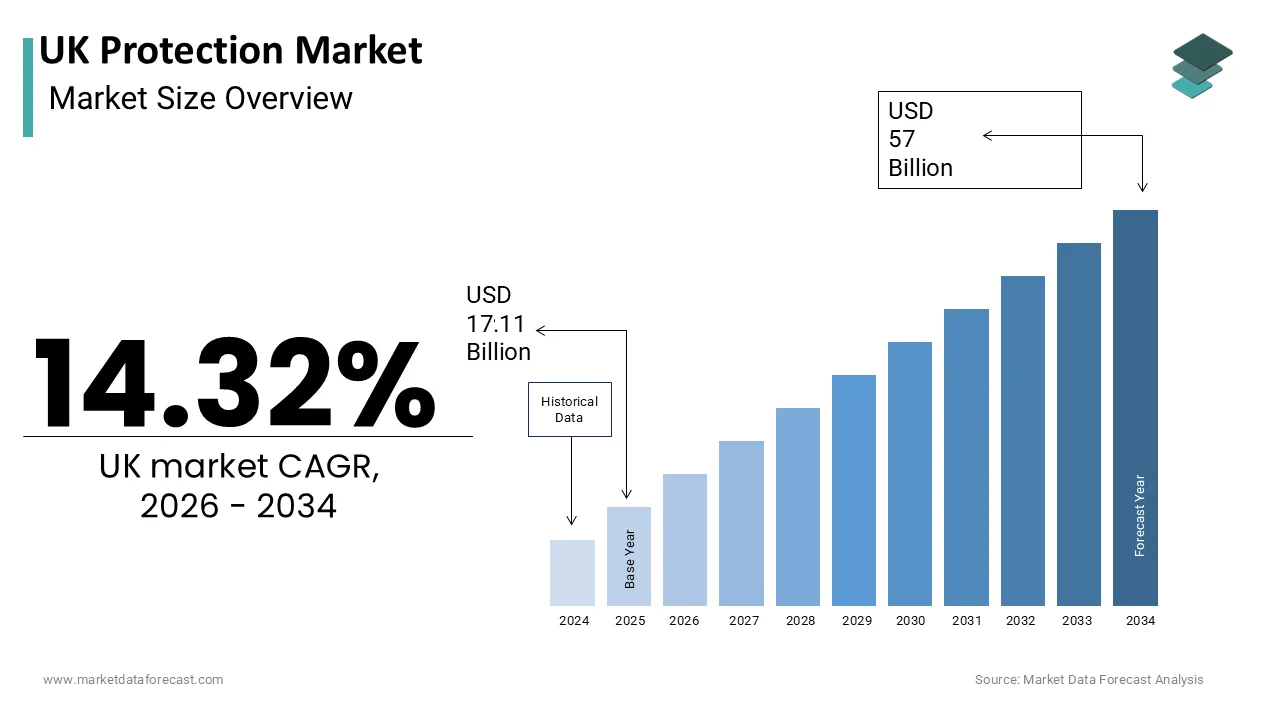
Market Size, 2025
$17.11 BnMarket Estimate, 2026
$19.56 BnMarket Forecast, 2034
$57.00 BnCAGR, 2026–2034
14.32%UK Protection Market Size
The UK Protection Market is projected to grow from USD 17.11 billion in 2025 to USD 19.56 billion in 2026 and reach USD 57 billion by 2034, registering a CAGR of 14.32% during the forecast period from 2026 to 2034.
The protection are financiais aervices industry dedicated to providing financial security against life events, such as death, illness, and loss of income. The regulatory framework enforced by the Financial Conduct Authority ensures high standards of advice and product transparency, fostering consumer trust. Demographic shifts, including an aging population and changing family structures, play a pivotal role in influencing coverage needs. The rise of the gig economy has created a new demographic of self-employed individuals, who lack employer spoemployer-sponsorediving demand for individual policies. Digital transformation is reshaping distribution channels, making it easier for consumers to compare and purchase coverage online.
MARKET DRIVERS
Rising Household Debt Levels Increase Financial Vulnerability
The escalating household debt levels, as families seek to safeguard their financial stability, are solely bolstering the growth of the United Kingdom protection market. The cost-of-living crisis, combined with higher interest rates,s has pushed many households into precarious financial positions where a single are, areme loss could lead to default. The total household debt reached 1.8 trillion pounds in recent quarters,arters representing a significant burden on monthly budgets, as per the study. Mortgage arrears and credit card balances have risen, prompting individuals to consider income protection and life insurance as essential risk mitigation tools. 1 in 5 adults struggles with debt repayment, ts making them highly aw, are of the consequences of financial shock. Protection policies offer a lifeline by ensuring that mortgage payments and daily expenses can be met even if the primary earner falls ill or passes away. Lenders increasingly encourage borrowers to take out protection products, when securing loans further driving adoption. The psychological stress associated with high debt loads motivates consumers to seek peace of mind through insurance coverage. This financial pressure transforms protection from a discretionary purchase into a necessity for responsible financial planning. The correlation between debt levels and insurance uptake remains strong, ensuring sustained demand as economic pressures persist.
Growing Awareness of State Welfare Limitations
The increasing public awareness regarding the limitations of state-provided benefits is another factor fuelling the growth of the United Kingdom protection market. Many consumers are realizing that statutory sick pay and universal credit offer insufficient support during periods of long-term illness or unemployment. This gap in state provision encourages individuals to seek private income protection and critical illness cover to bridge the shortfall. The complexity of accessing certain state benefits also deters reliance on government support, prompting a shift toward self-sufficiency. Financial advisors actively educate clients on these gaps highlighti, highlighting the importance of private safety nets. Media coverage of welfare reforms and benefit caps further amplifies this awareness. Consumers recognize that private protection offers faster access to funds and greater flexibility in how money is used. This realization fosters a proactive approach to financial planning where protection is viewed as a complement to rather than a replacement for state support.
MARKET RESTRAINTS
High Cost of Living Reduces Disposable Income
The persistent high cost of living is reducing the disposable income available for insurance premiums, restricting the growth of the United Kingdom protection market. Inflationary pressures on energy, food, and housing costs force households to prioritize immediate essentials over long-term financial protection. The consumer price inflation remained elevated, affecting household budgets across all income brackets. You,nger people and low income low-incomere particularly affected, often viewing long-term as an unaffordable luxury rather than a necessity. The trade-off between paying utility bills and insurance premiums leads to underinsurance, leaving many vulnerable to financial shock. Insurers face challenges in pricing products competitively while maintaining profitability amidst rising claims costs. The perception that protection is expensive persists despite the availability of budget-friendly options. Economic uncertainty makes consumers hesitant to commit to long-term future payment difficulties. This financial strain limits market penetration and slows growth in new business acquisition. Providers must innovate with flexible payment structures and lower entry level entry-level address affordability concerns.
Complexity of Products Causes Consumer Confusion
The inherent complexity of protection products creates substantial confusion that deters potential buyers from purchasing coverage, which is also declining, hindering the United Kingdom protection market. Policy terms, definitions, and exclusions are often difficult for laypersons to understand, leading to hesitation and mistrust. Terms, such as deferred periods own occupa, occupation definitions, and pre-existing condition exclusions vary significantly be, tween providers making comparisons challenging. Many individuals avoid buying protection because they fear being misled or having claims rejected due to technicalities. The lack of standardized language across the industry prevents consumers from making informed decisions based on clear apples-to-apples comparisons. Mis-selling in the past has further eroded trust, making customers wary of advice from sales agents. The need for professional advice adds another layer of cost and complexity discouragi, discouraging self-service. Many consumers procrastinate on buying protection because the process feels overwhelming and time-consuming. The edge gap results in low penetration rates despite high perceived need.
MARKET OPPORTUNITIES
Integration of Wellness Programs Enhances Value Proposition
The integration of wellness programs into protection policies presents a significant opportunity for insurers to differentiate their offerings and improve customer engagement. According to data from Deloitte, 70% of consumers express interest in insurance products that reward healthy lifestyles with premium discounts or benefits. Insurers partnering with fitness apps and wearable technology providers can track user activity and offer personalized feedback. This proactive approach shifts the model from passive payout to active health management, creating deeper customer relationships. Employers are increasingly interested in corporate protection schemes that include wellness components to improve workforce productivity and reduce absenteeism. The data generated from wellness interactions allows insurers to refine underwriting models and offer more accurate pricing. This strategy aligns with broader societal trends toward preventive care and holistic wellbeing. Insurers can leverage these programs to attract younger, healthier demographics who are typically harder to reach. The positive brand association with health promotion enhances customer loyalty and reduces churn.
Digital Distribution Channels Expand Reach to Younger Demographics
The expansion of digital distribution channels for protection insurers to reach younger and tech-savvy consumers is driving the growth of the United Kingdom protection market. Traditional broker-led models often fail to engage millennials and Generation Z, who prefer seamless online experiences. The digital first insurers acquire customers at 30% lower cost than traditional providers due to reduced overheads. Social media marketing and influencer partnerships can raise awareness about the importance of protection among younger audiences who may currently feel invincible. Gamification elements in digital interfaces can make learning about insurance engaging and less intimidating. Instant quote engines and automated underwriting allow for rapid policy issuance,e appealing to impatient consumers. The ability to manage policies entirely online appeals to those who value convenience and control. Digital channels also facilitate cross selling of additicross-sellinguch as gadget or travel insurance. This shift toward digital native strategies ensures long-term growth in a changing demographic landscape.
MARKET CHALLENGES
Claims Fraud and Abuse Increase Operational Costs
The fraudulent claims and abusive practices that undermine profitability and increase operational costs for protection insurers isarene of the major challenge for the growth of the United Kingdom protection market. Common schemes include exaggerating the severity, undermining, hiding pre-existing increases, or fabricating employment status for insurance protection claims. Detecting these discrepancies requires sophisticated analytical tools and manual investigation processes that strain resources and delay legitimate claim settlements. The rise of digital submissions has inadvertently facilitated easier manipulation of documents necessitati, necessitating enhanced cybersecurity measures. Organized criminal networks sometimes exploit lax verification processes to submit fabricated medical records. These costs ultimately translate into higher premiums for honest policyholders, creating a vicious cycle that may deter new customers. Lack of centralized databases sharing information about suspicious claims across different insurers allows repeat offenders to operate undetected. Strengthening industry collaboration and implementing blockchain technology for immutable record keeping could mitigate this challenge, but requires significant upfront investment.
Regulatory Compliance Burdens Increase Complexity
Navigating an evolving regulatory landscape imposes substantial compliance burdens that increase operational complexity, and costs for protection insurers are also expected to decline due to the growth of the United Kingdom protection market. The Financial Conduct Authority enforces strict guidelines regarding fair treatment of customers, transparency in advice, and solvency requirements, which, ts. Complexance with General Data Protection Regulation standards adds another layer of complexity, particularly when handling sensitive health data collected through wellness programs. Smaller insurers struggle disproportionately with these demands, lacking the resources of larger competitors to maintain dedicated compliance teams. The need for regular audits and reporting diverts attention from product innovation and customer service improvements. Regulatory changes often occur with short notice periods, forcing rapid implementation that disrupts normal business operations. This regulatory weight slows market entry for new players and limits agility for established firms.
REPORT COVERAGE
| REPORT METRIC | DETAILS |
| Market Size Available | 2025 to 2034 |
| Base Year | 2025 |
| Forecast Period | 2026 to 2034 |
| Segments Covered | By Solution, Deployment, Industry, and Region. |
| Various Analyses Covered | Global, Regional and Country-Level Analysis, Segment-Level Analysis, Drivers, Restraints, Opportunities, Challenges; PESTLE Analysis; Porter’s Five Forces Analysis, Competitive Landscape, Analyst Overview of Investment Opportunities |
| Countries Covered | United Kingdom |
| Market Leaders Profiled | Legal & General Group plc, Aviva plc, Royal London Mutual Insurance Society Limited, Aegon UK plc, Zurich Insurance Group Ltd., Scottish Widows Ltd., Vitality Life Limited, LV= (Liverpool Victoria Financial Services Limited), The Exeter Friendly Society Limited, HSBC Life (UK) Limited, AIG Life Limited, Guardian Financial Services Limited. |
SEGMENTAL ANALYSIS
By Solution Insights
The data encryption segment accounted in holding 43.2% of the United Kingdom protection market share in 2025, with the fundamental need to secure sensitive information both at rest and in transit. This technology serves as a line of defense against unauthorized access, ensuring that even if data is breached, it remains unreadable without the decryption key. Many organizations now prioritize encryption as a core component of their cybersecurity strategy. The rise of remote work ha,s further accelerated adoption as employees access corporate networks from various unsecured locations. Financial services and healthcare sectors are particularly heavy users due to the highly sensitive nature of customer and patient records. Advanced encryption standards such as AES 256 have become industry benchmarks,s providing high levels of security without compromising performance. Cloud service providers also integrate encryption by default,lt making it accessible to businesses of all sizes. The continuous evolution of quantum computing threats is driving investment in post-quantum cryptography, ensuring long-term data security.
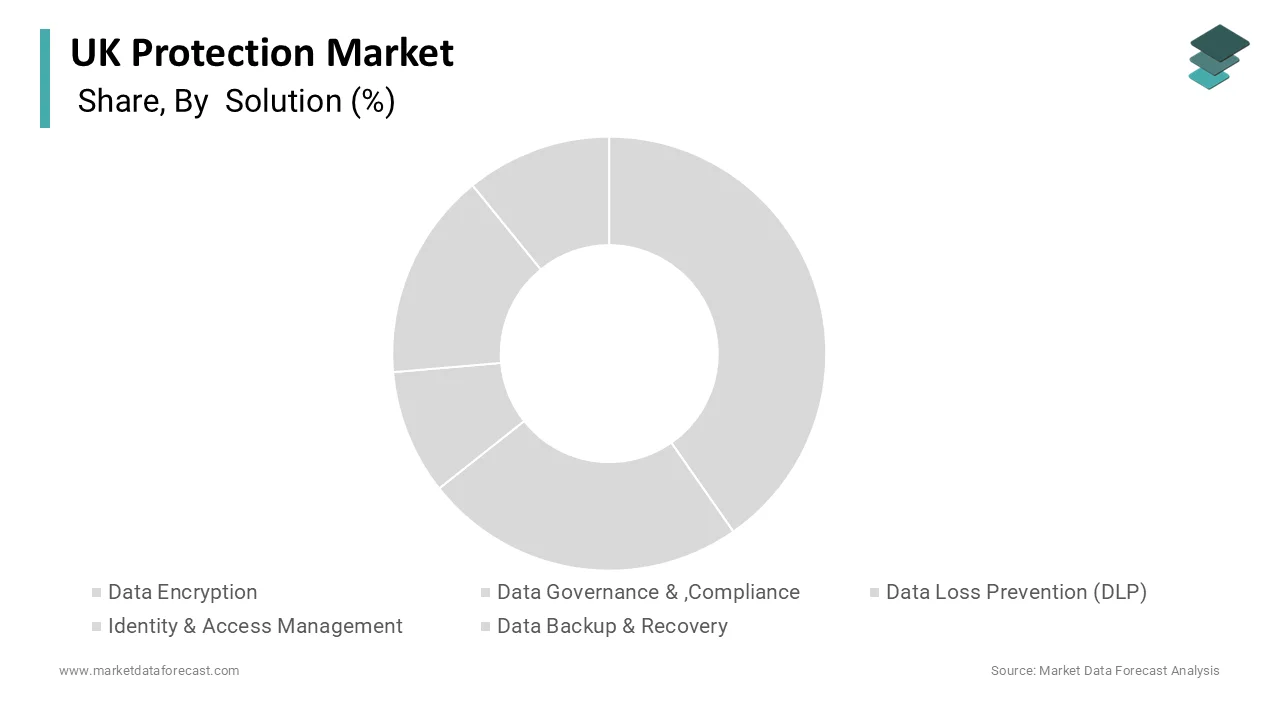
The data governance and compliance segment is likely to witness the fastest CAGR of 14.5% during the forecast period, with the increasing complexity of data post-quantum and the need for organizations to maintain control over their information assets in the long term. The integration of artificial intelligence and machine learning into governance tools enables automated policy enforcement and real time moreal-time. The need to track data lineage and ensure ethical use of data drives the adoption of comprehensive governance frameworks. Cross-border data transfer. Cross-bordered layers of complexity require sophisticated governance solutions. Companies are moving beyond basic compliance to view data governance as a strategic asset that enhances decision-making. This holistic approach addresses multiple pain points simultaneously, offering greater value to enterprises. The increasing scrutiny from regulators and consumers regarding data ethics further propels decision-making and governance structures.
By Deployment and Enterprise Type Insights
The cloud deployment segment held 42.3% of the United Kingdom protection market share in 2025 due to its scalability,y flexibility, and lower upfront costs compared to on-premises solutions. Organizations prefer cloud-based protection services because they eliminate the need for substantial capital investment in hardware and maintenance. This widespread adoption is driven by the on-premises scale resources up or down based on demand, ensuring optimal protection during peak periods. Cloud providers offer automatic updates and security patches,s reducing the burden on internal IT teams. The accessibility of cloud services from any location supports remote work arrangements, ts which have become standard in many industries. The reliability of major cloud providers ensures high availability and disaster recovery capabilities that are difficult to achieve with on-premises systems. Inton-premises other digital tools, such as identity management and analytics software, are seamless in cloud environments. This interoperability enhances overall business efficiency and data consistency. The pay-as-you-go pricing model aligns costs with usage, making it financially attractive for small and medium enterprises.
The small and mid-sized enterprises segment is deemed to grow at the fastest CAGR of 16.2% from 20 pay-as-you-go to the increasing recognition among SMEs that they are frequent targets for cyberattacks due to perceived weaker security defenses. Cloud-based security service for SMEs requires extensive IT expertise or infrastructure for enterprise-grade protection. Government initiatives, such as the Cyber Essentials scheme, encourage SMEs to adopt basic security measures, fostering a culture of protection. The availability of bundled security packages tailored for SMEs simplifies purchasing decisions and reduces complexity. Insurance providers also offer discounts for SMEs with robust protection measures linking security to financial benefits. The rise of remote work among smaller firms increases the attack surface, necessitating stronger endpoint protection. This combination of heightened risk awareness and accessible solutions drives rapid adoption.
By Industry Insights
The anbanking inancial Services and Insurance sector was the largest by holding 58.2% of the United Kingdom protection market share in 2025 due to the highly sensitive nature of financial data and strict regulatory requirements. Financial institutions handle vast amounts of personally identifiable information and transaction records,s making them prime targets for cyberattacks. The threat of financial fraud,ud money laundering, and data theft necessitates advanced encryption,n access control,ol and monitoring solutions. Regulatory bodies, such as the Pr,udential Regulation Authority, impose strict penalties for security failures, driving continuous investment. The digitization of banking services, including mobile apps and online trading platforms,rms expands the attack surface, requiring comprehensive protection. Real-time transaction monitoring and anomaly detection are essential for preventing fraud and maintaining customer trust. The sector also faces sophisticated threats from state-sponsored actors seeking to disrupt real-time stability.
The healthcare sector segment is deemed to grow at the fastest CAGR of 18.5% from 2026 to 2034, owing to the increasing digitization of patient records and the rising frequency of ransomware attacks on hospitals and clinics. The transition to electronic health records and telemedicine platforms has created vast amounts of positive data that require robust protection. The cyber-attacks on healthcare providers have doubled in recent years,s disrupting care services. The sensitivity of medical data, which includes detailed personal health information, makes it highly valuable to attackers. Regulatory requirements under the Data Protection Act 2018 mandate strict confidentiality and security for patient data. The integration of Internet of Things devices, such as pacemakers and insulin pumps, introduces new vulnerabilities that require specialized protection. The need to ensure continuity of care during cyber incidents drives investment in disaster recovery and backup solutions.
COMPETITIVE LANDSCAPE
The United Kingdom protection market features intense competition characterized by established incumbents and agile digital challengers vying for consumer trust and market presence. Major players have a competitive brand heritage and extensive adviser networks to maintain a strong position, while newer entrants differentiate through simplified online experiences and competitive pricing. The competitive landscape is shaped by the need to balance affordability with comprehensive coverage as economic pressures impact consumer spending. Insurers compete on service quality,y including speed of claims processing and clarity of policy ter, ms rather than price alone. Regulatory compliance with Financial Conduct Authority standards ensures fair treatment but adds operational complexity for all participants. Innovation in product design, such as modular cover and wellness integration services, serves as a key differentiator.
KEY MARKET PLAYERS
Some of the companies that are playing a dominating role in the U.K. Protection Market include
- Legal & General Group plc
- Aviva plc
- Royal London Mutual Insurance Society Limited
- Aegon UK plc
- Zurich Insurance Group Ltd.
- Scottish Widows Ltd.
- Vitality Life Limited
- LV= (Liverpool Victoria Financial Services Limited)
- The Exeter Friendly Society Limited
- HSBC Life (UK) Limited
- AIG Life Limited
- Guardian Financial Services Limited
TOP LEADING PLAYERS IN THE MARKET
- Legal and General operates as a leading provider of protection products in the United Kingdom, offering life insurance, critical illness cover, er and income protection to individuals and businesses. The company leverages its extensive distribution network through financial advisers and direct channels to reach a broad customer base. Legal and General recently invested heavily in digital underwriting tools to accelerate policy issuance and improve customer experience. The firm has expanded its workplace benefits portfolio,lio helping employers support staff wellbeing with tailored protection solutions. Their commitment to responsible business practices includes integrating environmental, social, and governance criteria into product design. This strategic emphasis on innovation and customer centricity reinforces their position as a trusted partner for financial security in the UK market.
- Aviva serves as a major insurer in the United Kingdom protection market,t providing comprehensive life and health coverage to millions of policyholders. The company utilizes its strong brand recognition and diverse product range to meet varying consumer needs across different demographics. Aviva recently launched enhanced digital platforms, allowing customers to manage policies and submit claims seamlessly via mobile applications. The insurer has strengthened its partnerships with healthcare providers to offer integrated wellness services alongside traditional protection covers. Aviva focuses on simplifying policy language to improve transparency and trust among consumers. Their investment in artificial intelligence supports faster claim processing and fraud detection.
- Scottish Widows is a prominent player in the United Kingdom protection market, known for its robust life insurance and pension-linked protection products. The company benefits from its long-standing reputation and backing by Lloyds Banking Group, which provides extensive distribution reach. Sc, ottish Widows recently updated its critical pension definitions to provide clearer coverage and better support for long-standing holders during health crises. The firm has introduced flexible income protection options catering to self-employed individuals and gig economy workers. Their focus on financial education helps customers understand the importance of adequate protection coverage. Scottish Widows employs advanced data modeling to refine strategies and manage risk effectively.
TOP STRATEGIES USED BY KEY MARKET PARTICIPANTS
Key players in the United Kingdom protection market employ digital transformation as a primary strategy to enhance customer experience and operational efficiency. Companies invest in automated underwriting systems and mobile applications that allow policyholders to purchase and manage coverage seamlessly. This technological integration reduces administrative costs and accelerates policy issuance significantly. Insurers also leverage data analytics to personalize premiums based on individual lifestyle factors and health metrics. Strategic partnerships with healthcare providers enable the inclusion of wellness programs, which promote preventive care and reduce long-term claims. Product simplification remains central with firms rewriting policy documents in plain language to build trust and clarity. Distribution channels are diverse, defined through collaborations with fintech long-term and employer benefit schemes. Customer retention strategies focus on proactive engagement and regular policy reviews to ensure coverage remains relevant.
MARKET SEGMENTATION
This research report on the UK protection market is segmented and sub-segmented into the following categories.
By Solution
- Data Encryption
- Data Governance & ,Compliance
- Data Loss Prevention (DLP)
- Identity & Access Management
- Data Backup & Recovery
- Others
By Deployment
- Cloud
- On-Premises
By Industry
- Banking, Financial Services & Insurance (BFSI)
- Healthcare
- Government & Public Sector
- IT & Telecommunications
- Retail & E-Commerce
- Manufacturing
- Others
By Country
- United Kingdom
Related Reports
Access the study in MULTIPLE FORMATS
Purchase options starting from
$ 1200
Didn’t find what you’re looking for?
TALK TO OUR ANALYST TEAM
Need something within your budget?
NO WORRIES! WE GOT YOU COVERED!
Call us on: +1 888 702 9696 (U.S Toll Free)
Write to us: sales@marketdataforecast.com