- Product Description Description
- Table of Contents TOC
- List of Table & Figure LOT
- Get Free Sample PDF Sample PDF
Market Size, 2025
$828.48Market Estimate, 2026
$907.18Market Forecast, 2034
$1,875.03CAGR, 2026–2034
9.5%UK Smoothies Market Size, Growth, Trends & Forecast (2026–2034)
The UK smoothies market size is projected to grow from USD 828.48 million in 2025, reach USD 907.18 million in 2026, and climb to USD 1,875.03 million by 2034, registering a compound annual growth rate (CAGR) of 9.5% during the forecast period from 2026 to 2034. Driven by a cultural shift toward wellness, preventive healthcare, busy urban lifestyles, and convenient on-the-go nutrition solutions, the market continues to expand rapidly across retail and foodservice channels.
Key Executive Metrics (At-a-Glance)
- 2025 Base Valuation: USD 828.48 Million
- 2026 Current Valuation: USD 907.18 Million
- 2034 Forecast Valuation: USD 1,875.03 Million
- Compound Annual Growth Rate (CAGR): 9.5% (2026–2034)
- Dominant Type Segment: Fruit-Based Smoothies (accounting for a 59.5% share in 2025, driven by natural sweetness and familiar profiles)
- Fastest-Growing Type Segment: Vegetable-Based Smoothies (projected at a CAGR of 8.5%, fueled by detox trends and lower glycemic impact)
- Dominant Form Segment: Ready-to-Drink (holding a 43.5% share in 2025 due to unmatched convenience and accessibility)
- Fastest-Growing Form Segment: Fresh Smoothies (expected to register a CAGR of 9.2% from 2026 to 2034, driven by premium quality and custom preparation)
- Dominant Distribution Channel: Supermarkets and Hypermarkets (holding a 54.5% majority share in 2025 due to extensive reach and one-stop shopping)
- Fastest-Growing Distribution Channel: Online Retail (forecasted at a CAGR of 12.5% via e-commerce adoption and subscription home delivery)
- Dominant Region: England (occupying an 85.6% share in 2025, anchored by dense urban centers like London, high disposable incomes, and health-conscious demographics)
Core Market Drivers
- Health Consciousness & Preventive Care: Growing awareness of diet-related well-being and public health campaigns encouraging fruit and vegetable intake to bridge the "5 A Day" gap.
- Urbanization & Busy Lifestyles: Time-constrained commuters and professionals seeking portable, nutrient-dense, ready-to-drink options that require zero preparation.
Primary Market Restraints & Challenges
- High Sugar Content Perceptions: Scrutiny over natural fruit sugars exceeding recommended free sugar limits, prompting consumer shifts toward low-sugar and homemade options.
- Supply Chain Volatility: Climate change disruptions, extreme weather, and geopolitical tensions driving up costs for imported core fruits like bananas, berries, and mangoes.
UK Smoothies Market Segmentation Breakdown
| Segment Category | Leading Sub-Segment (Base Year) | Fastest-Growing Sub-Segment (2026–2034) |
|---|---|---|
| By Type | Fruit-Based Smoothies (59.5% share in 2025, valued for natural sweetness and universal appeal) | Vegetable-Based Smoothies (8.5% CAGR, fueled by leafy green demand and low glycemic benefits) |
| By Form | Ready-to-Drink (43.5% share in 2025, favored for immediate consumption and extended shelf life) | Fresh Smoothies (9.2% CAGR, driven by made-to-order customization and whole-food freshness) |
| By Distribution Channel | Supermarkets & Hypermarkets (54.5% share in 2025 due to broad provisioning and strong retail footprints) | Online Retail (12.5% CAGR, accelerated by subscription models, e-commerce, and direct delivery) |
| By Region / Country | England (85.6% share in 2025, anchored by population density, London, and active fitness cultures) | Urban Centers across England (driven by commuter hubs, student populations, and juice bar adoption) |
Major Industry Players Profiled
Key enterprises shaping the competitive United Kingdom smoothies market include Innocent Drinks Ltd., PepsiCo, Inc. (Naked Juice / Tropicana), The Coca-Cola Company (Innocent Drinks), Boost Juice Bars, Pret A Manger Ltd., MOMA Foods Ltd., Tropical Smoothie Café, Moju Ltd., Savsé Smoothies Ltd., Pip Organic Ltd., Jamba Juice Company, and The Juice Executive Ltd.
 Download Free Sample Report
UK Smoothies Market Size
The UK Smoothies Market is projected to grow from USD 828.48 million in 2025 to USD 907.18 million in 2026 and reach USD 1,875.03 million by 2034, registering a CAGR of 9.5% during the forecast period from 2026 to 2034.
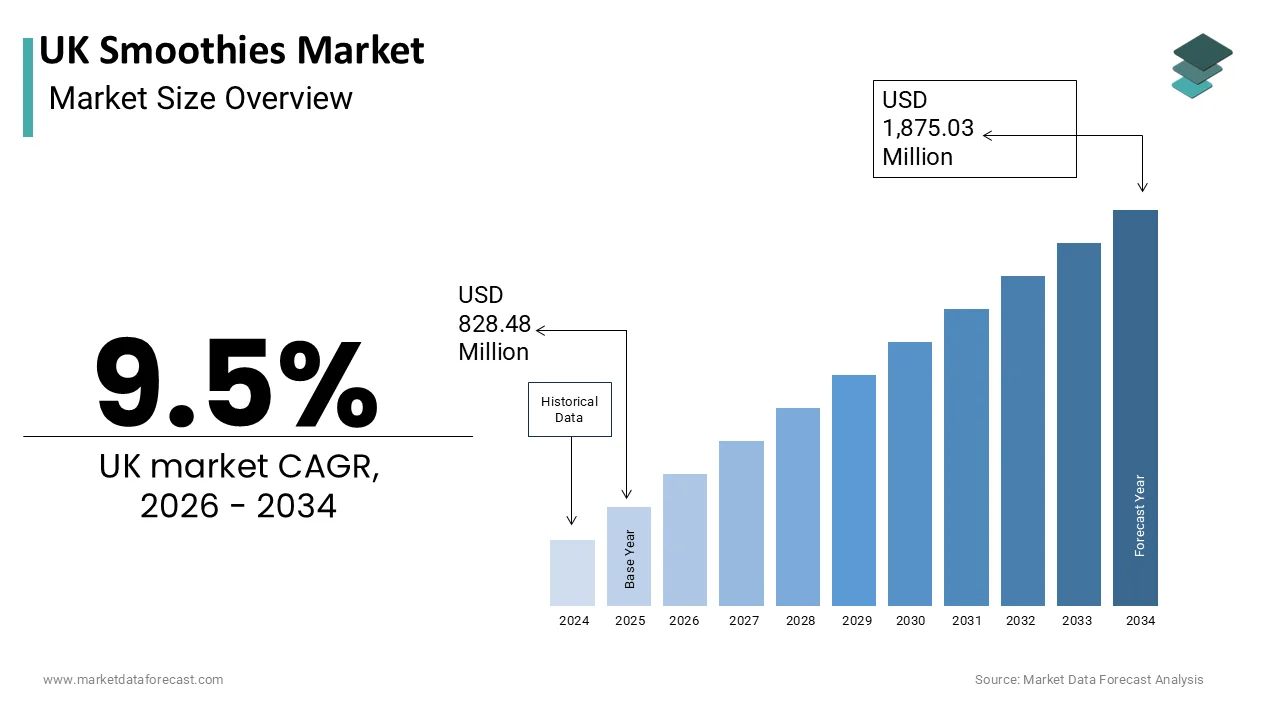
A smoothie is a thick, creamy beverage made by blending puréed fruits or vegetables with a liquid base like milk, yogurt, or juice. This market has evolved from a niche offering into a mainstream staple found in supermarkets, convenience stores, and dedicated juice bars across the nation. The cultural shift towards wellness and preventive healthcare has significantly influenced consumer preferences, driving demand for natural and minimally processed beverages. According to official data from the UK's National Diet and Nutrition Survey (NDNS), fruit and vegetable consumption is much lower than stated; less than one in five adults (17%) actually meet the government's "5 A Day" recommendation. Even when relying on broader self-reported daily surveys, the percentage of adults meeting the threshold hovers between 26% and 33%. The rise of urbanization and busy lifestyles has further cemented the role of smoothies as an on-the-go solution for individuals who prioritize health but lack time for meal preparation. According to sources, consumer interest in functional beverages has grown substantially, with many shoppers actively seeking drinks that offer additional benefits such as immune support or energy enhancement. The market is also shaped by increasing awareness of sugar content, leading to innovations in low-sugar and plant-based formulations. Retailers have responded by expanding their fresh and chilled sections to accommodate this growing category, reflecting its integration into everyday shopping routines. The competitive landscape features both established brands and emerging startups,s each vying for shelf space and consumer loyalty through unique flavor profiles and sustainable packaging initiatives.
MARKET DRIVERS
Rising Health Consciousness And Preventive Healthcare Trends Drive Demand
The escalating focus on personal health and preventive care drives the growth of the United Kingdom smoothies market. Consumers are increasingly aware of the link between diet and long-term well-being, prompting them to choose beverages that offer nutritional value beyond mere hydration. According to the British Heart Foundation, heart disease remains one of the leading causes of death in the United Kingdom, which has spurred public health campaigns encouraging higher fruit and vegetable intake. This societal push has translated into commercial success for smoothie brands that position their products as easy ways to meet daily nutritional recommendations. Data from the National Health Service indicates that only 28 percent of adults in England consume the recommended five portions of fruits and vegetables per day, creating a significant gap that smoothies aim to fill. The convenience factor cannot be overstated, as modern consumers often struggle to prepare fresh produce due to time constraints. Smoothies provide a ready-to-drink alternative that retains much of the fiber and vitamins found in whole fruits. Furthermore, the trend towards clean label products has benefited this sector as shoppers scrutinize ingredient lists for artificial additives. Brands that emphasize organic sourcing and non-GMO ingredients resonate strongly with this health-oriented demographic. The proliferation of fitness culture and gym memberships across the United Kingdom also contributes to this driver, as post-workout nutrition becomes a priority for millions of active individuals seeking quick recovery options.
Urbanization And Busy Lifestyles Fuel Convenience Seeking Behavior
The rapid pace of urban life in the country has created a robust demand for convenient food and beverage solutions, which boosts the expansion of the United Kingdom's smoothies market. This makes smoothies an ideal choice for time-poor consumers. As more people migrate to cities for employment opportunities, the amount of time available for meal preparation has diminished significantly. According to the Office for National Statistics,s the average working week in the United Kingdom stands at approximately 37 hours, leaving a limited window for cooking from scratch. This temporal pressure has led to a surge in the consumption of on-the-go meals and drinks that require no preparation effort. Smoothies fit seamlessly into this lifestyle as they are portable, easy to consume, and do not require utensils. The expansion of the commuter culture in major cities like London M, Manchester, and Birmingham has further amplified this trend, with train stations and business districts hosting numerous outlets selling fresh blends. Data from the Department for Transport shows that over 1 million people commute into central London daily, many of whom purchase breakfast or snack items during their journey. Retailers have capitalized on this by placing smoothie counters in high-traffic areas, ensuring visibility and accessibility. Additionally, with the rise of remote work, this demand has not diminished; home-based professionals still seek quick and healthy options that do not disrupt their workflow. The integration of delivery apps has also made it easier for consumers to order smoothies directly to their homes or offices, reinforcing the convenience narrative that drives market penetration.
MARKET RESTRAINTS
High Sugar Content Perception Deters Health-Focused Consumers
The perception of high sugar content is a limiting factor among discerning consumers, which restricts the growth of the United Kingdom smoothies market. This is despite the health halo associated with smoothies. Many commercially available smoothies contain substantial amounts of natural sugars from fruits, which can exceed the daily recommended limits set by health authorities. According to Public Health England,d adults should consume no more than 30 grams of free sugars per day, ay yet some popular smoothie variants contain up to 40 grams per serving. This discrepancy has led to increased scrutiny from nutritionists and health advocates who warn against the potential risks of excessive sugar intake, ake including weight gain and dental issues. The Scientific Advisory Committee on Nutrition has emphasized the need for clearer labeling to help consumers make informed choices about their sugar consumption. As awareness spreads,eads a segment of the population is becoming cautious about purchasing pre-packaged smoothies, opting instead for whole fruits or homemade alternatives where they can control the ingredients. This shift is particularly evident among parents who are mindful of their children's sugar intake and prefer to avoid products that may contribute to childhood obesity. The National Child Measurement Programme reveals that nearly 10 percent of children in England are obese by the time they start primary school, prompting stricter dietary guidelines at home. Consequently, brands face the challenge of reformulating their products to reduce sugar without compromising taste, which often requires costly research and development investments. Failure to address this concern can result in loss of trust and market share to competitors who successfully launch low-sugar or unsweetened versions.
Supply Chain Volatility And Ingredient Cost Fluctuations Impact Profitability
Supply chain bottlenecks and surging prices for core ingredients like fruits and vegetables are putting heavy pressure on the UK smoothie market. Since many smoothie recipes rely on imported produce like bananas, mangoes, and berries, the sector is vulnerable to global agricultural disruptions and trade barriers. Recent geopolitical tensions and climate change-induced weather events have exacerbated these challenges, leading to unpredictable harvest yields and increased transportation costs. For instance, the extreme weather conditions in Southern Europe and South America have periodically reduced the availability of premium berries and tropical fruits, ts forcing manufacturers to seek alternative suppliers at higher prices. These cost increases are often passed on to consumers, resulting in higher retail prices that may dampen demand among price-sensitive shoppers. The British Retail Consortium has noted that food inflation has remained elevated in recent years, affecting consumer spending patterns and forcing households to prioritize essential items over premium beverages. Additionally, the perishable nature of fresh produce requires efficient cold chain logistics, which adds to operational expenses. Any disruption in this chain can lead to spoilage and waste,e further eroding profit margins. Companies must therefore invest in robust supply chain management systems and diversify their sourcing strategies to mitigate these risks, but such measures require significant capital expenditure that smaller players may find prohibitive.
MARKET OPPORTUNITIES
Expansion Into Functional and Fortified Beverage Segments Presents Growth Avenues
The integration of functional ingredients into smoothies offers a substantial opportunity for the expansion of the United Kingdom smoothies market. This appeals to consumers seeking specific health benefits beyond basic nutrition. As the line between food and medicine blurs, there is growing interest in beverages that support immunity,y digestion, and mental clarity. Smoothie manufacturers can capitalize on this trend by incorporating superfoods such as spirulina, chia seeds, turmeric, and probiotics into their formulations. These additions transform ordinary smoothies into targeted wellness solutions that command premium pricing and foster brand loyalty. The aging population in the United Kingdom also presents a lucrative demographic as older adults seek products that support joint health and cognitive function. Data from the Office for National Statistics indicates that the number of people aged 65 and over is projected to reach 16 million by 2040, creating a sustained demand for health-supportive foods and drinks. Furthermore, the rise of personalized nutrition allows brands to offer customized smoothie blends tailored to individual dietary needs and health goals. Digital platforms and mobile apps can facilitate this customization, enabling consumers to select ingredients based on their specific requirements. Collaborations with healthcare professionals and nutritionists can further enhance credibility and drive adoption among health-conscious segments. Companies can differentiate themselves in a crowded market by positioning smoothies as functional tools for well-being. Consequently, they can tap into the growing willingness of consumers to pay extra for added health benefits.
Sustainability and Eco-Friendly Packaging Innovations Attract Ethical Consumers
The increasing consumer demand for sustainable practices provides an opening for brands to enhance their appeal through eco-friendly packaging and ethical sourcing initiatives, which is likely to accelerate the expansion of the United Kingdom smoothies market. Environmental consciousness is now a key purchasing criterion for many shoppers in the United Kingdom who prefer brands that demonstrate commitment to reducing plastic waste and carbon footprints. According to Wrap, a leading sustainability charity,y approximately 70 percent of UK consumers consider environmental impact when making purchasing decisions. Smoothie companies can leverage this sentiment by adopting biodegradable bottles, recyclable materials, or refillable container systems. Some innovative startups have already introduced paper-based packaging and plant-derived caps, which resonate strongly with environmentally aware demographics. Additionally, sourcing ingredients from local farms reduces transportation emissions and supports the rural economy, aligning with the buy local movement. The Soil Association reports that sales of organic products in the United Kingdom have grown steadily as consumers seek transparency and ethical production methods. Brands that obtain certifications such as Fair Trade or Rainforest Alliance can further distinguish themselves and build trust with conscientious buyers. Corporate social responsibility initiatives, such as partnering with environmental NGOs or contributing to reforestation projects, can also enhance brand image and foster emotional connections with customers. As regulatory pressures mount regarding single-use plastics, early adopters of sustainable packaging will gain a competitive advantage and avoid potential fines or restrictions. This strategic focus on sustainability not only meets consumer expectations but also future-proofs the business against evolving environmental regulations.
MARKET CHALLENGES
Intense Competition From Private Label And Homemade Alternatives Challenges Market Share
Fierce competition from private label brands further challenges the growth of the United Kingdom smoothies market. These supermarket chain offerings often undercut branded products on price. Retailers such as Tesco, Sainsbury's, and Asda have developed their own ranges of smoothies that mimic the quality and flavor profiles of established brands while offering lower prices. This trend poses a significant challenge for branded manufacturers who must justify their premium pricing through superior quality or unique value propositions. Additionally, the popularity of home blending has risen as consumers invest in high-performance blenders and purchase fresh fruits to create customized drinks at home. A study indicates that sales of kitchen appliances, including blenders, have remained robust, suggesting that many households prefer the control and freshness of homemade smoothies. This DIY approach allows individuals to avoid preservatives and tailor sweetness levels to their preference, further eroding the customer base for ready-to-drink options. Branded companies must therefore innovate continuously to stay relevant by introducing exclusive flavors, limited edition releases, or bundled offers that provide convenience and variety that home preparation cannot easily match. Failure to differentiate effectively can result in margin compression and loss of shelf space as retailers prioritize their own higher-margin private-label offerings.
Regulatory Scrutiny On Health Claims And Labeling Requirements Increases Compliance Burden
Navigating the complex regulatory landscape surrounding health claims and labeling requirements is a persistent challenge for manufacturers in the United Kingdom, which slows down the expansion of the United Kingdom's smoothies market. Authorities such as the Food Standards Agency enforce strict guidelines on what constitutes a valid health claim to prevent misleading consumers. According to the European Food Safety Authority, which continues to influence UK standards post Brexit, only scientifically substantiated claims can be used on packaging. This restriction limits the ability of brands to market their products as having specific health benefits unless they undergo rigorous and costly approval processes. Missteps in labeling can lead to legal penalties, recalls, and reputational damage, which can be devastating for smaller companies. Additionally, the introduction of front-of-pack traffic light labeling systems requires clear disclosure of sugar, fat,t and salt content, ent which may discourage some consumers if their products receive unfavorable ratings. The Department of Health and Social Care has been proactive in promoting healthier eating habits, leading to increased scrutiny of beverages with high sugar content. Companies must invest in legal and regulatory expertise to ensure compliance,ce which adds to operational costs. Furthermore, more evolving regulations regarding environmental claims mean that brands must be careful not to engage in greenwashing when promoting sustainable packaging. Keeping abreast of these changing rules requires constant monitoring and adaptation, which can divert resources from product development and marketing efforts. Non-compliance risks not only financial losses but also erosion of consumer trust, which is difficult to rebuild once lost.
REPORT COVERAGE
| REPORT METRIC | DETAILS |
| Market Size Available | 2025 to 2034 |
| Base Year | 2025 |
| Forecast Period | 2026 to 2034 |
| Segments Covered | By Type, Form, Distribution Channel, and Region |
| Various Analyses Covered | Global, Regional and Country-Level Analysis, Segment-Level Analysis, Drivers, Restraints, Opportunities, Challenges; PESTLE Analysis; Porter’s Five Forces Analysis, Competitive Landscape, Analyst Overview of Investment Opportunities |
| Countries Covered | United Kingdom |
| Market Leaders Profiled | Innocent Drinks Ltd., PepsiCo, Inc. (Naked Juice), The Coca-Cola Company (Innocent Drinks), Boost Juice Bars, Pret A Manger Ltd., MOMA Foods Ltd., Tropical Smoothie Café, Moju Ltd., Savsé Smoothies Ltd., Pip Organic Ltd., Jamba Juice Company, The Juice Executive Ltd. |
SEGMENTAL ANALYSIS
By Type Insights
The fruit-based smoothies segment dominated the United Kingdom market and accounted for a 59.5% share in 2025. This dominance of the segment was driven by widespread consumer preference for natural sweetness and familiar flavor profiles. The dominance of this segment is also supported by the universal appeal of fruits such as bananas, strawberries,s and mangoes, es which serve as accessible entry points for health-conscious consumers. This preference is reinforced by the perception that fruit-based drinks provide essential vitamins and antioxidants without the earthy taste often associated with vegetable blends. The availability of diverse tropical and berry variants allows brands to cater to varied palates while maintaining a consistent health narrative. Retailers support this dominance by allocating prime shelf space to fruit-centric products, ensuring high visibility and impulse purchases. Furthermore, the versatility of fruit bases enables easy integration with other functional ingredients like protein powders or seeds without compromising taste. This adaptability ensures that fruit-based smoothies remain relevant across different consumer segments, from children to athletes. The established supply chains for common fruits also contribute to stable pricing and consistent quality,y making them a reliable choice for both manufacturers and shoppers. As a result,fruit-based smoothies continue to command the majority of sales volume and revenue in the sector.

The vegetable-based smoothies segment is anticipated to witness the fastest CAGR of 8.5% over the forecast period. This rapid expansion of the segment is fueled by increasing consumer awareness of the benefits of leafy greens and root vegetables for detoxification and sustained energy levels. Health enthusiasts are increasingly seeking alternatives to high sugar fruit drinks l, leading them to explore vegetable blends that offer lower glycemic impact. The influence of social media and wellness influencers has played a pivotal role in normalizing the consumption of green smoothies among younger demographics. Manufacturers are responding by creating palatable combinations that mask the strong taste of vegetables using small amounts of apple or pineapple for balance. The trend towards plant-based diets further accelerates this growth as consumers look for ways to increase their vegetable intake conveniently. Additionally, advancements in cold-press technology help retain the nutritional integrity of vegetables, making these smoothies more appealing to health purists. Vegetable-based smoothies are poised to capture a larger share of the health beverage market. This growth is driven by spreading education about the benefits of phytonutrients.
By Form Insights
The ready-to-drink smoothies segment led the United Kingdom market and captured a 43.5% share in 2025. Unparalleled convenience and accessibility make ready-to-drink smoothies ideal for busy consumers. This form appeals to individuals who seek immediate nutrition without the time commitment of preparation or cleaning. The proliferation of these products in convenience stores, petrol stations, and vending machines ensures they are available at critical moments of need, such as during commutes or work breaks. Major retailers have expanded their chilled aisles to accommodate a wide variety of ready-to-drink options, ranging from single-serve bottles to multi-pack bundles. Research notes that the grab-and-go segment has seen consistent growth as urban lifestyles become increasingly fast-paced. Consumers value the consistency in taste and portion control that packaged, ready-to-drink smoothies offer compared to homemade versions. Furthermore, improvements in preservation technologies, such as high-pressure processing, allow brands to extend shelf life while maintaining fresh qualities and nutritional value. This technological advancement has reduced waste and improved distribution efefficiencynabla ing wider geographic reach. The trust in established brands for safety and quality also drives preference for this form over uncertain homemade alternatives. Thus, ready-to-drink smoothies remain the cornerstone of the market, catering to the core demand for effortless health solutions.
The fresh smoothies segment is likely to experience the fastest CAGR of 9.2% from 2026 to 2034, owing to the demand for premium quality and customization. Consumers are increasingly willing to pay a premium for beverages made from whole fruits and vegetables in front of them, ensuring maximum freshness and nutrient retention. This segment thrives in high footfall areas such as shopping malls, YMS, and business districts where customers seek immediate gratification and personalized service. The ability to customize ingredients allows consumers to tailor their drinks to specific dietary needs or taste preferences e, enhancing the overall experience. The rise of health-focused cafes and wellness hubs has further normalized the consumption of fresh blends as part of a holistic lifestyle. Additionally, the visual appeal of fresh preparation serves as a marketing tool attracting passersby and encouraging trial. As consumers become more discerning about ingredient sourcing and processing methods, DS Fresh smoothies offer a level of authenticity that packaged forms cannot match. This emotional connection to freshness and craftsmanship drives loyalty and repeat visits, fueling the rapid expansion of this segment.
By Distribution Channel Insights
In 2025, the supermarkets and hypermarkets segment held a majority share of 54.5% of the United Kingdom smoothies market because of its extensive reach and one-stop shopping convenience. These retail giants offer a comprehensive selection of smoothie brands and forms, allowing consumers to compare prices and flavors easily. The strategic placement of smoothies in chilled sections near fresh produce and dairy products enhances visibility and encourages impulse buys during regular grocery trips. Major chains like Tesco, Sainsbury's,s and Asda have invested heavily in expanding their healthy eating ranges, including private label smoothies that compete directly with branded counterparts. Loyalty programs and promotional offers further drive traffic and volume sales within this channel. Consumers appreciate the ability to purchase smoothies alongside other weekly essentials, saving time and effort. The economies of scale enjoyed by large retailers enable competitive pricing,g which attracts price-sensitive shoppers. Additionally, the trust associated with established supermarket brands assures customers of product safety and quality standards. Supermarkets and hypermarkets continue to dominate the distribution landscape for smoothies as the primary destination for household provisioning. This ensures consistent volume and market presence.
The online retail segment is on the rise and is expected to be the fastest-growing segment in the market by witnessing a CAGR of 12.5% over the forecast period due to digital adoption and home delivery convenience. The shift towards e-commerce has been accelerated by changing consumer habits and the availability of subscription services for regular deliveries. Smoothie brands have leveraged this trend by partnering with major platforms like Amazon and specialized grocery delivery services to reach customers directly. The ability to browse a wider variety of niche and premium brands online appeals to discerning consumers who may not find these options in local stores. Subscription models offer added value through discounts and automatic replenishment, fostering customer loyalty and predictable revenue streams for brands. Social media marketing and influencer collaborations drive traffic to online stores where detailed product information and reviews aid purchasing decisions. The integration of cold chain logistics has ensured that fresh and frozen smoothies arrive in optimal condition, addressing previous concerns about quality. Digital infrastructure is improving, ing and consumer confidence in online food shopping is growing. Consequently, this channel will continue to expand rapidly, capturing a larger share of the market.
COUNTRY LEVEL ANALYSIS
UK Smoothies Market Analysis
England was the top performer in the United Kingdom smoothies market and occupied an 85.6% share in 2025. This is largely due to its large population and high urbanization rate. The concentration of major cities such as London, Manchester, and Birmingham creates dense markets with high disposable incomes and health-conscious demographics. According to the Office for National Statistics, England and Wales have a combined population exceeding 61.8 million, with England alone containing the vast majority of those residents, making it a highly concentrated customer base. The vibrant food culture in London particularly drives innovation and adoption of new trends, with numerous juice bars and health cafes setting the pace for the rest of the country. The presence of headquarters for major retailers and beverage companies in England facilitates efficient distribution and marketing campaigns. Historical campaigns run by Public Health England actively promoted the 5-a-day dietary target, creating a general cultural shift toward health-conscious consumer behavior that benefits fruit and vegetable-based products. The high density of gyms and fitness centers in urban areas further stimulates demand for post-workout nutrition options. Additionally, the diverse multicultural population in England contributes to a wide acceptance of various flavor profiles, including tropical and exotic blends. The robust infrastructure supports both retail and foodservice channels, ensuring widespread availability. As the economic engine of the UK, Egland continues to lead in both volume and value terms, setting trends that other regions follow. The continuous influx of young professionals and students in university towns also sustains demand for convenient and healthy beverage options.
COMPETITIVE LANDSCAPE
The competition in the United Kingdom smoothies market is intense and characterized by a mix of established multinational corporations and agile local brands vying for consumer attention. Major players leverage their extensive distribution networks and marketing budgets to dominate shelf space in supermarkets and convenience stores,s while smaller niche brands focus on premium positioning and unique value propositions. The market sees frequent product launches as companies strive to innovate with new flavors, rs functional benefits, and sustainable packaging solutions to differentiate themselves. Price competition is significant, particularly between private label offerings from major retailers and branded products, forcing companies to balance quality with affordability. Consumer loyalty is increasingly driven by brand ethics, transparency, and alignment with health and wellness trends rather than just taste. In the digital market, indirect-to-consumer channels have become critical battlegrounds where brands engage directly with shoppers to build communities and foster repeat purchases. The entry of new startups focusing on specific dietary needs, such as keto or vegan, further fragments the market, requiring incumbent players to remain agile and responsive to emerging trends to maintain their competitive edge.
KEY MARKET PLAYERS
Some of the companies that are playing a dominating role in the U.K. Smoothies Market include
- Innocent Drinks Ltd.
- PepsiCo, Inc. (Naked Juice)
- The Coca-Cola Company (Innocent Drinks)
- Boost Juice Bars
- Pret A Manger Ltd.
- MOMA Foods Ltd.
- Tropical Smoothie Café
- Moju Ltd.
- Savsé Smoothies Ltd.
- Pip Organic Ltd.
- Jamba Juice Company
- The Juice Executive Ltd.
TOP LEADING PLAYERS IN THE MARKET
- Innocent Drinks stands as a pioneering force in the United Kingdom smoothies sector r, renowned for its playful branding and commitment to natural ingredients. The company has consistently innovated by introducing new flavor combinations and expanding into plant-based alternatives to meet evolving consumer preferences. Recently, Innocent has strengthened its market position by enhancing its sustainability initiative, including the use of recycled plastic bottles and carbon-neutral production methods. The brand actively engages with customers through community events and digital campaigns that promote healthy living and environmental responsibility. Its widespread availability in major supermarkets and convenience stores ensures high visibility and accessibility for shoppers across the nation. Innocent continues to invest in research and development to create products that align with clean label trends while maintaining the taste quality that loyal customers expect from the brand.
- PepsiCo International leverages its extensive global resources and distribution network to maintain a strong presence in the United Kingdom smoothies market through brands like Tropicana. The company focuses on portfolio diversification by offering a range of juice blends and smoothie options that cater to different taste preferences and health goals. Recent actions include reformulating products to reduce sugar content and introducing functional beverages with added vitamins and minerals. PepsiCo utilizes its robust supply chain capabilities to ensure consistent product availability and competitive pricing across retail channels. The company also invests heavily in marketing campaigns that highlight the nutritional benefits of its offerings. PepsiCo collaborates with retailers on promotional activities and shelf placement strategies. As a result, the company strengthens its brand visibility and drives consumer engagement in a highly competitive landscape.
- The Coca-Cola Company competes vigorously in the United Kingdom smoothies market with its Minute Maid and other premium juice brands. The corporation emphasizes innovation by launching limited-edition flavors and organic variants that appeal to health-conscious consumers. Recent strategic moves include upgrading packaging to be more environmentally friendly and investing in cold chain logistics to preserve freshness. The company leverages its powerful brand recognition and extensive retail partnerships to secure prominent shelf space in supermarkets and convenience stores. Coca-Cola also focuses on digital marketing efforts to connect with younger demographics through social media platforms and influencer collaborations. The Coca-Cola Company maintains its relevance and appeal in the dynamic beverage sector. It achieves this by continuously adapting its product lineup to reflect current wellness trends like immunity support and energy enhancement.
TOP STRATEGIES USED BY KEY MARKET PARTICIPANTS
Key players in the United Kingdom smoothies market employ several strategic approaches to maintain competitiveness and drive growth. Product innovation remains central as companies introduce new flavors, functional ingredients, and low-sugar formulations to meet changing consumer demands. Sustainability initiatives are increasingly prioritized with brands adopting recyclable packaging and ethical sourcing practices to appeal to environmentally conscious shoppers. Strategic partnerships with retailers ensure optimal shelf placement and visibility,y while collaborative marketing campaigns enhance brand awareness. Digital engagement through social media and e-commerce platforms allows companies to reach broader audiences and gather valuable consumer insights. Expansion into niche segments such as plant-based and organic smoothies helps brands differentiate themselves in a crowded marketplace. Continuous investment in supply chain efficiency ensures product quality and availability, while cost management strategies help maintain competitive pricing structures in response to inflationary pressures.
MARKET SEGMENTATION
This research report on the UK smoothies market is segmented and sub-segmented as follows.
By Type
- Fruit-Based Smoothies
- Vegetable-Based Smoothies
By Form
- Ready-to-Drink Smoothies
- Fresh Smoothies
By Distribution Channel
- Supermarkets & Hypermarkets
- Online Retail
By Country
- United Kingdom