- Product Description Description
- Table of Contents TOC
- List of Table & Figure LOT
- Get Free Sample PDF Sample PDF
Market Size, 2025
$5.49 BnMarket Estimate, 2026
$5.73 BnMarket Forecast, 2034
$8.06 BnCAGR, 2026–2034
4.36%Europe Smoothies Market Summary
The European smoothies market was calculated to be USD 5.49 billion in 2025 and is anticipated to be worth USD 8.06 billion by 2034, from USD 5.73 billion in 2026, growing at a CAGR of 4.36% during the forecast period. The growth of the European smoothies market is driven by rising health consciousness, increasing preference for functional beverages, and the demand for convenient, ready-to-drink options. Innovation in flavors, plant-based offerings, and clean-label products is further boosting market adoption across the region.
Key Market Trends
- The growing popularity of fruit-based smoothies as natural and healthy drink alternatives.
- Rising demand for plant-based and dairy-free smoothies.
- Expansion of functional smoothies fortified with proteins, vitamins, and probiotics.
- Increasing penetration of supermarkets, hypermarkets, and online retail channels.
- Shift toward eco-friendly packaging and sustainable sourcing.
Segmental Insights
- Based on product, the fruit-based smoothies segment dominated with 58.6% share in 2025, reflecting consumer demand for natural and nutrient-rich beverages.
- Based on distribution channel, the supermarkets and hypermarkets segment held 42.4% of the market in 2025, supported by wide product availability and consumer accessibility.
- Based on packaging material, the plastic packaging segment accounted for a 56.4% share in 2025, owing to cost-effectiveness and convenience in distribution.
Regional Insights
- The United Kingdom led the European smoothies market with 18.6% share in 2025, driven by strong consumer demand for healthy and premium beverage options.
- Germany and France are witnessing steady growth, supported by increasing demand for functional and organic smoothies.
- Southern and Eastern Europe are emerging markets, benefiting from rising health awareness and expanding retail distribution networks.
Competitive Landscape
Key players in the European smoothies market include Innocent Drinks, Smoothie Factory, Danone, PepsiCo Inc., Nestlé S.A., Provamel, Happy Monkey Drinks, Plenish, Savsé, and Rabenhorst. These companies are focusing on new flavor launches, plant-based product innovation, and expanding retail partnerships to strengthen their market presence across Europe.
 Download Free Sample Report
Europe Smoothies Market Size
The Europe Smoothies Market size was calculated to be USD 5.49 billion in 2025 and is anticipated to be worth USD 8.06 billion by 2034, from USD 5.73 billion in 2026, growing at a CAGR of 4.36% during the forecast period.
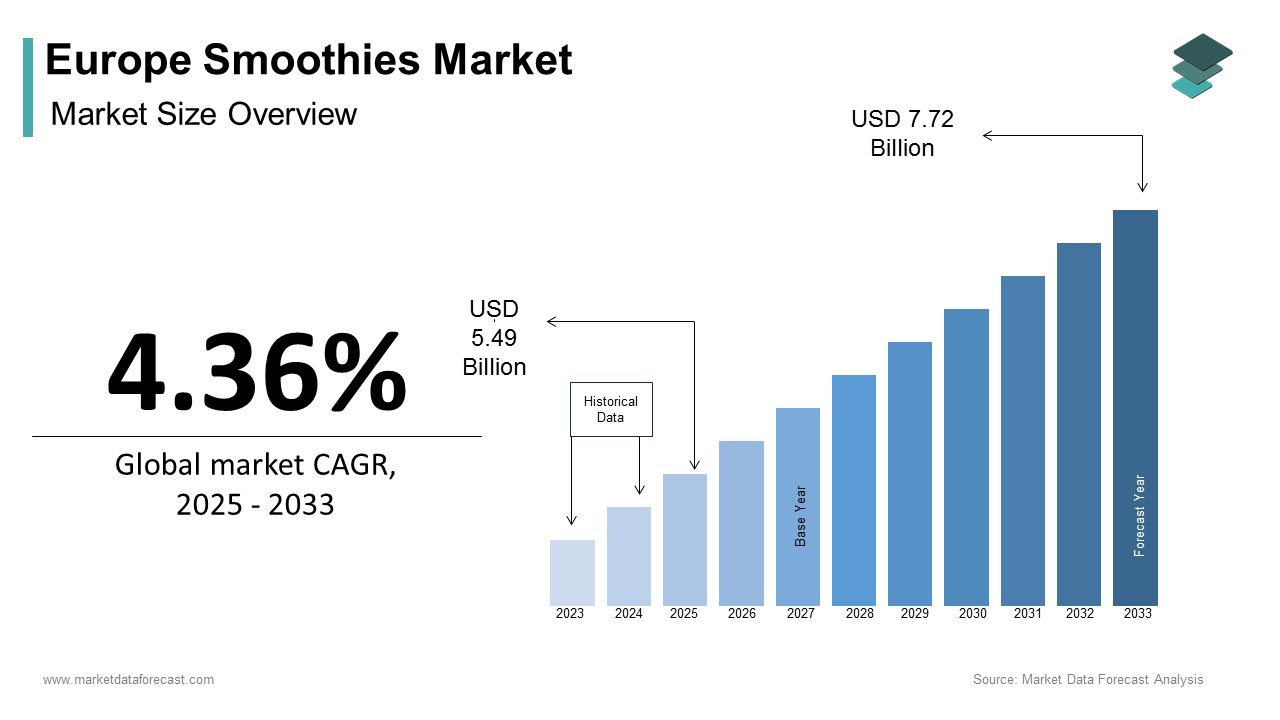
The smoothies are consumed for their convenience, taste, and perceived health benefits, including improved digestion, energy boosts, and nutrient intake. According to Statista, the European functional beverage sector has seen steady growth, with smoothies increasingly categorized under “better-for-you” drinks that align with active lifestyles and clean-label preferences. This trend is particularly strong in Western Europe, where consumers prioritize wellness and seek alternatives to sugary soft drinks. Additionally, rising veganism and lactose-free diets have contributed to the popularity of plant-based smoothies using almond milk, oat milk, and coconut water as base ingredients.
As per Euromonitor International , the presence of both global brands and local artisanal smoothie chains has expanded product availability across supermarkets, cafes, gyms, and convenience stores. Moreover, digital platforms and social media influencers have played a crucial role in shaping consumer perceptions and driving demand for Instagrammable, premium smoothie bowls and cold-pressed blends.
MARKET DRIVERS
Rising Health Consciousness and Demand for Functional Beverages
One of the most influential drivers shaping the Europe smoothies market is the rising health consciousness among consumers, particularly in urban centers across Germany, France, and the UK. As people become more aware of the impact of diet on overall well-being, there has been a noticeable shift away from sugar-laden carbonated drinks toward nutrient-rich, natural alternatives like smoothies. This shift is being fueled by an increase in health-related marketing campaigns and educational initiatives aimed at reducing obesity, diabetes, and cardiovascular diseases. As per Deloitte’s 2025 Wellness Report, smoothies are increasingly positioned as functional foods that support immunity, digestive health, and sustained energy levels especially when fortified with vitamins, fiber, and plant-based proteins. Brands like Innocent, Fruska and Yeo Valley have capitalized on this trend by launching formulations tailored to specific dietary needs, such as low-sugar, gluten-free, and vegan options.
Moreover, the influence of fitness culture and the rise of meal-replacement trends have further amplified smoothie consumption. According to McKinsey & Company, over 35% of working professionals in Western Europe incorporate smoothies into their daily routines as part of a balanced diet or post-workout recovery plan. With ongoing investments in product innovation and health-focused branding, the demand for smoothies continues to grow across diverse consumer segments.
Expansion of Plant-Based and Clean-Label Trends
A significant driver fueling the Europe smoothies market is the expanding adoption of plant-based and clean-label products, reflecting broader consumer demand for transparency, sustainability, and ethical sourcing. As awareness around the environmental impact of animal agriculture grows, more consumers are opting for smoothies made with plant-based milks such as almonds, oats, soy, and coconut. Clean-label movements have also reshaped ingredient sourcing strategies, pushing manufacturers to eliminate artificial preservatives, flavors, and colors from their formulations. As per Statista, nearly 45% of surveyed European consumers stated they avoid products with unrecognizable ingredients, which makes “clean label” a key purchasing criterion. In response, major smoothie brands have reformulated their products to feature organic produce, minimal additives, and recognizable ingredients by enhancing consumer trust and brand loyalty.
Additionally, the integration of functional components like probiotics, adaptogens, and superfoods such as spirulina, chia seeds, and flaxseeds has broadened the appeal of smoothies beyond casual drinkers to include health-conscious millennials and Gen Z consumers.
MARKET RESTRAINTS
High Sugar Content in Commercial Smoothies
One of the primary restraints affecting the Europe smoothies market is the high sugar content found in many commercially available smoothies, which has led to regulatory scrutiny and shifting consumer preferences toward low-sugar alternatives. While marketed as healthy options, many store-bought smoothies contain naturally occurring sugars from fruit concentrates and added sweeteners, often exceeding recommended daily limits. These concerns have prompted policymakers in several European countries to implement stricter labeling requirements and taxation policies targeting high-sugar beverages.
Seasonality and Perishability of Ingredients
Another key restraint impacting the Europe smoothies market is the seasonality and perishability of core ingredients such as fresh fruits, leafy greens, and dairy or plant-based bases. Unlike shelf-stable beverages, smoothies rely heavily on refrigeration and short supply chains to maintain freshness and flavor integrity, limiting their availability in off-season months and rural areas. This dependency on fresh produce creates logistical challenges, particularly in Northern and Eastern Europe, where colder climates shorten growing seasons and limit local sourcing capabilities. Additionally, transportation and storage requirements add complexity and cost, especially for small-scale smoothie vendors operating without large-scale cold chain infrastructure. Moreover, consumer expectations regarding taste and texture vary seasonally, influencing product development cycles and marketing strategies. Until innovations in preservation technology and ingredient sourcing improve, the perishable nature of smoothie components will continue to pose operational constraints across the European market landscape.
MARKET OPPORTUNITIES
Growth of Premium and Organic Smoothie Segments
An emerging opportunity in the European smoothies market lies in the rapid expansion of premium and organic smoothie offerings, catering to affluent consumers seeking high-quality, ethically sourced, and nutritionally dense beverages. One of the key factors behind this trend is the increasing willingness of consumers to pay a premium for products that align with personal values around wellness and environmental responsibility. Companies like Innocent Drinks, Fruska, and boutique smoothie bars in London and Berlin have successfully leveraged this shift by offering handcrafted, small-batch smoothies with transparent ingredient sourcing. Additionally, the rise of premium retail outlets and online subscription models has enabled direct-to-consumer brands to differentiate themselves from mass-market competitors.
Expansion of On-the-Go and Ready-to-Drink Formats
A significant opportunity in the European smoothies market is the rising popularity of on-the-go and ready-to-drink (RTD) formats, driven by changing consumer lifestyles and increased demand for convenient yet nutritious food options. More consumers are turning to pre-packaged smoothies as breakfast replacements, midday snacks, or post-exercise refuels with urbanization and fast-paced work environments shaping dietary behaviors. This shift is particularly evident among younger demographics, especially Gen Z and millennial professionals, who value portability, extended shelf life, and minimal preparation time. Major retailers like Tesco, Carrefour, and Lidl have responded by expanding their private-label smoothie ranges, often featuring organic, low-sugar, and plant-based variants. Moreover, the integration of sustainable packaging materials such as recyclable bottles and compostable cups has enhanced the appeal of RTD smoothies among eco-conscious buyers.
MARKET CHALLENGES
Navigating Regulatory Scrutiny Around Nutritional Claims
A primary challenge facing the Europe smoothies market is the increasing regulatory scrutiny surrounding nutritional claims and health-related marketing messages. As consumer interest in functional beverages rises, so too does oversight from food safety authorities, which are tightening rules around ingredient labeling, calorie disclosure, and substantiation of health benefits. This regulatory environment has created compliance hurdles for smoothie manufacturers, particularly smaller brands that lack the resources to conduct clinical studies or navigate complex approval processes. Furthermore, misperceptions around smoothies as inherently “healthy” have come under fire from health organizations, with reports indicating that some bottled smoothies contain more sugar than soda.
Balancing Taste Preferences with Nutritional Integrity
A significant challenge confronting the Europe smoothies market is the difficulty of balancing consumer taste preferences with nutritional integrity, as many buyers expect indulgent flavors while also seeking health benefits. While smoothies are marketed as wholesome and natural, they often rely on high-sugar fruits such as bananas, mangoes, and berries to achieve desirable taste profiles. According to The British Nutrition Foundation, smoothies containing multiple servings of fruit can easily exceed the recommended daily intake of free sugars, which is posing a dilemma for formulators aiming to maintain palatability without compromising health messaging.
This challenge is particularly pronounced in youth-oriented markets, where sweeter, dessert-like smoothies are popular but may conflict with public health recommendations. As per Euromonitor International, approximately 40% of smoothie consumers in the UK and Germany admitted choosing products based on flavor rather than nutritional content, which is creating a gap between consumer expectations and health outcomes. Moreover, the addition of functional ingredients like protein isolates, adaptogens, and probiotics has introduced formulation complexities that can impact taste and texture. According to McKinsey & Company, nearly one-third of European consumers have abandoned certain smoothie products due to undesirable aftertastes or gritty textures associated with added nutrients.
REPORT COVERAGE
| REPORT METRIC | DETAILS |
| Market Size Available | 2025 to 2034 |
| Base Year | 2025 |
| Forecast Period | 2026 to 2034 |
| CAGR | 4.36% |
| Segments Covered | By Product, Distribution Channel, Packaging Material, and Region |
| Various Analyses Covered | Global, Regional & Country Level Analysis; Segment-Level Analysis; DROC, PESTLE Analysis; Porter’s Five Forces Analysis; Competitive Landscape; Analyst Overview of Investment Opportunities |
| Regions Covered | UK, France, Spain, Germany, Italy, Russia, Sweden, Denmark, Switzerland, Netherlands, Turkey, and Czech Republic |
| Market Leaders Profiled | Innocent Drinks, Smoothie Factory, Danone, PepsiCo Inc., Nestlé S.A., Provamel, Happy Monkey Drinks, Plenish, Savsé, Rabenhorst |
SEGMENTAL ANALYSIS
By Product Insights
The fruit-based smoothies segment was the largest and held 58.6% of the Europe smoothies market share in 2025. One key driver behind this dominance is the widespread perception of fruit-based smoothies as a clean-label, nutrient-dense alternative to sugary soft drinks and processed snacks. Additionally, these smoothies are often marketed as containing whole fruits, fiber, and antioxidants, making them a popular choice among millennials and Gen Z. Another significant factor is the versatility and customization potential of fruit-based formulations. As per Statista over 70% of surveyed consumers in Western Europe prefer personalized smoothie combinations featuring berries, tropical fruits, and superfoods like acai and goji berries. Brands such as Innocent Drinks and Fruska have capitalized on this trend by offering seasonal blends and limited-edition flavors tailored to regional tastes.

The dairy-based smoothies segment is likely to grow with a CAGR of 9. of 3% during the forecast period. A major driver behind this growth is the rising popularity of protein-enriched dairy smoothies among gym-goers, athletes, and health-conscious consumers. Brands such as Alpro and Müller have launched fortified variants incorporating whey protein, Greek yogurt bases, and probiotics to cater to this expanding demographic.
Moreover, the integration of dairy smoothies into breakfast routines and meal-replacement strategies has contributed to increased consumption. As per Euromonitor International, sales of ready-to-drink (RTD) dairy smoothies in supermarkets and convenience stores rose by 11% between 2021 and 2025 in Germany, France, and the UK.
By Distribution Channel Insights
The supermarkets and hypermarkets segment held 42.4% of the Europe smoothies market share in 2025 with the widespread availability of branded and private-label smoothies in major retail chains such as Tesco, Carrefour, Rewe, and Lidl, which offer both chilled and shelf-stable options to a broad consumer base. Additionally, private-label offerings from retailers have gained traction, providing cost-effective alternatives to premium brands while maintaining acceptable quality standards.
Another key factor is the expansion of organic and plant-based smoothie lines within supermarket chilled beverage sections. As per Euromonitor International, leading retailers have introduced eco-friendly packaging and zero-waste initiatives, enhancing consumer trust and loyalty. Moreover, strategic promotions, bundled offers, and endcap displays have further boosted impulse purchases.
The convenience stores segment is growing with a CAGR of 10.1% in the coming years. A key driver behind this growth is the rising demand for portable, nutritious beverages among working professionals, students, and commuters seeking quick yet healthy refreshment options. Additionally, the integration of refrigerated coolers and grab-and-go beverage sections in major chains like 7-Eleven, Spar, and Shell Select has expanded product accessibility beyond traditional retail hours.
Moreover, partnerships between smoothie manufacturers and convenience store operators have facilitated exclusive product launches and localized flavor adaptations. As per Euromonitor International, several independent smoothie brands have leveraged in-store kiosks and vending machines to reach new customer segments without the overhead of standalone outlets.
By Packaging Material Insights
The plastic packaging segment accounted for 56.4% of the Europe smoothies market share in 2025. One of the key factors behind plastic’s dominance is its compatibility with cold-chain logistics and extended shelf-life requirements. Additionally, brands value plastic for its flexibility in design, allowing for vibrant labeling, resealable caps, and ergonomic shapes that enhance consumer experience. Another significant driver is the recyclability advancements made by industry players to address environmental concerns.
The paper-based packaging is lucratively growing with an estimated CAGR of 12.4% in the next coming years. A major driver behind this growth is the increasing adoption of paperboard cartons and coated fiber cups designed specifically for chilled smoothie applications. According to Packaging Europe, major smoothie brands such as Innocent Drinks and Yeo Valley have transitioned portions of their bottled smoothie range to recyclable paper-based formats, aligning with EU Green Deal objectives on sustainable packaging. These materials not only reduce reliance on fossil fuels but also offer lower carbon emissions during production compared to conventional plastics.
Additionally, consumer awareness and brand transparency efforts have played a crucial role in shaping preferences. As per Statista nearly 45% of European consumers stated they would be more likely to purchase smoothies packaged in eco-friendly materials if available.
REGIONAL ANALYSIS
The UK Smoothies Market Analysis
The United Kingdom was the largest with 18.6% of the European smoothies market share in 2025. The country's early adoption of smoothie trends, led by domestic brands like Innocent Drinks and boutique startups, has created a deep-rooted consumer habit of daily smoothie consumption, particularly among urban professionals and fitness enthusiasts. As per Euromonitor International, the UK’s smoothies market has been further propelled by the rise of plant-based diets and the proliferation of e-commerce platforms offering subscription-based smoothie delivery services. Additionally, government-backed initiatives promoting healthier eating habits, including sugar taxation policies and school nutrition programs, have indirectly reinforced smoothie consumption as a perceived healthier alternative to carbonated soft drinks.
Germany Smoothies Market Analysis
Germany was positioned second with 15.3% of the European smoothies market share in 2025 with a growing emphasis on health, wellness, and convenience-driven lifestyles. The country benefits from a strong network of health-focused retail chains, increasing veganism, and a rising number of smoothie cafes catering to urban populations. Moreover, the presence of major supermarket chains such as Edeka, Rewe, and Aldi has enabled the wide distribution of both national and private-label smoothie products. As per McKinsey & Company, nearly 55% of German smoothie sales occur through modern trade channels, with chilled and shelf-stable variants gaining prominence. According to Euromonitor International, Germany’s smoothie market has benefited from a growing fitness culture and increasing adoption of breakfast replacement habits, particularly among working professionals.
France Smoothies Market Analysis
The growth of the smoothies market in France is driven by a combination of lifestyle shifts, urbanization, and increasing health consciousness among consumers. The country’s smoothie market is characterized by a blend of premium artisanal offerings and mainstream retail products, which cater to diverse consumer preferences across metropolitan and suburban areas. A key driver of market growth in France is the rising popularity of “clean eating” and plant-based nutrition, particularly among millennials and Gen Z consumers. Moreover, the influence of digital platforms and social media has significantly shaped purchasing behaviors. As per McKinsey & Company, French smoothie brands leveraging influencer collaborations and Instagrammable aesthetics have seen a 20% higher engagement rate compared to traditional beverage marketers. Additionally, major retailers like Carrefour and Leclerc have expanded their chilled smoothie ranges, capitalizing on convenience-driven consumption habits.
Netherlands Smoothies Market Analysis
Netherlands is expected to grow with the early adoption of global food trends, making smoothies a staple in everyday diets, especially among young professionals and health-oriented families. Additionally, the Netherlands has emerged as a hub for innovative smoothie startups and direct-to-consumer (DTC) brands, many of which operate on a subscription model. According to McKinsey & Company, nearly 28% of Dutch consumers have tried smoothie subscription services, appreciating the convenience of doorstep delivery and customizable blends. Moreover, the Dutch government’s focus on reducing sugar intake has encouraged reformulation efforts, resulting in low-sugar and unsweetened smoothie variants gaining traction.
Sweden Smoothies Market Analysis
Sweden is anticipated to account for a notable share of the European market over the forecast period owing to the strong emphasis on natural living, wellness, and sustainability. Swedish consumers exhibit a high level of health awareness, making smoothies a common fixture in daily nutrition, especially among urban dwellers and environmentally conscious households. Moreover, Sweden has seen a notable rise in the use of smoothies as part of structured meal plans and intermittent fasting regimens. According to Euromonitor International, nearly 35% of Swedish consumers incorporate smoothies into their morning routines as a nutrient-dense breakfast alternative. Additionally, the Nordic region’s growing fitness culture and emphasis on clean eating have fueled demand for high-protein, low-sugar smoothies enriched with plant-based ingredients.
Spain Smoothies Market Analysis
Spain is expected to register a healthy CAGR in this regional market during the forecast period. The growing wellness movement, increasing tourism, and the expansion of café-style smoothie vendors in major metropolitan areas are driving the smoothies market in Spain. One of the primary drivers behind Spain’s market growth is the increasing integration of smoothies into café menus and fast-casual dining experiences. Moreover, the rise of digital health platforms and influencer-led nutrition campaigns has reshaped consumer perceptions of smoothies as essential components of active lifestyles. As per Euromonitor International, nearly 40% of surveyed Spanish consumers aged 18–34 reported consuming smoothies regularly, particularly as pre- and post-workout beverages.
Italy Smoothies Market Analysis
The Italian market growth driven by the shift in dietary habits toward healthier, ready-to-drink options despite a historically strong culinary tradition centered around fresh, homemade foods. The Italian smoothies market is experiencing growth, particularly in urban centers such as Milan, Rome, and Florence, where modern lifestyles and wellness trends are gaining traction. Moreover, Italian consumers are becoming more receptive to functional beverages that offer additional health benefits such as gut health, hydration, and immune support.
COMPETITIVE LANDSCAPE
The competition in the European smoothies market is marked by a dynamic mix of multinational beverage giants, regional smoothie specialists, and local artisanal brands striving to capture consumer attention in an increasingly health-conscious and convenience-driven environment. While established players benefit from strong brand equity, extensive distribution networks, and economies of scale, smaller and niche brands are leveraging differentiation through clean-label positioning, localized sourcing, and innovative flavor profiles to carve out distinct identities. Market participants are increasingly focusing on expanding their product portfolios to include value-added smoothies such as high-protein variants, immunity-boosting blends, and low-sugar formulations to meet evolving dietary preferences. Additionally, sustainability pressures are driving companies to invest in biodegradable packaging, carbon-neutral logistics, and ethical sourcing certifications, further intensifying rivalry among suppliers aiming to meet regulatory and consumer expectations.
Moreover, the convergence between food science and lifestyle branding is enabling new entrants to challenge incumbents with novel formats like powdered smoothies, frozen packs, and personalized nutrition offerings. As demand diversifies beyond traditional chilled beverages into meal replacements and functional nutrition, the European smoothies market continues to witness heightened competition, requiring continuous adaptation and strategic positioning from all players involved.
Key Market Participants
A few of the dominating players in the European smoothies market include
- Innocent Drinks
- Smoothie Factory
- Danone
- PepsiCo Inc.
- Nestlé S.A.
- Provamel
- Happy Monkey Drinks
- Plenish
- Savsé
- Rabenhorst
LEADING PLAYERS IN THE EUROPEAN SMOOTHIES MARKET
- Innocent Drinks: Innocent Drinks is a leading player in the European smoothies market, known for its natural, high-quality ingredients and environmentally conscious branding. Founded in the UK, the company has expanded across multiple European markets, offering a wide range of fruit-based smoothies, juices, and blended drinks. Innocent’s commitment to sustainability, ethical sourcing, and transparent labeling has made it a trusted brand among health-conscious consumers. The company plays a pivotal role in shaping consumer expectations around clean-label beverages, influencing both retail and foodservice segments. Its acquisition by The Coca-Cola Company in 2013 provided access to global distribution networks while maintaining its independent identity. Innocent continues to lead innovation in product formulation, packaging, and marketing, setting benchmarks for market growth.
- Fruska: Fruska is a prominent European smoothie brand that has built a strong presence through its emphasis on freshness, convenience, and functional nutrition. Operating primarily in the UK and expanding into Germany and France, Fruska offers premium cold-pressed smoothies, superfood blends, and plant-based options tailored to modern wellness trends. The brand is recognized for its sleek positioning and digital-first engagement strategy. A key contributor to the growth of premium smoothie consumption, Fruska has successfully tapped into the demand for organic, low-sugar, and nutrient-dense beverages. It collaborates with nutritionists and fitness influencers to reinforce its health-focused image. By leveraging direct-to-consumer channels and subscription models, Fruska has redefined how smoothies are marketed and distributed in urban Europe, which is contributing significantly to category expansion and consumer education.
- Yeo Valley: Yeo Valley is a well-established UK-based brand that has extended its reputation for natural and organic products into the smoothies segment. Known for its commitment to sustainable farming and clean-label formulations, Yeo Valley offers a range of dairy-based and plant-based smoothies that appeal to eco-conscious and health-oriented consumers. The brand emphasizes traditional values while embracing modern dietary preferences. As one of the pioneers of organic smoothies in Europe, Yeo Valley has influenced product development strategies across the industry. Its family-owned heritage and farm-to-bottle transparency have strengthened consumer trust. Yeo Valley’s success lies in aligning with evolving health trends while maintaining a strong regional identity, which is making it a respected name in both mainstream and specialty smoothie markets across Europe.
TOP STRATEGIES USED BY KEY MARKET PARTICIPANTS
- One major strategy employed by leading players in the European smoothies market is product innovation focused on health and functionality. Brands are increasingly introducing smoothies fortified with probiotics, adaptogens, plant proteins, and superfoods to cater to evolving consumer demands for holistic wellness benefits beyond basic nutrition.
- Another critical approach involves leveraging sustainability and ethical sourcing as core brand values. Companies are investing in eco-friendly packaging solutions, carbon-neutral operations, and traceable ingredient sourcing to align with EU environmental policies and consumer expectations for responsible production practices.
- A third strategic focus is on expanding digital engagement and direct-to-consumer (DTC) models. Leading brands are enhancing online visibility, launching subscription services, and utilizing influencer marketing to build brand loyalty and ensure consistent customer retention in an increasingly competitive and fragmented marketplace.
Europe Smoothies Market News
- In February 2025, Innocent Drinks launched a limited-edition line of sustainably packaged smoothies in collaboration with environmental NGOs, reinforcing its green credentials and strengthening its appeal among eco-conscious consumers across Western Europe.
- In May 2025, Fruska introduced a nationwide smoothie delivery service in Germany, partnering with local logistics providers to ensure fresh, same-day delivery of cold-pressed smoothie packs, expanding its reach beyond traditional retail outlets.
- In July 2025, Yeo Valley unveiled a new range of organic, low-sugar smoothies designed specifically for children by tapping into the growing parental interest in healthy, school-friendly beverage alternatives to sugary drinks.
- In September 2025, Marks & Spencer expanded its ready-to-drink smoothie selection in UK stores, introducing exclusive seasonal flavors developed in partnership with independent smoothie consultants to attract premium customers seeking quality and exclusivity.
- In November 2025, Alpro, a leader in plant-based beverages, integrated smoothies into its core product lineup, emphasizing dairy-free, high-fiber, and protein-enriched formulations aimed at fitness-conscious consumers in France and the Netherlands.
MARKET SEGMENTATION
This research report on the European smoothies market has been segmented and sub-segmented based on product, distribution channel, packaging material, and region.
By Product
- Dairy-Based
- Fruit-Based
By Distribution Channel
- Supermarkets And Hypermarkets
- Convenience Stores
By Packaging Material
- Plastic Packaging
- Paper-Based Packaging
By Region
- UK
- France
- Spain
- Germany
- Italy
- Russia
- Sweden
- Denmark
- Switzerland
- Netherlands
- Turkey
- Czech Republic
- Rest of Europe