- Product Description Description
- Table of Contents TOC
- List of Table & Figure LOT
- Get Free Sample PDF Sample PDF
Market Size, 2025
$9.41 BnMarket Estimate, 2026
$10.57 BnMarket Forecast, 2034
$26.87 BnCAGR, 2026–2034
12.37%UK Telemedicine Market Report Summary
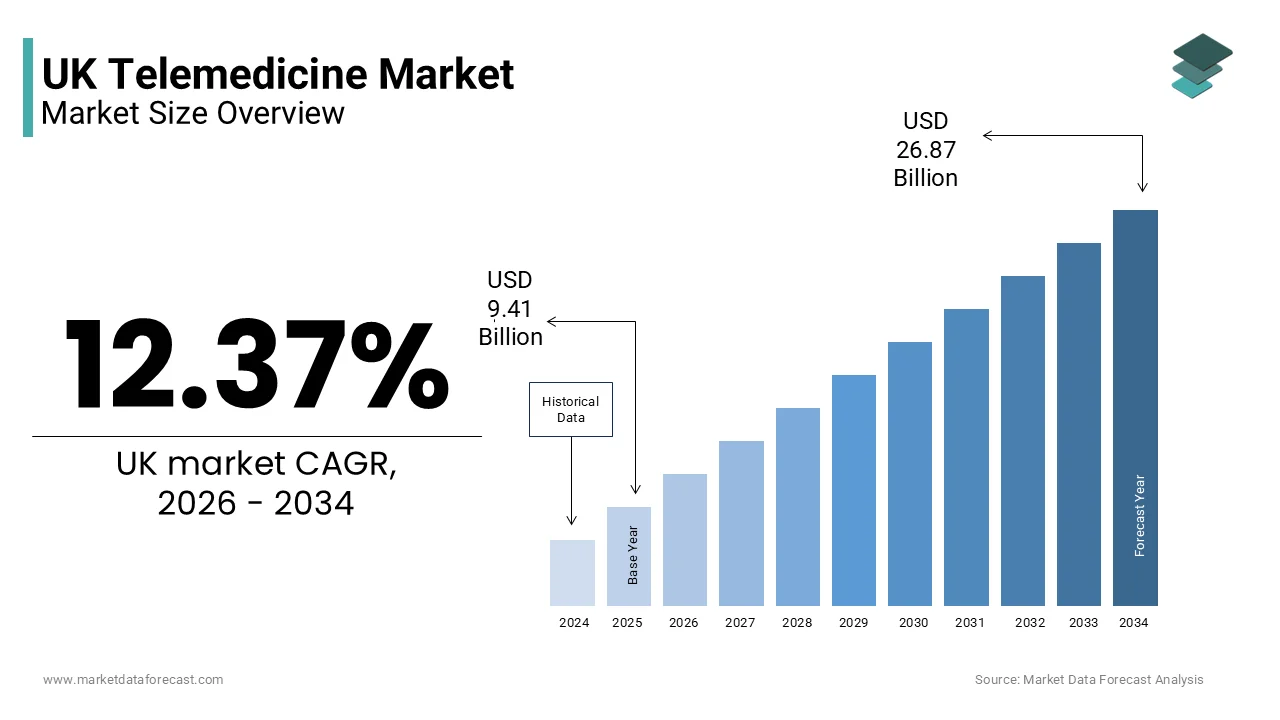
The UK telemedicine market was valued at USD 9.41 billion in 2025, is estimated to reach USD 10.57 billion in 2026, and is projected to reach USD 26.87 billion by 2034, growing at a CAGR of 12.37% during the forecast period. Market growth is driven by increasing adoption of digital healthcare solutions, rising demand for remote patient monitoring, growing healthcare accessibility needs, and continued advancements in telehealth technologies. Government support for healthcare digitization, increasing smartphone penetration, and the growing preference for virtual consultations are further accelerating market expansion across the United Kingdom.
Key Market Trends
- Growing adoption of virtual healthcare services is driving market growth.
- Increasing demand for remote patient monitoring solutions is boosting market expansion.
- Rising integration of artificial intelligence and digital health platforms is supporting industry development.
- Expansion of telehealth services in rural and underserved areas is enhancing market opportunities.
- Growing focus on healthcare accessibility, convenience, and cost efficiency is influencing market advancement.
Segmental Insights
- Based on product, the software segment accounted for 42.2% of the UK telemedicine market share in 2025. This dominance is attributed to the increasing need for integrated digital platforms that support communication, scheduling, patient management, and healthcare data exchange.
- Based on services, the tele consulting segment held 55.4% of the UK telemedicine market share in 2025, driven by growing consumer preference for virtual consultations and improved access to healthcare professionals.
- Based on type, the tele radiology segment accounted for 34.6% of the UK telemedicine market share in 2025, supported by increasing demand for remote diagnostic services and efficient image interpretation.
- Based on end user, the hospitals and clinics segment held 55.8% of the UK telemedicine market share in 2025, reflecting widespread adoption of telemedicine solutions to improve patient care delivery and operational efficiency.
Regional Insights
- The United Kingdom accounted for 25.4% of the European telemedicine market share in 2025 and ranked among the leading digital healthcare markets in the region. Strong healthcare infrastructure, government initiatives supporting digital transformation, and increasing patient acceptance of virtual care continue to drive market growth.
Competitive Landscape
The UK telemedicine market is highly competitive, with service providers focusing on platform innovation, patient engagement, healthcare integration, and data security to strengthen their market position. Companies continue to invest in advanced telehealth technologies, artificial intelligence capabilities, and remote care solutions.
Key companies operating in the UK telemedicine market include Babylon Health, Doctor Care Anywhere, Livi, HealthHero, Medibuddy, Push Doctor, Online Doctor UK, Teladoc Health, HealthUnlocked, MyHealthTeams, Medigo, Zesty, Visionable, Doctorlink, and The GP Service.
 Download Free Sample Report
UK Telemedicine Market Size
The UK telemedicine market size was valued at USD 9.41 billion in 2025, and is projected to reach USD 26.87 billion by 2034 from USD 10.57 billion in 2026, growing at a CAGR of 12.37%.
Telemedicine is the remote delivery of healthcare services. It allows patients to receive medical advice, diagnoses, and treatment from healthcare professionals without an in-person visit. The country’s market is a highly developed sector within Europe. This sector has become integral to the National Health Service operational framework facilitating direct doctor patient interactions without physical presence. The demographic imperative drives this evolution as the Office for National Statistics confirms that 19 percent of the population is aged 65 or older creating sustained demand for accessible medical care. Digital connectivity serves as the backbone for these services with Ofcom data indicating that 97 percent of UK households have access to fixed broadband networks enabling reliable video consultations. Overall UK adult smartphone ownership has reached roughly 92%. Furthermore, a significant generational gap remains, as mobile application ownership drops steeply among individuals aged 75 and older. The regulatory environment supports this shift through guidelines established by the General Medical Council which clarify professional standards for remote consultations. General population healthcare surveys show that comfort levels with virtual consultations hover around 70% for non-emergency conditions. However, this acceptance metric heavily skews toward younger demographics. Only a small fraction of the older population actively utilizes or expresses a preference for telehealth services. The integration of electronic prescribing systems allows seamless medication management following virtual appointments enhancing treatment continuity. Rural communities benefit disproportionately from telemedicine as it bridges geographic gaps in specialist access. Clinical workflows are adapting to hybrid models that combine face-to-face and virtual care. As a result, the telemedicine market continues to refine its role in delivering efficient, high-quality healthcare outcomes across diverse patient populations throughout the nation.
MARKET DRIVERS
Rising Prevalence of Chronic Diseases Necessitating Remote Monitoring
The escalating burden of chronic diseases in the country is among the key drivers of the United Kingdom telemedicine market. Continuous monitoring is essential for effective disease management. NHS Digital reports that approximately 15 million people in England live with at least one long term condition such as diabetes hypertension or cardiovascular disease requiring regular clinical oversight. Telemedicine enables real time transmission of physiological data from home based devices to healthcare providers allowing for timely interventions before conditions deteriorate. This proactive approach reduces hospital admissions by up to 20 percent for patients enrolled in remote monitoring programs according to clinical studies conducted by major UK trusts. The aging population exacerbates this trend with multimorbidity rates increasing among those over 75 years old necessitating coordinated care that telemedicine facilitates through virtual multidisciplinary team meetings. Patients appreciate the convenience of avoiding frequent travel to clinics which can be physically taxing and costly. General practitioners utilize telemedicine platforms to review trends in blood glucose or blood pressure readings adjusting treatment plans dynamically without requiring in person visits. This efficiency frees up clinic capacity for acute cases while ensuring chronic patients receive consistent attention. The cost effectiveness of remote management appeals to healthcare commissioners seeking to optimize limited budgets amidst rising demand. Lifestyle factors contribute to a higher incidence of obesity and related conditions. Consequently, the scalability of telemedicine offers a sustainable solution for managing complex health needs across the population.
Government Mandates for Digital First Primary Care Access
Strategic government policies mandating digital first access options propel the United Kingdom telemedicine market. These options are driving telemedicine expansion within the country’s healthcare system. The NHS Long Term Plan explicitly targets the provision of online consultation capabilities for all general practices driving institutional adoption of telemedicine technologies. Funding initiatives such as the Global Digital Exemplar program have allocated substantial resources to accelerate digital transformation in leading healthcare organizations setting benchmarks for others to follow. NHS England data indicates that over 90 percent of general practices now offer some form of digital appointment booking or video consultation service reflecting widespread compliance with national directives. These mandates aim to reduce waiting times and improve patient choice by providing alternative pathways to care beyond traditional phone lines. The standardization of digital tools through the NHS App creates a unified interface for patients to access medical records book appointments and consult with clinicians remotely. Training programs funded by Health Education England equip healthcare professionals with necessary digital skills ensuring competent delivery of remote care. Regulatory bodies like the Care Quality Commission incorporate digital safety into inspection frameworks encouraging adherence to best practices. Public awareness campaigns promote the benefits of telemedicine addressing initial resistance among certain demographic groups. The government ensures the longevity and integration of telemedicine into routine clinical practice by embedding it into the core infrastructure of primary care. This approach establishes it as a permanent standard rather than treating it as a temporary contingency measure.
MARKET RESTRAINTS
Digital Exclusion Among Elderly and Low Income Groups
Digital exclusion remains a major factor limiting equitable access to telemedicine services in the country, particularly affecting elderly and low-income populations, which restricts the growth of the United Kingdom telemedicine market. Lack of digital literacy prevents many seniors from navigating complex telemedicine platforms leading to frustration and disengagement from healthcare services. Device affordability poses another barrier as individuals on fixed incomes may prioritize essential expenses over purchasing smartphones or tablets capable of supporting video consultations. Broadband connectivity issues persist in rural areas where 2 percent of premises lack access to decent speeds according to government infrastructure audits compromising the quality of remote consultations. Language barriers further complicate access for non English speaking communities who may struggle with platform interfaces and medical terminology. Healthcare providers face ethical challenges when patients cannot participate in telemedicine due to these structural inequalities potentially widening health disparities. Efforts to provide digital support through community centers have limited reach and sustainability. The assumption that all patients possess necessary technology and skills leads to inadvertent exclusion from care pathways. Addressing these barriers requires targeted interventions including simplified user interfaces telephone based alternatives and subsidized device programs to ensure telemedicine serves as an inclusive tool rather than a privilege for the digitally adept.
Regulatory Ambiguity Regarding Cross Border Practice
Regulatory ambiguity concerning cross border medical practice is also a complex hindrance for providers operating in the United Kingdom telemedicine market. The General Medical Council requires doctors to be registered in the UK to treat patients located within the country limiting the ability of international specialists to offer remote consultations legally. This restriction constrains the supply of specialized expertise available through telemedicine particularly in niche fields where domestic shortages exist. Licensing requirements vary across different jurisdictions creating administrative burdens for providers seeking to expand services across borders within Europe or globally. The UK GDPR restricts "restricted transfers" of personal data outside the United Kingdom. Legal liabilities associated with malpractice claims involving cross border telemedicine remain unclear deterring insurers from offering comprehensive coverage for such services. Professional indemnity insurance often excludes activities performed outside licensed territories leaving providers exposed to financial risks. The lack of harmonized regulatory frameworks across countries hinders the development of seamless international telemedicine networks. Patients seeking second opinions from foreign experts face logistical and legal hurdles reducing accessibility to global knowledge pools. Clarifying these regulatory boundaries is essential for fostering innovation and expanding the range of services available to UK patients through telemedicine while ensuring patient safety and legal compliance are maintained.
MARKET OPPORTUNITIES
Integration Of Artificial Intelligence In Diagnostic Workflows
The integration of artificial intelligence into diagnostic workflows offers a strong opening for enhancing the accuracy and efficiency of remote delivery of healthcare services in the country, which is likely to boost the growth of the United Kingdom telemedicine market. AI algorithms can analyze medical images such as X rays and skin lesions with precision comparable to human specialists enabling rapid triage and diagnosis in remote settings. Studies indicate that AI assisted diagnostics can reduce error rates by up to 30 percent in radiology applications supporting clinicians in making informed decisions during virtual consultations. Chatbots powered by natural language processing handle initial patient inquiries collecting symptom data and directing users to appropriate care levels thereby reducing administrative burden on medical staff. Predictive analytics identify individuals at high risk of developing complications allowing for preventive interventions that improve outcomes and lower costs. The National Health Service has initiated pilot programs testing AI tools for detecting early signs of conditions like sepsis demonstrating potential for life saving interventions in remote monitoring scenarios. Collaboration between technology firms and clinical experts ensures algorithms are trained on diverse datasets minimizing bias and enhancing generalizability. Regulatory bodies are developing frameworks for validating AI medical devices ensuring safety and efficacy before widespread deployment. The continuous increase in computational power will make AI-driven telemedicine solutions essential for scalable healthcare delivery. These tools are designed to augment human medical expertise rather than replace it, resulting in better care and improved system productivity.
Expansion Into Corporate Wellness and Occupational Health
Expansion into corporate wellness and occupational health sectors opens new doors for providers in the United Kingdom telemedicine market. This is fuelled by employers who are increasingly prioritizing employee well-being. Companies recognize that healthy workforces enhance productivity and reduce absenteeism driving demand for accessible mental health and primary care services. Telemedicine platforms offer convenient access to counseling physiotherapy and general medical advice fitting seamlessly into busy work schedules without requiring time off for clinic visits. Surveys indicate that 60 percent of employees value access to digital health benefits when choosing employers highlighting the competitive advantage for companies offering such services. Occupational health assessments conducted via video link streamline return to work processes following illness or injury ensuring timely and safe reintegration. Specialized telemedicine services for stress management and ergonomic assessments address common workplace health issues proactively. Partnerships between telemedicine providers and insurance companies create bundled packages that offer cost effective solutions for businesses of all sizes. The rise of remote work has further amplified the need for digital health support as employees seek medical advice from home environments. Telemedicine providers can secure stable recurring revenue streams by catering to the corporate sector. In doing so, they also contribute to broader public health improvements through preventive care and early intervention strategies in the workplace.
MARKET CHALLENGES
Interoperability Challenges with Legacy IT Systems
Achieving interoperability between modern telemedicine platforms and legacy IT systems is a significant challenge for the country’s healthcare sector, and thereby holds back the growth of the United Kingdom telemedicine market. This obstructs seamless data exchange. Many general practices and hospitals operate on outdated software architectures that lack application programming interfaces necessary for real time integration with contemporary telemedicine tools. This fragmentation forces clinicians to manually enter data from multiple sources increasing administrative workload and risk of transcription errors that compromise patient safety. Inconsistent data standards across different vendors prevent unified views of patient histories leading to incomplete clinical pictures during virtual consultations. The cost of upgrading legacy systems is prohibitive for many smaller providers lacking capital budgets for comprehensive IT overhauls. Technical compatibility issues cause frequent system crashes or data synchronization delays disrupting workflow continuity and frustrating both staff and patients. Regulatory requirements for data retention and audit trails add complexity to integration projects requiring meticulous planning and testing. Lack of vendor cooperation exacerbates problems as proprietary formats restrict data portability locking organizations into specific ecosystems. Staff training demands increase as users navigate disjointed interfaces requiring switching between multiple applications to complete single tasks. Standardization efforts by national bodies progress slowly facing resistance from entrenched interests and technical debt accumulated over decades. Telemedicine's true potential remains constrained by siloed information environments. To overcome this, robust interoperable frameworks must be universally adopted.
Reimbursement Policy Uncertainties and Funding Models
Uncertainties surrounding reimbursement policies and sustainable funding models create major barriers for providers operating within the healthcare ecosystem, which constrains the expansion of the United Kingdom telemedicine market. While the National Health Service covers many virtual consultations payment structures for private telemedicine services remain inconsistent causing financial instability for independent practitioners and digital health startups. Variations in commissioning decisions across different integrated care boards lead to postcode lotteries where access to funded telemedicine depends on geographic location rather than clinical need. Private insurance companies often impose restrictive criteria for covering digital therapies limiting market growth and excluding patients who rely on employer sponsored health plans. The transition from fee for service to value based care models requires new metrics for evaluating telemedicine effectiveness which are still under development creating ambiguity for providers seeking contracts. Startups struggle to secure long term investment due to unclear pathways to profitability within regulated healthcare markets dominated by public funding. Pricing pressures force providers to compete on cost rather than quality potentially compromising service standards and innovation capacity. Administrative burdens associated with claiming reimbursements from multiple payers increase operational overhead reducing margins for small practices. Lack of transparent pricing guidelines confuses consumers making it difficult to compare value propositions across different platforms. Policy makers face difficulty balancing affordability with incentivizing innovation leading to delayed decisions on coverage expansions. Establishing clear equitable and sustainable reimbursement frameworks is essential for attracting talent and capital into the telemedicine sector.
REPORT COVERAGE
| REPORT METRIC | DETAILS |
| Market Size Available | 2025 to 2034 |
| Base Year | 2025 |
| Forecast Period | 2026 to 2034 |
| CAGR | 12.37% |
| Segments Covered | By Product, Service, Type, Deployment, End User, and Region. |
| Various Analyses Covered | Global, Regional and Country-Level Analysis, Segment-Level Analysis, Drivers, Restraints, Opportunities, Challenges; PESTLE Analysis; Porter’s Five Forces Analysis, Competitive Landscape, Analyst Overview of Investment Opportunities |
| Market Leaders Profiled | Babylon Health, Doctor Care Anywhere, Livi, HealthHero, MediBuddy, Push Doctor, Online Doctor UK, Teladoc Health, HealthUnlocked, MyHealthTeams, Medigo, Zesty, Visionable, Doctorlink, and The GP Service |
SEGMENTAL ANALYSIS
By Product Insights
In 2025, the software segment held the majority share of 42.2% of the United Kingdom telemedicine market because of the critical need for integrated digital platforms that facilitate seamless communication between patients and healthcare providers. Electronic health record integration is a primary driver. Cloud based consultation platforms enable scalable service delivery allowing clinics to manage high volumes of virtual appointments without significant physical infrastructure investment. The adoption of artificial intelligence driven triage tools has surged with major providers reporting a 40 percent reduction in administrative workload through automated patient routing and symptom checking. Regulatory support from the National Institute for Health and Care Excellence accelerates software adoption by providing clear validation pathways for digital health technologies ensuring safety and efficacy. Subscription based models offer cost effective solutions for smaller practices avoiding large upfront capital expenditures associated with hardware procurement. Continuous updates and security patches provided by software vendors ensure compliance with evolving General Data Protection Regulation requirements protecting sensitive patient information. The flexibility of software solutions allows customization to specific clinical workflows enhancing user experience for both clinicians and patients. Integration with mobile applications extends reach enabling patients to access care from personal devices increasing engagement and adherence to treatment plans. The reliance on sophisticated software ecosystems is becoming central to modern medical practice as healthcare professionals improve their digital literacy. Ultimately, this segment establishes the foundational pillar of the UK telemedicine infrastructure.
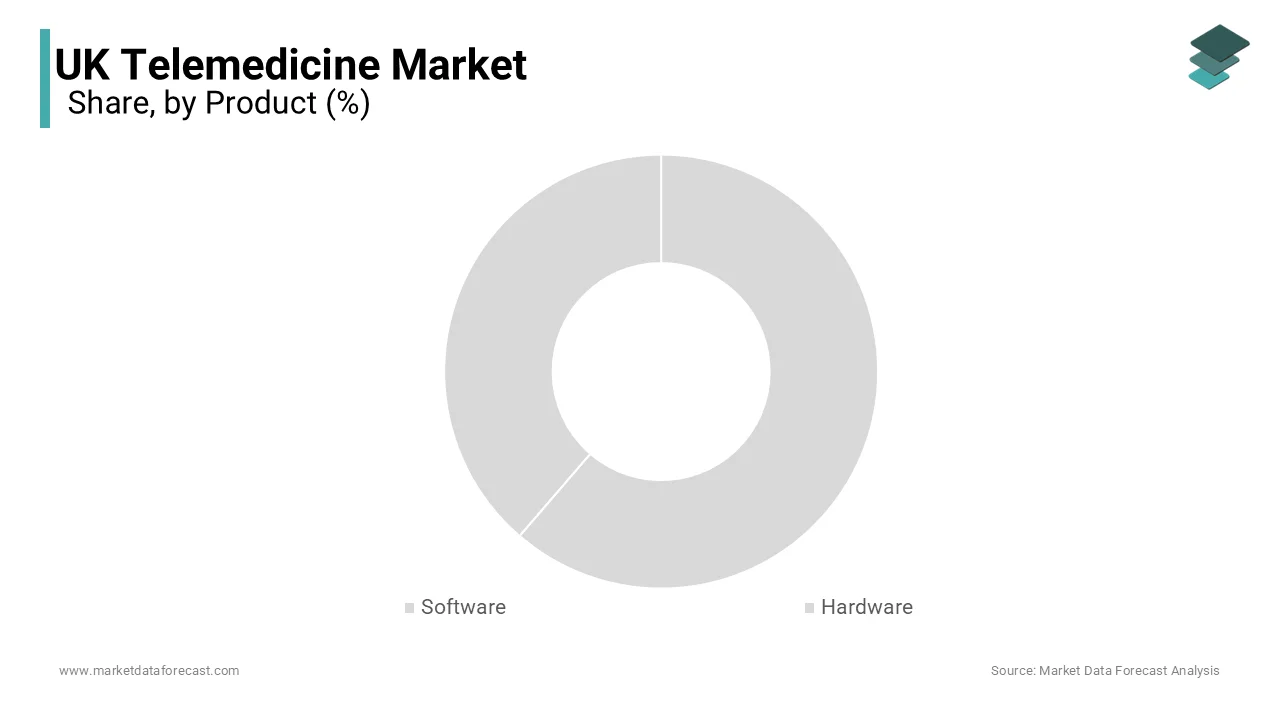
The hardware segment is on the rise and is expected to be the fastest growing segment in the market by witnessing a CAGR of 16.3% from 2026 to 2034 due to the increasing deployment of remote patient monitoring devices such as wearable sensors smart blood pressure cuffs and glucose monitors that transmit real time physiological data to clinicians. The aging population drives demand for home based diagnostic tools. The Office for National Statistics (ONS) projects that the population aged 85 and over is rapidly increasing. Current projections estimate this demographic will double by 2045 or 2047 (reaching approximately 3.3 to 3.4 million). However, the trajectory correctly underscores the urgent need for decentralized health surveillance. Government initiatives like the Virtual Ward program have allocated substantial funding for distributing connected devices to patients with chronic conditions enabling early detection of deterioration and reducing emergency admissions. Advances in miniaturization and battery life make these devices more user friendly and less intrusive encouraging higher adoption rates among elderly users. Project Gigabit has significantly improved rural infrastructure, with over 80-89% of UK premises now having access to gigabit-capable speeds. Healthcare providers recognize the value of objective data collected through hardware in making informed clinical decisions reducing reliance on subjective patient self reporting. The shift toward preventive care models incentivizes investment in hardware that supports long term health tracking rather than episodic treatment. The accessibility of medical-grade hardware for home use is rising as technology costs decrease and insurance coverage expands. Consequently, this segment is experiencing robust growth.
By Services Insights
The tele consulting segment dominated the United Kingdom telemedicine market and accounted for a 55.4% share in 2025. This dominance of the segment was driven by its role as the primary interface for patient provider interactions in remote care settings. General practitioners conduct millions of video and audio consultations annually with NHS England data indicating that digital appointments account for over 30 percent of all primary care contacts. The convenience of accessing medical advice from home reduces travel time and waiting room exposure appealing strongly to working professionals and parents. Mental health consultations have seen particularly strong growth as stigma decreases and accessibility improves through private and public digital platforms. The efficiency of tele consulting allows clinicians to manage larger patient caseloads by eliminating room turnover times and administrative delays associated with physical visits. Reimbursement structures within the National Health Service support virtual consultations ensuring financial viability for providers adopting this model. Patient satisfaction scores remain high due to flexible scheduling options and reduced disruption to daily routines. Integration with electronic prescribing systems enables immediate medication management following consultations enhancing treatment continuity. The scalability of tele consulting services allows healthcare systems to respond effectively to seasonal demand spikes such as flu outbreaks without overwhelming physical facilities. Digital literacy is rising across all demographics, making video-based medical advice mainstream. Hence, teleconsulting is now the cornerstone of remote healthcare delivery in the UK.
The tele monitoring segment is expected to exhibit a noteworthy CAGR of 19.5% during the forecast period owing to the strategic shift toward proactive chronic disease management where continuous data collection enables early intervention before acute episodes occur. NHS Long Term Plan priorities emphasize keeping patients out of hospitals through remote monitoring programs for conditions like heart failure diabetes and chronic obstructive pulmonary disease. Clinical studies demonstrate that tele monitoring reduces hospital readmissions by up to 25 percent for enrolled patients providing compelling evidence for widespread adoption. The proliferation of Internet of Things enabled medical devices facilitates seamless data transmission from home to clinical dashboards allowing nurses and doctors to track trends in real time. Personalized alerts notify care teams of abnormal readings ensuring timely responses to potential health crises. Patients benefit from increased autonomy and peace of mind knowing their health status is being closely monitored by professionals. Cost savings for healthcare commissioners are significant as preventive interventions are far less expensive than emergency care or prolonged hospital stays. Technological advancements in sensor accuracy and battery life enhance user experience encouraging long term adherence to monitoring protocols. Value-based care models are gaining traction and focusing on patient outcomes rather than volume. This shift further accelerates the integration of telemonitoring into standard clinical pathways.
By Type Insights
The tele radiology segment was the largest in the United Kingdom telemedicine market and occupied a 34.6% share in 2025. This prominence of the segment was supported by the critical need for rapid interpretation of medical images across geographically dispersed healthcare facilities. The shortage of specialist radiologists in the UK creates a bottleneck that tele radiology alleviates by enabling remote experts to review X rays CT scans and MRIs from any location. NHS trusts frequently utilize teleradiology services to provide out of hours coverage ensuring that emergency departments receive timely diagnostic reports crucial for patient management. The digitization of imaging archives through Picture Archiving and Communication Systems allows instant access to high resolution images facilitating collaborative diagnosis among multidisciplinary teams. Standardization of imaging protocols ensures consistent quality regardless of where the scan was performed supporting reliable remote interpretation. Turnaround times for reports have improved significantly with some providers offering guarantees of under 30 minutes for urgent cases enhancing clinical decision making speed. The ability to share complex cases with subspecialists globally enhances diagnostic accuracy for rare or difficult conditions. Regulatory frameworks support cross border image sharing within strict data protection guidelines enabling efficient resource utilization. Investment in artificial intelligence tools assists radiologists by highlighting potential abnormalities increasing throughput and reducing fatigue related errors. Demand for diagnostic imaging continues to rise with aging populations. Therefore, teleradiology remains essential for maintaining operational efficiency and diagnostic excellence in the UK healthcare system.
The tele dermatology segment is predicted to witness the highest CAGR of 21.7% over the forecast period. This rapid growth is propelled by the visual nature of dermatological conditions which are well suited for assessment via high resolution digital images and video consultations. Long waiting lists for face to face dermatology appointments in the National Health Service drive patients and general practitioners toward digital alternatives for faster diagnosis and treatment initiation. Store and forward technology allows primary care physicians to capture images of skin lesions and send them to specialists for asynchronous review optimizing specialist time and reducing unnecessary referrals. Mobile applications equipped with artificial intelligence algorithms assist in preliminary screening of skin cancers and common conditions improving triage accuracy. Patient convenience is a major factor as many skin issues can be evaluated without physical examination reducing the need for clinic visits. Private sector providers have expanded tele dermatology offerings catering to cosmetic and medical needs with quick turnaround times. Regulatory guidance from the British Association of Dermatologists supports safe practice standards for remote assessments building confidence among clinicians. The cost effectiveness of tele dermatology compared to traditional outpatient visits appeals to healthcare commissioners seeking to optimize resources. The reliability of remote dermatological assessments continues to grow as image quality and broadband speeds improve on consumer devices. As a result, this specialized field is experiencing sustained expansion.
By End User Insights
The hospitals and clinics segment led the United Kingdom telemedicine market and accounted for a 55.8% share in 2025. This leading position of the segment was attributed to its central role in delivering acute and specialized care services that increasingly incorporate remote modalities. Large NHS trusts utilize telemedicine for follow up appointments discharge planning and multidisciplinary team meetings reducing congestion in physical facilities. The implementation of virtual wards allows hospitals to monitor patients at home after surgery or during illness recovery freeing up beds for acute cases while maintaining clinical oversight. Specialist consultations via video link enable regional hospitals to access expertise from tertiary centers without transferring patients improving equity of care. Investment in integrated telemedicine infrastructure supports seamless workflow integration with electronic health records ensuring that remote interactions are documented and accessible to all care team members. Staff training programs focus on developing competencies in remote assessment techniques ensuring high quality care delivery. Regulatory incentives encourage hospitals to adopt digital tools to meet performance targets related to waiting times and patient satisfaction. The reputation of established hospital brands drives patient trust in their telemedicine offerings encouraging uptake. Collaboration with technology vendors enables customization of solutions to fit specific clinical specialties and operational needs. Healthcare systems are prioritizing efficiency and sustainability. So, hospitals continue to lead telemedicine adoption by leveraging their resources to transform service delivery models across the UK.
The home care segment is estimated to register the fastest CAGR of 18.5% between 2026 and 2034. This quick surge of the segment is fuelled by the strong preference among elderly and chronically ill patients to receive care in the comfort of their own homes rather than institutional settings. Telemedicine enables caregivers and family members to monitor vital signs and communicate with healthcare professionals in real time ensuring safety and timely intervention. The rise of aging in place initiatives supported by local councils and social care providers drives demand for remote monitoring devices and virtual support services. Technology advancements have made home care telemedicine user friendly with simple interfaces designed for seniors and those with limited technical skills. Integration with smart home devices allows automated alerts for falls or unusual activity patterns enhancing protective oversight. Cost pressures on social care budgets encourage adoption of telemedicine as a cost effective alternative to frequent home visits by nurses. Personalized care plans delivered through digital platforms empower patients to manage their health actively improving quality of life and independence. Partnerships between home care agencies and telemedicine providers create comprehensive service packages addressing both medical and daily living needs. The emotional benefit of remaining in familiar surroundings while receiving professional support appeals strongly to patients and families. Demographic trends favor longer lives with complex care needs. As a result, home care telemedicine will continue its rapid expansion.
COUNTRY LEVEL ANALYSIS
The United Kingdom was positioned second in the European telemedicine market and occupied a 25.4% share in 2025. This growth is attributed to a robust national healthcare system that has actively embraced digital transformation to address capacity constraints and improve patient access. The market status reflects maturity with widespread integration of telemedicine into primary and secondary care pathways supported by strong government backing and regulatory clarity. NHS England's "Digital First" strategy has integrated telemedicine as a core delivery channel, moving it beyond an "optional extra" for providers. However, digital inclusion frameworks explicitly mandate that non-digital alternatives (such as face-to-face appointments) must remain available to ensure equitable access, meaning telemedicine is a fundamental option within a hybrid model rather than the sole mandated method of care. High broadband penetration and smartphone usage facilitate widespread adoption across urban and rural populations. The presence of a vibrant health tech ecosystem in cities like London Manchester and Cambridge fosters innovation and attracts global investment. Collaborative partnerships between public healthcare providers and private technology firms accelerate the development and deployment of scalable solutions. Patient trust in the National Health Service brand extends to its digital offerings encouraging uptake of virtual services. Regulatory frameworks such as the Medical Devices Regulations ensure safety and quality standards are maintained building confidence among users. The focus on health equity drives initiatives to bridge the digital divide ensuring vulnerable groups benefit from telemedicine advancements. Continuous investment in digital literacy programs and infrastructure upgrades sustains momentum. The United Kingdom serves as a model for other nations demonstrating how systemic integration of telemedicine can enhance efficiency accessibility and outcomes in a publicly funded healthcare system maintaining its leadership through ongoing innovation and policy support.
COMPETITIVE LANDSCAPE
The competitive landscape in the United Kingdom telemedicine market features intense rivalry among established digital health firms traditional healthcare providers entering the digital space and innovative startups. Differentiation is achieved through specialized clinical offerings superior user experiences and strategic alliances with the National Health Service. Companies compete on the basis of wait times diagnostic accuracy and integration capabilities with existing electronic health record systems. Price competition is moderated by NHS contracts but remains significant in the private sector where employers and insurers seek cost effective solutions. Regulatory compliance serves as both a barrier to entry and a competitive advantage for firms with robust governance frameworks. Innovation in artificial intelligence and remote monitoring technologies drives continuous improvement in service quality. Patient trust and brand reputation play crucial roles in retention as users prioritize reliability and data security. Consolidation activities are expected as larger players acquire niche specialists to expand their service portfolios. The market demands constant adaptation to changing healthcare policies and technological advancements requiring agility and substantial investment from all participants seeking to maintain relevance and growth in this rapidly evolving sector.
KEY MARKET PLAYERS
Some of the companies that are playing a dominating role in the UK telemedicine market are
- Babylon Health
- Doctor Care Anywhere
- Livi
- HealthHero
- Medibuddy
- Push Doctor
- Online Doctor UK
- Teladoc Health
- HealthUnlocked
- MyHealthTeams
- Medigo
- Zesty
- Visionable
- Doctorlink
- The GP Service
Top Players in the Market
- Babylon Health operates as a leading digital health provider in the United Kingdom by delivering artificial intelligence powered triage and virtual consultation services to patients. The company partners extensively with the National Health Service to offer accessible primary care through its mobile application allowing users to consult doctors via video or chat. Recent strategic initiatives focus on enhancing AI algorithms to improve diagnostic accuracy and streamline patient routing to appropriate care levels. Babylon has expanded its clinical team to handle increased demand for mental health support and chronic disease management. The platform integrates with wearable devices to provide continuous health monitoring enabling proactive interventions. By prioritizing user experience and clinical safety, Babylon strengthens its position as a trusted partner in digital healthcare delivery. This approach ensures scalable and efficient medical access for millions of users across the region.
- Livi serves as a prominent telemedicine service provider in the United Kingdom connecting patients with general practitioners and specialists through secure video consultations. The company collaborates with NHS integrated care boards to offer white label digital primary care solutions that reduce waiting times and improve accessibility for local populations. Livi recently enhanced its platform to include specialized services for dermatology and mental health addressing specific patient needs beyond general practice. The organization invests heavily in clinician training to ensure high quality remote assessments that meet rigorous medical standards. Integration with local pharmacy networks facilitates seamless prescription delivery improving patient convenience. Livi focuses on expanding its reach into underserved rural areas by promoting digital literacy and providing technical support. These strategic initiatives reinforce its commitment to delivering equitable and efficient healthcare services while supporting the broader digital transformation goals of the UK healthcare system.
- Push Doctor provides on demand video consultation services in the United Kingdom partnering with employers insurers and the National Health Service to offer rapid access to medical professionals. The company enables patients to consult with qualified doctors within minutes through its user friendly digital platform reducing the burden on traditional emergency departments. Recent actions include expanding its network of specialists to cover pediatrics and women health ensuring comprehensive care options for diverse demographics. Push Doctor has implemented advanced security measures to protect patient data complying with strict regulatory requirements. The platform offers flexible subscription models for corporate clients enhancing employee well being programs. By focusing on speed and convenience Push Doctor addresses the growing demand for immediate medical advice. Continuous investment in technology infrastructure ensures reliable service performance during peak usage periods strengthening its reputation as a dependable provider of urgent and routine telemedicine solutions.
Top Strategies Used By Key Market Participants
Key players in the United Kingdom telemedicine market employ strategic partnerships with public healthcare providers to integrate their services into national care pathways ensuring widespread adoption and legitimacy. Investment in artificial intelligence and machine learning technologies enhances diagnostic capabilities and operational efficiency allowing for scalable service delivery. Companies focus on expanding clinical specialties beyond general practice to include mental health dermatology and chronic disease management addressing diverse patient needs. Enhancing cybersecurity measures and ensuring compliance with data protection regulations build trust among users and healthcare institutions. Developing user friendly interfaces and providing technical support improve accessibility for elderly and digitally inexperienced populations. Collaborating with pharmaceutical and insurance companies creates bundled offerings that add value and drive subscriber growth. Continuous professional development for remote clinicians ensures high quality care standards are maintained. These multifaceted strategies enable participants to navigate regulatory complexities while meeting evolving consumer expectations for convenient and effective digital healthcare solutions.
MARKET SEGMENTATION
This research report on the UK telemedicine market is segmented and sub-segmented into the following categories.
By Product
- Software
- Hardware
By Services
- Tele Consulting
- Tele Monitoring
- Tele Education
- Others
By Type
- Tele Nursing
- Tele Pharmacy
- Tele Radiology
- Tele Dermatology
- Tele Oncology
- Others
By Deployment
- On Premise
- Cloud Based
By End User
- Hospitals and Clinics
- Home Care
- Others