- Product Description Description
- Table of Contents TOC
- List of Table & Figure LOT
- Get Free Sample PDF Sample PDF
Market Size, 2025
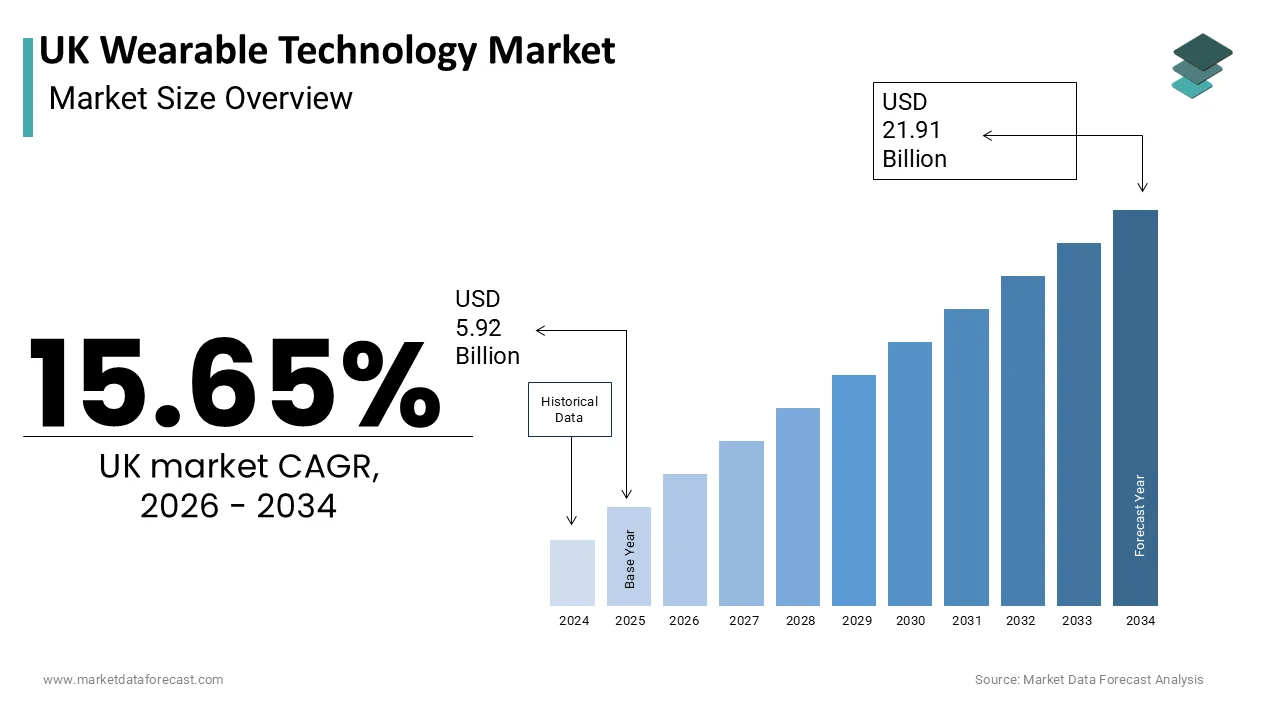
$5.92 BnMarket Estimate, 2026
$6.85 BnMarket Forecast, 2034
$21.91 BnCAGR, 2026–2034
15.65%UK Wearable Technology Market Size
The UK Wearable Technology Market is projected to grow from USD 5.92 billion in 2025 to USD 6.85 billion in 2026 and reach USD 21.91 billion by 2034, registering a CAGR of 15.65% during the forecast period from 2026 to 2034.
The wearable technology is electronic devices designed to be worn on the body, including smartwatches, fitness trackers,s smart glasses, es and hearables that integrate seamlessly with digital ecosystems. These devices serve as extensions of smartphones and personal health monitors enabling users to track biometric data manage notifications and, enhance daily pr,oductivity th, rough continuous connectivity. According to the Office for National Statistics, approximately 78% of adults in the United Kingdom own a smartphone, one which serves as the primary hub for pairing with wearable devices, establishing a robust infrastructure for adoption. The cultural shift toward quantified self-practices has normalized the collection of personal health metrics, such as heart rate, sleep patterns, and activity levels. UK internet users engage with health and fitness applications reg,ularly indicating strong alignment with wearable functionality. Public health initiatives promoting preventive care have further encouraged the use of these devices for monitoring chronic conditions and maintaining healthy lifestyles. The integration of artificial intelligence and machine learning enhances the predictive capabilities of wearables, making them indispensable tools for modern health management.
MARKET DRIVERS
Increasing Prevalence Of Chronic Health Conditions
The rising incidence of chronic diseases, such as diabetes, cardiovascular issues, and hypertension, is accelerating the adoption of wearable technology focused on health monitoring, which is driving the growth of the United Kingdom's wearable technology market. These conditions require continuous tracking of vital signs to manage symptoms and prevent complications, creating a sustained demand for medical-grade and consumer health wearables. Many adults in England report having at least one long-term health condition necessitating regular monitoring and intervention. Wearable devices equipped with s,ensensors blood oxygen saturation, medical-grade readings, and glucose monitoring empower patients to take proactive control of long-term health outcomes. The aging population exacerbates this trend as individuals over 60 years are more susceptible to chronic ailments and benefit from remote patient monitoring solutions that reduce hospital visits. Healthcare providers increasingly recommend wearables to complement traditional treatment plans, enhancing patient engagement and adherence to medication regimes. The ability to sharereal-timee data with doctors facilitates timely interventions and personalized care adjustments. Government initiatives supporting digital health infrastructure further validate the use of these technologies in real-time stream healthcare.
Growing Consumer Focus On Fitness And Wellness
The intensifying focus on physical fitness and holistic wellness among British consumers significantly propels the demand for wearable technology that tracks exercise performance and recovery metrics. The growing consumer focus on fitness and wellness is also fuelling the growth of the United Kingdom's wearable technology market. Participation in sports, running, cycling,g and gym activities has surged as individuals seek to improve their physical health and mental wellbeing through structured routines. Approximately 16.3 million people in the Kingdom of England engage in moderate intensity physical activi, ty at l, east on,ce a week,k creating a demand for fitness-oriented wearables. These devices provide immediate feedback on calories burned, distance covered, and heart rate zones,s enabling users to optimize their workouts and achieve specific goals. Social features within companion apps foster community support and competition, further motivating consistent usage and brand loyalty. The rise of home workouts a, nd outdoor activity post-pandemic has reinforced the need for portable tracking solutions that offer flexibility and convenience. Consumers value the gamification elements, such as badges and challenges,s that make fitness engaging post-pandemic. Retailers and brands leverage this by offering specialized bands and accessories that cater to different sports and aesthetic preferences. The integration of SL, eep tracking, and stress management tools expands the appeal beyond pure athletics to overall lifestyle enhancement.
MARKET RESTRAINTS
Data Privacy And Security Concerns
Data privacy and security concerns, as consumers become increasingly aware of the risks associated with sharing sensitive personal health information, are hampering the growth of the United Kingdom wearable technology market. Wearable devices collect vast amounts of intimate data, including location history, biometric readings, and daily habits, which,h i if compromised, could lead to identity theft or unauthorized surveillance. Many users hesitate to adopt advanced features due to fears that their data may be sold to third parties or used for targeted advertising, without their explicit consent. The complexity of privacy policies often confuses consumers, making it difficult for them to understand how their information is utilized and protected. High-profile incidents involving leaked user data have eroded trust in certain brands, prompting stricter scrutiny before purchase. Regulatory frameworks, such as the UK General Data Protection Regulation, impose stringent requirements on high-profile companies, yet compliance does not always guarantee perceived safety among shoppers. This apprehension limits the willingness of potential users to fully integrate wearables into their daily lives, especially for continuous monitoring applications. Manufacturers must invest heavily in encryption and transparent data practices to mitigate these fears, but the lingering uncertainty continues to hinder broader market penetration and user confidence in the ecosystem.
High Cost Of Advanced Devices
The high cost of advanced wearable devices is a significant barrier to entry for many consumers, rs is hindering the growth of the United Kingdom's wearable technology market. Premium smartwatches and specialized health monitors often carry price tags that exceed several hundred pounds, making them out of reach for budget-conscious shoppers. The household disposable income growth has lagged behind inflation in recent years, forcing families to prioritize essential expenditures over luxury tech items. The rapid pace of technological obsolescence further drives budget-conscious investment as users fear their expensive devices will become outdated within a short period req, requiring frequent replacements. Subscription fees for premium health insights or cellular connectivity add to the total cost of ownership, making long-term usage financially burdensome. Economic uncertainty amplifies price sensitivity le, leading consumers to delay upgrades or opt for cheaper alternatives with limited functionality. This financial constraint restricts the addressable market and slows down the adoption curve among middle- and lower-income groups, who might otherwise benefit from health monitoring features.
MARKET OPPORTUNITIES
Integration With Telemedicine And Remote Patient Monitoring
The integration of wearable technology with telemedicine and remote patient monitoring systems is setting up new opportunities for the expansion of the United Kingdom's wearable technology market. As healthcare providers seek efficient ways to manage patient loads and reduce real-time emissions, wearables offer real-time data transmission that enables proactive care interventions. The NHS faces increasing pressure to deliver care outside traditional hospital settings,s making remote monitoring solutions vital for post-operative chronic conditions and post-operative recovery. Wearable devices can alert clinicians to abnormal vitals, such as irregular heart rhythm,hms, or sudden drops in blood oxygen, allowing for timely medical responses without physical visits. This capability enhances patient safety and reduces healthcare costs by preventing emergencies. Partnerships between tech companies and healthcare institutions facilitate the development of clinically validated devices that meet regulatory standards for medical use. The aging population benefits significantly from this model as it supports independent living while ensuring continuous professional oversight. Reimbursement policies are gradually evolving to cover remote monitoring services, encouraging wider adoption among practitioners. Patients appreciate the convenience and peace of mind provided by constant connectivity to their care teams.
Expansion Into Corporate Wellness Programs
The expansion of wearable technology into corporate wellness programs is also expected to boost the growth of the United Kingdom's wearable technology market. Employers increasingly recognize the link between employee health and productivity,y leading them to invest in initiatives that promote physical activity and stress management. Companies have implemented or plan to implement wellness programs that include incentives for healthy behaviors tracked via wearable devices. These programs often subsidize the cost of wearables for employees, encouraging widespread adoption and fostering a culture of health within the organization. Data aggregated from these devices helps employers design targeted interventions, such as step challenges or mindfulness sessions that improve overall workforce wellbeing. Reduced absenteeism aa nd lower healthcare claims provide tangible return on investment for companies, as justifying the expenditure. Wearable providers can partner with insurance firms and corporate benefits platforms to offer bundled solutions that simplify administration and enhance engagement. The competitive labor market drives organizations to differentiate themselves through attractive perks, including tech-enabled health benefits. This B2B channel provides stable volume sales and reduces reliance on fluctuating consumer demand.
MARKET CHALLENGES
Interoperability Issues Across Ecosystems
Interoperability issues across different technology ecosystems, as consumers struggle with compatibility between devices and platforms, pose a major challenge for the growth of the United Kingdom's wearable technology market. Many wearables function optimally only within specific brand ecosystems, such as Apple iOS or And, roid, creating fragmentation that limits user choice and convenience. This lack of seamless integration prevents users from consolidating health data from multiple sources into a single, comprehensive, long-term, and effective analysis and long-term tracking. Developers face technical hurdles in creating universal standards due to proprietary protocols and competitive barriers among major tech giants. Users who switch smartphone brands often find their existing wearables incompatible, forcing premature replacements and generating electronic waste. The inability to share data easily with healthcare providers who use diverse electronic health record systems further limits the clinical value of wearables. Industry efforts to establish open standards have been slow and inconsistent,t leaving consumers to navigate a complex landscape of adapters and workarounds. This fragmentation undermines the promise of connected health and discourages new adopters who seek simplicity and reliability.
Battery Life And Charging Frequency Limitations
The battery life and charging frequency limitations are affecting user experience and device reliability, which is likely to impede the growth of the United Kingdom wearable technology market. Most advanced smartwatches and fitness trackers require daily or every other day charging, which disrupts continuous monitoring capabilities, prolonged-duration or sleep tracking, and long-duration activities. This limitation forces users to choose between functionality and convenience, often removing devices' critical periods, such as overnight rest, when valuable health data is generated. While some rugbattery life, models offer battery life,e they typically sacrifice advanced features like bright displays or real-time processing power. The degradation of battery capacity over time further reduces usability, requiring eventual replacement of the entire device rather than just the battery component. Fast charging technologies have improved slightly, but do not eliminate the need for regular docking, which can be problematic during travel or outdoor adventures. Manufacturers struggle to balance power consumption with feature richness as adding more sensors and connectivity options drains energy faster. This technical constraint hinders the development of truly autonomous wearables that can operate for weeks without intervention.
REPORT COVERAGE
| REPORT METRIC | DETAILS |
| Market Size Available | 2025 to 2034 |
| Base Year | 2025 |
| Forecast Period | 2026 to 2034 |
| Segments Covered | By Device Type, Connectivity Technology, Application, Distribution Channel, and Region |
| Various Analyses Covered | Global, Regional and Country-Level Analysis, Segment-Level Analysis, Drivers, Restraints, Opportunities, Challenges; PESTLE Analysis; Porter’s Five Forces Analysis, Competitive Landscape, Analyst Overview of Investment Opportunities |
| Countries Covered | United Kingdom |
| Market Leaders Profiled | Apple Inc., Samsung Electronics Co., Ltd., Google LLC (Fitbit), Garmin Ltd., Huawei Technologies Co., Ltd., Xiaomi Corporation, Sony Group Corporation, Polar Electro Oy, Amazfit (Zepp Health Corporation), Whoop, Inc., Oura Health Oy, Fossil Group, Inc. |
SEGMENTAL ANALYSIS
By Device Type Insights
The smart watches segment was the largest by holding 45.3% of the United Kingdom wearable technology market share in 2025, owing to their multifunctional capabilities that extend beyond basic fitness tracking to include communication, ion productivity, and health monitoring. These devices, serve as extensions of smartphones all, owing, users to manage notifications make calls and access applications directly from their wrists, which enhances c,onvenience i,n daily life. The integration of advanced sensors for heart rate, blood d oxygen, and electrocardiogram readings has transformed smart watches into essential health tools that appeal to both fitness enthusiasts and individuals managing chronic conditions. Major technology companies continue to innovate with improved battery life, brighter displays, nd more intuitive operating systems, which sustain consumer interest and encourage regular upgrade cycles. The availability of extensive app ecosystems enables customization for various lifestyles, from professional productivity to outdoor adventure tracking. Retailers prioritize smartwatch placements due to higher average selling prices and strong brand loyalty associated with premium models. Corporate wellness programs often subsidize these devices, further boosting penetration in the smartwatch population. The convergence of fashion and technology allows smart watches to function as style statements, encouraging purchases based on aesthetic preferences alongside functional needs.
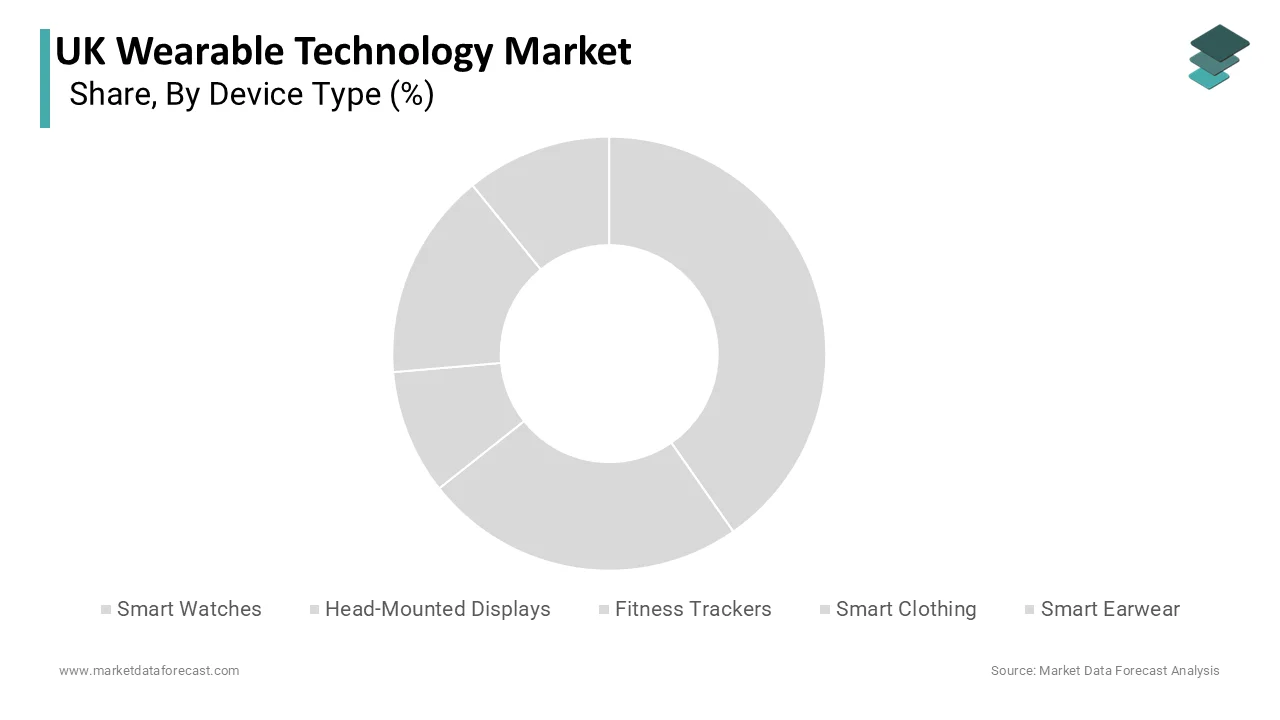
The head-mounted displays segment is expected to grow at the fastest CAGR of 18.5% throughout the forecast period, owing to the increasing investments in immersive technologies for gaming,g enterprise training, ng and educational applications. The launhead-mounted headsets that do not require tethering to powerful computers have lowered entry barriers, making the technology accessible to mainstream consumers. Gaming remains the primary driver; high-quality immersive titles attract enthusiasts willing to invest in premium hardware. Beyond entertainment, enterprises adopt augmented reality solutions for remote assistance, maintenance, CE, and design visualization to improve operational efficiency and reduce costs. Educational institutions utilize these devices for interactive learning experiences that enhance student engageme,nt and rete,nt, ion rates. Improvements in display resolution, field of view, and comfort address previous usability concerns, encouraging longer usage sessions. Content creators are developing increasingly sophisticated applications that leverage spatial computing capabilities,s creating a virtuous cycle of hardware adoption and software innovation.
By Bluetoothity Technology Insights
The Bluetooth connectivity segment was the largest by holding a significant share of the United Kingdom wearable technology market in 2025 due to its energy, efficiency, widespread compatibility, and ease of use with smartphones and other personal devices. This technology enables seamless pairing between wearables and mobile phones, allowing for real-time data synchronization without significant battery drain, which is ideal for small form factor devices. In Bluetooth-enabled environments, the ubiquity of Bluetooth-enabled smartphones ensures that almost every consumer can connect their wearable device in real-time without requiring additional hardware or complex setup procedures. The ideal development of Bluetooth Low Energy protocols has further enhanced performance by minimizing power consumption while maintaining reliable data transfer rates suitable for continuous health monitoring and notification alerts. Manufacturers favor Bluetooth due to its mature ecosystem and lower implementation costs compared to cellular alternatives. Consumers appreciate the simplicity of automatic reconnection when devices come within range, eliminating the need for manual intervention. The ability to connect multiple devices simultaneously s, such as headphones and smart watches, to a single phone adds to the convenience factor. Retailers and service providers support this dominance by ensuring broad compatibility across brands and models.
The cellular connectivity segment is likely to witness the fastest CAGR of 14.2% from 2026 to 2034, with the demand for standalone functionality and independence from smartphones. This technology allows wearables to make calls, send messages,s and stream data directly over mobile networks, enabling users to leave their phones behind during activities, such as running or swimming. Emergency services benefit from this capability as users can contact help even if their phone is not nearby, providing peace of mind for elderly individuals and outdoor enthusiasts. The rollout of 5G networks enhances performance by offering higher speeds and lower latency,cy which supports advanced applications, such as real-time video streaming and cloud-based processing on wearable devices. Mobile network operators promote cellular wearables through bundled data plans and family sharing options, making them more affordable and attractive to subscribers. real-timetilize cellular enabled smart watches for children to maintain contact and track location without providing a full smartphone. The integration of eSIM technology simplifies activation and management,t reducing friction for users switching between devices.
By Application Insights
The consumer fitness applications segment was the largest by holding 43.2% of the United Kingdom wearable technology market share in 2025, with the widespread cultural emphasis on physical health and active lifestyles. Wearable devices equipped with accelerometers, gyroscopes, and heart rate monitors provide users with detailed insights into their exercise performance, including steps taken, calories burned,d and activity intensity. The gamification, f fitness through challenge, badges, and social sharing features, encourage consistent usage and community engagement, which reinforces habit formation. Consumers value the ability to set personalized goals and receive immediate feedback, which helps optimize workouts and prevent overtraining. The integration of sleep tracking and recovery metrics expands the scope beyond active exercise to holistic wellness management. Retailers capitalize on this trend by offering specialized bands and accessories that cater to different sports and aesthetic preferences. Influencers and fitness professionals frequently recommend specific devices, enhancing credibility and driving sales. The affordability of entry-level fitness trackers makes them accessible to a wide audience,ce while premium models offer advanced analytics for serious athletes.
The healthcare monitoring segment is likely to grow at an anticipated CAGR of 16.8% from 2026 to 2,034 with the rising prevalence of chronic diseases and the shift toward preventive care. Wearable devices capable of measuring blood pressure, glucose levels, and electrocardiograms enable continuous remote patient monitoring, which reduces the burden on healthcare facilities and improves outcomes. According to the NHS Digital Health Survey, around 28% of adults in long-termrmort having at least one long-term health condition necessitating regular monitoring and management. These real-time clinicians can access real-time data, facilitating timely interventions and personalized treatment adjustments without requiring frequent hospital visits. The aging population benefits significantly from this technology as it supports independent living while ensuring safety through fall detection and emergency alert. Medical-grade approvals for medical-grade wearables have increased consumer trust and encouraged insurance providers to cover these devices as part of wellness programs. Partnerships between tech companies and healthcare institutions accelerate the development of clinically validated solutions that meet stringent accuracy standards. Patients appreciate the empowerment that comes from understanding their health metrics and actively participating in their care journey.
By Distribution Channel Insights
The online retail channels segment was the largest by accounting for 39.1% of the United Kingdom wearable technology market s, harshare25 due to the convenience,e extensive product selection, and competitive pricing they offer to consumers. E-commerce platforms allow shoppers to compare specifications, read reviews,s and access detailed product information before making purchasing decisions, which is crucial for technical devices. Major retailers, such as Amazon,n Curry, and Argos, dominate this space by offering fast delivery options, returns, and exclusive online deals that appeal to budget-conscious buyers. The ability to browse a wide variety of brands and models, out geogr,aphical constraints enables consumers to find niche products that may not be available in local stores. Direct-to-consumer websites from the manufacturer offer budget-conscious access to the latest releases and customized configurations, enhancing the shopping experience. Digital marketing strategies including tar, including targeted ads and influencer partnerships, drive traffic to online stores,s capturing younger demographics who prefer browsing on smartphones. The integration of atry-ons reality tools for virtuatry-onsns reduces uncertainty and increases conversion rates. Loyalty programs and subscription services further incentivize repeat purchases through online channels.
The specialty electronics stores segment is expected to grow at the fastest CAGR of 9.5% from 2026 to 2034, with the demand for expert advice and hands-on demonstration. These stores provide knowledgeable staff who can guide consumers through complex expectations and help them choose devices that best suit their specific needs and preferences. hands-on specialty electronics sector has stabilized, as shoppers seek tactile experiences and immediate product availability that online channels cannot fully replicate. The ability to try on smart watches and test fit heads,ets ensures comfort and satisfaction, reducing return rates and enhancing customer confidence. Specialty retailers often host workshops and training sessions that educate users on maximizing the utility of their devices,s fostering deeper engagement and brand loyalty. Exclusive partnerships with premium brands allow these stores to offer limited edition models, ls, and early access to new launches, attracting after-sales and early adopters. After-sales support, including setup assistance and troubleshooting services, adds value that justifies potentially higher price points.
COMPETITIVE LANDSCAPE
The competition within the United Kingdom wearable technology market is characterized by feature-rich offerings among global tech giants, a andentr and entry-level device manufacturers vying for consumer attention in a rapidly evolving landscape. Major players leverage their extensive ecosystems and brand recognition to maintain dominance, while continuously innovating to prevent commoditization. The presence of affordable alternatives from emerging brands adds significance, re forcing established companies to justify premium pricing through superior accuracy and unique features. Competitive dynamics are further complicated by the convergence of fashion technology, where aesthetic appeal becomes as important as functional performance. Companies compete not only on hardware specifications but also on software experiences, data insight,s, and customer support quality, which have become key differentiators for discerning shoppers. Price wars occasionally erupt during promotional periods, eroding margins but serving as necessary tactics to retain shelf space a, nd volume.
KEY MARKET PLAYERS
Some of the companies that are playing a dominating role in the U.K. Wearable Technology Market include
- Apple Inc.
- Samsung Electronics Co., Ltd.
- Google LLC (Fitbit)
- Garmin Ltd.
- Huawei Technologies Co., Ltd.
- Xiaomi Corporation
- Sony Group Corporation
- Polar Electro Oy
- Amazfit (Zepp Health Corporation)
- Whoop, Inc.
- Oura Health Oy
- Fossil Group, Inc.
TOP LEADING PLAYERS IN THE MARKET
- Apple maintains a strong presence in the United Kingdom's wearable technology sector through its Apple Watch series, which seamlessly integrates with the iOS ecosystem. The company focuses on advanced health monitoring features, such as electrocardiogram readings, and health-conscious tracking to appeal to health-conscious consumers. Recent initiatives include launching updated models with enhanced battery life and brighter displays to improve user experience. Apple collaborates with healthcare providers to validate the clinical accuracy of its sensors, reinforcing trust among medical professionals. Their strategic emphasis on privacy and data security addresses consumer concerns while maintaining premium brand positioning. Strong retail distribution across major UK cities ensures widespread high-end luxury for customers seeking high-end smartwatches that combine fashion with functionality.
- Samsung contributes significantly to the United Kingdom market with its Galaxy Watch series, offering robust Android compatibility and versatile fitness tracking capabilities. The company leverages its expertise in display technology to create vibrant screens that enhance readability in various lighting conditions. Samsung partners with local fitness apps and health platforms to provide a comprehensive wellness ecosystem for British users. Their commitment to sustainability includes using recycled materials in device construction, which resonates with environmentally aware shoppers. Aggressive marketing campaigns highlighting durability and water resistance attract active individuals who require reliable gear for diverse physical activities.
- Fitbit strengthens its position in the United Kingdom wearable technology market by focusing on accessible health tracking and community-driven motivation tools. The company offers a range of devices from basic trackers to advanced smartwatches, catering to different budget levels and user needs. Recent developments include enhanced community-driven scores and mindfulness features to support holistic wellbeing beyond physical activity. Fitbit integrates deeply with Google services, providing seamless data synchronization and improved software updates for existing users. Their partnerships with corporate wellness programs exp,, and reach into professional sectors promoting employee health. The initiatives. Continuous innovation in sensor accuracy and battery efficiency ensures that Fitbit remains a preferred choice for individuals prioritizing long-term health and lifestyle improvement.
TOP STRATEGIES USED BY KEY MARKET PARTICIPANTS
Key players in the United Kingdom wearable technology market employ several strategic approaches, long-term competitiveness, and drive growth. Product innovation remains central as companies develop advanced health sensors and longer battery life to differentiate their offerings. Sustainability initiatives are increasingly critical, with firms adopting eco-friendly materials and recycling programs to align with consumer values. Strategic partnerships with healthcare providers and insurance companies validate clinical utility and expand reimbursement opportunities. Digital ecosystem integration enables seamless connectivity with smartphones and other smart home devices, es enhancing user convenience. Pricing strategies vary from premium positioning for feature-rich models to competitive entry-level options to capture diverse income groups.
MARKET SEGMENTATION
This research report on the UK wearable technology market is segmented and sub-segmented into the following categories.
By Device Type
- Smart Watches
- Head-Mounted Displays
- Fitness Trackers
- Smart Clothing
- Smart Earwear
- Others
By Connectivity Technology
- Bluetooth Connectivity
- Cellular Connectivity
- Wi-Fi Connectivity
- NFC Connectivity
- Others
By Application
- Consumer Fitness Applications
- Healthcare Monitoring
- Enterprise & Industrial Applications
- Gaming & Entertainment
- Education & Training
- Others
By Distribution Channel
- Online Retail Channels
- Specialty Electronics Stores
- Hypermarkets & Supermarkets
- Brand Stores
- Others
By Country
- United Kingdom