- Product Description Description
- Table of Contents TOC
- List of Table & Figure LOT
- Get Free Sample PDF Sample PDF
Market Size, 2025
$27.29 BnMarket Estimate, 2026
$28.22 BnMarket Forecast, 2034
$36.87 BnCAGR, 2026–2034
3.40%Executive Summary: United Kingdom Wine Market
- Market Scope: Comprehensive market evaluation of the UK wine sector, analyzing types (sparkling, still, others), flavors (red, white, rose), distribution channels (on-trade, off-trade), and domestic viticulture versus international imports.
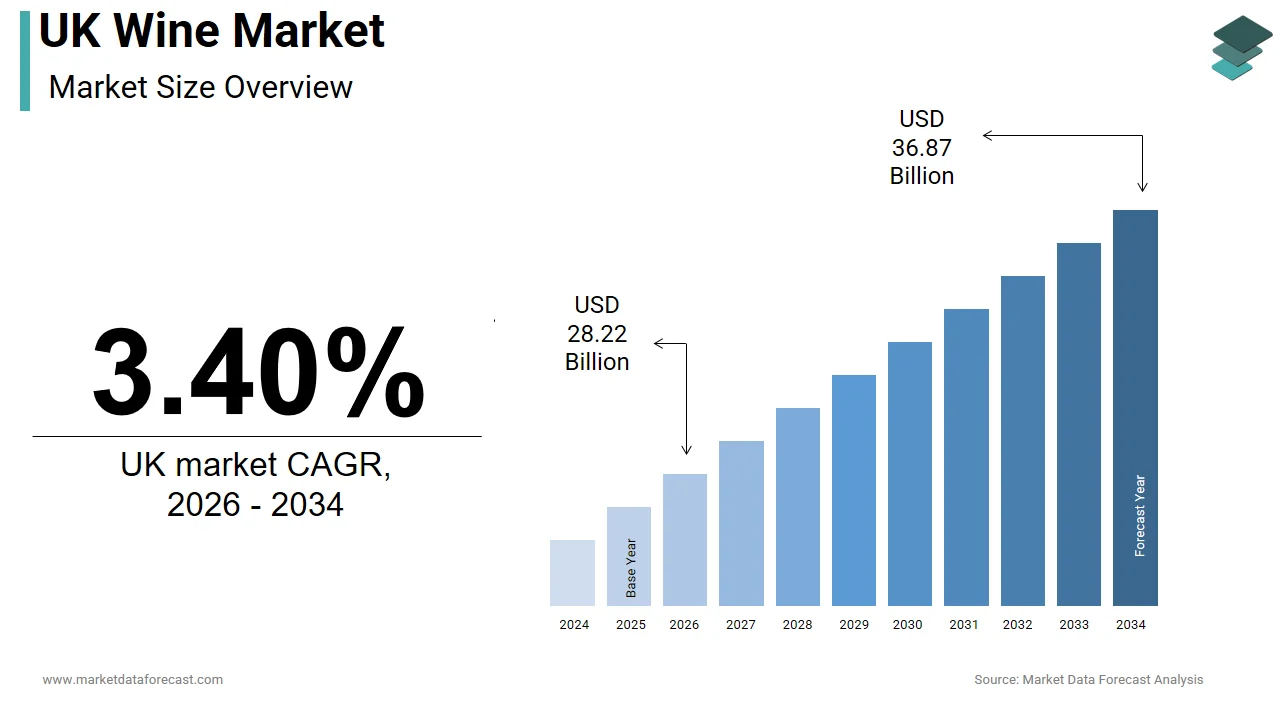
- Market Valuation: Valued at USD 27.29 billion in 2025, reaching USD 28.22 billion in 2026, and projected to expand up to USD 36.87 billion by 2034, registering a steady CAGR of 3.40% throughout the forecast period from 2026 to 2034.
- Primary Growth Drivers: Escalating consumer preference for premium, organic, and sustainable wine options; rapid expansion of direct-to-consumer (DTC) digital sales and e-commerce engagement; and the remarkable growth and international acclaim of domestic English sparkling wine.
Key Market Segment Metrics
| Category | Leading Segment (Base Year Position) | Fastest-Growing / High-Impact Segment |
|---|---|---|
| By Type, Flavor & Channel | Still Wine Segment (leading type with 56.2% share), Red Wine Segment (dominant flavor with 33.4% share), & Off-trade Channel (leading distribution with 46.2% share) | Sparkling Wine Segment (fastest-growing type at a 5.4% CAGR), Rose Wine Segment (fastest flavor at a 6.2% CAGR), & On-trade Channel (fastest distribution at a 4.8% CAGR) |
| By Region / Country | United Kingdom (mature and stable consumer market supported by high import diversity and thriving domestic vineyards in Sussex and Kent) | Direct-to-consumer digital platforms and regional tourism wine hubs experiencing rising engagement. |
Major Market Players & Market Structure
Market Structure: A highly competitive landscape featuring global multinational corporations, specialized independent wine merchants, and emerging domestic producers competing through premiumization, sustainability initiatives, and direct e-commerce platforms.
Key Companies: Accolade Wines Plc., Treasury Wine Estates, Constellation Brands Europe, The Wine Group, John Distilleries, International Beverage Holdings, Distell Group Limited, Halewood Wines International, Sula Vineyards Pvt. Ltd., E. & J. Gallo Winery, Global Drinks Finland, and Torres Wines.
 Download Free Sample Report
UK Wine Market Size
The UK wine market reached USD 27.29 billion in 2025, is expected to grow to USD 28.22 billion in 2026, and is anticipated to touch USD 36.87 billion by 2034, at a CAGR of 3.40% from 2026 to 2034.
The consumer preferences are shifting toward premiumization and diverse varietal exploration. This sector encompasses the import, distribution, and retail of still and sparkling wines from global regions alongside a burgeoning domestic production industry. Cultural attitudes toward alcohol are transforming, with moderation and mindful drinking becoming increasingly prevalent among younger demographics. According to the study, approximately 57% of adults in Great Britain reported drinking alcohol in the previous week, indicating a stable but selective engagement with alcoholic beverages. The regulatory environment is shaped by strict licensing laws and public health initiatives aimed at reducing harmful consumption. Retail dynamics have shifted significantly, with online channels gaining substantial traction alongside traditional off-licenses and supermarkets. The rise of direct-to-consumer models that allows producers to build closer relationships with enthusiasts. Sustainability has emerged as a critical factor influencing purchasing decisions, with consumers seeking organic, biodynamic, and low-intervention options. The geographic diversity of imports reflects global trade relationships, while domestic vineyards in regions such as Sussex and Kent gain international acclaim.
MARKET DRIVERS
Rising Consumer Preference for Premium And Sustainable Wine Options
The escalating demand for premium and sustainable wine options, as consumers increasingly prioritize quality and ethical production methods, is fuelling the growth of the United Kingdom wine market. Shoppers are moving away from bulk purchases of inexpensive wines toward selecting higher-quality bottles that offer distinct flavor profiles and artisanal credentials. There has been a notable shift in spending patterns, with value growth outpacing volume growth, indicating a willingness to pay more for superior products. This trend is reinforced by growing environmental consciousness, where buyers seek wines produced using organic or biodynamic practices that minimize ecological impact. Certifications, such as Soil Association Organic or Demeter Biodynamic, provide tangible assurance of sustainability appealing to ethically minded consumers. The proliferation of natural wines with minimal intervention further attracts younger demographics who value authenticity and transparency in production. Retailers respond by curating selections that highlight small batch producers and eco-friendly packaging solutions. This driver is sustained by educational initiatives from sommeliers and influencers who emphasize the connection between terroir stewardship and taste. As climate change concerns intensify, the appeal of sustainable viticulture grows, strengthening consumer loyalty to brands that demonstrate environmental responsibility.
Expansion of Direct-to-Consumer Sales And Digital Engagement
The rapid expansion of direct-to-consumer sales channels and enhanced digital engagement by bypassing traditional retail intermediaries is also boosting the growth of the United Kingdom wine market. Wineries and independent merchants are leveraging e-commerce platforms to reach customers directly, offering exclusive releases, subscriptions, and personalized recommendations. The online wine sales have maintained robust growth rates, as consumers appreciate the convenience and broader selection available digitally. Subscription services allow enthusiasts to discover new varieties regularly, fostering long-term customer relationships and predictable revenue streams for sellers. Social media platforms play an important role in this dynamic, with influencers and winemakers sharing behind-the-scenes content that builds brand narrative and emotional connection. Virtual tastings and online events have become common tools for engaging remote audiences, creating interactive experiences that mimic in-person interactions. This digital shift enables smaller producers to access national markets without the need for extensive physical distribution networks. Data analytics allow sellers to tailor offerings based on individual preferences, enhancing satisfaction and retention. The ability to purchase rare or limited edition wines directly from the source appeals to collectors and connoisseurs seeking exclusivity.
MARKET RESTRAINTS
Economic Pressure and Cost Of Living Crisis Limit Discretionary Spending
The persistent economic pressure and the ongoing cost-of-living crisis, by reducing disposable income available for non-essential purchases, are hampering the growth of the United Kingdom wine market. Households face increased expenses for energy, food, and housing, leading to tighter budgeting and prioritization of essential goods. The inflation rates have remained elevated, impacting consumer confidence and spending power across various sectors, including alcohol. Wine is often a discretionary item, meaning that during financial uncertainty, consumers may reduce the frequency of purchase or switch to lower-priced alternatives. This trading-down effect impacts premium segments disproportionately as buyers seek value without completely abstaining from consumption. Promotional discounts and multi-buy offers become more critical for driving sales, but can erode profit margins for retailers and producers. The uncertainty surrounding economic conditions also discourages large upfront expenditures on wine collections or premium bottles for special occasions. Small independent merchants struggle to compete with supermarkets that can leverage economies of scale to offer aggressive pricing. This financial constraint creates a challenging environment for growth, particularly for mid-tier and luxury brands that rely on aspirational purchasing.
Stringent Regulatory Frameworks and Public Health Initiatives
The stringent regulatory frameworks and proactive public health initiatives are likely to inhibit the growth of the United Kingdom wine market by imposing operational constraints and influencing consumer behavior. The government has implemented measures such as minimum unit pricing in Scotland and Wales to combat harmful alcohol consumption, which affects pricing strategies and profitability. The ongoing consultations regarding mandatory health labelling, including calorie counts and ingredient lists, add compliance burdens for importers and producers. These regulations require significant investment in packaging redesign and supply chain adjustments, increasing operational costs. Additionally, public health campaigns promoting mindful drinking and highlighting health risks associated with alcohol consumption contribute to a cultural shift toward moderation. This societal pressure reduces overall per capita consumption volumes, particularly among younger demographics who are more receptive to health messaging. The potential introduction of further restrictions, such as advertising bans or higher taxation, creates an environment of uncertainty for businesses. Compliance with varying regulations across different UK nations adds complexity for national distributors. These regulatory and social factors collectively constrain market expansion by limiting marketing flexibility and encouraging reduced consumption. Companies must navigate this landscape carefully, balancing commercial objectives with legal and ethical responsibilities, which can hinder aggressive growth strategies and innovation in promotional activities.
MARKET OPPORTUNITIES
Growth of Domestic Wine Production and English Sparkling Wine
The remarkable growth of domestic wine production, particularly English sparkling wine, by capitalizing on local pride and quality recognition, is anticipated to boost the growth of the United Kingdom wine market. Climate change has created favorable conditions for viticulture in southern England by allowing producers to craft world-class sparkling wines that rival Champagne. The area under vine in the UK has expanded significantly, with hundreds of new vineyards established in recent years. This domestic boom offers retailers and hospitality venues the chance to promote locally sourced products, appealing to consumers who prioritize sustainability and reduced carbon footprints. The prestige of English sparkling wine has grown internationally, winning numerous awards and attracting tourism to wine regions. This success story enhances the overall image of the UK wine sector, encouraging investment and innovation. Collaborations between domestic producers and international experts facilitate knowledge transfer and quality improvement. Marketing campaigns highlighting the unique terroir and craftsmanship of British wines resonate with patriotic and environmentally conscious buyers. The availability of high-quality local options reduces reliance on imports and supports rural economies.
Integration of Technology in Viticulture And Supply Chain Efficiency
The integration of advanced technology in viticulture and supply chain management for efficiency and quality enhancement in the United Kingdom wine market. Precision agriculture tools such as drones, sensors, and data analytics enable growers to monitor vine health, optimize irrigation, and predict harvest times with greater accuracy. These innovations reduce resource usage and improve grape quality, leading to better wine consistency and yield. In the supply chain, blockchain technology is being explored to enhance traceability, allowing consumers to verify the origin and authenticity of bottles via QR codes. This transparency builds trust and combats counterfeiting, which is a concern for premium brands. Automated warehousing and logistics solutions streamline distribution, reducing costs and delivery times for online orders. Artificial intelligence assists in demand forecasting, helping retailers manage inventory more effectively and reduce waste. These technological advancements support sustainability goals by minimizing environmental impact through precise resource application. For consumers, technology enhances the purchasing experience through augmented reality labels and virtual cellar management apps.
MARKET CHALLENGES
Climate Change Impact on Grape Growing and Production Stability
Climate change, by introducing unpredictability in grape growing conditions and threatening production stability, is one of the major challenges for the growth of the United Kingdom wine market. While warmer temperatures have initially benefited English viticulture, extreme weather events such as frost, hail, and heavy rainfall pose significant risks to yields. According to meteorological data, the frequency of such anomalies has increased, causing damage to vines and affecting grape quality. Unseasonable weather can disrupt flowering and ripening processes, leading to inconsistent harvests and variable wine characteristics. This volatility makes long-term planning difficult for growers who must invest in protective measures, such as frost fans and drainage systems, increasing operational costs. Additionally, changing climate patterns may alter the suitability of certain grape varieties, requiring producers to adapt their planting strategies over time. The uncertainty surrounding future climate scenarios complicates investment decisions and insurance coverage. For importers, climate change affects global supply chains, potentially disrupting the availability and pricing of popular international wines.
Intense Competition from Alternative Beverages and Changing Social Norms
The intense competition from alternative beverages and evolving social norms, by fragmenting consumer attention and reducing traditional consumption occasions, is additionally inhibiting the growth of the United Kingdom wine market. The rise of no and low alcohol wines, craft beers, spirits, and ready-to-drink cocktails offers diverse alternatives that appeal to health-conscious and socially aware consumers. The no and low alcohol segment is experiencing rapid growth as individuals seek to moderate their intake without sacrificing social participation. This shift reflects broader cultural trends toward wellness and mindfulness, where excessive alcohol consumption is increasingly stigmatized. Younger generations, particularly Gen Z, are drinking less overall, preferring experiences and authentic connections over heavy drinking sessions. Bars and restaurants are expanding their non-alcoholic offerings, reducing the prominence of wine lists. Wine producers face the challenge of reinventing their products to remain relevant in this new landscape, perhaps by developing sophisticated alcohol-free options. Marketing messages must evolve to align with the values of balance and moderation rather than indulgence. The fragmentation of the beverage market means wine must compete harder for share of wallet and occasion.
REPORT COVERAGE
| REPORT METRIC | DETAILS |
| Market Size Available | 2025 to 2034 |
| Base Year | 2025 |
| Forecast Period | 2026 to 2034 |
| Segments Covered | By Type, Flavor, Distribution Channel, and Country. |
| Various Analyses Covered | Global, Regional, and Country-Level Analysis, Segment-Level Analysis, Drivers, Restraints, Opportunities, Challenges; PESTLE Analysis; Porter’s Five Forces Analysis, Competitive Landscape, Analyst Overview of Investment Opportunities |
| Countries Covered | United Kingdom |
| Market Leaders Profiled | The Wine Group, John Distilleries, International Beverage Holdings, Distell Group Limited, Constellation Brands, Halewood Wines International, Sula Vineyards Pvt. Ltd., Accolade Wines Plc., E. & J. Gallo Winery, Global Drinks Finland, Treasury Wine Estates, Torres Wines, and Others. |
SEGMENTAL ANALYSIS
By Type Insights
The still wine segment was the largest by accounting for 56.2% of the United Kingdom wine market share in 2025 due to its versatility and integration into daily dining and social routines. Unlike sparkling wine, which is often reserved for celebrations, still wine is consumed regularly with meals or during casual relaxation. The wide variety of grape varieties and styles allows consumers to find options that suit diverse palates and occasions. Red and white still wines are perceived as essential components of home bars and restaurant menus, ensuring consistent demand. The availability of still wine across all price points, from budget-friendly table wines to premium single-vineyard bottles, makes it accessible to a broad demographic. Retailers dedicate significant shelf space to still wines, recognizing their high turnover rates. This segment benefits from established consumer preferences and deep cultural roots in European dining traditions. The ability to pair still wine with a wide range of cuisines further reinforces its dominance.
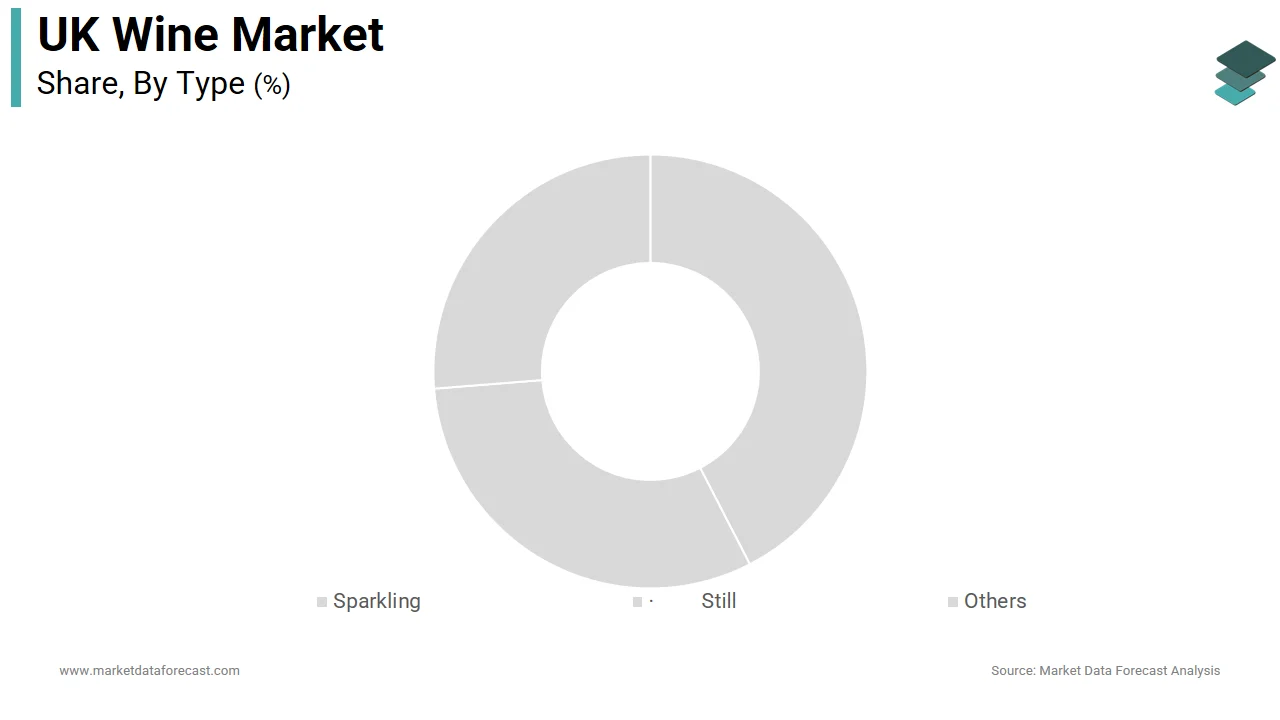
The sparkling wine segment is likely to grow at the fastest CAGR of 5.4% from 2026 to 2034, with the premiumization and its association with celebration and indulgence. Consumers are increasingly trading up from prosecco to higher-quality Champagne and English sparkling wines, viewing them as affordable luxuries. Sales of premium sparkling wines have outpaced volume growth, indicating a shift toward higher value products. The perception of sparkling wine as a treat rather than just a party drink has expanded its consumption occasions to include weekends and casual gatherings. Marketing campaigns emphasizing craftsmanship and heritage resonate with consumers seeking authentic experiences. The rise of English sparkling wine has added a local prestige factor, encouraging domestic consumption and pride. Retailers promote sparkling wines through attractive packaging and gift sets, enhancing their appeal. This segment benefits from the aspirational nature of the product, which drives impulse purchases and special occasion spending.
By Flavor Insights
The red wine segment was the largest by holding 33.4% of the United Kingdom wine market share in 2025, with its perceived health benefits and strong compatibility with hearty cuisines. Consumers often associate red wine with antioxidants such as resveratrol, which are believed to support heart health and longevity. The widely cited perception in the media this perception encourages regular moderate consumption among health-conscious adults. Red wine pairs exceptionally well with popular UK dishes such as roasts, stews, and grilled meats, making it a preferred choice for dinner parties and family meals. The depth and complexity of red wine flavors appeal to mature palates seeking richness and structure. Major grape varieties like Cabernet Sauvignon, Merlot, and Pinot Noir offer diverse profiles that cater to different preferences. Retailers stock extensive ranges of red wines reflecting their high demand. The cultural image of red wine as sophisticated and timeless reinforces its popularity. This segment benefits from long-standing consumer habits and loyalty to specific regions such as Bordeaux and Rioja.
The rose wine segment is expected to grow at the fastest CAGR of 6.2% from 2026 to 2034, with the social media influence and its association with a vibrant lifestyle. The visual appeal of rose wine makes it highly shareable on platforms like Instagram and TikTok, where aesthetics play an important role in consumer choices. The trends posts featuring rose wine often garner high engagement, particularly during the spring and summer months. This visibility translates into increased demand as consumers seek to participate in trending social experiences. Its light and fruity profile suits outdoor gatherings, barbecues, and picnics, aligning with casual socializing trends. Brands invest in attractive packaging and influencer partnerships to amplify this appeal. The perception of rose as a fun and approachable wine lowers barriers for new drinkers. Seasonal promotions and limited-edition releases create urgency and excitement.
By Distribution Channel Insights
The off-trade channel segment was the largest by accounting for 46.2% of the United Kingdom wine market share in 2025, with the convenience of purchasing wine for home consumption and shifting social habits. Consumers increasingly prefer the comfort and cost-effectiveness of drinking at home rather than visiting bars or restaurants. The ability to buy wine alongside groceries simplifies shopping trips and encourages impulse purchases. Home consumption allows for greater control over pacing and portion sizes, aligning with mindful drinking trends. The off-trade offers a wider selection of wines at competitive prices compared to on-trade venues. Promotions such as multi-buy deals and discounts attract budget-conscious shoppers. The rise of home entertainment and dining has further cemented the role of off-trade wine in social routines. Online delivery services provide additional convenience, allowing customers to browse extensive catalogs from home.
The on-trade channel is likely to grow at the fastest CAGR of 4.8% from 2026 to 2034, with the experience economy and the revival of social dining. Consumers are increasingly valuing experiences over possessions, seeking memorable moments in restaurants, bars, and wine bars. The footfall in dining establishments has recovered strongly post-pandemic, with wine sales benefiting from this resurgence. The on-trade offers expert guidance from sommeliers and staff, enhancing the discovery of new wines. The ambiance and service provided by venues justify premium pricing and encourage experimentation. Wine pairing menus elevate the dining experience, attracting foodies and enthusiasts. Social interaction in public spaces drives consumption as groups share bottles and explore options together. Events, such as wine tastings and themed nights, create buzz and draw crowds. The desire for connection and celebration outside the home supports on-trade growth. This channel captures the aspirational aspect of wine consumption, offering an escape from daily routines.
COMPETITIVE LANDSCAPE
The competition in the United Kingdom wine market is intense and characterized by a mix of large multinational corporations, independent importers, and burgeoning domestic producers. Major global players leverage their extensive distribution networks and brand recognition to dominate shelf space in supermarkets and off-licenses. Independent merchants compete by offering curated selections of rare and artisanal wines that appeal to connoisseurs seeking uniqueness. The rise of English sparkling wine has introduced a new competitive dynamic, with local producers gaining international acclaim and challenging imported Champagne. Price competition is fierce, particularly in the mid-tier segment where private label offerings from retailers exert pressure on branded products. Consumer preferences for sustainability and transparency force companies to innovate in packaging and sourcing. Digital channels have lowered barriers to entry, allowing small wineries to reach customers directly.
KEY MARKET PLAYERS
The major players in the UK wine market include
- The Wine Group
- John Distilleries
- International Beverage Holdings
- Distell Group Limited
- Constellation Brands
- Halewood Wines International
- Sula Vineyards Pvt. Ltd.
- Accolade Wines, Plc.
- E & J Gallo Winery
- Global Drinks Finland
- Treasury Wine Estates
- Torres Wines
TOP PLAYERS IN THE MARKET
- Accolade Wines is a major international wine company with a significant presence in the United Kingdom through its diverse portfolio of brands. The company contributes to the market by offering a wide range of wines from entry-level to premium segments, catering to various consumer preferences. Recent actions include investing in sustainable viticulture practices and reducing carbon emissions across its supply chain. Accolade strengthens its position by launching innovative packaging solutions such as lightweight bottles and canned wines to appeal to environmentally conscious buyers. The company also focuses on digital marketing campaigns to engage younger demographics and enhance brand visibility.
- Treasury Wine Estates is a global wine leader with a strong footprint in the United Kingdom, known for its premium and luxury wine brands. The company plays a vital role in elevating the perception of wine through high-quality products and strategic brand building. Recent actions involve expanding its direct-to-consumer channels and enhancing customer experiences through personalized digital platforms. Treasury Wine Estates strengthens its market position by acquiring niche premium brands that align with growing consumer demand for exclusivity and authenticity. The company also invests in vineyard technology to improve grape quality and sustainability.
- Constellation Brands Europe is a key player in the United Kingdom wine market, representing a diverse portfolio of international and domestic wine brands. The company contributes significantly by distributing popular labels and introducing new varieties to British consumers. Recent actions include strengthening partnerships with local retailers and hospitality venues to increase product availability and visibility. Constellation Brands enhances its market position by implementing data-driven marketing strategies to target specific consumer segments effectively. The company also prioritizes corporate social responsibility initiatives, focusing on water conservation and community support.
TOP STRATEGIES USED BY KEY MARKET PARTICIPANTS
Key players in the United Kingdom wine market employ several strategic approaches to maintain competitiveness and drive growth. Premiumization is central, with companies focusing on high-value brands to capture discerning consumers. Sustainability initiatives, including organic certification and eco-friendly packaging, are increasingly adopted to meet ethical demands. Digital transformation enhances direct-to-consumer sales through e-commerce platforms and subscription services. Strategic acquisitions of niche brands allow companies to diversify portfolios and access new customer segments. Partnerships with hospitality venues strengthen on-trade presence and brand visibility. Marketing efforts emphasize storytelling and provenance to build emotional connections with buyers. These combined strategies enable key participants to navigate market challenges and capitalize on emerging trends effectively.
UK WINE MARKET NEWS
- In May 2024, Treasury Wine Estates expanded its direct-to-consumer digital platform to enhance customer engagement and strengthen the UK wine market.
MARKET SEGMENTATION
This research report on the UK wine market has been segmented and sub-segmented based on the following categories.
By Type
- Sparkling
- Still
- Others
By Flavor
- Red
- White
- Rose
By Distribution Channel
- On-trade
- Off-trade