U.S. Kombucha Market Size, Share, Trends, and Growth Analysis Report, Segmented by Product, Type, Packaging Material, Distribution Channel, and Country – Industry Forecast From 2026 to 2034
Market Size, 2025
$554 MnMarket Estimate, 2026
$681.42 MnMarket Forecast, 2034
$3,570 MnCAGR, 2026–2034
23%U.S. Kombucha Market Report Summary
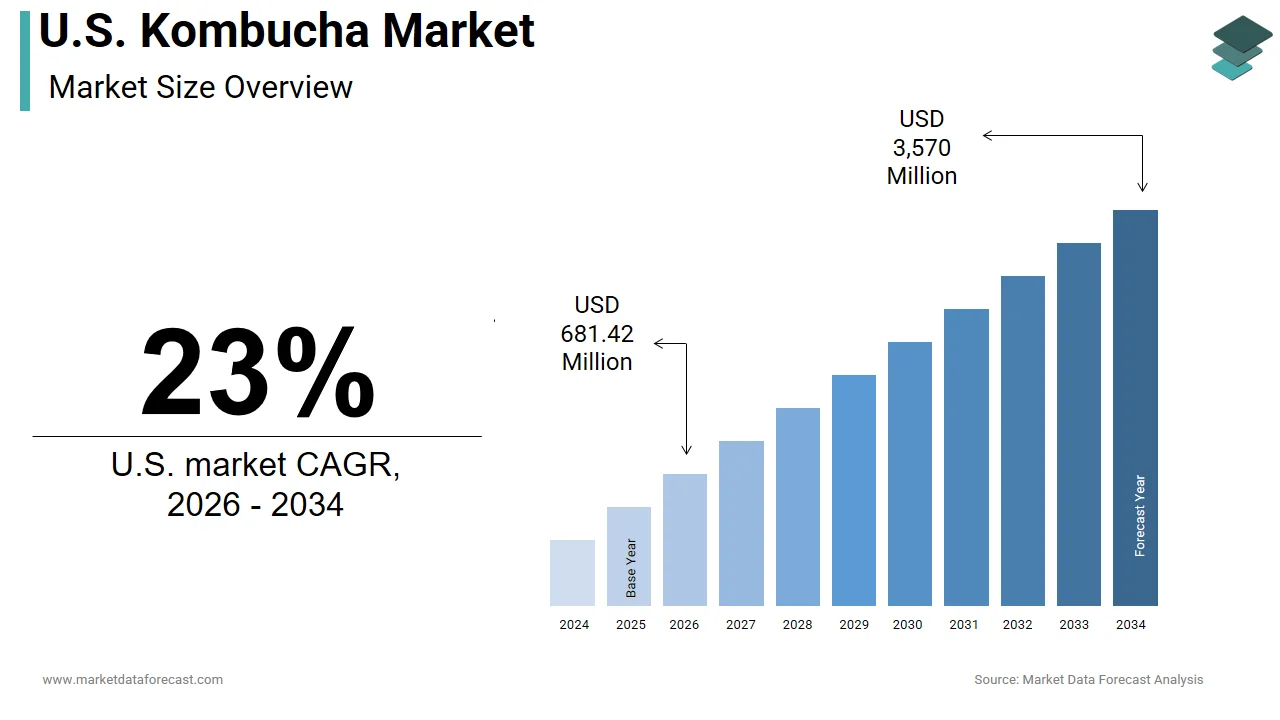
The U.S. kombucha market was valued at USD 554 million in 2025, is estimated to reach USD 681.42 million in 2026, and is projected to reach USD 3,570 million by 2034, growing at a CAGR of 23% from 2026 to 2034. Market growth is driven by increasing consumer preference for probiotic beverages, rising awareness regarding digestive health, and growing demand for natural and functional drinks. Kombucha has gained significant popularity among health-conscious consumers due to its perceived gut health benefits, low sugar alternatives, and clean-label appeal. Additionally, expanding product availability, flavor innovation, and increasing adoption of organic beverages are accelerating market growth across the United States.
Key Market Trends
- Rising demand for probiotic and gut-health beverages.
- Increasing consumer preference for natural and organic drinks.
- Growth in functional and fermented beverage consumption.
- Expansion of flavor innovation and premium kombucha offerings.
- Increasing availability through retail and e-commerce distribution channels.
Segmental Insights
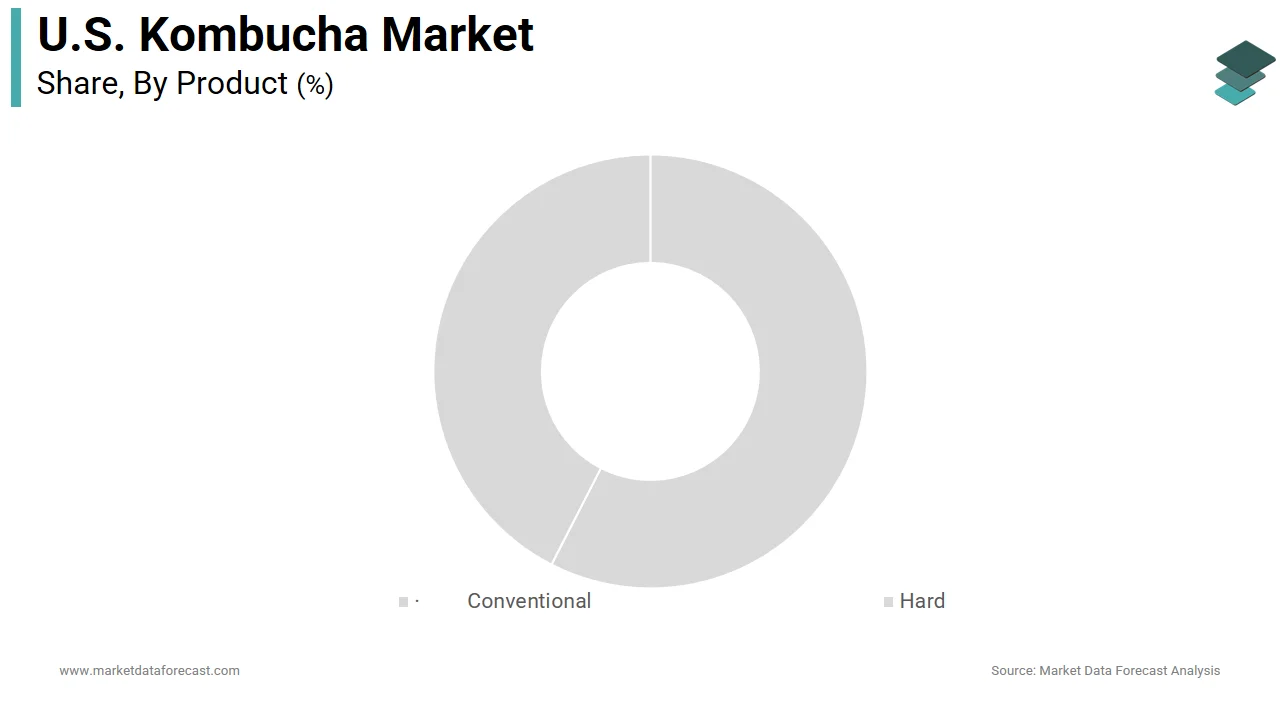
- Based on product, the conventional kombucha segment dominated the United States kombucha market by accounting for 68.9% share in 2025, driven by strong consumer familiarity and wider product availability.
- Based on distribution channel, the off-trade segment held the leading share in 2025, supported by strong sales through supermarkets, grocery stores, and online retail platforms.
Country-Level Insights
- The United States is expected to maintain its dominant position in the North American kombucha market over the forecast period, supported by increasing health-conscious consumer behavior, rapid product innovation, and strong retail penetration.
Competitive Landscape
The U.S. kombucha market is highly competitive, with companies focusing on organic formulations, flavor diversification, and expansion of distribution networks. Product innovation, clean-label positioning, and strategic retail partnerships are shaping the competitive landscape.
Prominent companies operating in the U.S. kombucha market include GT's Living Foods, Kombucha Wonder Drink, Health-Ade Kombucha, Brew Dr. Kombucha, Humm Kombucha, KeVita Inc., Kombucha Town, Revive Kombucha, and Kombucha Culture.
U.S. Kombucha Market Size
The U.S. kombucha market was valued at USD 554 million in 2025, is estimated to reach USD 681.42 million in 2026, and is projected to reach USD 3,570 million by 2034, growing at a CAGR of 23% from 2026 to 2034.
As per the Centers for Disease Control and Prevention, there is a growing national emphasis on preventive health measures, as approximately 47.4% of adults attempted to lose weight in the past year, driving interest in low-calorie functional alternatives. The market landscape is heavily influenced by consumer shifts away from high sugar sodas toward beverages that offer perceived digestive and immune benefits. According to the Dietary Guidelines for Americans, the average intake of added sugars remains above the recommended limit of 10% of daily calories, prompting a search for naturally sweetened options like kombucha. The regulatory environment requires strict adherence to alcohol content limits, as fermentation can produce trace amounts of ethanol, necessitating careful monitoring by manufacturers. The product is increasingly viewed not merely as a novelty but as a staple in wellness-oriented lifestyles, often consumed as a mid-day pick-me-up or a post-meal digestive aid. This sector operates at the intersection of traditional fermentation practices and modern health consciousness, appealing to a demographic that values transparency in ingredient sourcing and functional efficacy in their daily consumption habits.
MARKET DRIVERS
Rising Consumer Focus on Gut Health and Probiotics
The rising consumer awareness regarding gut health and the critical role of probiotics in overall well-being is one of the major factors propelling the growth of the U.S. kombucha market. Modern scientific research has increasingly linked gut microbiome diversity to immune function, mental health, and metabolic regulation, prompting individuals to seek dietary sources of beneficial bacteria. As per the International Food Information Council, public interest in microbiome-related research has surged, with 37% of Americans actively prioritizing digestive and gut health in their dietary choices. Kombucha serves as an accessible and enjoyable vehicle for delivering these live cultures, offering an alternative to pill-based supplements, which some consumers find inconvenient or unnatural. The fermentation process produces not only probiotics but also prebiotics and organic acids such as acetic and gluconic acid, which further support digestive integrity. This holistic benefit profile resonates strongly with health-conscious demographics who prioritize preventive healthcare over reactive treatment. According to consumer health surveys, a significant majority of millennials and Generation Z consumers consider gut health a top priority when making food and beverage choices. This demographic shift creates a sustained demand for functional beverages that deliver tangible health benefits without compromising on taste. Manufacturers leverage this trend by highlighting specific strain diversity and colony-forming units on packaging, thereby educating consumers and building trust. The alignment of kombucha with broader wellness trends such as clean eating and natural living reinforces its position as a preferred choice for those seeking to optimize their internal health ecosystems through daily dietary habits.
Shift Away from High Sugar Carbonated Soft Drinks
The widespread consumer movement away from traditional high-sugar carbonated soft drinks in favor of healthier alternatives is further contributing to the U.S. kombucha market growth. Public health initiatives and increased awareness of the detrimental effects of excessive sugar consumption have led many individuals to reduce their intake of conventional sodas. As per the U.S. Department of Agriculture, the average American consumes a substantial amount of added sugars daily, largely from beverages, prompting a search for lower sugar options that still provide sensory satisfaction. Kombucha offers a compelling substitute due to its natural carbonation and complex flavor profiles that mimic the mouthfeel of soda while containing significantly less sugar. The fermentation process consumes much of the initial sugar added to the tea, resulting in a final product that is often perceived as a guilt-free indulgence. This transition is particularly evident among parents seeking healthier options for their families and adults managing conditions such as type 2 diabetes or obesity. According to behavioral health studies, consumers are more likely to sustain dietary changes when they have access to enjoyable alternatives that do not feel like deprivation. Kombucha fulfills this need by providing a refreshing and flavorful experience that aligns with health goals. The availability of diverse flavors ranging from fruity to herbal allows consumers to explore variety without reverting to unhealthy habits. This substitution effect drives volume growth as kombucha increasingly occupies the shelf space and consumption occasions previously dominated by sugary soft drinks in households and food service establishments.
MARKET RESTRAINTS
Regulatory Ambiguity Regarding Alcohol Content
The regulatory ambiguity and compliance challenges associated with the trace alcohol content produced during fermentation are major restraints to the U.S. kombucha market growth. Since kombucha is a fermented product, it naturally contains ethanol, which can accumulate if the beverage is not properly stabilized or stored. As per the Alcohol and Tobacco Tax and Trade Bureau, beverages containing more than 0.5% alcohol by volume are classified as alcoholic and subject to stringent labeling, taxation, and distribution regulations. Maintaining alcohol levels below this threshold requires precise control over the fermentation process and cold chain logistics, as warmer temperatures can reactivate yeast and increase alcohol production. This technical requirement imposes high operational costs on manufacturers who must invest in advanced testing equipment and refrigerated supply chains. Any failure to comply can result in product recalls, legal penalties and reputational damage, as seen in past incidents where major brands were pulled from shelves due to elevated alcohol levels. According to industry analyses, the cost of maintaining compliance with these regulations can be prohibitive for smaller artisanal producers who lack the resources for extensive quality control infrastructure. Furthermore, the varying enforcement of these rules across different states creates a complex logistical landscape for national distribution. Retailers may hesitate to stock kombucha due to fears of non-compliance, which is limiting market access. This regulatory burden stifles innovation and expansion, particularly for new entrants who must navigate a labyrinth of legal requirements while ensuring product safety and consistency for consumers who may be sensitive to even trace amounts of alcohol.
High Price Point and Accessibility Limitations
The relatively high price point of kombucha compared to other non-alcoholic beverages is further hampering the mass market adoption and frequent consumption. Producing high-quality kombucha involves labor-intensive processes, including brewing tea, fermenting with SCOBY, and flavoring, which results in higher production costs than standard soft drinks or bottled teas. As per academic studies on beverage pricing, the average price of a healthy drink like kombucha in hospitality venues is often 100% higher than a typical $5 sugar sweetened beverage, positioning it as a premium product rather than a daily staple for many households. This cost disparity limits accessibility for lower-income consumers who may view kombucha as an occasional treat rather than a regular part of their diet. The premium pricing is further exacerbated by the need for refrigeration throughout the supply chain to maintain product quality and prevent over-fermentation, adding to logistical expenses. According to retail market observations, kombucha is often positioned in the specialty or health food sections of grocery stores, which can intimidate budget-conscious shoppers or those unfamiliar with the product. The perception of kombucha as an elite or niche beverage hinders its penetration into broader demographic segments. Additionally, the smaller package sizes typical of kombucha bottles mean that the cost per ounce is significantly higher than bulk beverage options. This economic constraint restricts volume growth and forces manufacturers to compete on value propositions that may not resonate with price-sensitive consumers. Until production efficiencies improve or economies of scale reduce costs, the high price point will remain a persistent restraint on market expansion.
MARKET OPPORTUNITIES
Expansion into Mainstream Retail and Convenience Channels
The expansion beyond specialty health food stores into mainstream retail supermarkets and convenience channels is a notable opportunity for the U.S. kombucha market. As consumer familiarity with kombucha grows, demand is increasing for greater accessibility and convenience in purchasing these beverages. For instance, major grocery chains are expanding their refrigerated beverage aisles to include a wider variety of kombucha brands, which is recognizing the potential for increased basket size and customer loyalty. This shift allows kombucha to reach a broader audience, including impulse buyers and those who may not actively seek out health food stores. The placement of kombucha alongside traditional soft drinks and juices in high-traffic areas enhances visibility and encourages trial among new consumers. According to retail analytics, products placed at eye level in mainstream aisles see significantly higher sales volumes compared to those relegated to niche sections. Convenience stores are also emerging as key distribution points, catering to on-the-go consumers who seek quick and healthy refreshment options. The integration of kombucha into these channels requires manufacturers to optimize packaging for durability and shelf appeal while ensuring consistent supply chain management. By leveraging the extensive distribution networks of large retailers, brands can achieve greater market penetration and brand recognition. This mainstreaming effort also provides opportunities for private label collaborations, where retailers develop their own kombucha lines to offer competitive pricing. The ability to make kombucha a ubiquitous presence in everyday shopping environments will drive volume growth and normalize its consumption as a standard beverage choice rather than a specialized health product.
Innovation in Flavor Profiles and Functional Ingredients
Innovation in flavor profiles and the incorporation of additional functional ingredients are other promising opportunities for the U.S. market. Consumers are increasingly seeking novel and exciting taste experiences that go beyond traditional ginger and berry flavors, driving demand for unique combinations such as tropical fruits, herbs, and spices. As per culinary trend reports, the integration of adaptogens, nootropics, and botanicals into beverages is gaining traction among health-conscious individuals who seek multifunctional benefits. Kombucha serves as an ideal base for these innovations due to its versatile flavor profile and natural acidity, which complements a wide range of ingredients. Manufacturers can create targeted products that address specific consumer needs, such as stress relief, energy boosting or immune support, by adding ingredients like ashwagandha, lion's mane mushroom or elderberry. According to consumer preference studies, there is a strong appetite for beverages that offer both sensory enjoyment and tangible health benefits, creating a niche for premium functional kombuchas. This strategy allows brands to command higher price points and foster brand loyalty among discerning consumers who value customization and efficacy. Additionally, the use of organic and locally sourced ingredients appeals to environmentally conscious buyers who prioritize sustainability and transparency. By continuously introducing limited edition flavors and seasonal varieties, companies can maintain consumer interest and encourage repeat purchases. This approach transforms kombucha from a static product into a dynamic platform for culinary and nutritional innovation, capturing the attention of adventurous drinkers and health enthusiasts alike.
MARKET CHALLENGES
Supply Chain Volatility and Ingredient Sourcing
The supply chain volatility and the sourcing of high-quality organic ingredients are significant challenges to the kombucha market expansion in the U.S. The production of kombucha relies heavily on tea, sugar, and various flavoring agents such as fruits and herbs, many of which are subject to agricultural fluctuations and climate change impacts. As per the U.S. Department of Agriculture, extreme weather events and shifting growing conditions can lead to shortages and price spikes for key commodities such as organic cane sugar and specialty teas. These disruptions force manufacturers to navigate complex procurement landscapes to secure consistent supplies while maintaining cost efficiency. The reliance on organic ingredients further complicates sourcing, as the supply of certified organic materials is often limited and more susceptible to variability. According to industry analyses, the cost of organic certification and compliance adds another layer of complexity to supply chain management. Manufacturers must build resilient supply networks that can withstand shocks such as transportation delays or geopolitical tensions affecting import routes. The need for fresh ingredients for flavoring also requires efficient cold chain logistics to prevent spoilage and ensure quality. Any disruption in these processes can lead to production delays and inconsistent product availability, damaging brand reputation and consumer trust. Furthermore, the increasing demand for sustainable and ethically sourced ingredients pressures companies to audit their supply chains rigorously, requiring significant investment in transparency and verification systems. Balancing cost, quality, and sustainability in ingredient sourcing remains a persistent challenge that requires strategic planning and collaboration with suppliers to mitigate risks and ensure long-term viability.
Consumer Skepticism and Label Transparency Issues
Consumer skepticism regarding health claims and label transparency poses a significant challenge to the growth of the kombucha market. As the sector becomes more crowded, consumers are becoming increasingly discerning about the actual benefits of the products they purchase, questioning the validity of marketing assertions related to probiotics and detoxification. As per the Federal Trade Commission, there is heightened scrutiny on health-related claims made by food and beverage companies, requiring substantiation through scientific evidence. Some kombucha products may contain negligible amounts of live cultures due to pasteurization or filtration processes, leading to discrepancies between consumer expectations and product reality. This lack of clarity can erode trust and lead to backlash from informed consumers who feel misled. According to consumer advocacy groups, there is a growing demand for clear and accurate labeling that specifies the number of colony-forming units and the presence of live cultures at the time of consumption. The variability in fermentation processes means that not all kombucha products offer the same health benefits, creating confusion in the marketplace. Manufacturers face the challenge of communicating complex scientific information in a way that is accessible and honest without violating regulatory guidelines. Failure to address these transparency issues can result in diminished brand loyalty and reduced willingness to pay premium prices. Additionally, negative media coverage or scientific studies questioning the efficacy of probiotics can impact overall market sentiment. Building and maintaining consumer trust requires a commitment to rigorous quality control and open communication about product formulation and benefits.
REPORT COVERAGE
| REPORT METRIC | DETAILS |
| Market Size Available | 2025 to 2034 |
| Base Year | 2025 |
| Forecast Period | 2026 to 2034 |
| Segments Covered | By Product, Type, Packaging Material, Distribution Channel, and Country. |
| Various Analyses Covered | Global, Regional, and Country-Level Analysis, Segment-Level Analysis, Drivers, Restraints, Opportunities, Challenges; PESTLE Analysis; Porter’s Five Forces Analysis, Competitive Landscape, Analyst Overview of Investment Opportunities |
| Countries Covered | New York, Massachusetts, Pennsylvania, Illinois, Ohio, Michigan, Texas, Florida, Georgia, California, Washington, Colorado. |
| Market Leaders Profiled | GT's Living Foods (US), Kombucha Wonder Drink (US), Health-Ade Kombucha (US), Brew Dr. Kombucha (US), Humm Kombucha (US), KeVita Inc, Kombucha Town (US), Revive Kombucha (US), Kombucha Culture (US). |
SEGMENTAL ANALYSIS
By Product Insights
The conventional kombucha segment accounted for the leading share of 68.9% of the U.S. market in 2025. The dominance of the conventional segment in the U.S. market is driven by its widespread acceptance as a daily wellness beverage that integrates seamlessly into healthy lifestyles across diverse demographic groups. Unlike alcoholic alternatives, conventional kombucha can be consumed at any time of day, including during work hours, after exercise, or with meals, making it a versatile option for hydration and gut health support. For instance, Americans are increasingly replacing sugary sodas with functional non-alcoholic drinks, with conventional kombucha serving as a leading substitute due to its probiotic content and lower sugar profile. The ability to market these products to children, pregnant women, and individuals avoiding alcohol for religious or personal reasons significantly expands the total addressable market. According to the Centers for Disease Control and Prevention, approximately 23% of young men and 38% of women are actively reducing alcohol intake, creating a favorable environment for non-alcoholic functional beverages. Conventional kombucha brands have successfully positioned themselves as essential components of preventive health routines, emphasizing benefits such as improved digestion and immune support. This broad appeal ensures consistent repeat purchases from a large base of loyal consumers who view the product as a staple rather than an occasional treat. The extensive distribution in mainstream grocery stores further reinforces its status as a household item, driving high-volume sales that far exceed those of niche alcoholic variants.
On the other hand, the hard kombucha segment is predicted to showcase a promising CAGR of 13.3% during the forecast period in the U.S. market, owing to the rising demand for alternative alcoholic beverages that offer natural ingredients and functional benefits. The rapid growth of hard kombucha is largely attributed to the increasing consumer preference for better-for-you alcoholic beverages that align with health-conscious values while providing social enjoyment. Modern drinkers, particularly millennials and Generation Z, are seeking alternatives to traditional beer and wine that contain fewer calories, lower sugar, and natural ingredients. As per the Beverage Information Group, the premium and craft alcohol segments are experiencing significant growth, with consumers willing to pay more for products that offer transparency and quality. Hard kombucha fits this trend by offering a fermented base that is perceived as healthier than malt-based seltzers or sugary cocktails. The presence of live cultures and organic acids, even in small amounts, adds a functional dimension that appeals to wellness-oriented drinkers. According to survey data from alcohol industry analysts, a substantial percentage of young adults are actively reducing their consumption of high-calorie beers in favor of lighter options. Hard kombucha provides a sophisticated flavor profile derived from tea and fruit fermentation, distinguishing it from neutral spirit-based drinks. This differentiation allows brands to command premium pricing and attract discerning consumers who value both taste and health. The positioning of hard kombucha as a guilt-free indulgence resonates with individuals who wish to participate in social drinking without compromising their dietary goals, driving robust adoption and repeat purchases in bars and retail outlets.
By Distribution Channel Insights
The off-trade segment had the leading share of the U.S. kombucha market in 2025. The dominating position of the off-trade segment in the U.S. market is attributed to the convenience of home consumption and the widespread availability of products in everyday shopping environments. The convenience they offer for home consumption and bulk purchasing that aligns with the daily habits of most kombucha drinkers is further boosting the dominance of the off-trade segment in the U.S. market. Consumers prefer to buy kombucha in multi-packs or larger bottles from grocery stores to keep stocked in their refrigerators for regular intake. As per the Food Marketing Institute, the majority of American households purchase beverages during weekly grocery trips, making supermarkets the most accessible point of sale for routine needs. The ability to compare prices and choose from a wide variety of brands and flavors in one location enhances the shopping experience and encourages trial. Off-trade retailers often offer promotional discounts and loyalty rewards that incentivize larger purchases, reducing the per-unit cost for consumers. According to retail analytics, the frequency of kombucha purchases in off-trade channels is significantly higher than in on-trade venues, driven by the habit of daily consumption for health benefits. The presence of kombucha in convenience stores also captures impulse buyers seeking quick refreshment, further boosting sales volume. The stability of off-trade sales provides a reliable revenue stream for manufacturers, allowing them to plan production and distribution efficiently. The integration of online grocery delivery services has further strengthened this channel, enabling consumers to order kombucha alongside other household items for home delivery. This seamless access ensures that kombucha remains a convenient and integral part of the modern household pantry.
However, the on-trade segment is growing exponentially and is estimated to showcase a CAGR of 10.5% during the forecast period in the U.S. market, owing to the increasing inclusion of kombucha in beverage menus and the rise of social consumption trends and the integration of kombucha into social dining and nightlife experiences, where consumers seek unique and refreshing beverage options. Bars and restaurants are increasingly featuring kombucha on their menus, both as a standalone drink and as a mixer in cocktails, appealing to patrons who want alternatives to alcohol or sugary sodas. As per the National Restaurant Association, the demand for non-alcoholic and low alcohol beverages in dining establishments has risen sharply, with kombucha being a popular choice for its complex flavor profile and health associations. The presentation of kombucha on draft or in stylish glassware enhances its appeal and perceived value, encouraging consumers to try it in social settings. According to hospitality industry reports, the inclusion of hard kombucha in beer and wine lists has attracted a new segment of drinkers who appreciate its craft credentials and natural ingredients. The ability to sample kombucha in a relaxed environment reduces hesitation and encourages future retail purchases. The social aspect of drinking kombucha in groups fosters community and shared experiences, driving repeat visits and word of mouth promotion. This trend is particularly strong in urban areas where health-conscious lifestyles are prevalent, making on-trade venues key drivers of category growth and awareness.
COUNTRY ANALYSIS
U.S. Kombucha Market Analysis
The U.S. is likely to continue its expansion and hold the dominant position in the North American kombucha market for the next few years. As the birthplace of the modern commercial kombucha industry, the country boasts a mature and highly developed market characterized by strong brand recognition and widespread consumer adoption. The market status is defined by a high level of competition among established players and emerging artisanal brands, driving continuous innovation in flavors and formats. The regulatory framework is well established, with clear guidelines for alcohol content and labeling, ensuring product safety and consumer trust. The U.S. market is fundamentally driven by its mature consumer base and high levels of health consciousness, which have fostered a deep appreciation for functional beverages. According to the International Food Information Council, 57% of Americans followed a specific diet or eating pattern in the past year, with a rising focus on gut health and natural ingredients. This cultural shift has made kombucha a staple in many households, with consumers viewing it as an essential part of their wellness routines. The widespread availability of educational resources and media coverage on the benefits of probiotics has further reinforced demand. As per demographic data, the millennial and Generation Z populations, which constitute a large portion of the workforce, are the primary drivers of consumption, valuing transparency and sustainability in their purchasing decisions. The high disposable income in certain segments allows for regular purchase of premium kombucha products, supporting market growth. The integration of kombucha into mainstream culture, evidenced by its presence in major retail chains and popular media, ensures sustained demand. The established infrastructure for distribution and marketing enables brands to reach a wide audience efficiently. This combination of informed consumers and robust market infrastructure solidifies the U.S. as the global leader in kombucha consumption and innovation.
COMPETITIVE LANDSCAPE
The competitive landscape of the U.S. kombucha market is characterized by a mix of established pioneers and agile emerging brands vying for shelf space and consumer loyalty. Incumbent players leverage strong brand recognition and extensive distribution networks to maintain dominance, while newer entrants differentiate through niche flavors and functional additives. Competition is intensely driven by innovation in product formulations, such as the integration of adaptogens, nootropics, and CBD to address specific wellness needs. Price competition remains moderate as consumers often prioritize quality and health benefits over cost, allowing premium brands to thrive. However, the rise of private label offerings from major retailers poses a threat to mid-tier brands by providing lower-cost alternatives. Digital engagement and social media presence have become critical battlegrounds for brand building and community formation. Supply chain efficiency and compliance with alcohol regulations for hard kombucha variants also influence competitive dynamics. Overall, the market favors companies that can balance authenticity with scalability while continuously innovating to meet the sophisticated demands of health-conscious consumers who value transparency and efficacy.
KEY MARKET PLAYERS
Some of the companies that are playing a dominating role in the U.S. kombucha market include
- GT's Living Foods (US)
- Kombucha Wonder Drink (US)
- Health-Ade Kombucha (US)
- Brew Dr. Kombucha (US)
- Humm Kombucha (US)
- KeVita Inc.
- Kombucha Town (US)
- Revive Kombucha (US)
- Kombucha Culture (US)
TOP PLAYERS IN THE MARKET
- GTs Living Foods Inc stands as a pioneering force in the U.S. kombucha industry, credited with popularizing the beverage through its flagship Synergy brand. The company maintains a strong commitment to raw organic ingredients and traditional fermentation methods, appealing to health-conscious consumers who prioritize authenticity. Recent strategic initiatives include expanding its production facilities to meet rising demand and introducing new flavor variations that cater to evolving palates. GTs has also invested in sustainable packaging solutions to reduce environmental impact, aligning with consumer values regarding ecological responsibility. By leveraging its founder-led narrative and grassroots marketing approach, the company fosters deep brand loyalty among dedicated followers. Its extensive distribution network ensures widespread availability in natural food stores and mainstream supermarkets alike. These efforts reinforce its position as a category leader while driving continuous innovation in product offerings and operational efficiency.
- KeVita Inc contributes significantly to the market by offering a diverse portfolio of probiotic drinks, including master brew kombucha and sparkling probiotic waters. The company distinguishes itself through innovative flavor combinations and a focus on clean-label ingredients that resonate with modern wellness trends. Recent actions involve strengthening its supply chain resilience and expanding retail presence in convenience stores and club channels to increase accessibility. KeVita actively engages in digital marketing campaigns to educate consumers about the benefits of probiotics and gut health. The brand has also introduced smaller package sizes to appeal to on-the-go consumers seeking portion control and convenience. By collaborating with health influencers and fitness communities, KeVita enhances brand visibility and credibility. These strategies enable the company to capture a broad demographic range while maintaining its reputation for quality and innovation in the functional beverage sector.
- Health Ade LLC has rapidly grown into a major player by combining scientific rigor with trendy branding and bold flavor profiles. The company emphasizes transparency in its brewing process and highlights the high colony-forming unit count in its products to attract educated consumers. Recent developments include the launch of hard kombucha lines to tap into the growing better-for-you alcohol segment. Health Ade has also expanded its direct-to-consumer capabilities through e-commerce platforms, allowing for personalized customer experiences and data-driven insights. The brand actively participates in community events and partnerships with yoga studios to reinforce its lifestyle-oriented positioning. By investing in research and development, Health Ade continues to introduce novel ingredients such as adaptogens and prebiotics. These initiatives strengthen its competitive edge and appeal to younger demographics seeking both functionality and aesthetic appeal in their beverage choices.
TOP STRATEGIES USED BY KEY MARKET PARTICIPANTS
Key players in the U.S. kombucha market primarily employ product diversification and premium branding strategies to sustain growth and differentiation. Companies are increasingly launching hard kombucha variants to capture the expanding better-for-you alcohol segment, appealing to consumers seeking lower-calorie and natural alcoholic options. This expansion allows brands to enter new consumption occasions such as social gatherings and nightlife. Another major strategy involves emphasizing transparency and educational marketing to build trust with health-conscious buyers who scrutinize ingredient lists and fermentation processes. Manufacturers invest in sustainable packaging initiatives to align with environmental values and reduce plastic waste. Strategic partnerships with fitness studios and wellness influencers help reinforce brand positioning within the healthy lifestyle ecosystem. Additionally, firms focus on expanding distribution into convenience stores and online platforms to enhance accessibility and impulse purchase opportunities. By balancing innovation with authentic storytelling key participants strengthen their market positions and adapt to evolving consumer preferences effectively.
MARKET SEGMENTATION
This research report on the U.S. kombucha market has been segmented and sub-segmented into the following categories.
By Product
- Conventional
- Hard
By Type
- Green Tea
- Black Tea
- Others
By Packaging Material
- Plastic
- Metal
- Glass
- Others
By Distribution Channel
- On-trade
- Off-trade
- Store Based
- Non-Store Based
By Country
- New York
- Texas
- Florida
- Georgia
- California
- Rest of U.S.
Frequently Asked Questions
What is the U.S. kombucha market?
The U.S. kombucha market produces fermented tea drinks with probiotics for digestive health, energy, and detox benefits sold nationwide through stores and taps.
How does the U.S. kombucha market function?
The U.S. kombucha market brews SCOBY-fermented tea, bottles flavors, and distributes through retail, draft systems, and direct sales to health-focused consumers.
What drives growth in the U.S. kombucha market?
Health awareness, gut microbiome interest, and demand for soda alternatives fuel expansion across the U.S. kombucha market.
Which flavors lead the U.S. kombucha market?
Fruit-infused ginger, berry, and citrus flavors dominate the U.S. kombucha market alongside emerging botanical and hard alcohol varieties.
What role do probiotics play in the U.S. kombucha market?
Live probiotics provide core health claims driving consumer preference and repeat purchases in the U.S. kombucha market.
How important is organic certification in the U.S. kombucha market?
Organic labeling builds trust and premium positioning for brands competing within the U.S. kombucha market.
What is hard kombucha in the U.S. kombucha market?
Hard kombucha adds alcohol through secondary fermentation, expanding adult beverage options within the U.S. kombucha market.
How does retail distribution shape the U.S. kombucha market?
Refrigerated aisles in grocery, health stores, and convenience chains drive accessibility across the U.S. kombucha market.
What trends affect the U.S. kombucha market?
Low/no sugar, functional ingredients, and ready-to-drink cans influence innovation throughout the U.S. kombucha market.
What challenges face the U.S. kombucha market?
Shelf life, taste consistency, and alcohol content regulation challenge scaling within the U.S. kombucha market.
Related Reports
Access the study in MULTIPLE FORMATS
Purchase options starting from
$ 1200
Didn’t find what you’re looking for?
TALK TO OUR ANALYST TEAM
Need something within your budget?
NO WORRIES! WE GOT YOU COVERED!
Call us on: +1 888 702 9696 (U.S Toll Free)
Write to us: sales@marketdataforecast.com