- Product Description Description
- Table of Contents TOC
- List of Table & Figure LOT
- Get Free Sample PDF Sample PDF
Market Size, 2025
$781.51 MnMarket Estimate, 2026
$960.87 MnMarket Forecast, 2034
$5,017.56 MnCAGR, 2026–2034
22.95%U.S. Cider Market Report Summary
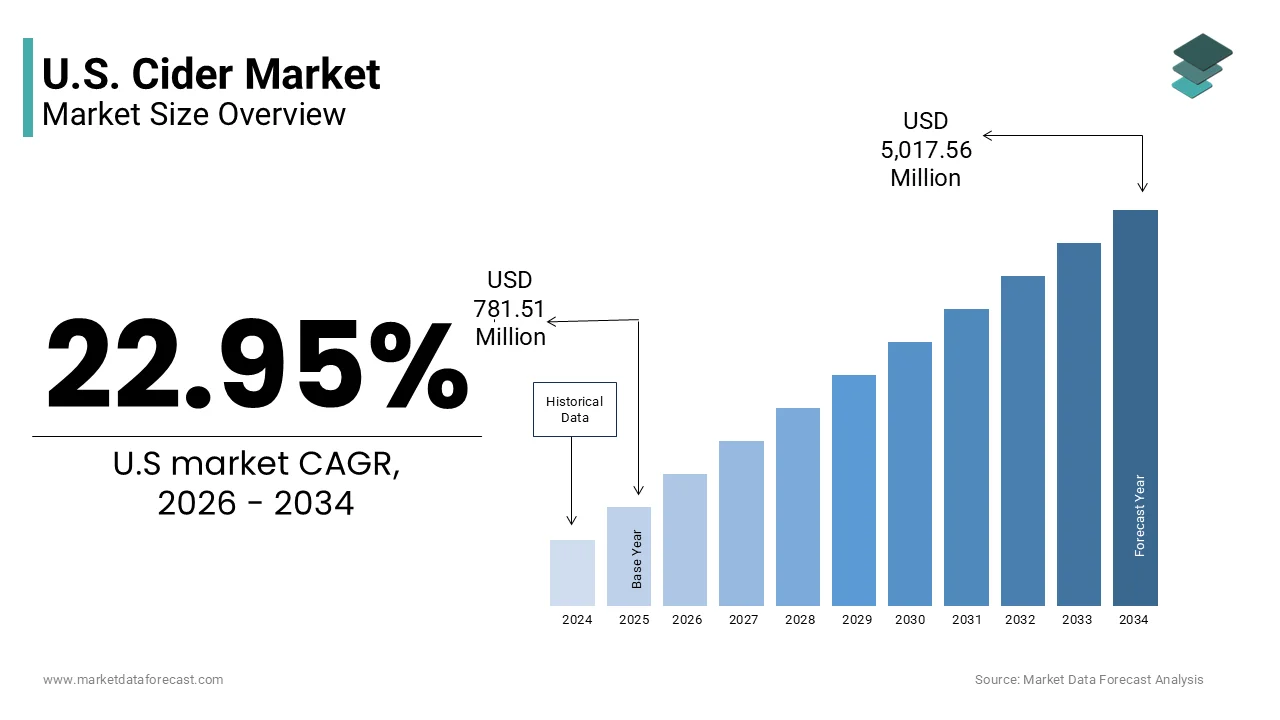
The U.S. cider market was valued at USD 781.51 million in 2025, is estimated to reach USD 960.87 million in 2026, and is projected to reach USD 5,017.56 million by 2034, growing at a CAGR of 22.95% during the forecast period. Market growth is driven by increasing consumer preference for craft alcoholic beverages, rising demand for gluten free drink alternatives, and growing interest in premium and flavored cider products. Cider is gaining popularity among health conscious consumers seeking lower calorie and fruit based alcoholic beverages. The expansion of craft beverage culture and premiumization trends is further supporting rapid market growth across the United States.
Key Market Trends
- Rising demand for craft and premium alcoholic beverages is driving market growth.
- Increasing consumer preference for gluten free alcohol alternatives is boosting cider consumption.
- Growing popularity of flavored and fruit infused cider products is supporting market expansion.
- Expansion of supermarkets and organized retail channels is enhancing product accessibility.
- Innovation in low sugar, organic, and artisanal cider formulations is influencing consumer preferences.
Segmental Insights
- Based on type, the still cider segment held the dominant share of the U.S. cider market in 2025. This dominance is attributed to its smooth taste profile, broad consumer acceptance, and increasing availability across retail outlets.
- Based on distribution channel, the supermarket segment accounted for the highest share of the U.S. cider market in 2025, supported by extensive retail presence and wide product assortment.
Regional Insights
- The United States cider market is expected to experience strong growth during the forecast period, driven by premiumization trends, increasing health conscious consumption habits, and growing consumer interest in craft alcoholic beverages. Rising availability of innovative cider flavors and expanding distribution networks are further strengthening market development.
Competitive Landscape
The U.S. cider market is highly competitive, with key players focusing on craft beverage innovation, premium product offerings, and expansion of retail distribution channels to strengthen their market position. Companies are investing in flavor diversification, sustainable production methods, and regional brand expansion. Prominent players in the U.S. cider market include Boston Beer Company, Angry Orchard, ACE Cider, Blake’s Hard Cider Co., Vander Mill, Woodchuck Hard Cider, Bold Rock Hard Cider, Virtue Cider, Downeast Cider House, Stem Ciders, Crispin Cider Company, Seattle Cider Company, 2 Towns Ciderhouse, Austin Eastciders, and Original Sin Cider.
U.S. Cider Market Size
The U.S. cider market size was valued at USD 781.51 million in 2025, is estimated to reach USD 960.87 million in 2026, and is projected to reach USD 5,017.56 million by 2034, growing at a CAGR of 22.95% from 2026 to 2034.
According to the U.S. Apple Association, the nation possesses over 2,500 apple varieties, providing a robust agricultural foundation for cider production, although only a fraction are specifically cultivated for cider apples. Consumer interest in gluten-free alternatives has positioned cider as a prominent option for individuals with dietary restrictions, since it is naturally free from gluten-containing grains. The regulatory landscape involves compliance with Alcohol and Tobacco Tax and Trade Bureau standards, which dictate labeling and production protocols. Seasonal consumption patterns remain influential, with sales peaking during autumn months associated with harvest festivals and cooler weather. The integration of cider into mainstream retail channels, including supermarkets and convenience stores, has enhanced accessibility beyond specialized liquor outlets. Innovation in packaging, such as single-serve cans and sustainable bottles, reflects changing consumer preferences for portability and environmental responsibility. The market continues to attract investment from major beverage conglomerates seeking to diversify their portfolios beyond beer and wine. This dynamic environment fosters competition based on quality, authenticity, and brand storytelling.
MARKET DRIVERS
Rising Demand for Gluten-Free Alcoholic Beverages
The increasing prevalence of gluten intolerance and celiac disease among American consumers is majorly driving the expansion of the U.S. cider market. Cider is naturally gluten-free, as it is produced from fermented apple juice rather than barley or wheat, which are common ingredients in beer. As per the Celiac Disease Foundation, approximately 1% of the population worldwide has celiac disease, while millions more experience non-celiac gluten sensitivity. This substantial demographic seeks safe and enjoyable alcoholic alternatives that do not trigger adverse health reactions. Traditional beers often contain gluten, whereas cider offers a reliable and flavourful substitute without the need for complex processing to remove gluten proteins. The perception of cider as a healthier and cleaner option aligns with broader wellness trends, where consumers scrutinize ingredient lists for allergens and additives. Retailers have responded by expanding their gluten-free sections to include a wider variety of cider brands, catering to this specific need. Marketing campaigns frequently highlight the gluten-free status of cider to attract health-conscious shoppers who may have previously limited their alcohol consumption. The availability of certified gluten-free labels further builds trust and confidence among consumers with strict dietary requirements. This driver ensures a steady base of loyal customers who prioritize safety and health in their purchasing decisions. The growth of the gluten-free lifestyle movement continues to expand the potential customer base for cider producers. Consequently, cider has become a staple in the diets of those avoiding gluten, driving consistent demand across various demographic groups.
Expansion of Craft Beverage Culture and Local Sourcing
The flourishing craft beverage culture in the U.S. significantly drives the cider market by emphasizing artisanal quality, local ingredients, and unique flavor experiences. Consumers are increasingly interested in supporting local businesses and consuming products with transparent supply chains. According to the Brewers Association, the craft movement has influenced adjacent categories, including cider, where small-batch producers focus on heritage apple varieties and traditional fermentation methods. This trend appeals to educated consumers who value authenticity and storytelling in their beverage choices. Local cideries often collaborate with regional orchards to source specific apple types that impart distinct tastes, ranging from tart to sweet. The emphasis on terroir and production craftsmanship differentiates craft ciders from mass-produced counterparts. Taprooms and tasting rooms provide immersive experiences, where consumers can learn about the production process and sample diverse styles. Social media platforms amplify the visibility of these local brands through visually appealing content and community engagement. The desire for novel and complex flavors encourages experimentation with ingredients such as hops, berries, and spices. This cultural shift towards appreciating handmade and locally sourced goods fosters brand loyalty and willingness to pay premium prices. Regional festivals and farmers markets serve as key distribution channels for emerging cider brands. The connection between producers and consumers strengthens the market position of craft ciders. This driver sustains innovation and diversity within the sector, ensuring continuous growth and consumer interest.
MARKET RESTRAINTS
Seasonal Consumption Patterns and Weather Dependency
The strong association of cider consumption with autumn and winter seasons is hampering the cider market expansion in the U.S. Sales volumes typically surge during the fall harvest period and holiday seasons, but decline noticeably during spring and summer months. As per the National Centers for Environmental Information, temperature fluctuations directly influence beverage preferences, with consumers shifting toward lighter options like beer and wine in warmer weather. This seasonality creates challenges for producers in maintaining consistent revenue streams and managing inventory levels throughout the year. Manufacturers must invest in marketing efforts to promote cider as a refreshing summer beverage, often highlighting sparkling and fruit-infused varieties to counteract seasonal dips. However, overcoming the entrenched perception of cider as a cold weather drink requires substantial educational campaigns and consumer behavior modification. Retailers may reduce shelf space for cider during off-peak seasons, limiting visibility and accessibility for potential buyers. The unpredictability of weather patterns, due to climate change, further complicates demand forecasting and production planning. Producers face higher operational costs associated with storing inventory and managing cash flow during slower periods. This cyclical nature restricts the ability of cider brands to achieve stable growth comparable to non-seasonal beverages. The industry struggles to establish cider as a daily staple rather than an occasional treat. Efforts to diversify flavor profiles and packaging formats aim to mitigate this restraint, but seasonal dependency remains a critical factor impacting market performance.
Limited Consumer Awareness of Cider Diversity
A lack of comprehensive consumer awareness regarding the diverse styles and quality of cider available in the market restrains broader adoption and expansion. Many Americans perceive cider as a uniformly sweet and sugary beverage, similar to soda, rather than a complex alcoholic drink with varied flavor profiles. According to recent beverage consumer surveys, a significant portion of consumers are unfamiliar with terms such as dry, semi-dry, or heritage cider, which limits their willingness to explore beyond mainstream brands. This misconception prevents cider from competing effectively with beer and wine, which enjoy established reputations for sophistication and variety. Educating consumers about the nuances of cider production, including fermentation techniques and apple varieties, requires sustained marketing investment. Without proper understanding, many potential customers dismiss cider as a novelty item rather than a serious beverage choice. The dominance of a few large brands with sweet profiles reinforces this narrow perception, making it difficult for artisanal and dry cider producers to gain traction. Retail staff often lack the knowledge to recommend different cider styles to curious buyers, further hindering exploration. The absence of standardized tasting notes and rating systems, comparable to those in the wine industry, adds to consumer confusion. This knowledge gap limits the market potential for premium and craft ciders that rely on educated consumers to appreciate their value. Overcoming this barrier requires collaborative efforts from producers, retailers, and industry associations to promote cider literacy. Until consumer perceptions broaden, the market will remain constrained by limited appeal.
MARKET OPPORTUNITIES
Innovation in Flavor Profiles and Ingredient Blending
The opportunity to innovate with diverse flavor profiles and ingredient blending is a significant growth potential for the U.S. cider market. Producers are experimenting with the addition of fruits, herbs, spices, and even hops to create unique and appealing taste experiences. As per Mintel, over 59% of consumers are interested in trying fruit-infused cider varieties, as new product launches increasingly feature exotic profiles. This innovation attracts consumers seeking novel beverages that stand out in a crowded market. The integration of hop varieties allows cider to appeal to beer drinkers looking for familiar bitter notes in a gluten-free format. Blending different apple varieties enables producers to craft complex flavor profiles, ranging from tart and tannic to sweet and aromatic. These creative combinations cater to evolving palates and encourage trial among younger demographics who value experimentation. Limited edition releases and seasonal flavors generate excitement and urgency, driving short-term sales spikes. Collaborations with local farms for unique ingredients enhance the artisanal appeal and support sustainability narratives. The use of natural sweeteners and low-sugar formulations addresses health concerns while maintaining taste satisfaction. Packaging innovations, such as vibrant labels and eco-friendly materials, further differentiate these products on shelves. This opportunity allows brands to command premium prices and build distinct identities. By continuously introducing new flavors, producers can retain existing customers and attract new ones. The versatility of cider as a base for flavor infusion ensures endless possibilities for product development. This strategic focus on innovation drives market expansion and consumer engagement.
Expansion into Premium and Luxury Segments
The expansion into premium and luxury cider segments offers a lucrative opportunity for the U.S. cider market. High-end ciders, crafted from heritage apple varieties and aged in oak barrels, appeal to sophisticated consumers willing to pay for quality and exclusivity. These premium ciders are often marketed similarly to fine wines, emphasizing terroir, vintage, and production methods. The use of specialized yeast strains and extended fermentation processes enhances complexity and depth of flavor. Packaging plays a crucial role in this segment, with elegant bottles and sophisticated branding conveying a sense of luxury. Upscale restaurants and bars are increasingly featuring premium ciders on their menus as pairing options for gourmet meals. This positioning helps cider compete directly with wine in fine dining settings. Direct-to-consumer sales, through tasting rooms and online platforms, allow producers to capture higher margins and build direct relationships with affluent customers. Educational events and guided tastings enhance the perceived value and appreciation of these premium products. The growing interest in experiential consumption supports the demand for high-quality ciders with compelling stories. This opportunity enables brands to differentiate themselves from mass-market competitors and establish a loyal following among discerning drinkers. By focusing on quality and exclusivity, producers can drive sustainable growth and profitability.
MARKET CHALLENGES
Supply Chain Volatility and Apple Crop Variability
The reliance on apple crops exposes the U.S. cider market to significant supply chain volatility and production risks, which is a significant challenge to the growth of the U.S. cider market. Apple yields are highly susceptible to weather conditions, pests, and diseases, which can lead to inconsistent supply and fluctuating prices. According to the U.S. Department of Agriculture, global fresh apple production is forecast to fall 5% to 81.7 million tons in the 2025/26 season, due to unfavorable weather. This variability forces producers to secure long-term contracts with orchards or invest in their own growing operations to ensure stability. The cost of apples can spike during poor harvest years, squeezing profit margins for cider makers who cannot easily pass these costs onto consumers. Climate change exacerbates these challenges by altering growing seasons and increasing the frequency of extreme weather events. Producers must adapt by selecting resilient apple varieties and implementing advanced agricultural practices. The logistical complexities of transporting perishable apples from orchards to processing facilities add another layer of risk. Disruptions in transportation networks, due to labor shortages or fuel price increases, can delay production schedules. Small-batch producers are particularly vulnerable to these supply chain issues, as they lack the bargaining power of larger corporations. Ensuring a consistent supply of high-quality apples is critical for maintaining product standards and brand reputation. This challenge requires strategic planning and investment in supply chain resilience. Producers must balance cost efficiency with reliability to navigate the uncertainties of agricultural production. Failure to manage these risks can lead to product shortages and lost market share.
Intense Competition from Other Alcoholic Beverages
The U.S. cider market faces intense competition from established alcoholic beverage categories, such as beer, wine, and spirits, which dominate consumer spending and shelf space. According to the Brewers Association, the overall beer category declined 5.7% by volume in 2025, yet it still maintains a massive majority share of total alcoholic beverage consumption. This dominance makes it difficult for cider to gain significant market share despite its growth potential. Wine and spirits also compete fiercely for consumer attention, offering diverse options for various occasions and preferences. Retailers often prioritize these established categories due to their predictable sales volumes and higher turnover rates. Cider brands must invest heavily in marketing and promotions to differentiate themselves and attract consumers away from their usual choices. The saturation of the ready-to-drink cocktail market further intensifies competition by offering convenient and flavorful alternatives. Consumer loyalty to traditional beverages poses a significant barrier to entry for new cider brands. Price sensitivity among shoppers means that cider must offer compelling value propositions to justify switching costs. The limited shelf space in retail outlets restricts the visibility of smaller cider producers. Overcoming this challenge requires innovative branding, strategic partnerships, and targeted advertising campaigns. Producers must highlight the unique benefits of cider, such as its gluten-free status and versatility. Building a distinct identity and fostering community engagement are essential for competing in this crowded landscape. Without effective differentiation, cider risks remaining a niche category rather than achieving mainstream success.
REPORT COVERAGE
| REPORT METRIC | DETAILS |
| Market Size Available | 2025 to 2034 |
| Base Year | 2025 |
| Forecast Period | 2026 to 2034 |
| CAGR | 22.95% |
| Segments Covered | By Type, Distribution Channel, and Region. |
| Various Analyses Covered | Global, Regional and Country-Level Analysis, Segment-Level Analysis, Drivers, Restraints, Opportunities, Challenges; PESTLE Analysis; Porter’s Five Forces Analysis, Competitive Landscape, Analyst Overview of Investment Opportunities |
| Countries Covered | California, Washington, Oregon, New York, United States |
| Market Leaders Profiled | Boston Beer Company, Angry Orchard, ACE Cider, Blake’s Hard Cider Co., Vander Mill, Woodchuck Hard Cider, Bold Rock Hard Cider, Virtue Cider, Downeast Cider House, Stem Ciders, Crispin Cider Company, Seattle Cider Company, 2 Towns Ciderhouse, Austin Eastciders, and Original Sin Cider |
SEGMENTAL ANALYSIS
By Type Insights
The still cider segment dominated the market by holding the largest share of the U.S. cider market in 2025. The growth of the still cider segment in the U.S. market can be credited to its traditional appeal and widespread consumer acceptance. This category includes non-carbonated ciders that emphasize the pure flavor of apples, without the effervescence found in sparkling varieties. Still cider dominates the market because it aligns with the traditional perception of cider as a rustic and authentic beverage. Consumers who appreciate the nuanced flavors of different apple varieties prefer still cider for its ability to showcase terroir and craftsmanship. As per the U.S. Association of Craft Brewers, still ciders account for a significant portion of craft cider sales, reflecting the preference for unadulterated fruit profiles. This segment appeals to wine drinkers who are accustomed to non-carbonated beverages and seek a similar drinking experience. The versatility of still cider allows it to be paired with a wide range of foods, from cheeses to meats, enhancing its appeal in dining settings. Restaurants and bars often feature still ciders on their menus as sophisticated alternatives to beer or wine. The absence of carbonation makes it suitable for individuals who experience discomfort from bubbly drinks. Producers leverage this preference by highlighting heritage apple varieties and artisanal production methods. The stability of still cider in terms of flavor profile ensures consistent quality, which builds consumer trust. Retailers stock a diverse range of still ciders to cater to this steady demand. The segment benefits from the growing interest in slow food and traditional fermentation practices. This cultural trend supports the continued dominance of still cider as a premium and authentic choice. The ability to age still cider further enhances its value proposition for connoisseurs. These factors collectively sustain the leading position of still cider in the market.
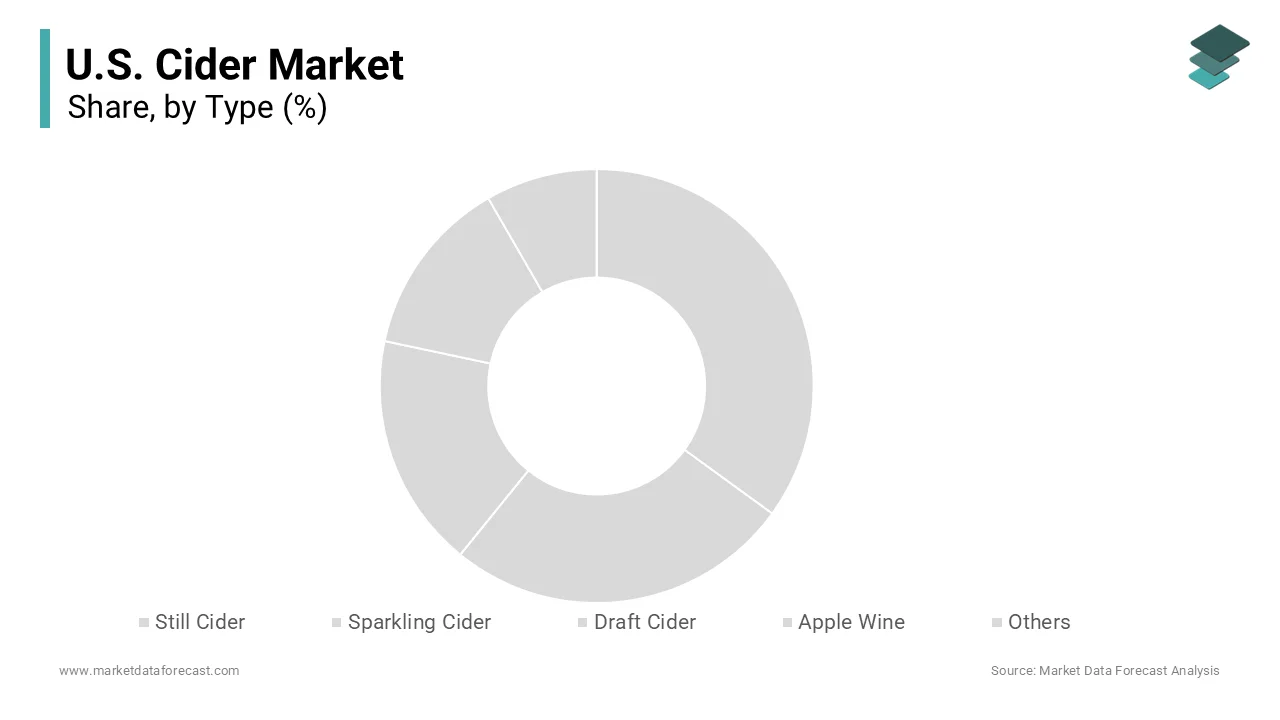
However, the sparkling cider segment is experiencing the fastest growth in the U.S. cider market and is predicted to record a promising CAGR in the U.S. cider market during the forecast period owing to its refreshing qualities and appeal to younger demographics. Sparkling cider is growing rapidly because it appeals to younger consumers who view it as a fun and festive alternative to beer and wine. The effervescence and lighter body of sparkling cider make it ideal for social gatherings, parties, and casual outings. The visual appeal of bubbles and the crisp taste profile align with the preferences of these demographics for refreshing and easy-to-drink beverages. Sparkling cider is often marketed as a lower alcohol option, which resonates with health-conscious young adults who moderate their alcohol intake. The availability of flavored sparkling ciders, with added fruits and botanicals, further enhances its attractiveness. Social media platforms play a crucial role in promoting sparkling cider through visually engaging content and influencer partnerships. Bars and clubs are increasingly featuring sparkling cider cocktails, expanding its presence in the nightlife scene. The perception of sparkling cider as a modern and trendy beverage drives trial and repeat purchases. Brands are launching limited edition sparkling varieties to create excitement and urgency. The versatility of sparkling cider in mixology allows for creative presentations that attract attention. This dynamic positioning ensures that sparkling cider remains a high-growth category. The alignment with lifestyle trends and social behaviors sustains its rapid expansion. The continuous innovation in flavors and packaging keeps the segment fresh and relevant.
By Distribution Channel Insights
The supermarket segment led the market with the highest share of the U.S. cider market in 2025. The dominance of this segment in the U.S. market is attributed to its extensive reach and high foot traffic. Supermarkets provide a one-stop shopping experience where consumers can purchase cider alongside groceries and other household items. Supermarkets dominate the distribution channel because they attract a wide range of consumers on a regular basis, ensuring high visibility for cider products. According to government trade statistics, rising preference for ready-to-drink canned cider accounts for 61% of off-trade sales, which are primarily driven by supermarket convenience. The frequent visits by households for weekly shopping create numerous opportunities for impulse purchases of cider. Retailers dedicate significant shelf space to alcoholic beverages, including dedicated sections for cider, which enhances discoverability. The presence of both national and local brands in supermarkets caters to diverse consumer preferences and price points. Promotional activities, such as discounts and bundle offers in supermarkets, drive volume sales and attract budget-conscious buyers. The convenience of purchasing cider during routine grocery trips reduces the effort required for consumers to restock their supplies. Supermarkets often feature seasonal displays that highlight cider during autumn and holiday periods, boosting sales. The trusted environment of established supermarket chains builds consumer confidence in product quality and safety. The ability to compare prices and read labels in person supports informed purchasing decisions. The integration of loyalty programs and digital coupons further incentivizes purchases. These factors collectively sustain the leading position of supermarkets in cider distribution. The broad demographic appeal of supermarkets ensures that cider reaches a wide audience. The consistent availability and variety make supermarkets the primary source for cider purchases.
On the other end, the online store segment is a promising segment and is estimated to showcase the fastest CAGR in the U.S. market during the forecast period owing to the convenience of home delivery and expanding e-commerce infrastructure. Online stores are growing rapidly because they offer the convenience of home delivery and access to a wider selection of cider brands than physical retailers. According to Mark & Spark Solutions, the industry is seeing high accessibility through e-commerce to serve the trend of at-home consumption, with a projected CAGR of 8.4% through 2033 for innovative beverage formats. The ability to browse and purchase ciders from the comfort of home appeals to busy individuals and those in remote areas with limited retail options. Online platforms provide detailed product descriptions, reviews, and ratings that help consumers make informed decisions. The availability of niche and artisanal ciders that may not be stocked in local supermarkets attracts enthusiasts seeking unique varieties. Subscription services offer regular deliveries of curated cider selections, enhancing customer retention and loyalty. The elimination of travel time and parking hassles makes online shopping an attractive alternative. Retailers invest in secure packaging and reliable logistics to ensure that products arrive in perfect condition. The integration of age verification systems ensures compliance with legal requirements for alcohol sales. Personalized recommendations based on purchase history enhance the user experience and drive repeat business. The flexibility to schedule deliveries at convenient times adds to the appeal. These factors collectively drive the rapid growth of online cider sales. The expansion of digital infrastructure supports seamless transactions and efficient fulfillment. The shift towards digital consumption habits ensures sustained growth for this channel.
COUNTRY LEVEL ANALYSIS
The United States is expected to see a significant surge in its cider market performance over the next few years, as premiumization and health-conscious consumption trends continue to gain momentum. The country serves as a global leader in innovation and diversity within the cider industry. The U.S. maintains its dominant position in the regional market through a strong craft beverage culture and a rich agricultural foundation for apple production. The presence of thousands of apple varieties across different states provides a diverse raw material base for cider makers. According to the U.S. Department of Agriculture, the nation produced 5.0 million tons of apples in the 2025/26 season, with production forecast up due to larger crops in Washington. This abundance allows producers to experiment with different flavors and styles, creating a vibrant and competitive market. The craft movement has empowered small-batch cideries to thrive by emphasizing quality, locality, and authenticity. Consumers in the U.S. are increasingly educated about cider styles and production methods, driving demand for premium and specialized products. The regulatory environment supports innovation while ensuring safety and quality standards. The integration of cider into mainstream retail and hospitality sectors enhances its visibility and accessibility. Major beverage companies have invested in the US cider market, recognizing its growth potential and strategic importance. The collaboration between orchards and cideries strengthens local economies and promotes sustainable practices. The cultural acceptance of cider as a versatile beverage for various occasions sustains its popularity. The continuous introduction of new brands and flavors keeps the market dynamic and engaging. This combination of agricultural resources and cultural enthusiasm ensures that the U.S. remains the centerpiece of the North American cider landscape. The market's maturity and sophistication attract global attention and investment.
COMPETITIVE LANDSCAPE
The competitive landscape of the U.S. cider market is characterized by intense rivalry among established global brands and emerging craft producers. Major players compete on product quality branding and distribution reach to capture consumer attention in a growing segment. The rise of craft cideries has diversified the market offering unique and artisanal options that challenge mainstream brands. Innovation in flavors and packaging provides a competitive edge for companies seeking to differentiate their offerings. Price sensitivity among consumers drives promotional activities and value based positioning. Retailers play a crucial role by deciding which brands gain shelf space and visibility. The influence of health trends favors ciders marketed as natural and gluten free alternatives. Consolidation activities allow larger firms to expand portfolios and eliminate competitors. Market dynamics require continuous adaptation to changing consumer tastes and regulatory requirements. Brand storytelling and authenticity are key factors influencing purchasing decisions. This highly competitive environment forces companies to innovate constantly and optimize operations. Maintaining relevance requires strategic focus on quality sustainability and consumer engagement. The balance between mass appeal and niche specialization defines the current competitive structure.
KEY MARKET PLAYERS
Some of the companies that are playing a dominating role in the U.S. cider market include
- Boston Beer Company
- Angry Orchard
- ACE Cider
- Blake’s Hard Cider Co.
- Vander Mill
- Woodchuck Hard Cider
- Bold Rock Hard Cider
- Virtue Cider
- Downeast Cider House
- Stem Ciders
- Crispin Cider Company
- Seattle Cider Company
- 2 Towns Ciderhouse
- Austin Eastciders
- Original Sin Cider
Top Players in the Market
- Angry Orchard Cider Company serves as a pivotal force in the U.S. cider sector by making craft style cider accessible to mainstream consumers. The brand leverages its association with the Boston Beer Company to utilize extensive distribution networks across the nation. Recent strategic initiatives include the introduction of innovative flavor profiles such as Rosé and Apple Ginger to attract diverse palates. Angry Orchard focuses on educating consumers about cider apples and fermentation processes through digital campaigns and tasting events. The company emphasizes sustainability by sourcing apples from responsible growers and reducing environmental impact in production. These actions strengthen its position as a leader in the premium cider category. By maintaining consistent quality and visibility in retail outlets Angry Orchard ensures broad market penetration. Its ability to blend traditional methods with modern marketing appeals to both novice and experienced cider drinkers. This approach sustains its relevance in a competitive beverage landscape.
- Woodchuck Hard Cider is a prominent participant in the US market known for its approachable and flavorful cider offerings. Owned by Heineken USA the brand benefits from robust logistical capabilities and marketing support. Woodchuck focuses on creating easy drinking ciders that appeal to a broad audience including those new to the category. Recent actions include expanding its portfolio with seasonal varieties and limited edition flavors to drive consumer interest. The company actively engages in community events and outdoor festivals to build brand loyalty and visibility. Woodchuck emphasizes its Vermont heritage to convey authenticity and quality craftsmanship. Investments in sustainable packaging and responsible sourcing practices enhance its corporate image. The brand collaborates with local orchards to secure high quality apple supplies. These efforts reinforce its reputation as a trusted and enjoyable cider choice. By balancing tradition with innovation Woodchuck maintains a strong presence in retail and on premise channels. Its focus on accessibility ensures continued growth and consumer engagement.
- Strongbow Cider holds a significant position in the U.S. market as a global brand with deep historical roots. Owned by Heineken NV Strongbow leverages its international recognition to compete effectively in the domestic landscape. The brand offers a range of ciders including dry sweet and fruit infused options to cater to varied preferences. Recent strategies involve targeting younger demographics through vibrant marketing campaigns and social media engagement. Strongbow emphasizes its British heritage and traditional brewing methods to differentiate itself from craft competitors. The company invests in premium packaging designs that stand out on shelves and in bars. Partnerships with music festivals and lifestyle brands enhance its visibility among target audiences. Strongbow focuses on consistency and quality to build long term consumer trust. Its extensive distribution network ensures widespread availability in supermarkets and convenience stores. By adapting global best practices to local tastes Strongbow strengthens its market position. This combination of heritage and modern appeal drives sustained relevance and growth.
Top Strategies Used by Key Market Participants
Key players in the U.S. cider market employ diverse strategies to maintain competitiveness and drive growth. Product innovation is central as companies introduce new flavors and styles to attract evolving consumer preferences. Sustainability initiatives focus on eco friendly packaging and responsible sourcing to appeal to environmentally conscious buyers. Strategic partnerships with retailers ensure optimal shelf placement and visibility in high traffic areas. Digital marketing campaigns leverage social media platforms to engage younger demographics and build brand loyalty. Expansion into on premise channels such as bars and restaurants enhances brand presence and trial. Educational efforts promote cider knowledge and appreciation among consumers. Companies prioritize quality consistency to build trust and repeat purchases. These combined approaches help operators navigate market dynamics while ensuring long term profitability in a growing industry landscape.
MARKET SEGMENTATION
This research report on the U.S. cider market is segmented and sub-segmented into the following categories.
By Type
- Still Cider
- Sparkling Cider
- Draft Cider
- Apple Wine
- Others
By Distribution Channel
- Hypermarkets
- Supermarkets
- Departmental Stores
- Convenience Stores
- Online Stores
By Country
- California
- Washington
- Oregon
- New York
- Rest of the United States