- Product Description Description
- Table of Contents TOC
- List of Table & Figure LOT
- Get Free Sample PDF Sample PDF
Market Size, 2025
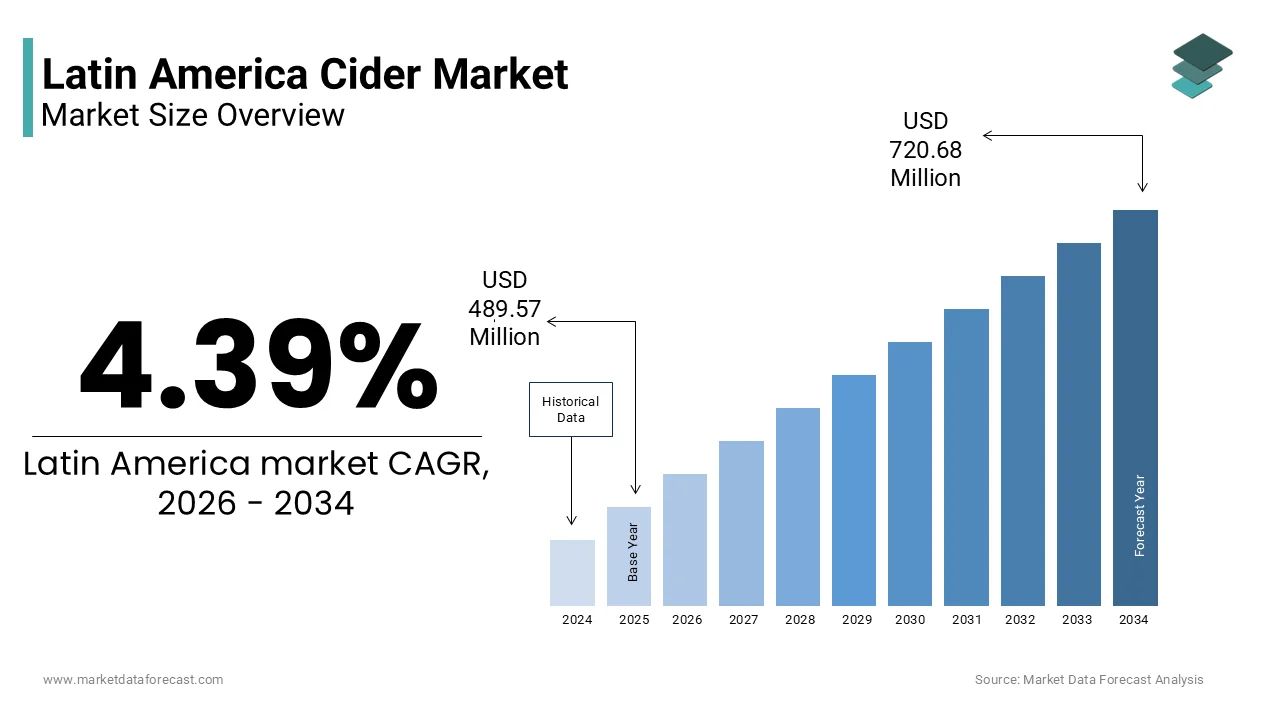
$489 MnMarket Estimate, 2026
$511 MnMarket Forecast, 2034
$720 MnCAGR, 2026–2034
4.39%Latin America Cider Market Size
The Latin America cider market size was valued at USD 489.57 million in 2025 and is projected to reach USD 720.68 million by 2034 from USD 511.06 million in 2026, growing at a CAGR of 4.39%.
The cider is an alcoholic beverage industry characterized by the production distribution and consumption of fermented apple-based drinks. The sector has witnessed a resurgence driven by a shift toward premiumization and the desire for alternative alcoholic options beyond beer and wine. According to the International Organization of Vine and Wine, global apple production reached 76 million metric tons in 2023 with Latin America contributing significantly through major producing nations like Argentina and Chile. Consumer behavior studies indicate that 45% of urban millennials in Brazil and Mexico prefer lower alcohol content beverages during social gatherings as per data from Euromonitor International. This preference aligns with the moderate alcohol by volume levels typically found in ciders ranging from 4 to 6%. The cultural integration of cider into festive occasions and casual dining scenarios further supports its adoption.
MARKET DRIVERS
Rising Preference For Premium And Craft Alcoholic Beverages Among Urban Consumers
The urban populations are seeking premium and craft alcoholic beverages that offer unique flavor profiles and authentic production stories, which is driving the growth of the Latin America cider market. Cider fits this demand perfectly as it is often perceived as a sophisticated, yet approachable alternative to mass produced beers. Consumers in cities like Buenos Aires Santiago and Sao Paulo are driving this shift with 55% of respondents in a Kantar Worldpanel survey indicating a willingness to explore new drink categories that emphasize quality ingredients. The craft movement has empowered local producers to experiment with different apple varieties and fermentation techniques resulting in diverse taste experiences that appeal to discerning drinkers. Social media platforms play a crucial role in amplifying this trend, as influencers and enthusiasts share their experiences with niche brands. The perception of cider as a versatile drink suitable for pairing with food further enhances its appeal in urban dining scenes. Restaurants and bars in major metropolitan areas are expanding their cider selections to meet this growing demand.
Expansion Of Apple Cultivation And Availability Of High Quality Raw Materials
The availability of high-quality apples by ensuring consistent supply and enabling product innovation. The expansion of apple cultivation and availability of high quality raw materials is accelerating the growth of the Latin America cider market. Countries like Argentina and Chile possess ideal climatic conditions for apple cultivation resulting in abundant harvests of varieties suitable for cider production. The presence of specific cider apple varieties, such as Granny Smith and Fuji allows producers to create distinct flavor profiles ranging from tart to sweet. This surplus enables cider manufacturers to source locally reducing transportation costs and supporting sustainability initiatives. Local sourcing also appeals to consumers, who value regional authenticity and environmental responsibility. The steady supply of raw materials allows companies to invest in research and development leading to innovative products, such as sparkling ciders and flavored variants.
MARKET RESTRAINTS
High Competition From Established Beer And Wine Industries
The dominant presence of established beer and wine industries that is limiting the growth of the Latin America cider market. Beer remains the most consumed alcoholic beverage in the region with per capita consumption reaching 35 liters annually in countries like Mexico and Brazil, as per data. The wine industry in Argentina and Chile is deeply entrenched in cultural traditions and export markets making it difficult for cider to gain comparable visibility. Major beer conglomerates invest heavily in marketing and distribution networks creating high barriers to entry for smaller cider brands. Retail shelf space is often prioritized for these established categories limiting exposure for cider products. Consumer habits are deeply rooted in beer drinking during social events and sports gatherings, which cider struggles to displace. The price competitiveness of mass produced beer further challenges cider manufacturers, who often face higher production costs.
Regulatory Hurdles And Complex Taxation Structures Across Different Countries
The diverse regulatory landscapes and taxation structures is also degrading the growth of the Ltin America cider market. Each country has its own classification system for alcoholic beverages, which can lead to inconsistent labeling requirements and tax implications. The alcohol tax rates vary significantly with some countries classifying cider as beer, while others treat it as wine leading to unpredictable cost structures. This variability complicates pricing strategies and reduces profit margins for producers operating in multiple areas. Regulatory changes regarding alcohol content labeling and health warnings also require continuous adaptation increasing compliance costs. Small and medium sized enterprises often lack the resources to manage these regulatory complexities effectively limiting their growth potential. Inconsistent enforcement of regulations across regions further creates uncertainty for investors and distributors. The lack of harmonized standards within trade blocs like Mercosur hinders cross border expansion and economies of scale.
MARKET OPPORTUNITIES
Development Of Flavored And Low Alcohol Cider Variants
The introduction of flavored and low alcohol cider variants by appealing to broader consumer segments, including younger drinkers and health-conscious individuals is significant opportunities for the growth of the Latin America cider market. Manufacturers are innovating with fruits, such as pear berry and tropical flavors to create unique taste experiences that differentiate cider from traditional options. Low alcohol ciders with alcohol by volume levels below 3.5% cater to the growing moderation movement where consumers seek enjoyable drinks without excessive intoxication. This trend is particularly strong among women and young adults, who prioritize wellness and social responsibility. The versatility of cider allows for easy integration of natural flavors and sweeteners enhancing its appeal as a refreshing beverage for warm climates. Retailers are responding by dedicating more shelf space to these innovative products recognizing their potential to drive foot traffic. Collaborations with local fruit producers enable the creation of regionally inspired flavors that resonate with national pride.
Growth Of E Commerce And Digital Marketing Channels
The rapid growth of e-commerce and digital marketing channels to reach consumers directly and build strong community engagement is another attribute to pose significant opportunities for the growth of the Latin America cider market. Cider manufacturers leverage social media platforms to tell their brand stories showcase production processes and engage with influencers who amplify their message to targeted audiences. Digital campaigns allow for precise targeting based on demographics interests and behaviors ensuring efficient use of marketing budgets. Direct to consumer sales models enable brands to offer exclusive bundles limited editions and personalized recommendations fostering loyalty. Subscription services for craft ciders are gaining traction providing steady revenue streams and valuable consumer data. The ability to gather real time feedback through digital interactions helps companies refine their products and marketing strategies quickly. Partnerships with online grocery delivery platforms further enhance accessibility ensuring that cider is available for home consumption.
MARKET CHALLENGES
Climate Change Impacting Apple Yield And Quality Consistency
The climate change is affecting apple yield and quality consistency in key producing regions, which is a major challenge for the growth of the Latin America cider market. Rising temperatures and unpredictable rainfall patterns disrupt flowering and fruit development leading to variable harvest outcomes. According to the Intergovernmental Panel on Climate Change, average temperatures in parts of Argentina and Chile have increased by 1.2 degrees Celsius over the past three decades impacting agricultural productivity. Drought conditions in recent years have reduced water availability for irrigation forcing farmers to rely on less optimal sources or reduce planting areas. These fluctuations affect the supply chain stability and increase raw material costs for cider manufacturers. Inconsistent apple quality due to heat stress can alter sugar levels and acidity profiles requiring adjustments in fermentation processes. Producers face higher risks of crop failure necessitating investments in climate resilient agricultural practices and insurance schemes. The need to adapt to changing climatic conditions adds financial pressure and operational complexity.
Supply Chain Disruptions And Logistics Infrastructure Limitations
The supply chain disruptions and limitations in logistics infrastructure by affecting distribution efficiency and product availability is additionally a challenge for the growth of the Latin America cider market. Poor road conditions and inadequate storage facilities in rural areas hinder the timely transport of fresh apples to processing plants. The logistics performance indices for several Latin American countries remain below global averages increasing transportation costs and delivery times. Perishable nature of apples requires cold chain infrastructure, which is often lacking in remote growing regions leading to post harvest losses. These inefficiencies raise production costs and reduce profit margins for cider manufacturers. Port congestion and customs delays further complicate export opportunities limiting market expansion beyond domestic borders. Fuel price volatility adds another layer of uncertainty to transportation budgets affecting overall operational stability. Small producers are particularly vulnerable to these disruptions as they lack the resources to invest in private logistics solutions. The fragmentation of supply chains across different countries prevents economies of scale and standardization.
REPORT COVERAGE
| REPORT METRIC | DETAILS |
| Market Size Available | 2025 to 2034 |
| Base Year | 2025 |
| Forecast Period | 2026 to 2034 |
| CAGR | 4.39% |
| Segments Covered | By Type, Distribution Channel, and region. |
| Various Analyses Covered | Global, Regional and Country Level Analysis; Segment-Level Analysis; DROC; PESTLE Analysis; Porter’s Five Forces Analysis; Competitive Landscape; Analyst Overview of Investment Opportunities |
| Regions Covered | United Kingdom, France, Spain, Germany, Italy, Russia, Sweden, Denmark |
| Market Leaders Profiled | Aston Manor Brewery, C&C Group Plc, Carlberg A/S, Distell Group, Halewood International Holdings Plc, Heineken UK Ltd, SABMiller Plc, Carlton & United Breweries Limited, The Boston Beer Company Inc. |
SEGMENTAL ANALYSIS
By Type Insights
The sparkling cider segment was the largest by holding 33.3% of the Latin America Cider Market share in 2025 with the consumer preference for carbonated beverages that offer a refreshing and celebratory drinking experience. The effervescence of sparkling cider makes it an attractive alternative to champagne and beer during social gatherings and festive occasions. The perception of sparkling cider as a premium product allows manufacturers to command higher price points, while appealing to quality conscious drinkers. The visual appeal of bubbles enhances the sensory experience making it popular among younger demographics who prioritize aesthetics and presentation. Major brands have invested in sleek packaging and marketing campaigns that promote the sophistication of sparkling cider, further amplifying its market growth. The availability of diverse sweetness levels from dry to sweet ensures broad appeal across different taste preferences.
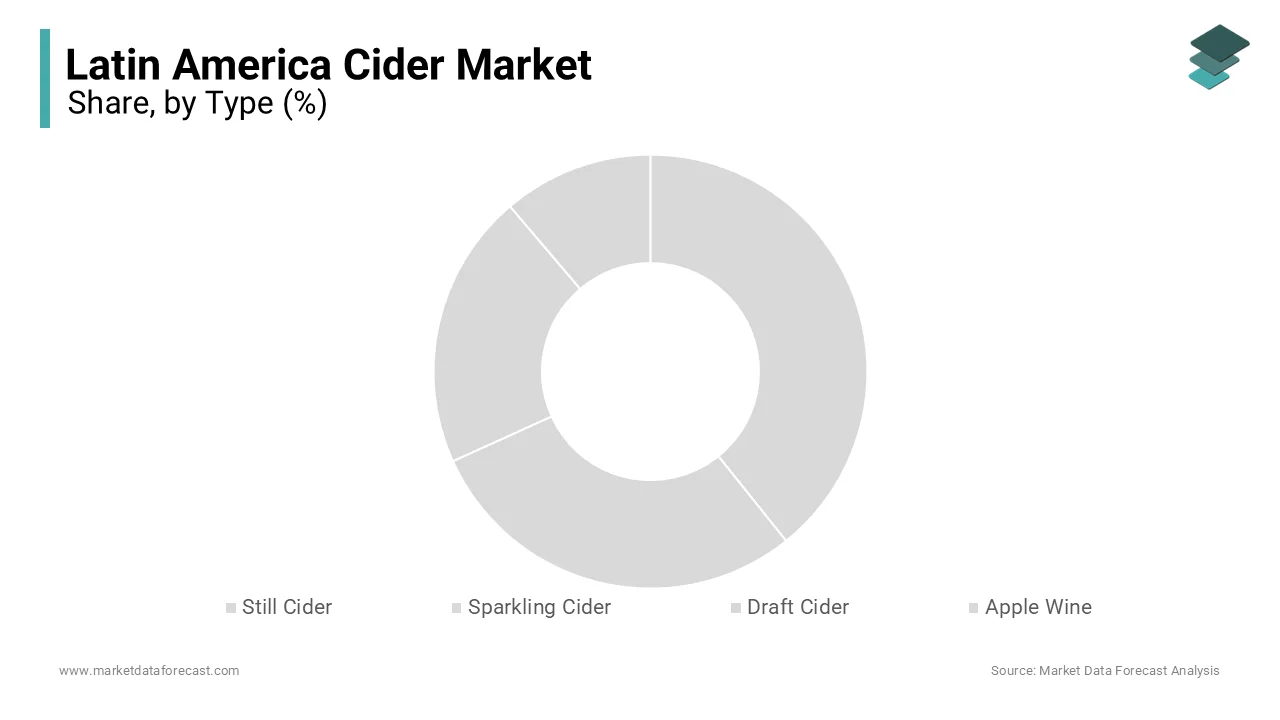
The draft cider segment is likely to grow at a fastest CAGR of 10.5% during the forecast period driven by the expansion of craft bars and the popularity of on premise consumption. Draft cider offers a fresh and authentic taste experience that appeals to enthusiasts seeking unpasteurized and minimally processed beverages. The ability to serve cider directly from the tap ensures optimal carbonation and temperature enhancing the overall drinking experience. The rise of beer gardens and gastro pubs in major cities provides ideal venues for introducing consumers to draft cider. Bartenders play a crucial role in educating customers about different cider styles and recommending pairings with food. The interactive nature of draft service creates a memorable experience that encourages repeat visits. This trend is particularly strong among millennials and Gen Z consumers who value authenticity and experiential consumption.
By Distribution Channel Insights
The supermarket segment held a significant share of the Latin America Cider Market in 2025 due to its widespread presence and convenience for weekly grocery shopping. Supermarkets offer a wide variety of cider brands and types allowing consumers to compare prices and make informed choices. According to the study, supermarkets accounted for 50% of total cider sales in Latin America in 2023, reflecting their dominance in retail distribution. The ability to purchase cider alongside other household items saves time and effort for busy consumers. Supermarkets often run promotions and discounts on cider products attracting price sensitive shoppers. The organized layout and clear labeling help consumers navigate the expanding cider category easily. Major chains like Walmart, Carrefour, and Soriana have dedicated alcohol sections with knowledgeable staff to assist customers.
The online stores segment is expected to witness a fastest CAGR of 12.8% during the forecast period driven by increasing internet penetration and the convenience of home delivery. Consumers are increasingly comfortable purchasing alcoholic beverages online due to improved logistics and secure payment systems. The ability to browse extensive catalogs and read reviews enhances the shopping experience. Direct to consumer models allow brands to offer exclusive products and personalized recommendations. The discretion and privacy of online shopping appeal to certain consumer segments. Subscription services provide regular deliveries ensuring consistent supply and customer retention.
REGIONAL ANALYSIS
Argentina was the largest contributor in the Latin America Cider Market by holding 45.3% of share in 2025 with its robust apple production industry and strong cultural affinity for fermented beverages. The country is one of the largest apple producers in the Southern Hemisphere providing a steady supply of high-quality raw materials for cider manufacturing. According to the Argentine Ministry of Agriculture, livestock and fisheries the province of Rio Negro produces over 80% of the nation's apples supporting a thriving cider sector. Consumer preference for dry and semi dry ciders aligns with European tastes influencing local production styles. The per-capita cider consumption in Argentina is among the highest in the region. The presence of established wineries diversifying into cider production enhances credibility and distribution reach. Government support for agricultural exports facilitates access to international markets boosting industry growth. The cultural tradition of enjoying cider during holidays and family gatherings sustains domestic demand. As premiumization trends grow, Argentine producers are focusing on artisanal and organic ciders to capture higher value segments.
Brazil cider market was ranked second by accounting for 22.3% of share in 2025 with the increasing urbanization and changing consumer preferences. The large population and rising middle class create substantial demand for alcoholic beverages, including cider. Consumers in major cities like Sao Paulo and Rio de Janeiro are exploring cider as a lighter alternative to beer. The sweet and flavored ciders are particularly popular among younger people. The expansion of retail chains and e-commerce platforms improves product accessibility across the vast territory. Local producers are investing in apple orchards in southern states to reduce reliance on imports. Government regulations on alcohol advertising influence marketing strategies requiring creative approaches to reach consumers. The vibrant nightlife and festival culture provide opportunities for brand visibility and trial. As health consciousness rises, low alcohol and organic ciders are gaining traction.
Chile cider market is more likely to exhibit a fastest CAGR during the forecast period with its advanced agricultural technology and export oriented production model. The country is renowned for its high-quality apples and efficient supply chain infrastructure. Chilean consumers appreciate premium and craft ciders that reflect local terroir and craftsmanship. The Maule and O'Higgins regions are key hubs for cider apple cultivation. The proximity to major urban centers facilitates efficient distribution and marketing. Chilean producers are increasingly focusing on sustainable practices and organic certification to meet global standards. The tourism sector promotes local cider brands enhancing their visibility and appeal. Government initiatives support innovation and quality improvement in the agro industrial sector. The strong reputation of Chilean agricultural products boosts consumer confidence in domestic ciders.
Mexico cider market growth is likely to grow with the young population and evolving drinking habits. The country has a strong beer culture but cider is gaining popularity as a refreshing and versatile alternative. The cider consumption increased by 10% in 2023, particularly among women and young adults, as per the study. The warm climate favors the consumption of cold and carbonated beverages making cider an attractive option. The flavored and sweet ciders are preferred by Mexican consumers. Major international brands have entered the market through partnerships with local distributors enhancing availability. Local producers are experimenting with native fruits and spices to create unique flavor profiles. The growth of craft bars and restaurants in cities like Mexico City and Guadalajara provides platforms for cider promotion. Social media influences drinking trends encouraging experimentation with new brands. Regulatory changes regarding alcohol taxes impact pricing strategies requiring careful planning.
COMPETITIVE LANDSCAPE
The Latin America Cider Market features a moderately consolidated competitive landscape dominated by large multinational beverage corporations and influential regional producers. Major players leverage their extensive distribution networks and financial resources to maintain strong market presence and influence pricing dynamics. Local craft producers differentiate themselves through unique flavor profiles and artisanal branding appealing to niche consumer segments. Competition intensifies as companies strive to capture the growing demand for premium and healthy alcoholic alternatives. Brand loyalty plays a significant role with consumers often preferring established names known for consistent quality. Price competition remains moderate due to the premium positioning of many cider products but affordability is crucial for mass market penetration. Innovation in packaging and flavor serves as a key differentiator enabling companies to stand out in crowded retail environments. Regulatory compliance and tax variations across countries create operational complexities favoring larger entities with robust legal teams. Strategic alliances with retailers and hospitality providers help streamline distribution and enhance visibility. As consumer preferences evolve, new entrants continue to emerge focusing on organic and sustainable practices adding diversity to the competitive mix.
KEY MARKET PLAYERS
Key Players in Latin America cider market are
- Aston Manor Brewery
- C&C Group Plc
- Carlberg A/S
- Distell Group
- Halewood International Holdings Plc
- Heineken UK Ltd
- SABMiller Plc
- Carlton & United Breweries Limited
- The Boston Beer Company Inc.
Top Players in the Market
- Heineken Latin America significantly influences the regional cider landscape through its strong distribution network and portfolio of international brands. The company leverages its extensive experience in the beer sector to introduce premium cider options to a broad consumer base across multiple countries. Recent initiatives include launching localized marketing campaigns that highlight the refreshing qualities of cider for warm climates. Heineken has also invested in upgrading cold chain logistics to ensure product quality reaches retailers in optimal condition. The company collaborates with local bars and restaurants to feature cider in cocktail menus enhancing visibility among younger demographics. By utilizing its established relationships with major retail chains, Heineken ensures wide shelf availability. These strategic efforts focus on positioning cider as a sophisticated alternative to traditional beers, while maintaining consistent supply and brand recognition throughout the region.
- Compania Cervecera de Nicaragua plays a pivotal role in the Central American cider market by producing and distributing popular local brands that resonate with regional tastes. The company focuses on creating affordable and accessible cider products that appeal to many consumers. Recent actions include expanding production capacity to meet growing demand and introducing new flavored variants, such as pear and berry. The firm actively participates in local festivals and community events to build brand loyalty and awareness. It has also strengthened partnerships with convenience stores and small retailers to improve product accessibility in rural areas. By emphasizing local identity and affordability, the company maintains a strong presence in competitive places.
- CCU Chile is a key contributor to the South American cider market leveraging its deep roots in the beverage industry to promote both domestic and international cider brands. The company utilizes its robust distribution infrastructure to ensure widespread availability across urban and rural regions. Recent strategies involve launching premium craft cider lines that cater to discerning consumers seeking high quality and unique flavors. CCU Chile has also invested in digital marketing platforms to engage directly with younger audiences and promote responsible drinking. Collaborations with local apple growers support sustainable sourcing practices and enhance product authenticity. The company frequently introduces limited edition seasonal flavors to keep the product lineup fresh and exciting.
Top Strategies Used by Key Market Participants
Key players in the Latin America Cider Market employ diverse strategies to enhance their competitive edge and drive growth. Product innovation remains central with companies introducing flavored and low alcohol variants to attract health-conscious consumers and younger demographics. Strategic partnerships with local apple growers ensure sustainable sourcing and reduce raw material costs while supporting regional agriculture. Expansion into e commerce channels allows brands to reach consumers directly offering convenience and personalized experiences. Marketing campaigns focus on positioning cider as a premium and versatile beverage suitable for various social occasions. Companies also invest in improving distribution networks to ensure product availability in remote areas. Collaborations with hospitality venues help promote cider through food pairing and cocktail menus.
MARKET SEGMENTATION
This research report on the Latin America cider market is segmented, and sub segmented into following categories.
By Type
- Still Cider
- Sparkling Cider
- Draft Cider
- Apple Wine
By Distribution Channel
- Hypermarkets
- Supermarkets
- Departmental Stores
- Convenience Stores
- Online Stores
By Region
- Argentina
- Brazil
- Mexico