- Product Description Description
- Table of Contents TOC
- List of Table & Figure LOT
- Get Free Sample PDF Sample PDF
Market Size, 2025
$1.35 BnMarket Estimate, 2026
$1.42 BnMarket Forecast, 2034
$2.14 BnCAGR, 2026–2034
5.42%Executive Summary: Asia Pacific Cider Market
- Market Scope: Comprehensive analysis of the Asia Pacific cider market covering types (sparkling cider, still cider, and draft cider), distribution channels (supermarkets/hypermarkets, specialty stores, online channels, on-trade), and major country hubs across the region.
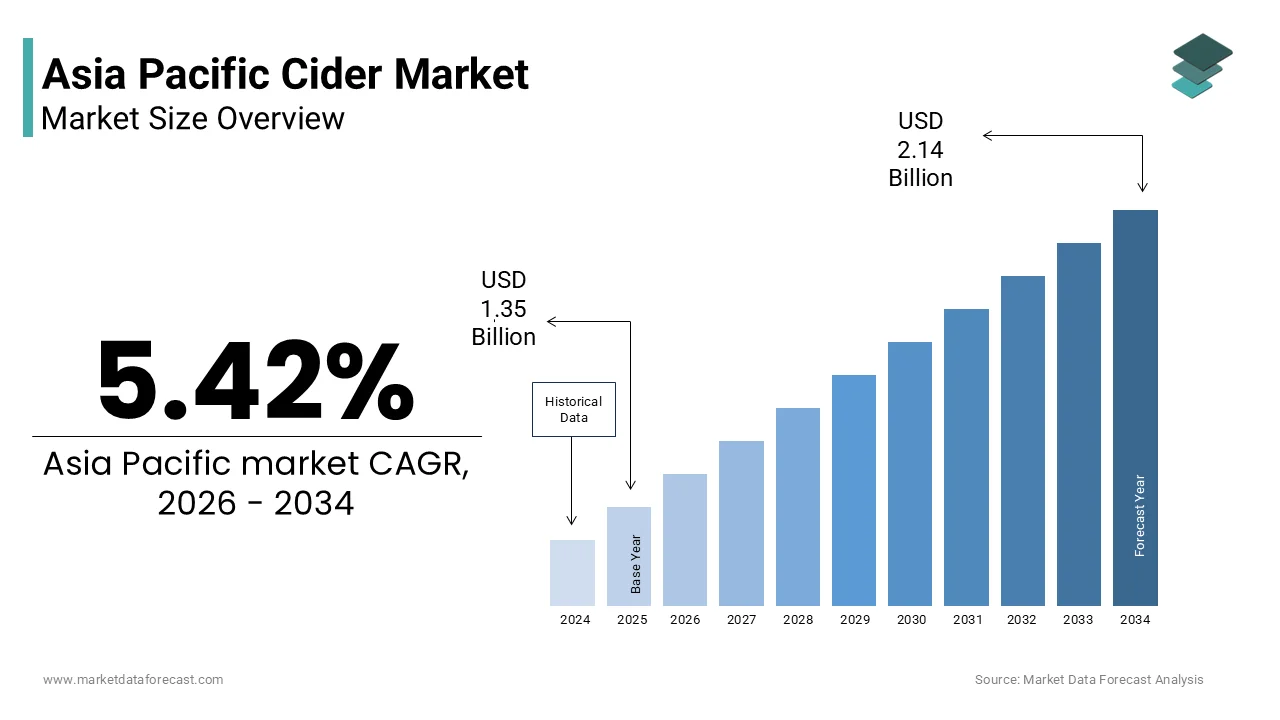
- Market Valuation: Valued at USD 1.35 billion in 2025, estimated at USD 1.42 billion in 2026, and projected to reach USD 2.14 billion by 2034, growing at a steady CAGR of 5.42% over the forecast period from 2026 to 2034.
- Primary Growth Drivers: Rapid rise in disposable incomes and urban premiumization trends; increasing preference for low-alcohol and fruit-based alternatives driven by health-conscious consumers; and expanding craft cider production leveraging local orchard biodiversity. Key challenges include complex government regulations, high regional alcohol excise taxes, and fierce competition from established beer and wine sectors.
Key Market Segment Metrics (2026–2034)
| Category | Leading Segment (Base Position) | Fastest-Growing Segment |
|---|---|---|
| By Type | Sparkling Cider (captures the majority share due to cultural preference for effervescence and celebration pairings) | Draft Cider (projected at a fastest CAGR of 8.2% driven by craft brewery expansions and on-trade hospitality trends) |
| By Distribution Channel | Supermarkets and Hypermarkets (dominate baseline retail sales due to massive cold-chain logistics and one-stop shopping convenience) | Online Stores (projected as the fastest-growing channel backed by digital infrastructure rollouts and direct-to-consumer alcohol delivery apps) |
| By Region / Country | China (leads with a 35.2% market share in 2025 backed by world-leading apple yields exceeding 51 million metric tons) | Japan & Southeast Asian Hubs (expanding via gourmet food tourism, premium import demand, and low-alcohol lifestyle shifts) |
Major Market Players & Market Structure
Market Structure: Fragmented yet rapidly consolidating market featuring multinational beverage giants alongside agile regional craft micro-breweries experimenting with local indigenous fruits and boutique distribution models.
Key Companies: Aston Manor Brewery, C&G Group Plc, Carlsberg A/S, Distell Group, Asahi Group Holdings Ltd, Halewood International Holdings Plc, Heineken UK Ltd., SABMiller Plc, Carlton & United Breweries Limited, Cider Republic Pty Ltd, and The Boston Beer Company Inc.
Asia Pacific Cider Market Size
The Asia Pacific cider market size was valued at USD 1.35 billion in 2025 and is expected to reach USD 2.14 billion by 2034 from USD 1.42 billion in 2026. The market is projected to grow at a CAGR of 5.42%.
Cider is an alcoholic drink made from the fermented juice of apples. This sector has evolved from a niche import category into a dynamic segment driven by local manufacturing innovations and shifting consumer palates across diverse economies. Unlike traditional beer or wine, cider offers a distinct flavor profile characterized by its fruity sweetness and lower alcohol content, which appeals to younger demographics and health-conscious drinkers. According to the Food and Agriculture Organization of the United Nations, global apple production stands at approximately 95 million metric tons annually, with China leading world production by generating more than 51 million metric tons. The cultural acceptance of fermented beverages varies significantly across the region, with countries like Australia and New Zealand having established cider traditions while markets in Southeast Asia and East Asia are experiencing rapid adoption through urbanization and Western influence. As per the National Tax Agency of Japan, domestic beverage manufacturers are restructuring portfolios toward low-alcohol and zero-alcohol options to align with official national health guidelines on consumption. Regulatory frameworks regarding alcohol labeling, taxation, and advertising differ widely among nations, influencing market entry strategies for both local and international brands. The rise of craft breweries has also spurred interest in artisanal ciders, creating a vibrant ecosystem of small-batch producers who emphasize unique flavor combinations and sustainable practices. This evolving landscape positions cider as a versatile alternative in the broader alcoholic beverage industry.
MARKET DRIVERS
Rising Disposable Incomes and Premiumization Trends Among Urban Consumers
The surge in disposable incomes across emerging economies in the region has fundamentally altered consumer spending habits and accelerated the growth of the Asia Pacific cider market. This trend leads to an increased demand for premium alcoholic beverages, including cider. According to the Asian Development Bank, urbanized regions across developing economic corridors are experiencing rapid demographic shifts, with private consumption expenditures in Asia projected to scale to $32 trillion. This demographic shift drives a preference for high-quality branded products that signal status and sophistication. In urban centers such as Shanghai, Mumbai, and Bangkok, consumers are increasingly willing to pay a premium for craft ciders that offer unique taste experiences and superior packaging. The trend toward premiumization is evident in the growing number of specialty bars and restaurants that feature extensive cider menus alongside wine and beer selections. As per the National Tax Agency of Japan, domestic market structural shifts demonstrate that premium-grade sake and high-end spirit classifications achieved an annual export value record of 139.2 billion yen under official trade data tracking. Young professionals and millennials who form a significant portion of the urban workforce view cider as a fashionable and social drink suitable for various occasions from casual gatherings to formal dinners. The availability of imported ciders from Europe and North America further elevates consumer expectations, prompting local producers to enhance their quality standards. This economic empowerment combined with exposure to global lifestyle trends creates a robust foundation for the expansion of the cider market in the region.
Growing Preference for Low Alcohol and Fruit-Based Beverages
Health consciousness and changing dietary preferences are driving the popularity of low alcohol and fruit-based beverages, which further boosts the expansion of the Asia Pacific cider market. This positions cider as an attractive alternative to high-strength spirits and beers. According to the World Health Organization, public health intervention metrics verify that no scientifically safe minimum volume threshold exists for human ethanol consumption regarding long-term oncological and cardiovascular risk vectors. As per the Australian Department of Agriculture, Fisheries and Forestry, national technical definitions enforce that standard commercial hard cider products maintain a precise ethyl alcohol content range exceeding 1.15% by volume to comply with primary legal labeling categories. The natural fruit origin of cider aligns with the clean label movement, where consumers prefer ingredients they can recognize and understand. In countries like Japan and South Korea, where health and wellness trends are deeply ingrained in consumer culture, cider is perceived as a lighter and more refreshing option compared to heavier alcoholic drinks. According to the Ministry of Industry and Information Technology of China, modern alcoholic beverage manufacturers are accelerating the development of traditional Chinese fruit wines and low-malt beverages to capture shifting consumer dietary habits. The versatility of cider allows it to be marketed as a summer refreshment or a winter warmer depending on the flavor profile and serving temperature. Manufacturers are responding to this demand by introducing dry and semi-dry varieties that cater to sophisticated palates while maintaining the fruity appeal. This alignment with health and lifestyle trends ensures sustained interest in cider across diverse demographic groups.
MARKET RESTRAINTS
Stringent Government Regulations and High Taxation on Alcoholic Beverages
Stringent government regulations and high taxation policies on alcoholic beverages are significant impediments to the growth of the Asia Pacific cider market. Many countries in the region impose heavy excise duties and sin taxes on alcohol to discourage consumption and generate public revenue. According to the World Health Organization, global comprehensive tracking confirms that national alcohol excise tax burdens across middle-income Southeast Asian countries typically average less than 25% of the standard retail product cost. As per the Ministry of Commerce and Industry of India, interstate commerce regulations enforce distinct state-level excise structures, driving domestic spirits and alternative beverage manufacturers to register individual pricing matrices for each local state territory. Regulatory restrictions on advertising and marketing limit the ability of cider producers to build brand awareness and educate consumers about their products. According to the Ministry of Industry and Advanced Technology, statutory commercial frameworks control the localized licensing of general non-halal consumer items, ensuring non-halal food and beverage imports encounter strict targeted hospitality distribution funnels. Compliance with diverse labeling requirements and safety standards across different jurisdictions increases operational costs for manufacturers. As per Food Standards Australia New Zealand, new mandatory labeling standards require all domestic alcoholic beverage producers to display prominent, standardized pregnancy warning graphics on primary retail packaging containers. These regulatory complexities not only increase the cost of doing business but also restrict market access for smaller craft producers who lack the resources to navigate bureaucratic hurdles. Consequently, the high cost burden and legal constraints dampen consumer demand and slow down market expansion.
Limited Awareness and Cultural Preference For Traditional Alcoholic Drinks
Limited awareness and strong cultural preferences for traditional alcoholic drinks also hinder the expansion of the Asia Pacific cider market. This restrains the widespread adoption of cider in many parts of the Asia Pacific region. In countries like China, Japan, and Korea, traditional beverages such as baijiu, sake, and soju hold deep cultural significance and dominate social drinking occasions. According to sources, regional consumer demand is pivoting rapidly toward "mindful drinking" trends, driving localized market volumes for low-alcohol and zero-alcohol options upward across major metropolitan markets. Cider is often perceived as a foreign or novelty product lacking the historical resonance of local drinks. In rural areas and among older generations there is limited knowledge about cider production methods and flavor profiles, leading to hesitation in trying new products. The dominance of beer in casual dining and social settings further marginalizes cider, which struggles to establish a clear identity in the competitive beverage landscape. In Southeast Asia, where tropical fruits are abundant, consumers often prefer fresh fruit juices or locally made rice wines over fermented apple products. The lack of dedicated cider sections in retail stores and bars limits visibility and trial opportunities for potential customers. Marketing efforts to educate consumers about cider are often overshadowed by aggressive campaigns from established beer and spirit brands. This cultural inertia and lack of familiarity create a significant challenge for cider producers seeking to expand their customer base beyond urban elites and expatriate communities.
MARKET OPPORTUNITIES
Expansion Of Craft Cider Production Using Local Fruit Varieties
The expansion of craft cider production using local fruit varieties offers a significant opportunity for the Asia Pacific cider market to differentiate itself and appeal to local tastes. Producers are increasingly experimenting with indigenous apples, pears, and other fruits such as lychee, mango, and plum to create unique flavor profiles that resonate with regional consumers. According to the National Tax Agency of Japan, international entries from artisanal distilleries and regional apple cider manufacturers are scaling, driven by localized cross-border competition wins like Indian brands securing tasting medals. Using local fruits reduces dependency on imported raw materials and lowers production costs while supporting local farmers and promoting sustainability. As per the Ministry of Commerce and Industry of India, regional micro-breweries and boutique cider mills are escalating production capabilities by merging small-batch orchard harvesting techniques with standard modern steel tank fermentation. These artisanal products attract tourists and locals seeking authentic and distinctive drinking experiences. The rise of agritourism allows cider producers to open tasting rooms and farms where visitors can learn about the production process and enjoy fresh products directly from the source. Social media platforms enable these small businesses to reach niche audiences and build loyal followings without substantial marketing budgets. Government initiatives supporting small and medium enterprises in the agricultural sector provide financial incentives and technical assistance for craft producers. By leveraging local biodiversity and cultural heritage, craft cidermakers can carve out a profitable niche in the market.
Growth of E-commerce and Direct-to-Consumer Sales Channels
The rapid growth of e-commerce and direct-to-consumer sales channels creates a pathway for the Asia-Pacific cider market. This paves the way to bypass traditional distribution barriers and reach wider audiences. Digital platforms allow producers to sell directly to customers, ensuring better margins and immediate feedback on product preferences. According to the National Tax Agency of Japan, regional digital liquor distribution platforms are recording consistent transactional gains as domestic consumers increasingly utilize online mobile direct-to-consumer networks to buy high-end artisanal beverages. Online marketplaces and specialized alcohol delivery apps enable consumers in remote areas to access premium and craft ciders that may not be available in local stores. Subscription services for monthly cider boxes are gaining popularity among enthusiasts who enjoy discovering new flavors and brands. Direct-to-consumer models allow producers to tell their brand story and engage with customers through personalized communication and loyalty programs. The use of data analytics helps companies understand consumer behavior and tailor marketing campaigns effectively. During periods of restricted mobility such as pandemics or lockdowns, online sales proved resilient and even surged, highlighting the importance of digital presence. Partnerships with logistics providers ensure safe and timely delivery of fragile glass bottles. As internet penetration and digital literacy continue to rise in the region, e-commerce will play an increasingly vital role in driving cider sales and brand visibility.
MARKET CHALLENGES
Supply Chain Volatility and Climate Impact on Apple Harvests
Supply chain volatility and the impact of climate change on apple harvests are critical challenges to the Asia Pacific cider market. Apples are sensitive to temperature fluctuations and extreme weather events, which can significantly affect yield and quality. According to the Food and Agriculture Organization of the United Nations, global apple harvests reach approximately 95 million metric tons annually, with China leading world production by generating 51.29 million tons. Droughts, floods, and unseasonal rains damage crops and increase the cost of raw materials for cider producers. Dependence on seasonal harvests means that any shortfall can lead to supply shortages and price spikes affecting profitability. In regions with limited storage infrastructure, post-harvest losses are high, further exacerbating supply issues. Transporting fresh apples from rural farms to processing facilities involves logistical challenges, including poor road conditions and inadequate refrigeration. Global supply chain disruptions such as those caused by geopolitical tensions or pandemics can delay the import of essential equipment and packaging materials. Small-scale producers are particularly vulnerable to these shocks as they lack the financial reserves to absorb sudden cost increases. Fluctuating prices of sugar, yeast, and other ingredients add to the uncertainty. To mitigate these risks, producers must invest in climate-resilient farming practices and diversified sourcing strategies, but these require significant capital and expertise.
Intense Competition from Established Beer and Wine Industries
Intense competition from established beer and wine industries is a formidable constraint to the Asia Pacific cider market. These categories dominate shelf space and consumer mindshare. Beer giants with massive marketing budgets and extensive distribution networks often view cider as a secondary category, limiting its visibility in retail outlets. According to the Ministry of Industry and Information Technology of China, beer production remains the dominant sector within the commercial beverage industry, accounting for an annual national output exceeding 35.5 million kiloliters. Wine brands also compete directly with premium ciders targeting similar affluent consumer segments. Large beverage conglomerates frequently launch cider extensions under existing beer brands, which can confuse consumers and dilute the distinct identity of standalone cider products. Retailers prioritize high-turnover items, making it difficult for new or niche cider brands to secure prominent placement. Promotional activities by beer and wine companies often overshadow cider launches, reducing their impact. In bars and restaurants, cider is frequently listed under beer rather than as a separate category, limiting its perceived value. The entrenched loyalty of consumers to traditional brands makes it challenging for cider producers to gain trial and repeat purchases. Overcoming this dominance requires significant investment in branding and education to establish cider as a distinct and desirable choice.
REPORT COVERAGE
| REPORT METRIC | DETAILS |
| Market Size Available | 2025 to 2034 |
| Base Year | 2025 |
| Forecast Period | 2026 to 2034 |
| CAGR | 5.42% |
| Segments Covered | By Type, Distribution Channels, and Region. |
| Various Analyses Covered | Global, Regional and Country Level Analysis; Segment-Level Analysis; DROC; PESTLE Analysis; Porter’s Five Forces Analysis; Competitive Landscape; Analyst Overview of Investment Opportunities |
| Regions Covered | China, Japan, India, Korea, Singapore, Australia, Malaysia |
| Market Leaders Profiled | Aston Manor Brewery, C&C Group Plc, Carlsberg A/S, Distell Group, Asahi Group Holdings Ltd, Halewood International Holdings Plc, Heineken UK Ltd., SABMiller Plc, Carlton & United Breweries Limited, Cider Republic Pty Ltd, and The Boston Beer Company Inc. |
SEGMENTAL ANALYSIS
By Type Insights
In 2025, the sparkling cider segment held the majority share of the Asia Pacific cider market because of its alignment with regional preferences for carbonated beverages and its suitability for social celebrations. The effervescent nature of sparkling cider mimics the mouthfeel of champagne and beer, making it an accessible entry point for consumers transitioning from traditional alcoholic drinks. According to the National Tax Agency of Japan, regional beverage structural updates demonstrate that carbonated soft drink market volumes maintain a major share of domestic non-alcoholic refreshment channels, shifting factory investments toward sugar-free variants. In countries like China and Japan, sparkling cider is frequently consumed during festivals, weddings, and business dinners as a sophisticated yet approachable alternative to wine. The visual appeal of bubbles in clear glass bottles enhances the premium perception of the product, encouraging higher spending among urban consumers. Major brands leverage this preference by marketing sparkling variants as lifestyle beverages suitable for pairing with diverse Asian cuisines ranging from spicy Sichuan dishes to delicate Japanese sushi. The versatility of sparkling cider allows it to be served chilled or over ice, appealing to consumers in tropical climates across Southeast Asia. Retailers prioritize stocking sparkling varieties because they have longer shelf lives compared to draft options and offer consistent quality that meets consumer expectations. This widespread acceptance and adaptability to various social contexts ensure that sparkling cider remains the primary choice for the majority of drinkers in the region.
The domination of sparkling cider is further reinforced by aggressive marketing strategies that position the product as a symbol of celebration and modern sophistication. Beverage companies invest heavily in advertising campaigns that associate sparkling cider with milestones such as graduations, promotions, and holidays, creating emotional connections with consumers. According to the National Tax Agency of Japan, domestic high-end beverage registrations verify that premium sparkling fruit liquors and high-grade sake achieved record export revenues under localized commerce reporting frameworks. Manufacturers use sleek bottle designs and vibrant labels to attract younger demographics who value aesthetics and shareability on social media platforms. Collaborations with influencers and celebrities in key markets like South Korea and Australia amplify brand visibility and create trends that drive trial purchases. The perception of sparkling cider as a lighter and less intimidating option compared to heavy spirits encourages experimentation among first-time drinkers. Bars and restaurants feature sparkling cider prominently on their menus, often offering it in flutes to enhance the dining experience. This strategic positioning helps differentiate sparkling cider from still varieties, which are often viewed as casual or everyday drinks. The consistent reinforcement of these premium associations through digital and traditional media ensures that sparkling cider maintains its leadership status and continues to capture significant market volume across the diverse Asia Pacific landscape.
The draft cider segment is anticipated to witness the fastest CAGR of 8.2% from 2026 to 2034 due to the proliferation of craft breweries and the expanding on-trade sector. Consumers increasingly seek authentic and fresh experiences, which draft cider provides through its unpasteurized flavor profile and immediate consumption context. According to the Brewers Association, the global World Beer Cup competition evaluates professional technical entries across more than 100 style categories to recognize elite commercial brewing mastery worldwide. In urban hubs such as Melbourne, Shanghai, and Bangkok, craft cider bars have become popular social destinations where patrons can sample various local and international drafts. The tactile experience of drinking from a tap enhances the perceived quality and freshness of the product, appealing to discerning drinkers. As per the Ministry of Industry and Information Technology of China, domestic commercial hospitality channels are driving market recoveries through draft beverage production outputs that reached 35.5 million kiloliters annually. Brewers utilize local apple varieties to create unique draft ciders that reflect regional terroir, attracting tourists and locals alike. The ability to serve cider at optimal temperatures and carbonation levels in controlled environments ensures superior taste consistency. This focus on experiential drinking and artisanal quality drives the rapid expansion of the draft cider segment.
The expansion of the hospitality sector and the growing trend of food pairing significantly contribute to the accelerated growth of the draft cider segment. Restaurants and hotels are increasingly training staff to recommend cider pairings with specific dishes, highlighting its versatility and ability to complement complex flavors. According to the Pacific Asia Travel Association, regional travel recoveries continue to scale up, with international visitor arrivals across Asia-Pacific destinations reaching approximately 81.3% of their pre-pandemic historical benchmark volumes. Draft cider is particularly favored in gastropubs and fine dining venues where chefs design menus around local ingredients, including apples and pears. The freshness of draft cider enhances the dining experience by providing a crisp contrast to rich and savory foods. Hospitality groups invest in dedicated cider taps and glassware to elevate the presentation and appeal of the product. Marketing initiatives by cider producers collaborate with culinary institutions to educate chefs and sommeliers about the nuances of different cider styles. This professional endorsement builds credibility and encourages consumers to explore draft options beyond standard beer choices. The integration of cider into high-end dining narratives positions it as a sophisticated beverage choice driving repeat visits and higher spending per customer. This synergy between culinary innovation and hospitality growth sustains the momentum of the draft cider segment.
By Distribution Channel Insights
The supermarkets and hypermarkets segment was the largest in the Asia Pacific cider market and occupied a commanding share in 2025. This supremacy of the segment was supported by its extensive retail network and the convenience of one-stop shopping. These large-format stores offer a wide variety of cider brands ranging from mass market to premium imports, allowing consumers to compare prices and flavors easily. According to the National Bureau of Statistics of China, large-scale consumer grocery retail operations maintain structural leadership, with the cumulative retail revenue of social consumer goods rising by 4.8% through modern hypermarket expansions. In countries like Australia and New Zealand, major chains such as Woolworths and Countdown dedicate significant shelf space to cider, often featuring promotional displays that drive impulse purchases. The ability to purchase cider alongside groceries and other household items saves time for busy consumers who prefer efficient shopping trips. Retailers leverage their buying power to negotiate favorable terms with suppliers, ensuring competitive pricing that attracts price-sensitive shoppers. The controlled environment of supermarkets ensures proper storage conditions, which is critical for maintaining the quality of bottled and canned ciders. Loyalty programs and digital coupons offered by these retailers further incentivize repeat purchases and brand switching. The visibility of cider in well-lit aisles and end-cap displays enhances product discovery among casual shoppers. This combination of accessibility, variety, and affordability solidifies the leadership of supermarkets and hypermarkets in the regional distribution landscape.
The prominence of supermarkets and hypermarkets is also supported by their established supply chain efficiency and advanced cold chain capabilities. These retailers have invested heavily in logistics infrastructure to ensure timely delivery and minimal spoilage of perishable goods, including chilled ciders. According to the Asian Development Bank, structural investments in regional supply chain infrastructure prioritize expanding modern multimodal logistics frameworks to increase cross-border economic corridor trade values across developing member countries. Efficient inventory management systems allow retailers to maintain optimal stock levels, reducing out-of-stock situations and ensuring consistent availability of popular cider brands. The ability to distribute products to remote and rural areas expands market reach beyond major urban centers. Cold chain technologies preserve the freshness and flavor of premium ciders, enhancing consumer satisfaction and trust in the retail channel. Suppliers benefit from the predictable demand patterns of large retailers, enabling better production planning and resource allocation. The professionalism and reliability of supermarket operations build long-term relationships with both suppliers and customers. Regular audits and quality checks ensure that only compliant and safe products reach the shelves protecting brand reputation. This operational excellence makes supermarkets and hypermarkets the preferred channel for both established brands and new entrants seeking broad market penetration.
The online stores segment is likely to experience the fastest CAGR during the forecast period owing to high digital penetration and the convenience of home delivery. Consumers increasingly prefer shopping online for alcoholic beverages due to the ease of browsing extensive catalogs and accessing niche products not available locally. According to the International Telecommunication Union, digital infrastructure rollouts continue to scale up globally, pushing the internet penetration rate across the Asia-Pacific region to 66%. Specialized alcohol delivery apps and general e-commerce giants like Alibaba and Amazon offer seamless purchasing experiences with secure payment gateways and discreet packaging. The ability to read customer reviews and compare prices empowers buyers to make informed decisions. Home delivery services eliminate the need to carry heavy cases of cider from stores appealing to elderly consumers and those with limited mobility. Subscription models for regular cider deliveries are gaining popularity among enthusiasts who enjoy discovering new brands and flavors. The COVID-19 pandemic accelerated the adoption of online alcohol shopping, a trend that has persisted due to its inherent convenience. Retailers invest in user friendly interfaces and personalized recommendations to enhance customer engagement. This digital shift enables producers to reach customers directly bypassing traditional intermediaries and capturing higher margins.
Regulatory changes and the expansion of licensed online retailers significantly contribute to the rapid growth of the online store segment. Several countries in the Asia Pacific region have updated their laws to permit the online sale and delivery of alcoholic beverages under strict age verification protocols. According to the Ministry of Home Affairs of Singapore, statutory regulatory frameworks control the strict digital licensing parameters of online commerce portals, enforcing mandatory verification checks to track all digital alcoholic beverage retail transactions. Licensed retailers implement robust identity checks using digital ID verification systems to comply with legal requirements and prevent underage sales. This regulatory clarity builds consumer confidence in the legitimacy and safety of online purchases. Major beverage companies partner with licensed platforms to ensure authentic products reach consumers, avoiding counterfeit risks. Marketing efforts focus on educating consumers about the benefits of buying from authorized online sellers such as guaranteed freshness and exclusive offers. The integration of online and offline channels through click and collect services provides flexibility for customers who prefer immediate pickup. Data analytics allow retailers to target specific demographic groups with tailored promotions, increasing conversion rates. As regulatory frameworks continue to evolve and support digital commerce, the online store segment is poised for sustained high growth.
REGIONAL ANALYSIS
China Market Analysis
China led the Asia Pacific cider market and captured a 35.2% share in 2025. This leading position of the Chinese market was attributed to its massive apple production base and growing urban middle class. The country is the world’s largest producer of apples, providing abundant raw materials for domestic cider manufacturing. According to the National Bureau of Statistics of China, domestic agricultural outputs are rising globally, with total apple yields climbing to 51.29 million metric tons as regional orchard expansions scale production. Rising disposable incomes in tier one and tier two cities have increased demand for premium alcoholic beverages, including imported and craft ciders. Young consumers in urban areas are exploring Western drinking cultures, viewing cider as a trendy and social drink. Government initiatives to promote agricultural processing add value to fruit crops, encouraging investment in cider production facilities. Major international brands have established joint ventures with local distributors to navigate regulatory complexities and expand market reach. The rise of e-commerce platforms facilitates direct sales to consumers, bypassing traditional retail barriers. Cultural shifts toward healthier lifestyles favor lower alcohol options like cider over strong spirits. The sheer scale of the population and rapid urbanization ensure continuous growth potential. China’s dual role as a major producer and consumer solidifies its position as the market leader in the region.
Japan Market Analysis
Japan followed closely behind in the Asia Pacific cider market and accounted for an 18.3% share in 2025. This growth of the Japanese market was propelled by a mature consumer base that prioritizes high quality and unique flavor profiles. Japanese consumers have a sophisticated palate for fermented beverages, influencing the development of premium and artisanal ciders. According to the Ministry of Agriculture, Forestry, and Fisheries of Japan, regional agricultural integration models explicitly prioritize community orchard harvesting events and multi-course culinary tourism to stimulate regional fruit distribution networks. The popularity of fruit wines and low-alcohol beverages in Japan creates a favorable environment for cider adoption. Department stores and specialty shops feature curated selections of domestic and imported ciders catering to discerning buyers. Tourism plays a significant role as visitors seek authentic local experiences, including cider tasting tours in apple-growing regions. Regulatory standards for labeling and quality ensure consumer trust in product safety and authenticity. The aging population drives demand for lighter alcoholic drinks that are easier to consume in moderation. Innovations in packaging such as single-serve cans appeal to solo drinkers and convenience seekers. Japan’s emphasis on quality and detail maintains its strong position in the premium segment of the regional market.
Australia Market Analysis
Australia saw strong growth in the Asia Pacific cider market owing to a vibrant craft beverage culture and strong domestic apple production. The country has a long history of cider making, particularly in Tasmania and Victoria, where ideal climatic conditions support high-quality apple orchards. According to Cider Australia, the broader national cider category faces retail pressure with an overall retail sales value drop of 3.8% due to rising cost-of-living constraints and intense competition from ready-to-drink options. Local producers experiment with heritage apple varieties and innovative fermentation techniques, creating distinct flavors that appeal to domestic and export markets. The hospitality sector actively promotes Australian ciders in pubs and restaurants, enhancing visibility and trial. Export opportunities to neighboring Asia Pacific countries allow Australian brands to showcase their premium quality. Consumer awareness of sustainable farming practices influences purchasing decisions favoring brands with eco-friendly credentials. Festivals and events dedicated to cider celebrate the diversity of local products and engage communities. The relaxed drinking culture in Australia supports regular consumption of cider in social settings. Strong brand loyalty and community support sustain the robust growth of the Australian cider market.
India Market Analysis
India expands rapidly in the Asia Pacific cider market due to rising urban demand and increasing exposure to global beverage trends. The Himalayan regions provide suitable conditions for apple cultivation, supporting local cider production in states like Himachal Pradesh and Jammu and Kashmir. According to the Agricultural and Processed Food Products Export Development Authority, Indian agricultural trade initiatives focus on broad structural expansions across 12 scheduled global expos to accelerate general processed food and beverage shipments. Urban millennials in cities like Mumbai and Delhi are experimenting with alcoholic beverages beyond traditional whiskey and beer. International brands are entering the market through partnerships with local distributors navigating complex state-level liquor laws. The growth of pubs and bars in metropolitan areas provides platforms for cider introduction and education. Rising middle class incomes enable spending on premium leisure products including imported ciders. Government initiatives to boost agro processing industries offer incentives for cider production units. Cultural stigma around alcohol is gradually decreasing among younger generations in urban centers. India’s large population and evolving tastes present significant long-term growth opportunities for the cider market.
South Korea Market Analysis
South Korea holds a noteworthy position in the Asia Pacific cider market because of health-conscious trends and the popularity of fruit-based alcoholic drinks. Korean consumers prefer beverages with natural ingredients and lower alcohol content, aligning with the profile of cider. According to the Ministry of Agriculture, Food and Rural Affairs of South Korea, strict domestic border controls and phytosanitary regulatory policies actively maintain a complete ban on raw fresh apple imports to safeguard domestic orchards. Craft breweries in Seoul and Busan include cider in their portfolios to attract diverse customer segments. The influence of K culture and social media drives interest in aesthetically pleasing and photogenic drinks like sparkling cider. Convenience stores widely stock canned ciders, making them accessible for casual consumption. Collaborations between local farms and beverage companies promote regional specialties and sustainable practices. The trend of home mixing and cocktail creation boosts sales of cider as a versatile base ingredient. Regulatory support for small businesses encourages innovation in the alcoholic beverage sector. South Korea’s dynamic consumer landscape supports steady, albeit specialized, growth in the cider market.
COMPETITIVE LANDSCAPE
The competition in the Asia Pacific Cider Market is characterized by a mix of global beverage giants and agile local craft producers vying for consumer attention. International brands leverage their established distribution networks and marketing resources to maintain visibility in major retail and hospitality channels. Local craft cideries differentiate themselves through unique flavor profiles artisanal quality and strong community connections appealing to discerning drinkers seeking authenticity. Competitive intensity is driven by the need to innovate continuously as consumer preferences shift toward healthier and more diverse beverage options. Price sensitivity varies across the region with premium segments in developed markets contrasting with value driven demands in emerging economies. Regulatory differences regarding alcohol taxation and advertising create uneven playing fields requiring adaptable strategies. The rise of e commerce has lowered barriers to entry allowing smaller brands to reach niche audiences directly. Collaboration with tourism sectors enhances brand exposure through experiential marketing. Overall success depends on balancing global scale with local relevance while maintaining high quality standards and sustainable practices.
KEY MARKET PLAYERS
Key Players in the Asia Pacific cider market are
- Aston Manor Brewery
- C&C Group Plc
- Carlberg A/S
- Distell Group
- Asahi Group Holdings Ltd
- Halewood International Holdings Plc
- Heineken UK Ltd.
- SABMiller Plc
- Carlton & United Breweries Limited
- Cider Republic Pty Ltd
- The Boston Beer Company Inc
Top Players in the Market
- Heineken NV maintains a robust presence in the Asia Pacific Cider Market through its strong portfolio of international and local brands. The company leverages its extensive distribution network to ensure wide availability of cider products across supermarkets bars and restaurants in key markets like Australia China and Singapore. Recent strategic initiatives include the launch of innovative flavored cider variants tailored to regional taste preferences such as tropical fruit blends. Heineken has also invested in sustainable packaging solutions to align with environmental regulations and consumer expectations. The company actively promotes responsible drinking campaigns to build brand trust and comply with local laws. By focusing on premiumization and digital marketing Heineken strengthens its connection with younger consumers who value quality and experience. Its ability to adapt global best practices to local contexts ensures sustained relevance and growth in the diverse Asia Pacific region.
- Asahi Group Holdings Ltd contributes significantly to the Asia Pacific Cider Market by capitalizing on its deep understanding of regional consumer behaviors and preferences. The company offers a range of cider products that cater to the growing demand for low alcohol and fruit based beverages in Japan and Southeast Asia. Asahi has recently strengthened its position by acquiring local craft cider producers to expand its product diversity and enhance artisanal credibility. The firm emphasizes innovation in brewing techniques to create unique flavor profiles that distinguish its offerings from competitors. Strategic partnerships with hospitality providers ensure prominent placement of Asahi ciders in high traffic venues. The company also focuses on sustainability by sourcing apples from certified orchards and reducing water usage in production. These efforts reinforce Asahi’s reputation as a responsible and innovative leader in the regional beverage industry.
- Cider Republic Pty Ltd plays a pivotal role in the Asia Pacific Cider Market as a leading craft producer based in Australia. The company is renowned for its commitment to quality and authenticity using locally sourced apples from Tasmania and Victoria. Cider Republic has recently expanded its export capabilities to reach new markets in Asia including Japan and South Korea. The company invests in community engagement and tourism by hosting tasting events and farm tours that educate consumers about cider making. Its focus on small batch production allows for experimentation with heritage apple varieties and unconventional flavors. Cider Republic collaborates with local chefs and influencers to promote food pairing opportunities enhancing the culinary appeal of its products. By championing Australian craftsmanship and sustainability the company builds a loyal customer base and strengthens its competitive edge in the premium segment.
Top Strategies Used by Key Market Participants
Key players in the Asia Pacific Cider Market primarily focus on product innovation and localization to meet diverse consumer tastes. Companies introduce unique flavor combinations using indigenous fruits to differentiate their offerings and appeal to local palates. Strategic partnerships with local distributors and hospitality venues enhance market penetration and brand visibility. Investment in sustainable practices including eco friendly packaging and responsible sourcing aligns with growing environmental consciousness among consumers. Digital marketing campaigns leverage social media influencers to engage younger demographics and drive trial purchases. Expansion of e commerce channels facilitates direct to consumer sales and broader geographic reach. Premiumization strategies position cider as a sophisticated alternative to beer and spirits targeting affluent urban consumers. These approaches collectively enable participants to navigate regulatory complexities and capitalize on emerging trends in the dynamic Asia Pacific region.
MARKET SEGMENTATION
This research report on the Asia Pacific cider market is segmented, and sub segmented into following categories.
By Type
- Still Cider
- Sparkling Cider
- Draft Cider
- Apple Wine
- Others
By Distribution Channels
- Hypermarkets
- Supermarkets
- Departmental Stores
- Convenience Stores
- Online Store
By Region
- India
- Chin
- South Korea
- Japan
- Australia