- Product Description Description
- Table of Contents TOC
- List of Table & Figure LOT
- Get Free Sample PDF Sample PDF
Market Size, 2025
$1.07 BnMarket Estimate, 2026
$1.29 BnMarket Forecast, 2034
$5.73 BnCAGR, 2026–2034
20.48%Asia Pacific Kombucha Market Size, Growth, Trends & Forecast (2026–2034)
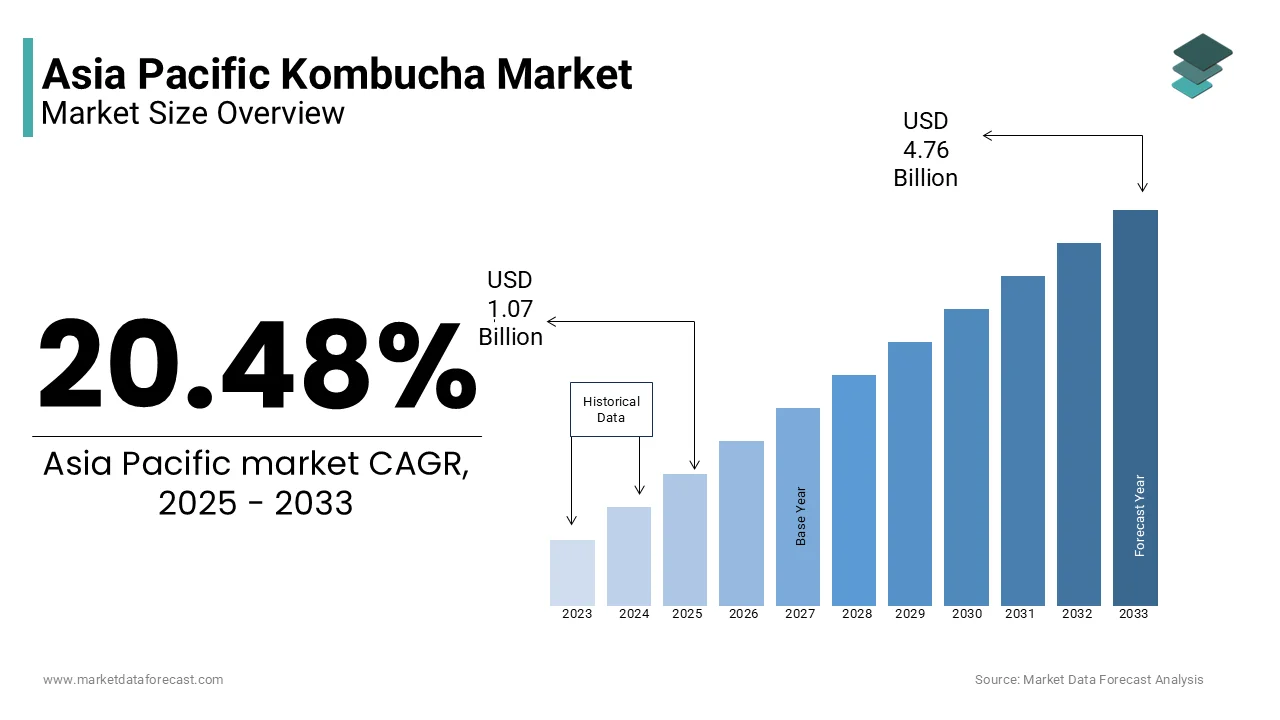
The Asia Pacific kombucha market size was valued at USD 1.07 billion in 2025, reached USD 1.29 billion in 2026, and is projected to skyrocket to USD 5.73 billion by 2034, registering a compound annual growth rate (CAGR) of 20.48% during the forecast period from 2026 to 2034. Driven by surging awareness of gut microbiome health, a transition from niche wellness circles to mainstream urban retail shelves, and cultural familiarity with traditional fermented foods, the market is experiencing hyper-growth across the region.
Key Executive Metrics (At-a-Glance)
- 2025 Base Valuation: USD 1.07 Billion
- 2026 Current Valuation: USD 1.29 Billion
- 2034 Forecast Valuation: USD 5.73 Billion
- Compound Annual Growth Rate (CAGR): 20.48% (2026–2034)
- Leading Country Market: Japan (Held 24.2% share of the APAC market in 2025, supported by strong consumer trust and the FOSHU framework)
- Prominent Country Markets: Australia (Mainstream retail integration via Woolworths and Coles), China (Rapid expansion in Tier 1 cities), and South Korea (Emphasis on scientific validation)
- Leading Type Segment: Microbial Component / Bacteria (Dominant share in 2025 due to essential roles played by acetic acid and lactic acid bacteria)
- Fastest-Growing Type Segment: Yeast (Projected CAGR of 14.3%)
- Leading Flavor Segment: Herbs & Spices (Held 27.4% share in 2025, driven by familiarity with ingredients like ginger, turmeric, and lemongrass)
- Fastest-Growing Flavor Segment: Flowers (Projected CAGR of 16.8% due to sensory appeal and aesthetic infusions like hibiscus and jasmine)
Core Market Drivers
- Gut Health Awareness: Escalating consumer focus on microbiome wellness, systemic immunity, and probiotic functional beverages.
- Clean-Label Trends & Wellness Cafes: Proliferation of plant-based drink consumption among younger demographics and boutique wellness spaces across metropolitan hubs.
Primary Market Restraints & Challenges
- Regulatory Gray Zones & Cold Chain Needs: Inconsistent legal thresholds concerning trace alcohol content (ABV limits) and high logistical complexities required to maintain live cultures.
- Taste Palatability & Technical Gaps: Aversion to tart, vinegary flavor profiles among unaccustomed populations, compounded by a regional scarcity of skilled fermentation scientists.
Asia Pacific Kombucha Market Segmentation Highlights
| Segment Category | Leading / Dominant Segment | Fastest-Growing / Prominent Segment |
|---|---|---|
| By Type | Bacteria / Microbial Component (Largest share in 2025) | Yeast (CAGR of 14.3%) |
| By Flavours | Herbs & Spices (27.4% share in 2025) | Flowers (CAGR of 16.8%) |
| By Region / Country | Japan (24.2% share in 2025) | Australia & India (High structural growth and D2C adoption) |
Major Industry Players Profiled
Key global and regional market players shaping the ecosystem include Millennium Products, Inc., Reed’s, Inc., The Hain Celestial Group, Revive Kombucha, GT's Kombucha, Red Bull GmbH, alongside prominent regional innovators like Remedy Drinks, Bucha Botanics, and Kombucha Co.
Asia Pacific Kombucha Market Size
The Asia Pacific kombucha market was valued at USD 1.07 billion in 2025, and the Asia Pacific market size is predicted to reach USD 5.73 billion by 2034 from USD 1.29 billion in 2026. The market's promising CAGR for the predicted period is 20.48%.
The kombucha is a fermented tea beverage produced through the symbiotic culture of bacteria and yeast (SCOBY), which is traditionally consumed for its purported digestive and immune benefits. While still an emerging segment compared to Western markets, kombucha has transitioned from niche wellness circles to mainstream retail shelves across urban centers in the region. As of 2023, functional beverage consumption in APAC has surged, with over 62% of consumers in countries like Australia, Japan, and South Korea actively seeking products with gut-health benefits, as per Euromonitor International. The beverage’s alignment with traditional fermentation practices in countries such as China (where fermented teas like pu-erh have long cultural roots) and Korea (with its heritage of dongdong-cha) provides a unique foothold.
MARKET DRIVERS
Gut health awareness fuels Asia-Pacific kombucha demand
The escalating consumer focus on gut microbiome health, which is a major factor propelling the growth of Asia-Pacific (APAC) kombucha market. Clinical and nutritional research has increasingly validated the role of probiotics in modulating digestive wellness and systemic immunity, prompting consumers to seek functional beverages with live cultures. Similarly, in South Korea, sales of probiotic supplements and fermented foods grew by 11.3% year-on-year in 2023, as reported by Korea Health Industry Development Institute. This entrenched preference creates fertile ground for kombucha, which naturally contains diverse lactic acid bacteria and acetic acid bacteria strains. The beverage’s positioning as a clean-label, naturally carbonated alternative to sugary sodas further amplifies its appeal among urban, health-conscious millennials and Gen Z consumers in metropolitan hubs like Sydney, Singapore, and Shanghai.
Clean-label trends and wellness cafés boost kombucha growth
The rapid proliferation of plant-based and clean-label beverage consumption among younger demographics in urban areas is propelling the growth of Asia-Pacific (APAC) kombucha market. Kombucha is a typically formulated with tea, sugar, and natural flavorings that aligns seamlessly with this preference. Additionally, the rise of boutique wellness cafés and cold-pressed juice bars in cities such as Bangkok, Mumbai, and Taipei has created experiential retail environments conducive to kombucha sampling and adoption. These venues often emphasize transparency in sourcing and production, reinforcing consumer confidence.
MARKET RESTRAINTS
Regulatory gray zones hinder kombucha market expansion
The lack of standardized regulatory frameworks governing fermented probiotic beverages, particularly concerning labeling, alcohol content, and health claims is hampering the growth of Asia-Pacific (APAC) kombucha market. In several countries, including India and Indonesia, kombucha falls into a regulatory gray zone due to its natural fermentation process, which can produce trace ethanol levels exceeding legal thresholds for non-alcoholic beverages. For instance, Thailand’s FDA mandates that non-alcoholic drinks contain less than 0.5% alcohol by volume, yet artisanal kombucha batches have been found to reach up to 1.2% ABV, as documented in a 2023 study by the National Food Institute of Thailand. This inconsistency leads to product recalls and import restrictions, discouraging large-scale distribution.
High costs and cold chain needs limit kombucha scalability
The high production cost and logistical complexity associated with maintaining live cultures throughout the supply chain is additionally to hinder the growth of Asia-Pacific (APAC) kombucha market. Kombucha is a perishable, biologically active beverage requiring cold chain distribution to preserve microbial viability and prevent over-fermentation. Additionally, sourcing high-quality organic tea and maintaining sterile fermentation environments increase manufacturing costs by up to 35% compared to conventional soft drinks, as noted in a 2022 analysis by the Food Innovation and Resource Centre at Singapore Polytechnic. These factors constrain scalability and force premium pricing, limiting accessibility for price-sensitive populations.
MARKET OPPORTUNITIES
Traditional fermented drinks integration creates opportunities
The integration of kombucha with traditional Asian fermented beverages by leveraging cultural is creating new opportunities for the growth of Asia-Pacific (APAC) kombucha market. Many APAC countries have deep-rooted traditions in fermented drinks such as Indonesia’s bajigur, India’s kanji, and Japan’s amazake which share sensory and functional parallels with kombucha. For example, a 2023 consumer trial by the Thai Department of Health Service Support found that 73% of participants preferred kombucha infused with local herbs over conventional flavors. Moreover, Japan’s long-standing acceptance of fermented foods, with miso and natto consumed by over 80% of households weekly as per the 2022 National Diet and Nutrition Survey, provides a behavioral foundation for kombucha adoption.
E-commerce and DTC channels drive kombucha market access
The expansion of e-commerce and direct-to-consumer (DTC) platforms, which enable niche kombucha brands to bypass traditional retail barriers is greatly influencing the growth of Asia-Pacific (APAC) kombucha market. In China, over 45% of functional beverage purchases are now made online, according to a 2023 McKinsey Consumer Health Survey, with consumers valuing subscription models and personalized offerings. DTC models also allow brands to collect real-time feedback, iterate flavors rapidly, and build community engagement through digital wellness content. This digital-first approach reduces reliance on brick-and-mortar shelf space, which is often dominated by established soft drink conglomerates, thereby democratizing market entry for artisanal kombucha producers.
MARKET CHALLENGES
Taste acceptance remains a barrier in APAC kombucha adoption
The consumer preferences regarding its taste profile among populations unaccustomed to tart, effervescent, and mildly vinegary flavors is degrading the growth of APAC kombucha market. Sensory studies conducted by the Singapore Institute of Food and Biotechnology Innovation in 2023 revealed that nearly 57% of first-time tasters in Malaysia and Vietnam rated kombucha as “too sour” or “unpleasantly fizzy,” compared to only 28% in Australia and Japan. This palatability gap hinders trial and repeat purchase, especially in markets where sweetened carbonated drinks dominate. Unlike in Western countries, where sourness is increasingly embraced as a hallmark of authenticity, many APAC consumers associate acidity with spoilage.
Lack of fermentation expertise restricts large-scale production
The scarcity of skilled fermentation scientists and technical expertise in microbial beverage production is hindering the growth of APAC kombucha market. Unlike in Europe or North America, where fermentation science is well-integrated into food technology curricula, specialized training in SCOBY management, pH control, and contamination prevention remains limited. According to a 2023 report by the ASEAN Food Safety Network, only 12% of small and medium-sized beverage manufacturers in Vietnam, the Philippines, and Cambodia have access to microbiologists or fermentation specialists. This knowledge gap leads to batch inconsistencies, contamination risks, and shortened shelf life, undermining brand reliability. Moreover, without standardized fermentation protocols, scaling production while preserving live cultures becomes highly complex. The absence of dedicated research centers focused on symbiotic fermentation further impedes innovation by leaving many startups reliant on trial-and-error methods that increase operational risk and reduce investor confidence in the sector’s long-term viability.
REPORT COVERAGE
| REPORT METRIC | DETAILS |
| Market Size Available | 2025 to 2034 |
| Base Year | 2025 |
| Forecast Period | 2026 to 2034 |
| CAGR | 20.48% |
| Segments Covered | By Type, Flavours, and Region |
| Various Analyses Covered | Global, Regional, & Country Level Analysis; Segment-Level Analysis; DROC; PESTLE Analysis; Porter’s Five Forces Analysis; Competitive Landscape; Analyst Overview of Investment Opportunities |
| Regions Covered | India, China, Japan, South Korea, Australia, New Zealand, Thailand, Malaysia, Vietnam, Philippines, Indonesia, Singapore, and the Rest of Asia-Pacific |
| Market Leaders Profiled | Millennium Products, Inc., Reed’s, Inc., The Hain Celestial Group, Revive Kombucha, Kosmic Kombucha, Cell-Nique Corporation, Buchi Kombucha, GT's Kombucha, Townshend’s Tea Company, The Humm Kombucha LLC, Red Bull Gmbh, Makana Beverages Inc., Nesalla Kombucha, Live Soda Kombucha and Kombucha Wonder Drink, and others. |
SEGMENTAL ANALYSIS
By Type Insights
The microbial component segment was the largest and held a dominant share of APAC kombucha market in 2025 with the central role bacteria play in both flavor development and probiotic efficacy. Acetic acid bacteria, which are responsible for synthesizing gluconic and acetic acids.

A 2022 clinical survey by the National Center for Biotechnology Information in Japan found that 61% of consumers associate LAB presence with improved digestion and immune modulation. Moreover, LAB strains such as Lactobacillus fermentum and Lactobacillus brevis, frequently isolated in Korean and Chinese kombucha batches, exhibit strong antioxidant and anti-inflammatory activity in vitro, as documented by the Korean Society for Microbiota and Health. These functional attributes enable brands to position their products within the broader wellness ecosystem in markets like Australia and Japan where microbiome-targeted foods are gaining scientific legitimacy.
The yeast segment is likely to expand at a CAGR of 14.3% during the forecast period with the increasing recognition of yeast’s role in bioactive compound synthesis during primary fermentation. In Australia, CSIRO’s Food and Health Program has developed proprietary yeast cultures that reduce ethanol byproduct to below 0.3% ABV while maintaining robust fermentation kinetics, addressing regulatory concerns in non-alcoholic beverage categories. Additionally, a 2023 study by the University of Auckland revealed that kombucha batches with balanced yeast-to-bacteria ratios demonstrated a 32% higher antioxidant capacity than standard formulations, reinforcing their appeal in functional beverage development.
By Flavour Insights
The herbs & spices segment was accounted in holding 27.4% of APAC kombucha market share in 2025 with the deep cultural integration of herbal ingredients in traditional medicine and culinary practices across the region. Consumers in countries like India, Thailand, and Indonesia exhibit high familiarity and trust in ingredients such as ginger, turmeric, lemongrass, and holy basil many of which possess scientifically validated anti-inflammatory and digestive properties. Moreover, the synergy between herbal ingredients and kombucha’s functional positioning amplifies market appeal. In India, turmeric-infused kombucha has gained traction among urban wellness consumers, with sales of turmeric-based functional drinks rising by 19% year-on-year in 2023, as noted by the Indian Council of Medical Research.
The flowers segment is likely to projected to register a CAGR of 16.8% in the coming years with the rising aesthetic and sensory appeal of floral infusions among younger, female consumers in urban APAC markets. Ingredients such as hibiscus, jasmine, chrysanthemum, and butterfly pea flower are prized not only for their vibrant color and delicate aroma but also for their antioxidant content and calming properties. The integration of floral ingredients into premiumization strategies is additionally to escalate the growth of APAC kombucha market. Additionally, butterfly pea flower, native to Thailand and Malaysia, has gained international attention for its natural pH-sensitive color-changing properties, enhancing experiential consumption.
REGIONAL ANALYSIS
Japan Market Analysis
Japan kombucha market was the top performer and held 24.2% of APAC kombucha market share in 2025 with highly regulated, characterized by strong consumer trust in functional foods due to the established FOSHU (Foods for Specified Health Use) framework. This cultural predisposition facilitates acceptance of kombucha as a digestive aid. Additionally, major beverage players such as Suntory and Kirin have introduced kombucha under their functional drink portfolios, ensuring wide distribution through convenience stores and vending machines.
Australia Market Analysis
Australia kombucha market growth is likely to grow with significant growth opportunities during the forecast period. Brands like Remedy and Health-Ade have leveraged direct-to-consumer models and subscription services to build loyal customer bases, while major retailers such as Woolworths and Coles dedicate shelf space to functional beverages, signaling mainstream integration.
China Market Analysis
China represents a rapidly expanding market, contributing 15% of the regional value, as assessed by the China Beverage Industry Association in 2023. Despite regulatory hurdles around health claims, kombucha is gaining traction in Tier 1 cities like Shanghai, Beijing, and Shenzhen, where affluent urbanites embrace Western wellness trends. The rise of premium fitness studios and organic grocery chains such as Ole’ Supermarket and Hema Xiansheng has created distribution channels for imported and domestic kombucha brands. Furthermore, local startups are reformulating kombucha with traditional ingredients like goji berry, chrysanthemum, and jasmine to align with TCM principles, enhancing cultural relevance.
South Korea Market Analysis
South Korea kombucha market growth is likely to grow with its emphasis on scientific validation and product sophistication. Korean consumers demand clinically backed health benefits, prompting brands to invest in microbiome research and transparent labeling. The country’s advanced biotechnology sector has enabled the development of patented probiotic strains specifically optimized for kombucha fermentation.
India Market Analysis
India kombucha market is likely to grow with a prominent growth opportunities in coming years. Startups like Om Kombucha and Bucha Botanics India are leveraging Ayurvedic herbs such as tulsi, ashwagandha, and amla to differentiate their offerings and appeal to naturopathic sensibilities. Despite logistical challenges and limited cold-chain coverage, e-commerce platforms like BigBasket and Nature’s Basket are enabling targeted distribution.
COMPETITIVE LANDSCAPE
KEY MARKET PLAYERS
A few of the notable players in the Asia Pacific kombucha market include
- Millennium Products, Inc.
- Reed’s, Inc.
- The Hain Celestial Group
- Revive Kombucha
- Kosmic Kombucha
- Cell-Nique Corporation
- Buchi Kombucha
- GT's Kombucha
- Townshend’s Tea Company
- The Humm Kombucha LLC
- Red Bull GmbH
- Makana Beverages Inc.
- Nesalla Kombucha
- Live Soda Kombucha
- Kombucha Wonder Drink
TOP STRATEGIES USED BY THE KEY MARKET PLAYERS
Key players in the APAC kombucha market are deploying a multifaceted strategic approach to consolidate their presence and drive consumer adoption. Product differentiation through localized flavor innovation is a dominant tactic, with brands incorporating region-specific botanicals and traditional herbs to enhance cultural resonance. Strategic distribution expansion via e-commerce platforms and health-focused retail chains enables broader market penetration, particularly in urban centers. Partnerships with fitness studios, wellness influencers, and nutritionists are being leveraged to build credibility and foster community engagement.
COMPETITION OVERVIEW
The competitive landscape of the APAC kombucha market is characterized by a dynamic interplay between artisanal startups and established beverage companies, each vying for dominance in a rapidly evolving wellness sector. While local brands leverage cultural familiarity and niche positioning, multinational players are entering through partnerships or localized product development. Intense competition revolves around innovation in flavor profiles, probiotic efficacy, and sustainable production practices. The absence of dominant market leaders has created a fragmented yet highly responsive ecosystem, where agility and consumer insight determine success.
TOP PLAYERS IN THE MARKET
- Remedy Drinks has emerged as a pivotal force in shaping the APAC kombucha landscape by championing a sugar-free, live-culture philosophy that resonates with health-conscious consumers. Based in Sydney, the company emphasizes transparency in fermentation, using organic ingredients and extended brewing cycles to ensure microbial potency. Remedy’s products are widely distributed across major Australian retailers and have expanded into New Zealand and select Southeast Asian markets through strategic partnerships with organic food distributors.
- Bucha Botanics has distinguished itself as a regional innovator by fusing traditional Asian botanicals with modern fermentation science, creating culturally relevant kombucha variants for diverse APAC palates. The Singapore-based brand infuses its brews with ingredients like butterfly pea flower, lemongrass, and pandan, appealing to local sensory preferences while maintaining functional integrity. It has established a strong presence in urban centers across Southeast Asia, including Malaysia, Thailand, and Indonesia, through premium retail placements and collaborations with boutique cafes. The company also invested in cold-chain logistics optimization to preserve probiotic viability by ensuring product consistency. Its focus on aesthetic branding and wellness storytelling has made it a favorite among younger, socially conscious consumers.
- Kobucha Co., headquartered in Tokyo, has played a transformative role in normalizing kombucha within Japan’s highly discerning functional beverage market. The company leverages Japan’s deep-rooted familiarity with fermented foods to position kombucha as a digestive wellness aid rather than a novelty drink. Its formulations adhere to strict quality standards, with batch-specific microbial profiling made available to consumers via QR codes, enhancing transparency.
MARKET SEGMENTATION
This research report on the Asia Pacific kombucha market has been segmented and sub-segmented into the following categories.
By Type
- Bacteria
- Yeast
- Mould
- Others
By Flavours
- Herbs & Spices
- Citrus
- Berries
- Apple
- Coconut
- Mangoes
- Flowers
- Others
By Country
- India
- China
- Japan
- South Korea
- Australia
- New Zealand
- Thailand
- Malaysia
- Vietnam
- Philippines
- Indonesia
- Singapore
- Rest of Asia Pacific