- Product Description Description
- Table of Contents TOC
- List of Table & Figure LOT
- Get Free Sample PDF Sample PDF
Market Size, 2025
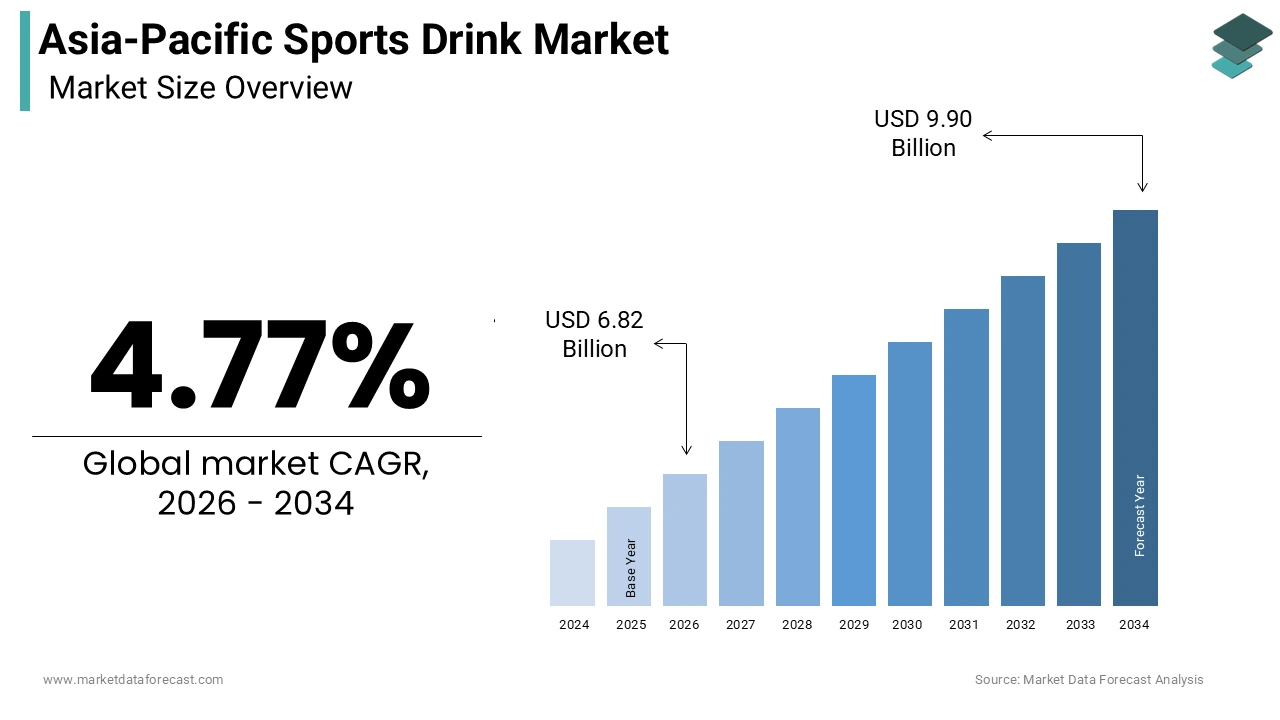
$6.51 BnMarket Estimate, 2026
$6.82 BnMarket Forecast, 2034
$9.90 BnCAGR, 2026–2034
4.77%Executive Summary: Asia-Pacific Sports Drink Market
- Market Scope: Regional sports drink market analysis covering product categories, distribution channels, country-level dynamics within Asia-Pacific, and active lifestyle consumption adoption metrics.
- Market Valuation: Valued at USD 6.51 billion in 2025, estimated at USD 6.82 billion in 2026, and projected to reach USD 9.90 billion by 2034, registering a CAGR of 4.77% from 2026 to 2034.
- Primary Growth Drivers: Rising health consciousness and fitness participation in urban centers, government initiatives promoting active lifestyles, and modern retail/e-commerce expansion enhancing accessibility in tier-two and tier-three cities.
Key Market Segment Metrics (2026–2034)
| Category | Leading Segment (Position) | Fastest-Growing / Key Growth Segment |
|---|---|---|
| By Product Type & Channel | Isotonic sports drinks (dominated for rapid fluid/electrolyte replenishment) & Supermarkets/hypermarkets (largest share in 2025) | Hypotonic sports drinks (fastest growth for low-calorie hydration) & Online platforms (highest CAGR via home delivery) |
| By Technology & Innovation | Standard electrolyte beverages and conventional sports drink formulations | Low-sugar formulations, clean-label ingredients, and sustainable packaging solutions |
| By Country / Regional Dynamics | China (led the market with the highest share due to large population and urban fitness culture) | India (experiencing significant volume growth driven by a young demographic and sports participation) |
Major Market Players & Market Structure
Market Structure: Highly competitive Asia-Pacific functional beverage sector characterized by low-sugar product innovations, regional flavor expansions, clean-label initiatives, and strategic partnerships with fitness influencers and local distributors.
Key Companies: PepsiCo Inc., The Coca-Cola Company, AJE Group, BodyArmor, Arizona Beverage Company, Gatorade Company, J Donohoe Beverages Ltd, BA Sports Nutrition, LLC., GU Energy Labs, BE Innovations, and CytoSport, Inc.
Asia-Pacific Sports Drink Market Size
The sports drink market size in Asia-Pacific was calculated to be USD 6.51 billion in 2025 and is anticipated to be worth USD 9.90 billion by 2034, from USD 6.82 billion in 2026, growing at a CAGR of 4.77% during the forecast period.
As per the World Health Organization, the number of people with diabetes in the South East Asia and Western Pacific regions has risen significantly, reaching approximately 200 million cases in recent years, which drives consumers toward healthier beverage options that offer controlled sugar intake. Furthermore, the urbanization rate in Asia continues to accelerate, with the United Nations Department of Economic and Social Affairs stating that over 50% of the Asian population now resides in urban areas. This demographic shift facilitates greater access to modern retail channels and fitness centers, thereby increasing the consumption of convenience-oriented functional beverages. The intense humidity in many Southeast Asian countries also necessitates higher fluid intake, creating a natural demand for isotonic solutions. According to the Asian Development Bank, climate change is expected to increase the frequency of heatwaves in the region, further amplifying the need for effective hydration strategies among outdoor workers and sports enthusiasts alike. These socio-environmental factors collectively shape the foundational demand for sports drinks beyond mere athletic performance, embedding them into daily health routines.
MARKET DRIVERS
Rising Health Consciousness and Fitness Participation Drives Demand For Functional Hydration Solutions
The surge in health consciousness across the Asia Pacific region is majorly boosting the growth of the sports drinks market in Asia-pacific. Consumers are increasingly adopting active lifestyles, driven by government initiatives and corporate wellness programs. As per the Ministry of Health in Singapore, nearly 60% of residents participate in regular physical activity, which reflects a broader regional trend toward fitness. This behavioural shift is not limited to elite athletes but extends to the general population engaging in recreational sports such as running, cycling, and gym workouts. According to the International Sport and Culture Association, participation in community sports events in countries like Japan and Australia has grown by 15% annually over the last five years. Such widespread engagement creates a consistent demand for beverages that aid in recovery and performance. Moreover, the rise of digital fitness platforms has democratized access to workout routines, further encouraging regular exercise. According to Statista, the number of fitness app users in the Asia Pacific is projected to reach 300 million by 2025, illustrating the deep integration of fitness into daily life. This digital influence promotes awareness about proper hydration, leading consumers to prefer scientifically formulated sports drinks over plain water or sugary sodas. The emphasis on preventive healthcare also motivates individuals to choose drinks with added vitamins and minerals, aligning with their overall wellness goals and driving sustained market growth.
Expansion of Modern Retail and E-Commerce Channels Enhances Product Accessibility and Consumer Reach
The rapid expansion of modern retail infrastructure and e-commerce platforms significantly boosts the accessibility of sports drinks in the Asia-Pacific region, which is further contributing to the Asia-Pacific sports drink market expansion. Traditional general stores are increasingly being replaced by supermarkets and convenience chains that offer a wider variety of branded beverages. As per Nielsen IQ, modern trade accounts for over 40% of total packaged food and beverage sales in emerging Asian markets such as India and Indonesia. This shift allows manufacturers to display premium sports drink brands prominently, influencing purchase decisions at the point of sale. Additionally, the e-commerce sector has witnessed exponential growth, facilitated by improved logistics and digital payment systems. According to the Alibaba Group, online grocery sales in China grew by 25% year on year, providing a robust channel for niche and premium sports drink variants. The convenience of home delivery appeals to busy urban professionals who prioritize time efficiency. Furthermore, social media marketing through these digital platforms enables brands to engage directly with consumers, educating them about product benefits and fostering brand loyalty. The integration of omni-channel strategies ensures that consumers can access their preferred sports drinks seamlessly, whether through physical stores or online apps. This enhanced distribution network reduces barriers to entry for new players and expands the consumer base, particularly in tier two and tier three cities where traditional retail penetration was previously limited.
MARKET RESTRAINTS
High Sugar Content and Associated Health Risks Restrain Market Growth amidst Regulatory Scrutiny
The high sugar content prevalent in many conventional sports drinks is significantly impeding the expansion of the Asia-Pacific sports drink market. Excessive sugar intake is linked to obesity, type 2 diabetes, and dental caries, prompting consumers to seek healthier alternatives. As per the World Health Organization, the prevalence of obesity in the Asia Pacific region has doubled since 1990, with over 100 million children currently affected by overweight conditions. This alarming statistic has led to stricter regulatory measures and public health campaigns aimed at reducing sugar consumption. Governments in countries like Thailand and Malaysia have implemented sugar taxes on sweetened beverages, which directly impact the pricing and affordability of standard sports drinks. According to the Thai Ministry of Public Health, the excise tax on sugary drinks increased by 20% in recent years, leading to a noticeable decline in sales volume for high sugar variants. Consumers are becoming more label-conscious, often avoiding products with added sugars despite their electrolyte benefits. This shift in preference forces manufacturers to reformulate their products, which can be costly and may alter taste profiles, potentially alienating existing customers. The negative perception of sugar-laden beverages as unhealthy undermines the core value proposition of sports drinks, limiting their appeal to health-conscious segments and restricting overall market expansion in regions with aggressive public health policies.
Availability of Low-Cost Natural Alternatives Limits Premium Sports Drink Adoption in Price-Sensitive Segments
The widespread availability of low-cost natural alternatives such as coconut water and homemade electrolyte solutions restricts the adoption of premium sports drinks in price-sensitive markets, which is another significant restraint to the regional market growth. In many Asia Pacific countries, traditional remedies for hydration are deeply ingrained in the culture and are perceived as healthier and more affordable. As per the Food and Agriculture Organization of the United Nations, Asia produces over 90% of the world's coconuts, making coconut water readily available and inexpensive in countries like the Philippines and Vietnam. This local abundance provides a viable substitute that competes directly with commercial sports drinks, particularly among rural and lower-income populations. Additionally, the rise of do-it-yourself hydration recipes using salt, lemon, and sugar offers a cost-effective solution that appeals to budget-conscious consumers. According to a survey by Kantar, nearly 35% of households in India prefer homemade beverages over branded options due to cost considerations. The perceived authenticity and lack of artificial additives in natural alternatives further enhance their appeal, challenging the value proposition of processed sports drinks. Manufacturers struggle to justify the premium pricing of their products when consumers can achieve similar hydration benefits at a fraction of the cost. This competitive pressure from informal and natural sectors limits the market penetration of branded sports drinks, particularly in economic sectors where disposable income remains constrained, and price sensitivity is high.
MARKET OPPORTUNITIES
Innovation in Plant-Based and Organic Formulations Opens New Avenues for Health-Conscious Consumers
The growing demand for plant-based and organic products is a significant opportunity for manufacturers to innovate and capture niche market segments. Consumers are increasingly seeking clean-label products that are free from artificial colors, flavors, and preservatives. As per the Organic Trade Association, the global organic food and beverage market is expected to grow at a compound annual growth rate of 14%, with the Asia Pacific emerging as a key contributor. This trend encourages brands to develop sports drinks using natural ingredients such as fruit extracts, herbal infusions, and plant-based electrolytes. For instance, the use of maple water or birch sap as natural hydration sources appeals to environmentally conscious consumers. According to Mintel, launches of beverages with organic claims in the Asia Pacific increased by 18% in the past year, indicating a strong market appetite for such innovations. Furthermore, the vegan movement is gaining traction in urban centers, with Euromonitor International reporting that 10% of consumers in Australia and New Zealand identify as flexitarians or vegans. This demographic prefers products aligned with their ethical and dietary values, creating a lucrative segment for plant-based sports drinks. By leveraging these trends, companies can differentiate their offerings and command premium prices. The integration of functional ingredients like adaptogens and antioxidants further enhances the health benefits, attracting consumers who view hydration as part of a holistic wellness routine. This strategic pivot towards natural and organic formulations allows brands to tap into evolving consumer preferences and drive sustainable growth.
Integration of Digital Technologies And Personalized Nutrition Creates Engaging Consumer Experiences
The integration of digital technologies and personalized nutrition offers a promising opportunity for the sports drink market in this region to enhance consumer engagement and loyalty. Advances in wearable technology and mobile applications enable users to track their hydration levels and physical activity in real time. As per IDC, shipments of wearable devices in the Asia Pacific region grew by 20% annually, providing a vast data pool for personalized health recommendations. Brands can leverage this data to offer customized drink formulations tailored to individual needs, such as specific electrolyte balances or calorie counts. This personalization enhances the perceived value of the product and fosters deeper brand connections. According to Accenture, 75% of consumers are more likely to buy from brands that provide personalized experiences, highlighting the potential of this approach. Additionally, augmented reality and gamification features in marketing campaigns can educate consumers about the science of hydration in an interactive manner. For example, QR codes on packaging can link to digital platforms that provide workout tips and hydration reminders. The rise of telehealth and online nutrition counseling also supports this trend, with the Global Wellness Institute noting that the personal care and beauty market, which includes nutritional supplements, is worth billions in the region. By aligning sports drinks with digital health ecosystems, manufacturers can create a seamless user experience that extends beyond the product itself, driving repeat purchases and long-term customer retention in a competitive landscape.
MARKET CHALLENGES
Intense Competition from Established Beverage Giants and Local Players Fragments Market Share
The intense competition from both multinational beverage giants and agile local players is a major challenge to the expansion of the Asia-Pacific sports drink market. Established companies such as PepsiCo and Coca-Cola dominate the landscape with extensive distribution networks and strong brand recognition. As per Beverage Digest, these conglomerates hold over 50% of the global sports drink market, leveraging their scale to maintain competitive pricing and prominent shelf space. However, local brands are increasingly challenging this dominance by offering products tailored to regional tastes and preferences. For instance, companies in Japan and South Korea have launched unique flavors and functional variants that resonate with local consumers, capturing significant market portions. According to Euromonitor International, the top five players in the Asia Pacific region account for less than 40% of the total market, indicating a high degree of fragmentation. This competitive environment forces companies to invest heavily in marketing and innovation to differentiate their offerings. The constant launch of new products and promotional activities increases operational costs and squeezes profit margins. Furthermore, private label brands from retail chains are gaining traction, offering cheaper alternatives that appeal to budget-conscious shoppers. The inability of smaller players to achieve economies of scale makes it difficult for them to compete on price, while larger firms struggle to maintain agility in responding to niche trends. This dynamic creates a volatile market landscape where sustaining growth requires continuous strategic adaptation and significant financial investment.
Supply Chain Disruptions and Raw Material Volatility Impact Production Costs and Availability
Supply chain disruptions and volatility in raw material prices are further challenging the sports drink market growth in this region. The region relies heavily on imports for key ingredients such as specific electrolytes, vitamins, and packaging materials, making it vulnerable to global logistical issues. As per the United Nations Conference on Trade and Development, shipping costs in Asia increased by 300% during recent global disruptions, directly impacting the cost structure of beverage manufacturers. Fluctuations in the prices of sugar, citrus fruits, and plastics further exacerbate these challenges, forcing companies to adjust pricing strategies or absorb costs. According to the Food and Agriculture Organization, extreme weather events linked to climate change have reduced crop yields in key agricultural regions, leading to scarcity and price spikes for natural ingredients. These inconsistencies disrupt production schedules and affect product availability, potentially leading to stockouts and lost sales. Additionally, geopolitical tensions and trade policies can impose tariffs or restrictions on imported goods, complicating supply chain management. For example, trade disputes between major economies have occasionally led to retaliatory measures that affect ingredient sourcing. Manufacturers must navigate these complexities by diversifying suppliers and investing in resilient logistics networks, which requires substantial capital expenditure. The uncertainty surrounding raw material availability and costs makes long-term planning difficult, hindering the ability of companies to maintain consistent quality and pricing, thereby affecting consumer trust and market stability.
REPORT COVERAGE
| REPORT METRIC | DETAILS |
| Market Size Available | 2025 to 2034 |
| Base Year | 2025 |
| Forecast Period | 2026 to 2034 |
| CAGR | 4.77% |
| Segments Covered | By Product Type, Distribution Channel & Region |
| Various Analyses Covered | Global, Regional, and Country-Level Analysis; Segment-Level Analysis; DROC; PESTLE Analysis; Porter’s Five Forces Analysis; Competitive Landscape; Analyst Overview of Investment Opportunities |
| Regions Covered | India, China, Japan, South Korea, Australia, New Zealand, Thailand, Malaysia, Vietnam, Philippines, Indonesia, Singapore, and the rest of APAC |
| Market Leaders Profiled | PepsiCo Inc., Coca-Cola Company, AJE Group, BodyArmor, Arizona Beverage Company, Gatorade Company, J Donohoe Beverages Ltd, BA Sports Nutrition, LLC., GU Energy Labs, BE Innovations, and CytoSport, Inc. |
SEGMENTAL ANALYSIS
By Product Type Insights
The isotonic sports drinks segment accounted for the dominating share of the Asia-Pacific sports drink market in 2025. The dominance of the isotonic segment in this regional market can be credited to its ability to rapidly replenish fluids and electrolytes lost during moderate physical activity. These beverages possess a similar concentration of salt and sugar as the human body, allowing for quick absorption without causing gastrointestinal distress. As per the International Society of Sports Nutrition, isotonic solutions are the most effective for maintaining hydration status during endurance events lasting over 60 minutes. The widespread participation in recreational running and cycling across urban centers in China and India fuels this demand. According to the Chinese Athletics Association, the number of registered marathon participants exceeded 1 million in recent years, creating a substantial consumer base for isotonic formulations. Furthermore, the hot and humid climate prevalent in Southeast Asian countries increases sweat rates, necessitating efficient rehydration strategies. The World Meteorological Organization states that average temperatures in the region have risen by 1 degree Celsius over the past decade, intensifying the need for effective hydration products. Consumers prefer isotonic drinks for their balanced taste and functional benefits, making them the default choice for gym goers and amateur athletes. This broad applicability across various sports and fitness levels ensures that isotonic drinks maintain their dominant market share, supported by extensive distribution networks and strong brand recognition among health-conscious individuals seeking reliable hydration solutions.
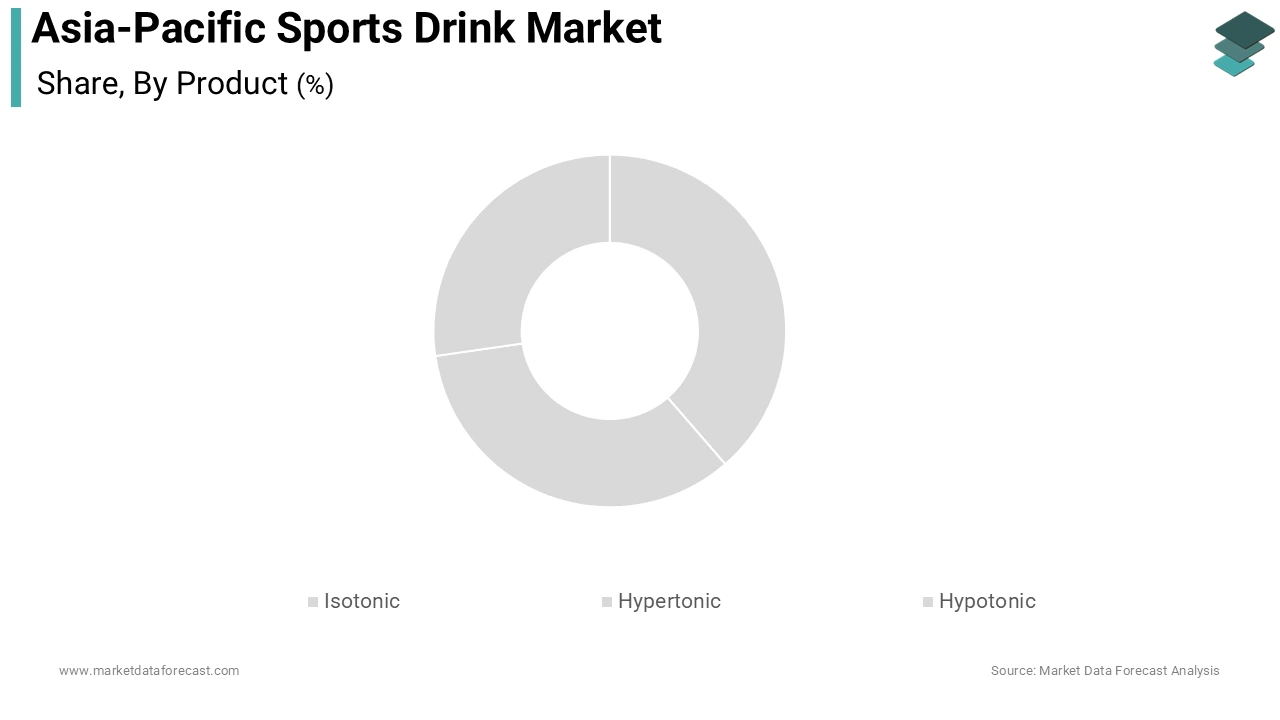
On the other hand, the hypotonic sports drinks segment is predicted to expand at a promising CAGR in the regional market during the forecast period, owing to the increasing demand for low-calorie hydration solutions. These beverages have a lower concentration of solutes than the human body, allowing for faster fluid absorption with minimal caloric intake. As per the Global Wellness Institute, the wellness economy in the Asia Pacific is growing at a rate of 10% annually, with a significant focus on weight management and healthy living. Consumers are increasingly aware of the risks associated with excessive sugar consumption, leading them to seek alternatives that provide hydration without added calories. According to Statista, sales of low-sugar beverages in the region increased by 15% year on year, reflecting this shifting preference. Hypotonic drinks are particularly appealing to individuals engaging in low to moderate intensity activities where energy replenishment is less critical than fluid replacement. The rise of fitness trends such as yoga and pilates, which emphasize mindfulness and health, further boosts demand for these lighter formulations. The International Yoga Federation reports that over 50 million people in India practice yoga regularly, creating a niche market for hypotonic beverages. Manufacturers are responding by launching innovative products with natural sweeteners and enhanced electrolyte profiles, catering to the evolving needs of health-conscious consumers and driving rapid segment growth.
By Distribution Channel Insights
The supermarkets and hypermarkets segment led the market by capturing the highest share of the regional market in 2025. The dominance of this segment in the regional market is attributed to the extensive physical retail infrastructure and high product visibility. These outlets offer a wide variety of brands and flavors, allowing consumers to compare options and make informed purchase decisions. As per Nielsen IQ, modern trade channels account for approximately 45% of total beverage sales in emerging Asian markets, reflecting their central role in consumer shopping habits. The strategic placement of sports drinks near checkout counters and in dedicated health aisles enhances impulse purchases and brand exposure. Major retail chains such as Walmart in China and Reliance Retail in India have expanded their footprint significantly, providing manufacturers with access to a vast customer base. According to the China Chain Store and Franchise Association, the number of supermarket outlets in China grew by 5% annually, ensuring widespread availability of sports drinks. Furthermore, supermarkets often run promotional campaigns and discounts, attracting price-sensitive consumers and driving volume sales. The ability to physically inspect products and check expiration dates builds consumer trust, particularly for health-related items. This tangible shopping experience, combined with the convenience of one-stop shopping for groceries and beverages, sustains the dominance of supermarkets and hypermarkets as the primary distribution channel for sports drinks in the region.
However, the online platforms segment is estimated to showcase a promising CAGR in the regional market during the forecast period, owing to the rapid expansion of e-commerce infrastructure and widespread adoption of digital payments. The convenience of home delivery and the ability to access a wider range of products appeal to busy urban consumers. As per Alibaba Group, online retail sales in China reached 13 trillion yuan in recent years, demonstrating the massive scale of the digital marketplace. The integration of seamless payment systems such as Alipay and Paytm has reduced transaction friction, encouraging online purchases of beverages. According to Statista, the number of e-commerce users in Southeast Asia is projected to reach 350 million by 2025, creating a vast potential customer base for sports drink brands. Logistics improvements, including same-day delivery services, have enhanced the reliability of online shopping, making it a viable option for perishable and bulk items. The rise of social commerce platforms like TikTok Shop and Instagram Shopping further accelerates growth by enabling direct sales through social media interactions. These platforms allow brands to engage with consumers through interactive content and influencer endorsements, driving impulse buys. The ability to subscribe to regular deliveries ensures consistent consumption and customer retention, fueling the rapid growth of online platforms as a key distribution channel.
REGIONAL ANALYSIS
China Sports Drink Market Analysis
China dominated the Asia-Pacific market by capturing the highest share of the regional market in 2025 and is expected to further strengthen its position as a major regional powerhouse for fitness beverage innovations and health-oriented consumption patterns over the next few years due to its massive population and growing fitness culture. The country's market status is characterized by intense competition between international giants and domestic brands, with a strong emphasis on innovation and digital marketing. As per the General Administration of Sport of China, over 400 million people participate in regular physical exercise, creating a substantial demand for functional beverages. The government's National Fitness Program aims to increase this number to 500 million by 2025, further boosting market potential. Urbanization and rising disposable incomes have led to greater awareness of health and wellness, prompting consumers to adopt active lifestyles. According to the National Bureau of Statistics of China, the per capita disposable income in urban areas increased by 8% annually, which is enabling higher spending on premium sports drinks. The e-commerce sector plays a pivotal role in distribution, with platforms like JD.com and Tmall facilitating easy access to a wide variety of products. Local brands such as Dongpeng Special Drink have gained significant market share by offering affordable and culturally relevant formulations. The integration of traditional Chinese medicine ingredients into sports drinks is an emerging trend, appealing to health-conscious consumers seeking holistic benefits. This unique blend of modern fitness trends and traditional health practices defines the dynamic market landscape in China, sustaining its position as the regional leader.
India Sports Drink Market Analysis
India is anticipated to experience a massive surge in commercial volume growth and youth-centric hydration brand penetration over the next few years, representing a rapidly expanding market within the Asia Pacific region, characterized by a young demographic and increasing sports participation. The market status is influenced by growing awareness of hydration and the rising popularity of cricket and other sports. As per the Ministry of Youth Affairs and Sports, India has over 100 million active sports participants, with cricket being the most popular sport, driving beverage consumption. The introduction of professional leagues such as the Indian Premier League has heightened interest in sports nutrition and hydration. According to the Confederation of Indian Industry, the sports goods industry in India is growing at a rate of 15% annually, reflecting broader engagement in physical activities. Urban centers like Mumbai and Delhi are seeing a surge in gym memberships and fitness classes, further driving demand for sports drinks. The availability of affordable options from local manufacturers makes these beverages accessible to a wider audience. Government initiatives like Fit India Movement encourage citizens to adopt healthier lifestyles, promoting the consumption of functional beverages. The rural market remains largely untapped, presenting significant growth opportunities for companies that can establish effective distribution networks. The combination of a youthful population, increasing sports enthusiasm, and government support creates a favorable environment for market expansion in India.
Japan Sports Drink Market Analysis
Japan is likely to focus heavily on specialized functional enhancements and elderly focused hydration formulations over the next few years, maintaining a mature and sophisticated sports drink market, characterized by high consumer awareness and demand for premium quality products. The country's market status is defined by a strong culture of health consciousness and advanced technological integration in beverage formulation. As per the Japan Sports Agency, over 60% of the population engages in regular sports activities, supporting steady demand for hydration solutions. The aging population also contributes to market growth, with older consumers seeking beverages that support joint health and recovery. According to the Ministry of Health, Labour and Welfare, life expectancy in Japan is among the highest globally, driving interest in longevity and wellness products. Innovations such as amino acid-enriched drinks and collagen-infused sports beverages cater to specific health needs. The convenience store network in Japan is highly developed, ensuring widespread availability of sports drinks in urban and rural areas. Vending machines remain a crucial distribution channel, with over 4 million units across the country providing 24-hour access. Consumers prioritize functionality and taste, willing to pay a premium for high-quality ingredients. The emphasis on precision and quality in manufacturing reinforces Japan's position as a key market for innovative and specialized sports drink products.
South Korea Sports Drink Market Analysis
South Korea is poised to expand its fast-paced lifestyle beverage segments and digital marketing collaborations over the next few years, exhibiting a dynamic sports drink market driven by a strong fitness culture and the influence of K-pop and celebrity endorsements. The market status is marked by rapid trend adoption and high demand for aesthetically pleasing and functional beverages. As per the Korean Sports Promotion Foundation, participation in leisure sports activities has increased by 10% annually, with hiking and running being popular choices. The influence of social media and celebrity culture significantly impacts consumer preferences, with endorsed products gaining quick popularity. According to Statistics Korea, the health functional food market is growing steadily, reflecting broader interest in wellness. Sports drinks are often marketed as lifestyle accessories, with packaging design playing a crucial role in purchase decisions. The convenience store sector is highly competitive, with frequent launches of new flavors and limited-edition products. Consumers are increasingly interested in low-calorie and natural ingredient options, aligning with global health trends. The integration of sports drinks into daily routines for office workers and students further expands the market. The combination of cultural influence, high fitness participation, and innovative marketing strategies sustains the vibrant market environment in South Korea.
Australia Sports Drink Market Analysis
Australia is expected to establish higher standards for ecological manufacturing and clean-label sports nutrition profiles over the next few years, holding a significant position in the Asia Pacific sports drink market, characterized by a strong outdoor lifestyle and high sports participation rates. The market status is influenced by a well-established fitness industry and consumer preference for natural and organic products. As per the Australian Bureau of Statistics, over 60% of adults participate in physical activity at least once a week, driving consistent demand for hydration solutions. The popularity of sports such as rugby, cricket, and swimming creates a robust consumer base for sports drinks. According to Sport Australia, community sports participation remains high, with millions of individuals involved in organized clubs and events. Consumers are increasingly seeking clean-label products with minimal artificial additives, prompting manufacturers to innovate with natural ingredients. The retail landscape is dominated by major supermarket chains, which offer a wide range of domestic and international brands. Environmental sustainability is also a key concern, with consumers preferring brands that use recyclable packaging. The strong emphasis on health and wellness, combined with an active lifestyle, ensures steady market growth in Australia. The focus on quality and sustainability differentiates the Australian market from other regions in the Asia Pacific.
COMPETITION OVERVIEW
The competition in the Asia Pacific sports drink market is intense and characterized by the presence of multinational giants alongside agile local players. Global corporations leverage their extensive resources and established brand recognition to dominate shelf space in modern retail outlets. However, local manufacturers challenge this dominance by offering affordable alternatives tailored to specific regional tastes and preferences. The market exhibits high fragmentation in certain countries where niche brands cater to unique consumer needs, such as traditional herbal hydration solutions. Price wars are common in price-sensitive segments, forcing companies to optimize supply chains and reduce operational costs. Innovation serves as a key differentiator, with brands constantly launching new flavors and functional formulations to attract attention. Digital marketing plays a crucial role as companies vie for consumer engagement through social media and e-commerce platforms. Regulatory pressures regarding sugar content and labeling further complicate the competitive landscape, requiring continuous adaptation. The entry of private label brands from major retail chains adds another layer of competition, pressuring margins. Overall, the market remains dynamic with participants striving to balance cost efficiency with product differentiation to sustain growth and profitability in this diverse region.
KEY MARKET PLAYERS
A few major players in the Asia Pacific sports drink market include
- PepsiCo Inc.
- Coca-Cola Company
- AJE Group
- BodyArmor
- Arizona Beverage Company
- Gatorade Company
- J Donohoe Beverages Ltd
- BA Sports Nutrition
- LLC.
- GU Energy Labs
- BE Innovations
- CytoSport, Inc
Top Strategies Used by Key Market Participants
Key players in the Asia Pacific sports drink market primarily employ product innovation and strategic partnerships to strengthen their positions. Companies frequently reformulate existing products to reduce sugar content and incorporate natural ingredients appealing to health-conscious consumers. Launching low-calorie and organic variants helps brands capture niche segments driven by wellness trends. Strategic sponsorships of major sporting events and local leagues enhance brand visibility and credibility among athletes. Collaborations with fitness influencers and digital platforms enable targeted marketing to active demographics. Expansion of distribution networks into tier two and tier three cities ensures broader market penetration in emerging economies. Investments in sustainable packaging solutions address environmental concerns and regulatory requirements. Mergers and acquisitions allow larger corporations to absorb innovative startups and expand their product portfolios. Regional customization of flavors and marketing messages ensures cultural relevance and consumer resonance. These multifaceted strategies collectively drive growth and maintain competitive advantage in the dynamic Asia Pacific landscape.
Leading Players in the Asia Pacific Sports Drink Market
- PepsiCo Inc maintains a formidable presence in the Asia Pacific sports drink landscape through its flagship Gatorade brand. The company leverages its extensive distribution network to ensure widespread availability across diverse retail channels in countries like China, India, and Australia. Recent initiatives include the launch of Gatorade Zero in several Asian markets to cater to health-conscious consumers seeking low-sugar options. PepsiCo actively partners with local sports leagues and athletic events to enhance brand visibility and engagement. The corporation invests heavily in digital marketing campaigns that resonate with younger demographics who prioritize fitness and wellness. By adapting flavor profiles to suit regional tastes, such as introducing lychee and yuzu variants in East Asia, PepsiCo strengthens its cultural relevance. The company also focuses on sustainable packaging solutions to align with environmental regulations and consumer expectations. These strategic moves reinforce its position as a leading innovator and supplier in the regional sports hydration sector.
- The Coca-Cola Company competes aggressively in the Asia Pacific sports drink market with its Powerade brand and other functional beverages. The organization utilizes its robust bottling infrastructure to penetrate both urban and rural markets effectively. Recent actions include the reformulation of Powerade to reduce sugar content and add essential vitamins, addressing growing health concerns among consumers. Coca-Cola engages in high-profile sponsorships of major sporting events such as the Olympics and local marathons to build brand affinity. The company also explores collaborations with fitness influencers and digital platforms to reach active lifestyle enthusiasts. In Japan and South Korea, Coca-Cola introduces innovative flavors and limited-edition products to stimulate consumer interest. The emphasis on research and development allows the company to create specialized formulations for different climate conditions and activity levels. These efforts demonstrate its commitment to maintaining a competitive edge and meeting evolving consumer demands in the dynamic Asia Pacific region.
- Otsuka Holdings Co., Ltd. is a pioneer in the Asia Pacific sports drink market with its iconic Pocari Sweat brand. The company enjoys strong brand loyalty, particularly in Japan, Southeast Asia, and China, due to its reputation for medical-grade hydration science. Otsuka focuses on educational campaigns that highlight the importance of electrolyte balance during physical activity and illness. Recent strategies include expanding production facilities in Vietnam and Indonesia to meet rising demand and reduce logistical costs. The company actively participates in community health programs and sponsors youth sports initiatives to foster long-term consumer relationships. Otsuka also invests in product innovation by launching lighter versions and new flavors tailored to local preferences. Its commitment to quality and scientific backing differentiates it from competitors relying solely on marketing. By maintaining a consistent message of health and reliability, Otsuka solidifies its status as a trusted household name and a dominant force in the regional sports beverage industry.
MARKET SEGMENTATION
This research report on the Asia-Pacific sports drink market has been segmented and sub-segmented based on product, distribution channel & region.
By Product
- Isotonic
- Hypertonic
- Hypotonic
By Distribution Channel
- Retail
- Supermarkets
- Online Platforms
By Country
- India
- China
- Japan
- South Korea
- Australia
- New Zealand
- Thailand
- Malaysia
- Vietnam
- Philippines
- Indonesia
- Singapore
- Rest of APAC