- Product Description Description
- Table of Contents TOC
- List of Table & Figure LOT
- Get Free Sample PDF Sample PDF
APAC Sports Nutrition Market Size
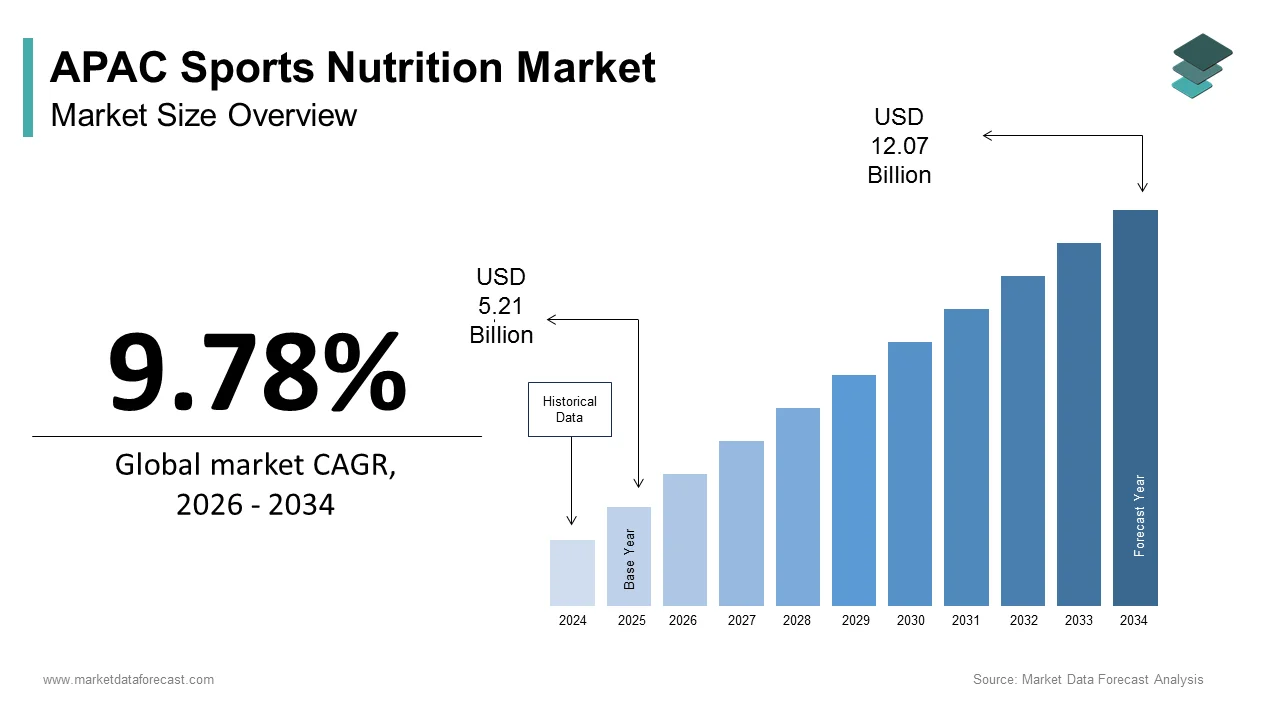
The size of the Asia Pacific Sports Nutrition Market was calculated to be USD 5.21 billion in 2025 and is anticipated to be worth USD 12.07 billion by 2034, from USD 5.72 billion in 2026, growing at a CAGR of 9.78% during the forecast period.
Sports nutrition is the food and diet research and procedure to improve the athletic performance of anyone. Nutrition is an essential part of many sports training programs, typical in sports of strength and endurance like weightlifting, cycling, swimming, bodybuilding, rowing, and others. Sports Nutrition focuses mainly on the type taken by an athlete as well as the number of fluids and food. It also addresses the consumption of nutrients such as vitamins, minerals, supplements, and organic substances, including carbohydrates, proteins, and fats.
Significant factors driving the Asia Pacific Sports Nutrition Market include the increasing number of health and fitness centers, which has positively influenced market growth. One key driver of market growth is the growing demand among bodybuilders and athletes for various types of protein bars, energy drinks, and dietary supplements. The market has also been propelled by rising disposable income and rapid urbanization. Recent developments are expected to drive the market in products containing natural ingredients, plant-based proteins, and dairy products.
The factors holding the Asia Pacific Sports Nutrition Market back include Complex regulatory scenarios and the risk of selling counterfeit goods, which will hinder market growth over the forecast period; the World Anti-Doping Agency (WADA) has prohibited many illicit substances in several products around the world.
Research Methodology The research takes place in two phases, namely Secondary Research. The first phase of the research process is extensive secondary research and identification of the related intelligence. Secondary data is compiled from various sources. Extensive secondary research helps in generating hypotheses and identifying critical areas of interest that are investigated through primary research. Primary Research entails conducting hundreds of primary interviews with industry participants and commentators in order to validate the data points obtained from secondary research and to fill the data gaps. A primary interview provides first-hand information on the market size, market trends, growth trends, competitive landscape, future outlook, etc. It also helps in deciding the scope and deliverables of the study in terms of the requirements of the market. Primary research involves e-mail interactions, telephonic interviews as well as face-to-face interviews for each market, category, segment, and sub-segment across geographies.
There is a need for good body hydration in sports, which is a great health indicator among athletes. These sports drinks contain certain macro-nutrients that play an important role in the hydration and improvement of people's health performance. These are also intended to improve mental health and prevent people from having joint pains. People have started gymnastics nowadays and have daily exercises for health concerns which bring them to demand more of these sports drinks during their workouts.
Increasing demand from the sports industry has led to the growth of the product market based on whey protein. At the same time, nuts, egg whites, etc. are used by food processing companies to make snack products. Gyms are opening in small and large cities across the country. This has resulted in an increase in muscle and exercise lovers resulting in demand for protein sports drinks, nutritious snack bars such as energy bars, and other products designed to improve athletic performance.
This research report on the Asia Pacific Sports Nutrition Market is segmented and sub-segmented into the following categories.
Asia Pacific Sports Nutrition Market By Product Type
- Sports Food
- Sports Supplements
- Sports Drinks
Asia Pacific Sports Nutrition Market By Distribution Channel
- Supermarkets/Hypermarkets
- Convenience Stores
- Specialty Stores
- Online Retail Stores
- Other Distribution Channels
Asia Pacific Sports Nutrition Market By Region
- India
- China
- Japan
- Australia
- Rest of APAC
The Asia-Pacific market is expected to grow rapidly during the forecast period. The Indian market in this region is poised to witness significant growth due to consumers' high intent on the sports industry. Beverage companies in Asia-Pacific focus on increasing demand for their sports drink products, with the aid of numerous sponsors, among others, by famous athletes and celebrities, and marketing promotions at festivals and events. Companies such as The Coca-Cola Company and PepsiCo are seen launching natural sports drinks, sugar substitutes, and vitamins and minerals enriched.
KEY MARKET PLAYERS
The key players in the Asia Pacific Sports Nutrition Market include PepsiCo Inc., Coca-Cola Company, Glanbia Plc, Otsuka Pharmaceutical Co. Ltd, Monster Energy Company, General Nutrition Centers Inc., Abbott, and Herbalife International of America Inc