- Product Description Description
- Table of Contents TOC
- List of Table & Figure LOT
- Get Free Sample PDF Sample PDF
Market Size, 2025
$272.9 BnMarket Estimate, 2026
$291.5 BnMarket Forecast, 2034
$493.4 BnCAGR, 2026–2034
6.80%Executive Summary: Asia Pacific Non-Alcoholic Beverage Market
- Market Scope: Comprehensive Asia-Pacific non-alcoholic beverage market analysis covering product types, distribution channels, regional market leadership shares, consumer lifestyle demographics, and functional beverage benchmarks.
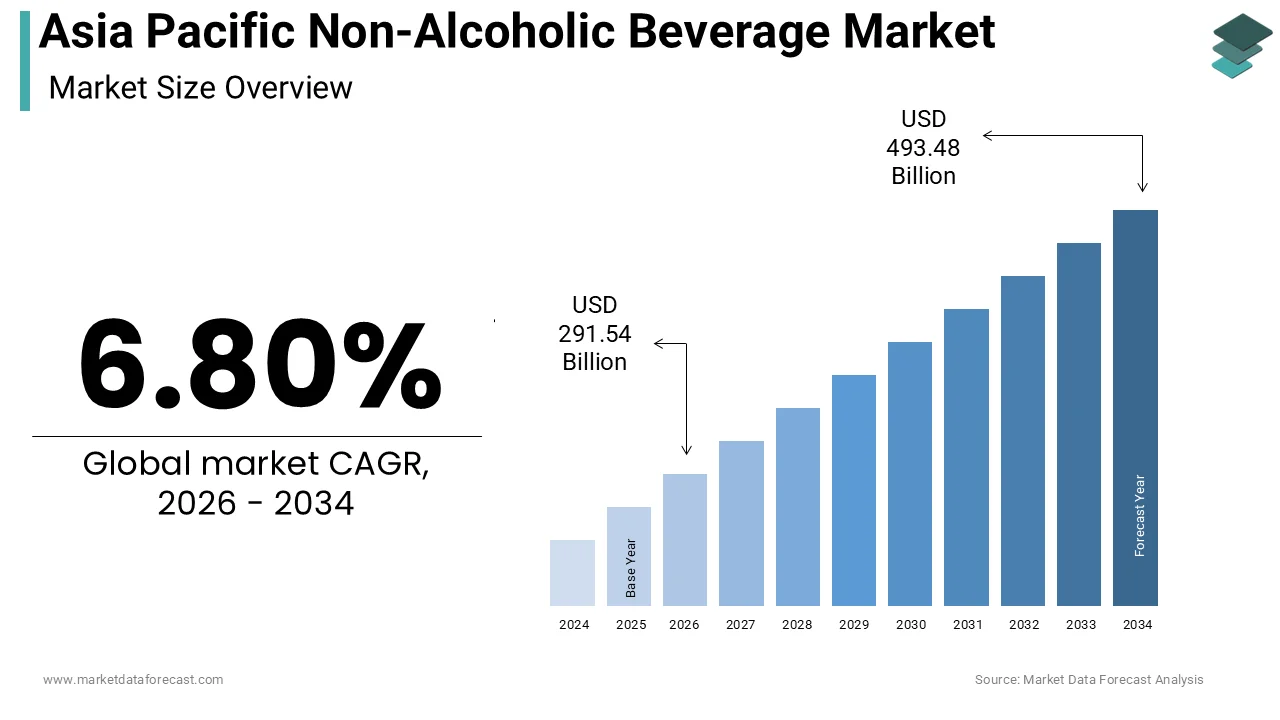
- Market Valuation: Valued at USD 272.98 billion (2025), estimated at USD 291.54 billion (2026), and projected to reach USD 493.48 billion by 2034, registering a solid CAGR of 6.80% (2026–2034).
- Primary Growth Drivers: Rapid urbanization, rising health-conscious consumption, demand for functional beverages and plant-based alternatives, and convenient ready-to-drink (RTD) formats. Key consumer and regional operational benchmarks include 72% of working professionals in metropolitan India consuming at least one packaged non-alcoholic beverage daily, over 40% of Japanese adults regularly consuming FOSHU-approved functional beverages, China’s bottled water market reaching USD 42 billion in 2023, and its RTD tea sector recording sales exceeding 15 billion liters.
Key Market Segment Metrics (2026–2034)
| Category | Leading Segment (2025 Position) | Fastest-Growing Segment |
|---|---|---|
| By Product Type | Bottled water (dominated with a 36.2% market share in 2025) | Ready-to-drink (RTD) tea and coffee beverages (projected to grow at an 8.4% CAGR) |
| By Distribution Channel | Supermarkets and hypermarkets (led with a 42.4% share in 2025) | Online e-commerce retail stores (forecast to expand at a rapid 14.6% CAGR) |
| By Functional Benefit | Basic hydration, carbonated refreshment, and traditional RTD variants | FOSHU-approved functional health drinks, plant-based items, and low-sugar wellness portfolios |
| By Country / Region | China (held the leading position with 27.4% of the Asia-Pacific market in 2025, followed by India ranking second) | Emerging Southeast Asian and South Asian metropolitan consumer hubs |
Major Market Players & Market Structure
Market Structure: Highly competitive Asia-Pacific non-alcoholic beverage marketplace featuring multinational beverage titans and major regional players competing intensely on low-sugar and functional formulations, plant-based beverage innovations, localized flavor profiles, sustainable packaging solutions, e-commerce expansion, direct-to-consumer models, digital marketing campaigns, and robust cold-chain supply infrastructure.
Key Companies: A.G. Barr, Dr. Pepper Snapple Group, Dydo Drinco, Attitude Drinks Co., Livewire Energy, Calcol Inc., Danone, Nestlé S.A., PepsiCo Inc., and The Coca-Cola Company.
Asia Pacific Non-Alcoholic Beverage Market Size
The Asia Pacific non-alcoholic beverage market size was calculated to be USD 272.98 billion in 2025 and is anticipated to be worth USD 493.48 billion by 2034, from USD 291.54 billion in 2026, growing at a CAGR of 6.80% during the forecast period.
Non-alcoholic beverages are liquid refreshments excluding alcohol that range from traditional herbal infusions and fermented drinks to modern functional beverages, plant-based milks, and enhanced waters. Unlike Western markets driven primarily by carbonated soft drinks, the region's consumption is deeply rooted in indigenous dietary habits, climatic conditions, and evolving wellness paradigms. As per the United Nations Food and Agriculture Organization (FAO), over 1.8 billion people in South and Southeast Asia consume traditional fermented beverages such as kefir, kanji, and tapai on a weekly basis, which reflects a longstanding cultural affinity for gut-health-promoting drinks. Urbanization and rising disposable incomes are now accelerating the adoption of premium formats, including probiotic tonics, adaptogenic teas, and electrolyte-enhanced waters. The region is also witnessing a generational shift, with younger consumers increasingly prioritizing health, sustainability, and authenticity in their beverage choices, reshaping the trajectory of product innovation and consumption behavior across the Asia Pacific landscape.
MARKET DRIVERS
Escalating Urbanization and Changing Lifestyle Patterns
The rapid pace of urbanization across the Asia Pacific is fundamentally altering consumption habits, with increasing reliance on convenience-driven and ready-to-drink beverages, which is primarily driving the expansion of the Asia-Pacific non-alcoholic beverage market. According to the Asian Development Bank, the urban population in the region is projected to reach 3.4 billion by 2050, with cities like Jakarta, Dhaka, and Manila experiencing explosive growth. This demographic shift is accompanied by longer commutes, sedentary work environments, and time-constrained routines, which are fuelling demand for portable, on-the-go hydration solutions. In India, as per a 2023 study by the National Institute of Urban Affairs, 72% of working professionals in metropolitan areas consume at least one packaged non-alcoholic beverage daily, which is primarily for refreshment and energy. Similarly, in China, the proliferation of convenience stores, numbering over 250,000 in Tier 1 and Tier 2 cities, as reported by the China Chain Store and Franchise Association, has expanded access to chilled teas, functional waters, and protein drinks. These structural changes in living patterns are creating sustained demand for beverages that align with fast-paced urban lifestyles.
Rising Health Consciousness and Demand for Functional Ingredients
A growing awareness of diet-related health risks is driving consumers toward beverages with perceived wellness benefits, such as immunity support, digestive health, and mental clarity, which is further fuelling the growth of the regional market. According to the World Health Organization, non-communicable diseases account for 67% of all deaths in the Western Pacific and 58% in South-East Asia, which is prompting public and private health initiatives to promote healthier lifestyles. In Japan, the Ministry of Health, Labour and Welfare reported in 2023 that over 40% of adults regularly consume FOSHU (Foods for Specified Health Use)-approved beverages, including green tea extracts and calcium-fortified drinks. Similarly, in Australia, according to a 2024 survey by the Dietitians Association of Australia, 58% of consumers actively seek beverages with added probiotics, vitamins, or plant extracts. This shift is further amplified by digital health platforms and fitness apps that educate users on hydration and nutrient intake. As a result, brands are reformulating products to include ingredients like collagen, L-theanine, and prebiotic fibers, transforming everyday drinks into vehicles for preventive health.
MARKET RESTRAINTS
Water Scarcity and Environmental Pressures on Production
The mounting pressure from water insecurity is constraining production and sustainability, which is significantly impeding the Asia-Pacific non-alcoholic beverage market growth. According to the World Resources Institute, 17 of the world’s 33 most water-stressed countries are located in Asia, including India, Pakistan, and parts of Central Asia. Beverage manufacturing is highly water-intensive, producing one liter of packaged drink can require up to three liters of water, as noted by the Pacific Institute’s 2023 global water use assessment. In India, the National Green Tribunal suspended operations at several bottling plants in Rajasthan and Tamil Nadu in 2023 due to excessive groundwater extraction, disrupting supply chains. Moreover, public backlash against perceived water privatization has intensified, particularly in rural communities. As per the Asian Development Bank, over 600 million people in South Asia face high to extreme water stress, making long-term beverage production increasingly vulnerable to regulatory restrictions and environmental activism.
Regulatory Fragmentation and Labeling Inconsistencies
The lack of harmonized regulatory standards across Asia Pacific nations creates significant compliance challenges for beverage manufacturers, particularly concerning health claims, sugar content, and ingredient safety. In Southeast Asia alone, countries like Thailand, Indonesia, and the Philippines have implemented divergent front-of-pack labeling systems, ranging from warning labels to traffic-light systems, making product adaptation complex and costly. According to the ASEAN Secretariat’s 2023 report on food and beverage regulation, only 40% of member states have fully aligned their labeling policies with Codex Alimentarius guidelines, leading to delays in regional product launches. Additionally, tax regimes vary widely; for instance, Singapore imposes a volumetric tax on sugary drinks, while Vietnam applies a tiered excise system. The International Food Policy Research Institute noted in 2023 that multinational beverage companies spend up to 18% more on compliance in Asia than in Europe due to the need for localized formulations and packaging. This fragmentation hampers scalability and discourages innovation in health-focused categories.
MARKET OPPORTUNITIES
Expansion of Plant-Based and Alternative Beverage Innovation
The surge in demand for plant-based diets is opening new frontiers in the non-alcoholic beverage sector, particularly in dairy alternatives and functional botanicals. According to the Good Food Institute Asia Pacific, plant-based milk sales in the region grew by 22% between 2021 and 2023, with oat, coconut, and almond milks gaining traction in urban centers. In China, a 2023 NielsenIQ survey revealed that one in three consumers has tried plant-based beverages in the past six months, driven by lactose intolerance, environmental concerns, and animal welfare. Local innovations are also emerging; brands in Thailand and Indonesia are commercializing drinks from taro, mung bean, and moringa, leveraging indigenous crops for both nutrition and sustainability. The Philippines’ Department of Science and Technology has funded R&D into fermented cassava-based drinks with probiotic properties, signaling government support for native ingredient utilization. These developments present a strategic opportunity for brands to differentiate through culturally rooted, nutrient-dense, and eco-friendly beverage formats.
Digital Commerce and Hyperlocal Distribution Networks
The proliferation of e-commerce and digital payment systems is revolutionizing beverage distribution, particularly in remote and underserved regions, which is another notable opportunity in the Asia-Pacific non-alcoholic beverage market. As per the Asian Development Bank, the digital economy in Southeast Asia reached $218 billion in 2023, with food and beverage as the fastest-growing online category. In Indonesia, platforms like Tokopedia and GrabMart reported a 45% year-on-year increase in bottled beverage sales in 2023, driven by doorstep delivery and bundled promotions. Similarly, in India, JioMart and BigBasket have introduced chilled logistics networks to deliver fresh juices and functional drinks within hours. This digital infrastructure enables niche brands, such as cold-pressed juice startups in Sydney or kombucha makers in Seoul, to bypass traditional retail gatekeepers and reach consumers directly. A 2024 McKinsey analysis found that D2C beverage brands in the Asia Pacific grew three times faster than conventional counterparts, underscoring the transformative potential of digital channels in reshaping market access and consumer engagement.
MARKET CHALLENGES
Rising Raw Material Costs and Supply Chain Volatility
The Asia Pacific non-alcoholic beverage market is increasingly vulnerable to fluctuations in agricultural commodity prices and climate-induced disruptions. Key ingredients such as tea, sugar, citrus, and coconut are subject to extreme weather events, which are becoming more frequent due to climate change. According to the Food and Agriculture Organization, global tea production in Asia declined by 8% in 2023 due to prolonged droughts in Sri Lanka and flooding in Assam, India, which are two major growing regions. Coconut water suppliers in the Philippines faced a 20% price surge in 2023, as reported by the Philippine Coconut Authority, due to pest infestations and labor shortages. These cost pressures are compounded by rising freight rates and energy costs, particularly in island nations dependent on imports. The United Nations Economic and Social Commission for Asia and the Pacific (UNESCAP) noted in 2024 that input cost inflation for beverage manufacturers averaged 12% annually, squeezing margins and forcing difficult trade-offs between quality, pricing, and profitability.
Consumer Skepticism Toward Artificial Additives and Greenwashing
A growing segment of Asian consumers is rejecting synthetic ingredients and questioning the authenticity of health claims, which is creating a trust deficit for conventional beverage brands and further challenging the expansion of the regional market. According to a 2023 Ipsos survey across eight Asia Pacific markets, 64% of respondents avoid drinks with artificial sweeteners, colors, or preservatives, which is citing long-term health risks. In Japan and South Korea, clean-label products have gained a competitive edge, with 70% of shoppers checking ingredient lists before purchase as per the Japan Pack Research Institute. At the same time, accusations of greenwashing, such as misleading recyclability claims or exaggerated carbon neutrality pledges, are damaging brand credibility. According to Greenpeace East Asia, over half of PET bottles in China are not recycled despite widespread eco-labeling on packaging in 2023. This erosion of trust demands greater transparency, third-party certifications, and verifiable sustainability reporting, placing additional operational and financial burdens on manufacturers striving to balance profitability with ethical positioning.
REPORT COVERAGE
| REPORT METRIC | DETAILS |
| Market Size Available | 2025 to 2034 |
| Base Year | 2025 |
| Forecast Period | 2026 to 2034 |
| CAGR | 6.80% |
| Segments Covered | By Product Type, Distribution Channel, And Region |
| Various Analyses Covered | Global, Regional & Country Level Analysis; Segment-Level Analysis; DROC, PESTLE Analysis; Porter’s Five Forces Analysis; Competitive Landscape; Analyst Overview of Investment Opportunities |
| Regions Covered | UK, France, Spain, Germany, Italy, Russia, Sweden, Denmark, Switzerland, Netherlands, Turkey, and the Czech Republic |
| Market Leaders Profiled | A.G. Barr, Dr. Pepper Snapple Group, Dydo Drinco, Attitude Drinks, Co., Livewire Energy, Calcol, Inc., Danone, Nestle S.A., PepsiCo, Inc., and The Coca-Cola Company. |
SEGMENTAL ANALYSIS
By Product Type Insights
The bottled water segment dominated the Asia-Pacific non-alcoholic beverage market by capturing 36.2% of the regional market share in 2025. The dominance of the bottled water segment in this regional market is primarily due to escalating health consciousness and deteriorating tap water quality across urban and rural regions. A staggering 60% of households in Southeast Asia rely on packaged water due to concerns over contaminated tap water, as reported by the World Health Organization in its 2022 regional water safety assessment. In countries like Indonesia and the Philippines, where municipal water supply fails to meet safety standards for over 40 million people, bottled water has become a necessity rather than a luxury. According to the WHO, diarrheal diseases linked to unsafe drinking water affect over 150 million people annually in the region, which is reinforcing consumer reliance on sealed, purified options. This public health imperative has cemented bottled water as the default hydration choice, particularly in densely populated urban centers. Rapid urbanization has transformed consumption patterns, with over 56% of the APAC population now living in cities according to the United Nations’ 2023 urbanization outlook. In megacities like Jakarta, Delhi, and Manila, fast-paced lifestyles and long commutes have increased demand for portable, single-serve bottled water. NielsenIQ data from 2023 shows that per capita bottled water consumption in urban India grew by 9.3% year-on-year, outpacing all other beverage categories. The convenience of ready-to-drink packaging, coupled with aggressive retail placement and chilled distribution networks, has made bottled water the most accessible hydration solution across informal and formal markets alike.
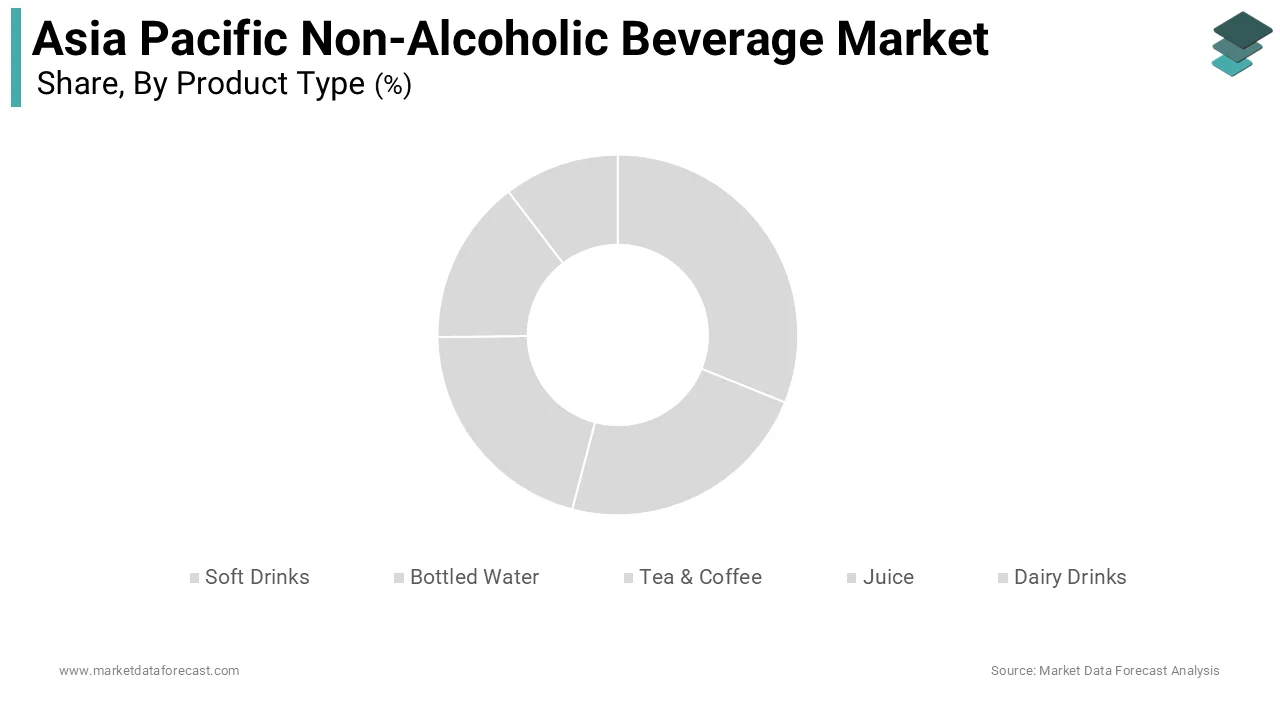
While bottled water holds the largest share, the RTD tea and coffee segment is expanding at the fastest pace and is estimated to witness a CAGR of 8.4% over the forecast period in this regional market. The expanding middle class in APAC, which is expected to reach 1.7 billion people by 2030 according to the Asian Development Bank, has fueled demand for premium beverage experiences. In China, RTD coffee sales surged by 21% in 2023 compared to the previous year, driven by brands like Luckin Coffee and Starbucks’ bottled offerings, according to the China Chain Store and Franchise Association. Consumers are increasingly trading up from instant powders to chilled, barista-style canned lattes and matcha drinks, reflecting a shift toward indulgence and convenience. In Japan, where canned coffee has long been a cultural staple, premium variants now account for over 45% of sales per Japan Beverage Association data. Product innovation is accelerating growth, with new functional formulations, such as green tea with added L-theanine or cold brew coffee with plant-based milk, capturing health-conscious millennials. Amazon Asia reported a 62% increase in RTD tea and coffee unit sales on its platforms across Japan, South Korea, and Australia in 2023. Additionally, direct-to-consumer models and subscription services are expanding access beyond traditional retail, enabling niche brands to scale rapidly. This digital enablement, combined with aggressive marketing by global and local players, is redefining how tea and coffee are consumed across the region.
By Distribution Channel Insights
The supermarkets and hypermarkets segment remained the dominant distribution channel for the non-alcoholic beverages market in the Asia Pacific by capturing 42.4% of the regional market share in 2025. This stronghold is anchored in their unmatched reach, product variety, and consumer trust. These retail giants offer one-stop shopping with wide beverage selections, from mass-market sodas to premium functional drinks. In Australia, supermarkets like Woolworths and Coles account for over 70% of packaged beverage sales, as reported by Roy Morgan Research in 2023. Their cold chain infrastructure ensures product freshness, while private label offerings provide value alternatives. In India, the top five supermarket chains sold over 1.2 million kiloliters of beverages in 202,3 per the Confederation of Indian Industry, reflecting their role as primary procurement hubs for urban households. Supermarkets are strategically located in high-traffic urban and suburban areas, making them accessible to a broad demographic. They also wield significant promotional power; end-cap displays and seasonal discounts can boost beverage sales by up to 30%, according to a 2023 study in Southeast Asia. In Thailand, hypermarkets like Big C and Tesco Lotus drive over 50% of bottled water and soft drink volume sales, leveraging loyalty programs and bundled offers. This combination of visibility, trust, and incentive-based marketing solidifies their dominance across the region.
However, the online stores segment is the fastest-growing distribution channel and is expected to expand at a CAGR of 14.6% over the forecast period. Asia Pacific leads global e-commerce growth, with over 2.7 billion internet users and 95% mobile internet penetration, according to the International Telecommunication Union’s 2023 connectivity report. In countries like Indonesia and Vietnam, where physical retail infrastructure is fragmented, platforms like Shopee and Lazada have become primary beverage shopping destinations. In 2023, online beverage sales in Indonesia grew by 58% year-on-year, according to DataReportal, driven by flash sales and cash-on-delivery options that reduce purchase friction. Brands are increasingly adopting D2C strategies, with companies like Coca-Cola and Nestlé launching official e-stores in China and India. According to Suntory, a 40% increase is reported in Japan in online RTD tea sales in 2023 through its subscription service, which delivers curated packs monthly. Alibaba’s 2023 Singles’ Day event saw beverage sales exceed $1.2 billion across APAC, highlighting the scalability of digital channels. The integration of AI-driven recommendations and same-day delivery in cities like Singapore and Seoul further enhances convenience, making online stores the most dynamic channel in the modern beverage ecosystem.
REGIONAL ANALYSIS
China Non-Alcoholic Beverage Market Analysis
China held the top spot in the Asia-Pacific non-alcoholic beverage market with 27.4% of the regional market share in 2025. Its sheer population, rising disposable incomes, and evolving consumer preferences have created a fertile ground for beverage innovation. The urban middle class, projected to reach 600 million by 2030 as per the World Bank, is driving demand for premium and functional beverages. In 2023, China’s bottled water market alone was valued at $42 billion, growing at 8.5% annually, fueled by concerns over water safety and wellness trends. The ready-to-drink tea sector, led by brands like Nestlé and Master Kong, recorded sales of over 15 billion liters as reported by the China Beverage Industry Association. E-commerce is also reshaping distribution, with Tmall and JD.com accounting for 28% of non-alcoholic beverage sales in 2023, up from 12% in 2019 per Alibaba Group’s retail data. This digital shift, combined with aggressive product localization, such as low-sugar and herbal infusions, positions China as both a volume and innovation leader.
India Non-Alcoholic Beverage Market Analysis
India held the second-largest share of the Asia-Pacific non-alcoholic beverage market in 2025. Its rapid growth is underpinned by a young, digitally native population and expanding retail infrastructure. With over 65% of its 1.4 billion people under the age of 35, India’s beverage consumption is being reshaped by youth preferences for convenience and health. Per capita soft drink consumption rose to 12.3 liters in 2023 from 9.1 in 2019, according to the Indian Beverage Association. Bottled water sales surged to 15.6 billion liters in 2023, driven by poor tap water quality in over 70% of urban households, as noted by the Ministry of Jal Shakti’s 2022 water quality survey. The rise of quick commerce, Zepto and Blinkit, which delivered over 100 million beverage orders in 2023 per RedSeer Consulting, has further accelerated access. Government initiatives like FDI liberalization in retail have attracted global players, while local brands like Bisleri and Paper Boat are scaling nationally, making India a pivotal growth frontier.
Japan Non-Alcoholic Beverage Market Analysis
Japan is predicted to showcase a promising CAGR in the Asia-Pacific non-alcoholic beverage market over the forecast period. Despite its mature status, Japan remains a benchmark for innovation and per capita spending. The country’s aging population, 30% aged 65 or older in 2023 according to Japan’s National Institute of Population and Social Security Research, has spurred demand for functional beverages. Sales of drinks with added vitamins, collagen, or probiotics reached ¥840 billion ($5.6 billion) in 2023, per the Japan Health Food Association. Canned coffee, a cultural staple, accounts for over 4 billion units sold annually, with vending machines dispensing 80% of all canned beverages as reported by the Japan Vending Machine Manufacturers Association. Even as population declines, premiumization and export-oriented innovation, such as matcha-infused RTD teas, keep the market resilient. Convenience stores like 7-Eleven Japan generate over 40% of beverage sales, reflecting the synergy between retail density and consumer habits.
Indonesia Non-Alcoholic Beverage Market Analysis
Indonesia has emerged as a key player due to the large, young population and rising urbanization. With over 278 million people, 60% under 35, Indonesia’s beverage consumption is shifting from traditional drinks to packaged alternatives. Bottled water sales hit 12.4 billion liters in 2023, up 10.2% from the previous year, as reported by the Indonesian Beverage Producers Association (ASPERINDO). Soft drink consumption is also rising, with carbonates and flavored water gaining traction in cities like Jakarta and Surabaya. E-commerce is a game-changer. Shopee and Tokopedia recorded $1.3 billion in beverage sales in 2023, a 52% increase from 2022, per iPrice Group’s e-commerce report. Government efforts to improve cold chain logistics and reduce import tariffs on beverage equipment are further enabling market expansion, positioning Indonesia as a high-potential market for regional and global brands.
Australia Non-Alcoholic Beverage Market Analysis
Australia is standing out for its high per capita expenditure and health-focused consumption. With one of the highest GDP per capita in the region at $64,000 in 202,3 as per the World Bank, Australians prioritize quality and wellness in beverage choices. Over 68% of consumers actively avoid added sugars according to a 2023 Roy Morgan Health Survey, driving demand for sparkling water, kombucha, and cold-pressed juices. The functional beverage sector grew by 12.4% in 2023, reaching A$1.8 billion in sales per Food Standards Australia New Zealand. Major retailers like Woolworths and Coles have dedicated health aisles, and brands like Sanitarium, Liquorice, and Chai are gaining traction. Despite a smaller population, Australia’s regulatory emphasis on clean labeling and sustainability, such as the 2025 National Packaging Targets, makes it a trendsetter for premium, transparent beverage innovation in the region.
COMPETITION OVERVIEW
Competition in the Asia Pacific non-alcoholic beverage market is intense, characterized by a blend of global giants and agile regional players vying for consumer attention across diverse cultural and economic landscapes. The market’s fragmentation, driven by varying taste preferences, regulatory environments, and urban-rural divides, necessitates localized strategies. Multinational corporations like Coca-Cola, PepsiCo, and Suntory compete with strong domestic brands such as Tingyi (China) and Indofood (Indonesia), creating a dynamic battlefield for innovation and distribution. Price sensitivity in emerging economies contrasts with premiumization trends in developed markets, forcing companies to adopt dual-tiered product strategies. Digital disruption has lowered entry barriers, enabling niche health-focused brands to gain traction. Retail channel evolution, especially the rise of e-commerce and quick commerce, has intensified competition for shelf space and consumer loyalty. Continuous product reformulation, sustainability commitments, and aggressive marketing define the competitive rhythm, making adaptability the key determinant of long-term success in this fast-evolving regional market.
KEY MARKET PLAYERS
A few major players of the Asia Pacific Non-alcoholic beverage market include
- A.G. Barr
- Dr. Pepper Snapple Group
- Dydo Drinco
- Attitude Drinks, Co
- Livewire Energy
- Calcol, Inc
- Danone
- Nestle S.A
- PepsiCo, Inc
- The Coca-Cola Company
Top Strategies Used by the Key Market Participants
Key players in the Asia Pacific non-alcoholic beverage market are deploying multifaceted strategies to maintain a competitive advantage. Product innovation is central, with companies reformulating offerings to include low-sugar, functional, and plant-based ingredients to align with health trends. Major firms are expanding their e-commerce presence through partnerships with delivery platforms and launching direct-to-consumer websites to enhance accessibility. Strategic mergers and acquisitions are enabling rapid market entry and portfolio diversification, as seen with investments in local startups. Sustainability initiatives, including recyclable packaging and water stewardship programs, are strengthening brand image. Geographic expansion into high-growth emerging markets like Vietnam and Indonesia is a priority. Additionally, companies are leveraging digital marketing and AI-driven analytics to personalize consumer engagement. Co-branding with food chains and investing in cold chain infrastructure further support distribution efficiency. These strategies collectively enable market leaders to respond dynamically to shifting consumer behaviors and regulatory landscapes across the diverse Asia Pacific region.
Leading Players in the Asia Pacific Non-Alcoholic Beverage Market
- The Coca-Cola Company maintains a dominant presence across the Asia Pacific non-alcoholic beverage market through its extensive portfolio and localized innovation. The company operates in over 30 countries in the region, offering carbonated soft drinks, bottled water, teas, and functional beverages tailored to regional tastes. In recent years, Coca-Cola has intensified its focus on health and wellness, launching low-sugar and plant-based beverages such as Coca-Cola Zero Sugar and AdeZ soy-based drinks in markets like Japan and Australia. It has also invested heavily in sustainable packaging, introducing 100% recycled PET bottles in Thailand and Indonesia. Strategic partnerships with local bottlers and digital commerce platforms like Alibaba and Grab have enhanced distribution efficiency. These initiatives reflect Coca-Cola’s commitment to adapting to evolving consumer demands while reinforcing its brand relevance across diverse APAC markets.
- PepsiCo plays a pivotal role in shaping the non-alcoholic beverage landscape across the Asia Pacific, leveraging its strong brand portfolio and aggressive diversification strategy. The company offers a wide range of products, including Pepsi, 7UP, Gatorade, Tropicana juices, and Aquafina water, with increasing emphasis on healthier options. In response to rising health consciousness, PepsiCo launched Bubly Sparkling Water in Australia and Japan and expanded its Tropicana Pure Premium line with no-added-sugar variants. The company has also strengthened its e-commerce footprint by partnering with food delivery platforms such as Foodpanda and Ninja Van across Southeast Asia. In 2023, PepsiCo opened a new R&D center in Singapore focused on flavor innovation and sustainable packaging solutions. These moves underscore its strategy to blend global branding with regional customization, ensuring sustained growth and deeper consumer engagement throughout the APAC region.
- Suntory Beverage & Food Limited is a leading force in the Asia Pacific non-alcoholic beverage market, particularly renowned for its expertise in tea, coffee, and functional drinks. Headquartered in Japan, the company has expanded its influence across China, Southeast Asia, and Oceania through organic growth and strategic acquisitions. Suntory’s product lineup includes Iyemon green tea, Boss canned coffee, and Pocari Sweat ionized beverages, all designed to meet local wellness and hydration needs. In 2023, the company launched a plant-based hydration drink in Australia and introduced smart vending machines in urban Japan that track consumer preferences. It has also committed to carbon neutrality by 2050, rolling out lightweight bottles and renewable energy in production. By combining traditional beverage craftsmanship with digital innovation and sustainability, Suntory continues to strengthen its regional footprint and consumer loyalty.
MARKET SEGMENTATION
This research report on the Asia Pacific non-alcoholic beverage market has been segmented and sub-segmented based on product type, distribution channel, & region.
By Product Type
- Soft Drinks
- Bottled Water
- Tea & Coffee
- Juice
- Dairy Drinks
By Distribution Channel
- Specialty Stores
- Online Store
- Super Markets/ Hyper Markets
- Convenience Stores
- Departmental Stores
- Others
By Region
- India
- China
- Japan
- South Korea
- Australia
- New Zealand
- Thailand
- Malaysia
- Vietnam
- Philippines
- Indonesia
- Singapore
- Rest of APAC