- Product Description Description
- Table of Contents TOC
- List of Table & Figure LOT
- Get Free Sample PDF Sample PDF
Market Size, 2025
$804.7 MnMarket Estimate, 2026
$824.9 MnMarket Forecast, 2034
$1,005.9 MnCAGR, 2026–2034
2.51%Middle East and Africa Cider Market Size, Trends, and Forecast (2026–2034)
The Middle East and Africa cider market size was valued at USD 804.75 million in 2025, stands at USD 824.95 million in 2026, and is anticipated to reach USD 1,005.91 million by 2034, expanding at a compound annual growth rate (CAGR) of 2.51% during the forecast period from 2026 to 2034. Growth is propelled by expanding tourism and hospitality sectors, rising urbanization among youth favoring lighter fruit-based alcoholic alternatives, and the development of non-alcoholic and low-alcohol variants to bypass stringent regional regulations.
Key Executive Metrics (At-a-Glance)
- 2025 Base Valuation: USD 804.75 Million
- 2026 Current Valuation: USD 824.95 Million
- 2034 Forecast Valuation: USD 1,005.91 Million
- Forecast Period: 2026–2034
- Compound Annual Growth Rate (CAGR): 2.51% (2026–2034)
- Dominant Nature Segment: Conventional
- Fastest-Growing Nature Segment: Organic (9.2% CAGR)
- Dominant Flavor Segment: Apple
- Fastest-Growing Flavor Segment: Peach (8.5% CAGR)
- Dominant End Use Segment: Beverages
- Fastest-Growing End Use Segment: Cocktails (7.8% CAGR)
- Leading Country Market: South Africa (45.3% share in 2025)
Core Market Drivers
- Tourism & Hospitality Expansion: High influx of international visitors frequenting licensed venues across hubs like Marrakech, Casablanca, Dubai, and Cape Town.
- Youth Urbanization: Growing middle-class populations in urban centers adopting ready-to-drink (RTD) flavored alcoholic beverages for social gatherings.
Primary Market Restraints & Challenges
- Religious & Legal Prohibitions: Strict alcohol bans across several Middle Eastern nations restricting formal market entry outside of duty-free or diplomatic zones.
- Illicit Trade & Climate Volatility: Widespread unrecorded counterfeit consumption and weather-related apple crop disruptions in the Western Cape.
Middle East and Africa Cider Market Segmentation Breakdown
| Segment Category | Largest Segment | Fastest-Growing Segment |
|---|---|---|
| By Nature | Conventional (34.2% share) | Organic (9.2% CAGR) |
| By Flavour | Apple (33.2% share) | Peach (8.5% CAGR) |
| By End Use | Beverages (32.1% share) | Cocktails (7.8% CAGR) |
| By Country | South Africa (45.3% share) | Israel & Emerging Sub-Saharan Hubs |
Major Industry Players Profiled
Key corporations shaping the Middle East and Africa cider market include Distell Group, Heineken UK Ltd (Heineken N.V.), Nomans Cider Company, Aston Manor Brewery, C&C Group Plc, Carlsberg A/S, Halewood International Holdings Plc, SABMiller Plc, Carlton & United Breweries Limited, and The Boston Beer Company Inc..
Middle East and Africa Cider Market Size
The Middle East and Africa cider market size was valued at USD 804.75 million in 2025 and is projected to reach USD 1,005.91 million by 2034 from USD 824.95 million in 2026, growing at a CAGR of 2.51%.
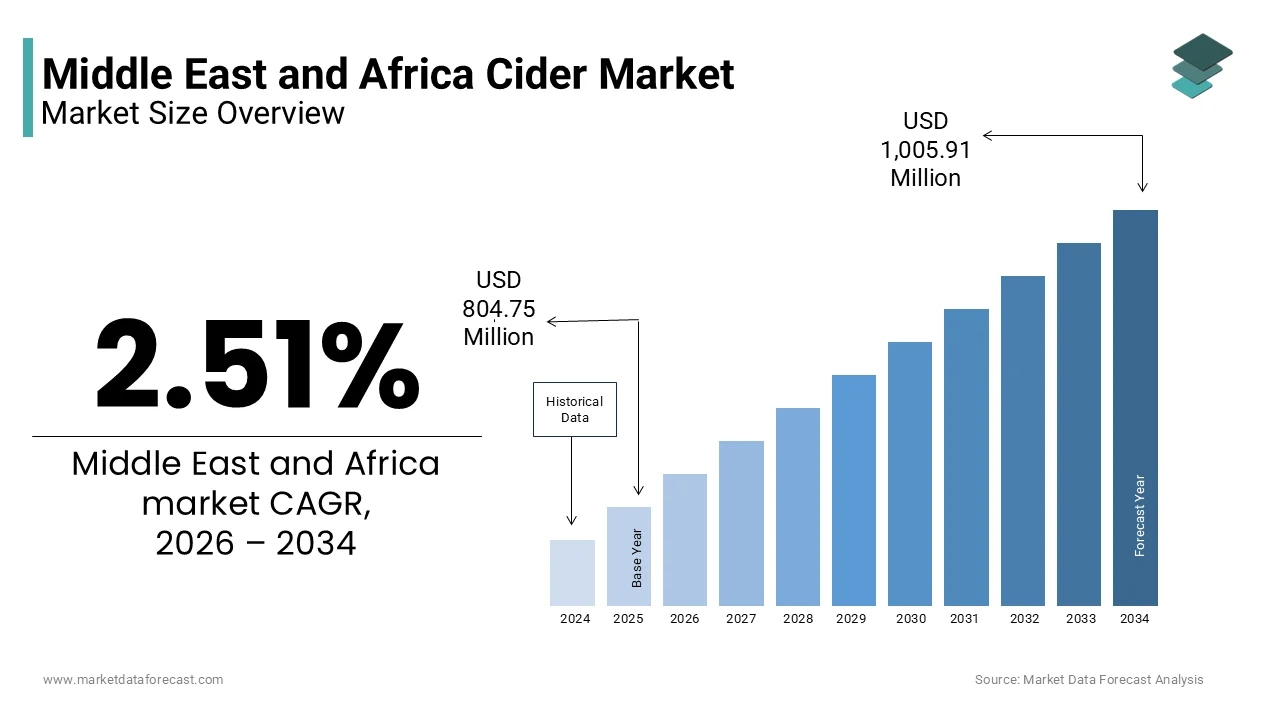
The cider is complex regulatory and cultural framework, primarily concentrated in specific regions where alcohol consumption is legally permitted and socially accepted. As per the study, South Africa remains the largest wine producing nation on the continent, with its established fruit processing infrastructure supporting cider production through abundant access to raw materials like apples and pears. The cultural landscape varies significantly across the region, with strict prohibitions in many Middle Eastern nations limiting the market to duty free zones, licensed hotels, and private imports. In contrast, Sub Saharan Africa exhibits a growing appreciation for premium alcoholic beverages among urban middle class consumers. Regulatory bodies in permissible jurisdictions enforce rigorous labeling and taxation policies, influencing pricing strategies and distribution channels. The evolving consumer palate, influenced by global trends and digital media, is gradually shifting preferences toward lighter, fruit based alcoholic drinks, positioning cider as a viable alternative to beer and spirits in select markets within this diverse geopolitical region.
MARKET DRIVERS
Tourism Growth And Hospitality Sector Expansion Drive Beverage Demand
The robust expansion of the tourism and hospitality is fuelling the growth of the Middle East and Africa cider market. International visitors often seek familiar beverage options or novel local experiences, driving demand in hotels, resorts, and restaurants. In Morocco, the Ministry of Tourism reported over 14 million tourist visits in a recent year, with many visitors frequenting licensed establishments in cities like Marrakech and Casablanca where cider is available. These venues curate extensive beverage menus to cater to diverse international palates, including European and American tourists who prefer cider over heavier spirits. The rise of luxury eco lodges in Kenya and Tanzania also contributes to this trend, as these high-end establishments stock premium imported ciders to enhance guest experience. Furthermore, business tourism and conferences in hubs like Dubai and Cape Town generate substantial revenue for bars and lounges, where cider is marketed as a refreshing daytime or casual evening option.
Rising Urbanization And Changing Lifestyle Preferences Among Youth
The rapid urbanization and shifting lifestyle patterns among younger are significantly influencing beverage choices in key African countries. As more people migrate to cities, exposure to global trends through digital media and social networks increases, fostering an interest in diverse alcoholic beverages. In South Africa, Statistics South Africa reports that individuals aged 18 to 34 represent a substantial portion of alcohol consumers, with many preferring lighter, sweeter, and flavored drinks over traditional beers. Cider fits this preference profile due to its fruity taste and lower alcohol content compared to spirits. The proliferation of shopping malls and modern retail outlets in cities like Lagos, Nairobi, and Johannesburg provides easy access to packaged ciders by making them convenient for social gatherings. The ready to drink alcoholic beverages have seen double digit growth in urban centers, driven by convenience and variety. Young professionals and students often view cider as a fashionable and approachable option for casual socializing, distinct from the heavy connotations of traditional liquor. This demographic shift encourages brands to invest in vibrant marketing campaigns and innovative flavors such as berry or tropical fruit blends, appealing to the experimental nature of urban youth.
MARKET RESTRAINTS
Strict Religious And Legal Prohibitions Limit Market Accessibility
The widespread legal and religious prohibition of alcohol consumption in many countries is restricting the growth of the Middle East and Africa cider market. Islamic law forbids the intake of alcoholic beverages, leading to strict bans on production, import, and sale in nations, such as Saudi Arabia, Iran, and Sudan. The population in several Middle Eastern countries identifies as Muslim, creating a societal environment, where alcohol demand is virtually nonexistent outside of very restricted diplomatic or expatriate circles. In these jurisdictions, even possession can result in severe legal penalties, effectively eliminating any formal market presence. Even in countries with partial allowances, such as some Gulf states, sales are confined to specific licensed venues or duty-free shops, severely restricting distribution channels. The alcohol consumption per capita in many Middle Eastern nations remains among the lowest globally, often below 1 liter per year, reflecting these deep seated cultural and legal barriers. This regulatory fragmentation forces companies to navigate a complex patchwork of laws, increasing compliance costs and limiting economies of scale. The inability to advertise or promote products openly further stifles brand awareness and growth.
High Taxation And Import Duties Inflate Consumer Prices
The exorbitant taxation and import duties in permissible regions is impeding the growth of the Middle East and Africa cider market. Governments in countries like South Africa, Morocco, and Israel impose heavy excise taxes on alcoholic beverages as a means of generating revenue and discouraging consumption. The excise duties on alcoholic drinks are adjusted annually, often outpacing inflation, which directly increases retail prices. In Morocco, the tax regime includes both specific excise duties and value added tax, causing imported premium ciders to be priced significantly higher than local alternatives. The tax revenues from alcohol can constitute a notable portion of indirect tax collections in these nations, incentivizing governments to maintain high rates. For consumers, this results in limited affordability, particularly for middle income earners who may view cider, as a luxury item rather than a regular purchase. Additionally, import tariffs on foreign brands reduce competitiveness against local producers, but even local manufacturers face high input costs due to taxed packaging and logistics. The cumulative effect of these fiscal policies restricts volume growth, as price sensitive consumers opt for cheaper alternatives such as beer or wine.
MARKET OPPORTUNITIES
Introduction Of Non Alcoholic And Low Alcohol Variants Opens New Segments
The development of non-alcoholic and low alcohol cider variants bypass religious and legal restrictions while appealing to health-conscious consumers. The introduction of non-alcoholic and low alcohol variants is solely creating new opportunities for the growth of the Middle East and Africa cider market. These products retain the flavor profile of traditional cider without the intoxicating effects, making them acceptable in broader social and cultural contexts. Brands are leveraging advanced dealcoholization technologies to preserve taste and aroma by ensuring a premium experience. In Africa, the rise of health awareness among urban populations creates demand for lighter beverage options that do not impair productivity or health. The soft drink alternatives with sophisticated flavor profiles are gaining traction among young professionals who avoid alcohol for lifestyle reasons. By positioning these products as refreshing fruit beverages rather than alcoholic substitutes, companies can navigate regulatory hurdles and access mainstream retail channels. This strategy allows brands to build recognition and loyalty that may translate to future sales of alcoholic variants in permissible markets.
Expansion Into Untapped Sub Saharan Markets With Growing Middle Class
The sub-Saharan Africa offers vast untapped potential for cider expansion due to its rapidly growing middle class and increasing disposable income. The expansion into untapped sub Saharan countries with growing middle class is additionally boosting the growth of the Middle East and Africa cider market. Countries, such as Nigeria, Ghana, and Kenya are experiencing economic stabilization and urban growth by creating new consumer segments with purchasing power for premium beverages. The increasing exposed to global lifestyle trends through internet and social media, fostering curiosity about diverse alcoholic drinks. In Kenya, the National Bureau of Statistics reports a steady increase in household spending on leisure and entertainment, indicating readiness to experiment with new products. Local production facilities can be established to reduce import costs and tailor flavors to regional preferences, such as incorporating tropical fruits like mango or passion fruit into cider blends.
MARKET CHALLENGES
Illicit Trade And Counterfeit Products Undermine Formal Market Integrity
The prevalence of illicit trade and counterfeit alcoholic beverages is a key challenge for the growth of the Middle East and Africa cider market. In regions with high taxes and limited availability, illegal production and smuggling flourish, offering cheaper alternatives that undercut legitimate brands. According to the World Health Organization, unrecorded alcohol consumption accounts for a significant portion of total intake in many African countries, with estimates suggesting it represents up to 50% of consumption in some nations. These illicit products often lack quality control, posing serious health risks due to contamination with methanol or other toxic substances. Counterfeit ciders mimicking popular brands confuse consumers and damage brand reputation when quality issues arise. In South Africa, the Southern African Liquor Traders Association reports that illicit trade costs the industry billions of rand annually in lost revenue and tax contributions. Enforcement agencies struggle to monitor vast informal and cross border smuggling routes by making eradication difficult. Consumers seeking affordability may unknowingly purchase these dangerous products, leading to public health crises that tarnish the entire alcohol category. Legitimate companies face unfair competition, as they cannot match the low prices of untaxed illegal goods.
Supply Chain Instability And Climate Impact On Raw Material Availability
The climate change and supply chain instability, significantly threaten the consistent availability and quality of apples, the primary raw material for cider production. The supply chain Apple cultivation requires specific climatic conditions, including adequate chill hours and moderate temperatures, which are becoming increasingly unpredictable due to global warming. According to the study, extreme weather events such as droughts, floods, and unseasonal frosts have reduced crop yields in key growing regions by up to 20% in recent years. In South Africa, the Western Cape province, a major fruit producing area, has faced severe water scarcity issues, impacting orchard productivity and increasing irrigation costs. The rising temperatures may shift suitable growing zones, forcing farmers to relocate or adapt varieties, which takes years. Supply chain disruptions, exacerbated by logistical inefficiencies and infrastructure deficits in parts of Africa, further complicate the timely transport of perishable fruits to processing facilities. Post harvest losses remain high due to inadequate cold storage and transportation networks, with the World Bank estimating that up to 30% of fresh produce is lost before reaching the market in some African countries. These factors lead to volatile raw material prices and inconsistent supply, forcing manufacturers to rely on imports or adjust production schedules unpredictably.
REPORT COVERAGE
| REPORT METRIC | DETAILS |
| Market Size Available | 2025 to 2034 |
| Base Year | 2025 |
| Forecast Period | 2026 to 2034 |
| CAGR | 2.51% |
| Segments Covered | By Nature, Flavour, Type, End Use, and Region |
| Various Analyses Covered | Global, Regional, & Country Level Analysis; Segment-Level Analysis; DROC; PESTLE Analysis; Porter’s Five Forces Analysis; Competitive Landscape; Analyst Overview of Investment Opportunities |
| Regions Covered | KSA, UAE, Israel, South Africa, And Ethiopia, Kenya, Egypt, Sudan, Rest of GCC Countries, and Rest of MEA |
| Market Leaders Profiled | Aston Manor Brewery, C&C Group Plc, Carlberg A/S, Distell Group, Halewood International Holdings Plc, Heineken UK Ltd, SABMiller Plc, Nomans Cider Company, Carlton & United Breweries Limited, The Boston Beer Company Inc. |
SEGMENTAL ANALYSIS
By Nature Insights
The conventional cider segment was accounted in holding 34.2% of the Middle East and Africa cider market share in 2025 due to its competitive pricing and widespread availability, across permissible regions. The majority of consumers in price sensitive areas, such as South Africa and Morocco prioritize affordability, making conventional variants the default choice for regular consumption. According to the study, household expenditure on alcoholic beverages remains constrained by economic pressures, with over 60% of consumers opting for budget friendly options during social gatherings. Conventional ciders benefit from established supply chains and large-scale production methods that keep costs low compared to organic alternatives. Major retailers and hospitality venues stock these products extensively because they offer higher turnover rates and broader appeal among diverse demographic groups. Additionally, the lack of strict certification requirements for conventional apples allows producers to source raw materials from a wider range of suppliers, ensuring consistent inventory levels. The familiarity of conventional taste profiles also reduces the barrier to entry for new drinkers, who are exploring cider for the first time.
The organic cider segment is likely to grow at a fastest CAGR of 9.2% during the forecast period with the rising health awareness and demand for premium natural products. Consumers in urban centers, such as Cape Town, Tel Aviv, and Dubai are increasingly scrutinizing ingredient labels and seeking beverages free from synthetic pesticides and artificial additives. The global demand for organic fruits has surged, influencing local production practices in key growing regions like the Western Cape in South Africa. The perception of organic cider as a healthier and more environmentally responsible option appeals to affluent demographics and expatriate communities who are willing to pay a premium for quality. Retailers are responding by dedicating shelf space to certified organic brands, enhancing their visibility and accessibility. Furthermore, tourism in eco-friendly lodges and sustainable vineyards promotes the consumption of organic products by creating a niche but loyal customer base. The steady increase in organic orchard certifications by supporting local supply for premium cider production. Social media influence also plays a role, as health influencers advocate for clean drinking habits, driving curiosity and trial among younger consumers.
By Flavour Insights
The apple flavour segment was accounted in holding 33.2% of the Middle East and Africa cider market share in 2025. The abundance of apple cultivation in regions like the Western Cape in South Africa and the Golan Heights in Israel ensures a steady and cost-effective supply of raw materials for producers. Consumers associate cider primarily with apple taste by making it the safest and most popular choice for both novice and experienced drinkers. The versatility of apple allows for various sub variants such as dry, sweet, and sparkling, catering to diverse palates without deviating from the core flavor profile. Hospitality venues prefer stocking apple cider due to its broad acceptance among international tourists who expect this standard offering. Additionally, marketing campaigns often emphasize the natural sweetness and crispness of apples, reinforcing positive consumer perceptions. The established processing infrastructure for apple juice and concentrate further supports efficient production scales, keeping prices competitive.
The peach flavour segment is swiftly growing at an anticipated CAGR of 8.5% during the forecast period with the , driven by innovation and the integration of locally sourced fruits. Manufacturers are leveraging the popularity of peaches in countries like South Africa and Egypt to create unique blends that appeal to consumers seeking novel taste experiences. The South African tree fruit industry exports significant volumes of peaches, which is indicating high quality and availability for local processing. The sweet and aromatic profile of peach complements the tartness of cider by creating a refreshing beverage that resonates with younger demographics and those who prefer sweeter drinks. The fruit flavoured alcoholic beverages are gaining traction globally, with peach being a top preference among millennials. In Egypt, where peach cultivation is prominent, local producers are experimenting with peach infused ciders to cater to domestic tastes and reduce reliance on imported flavors. The visual appeal of peach colored cider also enhances its marketability on social media platforms, driving impulse purchases among trend conscious consumers. Retailers report increased shelf velocity for peach variants during summer months, aligning with seasonal consumption patterns. The peach production has increased by 5% annually, supporting sustainable sourcing for beverage manufacturers.
By End Use Insights
The beverages segment held a significant share of the Middle East and Africa cider market by occupying 32.1% of the share in 2025 with the direct consumption of cider, as a standalone alcoholic drink in social and leisure settings. Cider is widely perceived as a refreshing alternative to beer and wine, particularly in warm climates where its light and fruity character is highly appreciated. The alcohol consumption in permissible African countries is predominantly through ready to drink formats, with cider featuring prominently in bars, restaurants, and home gatherings. In South Africa, data from Stats SA shows that household spending on alcoholic beverages is significant, with cider being a popular choice for weekend entertainment and celebrations. The convenience of pre-packaged bottles and cans facilitates easy consumption without the need for mixing or preparation by appealing to busy urban consumers. Hospitality industries in tourist hubs like Cape Town and Marrakech heavily promote cider as a daytime drink by contributing to its high volume sales. Additionally, the rise of outdoor dining and braai culture in Southern Africa reinforces the role of cider as a social lubricant.
The cocktails segment is anticipated to grow at a fastest CAGR of 7.8% during the forecast period with the rising popularity of mixology and premium drinking experiences. Bartenders and hospitality venues are increasingly using cider as a versatile mixer in creative cocktail recipes, appealing to consumers seeking sophisticated and unique flavor combinations. The global trends show a surge in cider-based cocktails, which is mirrored in upscale establishments in Dubai, Tel Aviv, and Johannesburg. The effervescence and slight sweetness of cider complement spirits, such as gin and whiskey, creating balanced and refreshing drinks that attract discerning patrons. Hotels and lounges are introducing signature cider cocktails to differentiate their menus and enhance guest experience. Social media platforms amplify this trend, with visually appealing cocktail posts inspiring consumers to try new combinations.
COUNTRY LEVEL ANALYSIS
South Africa Market Analysis
South Africa cider market was the out performer by accounting for 45.3% of the share in 2025 due to its well established fruit processing industry and mature consumption culture. The country benefits from extensive apple orchards in the Western Cape, providing a reliable and high-quality supply of raw materials for local cider manufacturers. The local preference for cider is deeply ingrained, with per capita consumption significantly higher than in other African nations. The alcoholic beverage industry contributes substantially to the national economy, with cider representing a growing segment within this sector. The presence of international brands alongside strong local players fosters competition and innovation, leading to diverse product offerings. Tourism further boosts demand, as visitors frequent wineries and cider farms in regions like Stellenbosch. The government’s support for agricultural exports also enhances the reputation of South African cider internationally.
Israel Market Analysis
Israel cider market was positioned second by holding 20.1% of share in 2025 with the high disposable income and a preference for premium imported and local brands. The country’s liberal alcohol laws and vibrant social scene create a conducive environment for cider consumption, particularly among secular and expatriate populations. The household spending on recreational services and goods, including alcohol, is among the highest in the region. Local producers leverage advanced agricultural technologies to grow high quality apples, supporting a boutique cider industry that focuses on artisanal and organic variants. The influence of European culinary trends introduces consumers to diverse cider styles, driving demand for dry and sparkling options. Retail chains, such as Shufersal and Yenot Bitan offer extensive selections, ensuring accessibility. Additionally, the tourism sector in Jerusalem and Eilat contributes to sales in hotels and restaurants.
United Arab Emirates Market Analysis
The United Arab Emirates cider market growth is primarily driven by its status as a global tourism and business hub with extensive duty free operations. Although, alcohol consumption is restricted to licensed venues and private residences, the high volume of international travelers ensures steady demand for premium cider brands. The alcohol sales remain a significant revenue stream, with cider featured prominently in their beverage portfolio. The luxury hospitality sector in Dubai and Abu Dhabi caters to affluent tourists who expect a wide range of international beverage options, including craft and imported ciders. The expatriate community, comprising over 80% of the population, maintains drinking habits from their home countries, sustaining demand for familiar brands. Regulatory frameworks allow for controlled importation, ensuring quality and availability in licensed outlets. As per the International Air Transport Association, the UAE serves as a major transit point, exposing millions of passengers to duty free cider promotions.
Saudi Arabia Market Analysis
Saudi Arabia cider market growth is likely to grow with the actual legal sales are minimal due to strict prohibition laws, with demand largely met through illicit channels or duty free purchases by travelers. However, data from the General Authority for Statistics indicates a large youth population and increasing exposure to global lifestyles through digital media, suggesting latent demand. Recent regulatory changes allowing limited alcohol sales in specific diplomatic quarters or for non-Muslim expatriates in future special economic zones may open small formal avenues. According to the World Tourism Organization, outbound tourism from Saudi Arabia is high, with citizens purchasing alcohol abroad, indicating underlying interest. The government’s Vision 2030 initiative aims to diversify the economy and enhance entertainment sectors, which could eventually lead to more nuanced alcohol policies in designated areas.
Egypt Market Analysis
Egypt cider market growth is deemed to grow with the small but growing local production base and tourism demand in coastal resorts. The country has a history of fruit wine and cider production, with companies like Obour Lands producing apple-based beverages that cater to local non-Muslim communities and tourists. Millions of visitors arrive annually, many staying in Sharm El Sheikh and Hurghada where alcohol is legally served in hotels. The government’s encouragement of local manufacturing reduces reliance on imports, keeping prices accessible. As per the Federation of Egyptian Industries, the food and beverage sector is expanding, with niche alcoholic beverages gaining slight traction among younger urbanites.
COMPETITIVE LANDSCAPE
The Middle East and Africa cider market features a moderately competitive landscape characterized by a mix of established international brands and agile local producers. Major players compete intensely on product quality flavor innovation and brand reputation to capture consumer loyalty in permissible regions. International corporations leverage their global scale and marketing budgets to dominate premium segments, while local artisans focus on niche craft offerings with unique regional flavors. Regulatory constraints in many Middle Eastern countries limit formal competition to a few key markets such as South Africa Israel and the United Arab Emirates creating isolated competitive pockets. Private label brands from major retailers exert pressure by offering affordable alternatives that appeal to price sensitive consumers. Distribution channel control remains crucial with supermarkets and licensed hospitality venues serving as primary battlegrounds for shelf space and visibility. The rise of health consciousness drives competition in the low alcohol and organic segments requiring continuous innovation. Supply chain efficiency and local sourcing capabilities further differentiate competitors as climate variability impacts raw material availability.
KEY MARKET PLAYERS
Key players in Middle East and Africa cider market are
- Aston Manor Brewery
- C&C Group Plc
- Carlberg A/S
- Distell Group
- Halewood International Holdings Plc
- Heineken UK Ltd
- SABMiller Plc
- Nomans Cider Company
- Carlton & United Breweries Limited
- The Boston Beer Company Inc.
Top Three Players in the Market
- Distell Group Limited operates as a leading beverage company in South Africa with a strong portfolio of cider brands, including Savanna and Hunters. The company leverages its extensive distribution network to ensure wide availability across retail and hospitality channels in permissible markets. Recent strategic initiatives include launching innovative flavored variants, such as Savanna Dry Lime to cater to evolving consumer taste preferences. Distell has invested in sustainable packaging solutions to align with environmental concerns and enhance brand image among eco conscious consumers. They actively engage in digital marketing campaigns targeting younger demographics through social media platforms to boost brand visibility. By collaborating with local apple growers, Distell ensures a consistent supply of high quality raw materials while supporting regional agriculture.
- Heineken N.V. maintains a significant presence in the Middle East and Africa cider market through its popular Strongbow brand and other regional offerings. The multinational giant utilizes its global expertise and robust supply chain to deliver consistent quality across diverse markets, including South Africa and Israel. Recent actions include expanding its portfolio with low alcohol and organic cider options to meet growing health consciousness among urban consumers. Heineken has strengthened partnerships with major hotel chains and tourism operators to secure prominent placement in high traffic venues. The company invests heavily in brand building activities such as sponsoring music festivals and lifestyle events to connect with target audiences. By adopting advanced brewing technologies, Heineken enhances flavor profiles and production efficiency. Their strategic focus on premium segments and experiential marketing reinforces brand loyalty and drives volume growth in competitive environments where consumer preferences are rapidly shifting toward sophisticated beverage choices.
- Nomans Cider Company is a prominent artisanal producer based in South Africa known for its craft ciders made from locally sourced apples. The company focuses on quality and authenticity appealing to discerning consumers, who prefer small batch premium products over mass market alternatives. Recent efforts include expanding distribution into upscale restaurants and boutique hotels in Cape Town and Johannesburg to enhance brand prestige. Nomans has introduced limited edition seasonal flavors using indigenous fruits to differentiate its offerings and attract curious drinkers. They prioritize sustainable farming practices by partnering with organic orchards, which resonates with environmentally aware customers. The brand actively participates in local food and wine festivals to build direct consumer relationships and gather feedback.
Top Strategies Used By Key Market Participants
Key players in the Middle East and Africa cider market primarily focus on product innovation and flavor diversification to capture changing consumer preferences. Companies are increasingly launching fruit infused variants, such as peach berry and lemon to appeal to younger demographics seeking sweeter and more refreshing options. Strategic partnerships with local apple growers ensure sustainable sourcing and reduce dependency on imported raw materials, while supporting regional agriculture. Brands are investing in premium packaging designs and sustainable materials to enhance shelf appeal and align with environmental consciousness among urban consumers. Digital marketing campaigns leveraging social media influencers help build brand awareness and engage directly with target audiences in permissible markets. Expansion into hospitality channels including hotels resorts and bars ensures high visibility and trial among tourists and locals. Additionally, manufacturers are introducing low alcohol and non-alcoholic variants to navigate regulatory restrictions and cater to health conscious individuals.
MARKET SEGMENTATION
This research report on the Middle East and Africa cider market is segmented and sub segmented into following categories
By Nature
- Organic
- Conventional
By Flavour
- Apple
- Pear
- Peaches
- Lemon
- Other
By Type
- Hard
- Dry
- Sweet
- Sparkling
- Soft
- Other
By End Use
- Beverages
- Cooking Ingredient
- Cocktails
By Country
- KSA
- UAE
- Israel
- rest of GCC countries
- South Africa
- Ethiopia
- Kenya
- Egypt
- Sudan
- rest of MEA