- Product Description Description
- Table of Contents TOC
- List of Table & Figure LOT
- Get Free Sample PDF Sample PDF
Market Size, 2025
$0.57 TnMarket Estimate, 2026
$0.63 TnMarket Forecast, 2034
$1.36 TnCAGR, 2026–2034
10.1%U.S. Energy Market Size, Growth, Trends & Forecast (2026–2034)
The U.S. energy market was valued at USD 0.57 trillion in 2025, is estimated to reach USD 0.63 trillion in 2026, and is projected to reach USD 1.36 trillion by 2034, registering a compound annual growth rate (CAGR) of 10.1% during the forecast period from 2026 to 2034. Driven by the computational energy imperative of artificial intelligence, climate-driven electrification, and rapid renewable expansion, the national energy sector is undergoing a massive transformation.
Key Executive Metrics (At-a-Glance)
- 2025 Base Valuation: USD 0.57 Trillion
- 2026 Current Valuation: USD 0.63 Trillion
- 2034 Forecast Valuation: USD 1.36 Trillion
- Compound Annual Growth Rate (CAGR): 10.1% (2026–2034)
- Leading Energy Source Segment: Fossil Energy (with Renewable Energy growing at a 12.4% CAGR)
- Leading End-Use Segment: Industrial Consumption (32.4% share in 2025)
- Leading Regional Contributor: California (14.8% share in 2025)
Core Market Drivers
- Artificial Intelligence & Computational Demand: Exponential growth in data centers driving unprecedented electricity consumption across key regional hubs.
- Climate-Driven Electrification: Transition from fossil-based heating and systems to electrical grids across residential and commercial sectors.
Primary Market Restraints & Challenges
- Aging Infrastructure: Decaying oil pipelines, ancient refineries, and outdated legacy control systems exposing vulnerabilities to leaks and cyberattacks.
- Permitting & Regulatory Gridlock: Interconnection queues featuring over 1,300 gigawatts of clean energy projects delayed by overlapping, conflicting jurisdictions.
U.S. Energy Market Segmentation Breakdown
| Segment Category | Largest / Dominant Segment | Fastest-Growing Segment |
|---|---|---|
| By Energy Type | Chemical or Fuel Energy (Dominant Share) | Electrical Energy (3.8% CAGR) |
| By Energy Source | Fossil Energy (Largest Share) | Renewable Energy (12.4% CAGR) |
| By End Use | Industrial Consumption (32.4% Share) | Transportation (9.1% CAGR) |
Major Industry Players Profiled
Key market participants shaping the U.S. energy landscape include ExxonMobil, Chevron Corporation, ConocoPhillips, Valero Energy, Occidental Petroleum, NextEra Energy, Duke Energy, Southern Company, American Electric Power (AEP), Exelon Corporation, Xcel Energy, Vistra Corp., Calpine, Constellation Energy, First Solar, Sunrun, Siemens Gamesa Renewable Energy, Kinder Morgan, Williams Companies, Enbridge, and Atmos Energy.
U.S. Energy Market Size
The U.S. energy market was valued at USD 0.57 trillion in 2025, is estimated to reach USD 0.63 trillion in 2026, and is projected to reach USD 1.36 trillion by 2034, growing at a CAGR of 10.1% from 2026 to 2034.
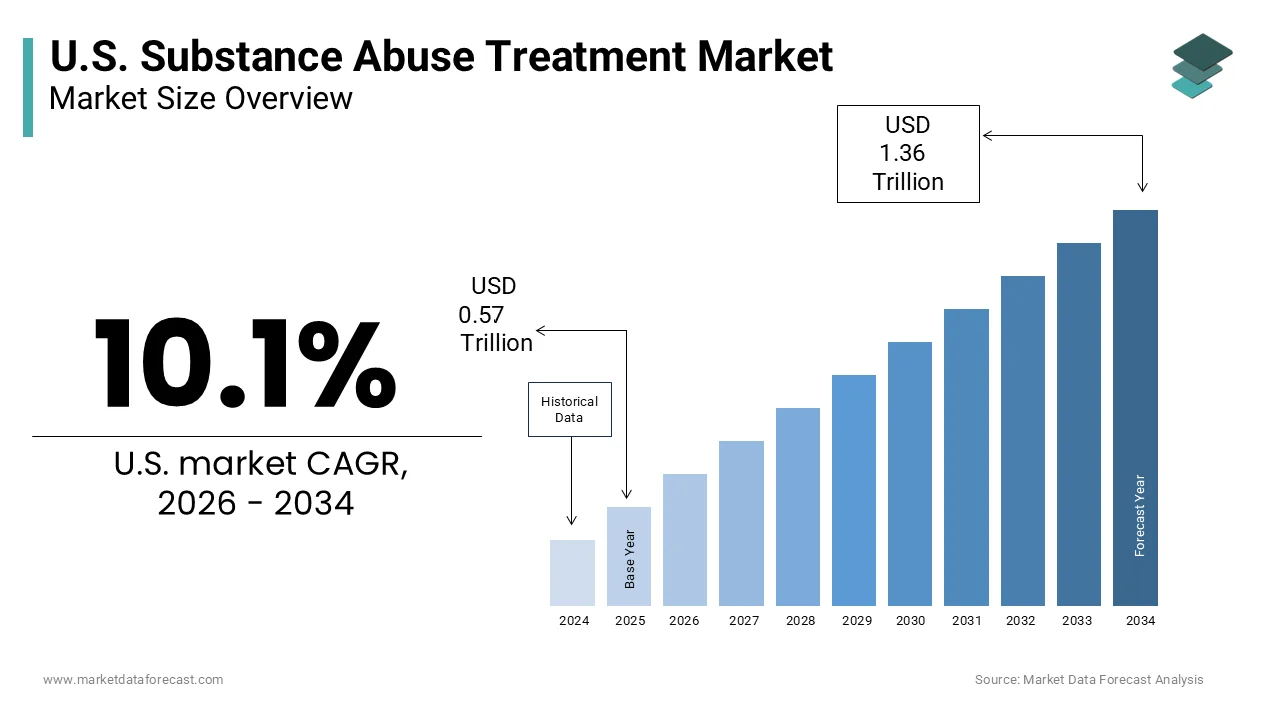
The energy is a contested terrain where national security, climate survival, and technological sovereignty collide. Meanwhile, the average age of the nation’s oil pipelines exceeds 50 years, with 28% rated in “poor” or “fair” condition by the Pipeline and Hazardous Materials Safety Administration.
MARKET DRIVERS
Artificial Intelligence and the Computational Energy Imperative
The rise of generative AI has triggered a hidden energy revolution, with one driven not by households or factories, but by silicon minds consuming power at an unprecedented scale, which is one of the major factors propelling the growth of the U.S. energy market. In Northern Virginia, where half of global internet traffic transits, proposed data center loads now exceed 5,000 megawatts, surpassing the entire electricity consumption of Vermont, as reported by the Virginia State Corporation Commission.
Climate-Driven Electrification of Critical Infrastructure
Americans are abandoning fossil-based systems for convenience, and survival is fuelling the growth ofthe U.S. energy market. In California, where 38% of homes now use electric heating, winter peak loads rose 18% since 2020 despite mild winters, as confirmed by the California Independent System Operator. Electrification is becoming mandatory, transforming every home, school, and hospital into a node in a climate-adaptive network.
MARKET RESTRAINTS
Pipeline and Refinery Infrastructure at End-of-Life
The U.S. energy supply chain is decaying beneath the weight of decades of deferred investment, which is restricting the growth of the U.S. energy market. In 2023, the Keystone Pipeline system experienced five major leaks within six months, which is a pattern repeated across aging networks in Louisiana, Oklahoma, and Pennsylvania. Simultaneously, 43% of U.S. refineries are over 40 years old, with 11% operating without modern emissions controls mandated for new facilities, according to the Environmental Protection Agency.
Permitting and Regulatory Fragmentation Across Jurisdictions
The U.S. energy sector is paralyzed by a labyrinth of overlapping, conflicting authorities. As per the Federal Energy Regulatory Commission, over 1,300 gigawatts of clean energy projects, including wind, solar, and storage,e are queued for interconnection. Meanwhile, states like Texas and Florida block cross-border transmission lines, es citing local control, while federal agencies lack the authority to override them.
MARKET OPPORTUNITIES
Hydrogen as a Decarbonization Vector for Heavy Industry
The green hydrogen is emerging as the only viable pathway to decarbonize sectors that electrification cannot reach, like steelmaking, ammonia production, and long-haul aviation. This attribute is expected to enhance the growth of the U.S. energy market in the coming years. Toyota and Boeing are already testing hydrogen-powered cargo planes and heavy trucks using this fuel.
Distributed Energy as Community Sovereignty
Energy independence is shifting from corporate control to community ownership in regions historically exploited by extraction economies, which is also gearing up new opportunities for the growth of the U.S. energy market. According to the National Renewable Energy Laboratory, over 1,100 community microgrids are now operational or under development across 48 states, with 73% serving critical infrastructure such as hospitals, schools, and emergency shelters.
MARKET CHALLENGES
Cybersecurity Vulnerabilities in Legacy Control Systems
The energy grid remains dangerously exposed to cyberattacks due to reliance on obsolete, unpatched control systems, which is one of the challenges for the growth of the U.S. energy market. In 2023, a ransomware attack on a regional distributor in Ohio disabled voltage regulation across six counties for 36 hours, triggering cascading instability that nearly tripped three major transmission lines, per NERC’s incident report.
Workforce Collapse and the Loss of Institutional Memory
The workforce collapse and the loss of institutional memory will additionally degrade the growth of the U.S. energy market. The next generation will inherit a system they cannot understand without urgent knowledge-transfer initiatives and immersive apprenticeships rooted in mentorship.
REPORT COVERAGE
| REPORT METRIC | DETAILS |
| Market Size Available | 2025 to 2034 |
| Base Year | 2025 |
| Forecast Period | 2026 to 2034 |
| Segments Covered | By Energy Type, Energy Source, End Use, and Region. |
| Various Analyses Covered | Global, Regional, and Country-Level Analysis, Segment-Level Analysis, Drivers, Restraints, Opportunities, Challenges; PESTLE Analysis; Porter’s Five Forces Analysis, Competitive Landscape, Analyst Overview of Investment Opportunities |
| Countries Covered | New York, Massachusetts, Pennsylvania, Illinois, Ohio, Michigan, Texas, Florida, Georgia, California, Washington, Colorado. |
| Market Leaders Profiled | ExxonMobil, Chevron Corporation, ConocoPhillips, Valero Energy, Occidental Petroleum, NextEra Energy, Duke Energy, Southern Company, American Electric Power (AEP), Exelon Corporation, Xcel Energy, Vistra Corp., Calpine, Constellation Energy, First Solar, Sunrun, Siemens Gamesa Renewable Energy, Kinder Morgan, Williams Companies, Enbridge, Atmos Energy |
SEGMENTAL ANALYSIS
By Energy Type
The chemical or fuel energy segment dominated the US energy market by accounting for a significant share in 2025. Over 94% of transportation fuel in the U.S. is petroleum-based, according to the Department of Energy’s Transportation Energy Data Book, with aviation, long-haul trucking, and marine shipping still entirely reliant on liquid hydrocarbons.

The electrical energy segment is likely to grow with an expected CAGR of 3.8% from 2025 to 2033. Simultaneously, data center electricity consumption rose 28%, reaching 210 terawatt-hours are equivalent to 45 coal plants’ output, according to the International Energy Agency. Its growth reflects a quiet revolution: Americans are no longer just consuming energy—they are converting their entire infrastructure into an electrical substrate.
By Energy Source Insights
The fossil energy segment was the largest by occupying a significant share of the US energy market in 2025, with its entrenched infrastructure and unmatched energy density. Coal, though declining, still contributes 16% of electricity in regions like Appalachia and the Midwest, where aging plants remain economically viable due to low fuel costs and regulatory exemptions.
The renewable energy segment is growing lucratively with an anticipated CAGR of 12.4% during the forecast period. Texas alone added more wind capacity than any European nation. Crucially, renewables are now being deployed faster than fossil plants are retired. In ERCOT, 92% of the new generation in 2023 was renewable.
By End Use Insights
The industrial consumption segment was the largest and held 32.4% of the US energy market share in 2025, with the scale and intensity of U.S. manufacturing. Heavy industries such as steel, chemicals, and aluminum rely on continuous thermal input, with 81% of process heat derived from natural gas or refinery byproducts, per the International Energy Agency.
The transportation segment is likely to grow with 9.1% from 2025 to 203,3 with the individual consumer behavior. Additionally, heavy-duty trucking firms like Schneider and J.B. Hunt are installing DC fast-charging corridors along I-95 and I-10, with 1,200 stations planned by 2026, as mapped by the Electrification Coalition.
COUNTRY LEVEL ANALYSIS
California Energy Market Analysis
California was the largestcontributor tof the U.S. energy market by holding 14.8% of the share in 2025. Its position as the nation’s most populous state and climate policy laboratory makes it both a bellwether and a pressure cooker. According to the California Independent System Operator, 41% of the state’s electricity came from renewable sources in 2023, yet extreme heatwaves triggered record-breaking peak loads exceeding 52,000 MW, exposing vulnerabilities in transmission bottlenecks and insufficient storage.
Texas Energy Market Analysis
Texas held 12.2% of the US energy market share in 2025. ERCOT’s 2023 winter weather event revealed that 72% of thermal generation failures occurred in gas-fired plants due to frozen pipelines, despite the state’s vast shale reserves. The state’s grid operates independently of the national interconnects, making it a self-contained experiment in market-driven electrification.
COMPETITIVE LANDSCAPE
KEY MARKET PLAYERS
Some of the companies that are playing a dominating role in the U.S. energy market include
-
ExxonMobil
-
Chevron Corporation
-
ConocoPhillips
-
Valero Energy
-
Occidental Petroleum
-
NextEra Energy
-
Duke Energy
-
Southern Company
-
American Electric Power (AEP)
-
Exelon Corporation
-
Xcel Energy
-
Vistra Corp.
-
Calpine
-
Constellation Energy
-
First Solar
-
Sunrun
-
Siemens Gamesa Renewable Energy
-
Kinder Morgan
-
Williams Companies
-
Enbridge
-
Atmos Energy
MARKET SEGMENTATION
This research report on the U.S. energy market is segmented and sub-segmented into the following categories.
By Energy Type
- Chemical or Fuel Energy
- Electrical Energy
By Energy Source
- Fossil Energy
- Renewable Energy
By End Use
- Industrial Consumption
- Transportation
- Residential & Commercial
- Others
By Country
- California
- Texas
- Rest of the United States