- Product Description Description
- Table of Contents TOC
- List of Table & Figure LOT
- Get Free Sample PDF Sample PDF
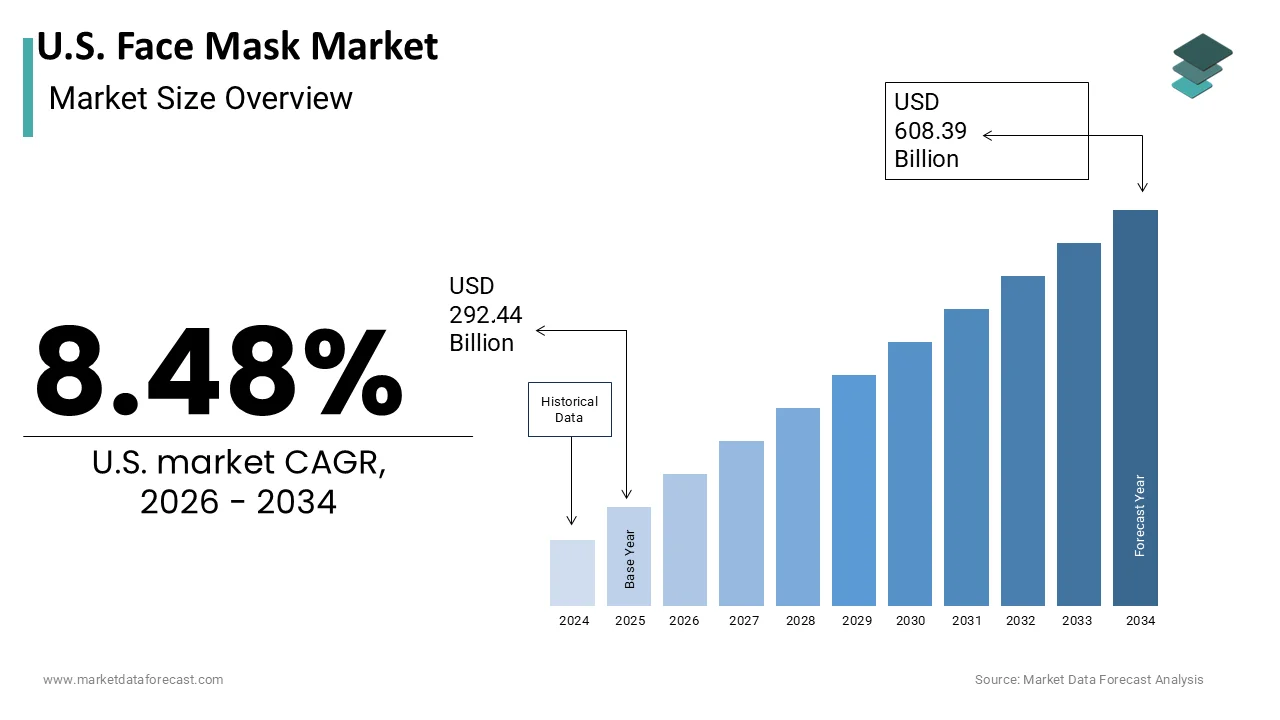
Market Size, 2025
$292.44 BnMarket Estimate, 2026
$317.24 BnMarket Forecast, 2034
$608.39 BnCAGR, 2026–2034
8.48%U.S. Face Mask Market Size
The U.S. Face Mask Market was valued at USD 292.44 billion in 2025, is estimated to reach USD 317.24 billion in 2026, and is projected to reach USD 608.39 billion by 2034, growing at a CAGR of 8.48% from 2026 to 2034.
According to the Centers for Disease Control and Prevention, respiratory pathogens such as influenza and SARS-CoV-2 remain persistent public health threats necessitating continued vigilance and preparedness in healthcare and community settings. As per the National Institute for Occupational Safety and Health, approximately 30 million workers in the United States are potentially exposed to hazardous airborne contaminants annually, including dust, fumes, and biological agents requiring appropriate respiratory protection. The Environmental Protection Agency notes that air quality indices in various regions frequently exceed safe levels due to wildfire smoke and urban pollution, driving consumer demand for high-efficiency particulate air filtration. Regulatory standards established by the Food and Drug Administration and NIOSH ensure that medical and industrial masks meet stringent performance criteria for filtration efficiency and breathability. The market dynamics are influenced by seasonal respiratory illness patterns, industrial safety regulations, and growing consumer awareness regarding personal health and environmental hazards. This landscape is characterized by a shift towards higher-quality reusable options and advanced filtration technologies that balance protection with comfort and sustainability.
MARKET DRIVERS
Persistent Respiratory Health Threats and Infectious Disease Preparedness
The ongoing prevalence of respiratory infectious diseases and the strategic emphasis on pandemic preparedness significantly drive the U.S. face mask market growth. According to the Centers for Disease Control and Prevention, influenza viruses cause millions of illnesses, hundreds of thousands of hospitalizations, and thousands of deaths annually in the United States. As per data from the World Health Organization, the risk of emerging infectious diseases remains high, prompting healthcare systems to maintain robust stockpiles of personal protective equipment. The memory of the COVID-19 pandemic has institutionalized mask usage in clinical settings, with the Occupational Safety and Health Administration enforcing strict guidelines for healthcare workers dealing with airborne pathogens. According to the American Hospital Association, a vast majority of hospitals maintain enhanced protocols for respiratory protection during flu seasons and outbreak scenarios. Furthermore, the rise of variant strains and other respiratory viruses, such as Respiratory Syncytial Virus,s reinforces the need for consistent protective measures. Public health campaigns continue to educate citizens on the efficacy of masks in reducing transmission rates, particularly in crowded indoor environments. According to survey data from the Kaiser Family Foundation, a significant portion of the population retains masks for use during high-risk periods or when experiencing symptoms. This sustained awareness, combined with regulatory mandates in healthcare and long-term care facilities, creates a stable baseline demand for medical-grade and high-filtration masks across the country.
Stringent Occupational Safety Regulations and Industrial Hygiene Standards
Rigorous occupational safety regulations and the necessity for protecting workers in hazardous environments are further boosting the U.S. face mask market expansion. According to the Bureau of Labor Statistics, there were approximately 2.8 million nonfatal workplace injuries and illnesses reported in private industry in 2022, many of which involved exposure to harmful substances. As per the National Institute for Occupational Safety and Health, industries such as construction, manufacturing, mining, and healthcare require employees to use certified respirators to prevent inhalation of silica dust, asbestos, chemical vapors, and biological agents. The Occupational Safety and Health Administration mandates the use of appropriate respiratory protection under its General Industry Standard 29 CFR 1910.134, which requires employers to provide fit-tested N95 or higher-level respirators for specific hazards. According to industry compliance reports, failure to adhere to these standards can result in substantial fines and liability issues, driving companies to prioritize high-quality protective gear. Furthermore, the expansion of infrastructure projects and manufacturing activities increases the workforce exposed to airborne particulates. According to the Associated General Contractors of America, the construction industry employs millions of workers who regularly encounter dust and debris, requiring consistent use of disposable and reusable masks. This regulatory framework, combined with employer liability concerns, ensures continuous procurement of industrial-grade face masks, maintaining steady demand regardless of broader consumer trends.
MARKET RESTRAINTS
Consumer Fatigue and Relaxation of Public Health Mandates
The gradual relaxation of public health mandates and increasing consumer fatigue regarding preventive measures significantly restrain the growth of the U.S. face mask market. According to polling data from Gallup, public adherence to mask wearing in public spaces has declined substantially since the peak of the pandemic, with only a small minority of Americans reporting regular usage in recent years. As per the Centers for Disease Control and Prevention, the removal of federal mask requirements for public transportation and healthcare settings has normalized the absence of masks in daily life. This behavioral shift reduces the frequency of purchase for disposable masks among the general population, who no longer view them as essential daily items. According to retail sales data, foot traffic in pharmacies and grocery stores shows a marked decrease in impulse purchases of face coverings compared to previous years. Furthermore, the perception of low risk for severe illness among vaccinated and younger demographics diminishes the perceived value of wearing masks. According to the Pew Research Center, a majority of adults believe that pandemic restrictions should be lifted entirely, influencing social norms and individual choices. This cultural transition away from universal masking limits the expansion of the consumer segment to niche applications such as allergy relief or extreme pollution events. Consequently, manufacturers face shrinking volume in the general retail channel, requiring them to pivot towards specialized or professional markets to sustain revenue.
Environmental Concerns Regarding Disposable Mask Waste
Growing environmental awareness and regulatory scrutiny concerning the waste generated by disposable face masks further impede the U.S. market expansion. According to the Environmental Protection Agency, millions of tons of plastic-related waste are generated annually in the United States, with disposable masks contributing significantly due to their polypropylene composition. As per research published in Environmental Science and Technology, single-use masks can take up to 450 years to decompose in landfills, releasing microplastics into soil and water systems. This environmental impact has led to increased criticism from consumer advocacy groups and environmental organizations, ns urging a reduction in single-use plastics. According to state legislation, several jurisdictions, including California and New York, have introduced bills aimed at restricting single-use personal protective equipment or mandating recycling programs, which complicates distribution and usage. Furthermore, corporate sustainability goals are prompting businesses to seek reusable alternatives rather than stocking disposable options for employees. According to a survey by NielsenIQ, over 60% of consumers prefer brands that demonstrate environmental responsibility, leading to hesitation in purchasing non-recyclable masks. The lack of widespread recycling infrastructure for contaminated medical waste further exacerbates the disposal challenge. These factors collectively dampen demand for traditional disposable masks, pushing the market towards reusable options, on which may have lower replacement frequencies and thus lower overall volume sales.
MARKET OPPORTUNITIES
Innovation in Sustainable and Biodegradable Materials
The development and adoption of eco-friendly materials is a substantial opportunity for the U.S. face mask market growth. According to the Biodegradable Products Institute, the market for compostable and biodegradable materials is expanding rapidly as companies seek alternatives to conventional plastics. As per industry reports, startups and established firms are introducing masks made from plant-based fibers such as bamboo, cotton, and polylactic acid, which offer comparable filtration while reducing environmental footprint. The Federal Trade Commission encourages clear labeling of sustainable claims, providing a framework for brands to communicate their green initiatives effectively. According to consumer trend analysis, younger cohorts of shoppers are willing to pay a premium for products that align with their values, including sustainability and ethical sourcing. Furthermore, corporate procurement policies increasingly favor suppliers with strong environmental, social, and governance credentials, creating B2B opportunities for green mask providers. According to the Ellen MacArthur Foundation, circular economy principles are gaining traction in the textile industry, encouraging designs that facilitate recycling or composting. By investing in research and development for biodegradable filters and ear loops, manufacturers can tap into this growing niche. Partnerships with waste management firms to create take-back programs further enhance brand loyalty. This shift towards sustainability not only mitigates regulatory risks but also opens new revenue streams in the premium segment of the face mask market.
Integration of Smart Technologies and Advanced Filtration Systems
The integration of smart features and advanced filtration technologies offers significant potential for product innovation and market growth in the high-end segment. According to the Consumer Technology Association, wearable technology is becoming increasingly sophisticated, equipped with sensors capable of monitoring air quality and breathing patterns in real time. As per patent filings, several tech companies are developing smart masks equipped with Bluetooth connectivity that alert users to filter replacement needs or high pollution levels via smartphone apps. The National Institute for Occupational Safety and Health is exploring standards for next-generation respirators that offer improved breathability and communication capabilities for industrial workers. According to market analysis, the demand for high-efficiency particulate air filtration in urban areas with poor air quality is rising among health-conscious consumers. Furthermore, advancements in nanotechnology allow for thinner yet more effective filter layers, enhancing comfort without compromising protection. According to industry experts, the integration of antimicrobial coatings that reduce bacterial buildup on reusable masks extends product lifespan and hygiene. These innovations appeal to tech-savvy consumers and professionals who require superior performance and data insights. By positioning face masks as intelligent health devices rather than simple barriers, manufacturers can command higher prices and foster brand loyalty. This technological evolution transforms the face mask from a commodity into a value-added health accessory.
MARKET CHALLENGES
Supply Chain Volatility and Raw Material Cost Fluctuations
Instability in global supply chains and fluctuating costs of raw materials pose significant challenges to manufacturers in the U.S. face mask market. According to the U.S. Department of Commerce, the price of polypropylene, a key component in melt-blown filters, has experienced significant volatility due to geopolitical tensions and energy price fluctuations. As per industry reports, disruptions in shipping logistics and port congestion continue to affect the timely delivery of imported materials and finished goods. The reliance on overseas manufacturing for certain specialized components creates vulnerabilities when international trade policies change or conflicts arise. According to the Institute for Supply Management, manufacturing lead times have extended, causing inventory management difficulties for distributors and retailers. Furthermore, labor shortages in the domestic manufacturing sector increase production costs and limit capacity expansion. According to the Bureau of Labor Statistics, wage pressures in the manufacturing industry have risen, forcing companies to absorb higher operational expenses or pass them on to consumers. These cost increases can reduce profit margins and make domestic production less competitive against cheaper imports. Additionally, the unpredictability of demand spikes during health crises makes it difficult for manufacturers to balance inventory levels without risking overstock or shortages. This economic uncertainty requires companies to diversify sourcing strategies and invest in resilient supply chain infrastructure to maintain stability.
Regulatory Complexity and Counterfeit Product Proliferation
The complex regulatory landscape and the prevalence of counterfeit products further challenge the U.S. face mask market growth. According to the Food and Drug Administration, the agency has issued numerous warnings about unauthorized respirators and surgical masks that do not meet performance standards. As per data from the National Institute for Occupational Safety and Health, a significant percentage of N95 respirators circulating in the market during high-demand periods were found to be counterfeit or substandard. This proliferation of fake products undermines consumer confidence and poses serious health risks to users who believe they are protected. According to the International Trademark Association, intellectual property theft and counterfeiting cost U.S. businesses billions of dollars annually, affecting brand reputation and revenue. Navigating the differing requirements for medical device registration, industrial safety certification, and consumer product labeling adds compliance burdens for manufacturers. According to legal analyses, small and medium-sized enterprises often struggle with the resources needed to maintain full regulatory compliance across multiple jurisdictions. Furthermore, changing guidelines from health authorities regarding mask efficacy and usage can create confusion among consumers and retailers. This regulatory ambiguity, combined with the threat of counterfeiters, forces legitimate companies to invest heavily in authentication technologies and legal enforcement. These challenges increase operational costs and complicate market entry for new innovators seeking to establish credibility.
REPORT COVERAGE
| REPORT METRIC | DETAILS |
| Market Size Available | 2025 to 2034 |
| Base Year | 2025 |
| Forecast Period | 2026 to 2034 |
| Segments Covered | By Product Type, End User, Distribution Channel, and Region. |
| Various Analyses Covered | Global, Regional and Country-Level Analysis, Segment-Level Analysis, Drivers, Restraints, Opportunities, Challenges; PESTLE Analysis; Porter’s Five Forces Analysis, Competitive Landscape, Analyst Overview of Investment Opportunities |
| Countries Covered | California, Washington, Oregon, New York, and the rest of the United States |
| Market Leaders Profiled | 3M Company, Honeywell International Inc., Kimberly-Clark Corporation, Medline Industries, LP, Cardinal Health, Inc., Mölnlycke Health Care AB, Ansell Limited, Prestige Ameritech, Alpha Pro Tech, Ltd., DuPont de Nemours, Inc., Owens & Minor, Inc., Makrite Industries, Inc. |
SEGMENTAL ANALYSIS
By Product Type Insights
The sheet masks segment dominated the market by capturing the highest share of the U.S. in 2025. The dominance of the sheet masks segment in the U.S. market is attributed to the growing demand for quick and effective skincare solutions. According to the International Spa Association, a majority of consumers prioritize skincare products that offer immediate visible results, such as hydration and brightness. As per consumer behavior data from the NPD Group, sheet masks are perceived as a convenient self-care ritual that fits easily into busy lifestyles, requiring only 15 to 20 minutes for application. The pre-soaked nature of these masks eliminates the need for messy application and cleanup associated with clay or cream masks. Furthermore, the occlusive effect of the sheet enhances ingredient penetration, delivering superior hydration compared to standard serums. According to research published in the Journal of Cosmetic Dermatology, the use of sheet masks significantly increases stratum corneum hydration levels immediately after use. This tangible benefit drives repeat purchases among users seeking rapid skin improvement before events or during travel. The variety of available formulations targeting specific concerns like acne, aging, or dullness allows consumers to customize their routine. This combination of ease of use, efficacy, and versatility ensures that sheet masks remain the preferred choice for American skincare enthusiasts.
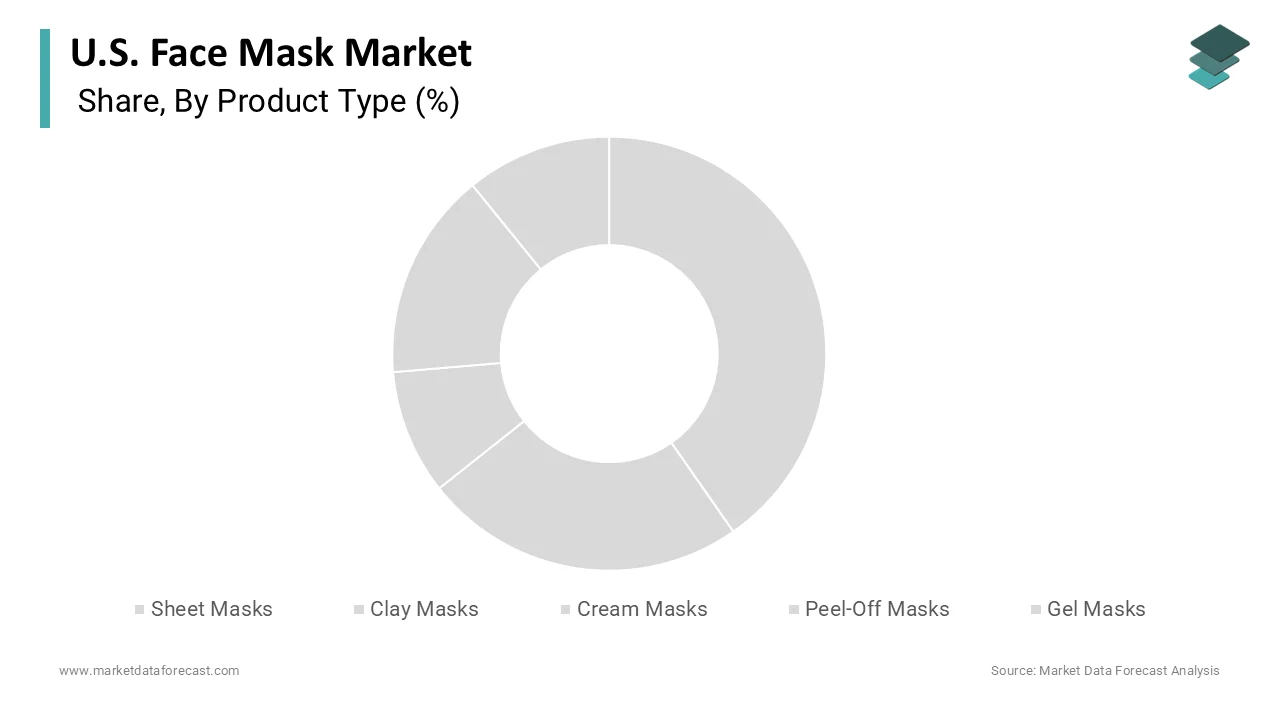
On the other hand, the clay mask segment is predicted to register a promising CAGR of 10.4% during the forecast period in the U.S. market, owing to the increasing prevalence of acne and the demand for deep cleansing solutions. The high incidence of acne and oily skin conditions among American consumers drives rapid expansion for clay masks. According to the American Academy of Dermatology, acne affects up to 50 million Americans annually, making it the most common skin condition in the United States. As per clinical data, clay masks containing kaolin, bentonite, or sulfur are highly effective at absorbing excess sebum and unclogging pores, which are primary contributors to acne formation. Dermatologists frequently recommend clay masks as part of a comprehensive acne management regimen due to their ability to reduce inflammation and prevent breakouts. The teenage and young adult demographics, who are most prone to acne, are also the most active skincare consumers. According to the National Institutes of Health, the psychological impact of acne drives individuals to seek effective over-the-counter treatments, including specialized masks. Furthermore, adults experiencing hormonal acne are increasingly incorporating clay masks into their weekly routines to manage oil production. The availability of gentle formulations suitable for sensitive skin has broadened the addressable market. According to industry reports, sales of acne-treating skincare products have grown consistently year over year, reflecting this urgent need. This consistent demand for effective oil control and pore refinement positions clay masks as the fastest-growing product type.
By End User Insights
The women segment held the largest share of 66.4% of the U.S. market in 2025. The growth of the women's segment in the U.S market is driven by established skincare routines and higher spending on beauty products. The deeply ingrained skincare habits and greater financial allocation towards beauty products among women significantly sustain their market dominance. According to the Bureau of Labor Statistics, women spend significantly more on personal care products than men, reflecting a higher prioritization of appearance and self-care. As per the American Society of Plastic Surgeons, a vast majority of minimally invasive cosmetic procedures and skincare treatments are performed on women, indicating a strong culture of maintenance and enhancement. Face masks are an integral component of weekly skincare rituals for many women, who view them as essential for maintaining skin health and addressing specific concerns like aging or hyperpigmentation. The social aspect of skincare also plays a role, with women often sharing product recommendations and routines with peers. According to a survey by Allure magazine, 65% of women use face masks at least once a week as part of their self-care practice. Furthermore, the wide variety of masks targeting anti-aging, hydration, and brightening aligns with the diverse needs of female consumers across different age groups. This consistent usage pattern, combined with higher purchasing power, ensures that women remain the primary drivers of revenue in the face mask market.
On the other side, the men's segment is on the rise and is expected to showcase a CAGR of 12.2% during the forecast period in the U.S. market, owing to the changing gender norms and the expansion of men’s grooming industries. The evolving perception of masculinity and increased awareness of personal grooming among men significantly drive expansion in this segment. According to the National Barber Shop Association, the stigma surrounding male skincare has diminished, with more men openly discussing and investing in their appearance. As per a survey by YouGov, a rising proportion of men aged 18 to 34 now use skincare products regularly, including face masks, compared to previous years. The influence of social media platforms like Instagram and YouTube, where male grooming influencers share routines, has normalized the use of face masks for men. Professional environments also play a role, with younger workers placing greater emphasis on personal presentation and skin health. According to the Society for Human Resource Management, workplace wellness programs increasingly include skincare education, encouraging male participation. Furthermore, the simplicity of face masks appeals to men, who prefer straightforward and efficient skincare steps over complex regimens. Clay and charcoal masks are particularly popular due to their perceived effectiveness in managing oil and preventing razor bumps. According to Euromonitor International, the men’s grooming market is expected to outpace the overall beauty market in growth rate. This cultural shift towards self-care among men creates a robust and expanding customer base for face mask manufacturers.
By Distribution Channel Insights
The online segment accounted for the major share of the U.S. face mask market in 2025 due to the unparalleled convenience and vast selection available through online platforms. According to the U.S. Census Bureau, e-commerce sales for health and personal care products have grown consistently, reflecting a shift in consumer shopping habits. As per Amazon retail data, face masks are among the top searched beauty items, with customers appreciating the ability to compare prices, read reviews, and access niche brands not found in physical stores. The ability to shop from home and receive products via fast shipping aligns with the busy lifestyles of American consumers. Furthermore, online retailers often offer bundle deals and subscriptions that encourage bulk purchases and repeat business. According to a survey by Digital Commerce 360, 70% of shoppers prefer buying skincare online due to the ease of finding specific ingredients or formulations. The availability of detailed product descriptions and video tutorials helps consumers make informed decisions, reducing purchase hesitation. Additionally, the privacy of online shopping appeals to individuals who may feel uncomfortable browsing skincare aisles in person. This combination of accessibility, variety, and informational support ensures that online retail remains the primary channel for face mask distribution.
However, the specialty stores segment is predicted to grow at a healthy CAGR in the U.S. face mask market during the forecast period, owing to the increasing demand for expert advice and premium shopping experiences. The availability of professional consultation and curated high-end products significantly drives expansion in the specialty store segment. According to the National Retail Federation, consumers are increasingly seeking experiential retail where they can receive personalized advice from knowledgeable staff. As per data from Sephora and Ulta Beauty, beauty advisors play a crucial role in recommending face masks based on individual skin types and concerns, leading to higher customer satisfaction and loyalty. Specialty stores often carry exclusive or prestige brands that are not available in mass-market retailers, attracting discerning shoppers willing to pay for quality. The ability to test products in-store before purchasing reduces the risk of adverse reactions and ensures product suitability. According to a survey by Retail Dive, 55% of beauty shoppers prefer visiting specialty stores for new product launches due to the opportunity for hands-on experience. Furthermore, these stores often host events and workshops that educate consumers on proper mask usage and skincare routines, fostering community engagement. The trusted environment of specialty stores enhances brand credibility and encourages trial of innovative formats. According to industry analyses, specialty beauty retailers have reported strong growth in skincare sales, outpacing general merchandise stores. This focus on service and exclusivity positions specialty stores as the fastest-growing distribution channel.
COUNTRY LEVEL ANALYSIS
U.S. Face Mask Market Analysis
The United States face mask sector is poised to sustain its strong market position due to advanced product innovation and is expected to experience expanded distribution over the next few years. This market leadership reflects the convergence of high consumer spending, advanced retail infrastructure, and a strong culture of personal care and hygiene. The substantial disposable income and sophisticated retail ecosystem in the United States significantly propel its market dominance. According to the Bureau of Economic Analysis, personal consumption expenditures on health and personal care reached record highs, with skincare representing a significant portion. As per the National Retail Federation, the U.S. boasts the highest density of beauty specialty stores and e-commerce platforms globally, ensuring widespread product accessibility. American consumers are known for their willingness to experiment with new beauty trends and invest in premium skincare products. According to the Personal Care Products Council, the U.S. leads in new product launches, with thousands of face mask variants introduced annually. The presence of major global beauty retailers and direct-to-consumer brands creates a competitive environment that drives innovation and quality. Furthermore, the integration of healthcare and wellness trends has elevated the status of face masks from occasional treats to essential self-care items. According to the Global Wellness Institute, the U.S. wellness economy is highly valued, with skincare playing a vital role. This economic strength, combined with a robust distribution network, ensures that the United States remains the largest and most influential market for face masks globally.
COMPETITIVE LANDSCAPE
The United States face mask market features intense competition among established industrial conglomerates, specialized personal care brands,s and emerging niche manufacturers. Incumbent players leverage extensive distribution networks, brand recognition,n and technological expertise to maintain leadership, while new entrants differentiate through innovative design,s sustainability claims, and targeted marketing. Competition centers on product efficacy and comfort,t with companies investing in research to improve filtration efficiency and wearability. Pricing strategies vary significantly, ly with premium brands emphasizing quality and aesthetics, while value-oriented competitors focus on affordability and volume. The rise of eco-conscious consumers drives rivalry in sustainable materials and packaging solutions. Regulatory compliance serves as a critical barrier to entry, ensuring only qualified manufacturers can compete in medical and industrial segments. Strategic collaborations with retailers and healthcare institutions enhance market penetration and brand loyalty. The dynamic landscape encourages continuous improvement in product features and customer service, benefiting consumers through greater choice and enhanced protection standards across diverse application areas.
KEY MARKET PLAYERS
Some of the companies that are playing a dominating role in the U.S. Face Mask Market include
- 3M Company
- Honeywell International Inc.
- Kimberly-Clark Corporation
- Medline Industries, LP
- Cardinal Health, Inc.
- Mölnlycke Health Care AB
- Ansell Limited
- Prestige Ameritech
- Alpha Pro Tech, Ltd.
- DuPont de Nemours, Inc.
- Owens & Minor, Inc.
- Makrite Industries, Inc.
TOP LEADING PLAYERS IN THE U.S. MARKET
- 3M Company maintains a dominant position in the United States face mask market through its extensive portfolio of personal protective equipment and industrial respiratory solutions. The company leverages its proprietary filtration technologies to produce high-efficiency N95 and surgical masks widely used in healthcare and construction sectors. 3M recently expanded its domestic manufacturing capacity to ensure supply chain resilience and meet fluctuating demand for protective gear. The company actively collaborates with regulatory bodies to maintain strict compliance with safety standards. 3M also invests in sustainable materials research to develop eco-friendly disposable options. These strategic initiatives reinforce its reputation for quality and reliability while addressing environmental concerns and strengthening its leadership in both professional and consumer segments.
- Honeywell International Inc contributes significantly to the U.S. face mask market by offering advanced respiratory protection products for industrial and emergency response applications. The company utilizes its expertise in material science to create comfortable yet highly effective masks that protect against hazardous airborne particles. Honeywell recently launched a new line of reusable elastomeric respirators designed for long-term use in harsh environments. The company strengthens its market position through strategic partnerships with safety distributors and online retailers. Honeywell also focuses on digital integration by providing training resources and fit testing tools via mobile platforms. These efforts enhance user safety and compliance while expanding accessibility for workers in diverse industries such as oil, gas, and pharmaceuticals.
- Kimberly-Clark Corporation plays a pivotal role in the U.S. face mask market through its well-known Kleenex and Andrex brands, which offer disposable facial coverings for everyday use. The company focuses on producing soft,t breathable masks that appeal to consumers seeking comfort and style alongside protection. Kimberly-Clark recently introduced a range of skincare-infused face masks that combine hydration benefits with filtration capabilities. The company leverages its robust distribution network to ensure widespread availability in supermarkets and pharmacies. Kimberly-Clark also emphasizes sustainability by launching recyclable packaging initiatives. These actions align with consumer preferences for gentle and environmentally responsible products, thereby enhancing brand loyalty and securing a strong foothold in the personal care segment of the market.
TOP STRATEGIES USED BY KEY MARKET PARTICIPANTS
Key players in the United States face mask market employ diverse strategies to maintain competitive advantages and drive growth. Companies prioritize product innovation by developing masks with enhanced filtration, breathability,y, and skin-friendly materials. Strategic partnerships with healthcare providers and industrial firms ensure consistent bulk procurement and brand visibility. Manufacturers invest heavily in sustainable practices, including biodegradable materials and recycling programs,s to address environmental concerns. Digital marketing campaigns leveraging social media influencers and health experts build consumer trust and awareness. Expansion of e-commerce platforms facilitates direct-to-consumer sales and broader market reach. Regulatory compliance and certification acquisitions reinforce product credibility and safety assurances. These coordinated efforts enable participants to navigate evolving consumer preferences and regulatory landscapes while sustaining revenue growth and market relevance in a competitive environment.
MARKET SEGMENTATION
This research report on the U.S. face mask market is segmented and sub-segmented into the following categories.
By Product Type
- Sheet Masks
- Clay Masks
- Cream Masks
- Peel-Off Masks
- Gel Masks
- Others
By End User
- Women
- Men
By Distribution Channel
- Online Stores
- Supermarkets & Hypermarkets
- Specialty Stores
- Pharmacies & Drug Stores
- Others
By Country
- California
- Washington
- Oregon
- New York
- Rest of the United States