- Product Description Description
- Table of Contents TOC
- List of Table & Figure LOT
- Get Free Sample PDF Sample PDF
Market Size, 2025
$11.19 BnMarket Estimate, 2026
$12.24 BnMarket Forecast, 2034
$24.94 BnCAGR, 2026–2034
9.31%U.S. Fleet Management Market Size
The U.S. Fleet Management Market was valued at USD 11.19 billion in 2025, is estimated to reach USD 12.24 billion in 2026, and is projected to reach USD 24.94 billion by 2034, growing at a CAGR of 9.31% from 2026 to 2034.
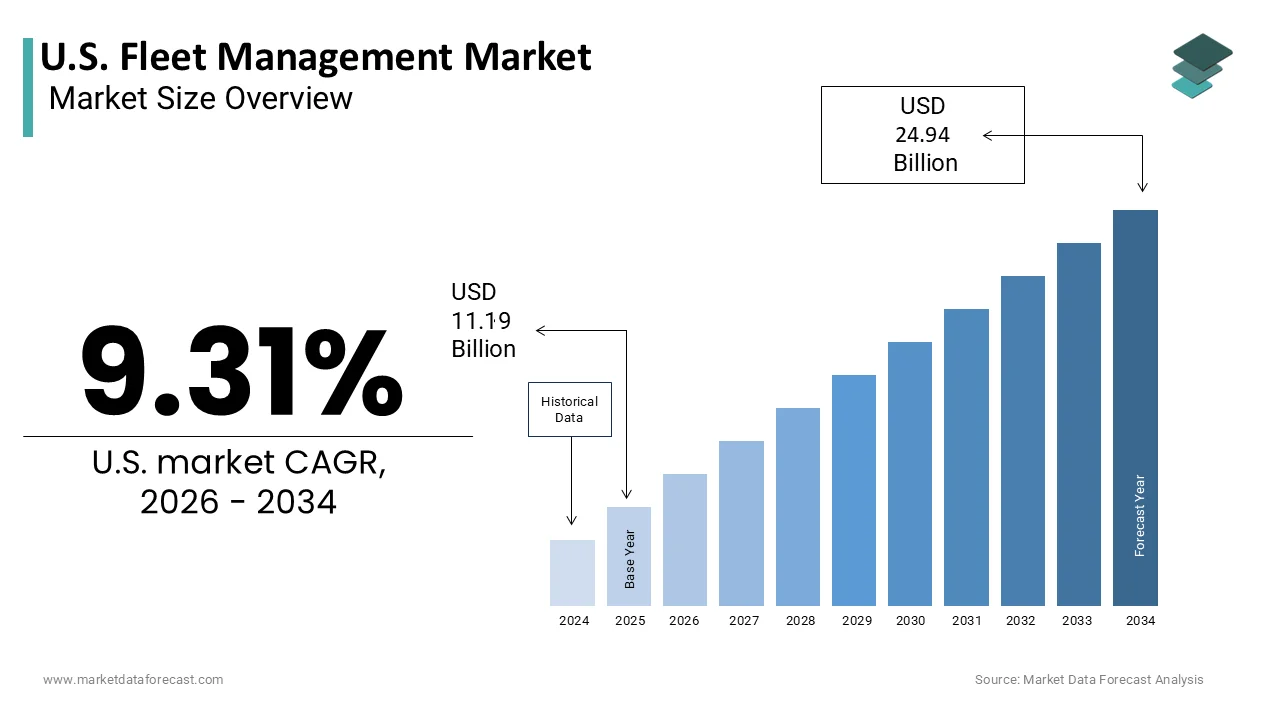
Fleet management encompasses a comprehensive suite of services and technologies designed to optimize the operation, maintenance, and compliance of commercial vehicle fleets. This sector integrates telematics software, hardware, and data analytics to provide real-time visibility into vehicle location, driver behavior, fuel consumption, and asset health. The primary objective is to enhance operational efficiency, reduce costs, and ensure regulatory adherence for businesses ranging from logistics providers to field service companies. According to the Federal Highway Administration, there are approximately 289 million registered vehicles in the U.S., and this indicates the vast scale of assets requiring management. Furthermore, as per the Federal Highway Administration, commercial vehicles travel over 300 billion miles annually, which promotes the critical need for effective monitoring and optimization tools. The adoption of fleet management solutions is driven by the increasing complexity of supply chains and the pressure to minimize carbon footprints. As per the Environmental Protection Agency, the transportation sector accounts for 29% of total greenhouse gas emissions in the country, prompting stricter environmental regulations. Companies are increasingly leveraging Internet of Things devices to collect granular data that informs strategic decision-making. The integration of artificial intelligence and machine learning further enhances predictive capabilities, allowing for proactive maintenance and risk mitigation. This technological evolution transforms fleet management from a reactive operational task into a strategic business function. The market is characterized by a shift toward cloud-based platforms that offer scalability and seamless integration with existing enterprise systems. These developments reflect a broader trend toward digitalization and automation in the logistics and transportation industries.
MARKET DRIVERS
Rising Fuel Costs and Operational Inefficiencies Drive Adoption of Telematics Solutions
Escalating fuel expenses and the persistent challenge of operational inefficiencies are primarily driving the growth of the U.S. fleet management market. Fuel represents one of the highest variable costs for fleet operators, often accounting for 20% to 30% of total operating budgets. According to the Energy Information Administration, the average price of diesel fuel in the U.S. has experienced significant volatility, with prices frequently exceeding 4 dollars per gallon in recent years. This financial pressure necessitates precise monitoring and optimization of fuel consumption to protect profit margins. Telematics systems provide real-time data on idling times, harsh acceleration, and route deviations, which are key contributors to excessive fuel usage. As per data from Geotab, implementing telematics can reduce fuel consumption by up to 15% through improved driver behavior and route optimization. Furthermore, inefficient routing leads to unnecessary mileage and wear on vehicles, exacerbating maintenance costs. Fleet management software utilizes algorithms to determine the most efficient paths, considering traffic conditions and delivery windows. As per the National Private Truck Council, optimized routing can decrease total mileage by 10% to 20%, significantly lowering operational expenses. The ability to monitor vehicle health in real time also prevents breakdowns that cause costly delays and emergency repairs. By addressing these inefficiencies, fleet managers can achieve substantial cost savings and improve overall productivity. Consequently, the direct correlation between telematics adoption and reduced operational expenditures drives sustained demand for fleet management technologies across various industries.
Stringent Government Regulations on Safety and Emissions Mandate Compliance Tracking
Strict government regulations regarding vehicle safety, driver hours, and emissions standards are further boosting the expansion of the U.S. fleet management market. The Federal Motor Carrier Safety Administration enforces the Electronic Logging Device mandate, which requires commercial drivers to use certified devices to record hours of service accurately. According to the Federal Motor Carrier Safety Administration, this regulation aims to reduce fatigue-related accidents by ensuring drivers adhere to mandatory rest periods. Non-compliance can result in severe penalties, including fines and out-of-service orders, making automated tracking essential for legal operation. Additionally, the Environmental Protection Agency imposes stringent emissions standards on commercial vehicles to mitigate environmental impact. Data from the Environmental Protection Agency shows that heavy-duty trucks are subject to progressively tighter nitrogen oxide and particulate matter limits, requiring fleets to monitor engine performance and maintenance schedules closely. Fleet management systems integrate with engine control modules to provide real-time emissions data and alert managers to potential violations. As per the Commercial Vehicle Safety Alliance, inspections reveal thousands of violations annually, many related to logging errors and maintenance issues, highlighting the importance of automated compliance tools. Furthermore, state-level regulations, such as California’s Advanced Clean Fleets rule, require gradual transitions to zero-emission vehicles, necessitating detailed tracking of vehicle types and usage. These regulatory frameworks create a compulsory demand for fleet management solutions that offer robust reporting and audit capabilities. By automating compliance processes, companies reduce administrative burdens and mitigate legal risks, thereby driving widespread adoption of sophisticated management platforms.
MARKET RESTRAINTS
High Initial Implementation Costs and Integration Complexities Restrain Market Growth
The substantial initial investment required for hardware installation and software subscription, coupled with complex integration challenges, hinders the fleet management market growth in the U.S. Small and medium-sized enterprises often face budget constraints that make the upfront costs of telematics devices and gateway installations prohibitive. According to a survey by the Small Business Administration, approximately 40% of small businesses cite high technology costs as a major barrier to digital adoption. The cost of equipping an entire fleet with GPS trackers, sensors, and diagnostic tools can amount to thousands of dollars, depending on fleet size and vehicle type. Furthermore, integrating these new systems with legacy enterprise resource planning and dispatch software often requires specialized technical expertise and custom development. As per data from Gartner, nearly 50% of digital transformation projects fail due to integration issues, leading to wasted resources and operational disruptions. Many fleet operators lack the internal IT infrastructure to support seamless data flow between disparate systems, resulting in fragmented information and reduced utility. As per the International Data Corporation, the complexity of managing multiple vendor platforms increases the total cost of ownership and extends the return on investment period. Additionally, ongoing maintenance and software updates add to the long-term financial burden. For companies operating on thin margins, these costs can outweigh the perceived benefits of enhanced efficiency. Consequently, the financial and technical barriers to entry slow down the adoption rate, particularly among smaller fleet owners who may rely on manual processes despite their inefficiencies. This restraint limits the overall market penetration and delays the realization of industry-wide efficiency gains.
Data Privacy Concerns and Cybersecurity Risks Hinder Widespread Trust And Adoption
Growing concerns regarding data privacy and the increasing threat of cyberattacks further impede the U.S. market expansion. Fleet management systems collect vast amounts of sensitive data, including precise location histories, driver behavior metrics, and personal identification information. According to the Identity Theft Resource Center, the transportation and logistics sector experienced a 25% increase in data breaches in the past year, highlighting the heightened risk profile. Drivers and employees often express discomfort with continuous monitoring, fearing misuse of data for punitive measures rather than safety improvements. This resistance can lead to low adoption rates and attempts to circumvent tracking devices, undermining the effectiveness of the system. Furthermore, the connectivity of telematics devices creates potential entry points for hackers to access corporate networks or even manipulate vehicle controls. Data from the Department of Transportation warns that connected vehicles are susceptible to remote attacks that could compromise safety and operational integrity. As per the Cybersecurity and Infrastructure Security Agency, many fleet management providers lack robust security protocols, making them attractive targets for ransomware and data theft incidents. The lack of standardized data protection regulations specifically for telematics adds to the uncertainty and liability concerns for fleet operators. Companies must invest heavily in encryption and security measures to mitigate these risks, which further increases costs. Until robust security frameworks and clear privacy guidelines are established, skepticism and fear will continue to hinder the full potential of fleet management technologies.
MARKET OPPORTUNITIES
Integration of Artificial Intelligence for Predictive Maintenance Offers Significant Efficiency Gains
The integration of artificial intelligence and machine learning into fleet management systems is a major opportunity for the U.S. fleet management market. Traditional maintenance schedules are often based on fixed intervals, which can lead to unnecessary servicing or unexpected failures. AI-driven algorithms analyze real-time data from vehicle sensors to predict component failures before they occur. According to McKinsey, predictive maintenance can reduce maintenance costs by up to 30% and decrease downtime by 45% by addressing issues proactively. This capability allows fleet managers to schedule repairs during non-peak hours and order parts in advance, optimizing resource allocation. Data from the Society of Automotive Engineers indicates that unplanned downtime costs fleets an average of 1,000 dollars per hour, per vehicle, making prevention highly valuable. Furthermore, AI can identify patterns in driver behavior that contribute to premature wear and tear, enabling targeted coaching interventions. As per Deloitte, companies using AI-enabled maintenance strategies report a 20% increase in asset utilization rates due to improved reliability. The ability to process large volumes of historical and real-time data provides insights that human analysis cannot achieve efficiently. This technological advancement transforms maintenance from a reactive cost center into a strategic efficiency driver. By reducing the frequency of breakdowns and extending the operational life of vehicles, fleets can achieve substantial long-term savings. This opportunity encourages continued investment in advanced analytics and smart sensor technologies within the fleet management ecosystem.
Expansion of Electric Vehicle Fleets Creates Demand for Specialized Management Solutions
The rapid transition toward electric vehicles in commercial fleets creates a substantial opportunity for the U.S. fleet management market by generating demand for specialized monitoring and charging infrastructure management. Electric vehicles require different maintenance protocols and operational considerations compared to internal combustion engine vehicles, including battery health monitoring and charging schedule optimization. According to the International Energy Agency, almost 14 million new electric cars were registered globally in 2023, which reflects a growing shift in asset composition. Managing these vehicles requires software that can track state of charge, locate nearby charging stations, and optimize charging times to reduce energy costs. Data from the National Renewable Energy Laboratory indicates that smart charging strategies can reduce electricity expenses by up to 20% by leveraging off-peak rates. Furthermore, fleet managers need insights into battery degradation to plan for replacements and maintain residual values. As per BloombergNEF, the total cost of ownership for electric fleets is becoming competitive, but requires sophisticated management to realize savings. Fleet management platforms that integrate EV-specific metrics provide a competitive advantage by helping companies navigate this transition smoothly. The complexity of managing mixed fleets of conventional and electric vehicles also drives demand for unified solutions that can handle diverse data streams. This evolving landscape offers vendors the chance to develop niche products and services tailored to the unique needs of electrified operations. By addressing these specific challenges, fleet management providers can capture a growing segment of the market and establish long-term partnerships with early adopters.
MARKET CHALLENGES
Shortage of Skilled Drivers and Technicians Impacts Operational Continuity and Data Utilization
The acute shortage of qualified commercial drivers and skilled maintenance technicians is a major challenge to the U.S. fleet management market. According to the American Trucking Associations, the industry faces a deficit of approximately 80,000 drivers, a number that is projected to reach 115,000 in 2025 if recruitment trends do not improve. This labor scarcity forces fleets to operate with fewer vehicles and drivers, increasing the pressure on existing resources to maximize efficiency. While fleet management tools can optimize routes and schedules, they cannot fully compensate for the lack of human capital. Furthermore, the shortage of technicians trained in modern vehicle technologies, including telematics and electric powertrains, complicates maintenance operations. Data from the Bureau of Labor Statistics shows that the demand for automotive service technicians is outpacing the supply of new entrants, leading to longer repair times and higher labor costs. As per the Technology and Maintenance Council of the American Trucking Associations, many older technicians lack the digital literacy required to interpret complex diagnostic data from fleet management systems. This skills gap prevents organizations from fully leveraging the insights provided by advanced analytics. Without personnel who can act on predictive alerts and optimize system settings, the value of fleet management investments is diminished. Companies must invest in training and retention programs alongside technology, which strains budgets. This structural labor challenge undermines the potential benefits of digital transformation and requires a holistic approach to workforce development.
Interoperability Issues among Diverse Hardware and Software Platforms Hinder Seamless Integration
The lack of standardization and interoperability among various hardware devices and software platforms is further challenging the U.S. market expansion. Fleet operators often utilize equipment from multiple vendors, including GPS trackers, engine diagnostic tools, and dispatch software that may not communicate seamlessly. According to the Industrial Internet Consortium, incompatible data formats and proprietary protocols prevent the seamless exchange of information between systems, leading to data silos. This fragmentation forces managers to manually consolidate data from different sources, increasing the risk of errors and delaying decision-making. Data from IDC reveals that 60% of enterprises struggle with data integration issues, which reduces the accuracy and timeliness of fleet analytics. As per the Open Mobility Foundation, the absence of universal standards for telematics data exchange complicates the development of unified management platforms. Vendors often lock customers into proprietary ecosystems, making it difficult to switch providers or add new functionalities without significant reconfiguration. This vendor lock-in limits flexibility and increases long-term costs for fleet owners. Furthermore, the rapid pace of technological innovation means that older devices may become obsolete quickly, requiring frequent upgrades that exacerbate compatibility issues. Without industry-wide standards for data connectivity and API integration, the full potential of interconnected fleet management solutions remains unrealized. This challenge necessitates greater collaboration among stakeholders to establish common protocols that facilitate seamless integration and enhance overall system efficacy.
REPORT COVERAGE
| REPORT METRIC | DETAILS |
| Market Size Available | 2025 to 2034 |
| Base Year | 2025 |
| Forecast Period | 2026 to 2034 |
| Segments Covered | By Offering, Lease Type, Business Type, End User, and Region. |
| Various Analyses Covered | Global, Regional and Country-Level Analysis, Segment-Level Analysis, Drivers, Restraints, Opportunities, Challenges; PESTLE Analysis; Porter’s Five Forces Analysis, Competitive Landscape, Analyst Overview of Investment Opportunities |
| Countries Covered | California, Washington, Oregon, New York, United States |
| Market Leaders Profiled | Verizon Connect, Trimble Inc., Geotab Inc., Samsara Inc., Motive Technologies Inc., Omnitracs LLC, Teletrac Navman, Wheels, Inc., Element Fleet Management Corp., Donlen Corporation, ARI Fleet Management Company, ORBCOMM Inc. |
SEGMENTAL ANALYSIS
By Offering Insights
The solution segment dominated the market by holding the highest share of the U.S. fleet management market in 2025 and is expected to continue to hold the dominant position in the U.S. fleet management market during the forecast period, owing to the rising need for real-time data visibility and automated operational contro,l and the widespread adoption of telematics hardware and software platforms that enable continuous monitoring of vehicle location status and performance metrics. According to the American Trucking Associations, the average cost of downtime for a commercial truck is approximately 75 dollars per hour, which compels fleet operators to invest in robust solutions that minimize idle time and optimize routes. Data from Geotab indicates that fleets using comprehensive telematics solutions report a 15% reduction in fuel costs and a 20% improvement in driver productivity. These tangible efficiency gains justify the initial capital expenditure on hardware and software licenses. Furthermore, the integration of advanced sensors allows for precise tracking of cargo conditions, temperature, and humidity, which is essential for industries such as food and pharmaceuticals. As per the International Dairy Foods Association, spoilage due to temperature deviations costs the industry billions annually, making real-time monitoring solutions indispensable. The scalability of cloud-based solutions also allows businesses to expand their fleets without significant infrastructure upgrades. This flexibility, combined with the ability to integrate with existing enterprise resource planning systems, ensures that solutions remain the cornerstone of modern fleet operations. The continuous evolution of software features, including artificial intelligence-driven analytics, further cements the leadership of the solution segment by providing actionable insights that drive strategic decision-making and long-term profitability.
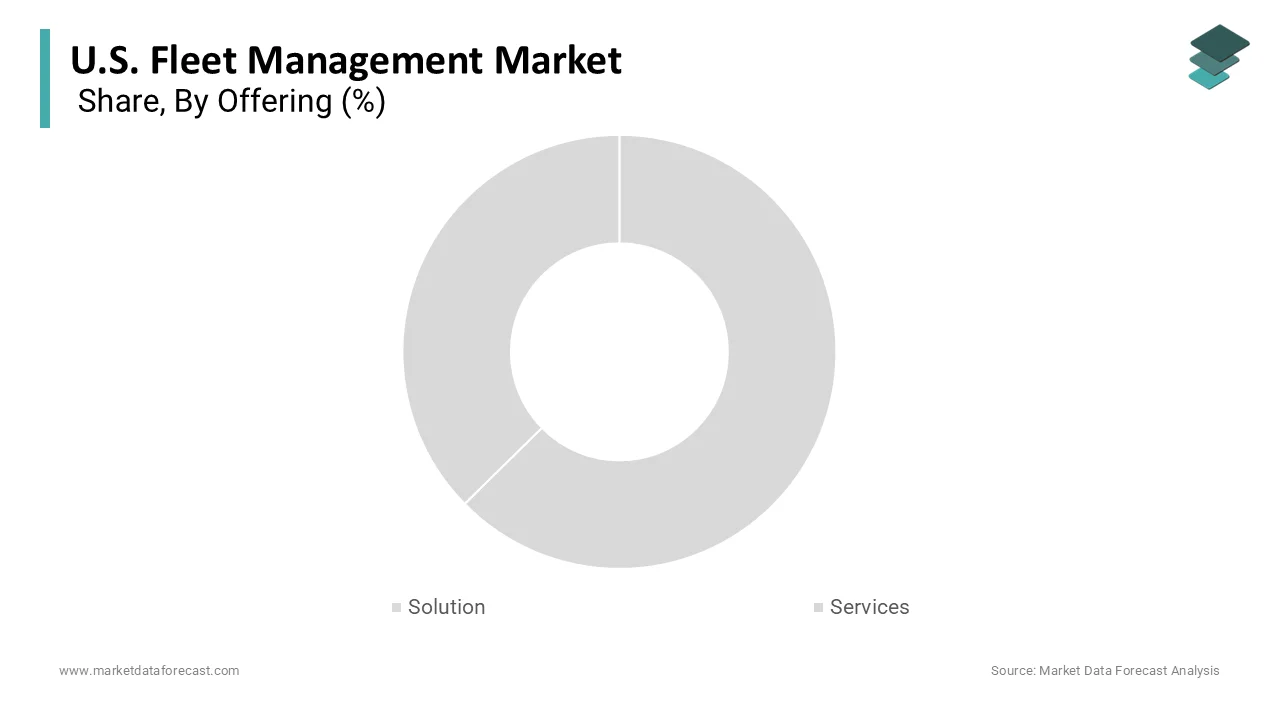
However, the services segment is a promising segment and is estimated to record a CAGR of 15.5% during the forecast period in the U.S. fleet management market. This rapid expansion is primarily likely to be driven by the increasing complexity of fleet technologies and the subsequent need for specialized expertise in installation, maintenance, and data interpretation. Many organizations lack the internal technical capabilities to manage sophisticated telematics systems effectively, leading them to outsource these functions to third-party providers. According to Gartner, nearly 60% of enterprises rely on managed services to handle the lifecycle of their IoT devices, including fleet trackers. This reliance ensures that systems remain operational and secure, reducing the burden on internal IT teams. Data from the Bureau of Labor Statistics shows that the demand for computer and information technology support specialists is growing much faster than the average for all occupations, reflecting the broader trend toward outsourced technical support. Furthermore, consulting services that help fleets transition to electric vehicles or comply with new environmental regulations are seeing heightened demand. As per the Environmental Protection Agency, new emissions standards require detailed reporting and strategic planning, which many companies achieve through professional service engagements. The rise of cybersecurity threats also necessitates ongoing security audits and monitoring services to protect sensitive fleet data. These factors collectively contribute to the accelerated growth of the services segment, as companies seek to leverage external expertise to navigate the evolving technological and regulatory landscape efficiently.
By Lease Type Insights
The on-lease segment commanded the largest share of the U.S. fleet management market in 2025. The growth of the on-lease segment in the U.S. market is attributed to the financial and operational advantages it offers to businesses seeking to preserve capital and simplify asset management. Leasing allows companies to avoid the large upfront costs associated with purchasing vehicles, thereby freeing up cash flow for other strategic investments. According to the Equipment Leasing and Finance Foundation, approximately 80% of U.S. companies use some form of equipment leasing, including vehicle fleets, to manage their assets. This high adoption rate is driven by the predictability of monthly payments, which facilitates easier budgeting and financial planning. Furthermore, leased vehicles often come with bundled maintenance and management services, reducing the administrative burden on fleet managers. Data from ALD Automotive indicates that full-service leasing can reduce the total cost of ownership by up to 10% by leveraging economies of scale in procurement and maintenance. The ability to regularly refresh the fleet with newer models also ensures compliance with the latest safety and emissions standards without the hassle of disposing of old assets. As per the National Association of Fleet Administrators, leasing simplifies the disposal process and mitigates the risk of residual value fluctuation. Additionally, tax benefits associated with leasing, such as the deductibility of lease payments, make it an attractive option for many corporations. These financial and operational efficiencies make on-lease arrangements the preferred choice for a majority of fleet operators, particularly those looking to optimize their balance sheets and streamline operations.
On the other hand, the non-lease segment is experiencing significant growth and is predicted to expand at a CAGR of 13.3% during the forecast period in the U.S. market, owing to the desire for greater control and long-term cost savings among certain business sectors. While leasing offers convenience, owning vehicles provides complete autonomy over asset utilization, modification, and disposal, which is crucial for specialized operations. According to the Small Business Administration, many small and medium-sized enterprises prefer ownership to build equity and avoid the restrictions imposed by lease agreements. This preference is particularly strong in industries where vehicles are heavily customized or subjected to harsh conditions that may violate lease terms. Data from the Federal Reserve Bank of New York shows that business loans for vehicle purchases have increased by 8% annually, indicating a steady shift toward ownership financing. Furthermore, advancements in fleet management software allow owned fleets to achieve similar levels of efficiency and tracking as leased fleets without the intermediary. As per the Technology and Maintenance Council, improved diagnostic tools enable owners to perform predictive maintenance effectively, reducing the need for third-party service contracts. The rising residual values of certain vehicle types also make ownership more financially viable in the long run. Companies are increasingly recognizing that while the initial outlay is higher, the total cost of ownership over the vehicle's lifespan can be lower than leasing. This realization, combined with the flexibility to modify assets as needed, drives the rapid adoption of the without-lease model, particularly among specialized and industrial fleet operators.
By Business Type And End User Insights
The large businesses segment captured the major share of the U.S. fleet management market in 2025 due to the sheer scale of their operations and the critical importance of efficiency in their supply chains. These organizations manage thousands of vehicles and require sophisticated systems to coordinate complex delivery networks and ensure timely service. According to the Council of Supply Chain Management Professionals, logistics costs account for approximately 8% of the U.S. GDP, highlighting the economic significance of efficient fleet operations. Large carriers invest heavily in advanced fleet management solutions to optimize routes, reduce fuel consumption, and maintain regulatory compliance. Data from the American Trucking Associations indicates that large fleets account for over 60% of the total freight tonnage moved in the U.S., underscoring their market influence. The ability to leverage big data analytics allows these companies to predict demand, adjust capacity, and minimize empty miles, which significantly impacts profitability. As per McKinsey, large logistics firms can achieve up to 15% cost savings through advanced analytics and automation. Furthermore, strict federal regulations regarding hours of service and vehicle safety mandate rigorous tracking and reporting, which large fleets are better equipped to handle through integrated management platforms. The economies of scale achieved by large businesses also allow them to negotiate better rates for technology and services, further reinforcing their dominance. Their continuous investment in innovation sets the standard for the industry and drives the overall adoption of fleet management technologies across the sector.
However, the small business segment is estimated to showcase a CAGR of 16.1% during the forecast period in the U.S. market, owing to the expansion of local delivery services and the increasing consumer demand for fresh and timely food products. Small businesses in this sector are increasingly adopting affordable and scalable fleet management solutions to compete with larger players and ensure product quality. According to the National Restaurant Association, independent restaurants and small food distributors are rapidly integrating delivery models, requiring efficient vehicle tracking and route optimization. Data from Square indicates that small food businesses using delivery apps have seen a 30% increase in sales volume, necessitating better fleet coordination. The perishable nature of food products makes real-time temperature monitoring and timely delivery critical, driving the adoption of specialized telematics devices. As per the Food Marketing Institute, consumers are willing to pay a premium for guaranteed freshness, which incentivizes small businesses to invest in tracking technologies that provide proof of condition and delivery time. Furthermore, government grants and incentives for small businesses to adopt digital tools are lowering the barrier to entry. The ability to demonstrate reliability and transparency to customers through shared tracking links also enhances brand loyalty. These factors combine to drive rapid adoption of fleet management solutions among small food and beverage operators who seek to enhance efficiency and customer satisfaction in a competitive market.
COUNTRY LEVEL ANALYSIS
U.S.
The U.S. is expected to maintain its position as the most advanced global market for fleet management solutions through 2026 and beyond. This dominant position is supported by a vast transportation infrastructure, a high volume of commercial vehicles, and a strong culture of technological adoption. The market status in the region is characterized by intense competition among technology providers and a high degree of innovation in telematics and artificial intelligence. A primary driving factor for this leadership is the extensive regulatory framework governing commercial transportation, which mandates the use of electronic logging devices and other tracking technologies. According to the Federal Motor Carrier Safety Administration, the ELD mandate has compelled hundreds of thousands of fleets to adopt digital tracking solutions, creating a robust baseline for market growth. Furthermore, the sheer size of the U.S. economy and its reliance on road freight for goods movement sustains high demand for efficiency-enhancing tools. Data from the Bureau of Transportation Statistics shows that trucks move over 70% of the nation’s freight by weight, valued at trillions of dollars annually. This massive volume necessitates sophisticated management systems to handle logistics complexity. Additionally, the presence of major technology hubs and venture capital funding fosters continuous innovation in fleet tech startups. As per PitchBook, investment in mobility and logistics technology in the U.S. reached record levels in recent years. These structural,l economic, and regulatory factors ensure that the U.S. remains the central driver of global fleet management trends and adoption.
COMPETITIVE LANDSCAPE
The competition in the U.S. fleet management market is intense and characterized by a mix of established technology giants, specialized telematics providers,s and emerging startups. Major players compete based on technological innovation, data analytics capabilities,s and customer service quality. The market is fragmented with numerous vendors offering varying levels of functionality from basic tracking to comprehensive operational platforms. Differentiation is achieved through unique features such as artificial intelligence-driven insights, electric vehicle support,t and seamless integration with enterprise systems. Price competitiveness remains a factor, particularly for small and medium-sized businesses seeking cost-effective solutions. Strategic partnerships with automotive manufacturers and software developers are common as companies seek to expand their ecosystems and enhance value propositions. Mergers and acquisitions are frequent as larger firms aim to consolidate market presence and acquire niche technologies. The rise of cloud computing and the Internet of Things has lowered barriers to entry, enabling new entrants to disrupt traditional models. Regulatory compliance requirements also drive competition as providers strive to offer robust reporting tools. Ultimately, success depends on the ability to deliver actionable insights that improve efficiency, safety,y and sustainability for fleet operators.
KEY MARKET PLAYERS
Some of the companies that are playing a dominating role in the U.S. Fleet Management Market include
- Verizon Connect
- Trimble Inc.
- Geotab Inc.
- Samsara Inc.
- Motive Technologies Inc.
- Omnitracs LLC
- Teletrac Navman
- Wheels, Inc.
- Element Fleet Management Corp.
- Donlen Corporation
- ARI Fleet Management Company
- ORBCOMM Inc.
TOP LEADING PLAYERS IN THE MARKET
- Verizon Connect is a prominent provider of fleet management solutions in the U.S., offering comprehensive telematics and workforce management tools. The company leverages its robust telecommunications infrastructure to deliver reliable real-time data transmission for commercial vehicles. Recent actions to strengthen its market position include the integration of artificial intelligence capabilities into its platform to provide predictive insights on vehicle maintenance and driver behavior. Verizon Connect has also expanded its partnerships with original equipment manufacturers to enable deeper vehicle data integration. These initiatives enhance the accuracy of diagnostics and improve operational efficiency for customers. By focusing on user-friendly interfaces and scalable cloud-based services, the company addresses the needs of diverse fleet sizes. Its commitment to innovation ensures that clients can optimize routes, reduce fuel consumption,n and maintain regulatory compliance effectively.
- Geotab Inc operates as a leading global provider of open platform telematics with a strong presence in the U.S. market. The company specializes in data analytics and Internet of Things connectivity to help businesses manage their fleets efficiently. Geotab strengthens its position through an extensive marketplace of third-party integrations, allowing customers to customize solutions for specific industry needs. Recent actions include enhancing its electric vehicle support feature,s such as charging station location services and battery health monitoring. The company also invests heavily in cybersecurity measures to protect sensitive fleet data from emerging threats. By promoting an open ecosystem, Geotab enables seamless integration with various software applications. This approach fosters flexibility and scalability for enterprises seeking tailored fleet management strategies. Its focus on sustainability and data-driven decision-making resonates with modern business objectives.
- Samsara Inc has emerged as a significant player in the U.S. fleet management market by offering a unified cloud-based operations platform. The company combines Internet of Things sensors with artificial intelligence to provide real-time visibility into physical operations. Recent actions to strengthen its market position include the launch of advanced AI dashcams that detect unsafe driving behaviors and prevent accidents. Samsara has also expanded its hardware portfolio to include environmental monitoring sensors for temperature-sensitive cargo. The platform integrates seamlessly with existing enterprise systems, enabling automated workflows and reduced administrative burden. By emphasizing ease of use and rapid deployment,t Samsara attracts small and medium-sized businesses alongside large enterprises. Its continuous innovation in safety and efficiency tools helps customers lower insurance costs and improve overall productivity.
TOP STRATEGIES USED BY KEY MARKET PARTICIPANTS
Key players in the U.S. fleet management market primarily employ product innovation and strategic partnerships to maintain competitive advantages. Companies invest heavily in artificial intelligence and machine learning to enhance predictive analytics and automate decision-making processes. This technological adoption improves operational efficiency and reduces manual workload for fleet managers. Providers also focus on expanding their ecosystems through open platforms that allow seamless integration with third-party applications and hardware. This flexibility attracts diverse customers seeking customized solutions. Additionally, firms prioritize cybersecurity measures to protect sensitive data and build trust among enterprise clients. Strategic acquisitions enable companies to broaden their service offerings and enter new verticals quickly. Customer-centric approaches, such as intuitive user interfaces and responsive support, further differentiate market leaders. These multifaceted strategies ensure sustained growth and resilience in a rapidly evolving technological landscape.
MARKET SEGMENTATION
This research report on the U.S. fleet management market is segmented and sub-segmented into the following categories.
By Offering
- Solution
- Services
By Lease Type
- On-Lease
- Without-Lease
By Business Type and End User
- Large Businesses
- Small Businesses
By Country
- Virginia
- Texas
- California
- New York
- Rest of the United States