- Product Description Description
- Table of Contents TOC
- List of Table & Figure LOT
- Get Free Sample PDF Sample PDF
Market Size, 2025
$56.68 BnMarket Estimate, 2026
$60.32 BnMarket Forecast, 2034
$99.23 BnCAGR, 2026–2034
6.42%U.S. Leather Market Size, Growth, Trends & Forecast (2026–2034)
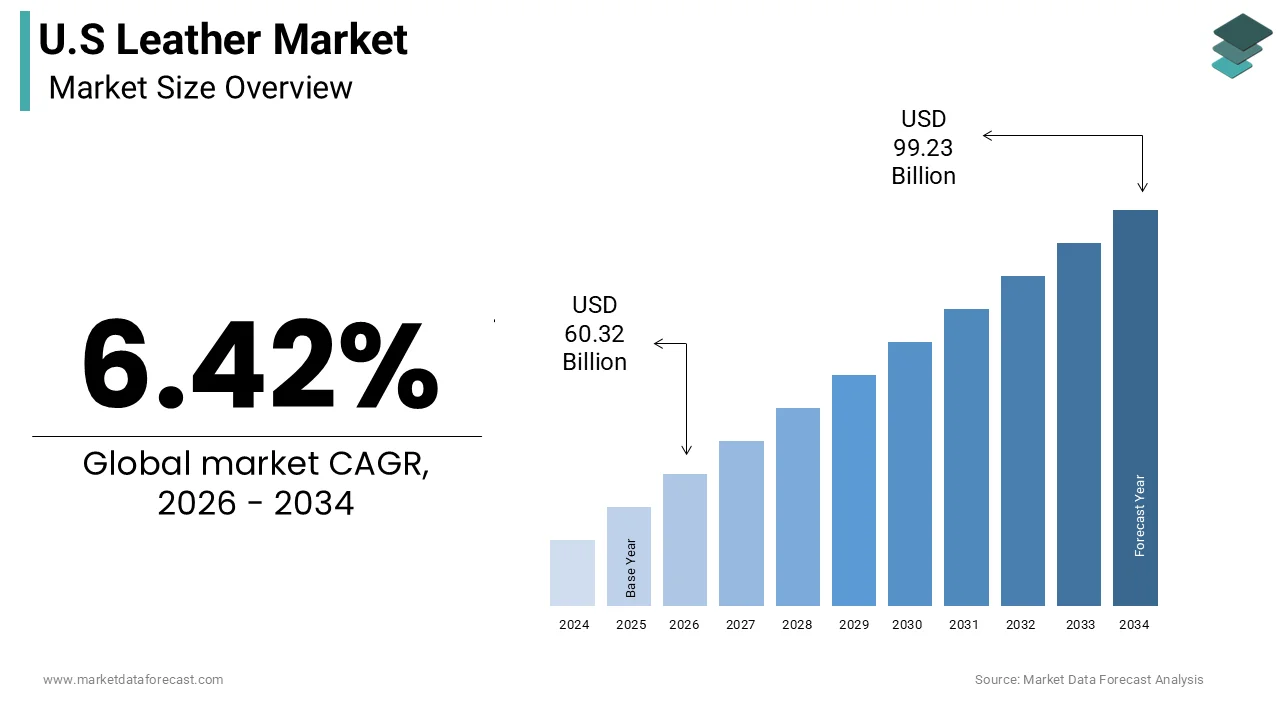
The U.S. leather market size was calculated to be USD 56.68 billion in 2025, is anticipated to reach USD 60.32 billion in 2026, and is projected to be worth USD 99.23 billion by 2034, registering a compound annual growth rate (CAGR) of 6.42% during the forecast period from 2026 to 2034. Driven by robust demand from automotive interiors, luxury fashion, and footwear industries, the market continues to experience steady upward expansion.
Key Executive Metrics (At-a-Glance)
- 2025 Base Valuation: USD 56.68 Billion
- 2026 Current Valuation: USD 60.32 Billion
- 2034 Forecast Valuation: USD 99.23 Billion
- Compound Annual Growth Rate (CAGR): 6.42% (2026–2034)
- Dominant Type Segment: Leather goods anhydrous (holding a significant share due to widespread demand in automotive and furniture sectors)
- Fastest-Growing Type Segment: Leather goods monohydrate (expected to register the fastest CAGR of 6.8% driven by high-end fashion and luxury footwear)
- Dominant Form Segment: Liquid syrup chemicals (largest form holding 23.4% share in 2025 due to application ease and uniform distribution)
- Fastest-Growing Form Segment: Powder form (growing at an anticipated CAGR of 5.2% due to solubility and storage efficiency)
- Dominant Application Segment: Automotive (largest sector occupying 34.5% of the market share in 2025)
- Fastest-Growing Application Segment: Personal accessories (witnessing the fastest CAGR of 7.5% from 2026 to 2034)
Core Market Drivers
- Automotive Interior Demand: Widespread use of leather in seats, steering wheels, and dashboard components, fueling luxury and comfort preferences in light trucks and SUVs.
- Luxury Fashion & Footwear Growth: Consumer prioritization of high quality, timeless appeal, and durability for items like handbags, shoes, and apparel.
Primary Market Restraints & Challenges
- Environmental Regulations & Competition: High compliance costs associated with wastewater treatment (such as handling chromium salts), combined with growing market competition from vegan and synthetic alternatives.
U.S. Leather Market Segmentation Breakdown
| Segment Category | Leading Sub-Segment (Base Year) | Fastest-Growing Sub-Segment (2026–2034) |
|---|---|---|
| By Type | Leather goods Anhydrous (dominant share in automotive and furniture) | Leather goods Monohydrate (fastest CAGR at 6.8%) |
| By Form | Liquid/Syrup Chemicals (largest at 23.4% share in 2025) | Powder Form (anticipated CAGR of 5.2%) |
| By Application | Automotive (largest sector occupying 34.5% share in 2025) | Personal Accessories (fastest CAGR at 7.5%) |
Major Industry Players Profiled
Key market participants shaping the U.S. leather landscape include Tapestry, Inc., Capri Holdings Limited, Wolverine World Wide, Inc., Horween Leather Company, Weinheimer Leather USA, American Leather Holdings, Shinola, Saddleback Leather Co., Red Wing Shoes, and Leatherology.
U.S Leather Market Size
The U.S. leather market size was calculated to be USD 56.68 billion in 2025 and is anticipated to be worth USD 99.23 billion by 2034, from USD 60.32 billion in 2026, growing at a CAGR of 6.42% during the forecast period.
The leather is the consumption of animal hides and skins transformed into durable, flexible materials for various industrial applications. Leather is valued for its aesthetic appea,l longevi,ty and tactile qualities, which distinguish it from synthetic alternatives. According to the United States Department of Agriculture, the United States remains one of the largest producers of cattle hides globally due to its robust beef production industry. The tanning process involves chemical and mechanical treatments that stabilize the protein structure of the skin, ensuring resistance to decay. The leather tanning industry is subject to strict environmental regulations regarding wastewater discharge and chemical usage, which influences operational costs and compliance strategies. Consumer preferences are shifting towards sustainable and ethically sourced material,s prompting manufacturers to adopt cleaner production technologies. The definition of the market extends beyond traditionachrome-tanneded leather to include vegetable-tanned and eco-friendly variants. The interplay between raw material supply regulatory frameworks and consumer demand defines the operational landscape.
MARKET DRIVERS
Robust Demand from the Automotive Interior Sector
The automotive interior sector, due to the widespread use of leather in seat,s steering whee,ls and dashboard compone,nts is propelling the growth of the United States leather market. Consumers increasingly associate leather interiors with luxury comfort and durabi,lity which influences purchasing decisions in the premium and mid-range vehicle segments. The sales of light trucks and sport utility vehicles, which often feature higher trim levels with leather uphol,stery have remained strong in the United States. Automakers are expanding the use of leathentry-level level models to enhance perceived value and competitiveness. The durability of leather makes it ideal for high-wear areas in vehicles, ensuringlong-termm customer satisfaction. The safety standards require materials that withstand rigorous testing for flammability, which leather consistently meets. The trend towards personalized and customized vehicle interiors further boosts demand for high-quality leather options. Manufacturers are investing in advanced finishing techniques to improve stain resistance and ease of cleaning, which appeals to families and pet owners. The recovery of the automotive industrypost-pandemicc has accelerated production rates, leading to increased procurement of leather supplies.
Growth in the Luxury Fashion and Footwear Industries
The growth in the luxury fashion and footwear industries has significantly increased, as consumers prioritize high quality and authentic materials, which is boosting the growth of the United States leather market. Leather remains a staple material for handbags, shoe,s belts, and jackets due to its timeless appeal and versatility. The import and domestic sales of leather footwear and accessories have shown resilience despite economic fluctuations.High-endd brands leverage leather to justify premium pricing and maintain brand exclusivity. The rise of e-commerce has expanded access to luxury leather goods, allowing consumers across the country to purchase from specialized retailers. The retail sales of clothing and clothing accessories, including leather item,s have contributed positively to overall retail growth. Consumer preference for durable goods that offelong-termrm value supports the demand for genuine leather over synthetic substitutes. The influence of social media and celebrity endorsements amplifies trends in leather fashion, driving seasonal demand spikes. Designers are experimenting with new textures and colors to attract younger demographics who value both style and sustainability. The craftsmanship associated with leather products aligns with the growing interest in artisanal and locally made goods.
MARKET RESTRAINTS
Stringent Environmental Regulations and Compliance Costs
The stringent environmental regulations by imposing high compliance costs and operational constraints on tanneries, are impeding the growth of the United States leather market. The tanning process involves the use of chemicals, such as chromium salts, which can generate hazardous waste and wastewater if not managed properly. The facilities must adhere to the Effluent Limitations Guidelines, which restrict the discharge of pollutants into water bodies. Compliance requires investment in advanced wastewater treatment systems and waste management protocols, which increase production costs. Workers in tanning facilities face exposure to harmful chemicals, necessitating strict safety measures and protective equipment. These regulatory burdens limit the flexibility of manufacturers to scale production or innovate processes. Public scrutiny regarding the environmental impact of leather production also affects brand reputation and consumer perception. Companies must invest in transparency and sustainability reporting to mitigate reputational risks. The complexity of navigating federa,l sta,te and local regulations creates administrative challenges that divert resources from core business activities.
Competition from Synthetic and Alternative Materials
The competition from synthetic and alternative materials, as consumers and manufacturers seek cost-effective and ethical options, is also limiting the growth of the United States leather market. Materials such as polyurethan,e polyest,er and emerging bio-based alternatives offer similar aesthetic qualities at lower prices. The production of synthetic leather has increased due to advancements in technology that improve durability and texture. These materials are often marketed as vegan and cruelty-free, appealing to ethically conscious consumers, who opposeanimal-derivedd products. The fashion industry is increasingly adopting synthetic alternatives to meet sustainability goals and reduce reliance on animal agriculture. The demand for preferred fibers and materials includes a growing segment for recycled and bio-based synthetics. Synthetic materials also offer consistency in supply and color, which simplifies manufacturing processes forlarge-scalee producers. The lower cost of synthetic leather allows retailers to offer trendy items at accessible price points, attractingbudget-consciouss shoppers. The performance of high-end synthetics in terms of water resistance and maintenance further challenges the traditional advantages of genuine leather.
MARKET OPPORTUNITIES
Development of Eco-Friendly and Vegetable-Tanned Leather
The development of eco-friendly and vegetable tanned leather to align with sustainability trends is setting up new opportunities for the growth of the United States leather market. Vegetable tanning uses natural tannins from plant sources, such as bark and leaves, which is perceived as environmentally safer than chrome tanning. The certification programs promote sustainable practices in the leather supply chain, encouraging manufacturers to adopt cleaner processes. Consumers are willing to pay a premium for leather products that are certified as eco-friendly and ethically sourced. This niche market allows manufacturers to differentiate their offerings and build brand loyalty among conscious consumers. The industry is moving towards greater transparency and traceability, which benefits producers of sustainable leather. Innovations in waterless tanning technologies and bio-based finishes further enhance the environmental profile of leather products. Retailers and brands are seeking partnerships with suppliers who can provide verified sustainable materials to meet corporate social responsibility goals. The growth of the circular economy also creates opportunities for recycling and upcycling leather waste into new products.
Expansion in the Medical and Healthcare Applications
The expansion of leather applications in the medical and healthcare sectors is expected to further enhance the growth of the United States leather market. Leather is increasingly used in medical devices, orthopedic support,s and prosthetics due to its biocompatibility and durability. According to the Food and Drug Administrati,on materials used in medical devices must meet strict safety and performance standa,rds which high-quality leather can satisfy. The aging population in the United States drives demand for orthopedic products and assistive devices that utilize leather for comfort and support. The prevalence of chronic conditions requiring mobility aids is increasing, creating a steady demand for specialized materials. Leather provides breathability and flexibilit,y which enhances patient comfort during prolonged use. Manufacturers are developinantimicrobial-treateded leather to prevent infections in healthcare settings. The customization potential of leather allows for tailored fits in prosthetics and braces, improving patient outcomes. Collaborations between leather producers and medical device manufacturers can lead to innovative solutions that address specific clinical needs. This diversification into healthcare reduces dependence on traditional fashion and automotive markets.
MARKET CHALLENGES
Volatility in Raw Material Supply and Prices
The volatility in raw material supply and pricesise affecting production planning and cost stability, which is acting as a major challenge for the growth of the United States leather market. The availability of raw hides depends on the livestock industry, which is subject to fluctuations in cattle populations and slaughter rates. Changes in beef demand and export impact the supply of hides available for tanning. Disease outbreaks such as foot and mouth disease can disrupt supply chains and reduce hide quality. The price of raw hides is influenced by global commodity markets, trade policie,s and currency exchange rates. The producer price indexes for hides and skins have shown significant volatility, reflecting these external pressures. Tanneries face difficulties in passing on cost increases to customers who may switch to cheaper alternatives. The reliance on imported hides from countries with different regulatory standards adds complexity to supply chain management. Quality inconsistencies in raw materials require additional processing step,s which increase costs and waste. The unpredictability of supply makes it challenging for manufacturers to maintain consistent production levelsLong-termrm contracts with suppliers can mitigate some risks, but do not eliminate market volatility.
Changing Consumer Preferences and Ethical Concerns
The changing consumer preferences and ethical concerns, as societal attitudes towards animal welfare evolv, ares also hindering the growth of the United States leather market. Consumers, particularly among younger people, prefer vegan and cruelty-free products over animal-derived materials. According to the Humane Society of the United States, awareness campaigns about animal suffering in the leather industry influence purchasing decisions. Social media platforms amplify these messages, leading to boycotts of brands that use genuine leather. Retailers and fashion houses face pressure to remove leather from their collections to maintain brand image and customer loyalty. The perception of leather as an outdated or unethical material challenges its relevance in modern fashion. Brands must invest in marketing efforts to highlight responsible sourcing and animal welfare standards to counter negative perceptions. The rise ofhigh-qualityy synthetic alternatives provides viable substitutes that align with ethical values. This shift in consumer sentiment requires the leather industry to adapt its messaging and practices. Failure to address ethical concerns may result in long-term decline in market demand.
REPORT COVERAGE
| REPORT METRIC | DETAILS |
| Market Size Available | 2025 to 2034 |
| Base Year | 2025 |
| Forecast Period | 2026 to 2034 |
| CAGR | 6.42% |
| Segments Covered | By Type, Form, Application, And Region |
| Various Analyses Covered | Global, Regional & Country Level Analysis; Segment-Level Analysis; DROC, PESTLE Analysis; Porter’s Five Forces Analysis; Competitive Landscape; Analyst Overview of Investment Opportunities |
| Regions Covered | New York, Massachusetts, Pennsylvania, Illinois, Ohio, Michigan, Texas, Florida, Georgia, California, Washington, Colorado. |
| Market Leaders Profiled | Tapestry, Inc., Capri Holdings Limited, Wolverine World Wide, Inc., Horween Leather Company, Weinheimer Leather USA, American Leather Holdings, Shinola, Saddleback Leather Co., Red Wing Shoes, Leatherology |
SEGMENTAL ANALYSIS
By Type Insights
The leather goods anhydrous segment held a significant share of the United States leather market in 2025, with the extensive demand for durable andlong-lastingg leather items in the automotive and furniture sectors. The majority of premium vehicle interiors utilize anhydrous leather due to its resistance to moisture and dimensional stability under varying temperature conditions. This type of leather ensures that seats and interior panels do not warp or degrade over time, maintaining aesthetic appeal and structural integrity. The residential and commercial furniture manufacturers prefer anhydrous leather for upholstery because it requires minimal maintenance and offers superior longevity compared to untreated or partially treated hides. The industrial processing of anhydrous leather involves rigorous quality control measures that meet strict safety and durability standards required by original equipment manufacturers. The widespread adoption of this material in high traffic environments such as airport,s hote,ls and offices further solidifies its market leadership. Consumers and businesses value tcost-effectivenessess of anhydrous leather over its lifecycle despite higher initial costs.
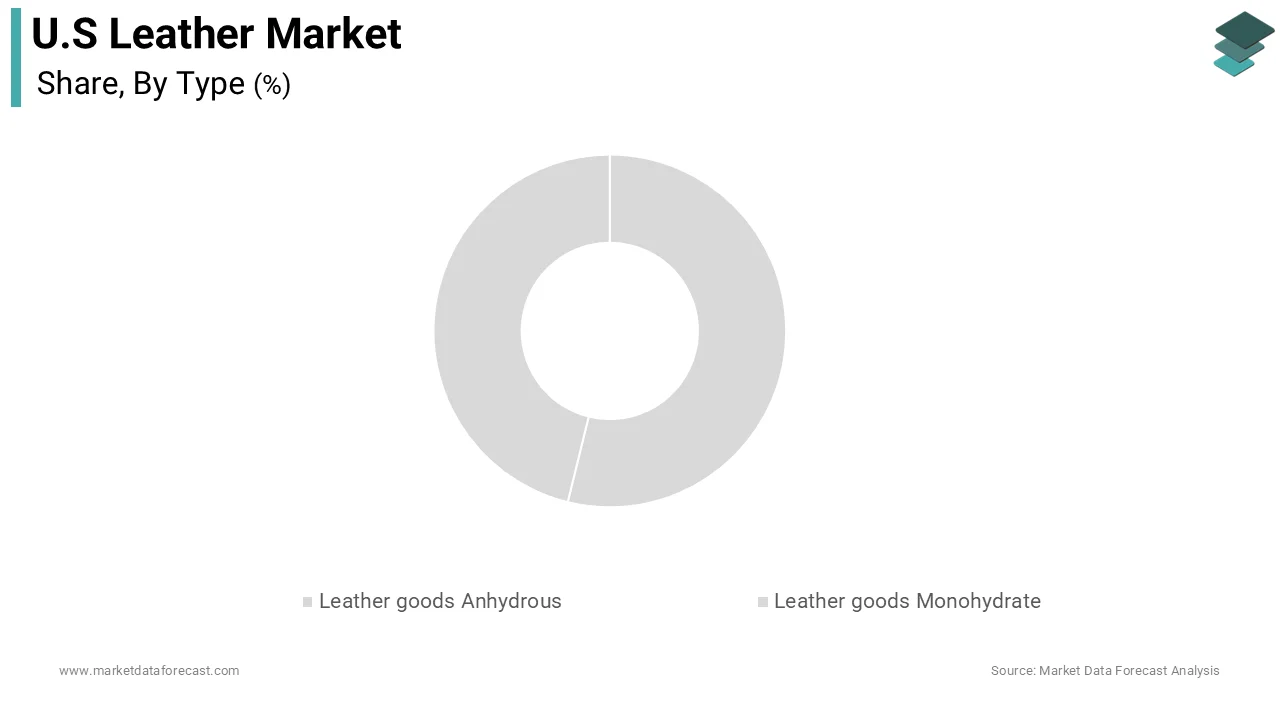
The leather goods monohydrate segment is expected to register the fastest CAGR of 6.8% in the coming years, with the increasing demand forhigh-endd fashion accessories and luxury footwear, where tactile comfort and pliability are paramount. The consumers are increasingly seeking premium leather products that offer a supple feel and enhanced comfort during wear. Monohydrate treatments allow manufacturers to produce lighter and more flexible leather goods that appeal to fashion-conscious demographics. The rise of bespoke and artisanal leather crafts has also boosted demand for specialized hydrated leathers that can be easily molded and shaped. The affluent consumers prioritize the sensory experience of leather products, driving brands to invest in advanced hydration technologies. The use of monohydrate leather inhigh-performancee athletic gear and ergonomic accessories further expands its application scope. Innovations in eco-friendly hydrating agents that reduce environmental impact align with sustainability trends, attracting ethically conscious buyers.
By Form Insights
The liquid syrup form of leather processing chemicals segment was the largest by holding 23.4% ofthe share in 2025 due to its ease of application and uniform distribution during the tanning process. The efficiency of liquid chemicals in penetrating hide structures ensures consistent quality and reduced processing time. The liquid tanning agents and fatliquors account for the majority of chemical consumption in domestic tanneries due to their compatibility with automated drum systems. The use of liquid formulations minimizes waste and allows for precise dosage control, which is fnecessary or meeting environmental regulations. The shift towards liquid-based processes helps reduce solid waste generation compared to powder alternatives, which may require additional dissolution steps. Tanneries prefer liquid syrups for their ability to blend seamlessly with water, reducing the risk of uneven treatment and surface defects. The logistics of handling liquid chemicals are streamlined through bulk storage and pumping system,s which lower labor costs. Major chemical suppliers have optimized their formulations to enhance stability and shelf li,fe making liquid syrups a reliable choice flarge-scaleale operations. The prevalence of continuous processing lines in modern tanneries further reinforces the preference for liquid forms.
The powder form segment of leather processing chemicals is likely to grow at an anticipated CAGR of 5.2% during the forecast period, with the advancements in solubility and storage efficiency. This growth is fueled by the demand for specialized finishing agents and pigments that are more stable in dry form. The powdered dyes and resins offer superior color consistency and ease of transportation compared to liquid equivalents. Small andmedium-sizedd tanneries favor powder forms due to lower shipping costs and reduced risk of spillage during handling. The imports of specialized powdered leather chemicals have increased as manufacturers seek high-performance additives for niche applications. Innovations in micro encapsulation technology have improved the dissolution rates of powdered chemicals, making them moreuser-friendlyy. The trend towards custom blending of powders for specific leather finishes allows manufacturers to achieve unique textures and effects. Powdered agents are also essential for dry finishing processes, which are gaining popularity for theirwater-savingg benefits. The ability to store powdered chemicals for extended periods without degradation provides inventory flexibility for producers.
By Application Insights
The automotive application segment was the largest by occupying 34.5% of the United States leather market share in 2025, with the extensive use of leather in vehicle interiors for seat,s steering whee,ls and door panels. The consumer preference for luxury and comfort in personal vehicles, particularly in the sport utility vehicle and truck segments. The leather upholstery is a standard feature in most premium and mid-range vehicles sold in the United States. The durability and aesthetic appeal of leather make it a preferred choice for automakers aiming to enhance brand perception and customer satisfaction. The safety regulations require materials that meet stringent flammability and abrasion standards, whiautomotive-gradeade leather consistently satisfies. The recovery of auto sales post-pandemic has led to increased production volumes, driving demand forhigh-qualityy leather supplies. Automakers are investing in advanced finishing technologies to improve stain resistance and breathability, addressing consumer concerns about maintenance. The trend towards personalized interiors with customized leather colors and textures further boosts demand. Supply chain partnerships between tanneries and original equipment manufacturers ensure consistent quality and timely delivery.
The personal accessories segment is expected to witnessthea fastest CAGR of 7.5% from 2026 to 2034, with the enduring popularity of leather as a symbol of status and style in the fashion industry. The sales of leather accessories have remained resilient as consumers view them as investment pieces withlong-termm value. The rise of e-commerce has expanded access to diverse leather brands, allowing consumers to explore niche and artisanal products. The retail sales of accessories have outpaced general apparel growth by reflecting shifting consumer spending patterns. Social media influencers and celebrity endorsements amplify trends in leather fashio,n driving demand for specific styles and colors. The trend towards sustainable and ethically sourced leather appeals to younger demographics who prioritize transparency in supply chains. Brands are introducing innovative designs that combine traditional craftsmanship with modern functionali,ty such tech-integratedted wallets. The customization of leather accessories through monogramming and bespoke services enhances consumer engagement and loyalty. The versatility of leather in creating both casual and formal items ensures broad market appeal.
COMPETITION OVERVIEW
The competition in the United States leather market is characterized by a mix of large integrated producers and specialized tanneries who compete on quality, sustainabilit,y and service reliability. The market structure is moderately consolidat,ed with key players holding influence over specific segments such as automotive upholstery and luxury fashion. Competitive intensity is driven by the need to differentiate throueco-friendlydly certifications and innovative finishes that appeal to conscious consumers. Regulatory compliance regarding wastewater treatment and chemical usage serves as a barrier to entry for smaller competitors without substantial capital. Established players leverage their vertical integration to ensure consistent supply and cost efficiency compared to independent tanneries. Customer loyalty is maintained through technical support and customized solutions that address specific manufacturing needs. Price competition remains intense in commodity segments, while premium sectors focus onvalue-addedd features such as durability and aesthetics. The focus on circular economy practices and recycling initiatives is becoming a key differentiator. Overall, the competitive landscape requires continuous adaptation to changing regulatory standards and evolving consumer preferences for sustainable materials.
KEY MARKET PLAYERS
A few major players of the United States leather market include
- Tapestry, Inc
- Capri Holdings Limited
- Wolverine World Wide, Inc
- Horween Leather Company
- Weinheimer Leather USA
- American Leather Holdings
- Shinola
- Saddleback Leather Co
- Red Wing Shoes
- Leatherology
Top Strategies Used by Key Market Participants
Key players in the United States leather market primarily employ strategies such as sustainable sourcing, product innovatio,n and vertical integration to strengthen their market position. Companies frequently invest ieco-friendlyly tanning processes to comply with environmental regulations and meet consumer demand for ethical products. This approach allows them to differentiate their offerings and command premium pricing in niche segments. Strategic partnerships with automotive and fashion brands help secure long-term contracts and ensure stable demand. By focusing on vertical integration, firms control the supply chain from raw hide to finished produc,t improving quality and reducing costs. Digital transformation is another key strategy as companies implement traceability systems to enhance transparency and build trust. Additionally, firms expand inthigh-valueue applications, such as medical devices and luxury accessories, to diversify revenue streams.
Leading Players in the Global Leather Market
- JBS S.A. is a global leader in the leather industr,y leveraging its position as thworld'sld largest meat processor to secure a vast supply of raw hides. The company operates extensive tanning facilities that produce high-quality leather for the automotive, footwea,r and furniture sectors. JBS strengthens its market position by investing in sustainable tanning technologies and waste management systems to reduce environmental impact. The company recently expanded its portfolio of certifieeco-friendlyly leather products to meet growing demand from ethical brands. JBS focuses on vertical integration, which allows for better quality control and cost efficiency throughout the supply chain. Its strategic partnerships with major automotive manufacturers ensurelong-termm contracts and stable revenue streams. These initiatives reinforce its reputation as a reliable and responsible supplier in the global leather market.
- Wolverine World Wide Inc is a prominent player in the global leather market known for its diverse portfolio of footwear and apparel brands. The company sources high-quality leather for its premium brands, such as Merrell and Saucon,y ensuring durability and performance. Wolverine strengthens its position by prioritizing sustainable sourcing practices and collaborating with suppliers who adhere to strict environmental standards. The company recently launched initiatives to increase the use of recycled and bio-based materials in its products. Wolverine invests in innovation to develop lightweight and water-resistant leather treatments that enhance product functionality. Its focus on direct-to-consumer sales channels that allows for greater control over brand messaging and customer experience. These efforts enable Wolverine to maintain a competitive edge in the dynamic global footwear and leather goods sector.
- Hyosung TNC Corporation is a leading manufacturer of synthetic and natural leather materials with a significant presence in the global automotive and fashion industries. The company produces high-performance leather alternatives that offer consistent quality and reduced environmental impact. Hyosung strengthens its market position through continuous research and development in bio-based polyurethane and recycling technologies. The company recently expanded its production capacity to meet increasing demand from electric vehicle manufacturers seeking sustainable interior materials. Hyosung collaborates with global brands to create customized leather solutions that meet specific aesthetic and functional requirements. Its commitment to carbon neutrality and circular economy principles enhances its appeal to environmentally conscious clients. These strategic actions solidify Hyosung TNC as a key innovator in the evolving global leather and material science landscape.
MARKET SEGMENTATION
This research report on the US leather market has been segmented and sub-segmented based on type, form, application & region.
By Type
- Leather goods Anhydrous
- Leather goods Monohydrate
By Form
- Powder
- Liquid/Syrup
- Crystalline
By Application
- Food
- Beverages
- Pharmaceutical
- Personal Care
- Others
By Region
- New York
- Texas
- Florida
- Georgia
- California
- Rest of U.S.