Europe Artificial Leather Market Size, Share, Trends, and Growth Analysis Report, Segmented by Type, Application, and Country – Industry Forecast From 2026 to 2034
Market Size, 2025
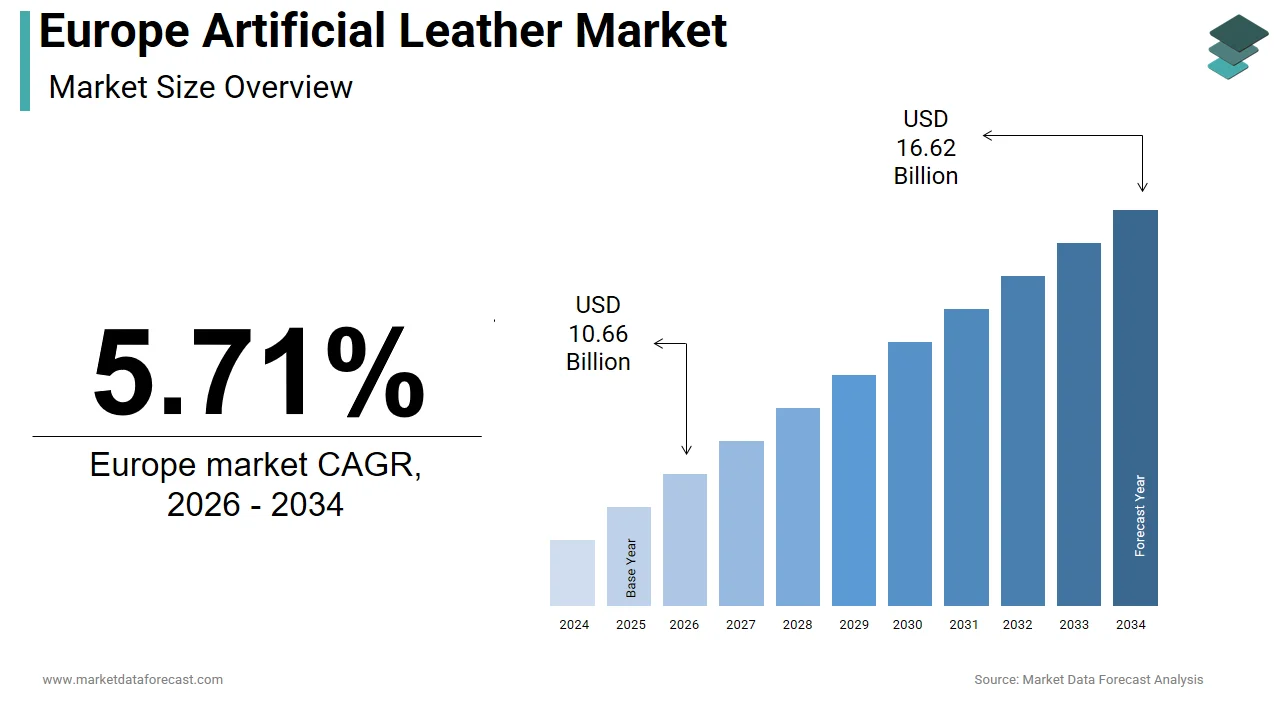
$10.08 BnMarket Estimate, 2026
$10.66 BnMarket Forecast, 2034
$16.62 BnCAGR, 2026–2034
5.71%Europe Artificial Leather Market Report Summary
The Europe artificial leather market was valued at USD 10.08 billion in 2025, is estimated to reach USD 10.66 billion in 2026, and is projected to reach USD 16.62 billion by 2034, growing at a CAGR of 5.71% from 2026 to 2034. Market growth is driven by increasing demand for sustainable and cost-effective alternatives to genuine leather, rising adoption in automotive and fashion industries, and growing consumer awareness regarding animal welfare. Artificial leather offers durability, versatility, and lower production costs, making it widely used across multiple applications. Advancements in bio-based and eco-friendly materials, along with regulatory pressure on traditional leather production, are further supporting market expansion across Europe.
Key Market Trends
- Rising demand for eco-friendly and sustainable leather alternatives.
- Increasing adoption in automotive interiors and upholstery applications.
- Growing use in fashion, footwear, and accessories industries.
- Advancements in bio-based and polyurethane-based materials.
- Increasing focus on animal welfare and ethical production practices.
Segmental Insights
- Based on type, the polyurethane (PU) segment dominated the Europe artificial leather market by capturing 57.9% share in 2025, driven by its flexibility, durability, and eco-friendly properties compared to PVC.
- Based on application, the automotive segment led the market with 31.3% share in 2025, supported by rising demand for lightweight and cost-efficient interior materials.
Regional Insights
The Europe artificial leather market is witnessing steady growth across key countries due to strong industrial demand and sustainability trends.
- Germany led the regional market in 2025 with 23.2% share, supported by its strong automotive manufacturing base.
- Italy holds a significant share, driven by its well-established fashion and luxury goods industry.
- France is expected to account for a prominent share during the forecast period due to its influential fashion industry and luxury brand ecosystem.
Competitive Landscape
The Europe artificial leather market is moderately competitive, with the presence of global chemical companies and specialized material manufacturers. Market players are focusing on developing sustainable alternatives, improving product quality, and expanding application areas. Innovation in bio-based materials and strategic partnerships are shaping competitive dynamics across the region.
Prominent companies operating in the Europe artificial leather market include BASF, DuPont, Toray Industries, Kuraray Co. Ltd., Teijin Limited, Alcantara S.p.A., Faux Leather, Mitsubishi Chemical Corporation, Hengli Group, Wanhua Chemical Group, and Sappi Lanaken.
Europe Artificial Leather Market Size
The Europe artificial leather market was valued at USD 10.08 billion in 2025, is estimated to reach USD 10.66 billion in 2026, and is projected to reach USD 16.62 billion by 2034, growing at a CAGR of 5.71% from 2026 to 2034.
Artificial leather, also known as synthetic leather or faux leather, represents an engineered material designed to mimic the aesthetic and functional properties of genuine animal hide. This versatile substrate is predominantly manufactured using polyurethane or polyvinyl chloride bases, often reinforced with fabric backings to enhance durability and flexibility. The European market for this material is undergoing a profound transformation driven by ethical considerations, environmental regulations, and technological advancements in bio-based polymers. As per the European Commission, the region has implemented stringent restrictions on hazardous chemicals under the REACH regulation, which directly influences the formulation of synthetic materials. The shift towards cruelty-free fashion is evident in consumer behavior, with a growing preference for vegan alternatives. According to Eurostat, the textile and clothing industry continues to be a major manufacturing sector in the European Union, employing a large workforce and generating significant revenue. The integration of artificial leather into automotive interiors, furniture, and footwear reflects its growing acceptance as a premium material. Environmental agencies emphasize the need to reduce the carbon footprint associated with livestock farming, which indirectly boosts the appeal of synthetic alternatives. The development of next-generation materials, such as mushroom leather and pineapple leaf fiber, further diversifies the landscape. These innovations align with the European Green Deal objectives, promoting circular economy principles and sustainable consumption. The market operates at the intersection of traditional manufacturing and modern ecological imperatives, creating a dynamic environment for material scientists and producers.
MARKET DRIVERS
Stringent Environmental Regulations and Animal Welfare Legislation
The implementation of rigorous environmental laws and animal welfare standards is propelling the growth of the Europe artificial leather market. The European Union has consistently strengthened its regulatory framework to minimize the environmental impact of industrial activities and protect animal rights. According to the European Commission, the Farm to Fork Strategy aims to make food systems fair, healthy, and environmentally friendly, which includes reducing reliance on animal-derived products. This policy direction encourages industries to seek alternative materials that do not involve animal slaughter. Additionally, the REACH regulation restricts the use of certain hazardous substances in chemical manufacturing, prompting producers to develop safer and more sustainable synthetic leather formulations. As per the European Environment Agency, the textile industry is identified as a significant contributor to water pollution and waste generation, leading to increased pressure for cleaner production methods. Artificial leather manufacturers are responding by adopting water-based polyurethane processes and recycling initiatives to comply with these standards. The ban on fur farming in several European countries, including Austria and the Netherlands, further accelerates the transition to synthetic alternatives. Consumer awareness regarding the ethical implications of leather production has risen sharply, influencing purchasing decisions. Brands are increasingly marketing their products as vegan and eco-friendly to align with these regulatory and social trends. This legislative and cultural shift creates a favorable environment for the adoption of artificial leather across various sectors. The alignment with sustainability goals ensures long-term growth potential for compliant manufacturers.
Rising Demand from the Automotive and Furniture Industries
The automotive and furniture sectors are significant drivers of demand for artificial leather in Europe due to its durability, cost-effectiveness, and design versatility. Automotive manufacturers are increasingly incorporating synthetic leather into vehicle interiors to meet weight reduction targets and enhance sustainability credentials. According to the European Automobile Manufacturers Association, the industry is under pressure to reduce the overall carbon footprint of vehicles, which includes sourcing lighter and more sustainable materials. Artificial leather offers a lighter alternative to genuine leather, contributing to improved fuel efficiency and reduced emissions. In the furniture industry, the demand for durable and easy-to-maintain upholstery materials supports the adoption of high-quality synthetic leathers. As per the European Furniture Industries Confederation, the sector is experiencing a shift towards modern and minimalist designs where synthetic materials offer consistent texture and color options. The hospitality sector, including hotels and restaurants, also prefers artificial leather for its resistance to wear and tear and ease of cleaning. Technological advancements have improved the tactile feel and breathability of synthetic leathers, making them indistinguishable from genuine leather in many applications. This perceptual parity allows manufacturers to offer premium aesthetics at a lower cost. The ability to customize colors and textures further appeals to designers seeking unique interior solutions. Consequently, the expanding application scope in these high-volume industries sustains robust demand for artificial leather products. The trend towards electric vehicles, which prioritize interior innovation, further amplifies this driver.
MARKET RESTRAINTS
Perception of Lower Quality and Durability Compared to Genuine Leather
Despite technological advancements, a persistent perception of inferior quality and durability is hampering the Europe artificial leather market growth. Many consumers and industry professionals still view synthetic materials as less prestigious and shorter-lasting than genuine leather. According to consumer surveys conducted by European retail associations, a significant segment of the population associates real leather with luxury, longevity, and status. This perception is rooted in historical experiences with early generations of synthetic leather, which were prone to cracking, peeling, and poor breathability. Although modern polyurethane and bio-based leathers have significantly improved in performance, the stigma remains a barrier to premium market penetration. As per industry analysis from textile experts, the lifespan of high-end genuine leather can exceed decades with proper care, whereas some synthetic variants may degrade faster under intense usage. This discrepancy affects consumer willingness to pay premium prices for artificial leather products. Luxury brands are often hesitant to fully transition to synthetic materials due to fears of diluting their brand equity. The lack of natural aging characteristics, such as patina development, further distinguishes artificial leather from its natural counterpart. Educating consumers about the improved durability and maintenance benefits of modern synthetic leathers requires substantial marketing investment. Until the perception gap is bridged, artificial leather may remain confined to mid-range and mass market segments. This psychological barrier limits the ability of manufacturers to command higher margins and compete directly with premium leather goods.
Environmental Concerns Regarding Plastic-Based Components
The reliance on plastic-based polymers such as polyvinyl chloride and polyurethane in traditional artificial leather production is another significant restraint to the Europe artificial leather market due to growing environmental concerns. Critics argue that synthetic leathers contribute to microplastic pollution and are difficult to recycle compared to natural materials. According to the European Environment Agency, microplastics released from synthetic textiles during washing and disposal pose a threat to aquatic ecosystems and human health. The non-biodegradable nature of conventional artificial leather means it persists in landfills for extended periods, exacerbating waste management challenges. As per the Zero Waste Europe initiative, the fashion and textile industries are under scrutiny for their contribution to plastic waste, prompting calls for more circular solutions. Environmentally conscious consumers may reject plastic-based synthetics in favor of natural or fully biodegradable alternatives. This sentiment is reinforced by regulatory pressures to reduce single-use plastics and improve product recyclability. The production process of polyvinyl chloride involves hazardous chemicals, which can have negative environmental impacts if not managed properly. While bio-based alternatives are emerging, they currently represent a small fraction of the market due to higher costs and limited scalability. The contradiction between the vegan appeal of artificial leather and its plastic composition creates a complex narrative that confuses consumers. Manufacturers face the challenge of developing fully sustainable and biodegradable synthetic leathers to address these concerns. Until such solutions become mainstream, the environmental footprint of current products remains a limiting factor.
MARKET OPPORTUNITIES
Development of Bio-Based and Biodegradable Synthetic Leathers
The emergence of bio-based and biodegradable synthetic leathers is a significant opportunity for the Europe artificial leather market to align with sustainability goals. Innovations in material science have led to alternatives derived from renewable resources such as mushrooms, pineapples, cactus, and apple peels. According to the European Bioplastics Association, production capacity for bioplastics in Europe is expanding, driven by demand for sustainable packaging and consumer goods. These bio-based materials combine the aesthetic appeal of leather with a lower environmental footprint. As per the research from leading European universities, many of these materials are biodegradable and compostable, addressing end-of-life disposal issues associated with traditional synthetics. Fashion brands are increasingly partnering with startups to create exclusive, eco-friendly collections. The European Union’s support for bioeconomy initiatives provides funding and regulatory incentives for such technologies. Consumers are willing to pay a premium for cruelty-free and environmentally responsible products, giving manufacturers a chance to differentiate themselves in a crowded market. As production processes become more efficient, scalability improves, making bio-based leathers more commercially viable. Investment in R&D remains crucial to enhance durability and performance, but the transition offers a strategic opportunity to capture the growing segment of conscious consumers.
Expansion in the Electric Vehicle Interior Segment
The rapid growth of the electric vehicle (EV) market in Europe offers a substantial opportunity for the Europe artificial leather market. EV producers are reimagining car interiors to reflect futuristic and sustainable design philosophies, often moving away from traditional leather. According to the International Energy Agency, electric car sales in Europe have surged, accounting for a significant share of new vehicle registrations. Automakers are seeking lightweight, durable, and ethically sourced materials to enhance user experience and meet sustainability targets. Artificial leather fits these criteria, offering design flexibility and reduced weight compared to genuine leather. As per the European Automobile Manufacturers Association, many new EV models feature synthetic upholstery in seats, dashboards, and door panels. This shift emphasizes technology and environmental responsibility. Manufacturers can collaborate with automakers to develop customized textures and colors that align with brand identities. Advances in coating technologies have improved abrasion resistance and UV stability, making artificial leather suitable for long-lasting automotive applications. The focus on interior ambiance in autonomous driving concepts further expands potential uses of decorative synthetic materials. This sector provides a high volume, stable demand channel for synthetic leather producers.
MARKET CHALLENGES
Volatility in Raw Material Prices and Supply Chain Disruptions
The Europe artificial leather market faces significant challenges from volatility in raw material prices and supply chain disruptions. Production relies heavily on petrochemical derivatives such as polyurethane and polyvinyl chloride, whose costs are linked to crude oil markets. According to the International Energy Agency, fluctuations in oil prices directly impact polymer manufacturing costs, creating uncertainty for downstream producers. Geopolitical tensions and trade restrictions exacerbate vulnerabilities, leading to shortages and delays. As per the European Chemical Industry Council, the chemical sector has struggled with consistent raw material supplies due to global logistical bottlenecks. SMEs are particularly vulnerable to price spikes, lacking bargaining power for long-term contracts. Transitioning to bio-based raw materials introduces further complexity, as agricultural yields depend on weather and climate conditions. Currency fluctuations also affect imported material costs, squeezing profit margins. Manufacturers must adopt agile supply chain strategies and diversify sourcing, but these measures require significant investment. The unpredictability of input costs complicates long-term pricing strategies, making financial planning difficult.
Technical Limitations in Performance and Recyclability
Technical limitations regarding performance and recyclability hinder broader acceptance of artificial leather in high-end applications, which is further challenging the expansion of the Europe artificial leather market. While advancements have improved quality, synthetic leathers often struggle to match the breathability and thermal comfort of genuine leather. Textile engineering studies note that the lack of natural pores in synthetic materials can cause discomfort in warm climates, limiting apparel and footwear applications. Recycling artificial leather is complex due to its multi-material composition—polymers, fabrics, and adhesives. As per the Ellen MacArthur Foundation, the fashion industry lacks effective recycling infrastructure for mixed textiles, resulting in low recovery rates. Most artificial leather products end up in landfills or incinerators, contradicting Europe’s circular economy goals. Developing mono-material structures that are easier to recycle remains a technical hurdle. Current mechanical recycling methods often produce downcycled, lower-value products, while chemical recycling technologies are still in early commercialization stages with scalability issues. These barriers prevent manufacturers from fully claiming sustainability credentials. Overcoming them requires significant R&D investment and collaboration across the value chain. Until viable recycling solutions are widely available, the environmental benefits of artificial leather remain only partially realized.
REPORT COVERAGE
| REPORT METRIC | DETAILS |
| Market Size Available | 2025 to 2034 |
| Base Year | 2025 |
| Forecast Period | 2026 to 2034 |
| Segments Covered | By Type, Application, and Country. |
| Various Analyses Covered | Global, Regional, and Country-Level Analysis, Segment-Level Analysis, Drivers, Restraints, Opportunities, Challenges; PESTLE Analysis; Porter’s Five Forces Analysis, Competitive Landscape, Analyst Overview of Investment Opportunities |
| Countries Covered | UK, France, Spain, Germany, Italy, Russia, Sweden, Denmark, Switzerland, Netherlands, Turkey, Czech Republic, and the Rest of Europe. |
| Market Leaders Profiled | BASF, DuPont, Toray Industries, Kuraray Co Ltd, Teijin Limited, Alcantara S.p.A., Faux Leather, Mitsubishi Chemical Corporation, Hengli Group, Wanhua Chemical Group, Sappi Lanaken. |
SEGMENTAL ANALYSIS
By Type Insights
The polyurethane (PU) segment held the leading position in the Europe artificial leather market by capturing 57.9% of the European market share in 2025. The dominance of the polyurethane segment in the European market is attributed to the PU’s superior physical properties, such as flexibility, breathability, and resistance to cracking that closely mimic genuine leather. A key driver is Europe’s stringent regulatory environment. According to the European Chemicals Agency, REACH regulations restrict harmful substances such as phthalates, pushing manufacturers toward safer, water-based PU formulations. As per the European Commission, the textile industry is increasingly adopting cleaner production technologies, and PU leather provides a compliant solution without compromising aesthetics. The automotive sector plays a pivotal role in PU’s dominance. The European Automobile Manufacturers Association highlights sustainability criteria in material selection, favoring PU over PVC for interiors due to durability and ease of cleaning. Advances in manufacturing have narrowed the cost gap between PU and lower-grade alternatives, making PU accessible for mass market applications. Its recyclability further enhances appeal under circular economy goals. Collectively, these factors ensure PU remains the preferred choice across diverse applications in Europe.
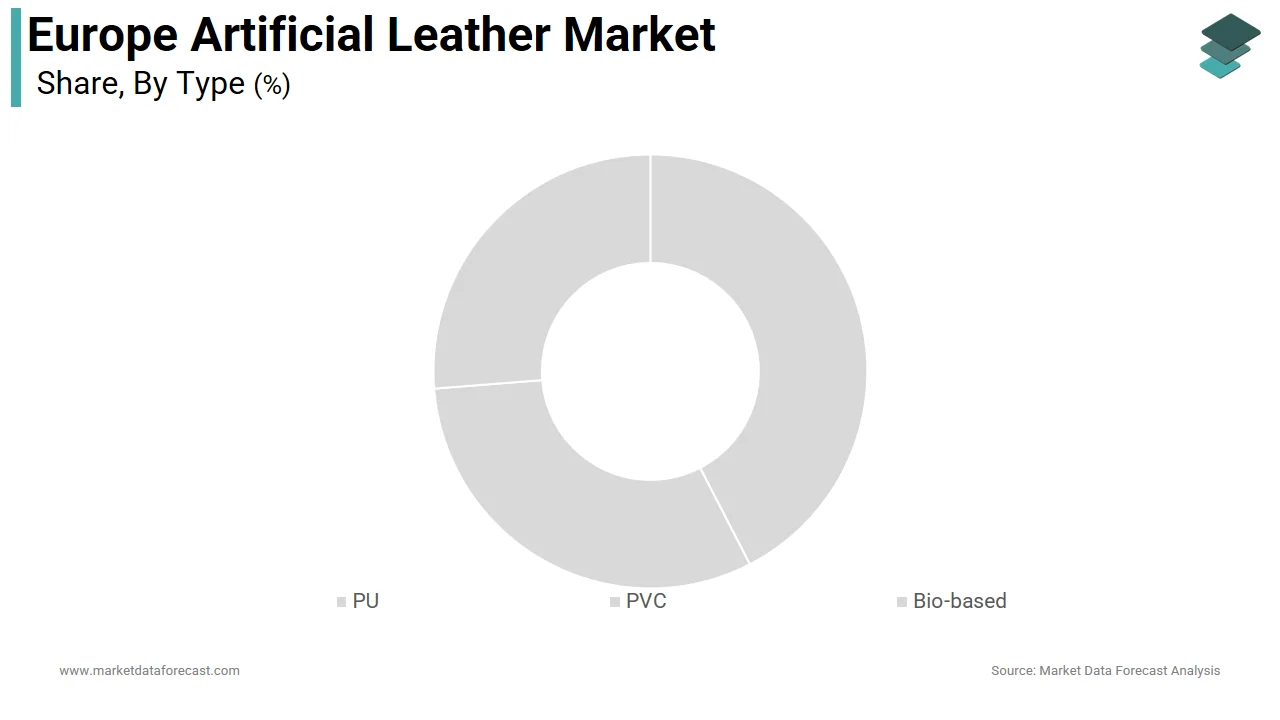
However, the bio-based segment is projected to grow at the fastest pace and record a CAGR of 13.2% over the forecast period, owing to the rising consumer demand for sustainable, cruelty-free materials and corporate commitments to carbon reduction. Bio-based leathers that are derived from mushrooms, pineapples, cactus, and apple waste offer renewable alternatives to petroleum-based synthetics. According to the European Bioplastics Association, production capacity for bio-based plastics is expanding rapidly, supported by government incentives and private investment. Fashion brands are embracing biobased materials to differentiate products and appeal to eco-conscious consumers. According to the reports from Paris and Milan fashion weeks, designers are showcasing collections made entirely from biobased leather alternatives. The EU’s Green Deal provides a supportive policy framework, while R&D investments have improved durability and texture, making these materials competitive with traditional options. Strategic partnerships between biotech startups and established companies are strengthening supply chains. The narrative of upcycling agricultural waste resonates strongly with modern consumers, and high media visibility accelerates adoption. Though smaller in current volume, the growth trajectory signals a significant shift toward regenerative resources.
By Application Insights
The automotive segment dominated the market by holding 31.3% of the regional market share in 2025. Synthetic materials are widely used in seats, dashboards, door panels, and steering wheels. The industry’s pursuit of lightweighting to improve fuel efficiency and extend EV range is a major driver. According to the European Automobile Manufacturers Association, reducing vehicle weight is critical for meeting emission targets, and artificial leather provides a lighter alternative to genuine hide. The rise of electric mobility has accelerated adoption, with EV manufacturers emphasizing sustainable and innovative interiors. For instance, synthetic material usage per vehicle has increased significantly. Artificial leather ensures consistent quality and color matching, essential for modern aesthetics, while offering easy maintenance. PU leather’s cost-effectiveness allows premium-looking interiors in mid-range vehicles. Regulatory pressures to eliminate volatile organic compounds further favor synthetics. Long term supply contracts between material suppliers and carmakers reinforce steady demand, which is further cementing the dominance of the automotive segment in the European market.
However, the footwear segment is the fastest-growing application and is estimated to register a CAGR of 10.2% over the forecast period owing to the fashion trends, ethical consumerism, and the rise of vegan lifestyles. Consumers are rejecting animal-derived products, prompting major footwear brands to expand synthetic offerings. According to the European Footwear Industry Federation, product lines are shifting toward sustainable and vegan-certified shoes. High street retailers and luxury brands are launching vegan collections featuring sneakers, boots, and sandals made from artificial leather. Improvements in tactile quality and breathability have boosted acceptance among discerning customers. According to the observations from retail hubs in London and Paris, vegan footwear options are gaining prominence. Social media campaigns promoting animal welfare amplify awareness, especially among younger demographics. Artificial leather’s affordability compared to genuine leather enables trendy styles at accessible prices. Innovations in textured and patterned finishes appeal to fashion-forward consumers, while fast fashion cycles favor synthetics for quick, diverse production. These dynamics underpin the rapid expansion of the footwear segment.
COUNTRY-LEVEL ANALYSIS
Germany Artificial Leather Market Analysis
Germany dominated the artificial leather market in Europe in 2025 with 23.2% of the regional market share. The dominance of Germany in the European market is attributed to the country’s robust automotive industry, given its global leadership in vehicle manufacturing. According to the German Association of the Automotive Industry, car and commercial vehicle production requires substantial quantities of interior materials, including artificial leather. Major automakers such as Volkswagen, BMW, and Mercedes-Benz ensure steady demand for high-quality synthetic upholstery. Germany’s strong chemical industry also supports advanced polyurethane and bio-based material production. As per the German Chemical Industry Association, heavy investments in sustainable innovations align with national environmental goals. Strict adherence to environmental regulations drives the adoption of eco-friendly variants, while consumer awareness of sustainability influences the retail and fashion sectors to offer vegan alternatives. The furniture industry also contributes to demand, favoring durable and easy-to-maintain synthetics. With well-developed infrastructure and logistics networks, Germany facilitates efficient distribution across Europe. Its focus on technological advancement, quality assurance, and circular economy principles reinforces its leadership position.
Italy Artificial Leather Market Analysis
Italy held a promising share of the Europe artificial leather market in 2025. The growth of Italy in the European market can be credited to the country’s renowned fashion and luxury goods sectors. Prestigious fashion houses and footwear manufacturers increasingly incorporate high-quality synthetic leathers into collections. According to the Italian National Institute of Statistics, textiles and clothing remain vital to the national economy. Ethical fashion trends have prompted Italian brands to explore biobased and recycled synthetics. As per the Italian Footwear Manufacturers Association, sustainable production methods and cruelty-free materials are gaining traction. The automotive sector also contributes, with Fiat and Ferrari utilizing premium synthetic interiors. Italy’s expertise in leather processing has been adapted to produce high-end artificial leather that mimics genuine hide. Its design heritage ensures products meet high aesthetic standards, while export-oriented manufacturing drives demand for compliant, versatile materials. Specialized suppliers and converters enhance the value chain. Italy’s blend of craftsmanship and sustainability initiatives supports continued growth.
France Artificial Leather Market Analysis
France is anticipated to account for a prominent share of the Europe artificial leather market over the forecast period, owing to the influential fashion industry and luxury brand ecosystem. Paris, as a global fashion capital, sets trends toward vegan and sustainable materials. According to the French Federation of Leather Goods Industries, more brands are committing to eliminating animal leather from supply chains, driven by consumer demand and regulatory pressures. The automotive industry, with Renault and Peugeot, also utilizes artificial leather interiors. As per the French Ministry of Ecological Transition, government policies support bio-based materials and circular economy practices. The furniture sector values synthetic leather’s durability and versatility. High-end retail outlets in Paris and other cities offer a wide range of vegan accessories and clothing. France’s cultural emphasis on style and innovation encourages the adoption of new materials, while strong research capabilities in material science support advanced synthetic leather development. Demand is characterized by premium, designer products where brand reputation and sustainability credentials are critical.
United Kingdom Artificial Leather Market Analysis
The UK is expected to exhibit a healthy CAGR in the Europe artificial leather market during the forecast period. The strong retail sector and growing awareness of animal welfare issues drive demand for synthetic alternatives. According to the British Retail Consortium, consumers increasingly seek transparent and ethical supply chains, prompting retailers to expand vegan ranges. London’s fashion industry is a hub for sustainable design, influencing broader trends. The automotive sector, with plants operated by Nissan and Jaguar Land Rover, contributes to industrial demand. As per the Society of Motor Manufacturers and Traders, sustainable materials are prioritized to meet environmental targets. The furniture market favors artificial leather for practicality and cost-effectiveness. Online retail growth has made vegan products more accessible, while government initiatives supporting green businesses encourage adoption. Consumer education campaigns by animal rights organizations have raised awareness of faux leather's benefits. The UK market is diverse, spanning budget to luxury segments, with innovation in material technology driving adoption.
Spain Artificial Leather Market Analysis
Spain is estimated to hold a notable share of the Europe artificial leather market over the forecast period. The footwear and fashion industries are the main drivers of consumption in Spain. Spain is a major shoe and leather goods producer, with many manufacturers transitioning to synthetics to meet international demand for vegan products. According to the Spanish Footwear Industry Federation, footwear exports are a key economic activity, with a growing proportion featuring synthetic components. The automotive industry, with Seat and Ford facilities, also utilizes artificial leather interiors. As per the Spanish Ministry of Industry, Trade, and Tourism, manufacturing is adapting to sustainability trends to remain globally competitive. Tourism and hospitality sectors contribute to the demand for durable synthetic upholstery in hotels and restaurants. Climate conditions favor heat and UV-resistant materials, which modern synthetics provide. Skilled artisans and designers enhance product quality and appeal. Domestic consumption is rising as consumers embrace ethical fashion. Strong export orientation and integration into European supply chains support growth, while Spain’s focus on innovation and design sustains expansion of the artificial leather sector.
COMPETITIVE LANDSCAPE
The Europe artificial leather market exhibits a fragmented yet competitive landscape characterized by the presence of global chemical giants and specialized regional manufacturers. Competition is primarily driven by product quality, sustainability credentials, and technological innovation rather than price alone. Major players leverage their established brand reputations and extensive distribution networks to maintain market leadership. The market sees intense rivalry in developing bio-based and recycled materials, with companies investing significantly in green chemistry and circular economy initiatives. New entrants face barriers due to high research and development costs and complex regulatory compliance requirements. Strategic collaborations with downstream industries such as automotive and fashion are common tactics to secure long-term contracts. The shift towards vegan and cruelty-free products has intensified competition in the luxury and mid-range segments. Companies differentiate themselves through unique textures, finishes, and performance characteristics. This dynamic environment fosters continuous improvement and innovation among participants striving to capture the growing demand for sustainable alternatives. The influence of environmental regulations further shapes competitive dynamics by favoring compliant and transparent suppliers.
KEY MARKET PLAYERS
The leading companies operating in the Europe artificial leather market include:
- BASF
- DuPont
- Toray Industries
- Kuraray Co. Ltd.
- Teijin Limited
- Alcantara S.p.A.
- Faux Leather
- Mitsubishi Chemical Corporation
- Hengli Group
- Wanhua Chemical Group
- Sappi Lanaken
TOP PLAYERS IN THE MARKET
- Toray Industries Inc is a global leader in advanced materials with a significant presence in the Europe artificial leather market through its Ultrasuede brand. The company specializes in high-quality non-woven synthetic leathers that are widely used in automotive interiors and luxury fashion. Toray recently focused on expanding its production capabilities for bio-based materials to meet growing sustainability demands. The company invested in research and development to create recycled polyester-based substrates, reducing environmental impact. These initiatives strengthen its position as a premium supplier in the European market. Toray collaborates closely with major automotive manufacturers to develop lightweight and durable interior solutions. Its commitment to innovation and circular economy principles ensures long-term competitiveness. The company continues to enhance the tactile properties of its products to mimic genuine leather effectively.
- Alcantara S.p.A. is an Italian manufacturer renowned for its proprietary synthetic material used in luxury automotive fashion and design sectors. The company plays a crucial role in the Europe artificial leather market by offering a unique blend of aesthetics and performance. Alcantara recently accelerated its sustainability strategy, aiming to become carbon neutral across its entire value chain. The company launched initiatives to increase the use of recycled and bio-based raw materials in its production processes. These actions reinforce its reputation as a responsible and innovative brand. Alcantara partners with high-end fashion houses and car makers to create exclusive collections. Its focus on craftsmanship and Italian design heritage differentiates it from competitors. The company continues to invest in digital technologies to optimize manufacturing efficiency and reduce waste.
- Kuraray Co Ltd is a Japanese chemical company with a strong footprint in the Europe artificial leather market through its Clarino brand. The company produces high-performance microfiber synthetic leathers known for their durability and soft texture. Kuraray recently expanded its product portfolio to include more eco-friendly options such as water-based polyurethane coatings. The company invested in upgrading its European facilities to improve production efficiency and reduce emissions. These efforts strengthen its market position by aligning with strict European environmental regulations. Kuraray collaborates with footwear and apparel brands to develop innovative material solutions. Its focus on technical excellence and sustainability drives customer loyalty. The company continues to explore new applications in sports equipment and consumer electronics. Kuraya's commitment to quality and innovation ensures its relevance in the evolving market landscape.
TOP STRATEGIES USED BY THE KEY MARKET PARTICIPANTS
Key players in the Europe artificial leather market predominantly focus on product innovation to develop biobased and recyclable materials that meet stringent environmental standards. Companies invest heavily in research and development to enhance the tactile qualities and durability of synthetic leathers. Strategic partnerships with automotive and fashion brands ensure stable demand and collaborative design opportunities. Participants also prioritize sustainability certifications to build trust with eco-conscious consumers. Expansion into niche segments such as electric vehicle interiors and luxury accessories offers new growth avenues. Manufacturers leverage digital technologies for supply chain optimization and waste reduction. These strategies collectively strengthen market positions by improving competitiveness, ensuring regulatory compliance, and meeting evolving customer preferences in a dynamic industrial landscape.
MARKET SEGMENTATION
This research report on the Europe artificial leather market has been segmented and sub-segmented into the following categories.
By Type
- PU
- PVC
- Bio-based
By Application
- Furnishing
- Automotive
- Footwear
- Accessories
- Clothing
- Electronics
- Others
By Country
- United Kingdom
- France
- Spain
- Germany
- Italy
- Russia
- Sweden
- Denmark
- Switzerland
- Netherlands
- Rest of Europe
Frequently Asked Questions
What is the Europe artificial leather market?
The Europe artificial leather market supplies PU/PVC alternatives for automotive and fashion. Germany dominates manufacturing; Italy leads luxury applications.
How does the Europe artificial leather market function?
The Europe artificial leather market operates through coating textiles with polyurethane, texturing via embossing, and finishing for automotive/fashion specs.
What drives growth in the Europe artificial leather market?
Vegan trends, automotive electrification, and EU sustainability regulations propel the Europe artificial leather market across upholstery and accessories.
Which countries lead the Europe artificial leather market?
Germany commands production in the Europe artificial leather market. Italy, France, and UK follow with fashion and automotive demand.
What materials define the Europe artificial leather market?
Polyurethane (PU) and polyvinyl chloride (PVC) define the Europe artificial leather market, with bio-based variants gaining regulatory favor.
What applications shape the Europe artificial leather market?
Automotive interiors, footwear, and furniture shape the Europe artificial leather market alongside fashion bags and accessories.
How does regulation influence the Europe artificial leather market?
REACH chemical restrictions and circular economy goals govern the Europe artificial leather market, favoring DMF-free and recyclable formulations.
What trends affect the Europe artificial leather market?
Bio-based leathers, recycled PET substrates, and plant-derived PU transform the Europe artificial leather market toward carbon-neutral production.
What challenges face the Europe artificial leather market?
Durability gaps vs genuine leather, microplastic concerns, and supply chain transparency challenge the Europe artificial leather market.
How has automotive adoption impacted the Europe artificial leather market?
Electric vehicle interiors boosted demand in the Europe artificial leather market, prioritizing lightweight, flame-retardant, and sustainable upholstery.
Related Reports
Access the study in MULTIPLE FORMATS
Purchase options starting from
$ 2000
Didn’t find what you’re looking for?
TALK TO OUR ANALYST TEAM
Need something within your budget?
NO WORRIES! WE GOT YOU COVERED!
Call us on: +1 888 702 9696 (U.S Toll Free)
Write to us: sales@marketdataforecast.com