U.S Orthopedic Market Size, Share, Trends & Growth Forecast Report Segmented By Type ( (Joint Reconstruction Devices (Knee, Hip, Extremities), Spinal Devices(Spinal Fusion Devices, Spinal Non- Fusion Devices), Trauma Devices, Arthroscopy Devices, Orthobiologics, Others), End User, And Country (California, Washington, Oregon, New York & Rest Of The United States) – Industry Analysis And Forecast, 2026 To 2034
Market Size, 2025
$33.39 BnMarket Estimate, 2026
$35.05 BnMarket Forecast, 2034
$51.63 BnCAGR, 2026–2034
4.96%U.S. Orthopedic Market Report Summary
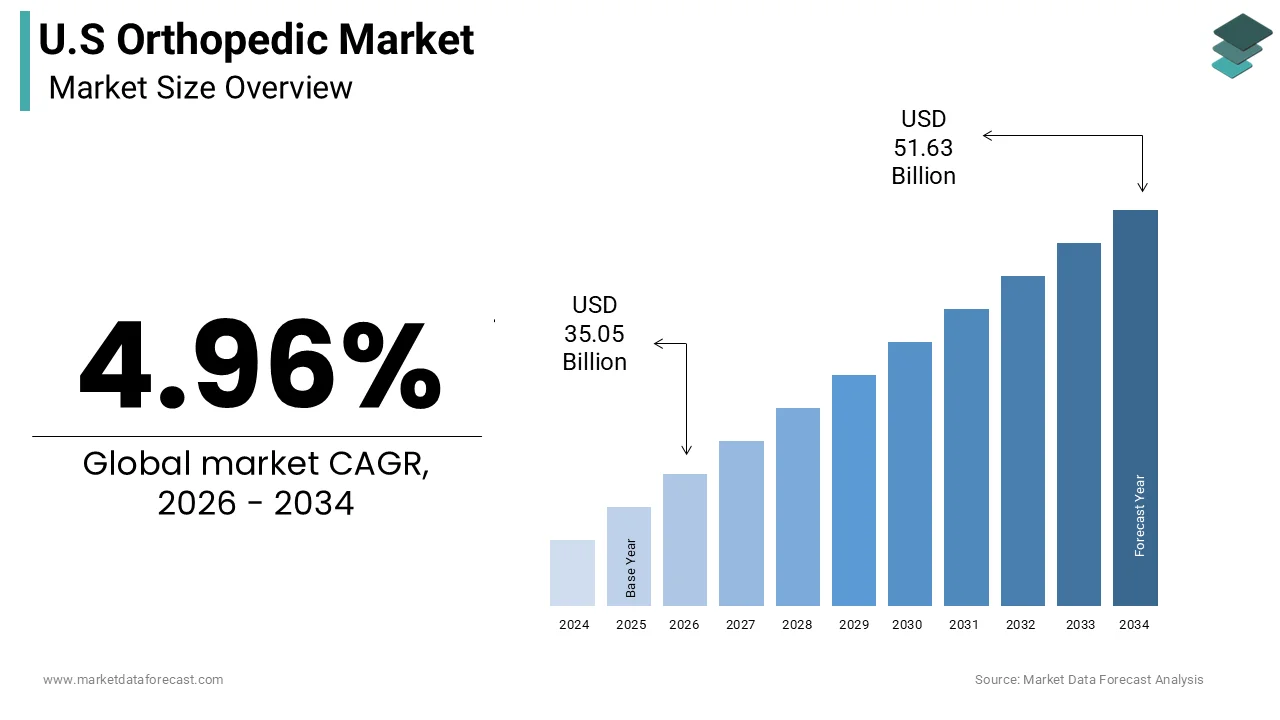
The United States orthopedic market was valued at USD 33.39 billion in 2025 and is projected to reach USD 51.63 billion by 2034, growing from USD 35.05 billion in 2026 at a CAGR of 4.96% during the forecast period. Market growth is driven by the increasing prevalence of musculoskeletal disorders, rising aging population, and growing demand for minimally invasive orthopedic procedures. Technological advancements in implants, robotic-assisted surgeries, and regenerative medicine are further accelerating the growth of the U.S. orthopedic market.
Key Market Trends
- Rising adoption of robotic-assisted orthopedic surgeries
- Increasing demand for joint replacement and reconstruction procedures
- Growth in minimally invasive orthopedic treatments
- Expansion of personalized implants and 3D-printed orthopedic devices
- Increasing focus on sports injury management and rehabilitation
Segmental Insights
- Based on type, the joint reconstruction devices segment dominated the U.S. orthopedic market in 2025 by accounting for 36.6% of the market share, driven by increasing hip and knee replacement surgeries among the aging population
- Based on end user, the hospitals and ambulatory surgery centers segment held the dominant share in 2025 by capturing 75.5% of the market share, supported by advanced surgical infrastructure and increasing outpatient orthopedic procedures
Regional Insights
- United States is expected to maintain its leadership position in the global orthopedic market due to high healthcare expenditure, advanced medical technologies, and the strong presence of leading orthopedic device manufacturers
Competitive Landscape
- The U.S. orthopedic market is highly competitive, with companies focusing on advanced implant technologies, robotic-assisted systems, and minimally invasive surgical solutions. Market players are investing in AI-driven surgical planning, regenerative therapies, and product innovation to strengthen their market presence.
- Prominent players in the U.S. orthopedic market include Stryker Corporation, Zimmer Biomet, Johnson & Johnson MedTech, Medtronic, Smith+Nephew, Arthrex, NuVasive, Globus Medical, CONMED Corporation, Enovis, Orthofix Medical, Integra LifeSciences, B. Braun, MicroPort Orthopedics, and DJO Global.
U.S Orthopedic Market Size
The U.S orthopedic market size was calculated to be USD 33.39 billion in 2025 and is anticipated to be worth USD 51.63 billion by 2034, from USD 35.05 billion in 2026, growing at a CAGR of 4.96% during the forecast period.
According to the Centers for Disease Control and Prevention, arthritis affects approximately 53 million adults in the U.S., representing a significant portion of the population requiring orthopedic intervention. As per the Orthopaedic Research Society, over half of adults in the U.S. have a musculoskeletal condition, highlighting the pervasive nature of these health issues. The Food and Drug Administration regulates orthopedic devices through rigorous premarket approval processes, ensuring safety and efficacy for high-risk implants such as total knee and hip replacements. Technological advancements, including robotic-assisted surgery and 3D printed patient-specific implants, are transforming clinical outcomes and procedural precision. The market is further influenced by the shift toward value-based care models, which emphasize cost-effectiveness and long-term patient functionality. With an aging demographic driving increased prevalence of chronic musculoskeletal diseases, the demand for innovative orthopedic solutions continues to rise. This landscape is characterized by intense competition among manufacturers to develop minimally invasive techniques and durable biomaterials that enhance recovery times and improve the quality of life for patients across diverse age groups.
MARKET DRIVERS
Aging Population and Rising Prevalence of Osteoarthritis
The demographic shift toward an older population, combined with the increasing incidence of osteoarthritis, is one of the major factors driving the growth of the U.S. orthopedic market. According to the U.S. Census Bureau, the population aged 65 and older is projected to reach 95 million by 2060. As per the Centers for Disease Control and Prevention, osteoarthritis is the most common form of arthritis, affecting more than 32.5 million U.S. adults primarily due to wear and tear on joints over time. This condition frequently leads to severe pain and mobility limitations necessitating surgical interventions such as total knee and hip arthroplasty. According to the National Institute on Aging, the prevalence of disability related to musculoskeletal disorders increases significantly with age, creating a substantial burden on the healthcare system. Furthermore, the baby boomer generation is more active than previous cohorts, leading to higher expectations for post-surgical mobility and quality of life. According to the American Academy of Orthopaedic Surgeons, the number of primary total knee replacements is projected to grow 673% to 3.5 million procedures per year by 2030. This demographic reality ensures a consistent and expanding base of patients requiring orthopedic care. The convergence of longevity and lifestyle factors drives continuous innovation in joint preservation and replacement technologies. Consequently, the structural growth of the elderly population creates a robust and enduring demand trajectory for orthopedic implants and associated surgical services.
Advancements in Robotic-Assisted Surgery and Minimally Invasive Techniques
Rapid innovation in surgical technologies, particularly robotic assistance and minimally invasive procedures, significantly propels the adoption of advanced orthopedic devices, which further contributes to the U.S. market expansion. According to the Journal of Arthroplasty, robotic adoption of arthroplasty surgical cases increased to approximately 5.8% by late 2023 and is continuing to expand. As per industry data, the utilization of robotic systems in orthopedic surgeries has increased by over 20% annually, reflecting surgeon preference for precision and reproducibility. Manufacturers such as Stryker and Zimmer Biomet have developed integrated platforms that combine preoperative planning with intraoperative guidance, enhancing surgical accuracy. The American Association of Hip and Knee Surgeons reports that minimally invasive techniques result in shorter hospital stays, reduced blood loss, and faster recovery time,s which are critical factors for patient satisfaction. Furthermore, the integration of artificial intelligence into robotic platforms allows for real-time data analysis and predictive modeling during procedures. According to the Food and Drug Administration, numerous robotic orthopedic systems have received clearance, expanding the addressable market for these high-tech solutions. Hospitals are increasingly investing in these technologies to attract top surgical talent and maintain a competitive advantage. This technological evolution drives replacement cycles and encourages the adoption of complementary instruments and implants. Consequently, the shift toward precision surgery sustains high demand for sophisticated orthopedic equipment and drives market expansion.
MARKET RESTRAINTS
Stringent Regulatory Requirements and Reimbursement Pressures
The rigorous regulatory framework governing orthopedic device approval and evolving reimbursement policies present significant barriers to market growth. According to the Food and Drug Administration, the premarket approval process for Class III orthopedic implants can take several years and involve millions of dollars in costs. As per the Medical Device Innovation Consortium, the average time from concept to market for a new orthopedic device is approximately five to seven years, reflecting the extensive testing required to demonstrate safety and efficacy. Regulatory agencies mandate comprehensive data on biocompatibility, mechanical performance, and long-term durability, which delays product launches and increases development risks. Furthermore, the Centers for Medicare and Medicaid Services have implemented bundled payment models for joint replacements, which cap reimbursement rates and pressure providers to reduce costs. According to the American Hospital Association, these payment structures limit the ability of hospitals to adopt premium-priced innovations without demonstrating clear cost savings. Private insurers also impose prior authorization requirements and narrow coverage criteria, limiting patient access to advanced procedures. According to the Advanced Medical Technology Association, small and medium-sized enterprises often struggle with the resource intensity of compliance, limiting their ability to innovate and compete with larger corporations. Consequently, the prolonged approval process and restrictive reimbursement landscapes act as persistent restraints on market expansion and innovation.
High Cost of Procedures and Limited Insurance Coverage
The substantial financial burden associated with orthopedic surgeries and limited insurance coverage for certain procedures are further hampering the U.S. market growth. According to a 2024 analysis, the average total cost of a knee replacement in the U.S. is approximately 30,000 to 50,000 dollars, while spinal fusion surgeries can cost upwards of 60,000 dollars. As per the Kaiser Family Foundation, many private insurance plans have high deductibles and copayments that place significant out-of-pocket expenses on patients. For individuals with high deductible health plans, the initial financial barrier can delay or prevent necessary surgical interventions. The Medicaid program covers orthopedic procedures but often restricts access to specialized surgeons or advanced implants due to budget constraints. According to the National Center for Health Statistics, uninsured or underinsured patients are less likely to receive timely orthopedic care, leading to worsened conditions and higher long-term costs. Furthermore, economic downturns and inflationary pressures reduce disposable income, causing consumers to prioritize essential healthcare over elective orthopedic procedures. According to the American Academy of Orthopaedic Surgeons, financial toxicity is a growing concern among patients facing complex musculoskeletal treatments. These economic constraints force providers to delay replacements or opt for less expensive alternatives, slowing the adoption of new technologies. Consequently, high upfront costs and uncertain reimbursement landscapes act as persistent restraints on market expansion, particularly for smaller community hospitals and independent practices.
MARKET OPPORTUNITIES
Expansion of Ambulatory Surgery Centers for Orthopedic Procedures
The shifting landscape of care delivery toward ambulatory surgery centers presents a substantial opportunity for market expansion in the orthopedic sector. According to the Ambulatory Surgery Center Association, more than 50% of joint replacements are expected to be performed in outpatient settings by the mid 2020s, driven by improvements in anesthesia and minimally invasive techniques. As per the Centers for Medicare and Medicaid Services, recent policy changes have expanded the list of procedures eligible for reimbursement in ASCs, encouraging providers to migrate cases from hospitals. This transition reduces overhead costs and improves patient convenience, driving demand for specialized instruments and implants designed for efficient outpatient use. Manufacturers are developing portable imaging systems and compact robotic platforms tailored for ASC environments. The American Academy of Orthopaedic Surgeons notes that outpatient surgeries result in lower infection rates and higher patient satisfaction scores. Furthermore, payers incentivize ASC utilization through lower reimbursement rates compared to hospital outpatient departments, creating financial motivation for providers. According to industry analyses, the ASC segment is projected to grow at a double-digit rate as more complex procedures become feasible in these settings. This trend opens new revenue streams for equipment manufacturers beyond traditional hospital channels. By focusing on tools that enhance efficiency and safety in outpatient settings, companies can capture a growing market of providers seeking cost-effective care delivery models.
Integration of 3D Printing and Patient-Specific Implants
The adoption of additive manufacturing and patient-specific implants is another significant opportunity for the U.S. orthopedic market. According to the Radiological Society of North America, 3D printing technology allows for the creation of implants that perfectly match patient anatomy, improving fit and reducing operative time. As per industry developments, companies are utilizing titanium and polymer materials to produce porous structures that promote bone ingrowth and osseointegration. The Food and Drug Administration has cleared numerous 3D printed orthopedic devices, fostering innovation in this space. According to research published in Clinical Orthopaedics and Related Research, patient-specific guides reduce surgical variability and improve alignment accuracy in complex reconstructive cases. Furthermore, the ability to rapidly prototype and manufacture implants on demand reduces inventory costs and waste for manufacturers. The American Academy of Orthopaedic Surgeons highlights that customized solutions are particularly beneficial for revision surgeries where standard implants may not suffice. This technological convergence transforms orthopedic devices from off-the-shelf products to personalized medical solutions. By leveraging 3D printing, manufacturers can differentiate their offerings and offer value-added solutions that enhance surgical precision and patient recovery. This innovation drives growth in the high-end segment of the orthopedic market.
MARKET CHALLENGES
Supply Chain Disruptions and Raw Material Shortages
Global supply chain vulnerabilities and shortages of critical raw materials pose significant challenges to the U.S. orthopedic market growth. According to the U.S. Department of Commerce, the orthopedic industry relies heavily on global suppliers for titanium, cobalt chrome, and specialized polymers, which are subject to geopolitical tensions and logistical bottlenecks. As per the Semiconductor Industry Association, supply chain constraints have impacted the production of smart orthopedic implants and robotic surgical systems, leading to extended lead times. The concentration of manufacturing in specific regions increases exposure to natural disasters and trade restrictions. According to the Bureau of Labor Statistics, inflationary pressures on raw materials and transportation costs have elevated production expenses, squeezing profit margins for manufacturers. These cost increases are often passed on to healthcare providers, potentially dampening demand.
Furthermore, the lack of domestic manufacturing capacity for certain critical components creates dependencies that compromise supply security. According to the Advanced Medical Technology Association, diversifying supply chains requires significant capital investment and time, which many companies find challenging. The unpredictability of supply availability complicates inventory management and planning, affecting the ability to meet sudden spikes in demand during health crises. Consequently, supply chain instability remains a persistent challenge affecting market consistency and accessibility.
Risk of Implant Failure and Product Liability Litigation
The potential for implant failure and subsequent product liability litigation is further challenging the U.S. orthopedic market expansion. According to the Food and Drug Administration, thousands of adverse event reports involving orthopedic implants are submitted annually, including cases of premature wear, loosening, and metallosis. As per legal databases, class action lawsuits against major manufacturers regarding metal-on-metal hip implants and defective spinal cages have resulted in billions of dollars in settlements. These legal battles damage brand reputation and increase insurance costs for companies. The American Academy of Orthopaedic Surgeons notes that revision surgeries due to implant failure are complex and costly, placing additional burden on the healthcare system. Furthermore, stringent post-market surveillance requirements mandate continuous monitoring of device performance, which adds to operational costs. According to the Journal of Bone and Joint Surgery, long-term data on new implant designs are often limited at the time of launch, creating uncertainty regarding durability. Manufacturers must invest heavily in quality control and clinical registries to mitigate risks. However, the threat of litigation remains a deterrent to rapid innovation and market entry for new players. Consequently, managing liability risks and ensuring long-term device reliability are critical challenges for the orthopedic industry.
REPORT COVERAGE
| REPORT METRIC | DETAILS |
| Market Size Available | 2025 to 2034 |
| Base Year | 2025 |
| Forecast Period | 2026 to 2034 |
| CAGR | 4.96% |
| Segments Covered | By Type, End User, And Region |
| Various Analyses Covered | Global, Regional & Country Level Analysis; Segment-Level Analysis; DROC, PESTLE Analysis; Porter’s Five Forces Analysis; Competitive Landscape; Analyst Overview of Investment Opportunities |
| Regions Covered | New York, Massachusetts, Pennsylvania, Illinois, Ohio, Michigan, Texas, Florida, Georgia, California, Washington, Colorado. |
| Market Leaders Profiled | Stryker Corporation, Zimmer Biomet, Johnson & Johnson MedTech, Medtronic, Smith+Nephew, Arthrex, NuVasive, Globus Medical, CONMED Corporation, Enovis, Orthofix Medical Inc., Integra LifeSciences, B. Braun, MicroPort Orthopedics, DJO Global |
SEGMENTAL ANALYSIS
By Type Insights
The joint reconstruction devices segment accounted for the highest share of 36.6% of the U.S. market in 2025. The dominance of the joint reconstruction devices segment in the U.S. market is attributed to the escalating burden of osteoarthritis among the rapidly expanding elderly population. According to the Centers for Disease Control and Prevention, arthritis affects approximately 53 million adults in the U.S., with osteoarthritis being the most common form. As per the American Academy of Orthopaedic Surgeons, the number of primary total knee replacements is projected to grow by 184% by 203,0 driven by demographic shifts. The U.S. Census Bureau reports that the population aged 65 and older will nearly double by 20,60 creating a massive addressable market for joint preservation and replacement therapies. Obesity rates further exacerbate joint wear, with the National Institute of Diabetes and Digestive and Kidney Diseases noting that over 40% of U.S. adults are obese, increasing mechanical stress on weight-bearing joints. Clinical guidelines strongly recommend total joint arthroplasty for patients with severe pain and functional impairment who do not respond to conservative treatments. According to the Agency for Healthcare Research and Quality, joint replacements are among the most common and successful surgical procedures performed in hospitals. This convergence of high disease prevalence, demographic inevitability, and clinical efficacy ensures that joint reconstruction remains the primary revenue driver in the orthopedic sector.
On the other hand, the orthobiologics segment is anticipated to register a CAGR of 10.4% during the forecast period in the U.S. market, owing to the rising demand for minimally invasive solutions and enhanced healing capabilities. The increasing preference for biologics to enhance tissue regeneration and avoid complex surgeries significantly drives expansion in this segment. According to the American Academy of Orthopaedic Surgeons, orthobiologics such as platelet-rich plasma, bone morphogenetic proteins, and stem cells are increasingly used to accelerate healing in sports injuries and spinal fusions. As per clinical studies, the adoption of minimally invasive surgical pathways can reduce recovery times by up to 25% compared to traditional methods, appealing to active patients and athletes. The National Institutes of Health highlights that regenerative medicine offers potential solutions for cartilage repair and tendon healing, which were previously difficult to treat. Furthermore, the aging population seeks alternatives to joint replacement that preserve natural anatomy, driving demand for viscosupplementation and biologic injections. According to industry analyses, the sports medicine sector is a major consumer of orthobiologics due to the high incidence of soft tissue injuries. Insurance coverage for certain biologic procedures is expanding, recognizing their cost-effectiveness in preventing more invasive surgeries. This clinical utility, combined with patient demand for natural healing options, positions orthobiologics as the fastest-growing segment in the orthopedic market.
By End User Insights
The hospitals and ambulatory surgery centers segment represented the dominant end-user segment within the U.S. orthopedic market by accounting for 75.5% of the market share in 2025. The substantial volume of complex orthopedic procedures and the advanced infrastructure of hospitals and ASCs are propelling the dominance of the hospitals and ambulatory surgical centers segment in the U.S. market. According to the American Hospital Association, U.S. hospitals conduct over 1 million joint replacement and spinal surgeries annually, requiring extensive use of implants and instruments. As per the Ambulatory Surgery Center Association, more than 50% of total knee and hip replacements are expected to be performed in outpatient settings by 2026, driven by efficiency and cost savings. These facilities possess the necessary operating rooms, imaging equipment, and specialized staff to handle high acuity cases safely. The Centers for Medicare and Medicaid Services reimburses hospitals and ASCs for a wide range of orthopedic procedures, ensuring financial viability. Furthermore, hospitals serve as trauma centers requiring immediate access to fixation devices and surgical tools for emergency cases. According to the Bureau of Labor Statistics, employment in hospital surgical departments remains robust, supporting continuous operations. The concentration of resources and expertise in these settings ensures that they remain the primary consumers of orthopedic products. This high throughput of patients and procedures guarantees that hospitals and ASCs maintain their leadership position in the market.
However, the orthopedic clinics segment is estimated to showcase a CAGR of 9.2% during the forecast period in the U.S. market, owing to the shift toward specialized outpatient care. The strategic shift toward decentralized specialized care significantly drives expansion in the orthopedic clinics segment. According to the Medical Group Management Association, independent orthopedic practices are increasingly performing minor surgical procedures and injections in office-based procedure rooms. As per industry trends, patients prefer the convenience and personalized attention offered by specialized clinics over large hospital systems. These clinics are equipped with diagnostic imaging and minor surgical suites, allowing for comprehensive care in a single location. The American Academy of Orthopaedic Surgeons emphasizes the role of private practices in managing chronic musculoskeletal conditions through conservative and minimally invasive treatments. Furthermore, the rise of direct access laws in many states allows patients to see orthopedic specialists without referrals, increasing patient volume. According to industry analyses, orthopedic clinics are adopting advanced technologies such as ultrasound-guided injections and point-of-care diagnostics. This focus on specialized, efficient care delivery positions orthopedic clinics as a high-growth segment. The ability to offer tailored treatment plans and rapid access to care drives patient loyalty and market expansion.
REGIONAL ANALYSIS
The U.S. is likely to continue its reign as the global leader in orthopedic innovation for the next few years due to its unmatched healthcare spending and concentration of industry pioneers. The sophisticated healthcare infrastructure and high volume of orthopedic procedures in the U.S. significantly fuel the dominance of the U.S. in the global market. According to the Centers for Medicare and Medicaid Services, the U.S. performs more joint replacements and spinal surgeries than any other country, reflecting high access to care. As per the American Academy of Orthopaedic Surgeons, the density of orthopedic surgeons per capita is among the highest globally, ensuring widespread availability of specialized services. The presence of leading medical device manufacturers and research institutions fosters a dynamic innovation ecosystem. The Food and Drug Administration maintains a rigorous yet efficient regulatory pathway that encourages the launch of new orthopedic technologies. According to the National Institutes of Health, federal funding for musculoskeletal research supports the development of novel implants and biologics. Furthermore, the fee-for-service payment model historically incentivized the adoption of high-technology equipment, although this is shifting toward value-based care. The combination of financial capacity, regulatory clarity, and industrial strength ensures that the U.S. remains the largest and most influential market for orthopedic devices globally.
COMPETITION OVERVIEW
The U.S. orthopedic market features intense competition among multinational medical device corporations, specialized orthopedic manufacturers, and emerging technology firms. Established players leverage extensive distribution networks, regulatory expertise, and brand recognition to maintain leadership while agile innovators differentiate through novel biomaterials and digital integration. Competition centers on technological advancement, with companies investing billions in research to develop robotic systems, smart implants, and 3D printed solutions. Pricing pressure from hospital group purchasing organizations and government reimbursement policies forces manufacturers to demonstrate superior clinical value and cost efficiency. Patent protection and intellectual property rights remain critical battlegrounds as firms seek to protect proprietary innovations and extend market exclusivity. Strategic collaborations with healthcare providers and technology companies accelerate product development and market entry. The shift toward ambulatory surgery centers drives demand for efficient and portable devices, creating new competitive dynamics. Regulatory compliance and cybersecurity standards serve as key differentiators, ensuring patient safety and data privacy. This dynamic environment fosters continuous innovation, improving patient care, while companies strive for sustainable growth and market relevance in a highly regulated sector.
Key market players
A few major players of the U.S orthopedic market include
- Stryker Corporation
- Zimmer Biomet
- Johnson & Johnson MedTech
- Medtronic
- Smith+Nephew
- Arthrex
- NuVasive
- Globus Medical
- CONMED Corporation
- Enovis
- Orthofix Medical Inc
- Integra LifeSciences
- B. Braun
- MicroPort Orthopedics
- DJO Global
Leading Players in the U.S. Orthopedic Market
- Stryker Corporation stands as a global leader in the U.S. orthopedic market with a comprehensive portfolio spanning joint reconstruction, trauma, and spine care. The company leverages its Mako robotic arm-assisted surgery platform to enhance precision in knee and hip replacements. Stryker recently strengthened its market position by expanding its manufacturing capabilities and introducing next-generation implant materials that promote faster osseointegration. The company actively collaborates with surgeons to refine surgical techniques and improve patient outcomes through data-driven insights. Stryker also invests heavily in research and development to advance minimally invasive solutions. These initiatives reinforce its commitment to innovation while addressing complex musculoskeletal challenges and maintaining operational excellence across diverse therapeutic areas in the U.S. healthcare system.
- Zimmer Biomet Holdings Inc contributes significantly to the U.S. orthopedic market through its extensive range of musculoskeletal healthcare products, including implants and surgical tools. The company utilizes its ZimVie spinoff strategy to focus on core orthopedic strengths and drive operational efficiency. Zimmer Biomet recently launched enhanced digital surgery ecosystems that integrate robotics and analytics for personalized patient care. The company strengthens its position by partnering with healthcare providers to implement value-based care models that reduce costs and improve recovery times. Furthermore, Zimmer Biomet emphasizes sustainability in its supply chain and product design. These efforts demonstrate its dedication to advancing human health while delivering high-quality orthopedic solutions that meet the evolving needs of surgeons and patients across the U.S.
- Johnson and Johnson MedTech plays a pivotal role in the U.S. orthopedic market with its DePuy Synthes portfolio offering innovative solutions for joint reconstruction, sports medicine, and trauma. The company is renowned for its Attune Knee System and advanced shoulder repair technologies. Johnson and Johnson recently announced significant investments in robotic-assisted surgery platforms to compete in the high-growth segment of digital orthopedics. The company actively pursues collaborations with academic institutions to validate clinical outcomes and expand indications for its devices. Johnson and Johnson also focuses on streamlining its supply chain to ensure reliable product availability. Through sustained innovation and strategic expansion, the company reinforces its leadership in providing comprehensive orthopedic care solutions that address critical patient needs in the U.S.
Top Strategies Used by Key Market Participants
Key players in the U.S. orthopedic market employ strategic approaches to maintain competitive advantages and drive growth. Companies prioritize technological innovation by developing robotic-assisted surgery platforms and artificial intelligence-driven planning tools. Strategic acquisitions enable firms to expand product portfolios and enter new therapeutic areas rapidly. Manufacturers invest heavily in research and development to create minimally invasive implants and biologics that enhance patient recovery. Regulatory engagement initiatives ensure streamlined approval processes and compliance with evolving safety standards. Digital transformation efforts integrate connected health features into devices, enabling remote monitoring and data analytics. Market participants also focus on value-based care models by demonstrating cost-effectiveness and clinical efficiency. These coordinated strategies enable companies to navigate complex regulatory environments while delivering high-quality medical technologies to diverse healthcare settings effectively.
MARKET SEGMENTATION
This research report on the US orthopedic market has been segmented and sub-segmented based on type, end user & region.
By Type
- Joint Reconstruction Devices
- Knee
- Hip
- Extremities
- Spinal Devices
- Spinal Fusion Devices
- Spinal Non-Fusion Devices
- Trauma Devices
- Arthroscopy Devices
- Orthobiologics
- Others
By End User
- Hospitals & ASCs
- Orthopedic Clinic
- Others
By Region
- New York
- Texas
- Florida
- Georgia
- California
- Rest of U.S.
Frequently Asked Questions
1. What factors are driving the growth of the U.S. orthopedic market?
Major growth drivers include the increasing geriatric population, rising sports injuries, obesity-related bone disorders, technological advancements, and growing adoption of minimally invasive surgeries.
2. Which orthopedic segment holds the largest market share in the U.S.?
Joint reconstruction and replacement devices, particularly knee and hip implants, hold the largest share due to the high number of arthritis and osteoporosis cases.
3. How is the aging population influencing the U.S. orthopedic market?
The aging population increases the prevalence of bone degeneration, osteoarthritis, and fractures, significantly boosting demand for orthopedic implants and surgeries.
4. What role do sports injuries play in orthopedic market growth?
Increasing participation in sports and fitness activities has led to a rise in ligament tears, fractures, and musculoskeletal injuries, driving demand for orthopedic treatments and devices.
5. Which technologies are transforming the orthopedic industry in the U.S.?
Robotics, 3D printing, AI-assisted diagnostics, smart implants, and computer-assisted surgical systems are transforming orthopedic treatment outcomes and surgical precision.
6. How are robotic-assisted orthopedic surgeries impacting the market?
Robotic-assisted surgeries improve implant accuracy, reduce recovery time, and enhance patient outcomes, leading to increased adoption across hospitals and specialty clinics.
7. What are the major challenges faced by the U.S. orthopedic market?
High surgical costs, strict regulatory requirements, product recalls, and reimbursement limitations are some of the major challenges affecting market growth.
8. What impact does healthcare reimbursement have on the orthopedic market?
Favorable reimbursement policies support procedure adoption, while reimbursement limitations and pricing pressure can restrict market expansion for advanced orthopedic technologies.
9. How is the rise in minimally invasive procedures affecting orthopedic device adoption?
Minimally invasive orthopedic procedures reduce hospital stays, recovery time, and complications, increasing the adoption of advanced orthopedic instruments and implants.
10. What are the future trends expected in the U.S. orthopedic market?
Future trends include personalized implants, outpatient orthopedic surgeries, AI-powered surgical planning, robotic-assisted procedures, and increased use of biologics and regenerative medicine.
Related Reports
Access the study in MULTIPLE FORMATS
Purchase options starting from
$ 1200
Didn’t find what you’re looking for?
TALK TO OUR ANALYST TEAM
Need something within your budget?
NO WORRIES! WE GOT YOU COVERED!
Call us on: +1 888 702 9696 (U.S Toll Free)
Write to us: sales@marketdataforecast.com