- Product Description Description
- Table of Contents TOC
- List of Table & Figure LOT
- Get Free Sample PDF Sample PDF
Market Size, 2025
$123.22 BnMarket Estimate, 2026
$124.53 BnMarket Forecast, 2034
$135.49 BnCAGR, 2026–2034
1.06%U.S. Red Meat Market Size, Share, Trends & Forecast (2026–2034)
- Market Scope: Comprehensive analysis of the U.S. red meat market covering product types, product forms, distribution channels, and livestock supply chain dynamics.
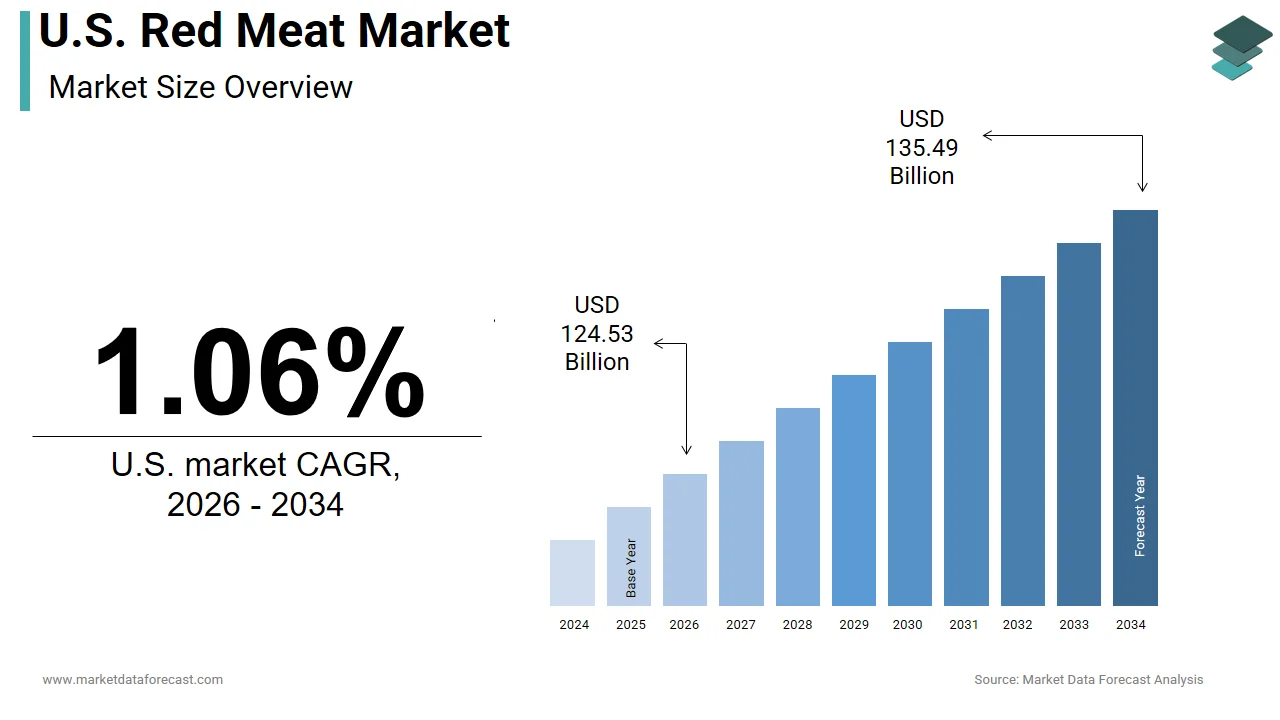
- Market Valuation: Valued at USD 123.22 billion in 2025, estimated at USD 124.53 billion in 2026, and projected to reach USD 135.49 billion by 2034, growing at a steady CAGR of 1.06% from 2026 to 2034.
- Primary Growth Drivers: Robust protein demand driven by deeply ingrained nutritional awareness and culinary traditions; and high economic accessibility supported by an efficient supply chain.
Key U.S. Red Meat Market Segment Metrics (2026–2034)
| Category | Leading Segment (2025 Position) | Fastest-Growing Segment |
|---|---|---|
| By Product Type | Beef segment (dominated with a 54.2% share in 2025, supported by cultural centrality and high demand for premium cuts) | Mutton and lamb segment (estimated to register the fastest CAGR of 3.5% from 2026 to 2034) |
| By Form | Fresh and chilled segment (led in 2025 due to consumer preference for perceived quality, freshness, and culinary versatility) | Processed red meat segment (anticipated to witness the fastest CAGR of 5.5% during the forecast period) |
| By Distribution Channel | Supermarkets and hypermarkets (largest off-trade channel occupying 58.4% of the market in 2025) | Online retail segment (projected to be the fastest growing with an exceptional CAGR of 11.4%) |
Major U.S. Red Meat Market Players & Competitive Structure
Market Structure: Highly consolidated industry characterized by major processors leveraging economies of scale, strict regulatory compliance, and vertical supply chain efficiency.
Key U.S. Red Meat Companies: Tyson Foods Inc., JBS S.A. (JBS USA Holdings Inc.), Hormel Foods Corporation, Cargill Meat Solutions, Smithfield Foods Inc., BRF S.A., and others.
U.S. Red Meat Market Size
The U.S. red meat market was valued at USD 123.22 billion in 2025, is estimated to reach USD 124.53 billion in 2026, and is projected to reach USD 135.49 billion by 2034, growing at a CAGR of 1.06% from 2026 to 2034.
Red meat is generally defined as the muscle meat from mammals, such as beef, pork, lamb, and goat, that is dark red when raw and dark brown when coo. This market is deeply integrated into the national agricultural framework reflecting complex supply chains that connect livestock farmers with processors retailers and food service providers. Red meat consumption remains a significant component of household expenditure despite shifting dietary trends toward plant based alternatives. The USDA ERS Food Availability Data shows that despite high prices, consumer demand remained resilient in 2024, with total red meat and poultry availability hovering near 225 lbs per person. The industry operates within a regulatory environment that emphasizes food safety animal welfare and environmental stewardship. According to the Centers for Disease Control and Prevention foodborne illnesses linked to meat products remain a critical public health focus driving stringent inspection protocols. The National Cattlemen’s Beef Association states that cattle inventory levels fluctuate based on feed costs and weather conditions directly influencing market volume. Consumer preferences are increasingly shaped by transparency regarding sourcing and production methods. The United States Department of Agriculture (USDA) mandates clear labeling standards for meat and poultry to ensure informed purchasing decisions, while the Food and Drug Administration (FDA) oversees labeling for most other food categories. This market landscape is characterized by a balance between traditional consumption patterns and emerging ethical considerations requiring stakeholders to adapt to evolving societal expectations while maintaining operational efficiency and product quality in a highly competitive domestic arena.
MARKET DRIVERS
Robust Protein Demand Driven by Nutritional Awareness and Culinary Tradition
Deeply ingrained culinary traditions and perceived nutritional value continue to fuel the American preference for red meat, which propels the overall growth of the United States red meat market. Consumers widely recognize beef and pork as essential sources of high quality protein iron and vitamin B12 which are critical for muscle maintenance and overall metabolic health. According to the Dietary Guidelines for Americans published by the Department of Health and Human Services meat remains a primary contributor to daily protein intake for a majority of the population. This nutritional perception sustains demand even amidst the rise of alternative proteins. According to the Hearth, Patio & Barbecue Association (HPBA), over 80% of U.S. households own a grill or smoker, facilitating regular consumption of grilled meats. Culinary traditions play a pivotal role as barbecuing and grilling are central to American social gatherings. The Barbecue Industry Association reports that over 70 percent of US households own a grill or smoker facilitating regular consumption of grilled meats. Furthermore the convenience of ready to cook and pre seasoned red meat products aligns with the busy lifestyles of modern consumers. Retailers have expanded their offerings of value added cuts which require minimal preparation time. This combination of nutritional confidence and cultural embeddedness ensures that red meat retains a dominant share of the protein market. The consistent integration of these products into meal planning across demographics underscores the resilience of demand driven by fundamental dietary habits and social practices.
Economic Accessibility and Supply Chain Efficiency Supporting Mass Consumption
The economic accessibility of red meat, coupled with a highly efficient supply chain, drives the expansion of the United States red meat market. This combination ensures sustained demand. Advances in livestock breeding feed optimization and processing technologies have enabled producers to maintain competitive pricing despite inflationary pressures. According to the United States Department of Agriculture the productivity of US cattle and hog operations has increased significantly over the past decade allowing for stable output levels. This efficiency translates to affordable retail prices which keep red meat within reach for a broad spectrum of income groups. The Bureau of Labor Statistics notes that while food prices have risen, the price of beef and other meats has frequently outpaced the cost increases of alternative protein sources, impacting household affordability. Large scale processing facilities benefit from economies of scale which reduce per unit costs and enhance distribution capabilities. The North American Meat Institute highlights that the integration of vertical supply chains from farm to fork minimizes waste and maximizes throughput. Additionally the widespread availability of red meat in supermarkets convenience stores and online platforms ensures constant consumer access. Promotional strategies and bulk purchasing options further incentivize regular consumption. The robust logistics network including refrigerated transportation ensures product freshness and reduces spoilage rates. This structural efficiency allows the market to absorb shocks from feed price volatility or labor constraints more effectively than less mature sectors. So, the ability to deliver consistent quality at accessible price points reinforces the position of red meat as a staple commodity in the American grocery basket.
MARKET RESTRAINTS
Heightened Health Concerns Regarding Chronic Disease and Dietary Risks
The growing body of scientific evidence linking excessive consumption to chronic health conditions is a major restraint to the United States red meat market. Medical professionals and health organizations increasingly warn against high intake of processed and unprocessed red meats due to associations with cardiovascular disease type 2 diabetes and certain cancers. According to the World Health Organization processed meat is classified as a Group 1 carcinogen while red meat is classified as a Group 2A probable carcinogen. This classification has influenced public perception and dietary recommendations. The American Heart Association advises limiting saturated fat intake which is abundant in many cuts of beef and pork to reduce heart disease risk. As per data from the Centers for Disease Control and Prevention heart disease remains the leading cause of death in the United States prompting many consumers to reevaluate their protein choices. Nutritionists often recommend replacing red meat with leaner proteins such as poultry fish or plant based options. This shift is particularly evident among health conscious demographics and older adults who are more susceptible to chronic illnesses. The proliferation of health focused media campaigns further amplifies these concerns leading to reduced frequency of purchase among some segments. While moderate consumption is still considered acceptable by many experts the prevailing narrative emphasizes restriction. This health driven caution acts as a persistent brake on market growth as consumers actively seek alternatives that align with preventive healthcare goals. The resulting behavioral change necessitates that industry players address these health perceptions through leaner product innovations and transparent nutritional labeling.
Environmental Sustainability Pressures and Carbon Footprint Scrutiny
Environmental sustainability concerns remain a serious barrier to the US red meat market. Consumers and regulators are increasingly scrutinizing the ecological impact of livestock production. Cattle farming in particular is associated with high greenhouse gas emissions primarily methane which contributes to global warming. According to the Environmental Protection Agency agriculture accounts for approximately 10 percent of total US greenhouse gas emissions with livestock being a substantial contributor. Water usage and land degradation are also critical issues as beef production requires significantly more resources compared to plant based proteins. The Natural Resources Defense Council states that producing one pound of beef requires roughly 1800 gallons of water which raises concerns about resource conservation in drought prone regions. Younger consumers especially Millennials and Generation Z are more likely to consider the environmental footprint of their food choices when making purchasing decisions. According to the 2024 IFIC Food and Health Survey, while environmental sustainability influences 31% of consumers, it is declining as a purchase driver, as healthfulness and price remains the primary motivations for dietary shifts. Regulatory pressures are also intensifying with potential future carbon taxes or stricter emission standards for agricultural operations. These factors create a challenging operating environment for producers who must invest in sustainable practices to maintain social license to operate. The negative perception of red meat as an environmentally damaging product drives some consumers toward alternative proteins that are marketed as eco friendly. This shift in consumer values constrains market expansion and forces the industry to confront its environmental legacy through costly adaptations and transparency initiatives.
MARKET OPPORTUNITIES
Expansion into Premium and Organic Segments Catering to Quality Conscious Consumers
The proliferation of premium organic and grass fed product lines that cater to increasingly discerning consumers provides a significant opportunity for the United States red meat market. There is a growing segment of shoppers who prioritize quality animal welfare and natural feeding practices over price sensitivity. According to the Organic Trade Association sales of organic meat poultry and eggs have shown consistent growth as consumers seek products free from antibiotics hormones and synthetic additives. Grass fed beef in particular commands a price premium due to its perceived health benefits and superior flavor profile. The American Grassfed Association notes that demand for grass fed products continues to rise as consumers associate them with higher nutritional value including increased omega 3 fatty acids. Retailers are responding by expanding their specialty meat sections and offering direct to consumer subscriptions for high quality cuts. This trend allows producers to differentiate their offerings and capture higher margins in a commoditized market. Additionally the transparency of sourcing appeals to consumers who want to know the origin of their food. Local and regional brands are leveraging this desire for connection by emphasizing farm to table narratives. The success of boutique butcher shops and online meat delivery services demonstrates the viability of this premium strategy. By focusing on quality and ethical production standards companies can build loyal customer bases that are less sensitive to price fluctuations. This segment offers a pathway for growth that aligns with contemporary values of health consciousness and ethical consumption providing a buffer against the decline in conventional mass market volumes.
Innovation in Value Added and Convenience Oriented Product Formats
Innovation in value-added and convenience-oriented product formats is creating a substantial opening for the growth of the United States red meat market. This shift is largely driven by changing lifestyle dynamics. Modern consumers often lack the time for extensive meal preparation leading to increased demand for ready to cook and ready to eat meat products. According to the Food Marketing Institute convenience remains a top priority for shoppers driving the development of marinated pre seasoned and pre cooked red meat items. These products offer the nutritional benefits of red meat while addressing the need for speed and ease in meal preparation. Manufacturers are investing in advanced packaging technologies such as modified atmosphere packaging to extend shelf life and maintain freshness without preservatives. The introduction of meal kits featuring high quality red meat cuts paired with complementary ingredients has also gained traction. Blue Apron and other meal kit providers continue to feature beef and pork in their highest-rated recipes, though the sector faces overall challenges in long-term customer retention and profitability. Furthermore the development of snack sized meat products such as jerky and sticks appeals to the on the go demographic. According to SNAC International, the meat snack market is expanding significantly as consumers seek high-protein, low-carbohydrate options, though no "Jerky Association" exists as a primary research authority. By transforming raw commodities into convenient solution oriented products producers can enhance perceived value and stimulate frequency of purchase. This strategic shift from selling ingredients to selling solutions allows companies to tap into new usage occasions and attract younger consumers who prioritize convenience without compromising on protein intake.
MARKET CHALLENGES
Volatility in Feed Costs and Input Price Fluctuations
The persistent volatility in feed costs and other input prices is a major challenge for the US red meat market. This directly impacts production profitability. Livestock producers rely heavily on corn and soybeans for feed and prices for these commodities are subject to significant fluctuations due to weather conditions global trade dynamics and energy costs. According to the United States Department of Agriculture feed costs typically account for 60 to 70 percent of the total expense in raising cattle and hogs. Droughts or extreme weather events can reduce crop yields leading to sharp increases in feed prices which squeeze producer margins. The Energy Information Administration notes that fuel costs also influence transportation and processing expenses adding another layer of financial pressure. When input costs rise producers may reduce herd sizes to manage expenses which leads to tighter supply and higher retail prices. This cycle creates uncertainty for both producers and consumers. High retail prices can dampen demand as shoppers switch to cheaper protein alternatives such as chicken or plant based options. The National Farmers Union highlights that small and mid sized operations are particularly vulnerable to these cost shocks as they lack the economies of scale to absorb losses. Additionally labor shortages in the agricultural sector drive up wages further increasing operational costs. These financial pressures challenge the stability of the supply chain and can lead to consolidation in the industry as smaller players exit the market. Managing this volatility requires sophisticated risk management strategies and long term contracts which are not always accessible to all participants.
Labor Shortages and Workforce Constraints in Processing Facilities
Labor shortages and workforce constraints in processing facilities are major obstacles the operational efficiency of the United States red meat market. The meat processing industry has historically faced difficulties in attracting and retaining workers due to the demanding nature of the work and safety concerns. According to the North American Meat Institute the industry employs hundreds of thousands of workers but turnover rates remain high. The COVID 19 pandemic exacerbated these issues by highlighting health risks in crowded processing plants leading to temporary closures and reduced capacity. Even as the pandemic subsides the sector struggles to fill positions as workers seek employment in less physically intensive industries. The Bureau of Labor Statistics indicates that job openings in manufacturing and food processing remain elevated reflecting a tight labor market. This shortage leads to bottlenecks in the supply chain causing delays in processing and distribution. When plants operate below capacity it results in backlogs of live animals which forces producers to hold livestock longer increasing feed costs and affecting animal weight. Additionally labor disputes and unionization efforts can disrupt operations and increase wage costs. The reliance on immigrant labor also introduces regulatory uncertainties related to visa policies and immigration enforcement. These workforce challenges constrain the industry's ability to scale production and meet demand consistently. Companies are investing in automation to mitigate labor dependencies but the transition is costly and technologically complex. The market will continue to face operational inefficiencies until these workforce issues are resolved. Consequently, this will impact product availability and pricing stability.
REPORT COVERAGE
| REPORT METRIC | DETAILS |
| Market Size Available | 2025 to 2034 |
| Base Year | 2025 |
| Forecast Period | 2026 to 2034 |
| Segments Covered | By Product Type, Form, Distribution Channel, and Country. |
| Various Analyses Covered | Global, Regional, and Country-Level Analysis, Segment-Level Analysis, Drivers, Restraints, Opportunities, Challenges; PESTLE Analysis; Porter’s Five Forces Analysis, Competitive Landscape, Analyst Overview of Investment Opportunities |
| Countries Covered | New York, Massachusetts, Pennsylvania, Illinois, Ohio, Michigan, Texas, Florida, Georgia, California, Washington, Colorado. |
| Market Leaders Profiled | Hormel Foods Corporation, Tyson Foods Inc., JBS S.A., Cargill Meat Solutions, BRF S.A., Smithfield Foods Inc., and Others |
SEGMENTAL ANALYSIS
By Product Type Insights
The beef segment dominated the United States red meat market and accounted for a 54.2% share in 2025. This dominance of the segment was driven by its cultural centrality and high consumer preference for premium cuts. Beef’s strong tie to American culinary traditions, especially in grilling, BBQ, and fine dining, drives this segment's dominance. According to the United States Department of Agriculture Economic Research Service beef accounts for approximately 58 pounds of per capita availability annually which significantly exceeds other red meat categories. This high volume is sustained by the robust infrastructure of the cattle industry which supports consistent supply despite periodic fluctuations in herd sizes. The National Cattlemen’s Beef Association highlights that beef sales generate billions of dollars in annual revenue reflecting its economic importance. Consumer willingness to pay a premium for quality grades such as USDA Prime and Choice further solidifies beef's market leadership. Retailers dedicate substantial shelf space to beef products recognizing their role as traffic drivers. The versatility of beef allows it to be utilized in diverse formats from ground meat for burgers to steaks for special occasions. This adaptability ensures broad appeal across different income levels and dietary preferences. Additionally marketing campaigns funded by checkoff programs effectively promote beef consumption reinforcing its position in the household diet. The established supply chain efficiency ensures that beef remains readily available nationwide supporting its status as the primary red meat choice for American consumers.
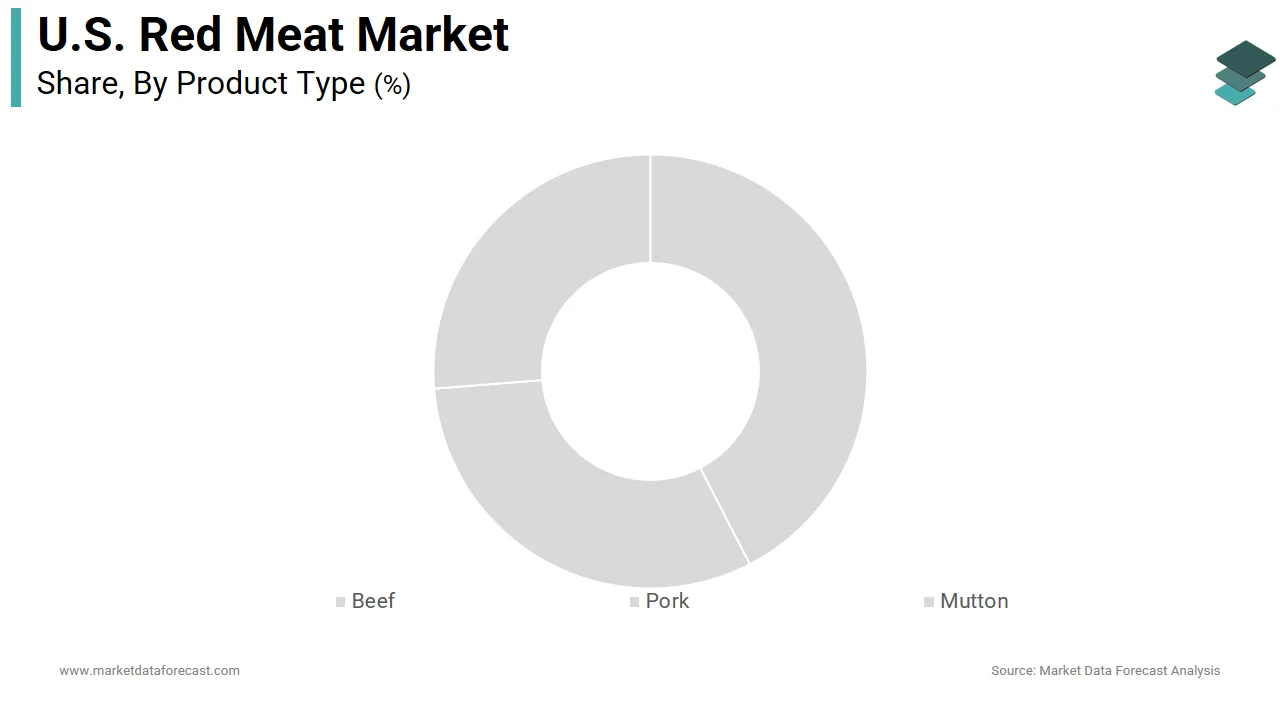
But the mutton and lamb segment is estimated to register the fastest CAGR of 3.5% from 2026 and 2034 due to increasing demographic diversity and rising health consciousness among consumers. According to the American Lamb Board demand for lamb has risen due to its perception as a leaner and more sustainable protein option. The growing population of immigrants from regions where lamb is a dietary staple such as the Middle East South Asia and North Africa has significantly boosted consumption levels. Furthermore younger consumers are increasingly exploring alternative meats to diversify their diets and reduce reliance on conventional beef. Culinary trends featuring global flavors have introduced lamb to a broader audience through restaurants and meal kits. The National Restaurant Association notes that lamb appears more frequently on menus as chefs highlight its unique flavor profile. Improved distribution networks have also enhanced the availability of lamb in mainstream supermarkets making it more accessible to non traditional consumers. This combination of demographic shifts and culinary exploration drives the accelerated growth of the mutton and lamb segment.
By Form Insights
The fresh and chilled segment led the United States red meat market and captured a substantial share in 2025. This leading position of the segment was attributed to consumer preference for perceived quality freshness and culinary versatility. Shoppers generally associate fresh meat with superior taste and texture compared to frozen or processed alternatives. According to the Food Marketing Institute a majority of consumers prioritize purchasing fresh meat for home cooking citing better control over preparation and seasoning. The retail infrastructure in the United States is heavily optimized for the cold chain distribution of fresh products ensuring that meat reaches shelves in optimal condition. Supermarkets and butcher shops invest significantly in refrigeration technologies to maintain product integrity. The United States Department of Agriculture emphasizes strict guidelines for handling fresh meat to prevent spoilage and ensure food safety which reinforces consumer confidence. Fresh meat allows for greater customization in cooking methods appealing to home cooks who enjoy preparing meals from scratch. The prevalence of weekend grilling and family dinners further sustains demand for fresh cuts. Additionally the rise of premium grocery stores has expanded the availability of high quality fresh beef and pork including organic and grass fed options. These factors collectively ensure that the fresh and chilled segment remains the primary choice for American households seeking quality protein sources for daily consumption.
Processed Meat Innovation
On the other hand, the processed red meat segment is anticipated to witness the fastest CAGR of 5.5% during the forecast period owing to convenience demands and innovation in product formulation. This segment includes items such as sausages deli meats bacon and ready to eat meals which appeal to busy consumers seeking quick meal solutions. According to the North American Meat Institute the processed meat category is expanding due to advancements in preservation techniques that enhance shelf life without compromising quality. The introduction of clean label products which exclude artificial preservatives and nitrates has attracted health conscious buyers who previously avoided processed options. The International Food Information Council reports that consumers are increasingly reading labels and seeking transparency in ingredients driving manufacturers to reformulate products. Ready to cook marinated meats and pre seasoned cuts are gaining popularity as they reduce preparation time while offering restaurant quality flavors. The busy lifestyles of dual income households contribute to this trend as convenience becomes a primary purchasing factor. Additionally the growth of the food service sector including fast casual dining relies heavily on processed meat products for consistency and efficiency. Manufacturers are also leveraging e commerce platforms to distribute specialized processed meat products directly to consumers. This strategic alignment with modern lifestyle needs and health trends propels the processed segment as the fastest growing form in the market.
By Distribution Channel Insights
Off Trade Supermarkets and Hypermarkets
The supermarkets and hypermarkets segment was the largest by occupying a 58.4% of the United States red meat market in 2025. This supremacy of the segment was credited to its extensive reach comprehensive product assortments and competitive pricing. These retail formats serve as the primary shopping destination for most American households offering a one stop solution for grocery needs. According to the Food Industry Association supermarkets account for the largest share of food retail sales in the United States providing consumers with convenient access to a wide variety of red meat products. The ability of these retailers to offer both private label and national brand options allows them to cater to diverse budget segments. Bulk purchasing opportunities and promotional discounts further attract price sensitive shoppers. The established cold chain logistics of major supermarket chains ensure consistent product quality and availability. Consumers value the ability to physically inspect meat cuts before purchase which builds trust and satisfaction. Additionally the integration of in store butcher counters provides personalized service and custom cutting options enhancing the shopping experience. The widespread geographic presence of supermarket chains ensures that red meat is accessible to urban suburban and rural populations alike. This combination of convenience variety and reliability solidifies the dominance of the off trade supermarket and hypermarket segment in the distribution landscape.
On the contrary, the online retail segment is on the rise and is expected to be the fastest growing segment in the market by witnessing a CAGR of 11.4% between 2026 and 2034. This quick surge of the segment is propelled by digital adoption and the convenience of home delivery. The proliferation of e commerce platforms and specialized meat delivery services has transformed how consumers purchase protein. According to the United States Census Bureau online retail sales have seen double digit growth rates in recent years with food and beverage categories contributing significantly to this expansion. The pandemic accelerated the shift toward online grocery shopping as consumers sought contactless purchasing options. Companies like Amazon Fresh and Instacart have integrated red meat into their offerings providing same day or next day delivery. Direct to consumer brands such as ButcherBox and Crowd Cow have gained traction by offering premium grass fed and organic meats sourced directly from farms. These subscriptions provide transparency and quality assurance which appeals to discerning shoppers. The ability to compare prices and read reviews online empowers consumers to make informed decisions. Additionally the expansion of cold chain logistics for last mile delivery has improved the reliability of online meat purchases. Younger demographics particularly Millennials and Generation Z prefer the convenience of digital shopping driving the rapid growth of this channel. Online retail is poised to capture an increasing share of the red meat market. This growth is driven by advancing technology and expanding delivery networks.
COUNTRY ANALYSIS
U. S. Red Meat Market Analysis
The United States was the top performer in the North American red meat market and captured a 77.1% share in 2025. This expansion of the US market was supported by the absence of comparable neighboring markets in this specific analysis context. The market status within the country is characterized by mature consumption patterns coupled with dynamic shifts in production efficiency and consumer preferences. As per the United States Department of Agriculture the nation is one of the largest producers and consumers of beef and pork globally reflecting a robust domestic industry. The driving factors for this market include a large and affluent population with high protein consumption habits. According to the Bureau of Labor Statistics, food expenditure accounts for approximately 12.8% of average household budgets; while this significant share supports meat demand, persistent inflation has led some consumers to seek value-oriented protein options. Technological advancements in livestock farming have enhanced productivity enabling the US to maintain competitive export levels while satisfying domestic needs. The National Pork Board reports that US pork production has reached record highs due to improved genetics and feed efficiency. Additionally, the strong regulatory framework ensures food safety and quality which bolster consumer confidence. The diverse culinary culture across different states supports varied consumption patterns from barbecue in the South to steak houses in urban centers. This internal diversity drives continuous innovation in product offerings. The integration of sustainable practices and ethical sourcing initiatives further shapes the market trajectory. The United States continues to lead in red meat innovation setting trends that influence global markets through its scale and technological prowess.
COMPETITIVE LANDSCAPE
The competition in the United States red meat market is characterized by a high degree of consolidation among a few major processors who dominate production and distribution networks. These leading entities leverage economies of scale to maintain competitive pricing while investing heavily in technological advancements to improve operational efficiency. Rivalry intensifies as companies strive to differentiate their offerings through premium branding organic certifications and sustainable sourcing claims to attract discerning consumers. The market faces pressure from alternative protein sources which prompts traditional meat producers to innovate and diversify their portfolios. Regulatory compliance regarding food safety and environmental standards adds complexity requiring significant investment in infrastructure and training. Labor availability remains a critical competitive factor as firms compete for skilled workers in processing plants. Supply chain resilience is paramount with companies seeking to secure reliable livestock sources amidst fluctuating feed costs and weather related disruptions. Consumer preferences for transparency and ethical practices drive competitors to enhance traceability systems and engage in corporate social responsibility initiatives. This dynamic environment necessitates continuous adaptation and strategic agility to maintain market relevance and profitability in a mature yet evolving industry landscape.
KEY MARKET PLAYERS
Some of the companies that are playing a dominating role in the U.S. red meat market include
- Hormel Foods Corporation
- Tyson Foods Inc.
- JBS S.A.
- Cargill Meat Solutions
- BRF S.A.
- Smithfield Foods Inc.
TOP PLAYERS IN THE MARKET
- Tyson Foods Inc operates as a dominant force in the United States protein sector with extensive capabilities in beef pork and chicken processing. The company maintains a vast network of production facilities that ensure consistent supply to retail and food service channels across the nation. Recently Tyson has focused on enhancing operational efficiency through automation and digital technologies to optimize processing speeds and reduce waste. The corporation actively invests in sustainable agriculture initiatives to address environmental concerns and meet evolving consumer expectations. By diversifying its product portfolio to include value added and ready to cook items Tyson strengthens its appeal to convenience oriented shoppers. The company also engages in strategic partnerships with retailers to expand distribution reach and improve shelf presence. These efforts collectively reinforce its leadership position by ensuring product quality availability and alignment with modern dietary trends while maintaining robust relationships with livestock producers throughout the supply chain.
- JBS USA Holdings Inc represents a significant pillar in the American red meat industry leveraging global expertise to enhance domestic operations. The company processes large volumes of beef and pork serving diverse markets from grocery stores to international export channels. JBS prioritizes innovation in packaging and preservation technologies to extend product shelf life and maintain freshness for consumers. Recent initiatives include substantial investments in renewable energy projects at processing plants to reduce carbon footprints and promote sustainability. The firm actively collaborates with local farmers to secure high quality livestock supplies ensuring consistent production standards. JBS also focuses on expanding its branded product lines to capture higher margin opportunities in the retail sector. By integrating advanced data analytics into supply chain management the company improves forecasting accuracy and inventory control. These strategic moves demonstrate a commitment to operational excellence and environmental responsibility while strengthening its competitive stance in the dynamic US market landscape.
- Cargill Meat Solutions plays a crucial role in the United States red meat sector by providing high quality beef and pork products to various customers. The company leverages its integrated supply chain to manage everything from animal nutrition to final processing ensuring traceability and safety. Cargill emphasizes sustainable sourcing practices working closely with ranchers to implement regenerative agriculture methods that benefit soil health and biodiversity. Recent actions include upgrading processing facilities with state of the art technology to enhance efficiency and worker safety. The organization actively develops innovative protein solutions tailored to specific customer needs including custom cuts and marinated options. Cargill also invests in community engagement programs to support rural economies where it operates. By focusing on transparency and ethical production standards the company builds trust with consumers and business partners alike. These efforts enable Cargill to maintain a strong market presence while adapting to changing consumer preferences and regulatory requirements in the evolving protein industry.
TOP STRATEGIES USED BY KEY MARKET PARTICIPANTS
Key players in the United States red meat market primarily employ vertical integration strategies to control supply chains from farm to fork ensuring quality and cost efficiency. Companies heavily invest in automation and robotics within processing facilities to enhance productivity and address labor shortages effectively. Product diversification is another critical strategy as firms expand into value added and convenience oriented offerings to meet changing consumer lifestyles. Sustainability initiatives are increasingly central with corporations adopting renewable energy and water conservation measures to mitigate environmental impact and appeal to eco conscious buyers. Strategic acquisitions and partnerships allow major entities to consolidate market presence and access new distribution channels or technologies. Branding efforts focus on transparency and ethical sourcing to build consumer trust and differentiate products in a competitive landscape. Additionally companies utilize advanced data analytics for demand forecasting and inventory management optimizing operations and reducing waste throughout the production cycle.
MARKET SEGMENTATION
This research report on the U.S. red meat market has been segmented and sub-segmented into the following categories.
By Product Type
- Beef
- Pork
- Mutton
- Other Meat
By Form
- Fresh / Chilled
- Frozen
- Canned
- Processed
By Distribution Channel
- On-Trade
- Off-Trade
- Supermarkets / Hypermarkets
- Convenience Stores
- Online Retail Channel
- Other Distribution Channels
By Country
- New York
- Texas
- Florida
- Georgia
- California
- Rest of U.S.