- Product Description Description
- Table of Contents TOC
- List of Table & Figure LOT
- Get Free Sample PDF Sample PDF
Market Size, 2025
$3.76 BnMarket Estimate, 2026
$3.87 BnMarket Forecast, 2034
$4.89 BnCAGR, 2026–2034
2.96%U.S. Retail Bags Market Summary
The U.S. retail bags market, valued at USD 3.76 billion in 2025, is projected to reach USD 4.89 billion by 2034, expanding at a CAGR of 2.96% driven by state-level plastic bans, growth in reusable and paper alternatives, and the transformation of retail bags into omnichannel fulfillment and brand engagement assets.
Market Snapshot
- 2025 Market Size: USD 3.76 billion
- 2026 Estimate: USD 3.87 billion
- 2034 Forecast: USD 4.89 billion
- CAGR (2026–2034): 2.96%
- Base Year: 2025
- Forecast Period: 2026–2034
Quick Growth Drivers
- Rapid adoption of reusable and paper bags due to plastic bag bans and fees
- Retailer-led elimination of virgin plastic checkout bags
- Integration of bags into omnichannel fulfillment, returns, and reverse logistics
- Rising importance of branded bags as marketing and customer touchpoints
- Growth in grocery, foodservice, and quick-commerce transactions
Principal Restraints
- Fragmented and inconsistent state-level plastic regulations
- Rising SKU complexity and compliance-driven inventory duplication
- Performance limitations of compostable and bio-based bag materials
- Higher operational costs from frequent material and design changes
High-Value Opportunities
- Digital interactivity and circular tracking embedded into reusable bags
- “Bag-as-brand-ambassador” strategies using limited editions and collaborations
- Expansion of QR-enabled bags for loyalty, ESG reporting, and traceability
- Premiumization of reusable bags as collectible lifestyle accessories
Key Market Challenges
- Scarcity and rising costs of recycled and bio-based feedstocks
- Supply chain fragility for certified PCR and compostable materials
- Consumer resistance to paying premiums for sustainable bag options
- Margin compression as retailers absorb sustainability-related cost increases
Fastest-Growing Segments
- Paper Bags: ~14.6% CAGR — driven by regulation and recyclability perception
- Food Service End Use: ~17.3% CAGR — takeout, delivery, and ghost kitchens
- Digitally Enabled Reusable Bags: high-growth niche tied to ESG and branding
Regional Leadership & Dynamics
- California — strict plastic bans and sustainability-driven innovation
- Northeast (NY, MA, PA) — early regulation adopters and reusable dominance
- Texas & Florida — volume-driven growth with mixed regulatory pressure
- Pacific Northwest & Colorado — high consumer acceptance of reusable formats
What Wins Commercially
- Compliance-ready designs adaptable to multi-state regulations
- Strong balance between durability, moisture resistance, and sustainability
- Digital traceability for ESG reporting and consumer engagement
- Branded, reusable formats that extend life cycle and marketing value
- Cost-efficient integration of recycled content without performance loss
Top Strategic Ask for Executives
Standardize reusable and paper bag platforms across states, invest in digital traceability and circular infrastructure, and align bag design with omnichannel logistics to protect margins while meeting regulatory and sustainability expectations.
Leading Players
Some of the companies that are playing a dominating role in the U.S. retail bags market include:
- Inteplast Group
- International Paper Company
- Smurfit Kappa Group PLC
- Novolex Holdings Inc.
- Sigma Plastic Group
- Amcor plc
- ProAmpac LLC
- El Dorado Packaging Inc.
- Mondi Group PLC
- Berry Global Inc.
- Sealed Air Corporation
- Atlantic Poly, Inc.
- Jet Paper Bags LLC
- Rainbow Packaging Inc.
- Rutan Poly Industries Inc.
- Welton Bibby & Baron Ltd
- American Packaging Corp.
- Bagcraft LLC
- Coveris Holdings SA
- BioPak Pty Ltd
U.S. Retail Bags Market Size
The U.S. retail bags market was valued at USD 3.76 billion in 2025, is estimated to reach USD 3.87 billion in 2026, and is projected to reach USD 4.89 billion by 2034, growing at a CAGR of 2.96% from 2026 to 2034.
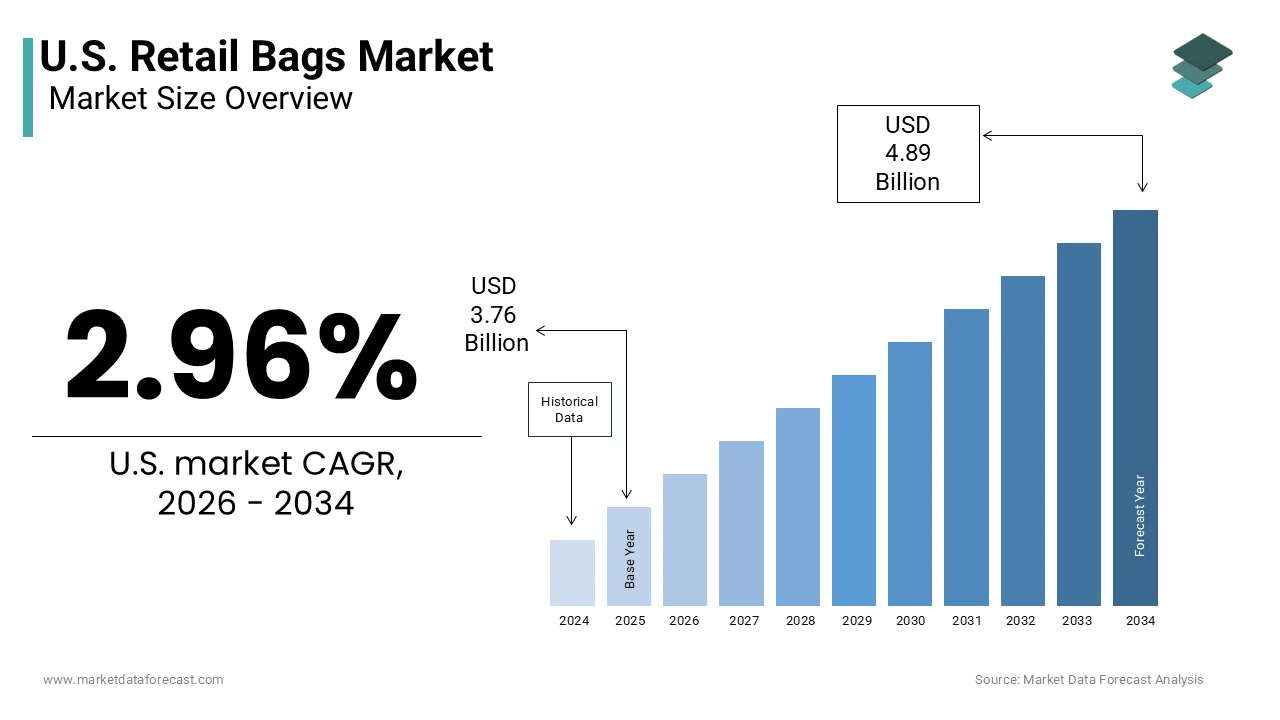
Retail bags are single-use or reusable bags given to customers at the checkout counter of a store to transport their purchased goods. This market includes a diverse array of materials such as polyethylene, paper, non-woven,n polypropylene, and biodegradable composites. The market dynamics are heavily influenced by environmental regulations, consumer sustainability preferences, and operational efficiency requirements of retail establishments. As per recent data,ata Americans use approximately 100 billion plastic shopping bags annually, which underscores the massive scale of consumption and the subsequent waste management challenges faced by municipalities. The transition from single-use plastics to reusable and recyclable alternatives is reshaping the industry landscape. According to the Environmental Protection Agency, only 8.7 percent of plastic waste was recycled in 2018, indicating a critical need for improved material recovery systems and alternative packaging solutions. Retailers are increasingly adopting bags made from post-consumer recycled content to align with corporate social responsibility goals. The definition of retail bags has expanded beyond mere utility to include branding opportunities and customer experience enhancements. High-quality reusable bags serve as mobile advertisements for brands while also reducing the frequency of bag usage per transaction. The market is characterized by a shift toward durable materials that can withstand multiple uses, thereby reducing the overall environmental footprint. Legislative actions in various states mandating bans or fees on single-use plastic bags are accelerating this transformation. As per industry observations, the demand for compostable bags is rising as consumers seek options that decompose naturally without leaving harmful residues. This evolving scenario reflects a broader societal commitment to sustainability and circular economy principles within the retail sector.
MARKET DRIVERS
Stringent Government Regulations and Plastic Bans
Strict government regulations and plastic bans across various states and municipalities are the primary factors driving the growth of the United States retail bags market. It is pushing the country’s market toward sustainable packaging. Legislative bodies are increasingly recognizing the environmental hazards posed by single-use plastic bags, which contribute significantly to landfill waste and marine pollution. As per current legislation, 13 states, including California, New York, and Washington, have enacted laws restricting or banning single-use plastic bags at checkout counters. These regulations force retailers to adopt alternative packaging solutions such as paper bags, reusable tot, es or compostable options. The financial penalties associated with non-compliance serve as a strong incentive for businesses to transition away from traditional plastics. For instance, in California, retailers are required to charge a minimum fee for each carryout bag, which has led to a significant reduction in plastic bag consumption. Data indicates that such fees can reduce plastic bag usage by up to 90 percent in affected areas. This regulatory pressure creates a robust demand for compliant packaging materials, driving innovation in biodegradable and recyclable bag manufacturing. Retailers are proactively adapting their supply chains to source eco-friendly bags that meet legal requirements while maintaining cost efficiency. The ripple effect of state-level laws influences national retailers to standardize sustainable practices across all locations to simplify operations. Furthermore, local municipalities are introducing additional restrictions on bag thickness and material composition, further shaping market dynamics. As per sources, these policies are essential for achieving waste reduction targets and promoting a circular economy. Therefore, the regulatory landscape acts as a powerful catalyst for market transformation, encouraging the adoption of sustainable retail bag solutions.
Growing Consumer Awareness and Preference for Sustainability
The escalating consumer awareness regarding environmental issues and the corresponding preference for sustainable retail bag options further propel the United States retail bags market forward. Modern shoppers are increasingly informed about the detrimental impacts of plastic pollution on ecosystems and wildlife,e leading them to make conscious purchasing decisions. As per recent surveys, 73 percent of global consumers say they would change their consumption habits to reduce their environmental impact This shift in mindset drives demand for reusable and recyclable bags, which are perceived as responsible choices. Retailers respond to this preference by offering high-quality reusable bags, often branded with the company log, os, which serve both functional and marketing purposes. The willingness of consumers to pay a premium for eco-friendly packaging supports the growth of this segment. Data shows that sales of reusable bags have increased significantly in regions with active environmental campaigns, highlighting the correlation between awareness and behavior change. Social media and educational initiatives play a crucial role in amplifying this awareness by showcasing the benefits of sustainable practices. Consumers are also favoring brands that demonstrate transparency in their sourcing and manufacturing processes. This demand for authenticity encourages retailers to adopt bags made from recycled materials or organic fibers. The trend extends beyond individual purchases to corporate procurement, where businesses prioritize suppliers with strong sustainability credentials. This consumer-driven demand ensures that the retail bags market continues to evolve toward greener solutions. The collective action of informed consumers creates a powerful force that accelerates the adoption of sustainable packaging across the retail industry.
MARKET RESTRAINTS
Higher Production Costs of Eco-Friendly Alternatives
The higher costs associated with eco-friendly alternatives compared to traditional single-use plastics are limiting the expansion of the United States retail bags market. Materials such as recycled paper, cotton,n canv, as well as biodegradable polymers, require more complex manufacturing processes and raw material sourcing, which increases expenses. The price disparity poses a challenge for retailers operating on thin margins who may hesitate to absorb the additional costs or pass them on to consumers. Small and medium-sized enterprises are particularly vulnerable to these cost pressures as they lack the economies of scale enjoyed by larger corporations. The volatility in raw material prices for sustainable options further complicates budgeting and financial planning for manufacturers. For instance, fluctuations in the price of recycled paper pulp can lead to unpredictable cost increases. Additionally,y the limited availability of specialized machinery for producing biodegradable bags adds to the capital investment required for transitioning production lines. As per economic analysis, es the initial investment for switching to sustainable packaging can be prohibitive for many businesses. This financial barrier slows down the widespread adoption of eco-friendly bags despite regulatory and consumer pressures. Retailers must balance cost efficiency with sustainability goals, which often requires strategic trade-offs. The higher costs also limit the ability of manufacturers to innovate and develop new materials that could potentially lower prices in the future. Thus, the economic burden of sustainable production acts as a substantial restraint on market growth.
Performance and Durability Limitations of Biodegradable Materials
Performance and durability limitations of biodegradable and compostable bag materials are hampering the expansion of the United States retail bags market. As a result, these bags often fall short of consumer expectations. While these materials offer environmental benefits, they frequently lack the strength and water resistance of traditional plastics. As per consumer feedback,ck many users report that biodegradable bags tear easily when carrying heavy items or become soggy in wet conditions. This perceived inferior quality discourages repeat usage and undermines consumer confidence in sustainable alternatives. Retailers face challenges in educating customers about the proper handling and disposal of these bags to ensure they function as intended. The shorter shelf life of biodegradable materials also poses logistical issues for storage and inventory management. Exposure to heat and humidity can cause these bags to degrade prematurely, leading to waste before they are even used. Industry tests indicate that some compostable bags begin to break down within months if not stored in controlled environments. This limitation restricts their applicability in certain retail settings where long-term storage is required. Furthermore, the lack of standardized testing protocols for biodegradability creates confusion among consumers and regulators regarding the true environmental impact of these products. As per scientific studies,s the decomposition rate of biodegradable bags varies significantly depending on environmental conditions, ns which may not be met in typical landfills. This uncertainty hinders the widespread acceptance of these materials as viable replacements for conventional plastics. The technical challenges associated with enhancing the durability of eco-friendly bags without compromising their biodegradability remain a significant hurdle for manufacturers.
MARKET OPPORTUNITIES
Innovation in Advanced Biodegradable Materials
Innovation and development of advanced biodegradable materials offer superior performance and environmental benefits, which provide a prominent opportunity for the United States retail bags market. Researchers and manufacturers are exploring new polymer blends and natural fiber composites that decompose rapidly under various conditions while maintaining strength and durability. As per recent advancements, materials derived from agricultural waste,e such as corn starch and sugarcane bagasse,se are gaining traction as viable alternatives to petroleum-based plastics. These bio-based materials reduce reliance on fossil fuels and lower the carbon footprint of bag production. The integration of nanotechnology to enhance the mechanical properties of biodegradable films presents another avenue for innovation. By improving tensile strength and water resistance, these advanced materials can address the performance limitations of current eco-friendly options. Industry collaborations between chemical companies and retail giants are accelerating the commercialization of these innovations. As per studies, the demand for high-performance biodegradable bags is expected to grow significantly as technology matures and costs decline. This opportunity allows manufacturers to differentiate their products and capture premium market segments. Furthermore, the development of home compostable bags that break down in residential compost bins offers convenience for consumers. This alignment with household sustainability practices enhances the appeal of these products. The potential for patenting new material formulations also provides a competitive advantage for early adopters. As per environmental experts,s the widespread adoption of advanced biodegradable materials could significantly reduce plastic waste in landfills and oceans. This technological evolution positions the retail bags market for sustainable growth and long-term viability.
Expansion of Reusable Bag Subscription and Rental Models
The expansion of reusable bag subscription and rental models provides convenient and cost-effective solutions for consumers, which opens a key area for the expansion of the United States retail bags market. These services allow customers to borrow or lease high-quality reusable bags for a nominal fee, returning them after use for cleaning and redistribution. As per pilot programs in urban areas, such models have shown promising results in reducing single-use bag consumption by up to 50 percent. The subscription model appeals to busy consumers who value convenience and sustainability without the hassle of remembering to bring their own bags. Retailers can partner with third-party service providers to implement these systems seamlessly at checkout counters. The data collected from these programs offers valuable insights into consumer behavior and usage patterns, enabling targeted marketing and optimization. As per business analysis, the recurring revenue stream from subscriptions enhances profitability for service providers and retailers alike. The rental model also reduces the initial cost barrier for consumers who may be hesitant to invest in expensive reusable bags. Furthermore,e these initiatives foster a sense of community and shared responsibility for environmental stewardship. The integration of digital platforms for tracking bag usage and rewards further enhances user engagement. As per consumer trends, the demand for service-based solutions is rising as individuals seek ways to simplify their lives while contributing to sustainability. This opportunity enables the retail bags market to evolve beyond product sales into service-oriented offerings. The scalability of these models across different retail sectors presents a vast potential for growth and innovation.
MARKET CHALLENGES
Inconsistent Regulatory Frameworks Across States
The inconsistent regulatory frameworks across different states and municipalities create complexity for national retailers, which is a serious barrier to the United States retail bags market. While some states have implemented strict bans on single-use plastic bags, others have adopted fee structures or no regulations at all. As per legal analysis, es this patchwork of laws requires retailers to manage diverse compliance strategies for different locations, increasing operational costs and administrative burdens. National chains must navigate varying definitions of what constitutes a reusable or biodegradable bag,g leading to confusion and potential compliance risks. The lack of federal standardization means that manufacturers must produce different types of bags for different markets, reducing economies of scale. This fragmentation hinders the efficient distribution of sustainable packaging solutions and slows down market uniformity. As per industry reports, the cost of adapting to multiple regulatory regimes can be prohibitive for smaller retailers who lack legal resources. Furthermore, frequent changes in local laws require continuous monitoring and adjustment of supply chains. The uncertainty surrounding future regulations also discourages long-term investment in specific material technologies. Retailers face the challenge of balancing compliance with customer satisfaction, as inconsistent policies may confuse shoppers. As per policy experts, ts the absence of a unified national strategy that impedes the progress toward comprehensive waste reduction goals. This regulatory inconsistency creates an unstable business environment that complicates strategic planning and execution. The challenge necessitates agile supply chain management and proactive engagement with policymakers to advocate for standardized regulations.
Consumer Behavior and Habitual Resistance to Change
Entrenched consumer behavior and habitual resistance to changing practices regarding bag usage slow down the expansion of the United States retail bags market. Despite growing awareness, many shoppers continue to prefer the convenience of single-use plastic bags, which are readily available and require no effort to carry or clean. As per behavioral studies, habit formation plays a crucial role in consumer choices, making it difficult to shift towards reusable alternatives without significant intervention. The forgetfulness of bringing reusable bags to stores remains a common issue undermining the effectiveness of voluntary sustainability initiatives. Retailers struggle to incentivize consistent usage of reusable bags as fees often fail to deter occasional plastic bag users. The perceived inconvenience of washing and storing reusable bags also deters some consumers from adopting them regularly. As per survey data, only 30 percent of consumers consistently bring their own bags to grocery stores, es indicating a gap between intention and action. This behavioral inertia limits the impact of sustainable packaging efforts and maintains demand for single-use options. Educational campaigns often fail to translate into lasting behavior change due to the low perceived personal impact of individual actions. The challenge is compounded by the availability of cheap plastic bags in regions without strict regulations. Retailers must invest in continuous engagement strategies to reinforce sustainable habits among customers. As per psychological research, overcoming habitual resistance requires consistent cues and reward, which is a resource-intensive process to implement. This challenge highlights the need for innovative solutions that make sustainable choices easier and more appealing to consumers.
REPORT COVERAGE
| REPORT METRIC | DETAILS |
| Market Size Available | 2025 to 2034 |
| Base Year | 2025 |
| Forecast Period | 2026 to 2034 |
| Segments Covered | By Material, End-Use, and Region. |
| Various Analyses Covered | Global, Regional, and Country-Level Analysis, Segment-Level Analysis, Drivers, Restraints, Opportunities, Challenges; PESTLE Analysis; Porter’s Five Forces Analysis, Competitive Landscape, Analyst Overview of Investment Opportunities |
| Countries Covered | New York, Massachusetts, Pennsylvania, Illinois, Ohio, Michigan, Texas, Florida, Georgia, California, Washington, Colorado. |
| Market Leaders Profiled | Inteplast Group, International Paper Company, Smurfit Kappa Group PLC, Novolex Holdings Inc., Sigma Plastic Group, Amcor plc, ProAmpac LLC, El Dorado Packaging Inc., Mondi Group PLC, Berry Global Inc., Sealed Air Corporation, Atlantic Poly, Inc., Jet Paper Bags LLC, Rainbow Packaging Inc., Rutan Poly Industries Inc., Welton Bibby & Baron Ltd, American Packaging Corp., Bagcraft LLC, Coveris Holdings SA, BioPak Pty Ltd |
SEGMENTAL ANALYSIS
By Material Insights
The plastic bags segment continued to hold the majority share of 42.1% of the United States retail bags market in 2025. This supremacy of the segment was credited to its unmatched cost efficiency and operational versatility for retailers. The production cost of high-density polyethylene or low-density polyethylene bags is significantly lower than that of paper or fabric alternatives, allowing retailers to minimize packaging expenses. As per research, the cost of producing a single plastic bag is approximately one cent, which is substantially cheaper than paper bags that can cost four to five cents each. This economic advantage is critical for high-volume retailers such as grocery chains and discount stores, where margins are thin and transaction volumes are high. The lightweight nature of plastic bags also reduces transportation and storage costs, enabling retailers to stock larger quantities without requiring extensive warehouse space. Furthermore, the plastic bags offer superior durability and water resistance, which protects merchandise from damage during transit and in adverse weather conditions. This functional reliability ensures customer satisfaction and reduces the likelihood of product returns due to packaging failure. The flexibility of plastic allows for easy customization in terms of size, thickness, and printing, which supports brand visibility and marketing efforts. Despite environmental concerns, many retailers in states without strict bans continue to rely on plastic bags due to these inherent economic and functional benefits. As per supply chain analysis, the logistical efficiency provided by plastic packaging contributes to faster checkout times and improved customer flow in stores. This combination of low-cost durability and operational ease solidifies the dominance of plastic bags in the current market landscape, ensuring their continued widespread use in various retail sectors.
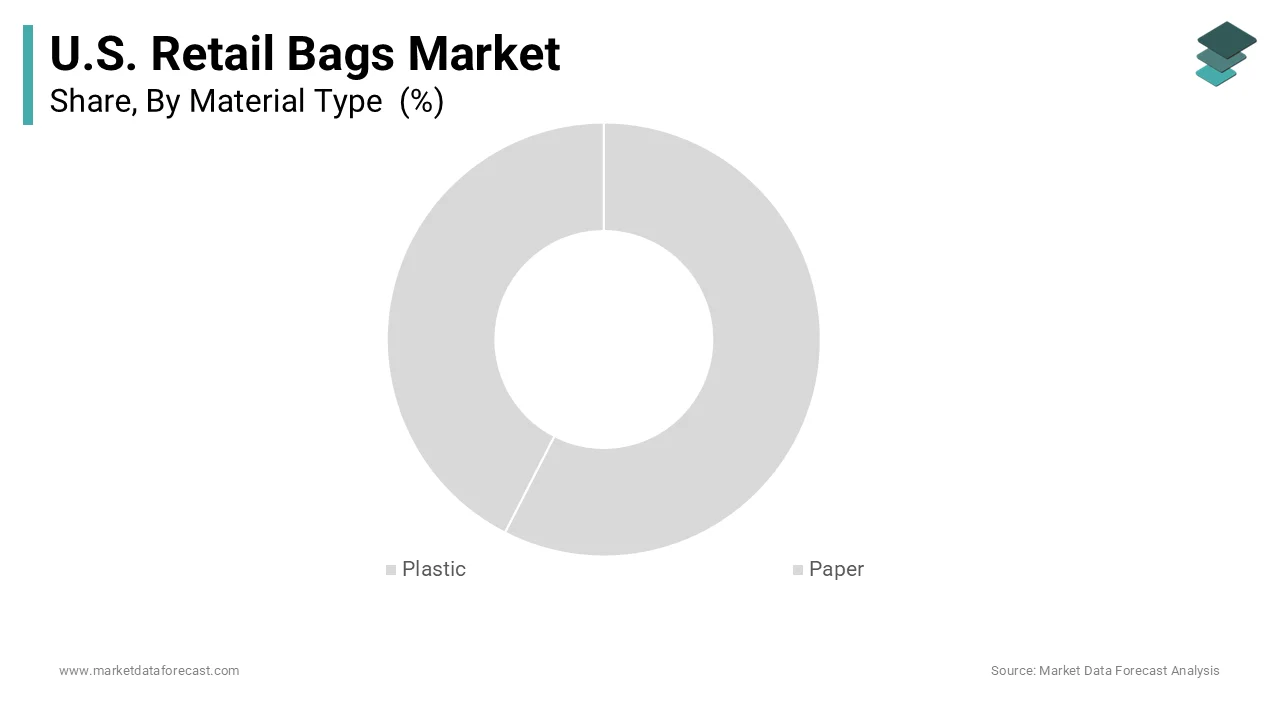
Also supporting their top position is the well-established manufacturing infrastructure and stable supply chain that supports large-scale production. The United States has a robust petrochemical industry that provides a consistent and abundant supply of raw materials such as ethylene and propylene for plastic bag production. As per multiple studies, the domestic production of natural gas liquids, which are feedstocks for plastic manufacturing,g has increased significantly, ly ensuring a reliable source of materials at competitive prices. This local availability reduces dependence on imports and mitigates risks associated with global supply chain disruptions. The mature manufacturing ecosystem includes numerous specialized facilities capable of producing various types of plastic bags efficiently and at scale. This infrastructure allows for rapid response to changes in demand and enables manufacturers to maintain consistent quality standards. The recycling infrastructure for plastic films, ms although limited, ted is more developed than that for many biodegradable alternatives, providing a pathway for waste management in certain jurisdictions. Retailers benefit from the predictability of supply and pricing, which facilitates long-term planning and budgeting. As per research, the economies of scale achieved by large plastic manufacturers further lower unit costs, making it difficult for alternative materials to compete on price. The existing machinery and technology for plastic bag production are highly optimized, resulting in minimal waste and high productivity. This structural advantage ensures that plastic bags remain the default choice for many retailers who prioritize reliability and cost-effectiveness. The stability of the supply chain thus reinforces the leading position of plastic bags in the United States retail market.
The paper bags segment is estimated to register the fastest CAGR of 6.8% between 2026 and 2034. This quick surge of the segment is mainly propelled by stringent environmental regulations and shifting consumer preferences toward sustainable packaging solutions. Many states and municipalities have implemented bans or fees on single-use plastic bags, prompting retailers to switch to paper alternatives, which are perceived as more environmentally friendly. As per legislative tracking, over 200 local jurisdictions in the United States have enacted some form of plastic bag restriction creating a significant demand for compliant packaging options. Consumers increasingly view paper bags as recyclable and biodegradable, aligning with their values regarding environmental conservation. Surveys indicate that 65 percent of shoppers prefer paper packaging over plastic due to its lower environmental impact. This preference drives retailers to adopt paper bags to enhance their brand image and attract environmentally conscious customers. The tactile and aesthetic appeal of paper bags also contributes to their growth as they are often associated with higher quality and premium shopping experiences. Brands leverage this perception to elevate their product presentation and customer engagement. Furthermore, the ease of recycling paper bags through existing municipal waste streams makes them a practical choice for both consumers and waste management facilities. As per waste management data, paper has a higher recycling rate compared to plastic film,m s which reinforces its sustainability credentials. This regulatory and consumer-driven momentum ensures that paper bags continue to grow at the fastest rate in the market.
Also bolstering the segment's expansion is the advancement in production technology and the increased use of recycled content, which enhances sustainability and cost competitiveness. Manufacturers are increasingly utilizing post-consumer waste paper to produce retail bags, reducing the need for virgin wood pulp and lowering the environmental footprint. As per a study, the use of recycled fiber in paper bag production has increased by 15 percent in recent years, rs reflecting a shift toward circular economy practice.. Technological innovations in pulping and papermaking have improved the strength and durability of recycled paper bags, making them viable alternatives to traditional options. These advancements address previous concerns about the reliability of paper bags for carrying heavy items. The development of water-based inks and adhesives further enhances the recyclability and compostability of paper bags, appealing to eco-conscious brands. Retailers are also benefiting from the ability to customize paper bags with high-quality prints using sustainable materials, which supports branding efforts. As per manufacturing data, the efficiency of modern paper bag production lines has improved, ed reducing waste and energy consumption during manufacturing. This operational efficiency helps mitigate the higher costs associated with paper packaging, ing making it more attractive to retailers. The integration of digital printing technologies allows for short runs and personalized de,signs which cater to niche markets and seasonal promotions. These technological and material improvements ensure that paper bags remain a dynamic and rapidly growing segment in the retail packaging industry.
By End Use Insights
The grocery stores segment led the United States retail bags market and captured a 45.7% share in 2025. This leading position of the segment was attributed to the high frequency of transactions and the essential nature of food shopping. Americans visit grocery stores regularly,ularly with the average household making 1.5 trips per week, resulting in a massive cumulative demand for carryout bags. The sheer volume of items purchased per trip often necessitates the use of multiple bags to transport goods safely and efficiently. This consistent and high volume usage creates a steady and reliable demand for retail bags within the grocery sector. Supermarkets and hypermarkets are the primary distributors of both plastic and paper bags, accounting for a significant portion of total bag consumption. As per retail data, the grocery sector accounts for over 40 percent of all retail bag usage in the United States, highlighting its dominant role. The need for hygienic and secure packaging for food items further reinforces the reliance on dedicated retail bags. Grocery retailers often provide bags as a standard service to enhance customer convenience and streamline the checkout process. The competitive nature of the grocery industry also drives retailers to use branded bags as a marketing tool to increase brand visibility in residential areas. The habitual use of bags for grocery shopping is deeply ingrained in consumer behavior, making it difficult to replace entirely with reusable alternatives without significant behavioral shifts. As per consumer studies, the convenience of single-use bags remains a key factor in customer satisfaction for grocery shoppers. This combination of high-frequency essential usage and operational necessity solidifies the position of grocery stores as the leading end-use segment.
A key pillar for this top position is the intense regulatory pressure faced by supermarkets to comply with local and state bag laws. Grocery stores are often the primary target of plastic bag bans and fee initiatives due to their high volume of distribution. As per sources, grocery retailers have been at the forefront of adopting alternative packaging solutions such as thicker reusable plastic bags, paper bags,s and compostable options to meet legal requirements. This adaptation has made grocery stores the largest consumers of compliant retail bags in the market. The transition to these alternatives requires significant investment in new supply chains and inventory management,t which grocery chains are well equipped to handle due to their scale. The implementation of bag fees in many jurisdictions has also generated revenue that some retailers reinvest in sustainability initiatives or offset against operational costs. This financial mechanism encourages the continued use of compliant bags while discouraging waste. Grocery stores also play a crucial role in educating consumers about sustainable practices through signage and promotions at the point of sale. As per research, the leadership of grocery retailers in adopting sustainable packaging sets a precedent for other retail sectors. The visibility of these changes in daily shopping routines amplifies their impact on consumer behavior. Consequently, ly the regulatory environment not only sustains but also shapes the dominance of the grocery segment in the retail bags market by driving the adoption of diverse and compliant packaging solutions.
On the contrary, the food service segment is anticipated to witness the fastest CAGR of 7.2% during the forecast period due to the sustained expansion of takeout and delivery services,ces which accelerated during the pandemic and have remained popular among consumers. The convenience of ordering food for home consumption has become a permanent fixture in American dining habits, driving demand for durable and functional carrying bags. As per restaurant industry data, off-premise dining, including takeout and delivery,y now accounts for 60 percent of all restauranttransactionso.ns This shift requires restaurants to provide sturdy bags that can securely hold multiple containers, drinks, and utensils without leaking or tearing. The need for thermal insulation in some cases also drives the adoption of specialized bags that maintain food temperature. Quick service restaurants and fast casual chains are particularly aggressive in adopting branded bags that serve as mobile advertising when carried by customers. The visual appeal of these bags enhances brand recognition and customer loyalty. Furthermore,e the rise of third-party delivery platforms has standardized the need for high-quality packaging that ensures food integrity during transit. As per a study, the frequency of food service transactions combined with the necessity for reliable packaging creates a robust growth trajectory for this segment. The ongoing innovation in bag design to accommodate diverse menu items further supports this expansion. This structural change in dining behavior ensures that the food service segment continues to grow at the fastest rate.
This fast-growing segment is pushed forward by the widespread adoption of sustainable packaging initiatives by quick-service restaurants and coffee chains. Major food service brands are committing to eliminating single-use plastics and switching to compostable or recyclable paper bags to align with corporate sustainability goals. As per corporate announcements, several leading fast food chains have pledged to source 100 percent of their guest packaging from renewable,e recycled, or certified sources by 202. This commitment drives significant demand for eco-friendly retail bags in the food service sector. Consumers dining out or ordering takeout increasingly expect restaurants to demonstrate environmental responsibility, influencing their choice of establishment. The use of branded paper bags made from recycled content allows restaurants to communicate their sustainability efforts directly to customers. These bags often feature messaging about recycling or composting, ng which educates consumers and reinforces brand values. The aesthetic quality of sustainable bags also enhances the perceived value of the food experience, making them a preferred choice for premium fast casual brands. As per sources, the integration of sustainability into packaging strategy is becoming a competitive differentiator in the food service industry. The scalability of these initiatives across large franchise networks amplifies their impact on market demand.F urthermoree, the regulatory pressures on food service establishments to reduce waste are accelerating this transition. This combination of corporate commitment,nt consumer expectation, ion and regulatory influence ensures that the food service segment remains a high-growth area in the retail bags market.
COUNTRY LEVEL ANALYSIS
United States Retail Bags Market Analysis
The United States outperformed others in the North American retail bags market and occupied an 88.6% share in 2025. This growth was driven by its large consumer base and advanced retail infrastructure. The country serves as the primary driver of market dynamics in the region, influenced by a complex interplay of federal,l state, and local regulations regarding packaging waste. As per economic data, the United States retail sector generates trillions of dollars in annual sales, creating a massive demand for packaging solutions,s including retail bags. The diverse landscape of the US market is characterized by a mix of traditional single-use plastics and emerging sustainable alternatives, reflecting varying regional preferences and legislative frameworks. The presence of major global retail chains and food service providers further amplifies the scale of bag consumption. Consumers in the United States are increasingly aware of environmental issues,s leading to a gradual shift toward reusable and recyclable options. However, the convenience of single-use bags remains a significant factor in maintaining their prevalence in many areas. The market is also driven by innovation in material science as manufacturers develop new biodegradable and compostable solutions to meet regulatory and consumer demands. The United States serves as a major testing ground for general retail technology. Meanwhile, sustainable models like circular bag rental and reusable bag sharing services are being piloted across North America and Europe to reduce single-use plastic waste. The strong emphasis on corporate social responsibility among US companies further accelerates the adoption of sustainable practices. This combination of scale, regulatory diversity, and innovation ensures that the United States remains the central hub for the retail bags industry in North America. The ongoing evolution of consumer behavior and policy will continue to shape the market trajectory in the coming years.
COMPETITIVE LANDSCAPE
The competition in the United States retail bags market is characterized by a mix of large multinational corporations and specialized regional manufacturers vying for dominance through innovation and sustainability. Major players leverage their extensive distribution networks and economies of scale to offer competitive pricing and consistent supply to large retail chains. These companies invest significantly in research and development to create advanced materials that balance durability with environmental responsibility. Smaller niche firms differentiate themselves by focusing on bespoke designs and premium eco-friendly options such as organic cotton or hemp bags. The market sees intense rivalry in the paper segment as manufacturers compete to provide high-quality recyclable alternatives to plastic. Regulatory pressures across different states create a fragmented landscape requiring companies to adapt quickly to varying compliance standards. Price sensitivity remains a key factor influencing purchasing decisions, particularly among small businesses and independent retailers. Brand reputation and corporate social responsibility initiatives play crucial roles in securing contracts with major grocery and retail chains. Customers increasingly prioritize suppliers who demonstrate transparent sourcing and ethical manufacturing practices. The entry of new startups offering innovative reusable bag subscription models adds another layer of complexity to the competitive environment. Overall, the market is dynamic with continuous shifts in material preference and regulatory frameworks driving strategic adaptations among participants. Success depends on the ability to innovate sustainably while maintaining cost efficiency and meeting diverse customer needs.
KEY MARKET PLAYERS
Some of the companies that are playing a dominating role in the U.S. retail bags market include
- Inteplast Group
- International Paper Company
- Smurfit Kappa Group PLC
- Novolex Holdings Inc.
- Sigma Plastic Group
- Amcor plc
- ProAmpac LLC
- El Dorado Packaging Inc.
- Mondi Group PLC
- Berry Global Inc.
- Sealed Air Corporation
- Atlantic Poly, Inc.
- Jet Paper Bags LLC
- Rainbow Packaging Inc.
- Rutan Poly Industries Inc.
- Welton Bibby & Baron Ltd
- American Packaging Corp.
- Bagcraft LLC
- Coveris Holdings SA
- BioPak Pty Ltd
TOP LEADING PLAYERS IN THE MARKET
- International Paper Company stands as a pivotal entity in the United States retail bags market, et leveraging its extensive manufacturing capabilities to produce high-quality paper-based packaging solutions. The company focuses on sustainable forestry practices and recycled content integration to meet growing environmental demands from retailers and consumers. Recent initiatives include expanding its production capacity for premium paper bags that offer enhanced durability and branding opportunities for major grocery chains. International Paper actively collaborates with retail partners to develop custom packaging designs that align with corporate sustainability goals. By investing in advanced recycling technologies, the company ensures that its products contribute to a circular economy. These efforts strengthen its position as a preferred supplier for businesses seeking reliable and eco-friendly bagging options. The company also emphasizes operational efficiency to maintain competitive pricing while adhering to strict environmental standards. Through continuous innovation in fiber science, International Paper delivers solutions that balance performance with ecological responsibility. This strategic focus allows the company to remain at the forefront of the transition away from single-use plastics. Its commitment to transparency and sustainability reporting further enhances trust among stakeholders. International Paper thus plays a crucial role in shaping the future of retail packaging in the United States by providing scalable and responsible alternatives.
- Novolex Holdings is a significant contributor to the United States retail bags market, offering a diverse portfolio of plastic,c paper, and reusable bag solutions. The company serves a wide range of retail sectors, rs including grocery, food service,e and specialty stores with customized packaging options. Recent actions involve substantial investments in recycling infrastructure to support the production of bags made from post-consumer recycled materials. Novolex actively promotes its closed-loop systems, which allow retailers to return used plastic films for reprocessing into new bags. This initiative helps clients meet their sustainability targets while reducing waste. The company also expands its product line to include compostable and biodegradable options,s catering to regions with strict plastic bans. By leveraging its nationwide distribution network, RKk Novolex ensures timely delivery and consistent supply for large-scale retail operations. The firm engages in educational campaigns to help consumers understand proper disposal and recycling methods. These efforts enhance brand loyalty and demonstrate corporate responsibility. Novolex continues to innovate in material science to improve the strength and functionality of its eco-friendly bags. Its comprehensive approach to sustainability and customer service solidifies its reputation as a leading provider in the industry. The company remains dedicated to helping retailers navigate the complex landscape of packaging regulations and consumer expectations.
- Berry Global Group Inc plays a vital role in the United States retail bags market by manufacturing a vast array of protective and carrying packaging solutions. The company specializes in high-performance plastic films and engineered materials that cater to the needs of modern retailers. Recent strategies focus on increasing the use of recycled resins in its product lines to reduce environmental impact and comply with evolving regulations. Berry Global collaborates with brands to create lightweight yet durable bags that minimize material usage without compromising strength. The company invests heavily in research and development to innovate sustainable packaging technologies such as biobased polymers. By optimizing its manufacturing processes, Berry Global achieves cost efficiencies that benefit both the company and its customers. The firm also prioritizes safety and quality assurance, ensuring that all products meet rigorous industry standards. Berry Global actively participates in industry consortia aimed at advancing circular economy principles for plastics. These collaborations help shape best practices and drive collective progress toward sustainability. The company's global expertise, combined with local market knowledge, enables it to deliver tailored solutions effectively. Berry Global remains committed to supporting retailers in their transition to more sustainable packaging models through innovation and partnership.
TOP STRATEGIES USED BY KEY MARKET PARTICIPANTS
Key players in the United States retail bags market primarily focus on product innovation and sustainability integration to maintain a competitive advantage. Companies invest heavily in developing biodegradable and compostable materials that meet stringent environmental regulations while satisfying consumer demand for eco-friendly options. Strategic partnerships with recycling firms enable manufacturers to incorporate post-consumer recycled content into their production processes, enhancing circularity. Expansion of manufacturing capacities for paper and reusable bags allows firms to cater to the shifting preferences away from single-use plastics. Brands emphasize customization services, offering printed and branded bags that serve as marketing tools for retailers. Cost optimization through efficient supply chain management helps mitigate the higher expenses associated with sustainable materials. Educational initiatives targeting consumers and businesses promote proper disposal and recycling practices, fostering brand loyalty. Companies also explore digital platforms for ordering and tracking shipments ,improving customer experience and operational efficiency. Diversification of product portfolios to include various sizes and materials ensures a broader market reach. Regulatory compliance remains a central strategy with firms proactively adapting to local and state laws. These multifaceted approaches enable market participants to navigate challenges and capitalize on emerging opportunities in the evolving retail packaging landscape.
MARKET SEGMENTATION
This research report on the U.S. retail bags market has been segmented and sub-segmented into the following categories:
By Material
- Plastic
- Paper
- Others
By End-Use
- Grocery Stores
- Food Service
- Others
By Region
- California
- Texas
- Florida
- Rest of the United States