- Product Description Description
- Table of Contents TOC
- List of Table & Figure LOT
- Get Free Sample PDF Sample PDF
Market Size, 2025
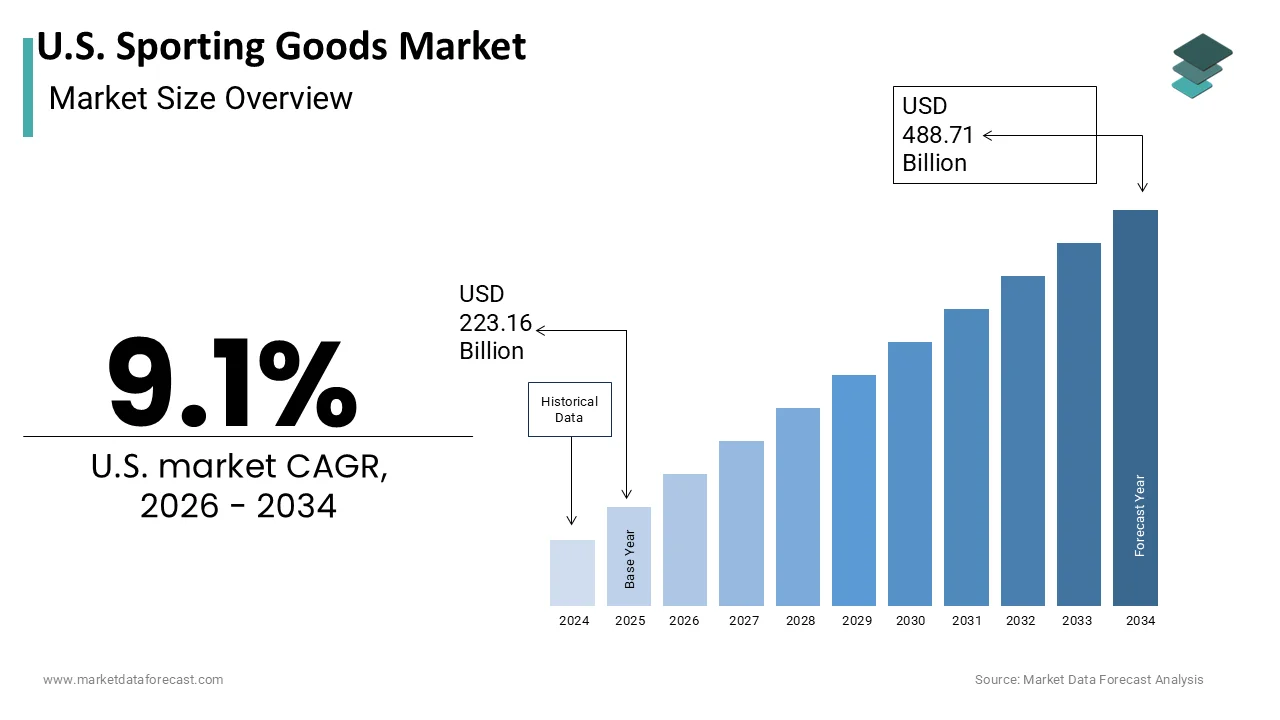
$223.16 BnMarket Estimate, 2026
$243.47 BnMarket Forecast, 2034
$488.71 BnCAGR, 2026–2034
9.1%U.S. Sporting Goods Market Size
The U.S. Sporting Goods Market was valued at USD 223.16 billion in 2025, is estimated to reach USD 243.47 billion in 2026, and is projected to reach USD 488.71 billion by 2034, growing at a CAGR of 9.1% from 2026 to 2034.
The sporting goods ARE products including athletic footwear, apparel, equipment, and accessories designed for physical activity and recreational sports. Participation rates in various sports activities significantly influence consumption patterns. As per the Physical Activity Council, approximately 55% of the United States population participated in at least one sport or physical activity in 2024. This high level of engagement creates a sustained baseline demand for specialized gear and apparel. The market is characterized by a shift towards performance-oriented technologies and sustainable materials as consumers become more environmentally conscious. Retail channels have evolved to integrate digital experiences with physical stores, enhancing customer engagement through personalized recommendations and virtual try-on solutions. The definition extends beyond professional athletics to include casual fitness enthusiasts who prioritize health and wellness in their daily routines. According to the Bureau of Labor Statistics, average annual expenditures on sports equipment and supplies reached 780 dollars per consumer unit in recent years.
MARKET DRIVERS
Rising Health Consciousness And Preventive Healthcare Adoption Drive Demand
The increasing emphasis on preventive healthcare and personal wellness is escalating the growth of the United States sporting goods market. Consumers are progressively viewing physical activity not merely as a leisure pursuit but as an essential component of long-term health maintenance. This shift in mindset has led to a substantial rise in gym memberships, outdoor recreational activities, and home-based exercise routines. As per the International Health Racquet and Sportsclub Association, health club membership in the United States reached 64 million individuals in 2024. This large base of active individuals requires consistent access to high-quality athletic apparel, footwear, and equipment. The prevalence of chronic conditions such as obesity and diabetes further motivates individuals to adopt active lifestyles, thereby boosting demand for fitness-related products. The Centers for Disease Control and Prevention states that only 27% of adults meet the recommended guidelines for both aerobic and muscle-strengthening activities. This gap indicates significant potential for growth as public health initiatives encourage greater participation. The programs often include subsidies for fitness equipment or gym memberships, directly stimulating market demand. The integration of wearable technology also supports this trend by providing users with data-driven insights into their physical performance and by encouraging continued investment in sporting goods that complement these devices.
Expansion Of E-Commerce Platforms And Digital Retail Integration
The rapid evolution of e-commerce platforms and the seamless integration of digital retail technologies are greatly influencing the growth of the United States sporting goods market. Online shopping has become the preferred channel for many consumers due to its convenience, extensive product variety, and competitive pricing. Major retailers have invested heavily in omnichannel strategies that blend online browsing with physical store experiences, such as buy online,ne pick up in store services. Advanced algorithms and artificial intelligence enable personalized shopping experiences by recommending products based on past purchases and browsing behavior. This level of customization enhances customer satisfaction and loyalty by leading to higher conversion rates. Social media platforms also play a pivotal role, with influencers and athletes promoting specific brands to millions of followers. Instagram and TikTok have become key marketing venues, where visual content drives immediate purchase decisions. The ability to access global brands without geographical constraints allows consumers to find specialized equipment that may not be available locally. Furthermore, augmented reality tools allow users to visualize how equipment or apparel will look or fit before making a purchase, reducing return rates and increasing confidence in online transactions.
MARKET RESTRAINTS
Supply Chain Disruptions And Raw Material Volatility
The persistent supply chain disruptions and volatility in raw material costs are hindering the growth of the United States sporting goods market. Any interruption in these networks, whether due to geopolitical tensions, natural disasters, or logistical hurdles, can lead to delayed shipments and inventory shortages. As per the Federal Reserve Bank of New York, the Global Supply Chain Pressure Index remained elevated in early 2025, indicating ongoing challenges in international trade flows. These delays force retailers to operate with lower stock levels, which potentially results in missing out on sales during peak seasons. Additionally, the cost of key raw materials such as rubber, leather, and synthetic fibers fluctuates due to changing commodity prices and environmental regulations. Labor shortages in manufacturing hubs further exacerbate these issues by leading to higher production costs and longer lead times. The complexity of managing a global supply chain also makes it difficult for companies to quickly adapt to sudden changes in demand. These operational inefficiencies hinder the ability of brands to maintain consistent product availability and competitive pricing, ultimately restraining market growth and affecting consumer satisfaction.
Counterfeit Products And Intellectual Property Infringement
The proliferation of counterfeit products and intellectual property infringement to the integrity and profitability is also declining the growth of the United States sporting goods market. Fake athletic footwear and apparel flood online and unauthorized retail outlets, undermining brand value and consumer trust. These illicit goods often mimic popular designs but lack the quality and performance features of authentic products, leading to negative customer experiences that can damage brand reputation. The ease of setting up online stores on social media platforms allows counterfeiters to reach a wide audience with minimal oversight. Consumers may unknowingly purchase fake items, which not only results in financial loss but also poses safety risks with protective equipment. Brands invest heavily in legal actions and anti-counterfeit technologies, yet the sheer volume of infringing products makes enforcement challenging. This uncertainty can lead to overproduction or underinvestment in innovation. Furthermore, the association of brands with low-quality fakes can erode the premium positioning that many sporting goods companies strive to maintain, thereby limiting their ability to command higher prices and sustain long-term growth.
MARKET OPPORTUNITIES
Integration Of Smart Technology And Wearable Devices
The integration of smart technology and wearable devices is setting up new opportunities for the growth of the United States sporting goods market. Consumers increasingly seek products that provide real-time feedback on their performance, health metrics, and training efficiency. This demand has spurred innovation in connected footwear, smart apparel, and advanced fitness trackers that sync with mobile applications. The widespread adoption creates a synergistic ecosystem, where traditional sporting goods are enhanced by digital capabilities. Manufacturers can leverage data collected from these devices to develop more personalized and effective products. For instance, smart shoes can analyze running gait and suggest improvements, while connected apparel can monitor heart rate and muscle activity. This level of insight appeals to both amateur athletes and professionals who aim to optimize their training regimes. Partnerships between technology firms and sporting goods brands are becoming more common, fostering collaboration that drives innovation. The ability to offer a holistic fitness solution that combines physical equipment with digital analytics differentiates brands in a crowded market. Additionally, the gamification of fitness through apps and online communities encourages sustained engagement and repeat purchases. As consumers become more data-driven in their approach to health, the demand for integrated smart sporting goods is expected to rise, providing a lucrative avenue for market expansion and differentiation.
Growth In Women's Specific Athletic Apparel And Equipment
The expanding focus on women-specific athletic apparel and equipment is also expected to elevate the growth of the United States sporting goods market in the coming years. Historically, many products were designed with male physiology in mind, leaving a gap in the market for items tailored to female athletes. Recognizing this disparity, brands are increasingly investing in research and development to create gear that addresses the unique needs of women. This rise in participation drives demand for specialized products that offer better fit, support, and performance. The athleisure trend further blurs the lines between workout wear and casual clothing, allowing women to incorporate athletic apparel into their daily wardrobes. This versatility expands the potential customer base beyond active athletes to include fashion-conscious consumers. Brands that prioritize inclusivity and diversity in their marketing campaigns resonate strongly with female consumers, fostering brand loyalty. The introduction of inclusive sizing and adaptive designs for women with disabilities also opens new market segments.
MARKET CHALLENGES
Sustainability Pressures And Environmental Compliance Costs
Meeting stringent sustainability pressures and bearing the associated environmental compliance costs is a major challenge for the growth of the United States sporting goods market. Consumers and regulators are increasingly demanding eco-friendly practices by forcing companies to rethink their material sourcing, manufacturing processes, and waste management strategies. Transitioning to sustainable materials, such as recycled polyester or organic cotton, often involves higher initial costs and complex supply chain adjustments. Addressing this issue requires significant investment in recycling infrastructure and circular economy initiatives. Many brands face scrutiny over their carbon footprints and water usage, leading to mandatory reporting and potential penalties for non-compliance. The lack of standardized regulations across different regions complicates efforts to implement uniform sustainability practices. Small and medium-sized enterprises struggle particularly with these costs, as they lack the economies of scale enjoyed by larger corporations. Greenwashing accusations also pose a reputational risk if claims about sustainability are not backed by verifiable data. Consumers are becoming more adept at identifying genuine efforts versus marketing tactics, raising the bar for transparency. The need to balance environmental responsibility with profitability creates a delicate operational challenge.
Intense Market Saturation And Brand Differentiation Difficulties
The intense saturation and difficulties in achieving meaningful brand differentiation also contribute to the decline of the growth of the United States sporting goods sector. Consumers are bombarded with similar product offerings, leading to decision fatigue and increased price sensitivity. Differentiation often relies on minor technological enhancements or aesthetic changes, which may not be sufficient to sway loyal customers. The abundance of private-label brands from major retailers further intensifies competition by offering lower-priced alternatives. Maintaining brand relevance requires continuous innovation and aggressive marketing campaigns, which strain financial resources. The rapid pace of trend cycles means that products can become obsolete quickly, increasing the risk of inventory obsolescence. Brands must constantly reinvent themselves to stay ahead, a process that is both costly and uncertain. The homogenization of product features makes it challenging to communicate unique value propositions effectively.
REPORT COVERAGE
| REPORT METRIC | DETAILS |
| Market Size Available | 2025 to 2034 |
| Base Year | 2025 |
| Forecast Period | 2026 to 2034 |
| Segments Covered | By Product Type, Sport Type, Distribution Channel, and Region. |
| Various Analyses Covered | Global, Regional and Country-Level Analysis, Segment-Level Analysis, Drivers, Restraints, Opportunities, Challenges; PESTLE Analysis; Porter’s Five Forces Analysis, Competitive Landscape, Analyst Overview of Investment Opportunities |
| Countries Covered | California, Texas, Florida, New York, and the rest of the United States |
| Market Leaders Profiled | Nike, Inc., Adidas AG, Under Armour, Inc., Puma SE, New Balance Athletics, Inc., Dick’s Sporting Goods, Inc., Academy Sports and Outdoors, Inc., Callaway Golf Company, Wilson Sporting Goods Co., VF Corporation, Columbia Sportswear Company, YETI Holdings, Inc. |
SEGMENTAL ANALYSIS
By Product Type Insights
The equipment segment accounted in holding 48.1% of the United States sporting goods market in 2025 due to its essential nature across a wide variety of sports and physical activities. The widespread participation in both team and individual sports is greatly influencing the growth of the segment. Americans engage in diverse activities ranging from basketball and soccer to tennis and golf, each requiring specialized gear. This massive user base creates a consistent demand for high-quality equipment. Schools and universities also contribute significantly to this demand through organized athletic programs. The institutions require bulk purchases of durable equipment to support training and competitions. Furthermore, the rise of recreational leagues for adults has expanded the consumer base beyond youth demographics. Community centers and private clubs frequently update their inventory to meet safety standards and improve user experience. The necessity for sport-specific equipment ensures that consumers make repeated purchases as they progress in skill level or switch activities.
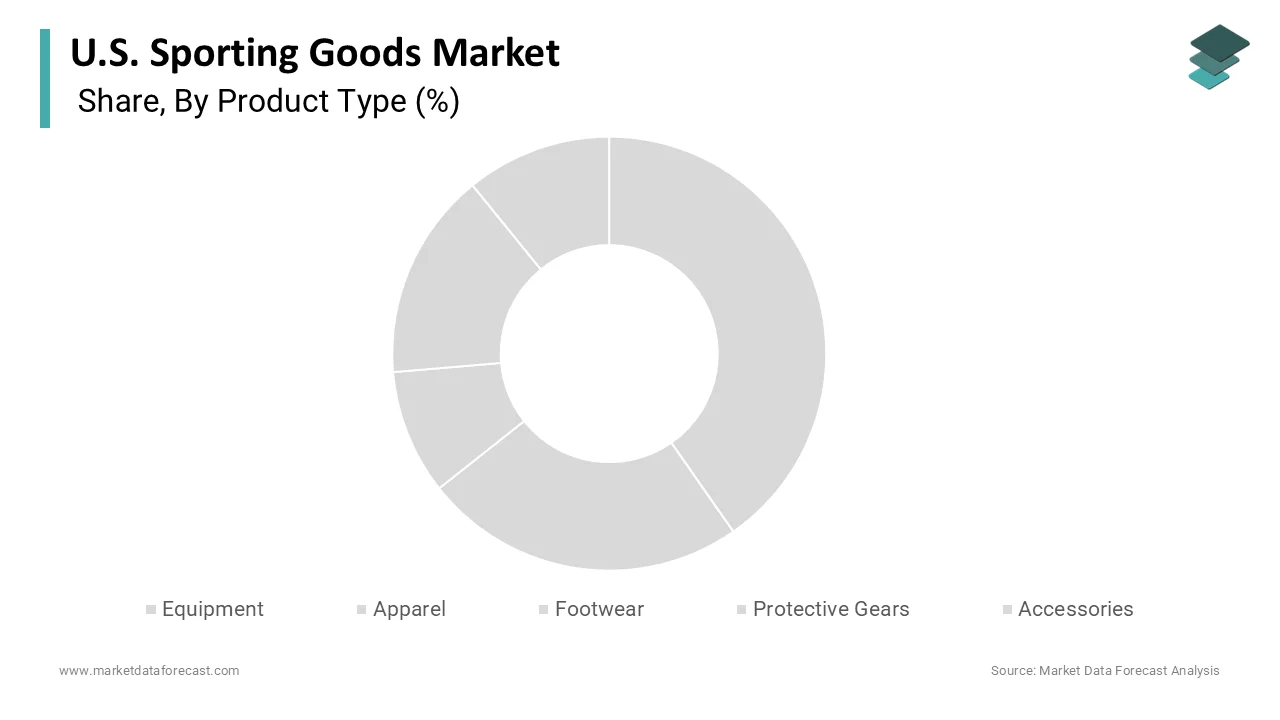
The protective gears segment is expected to 6.8% from 2025 to 2030. This rapid expansion is fueled by increasing awareness of safety risks and stringent regulations mandating the use of protective equipment in various sports. The growing popularity of high-impact sports and outdoor adventures further accelerates demand for helmets, pads, and mouthguards.
Rising awareness of sports-related injuries is a critical factor driving the rapid growth of the protective gear segment. Consumers are becoming more informed about the long-term consequences of concussions, fractures, and other traumatic injuries associated with athletic activities. As per the Centers for Disease Control and Prevention, an estimated 1.35 million emergency department visits for sports and recreation-related injuries occurred among children and adolescents in 2024. This alarming statistic has prompted parents and coaches to prioritize safety measures. Medical professionals actively advocate for the use of certified protective gear to mitigate risks. The introduction of stricter safety standards by organizations, such as the American Society for Testing and Materials, has increased consumer confidence in product efficacy. Schools and youth leagues are increasingly enforcing mandatory usage policies for helmets and padding in contact sports. Insurance providers also offer incentives for teams and individuals who adhere to safety protocols, further encouraging adoption. The media coverage of high-profile injuries in professional sports has heightened public consciousness, leading to a cultural shift towards preventive care. Consumers are willing to invest in premium protective equipment that offers advanced shock absorption and comfort.
By Sport Type Insights
The outdoor sports segment was the dominant by capturing 43.2% of the United States sporting goods market share in 2025, with the vast geographical diversity and favorable climate conditions in many regions. The accessibility of public parks and trails facilitates widespread participation, making outdoor sports a staple of American leisure culture. Extensive infrastructure and public access to recreational facilities are also bolstering the growth of the segment. The United States boasts a vast network of public parks, trails, and sports fields that encourage regular physical activity. As per the National Park Service, over 300 million visits were recorded at national park sites in 2024, indicating strong engagement with outdoor environments. Local municipalities invest heavily in maintaining community sports complexes and green spaces by ensuring that residents have convenient options for exercise. School districts also utilize outdoor facilities for physical education classes and interscholastic competitions by embedding outdoor sports in early development. The availability of well-maintained surfaces and equipment in public areas lowers the cost of participation, making it accessible to diverse socioeconomic groups. Community events, such as marathons and charity runs,s further promote outdoor engagement by creating a vibrant culture around these activities.
The adventure sports segment is likely to register the fastest CAGR of 7.2% from 2026 to 2034. The influence of social media and the rising experience economy are enhancing the growth of the segment. Platforms, such as Instagram and YouTube, showcase visually stunning content of adventurous activities, inspiring users to seek similar thrills. The desire to capture and share unique experiences motivates individuals to participate in adventure sports by viewing them as valuable life milestones rather than mere hobbies. The experience economy prioritizes memorable events over material possessions by leading consumers to allocate more budget towards activities that offer adrenaline and novelty. Travel agencies and tour operators capitalize on this trend by offering packaged adventure trips that include necessary gear and guidance. This accessibility lowers the barrier for beginners who may lack the skills or equipment to start independently. The viral nature of adventure sports content creates a feedback loop, where increased visibility leads to higher participation rates. Brands leverage this by sponsoring athletes and events that generate shareable moments. The emotional connection formed through these experiences fosters brand loyalty and repeat participation.
By Distribution Channel Insights
The offline distribution channel segment was the largest by capturing 33.2% of the United States sporting goods market share in 2025. Sporting apparel and footwear require precise sizing to ensure comfort and performance, which is difficult to achieve through online shopping alone. Physical stores allow customers to try on multiple sizes and styles, which significantly reduces the likelihood of returns and enhances satisfaction. For equipment, such as bicycles and golf clubs, professional fitting services are often available in-store, providing customized adjustments that optimize performance. This level of personalization builds trust and loyalty among consumers who value expert advice. The ability to feel the material texture and assess the build quality firsthand influences purchasing decisions, particularly for premium products. Retailers invest in spacious fitting rooms and interactive displays to enhance the trial experience. Staff training programs ensure that employees can provide accurate recommendations based on individual needs. The immediate gratification of taking home a purchase also appeals to consumers who wish to avoid shipping delays.
The online distribution channel is estimated to grow at the fastest CAGR of 9.5% from 2026 to 2034. Convenience and expanded product selection are driving the growth of the segment. Consumers appreciate the ability to browse and purchase sporting goods from anywhere at any time, fitting shopping into busy schedules. The e-commerce sales in the retail sector continue to rise, with sporting goods being a significant contributor. Online platforms offer a virtually unlimited inventory, allowing customers to access niche products and specific sizes that may not be available in local stores. This breadth of selection empowers consumers to compare brands and models easily, ensuring they find the best match for their needs. The elimination of travel time and parking hassles further enhances the appeal of online shopping. Mobile applications provide seamless browsing experiences, with features such as saved preferences and quick reordering. Subscription services for recurring purchases, such as socks or energy gel, add another layer of convenience. The ability to read detailed product descriptions and customer reviews helps inform decision-making, compensating for the lack of physical inspection. Retailers optimize their websites for speed and usability, reducing friction in the checkout process.
COMPETITIVE LANDSCAPE
The competition in the United States sporting goods market is intense and characterized by the presence of established global giants alongside emerging niche brands. Major corporations leverage their extensive resources to dominate through aggressive marketing campaigns and continuous product innovation. These leaders invest heavily in research and development to create proprietary technologies that enhance athletic performance and consumer appeal. Brand loyalty plays a crucial role as companies strive to build emotional connections with consumers through sponsorships and community engagement. The rise of digital channels has lowered barriers to entry, allowing smaller brands to reach specific audiences with specialized offerings. This fragmentation forces larger players to adapt quickly by adopting omnichannel strategies and personalized customer experiences. Price competition remains significant, particularly in the apparel segment,t where private label brands from major retailers offer affordable alternatives. Sustainability has become a key differentiator as consumers increasingly prefer eco-friendly options. Companies must balance innovation with cost efficiency to maintain profitability.
KEY MARKET PLAYERS
Some of the companies that are playing a dominating role in the U.S. Sporting Goods Market include
- Nike, Inc.
- Adidas AG
- Under Armour, Inc.
- Puma SE
- New Balance Athletics, Inc.
- Dick’s Sporting Goods, Inc.
- Academy Sports and Outdoors, Inc.
- Callaway Golf Company
- Wilson Sporting Goods Co.
- VF Corporation
- Columbia Sportswear Company
- YETI Holdings, Inc.
TOP LEADING PLAYERS IN THE MARKET
- Nike Inc maintains a formidable presence in the United States sporting goods landscape through its relentless focus on innovation and brand storytelling. The company consistently introduces advanced footwear technologies such as Air Zoom and React foam to enhance athletic performance for consumers. Recent initiatives include expanding its direct-to-consumer digital platforms, which allow for personalized shopping experiences and exclusive product releases. Nike invests heavily in sponsoring top-tier athletes and major sports leagues to reinforce its cultural relevance and aspirational appeal. The brand also prioritizes sustainability by launching Move to Zero campaigns that utilize recycled materials in production processes.
- Adidas North America strengthens its position by leveraging high-profile collaborations with celebrities and designers to create buzzworthy products that appeal to fashion-conscious consumers. The company focuses on blending performance technology with streetwear aesthetics to capture the growing athleisure segment effectively. Recent actions include enhancing its supply chain agility to respond quickly to changing trends and consumer demands in the United States. Adidas also commits to sustainable practices by increasing the use of Primegreen materials in its apparel and footwear lines. The brand actively engages with local communities through grassroots sports programs and digital fitness initiatives.
- Under Armour Inc focuses on delivering high-performance apparel and footwear designed specifically for serious athletes and fitness enthusiasts. The company emphasizes technical innovation through its proprietary fabrics that offer superior moisture management and thermal regulation. Recent strategies involve streamlining its product assortment to focus on core categories such as running, training,g and basketball. Under Armour enhances its digital ecosystem by integrating its MapMyRun application with product recommendations to create a holistic fitness experience. The brand also invests in retail store optimizations that provide immersive testing environments for customers. Under Armour elevates its reputation for durability and performance by collaborating with professional sports teams and elite athletes. These efforts help the company differentiate itself in a crowded market by appealing to consumers who prioritize function and quality.
TOP STRATEGIES USED BY KEY MARKET PARTICIPANTS
Key players in the United States sporting goods market primarily employ digital transformation strategies to enhance direct-to-consumer engagement and sales. Companies invest heavily in e-commerce platforms and mobile applications to offer personalized shopping experiences and exclusive product drops. Another major strategy involves sustainability initiatives where brands integrate recycled materials and eco-friendly manufacturing processes to appeal to environmentally conscious consumers. Collaborations with high-profile athletes and celebrities are frequently used to generate hype and strengthen brand loyalty among younger demographics. Additionally, firms focus on supply chain optimization to improve agility and reduce lead times, ensuring faster response to market trends. Innovation in product technology remains central as companies develop advanced materials that enhance performance and comfort. Retailers also adopt omnichannel approaches that seamlessly blend online and offline experience,s allowing customers to browse digitally and pick up in store.
MARKET SEGMENTATION
This research report on the U.S. sporting goods market is segmented and sub-segmented into the following categories.
By Product Type
- Equipment
- Apparel
- Footwear
- Protective Gears
- Accessories
By Sport Type
- Outdoor Sports
- Indoor Sports
- Fitness Sports
- Adventure Sports
- Team Sports
- Others
By Distribution Channel
- Offline Stores
- Online Stores
By Country
- California
- Texas
- Florida
- New York
- Rest of the United States