- Product Description Description
- Table of Contents TOC
- List of Table & Figure LOT
- Get Free Sample PDF Sample PDF
Market Size, 2025
$28 BnMarket Estimate, 2026
$28.60 BnMarket Forecast, 2034
$33.88 BnCAGR, 2026–2034
2.14%U.S. Sports Car Market Size, Share, Trends & Forecast (2026–2034)
- Market Scope: Comprehensive analysis of the United States sports car market covering fuel types, body styles, drive types, engine types, performance tiers, and key regional dynamics.
- Market Valuation: Valued at USD 28.00 billion in 2025, estimated at USD 28.60 billion in 2026, and projected to reach USD 33.88 billion by 2034, registering a steady CAGR of 2.14% from 2026 to 2034.
- Primary Growth Drivers: Rising disposable income and wealth concentration among affluent demographics; rapid technological advancements in powertrain efficiency, connectivity, and active safety systems; and the integration of electrified powertrains.
Key U.S. Sports Car Market Segment Metrics (2026–2034)
| Category | Leading Segment (2025 Position) | Fastest-Growing Segment |
|---|---|---|
| By Fuel Type | Gasoline segment (maintained the majority market share in 2025 due to established refueling infrastructure, deep cultural legacy, and sensory appeal) | Electric fuel type segment (predicted to witness the highest CAGR of 13.2% from 2026 to 2034) |
| By Body Style | Coupe segment (dominated with a substantial share in 2025, driven by superior structural rigidity, torsional stiffness, and all-weather versatility) | Convertible segment (experiencing the fastest CAGR of 6.2% due to immersive open-air driving desires and Sunbelt demographics) |
| By Engine Type | Turbocharged engine segment (captured a 58.2% share in 2025, praised for downsized efficiency and meeting strict corporate average fuel economy standards) | Electric engine segment (expected to grow at a CAGR of 12.7% driven by instant torque delivery and powertrain efficiency) |
Major U.S. Sports Car Market Players & Competitive Structure
Market Structure: Highly competitive sector defined by iconic luxury marques, domestic performance divisions, and exotic supercar manufacturers competing on brand heritage, track performance, and cutting-edge digital integrations.
Key U.S. Sports Car Brands & Companies: Ferrari, Porsche, Ford Motor Company, Lamborghini, McLaren, Chevrolet General Motors, Aston Martin, Bugatti, Lotus, and Nissan.
 Download Free Sample Report
U.S. Sports Car Market Size
The U.S. sports car market was valued at USD 28 billion in 2025, is estimated to reach USD 28.60 billion in 2026, and is projected to reach USD 33.88 billion by 2034, growing at a CAGR of 2.14% from 2026 to 2034.
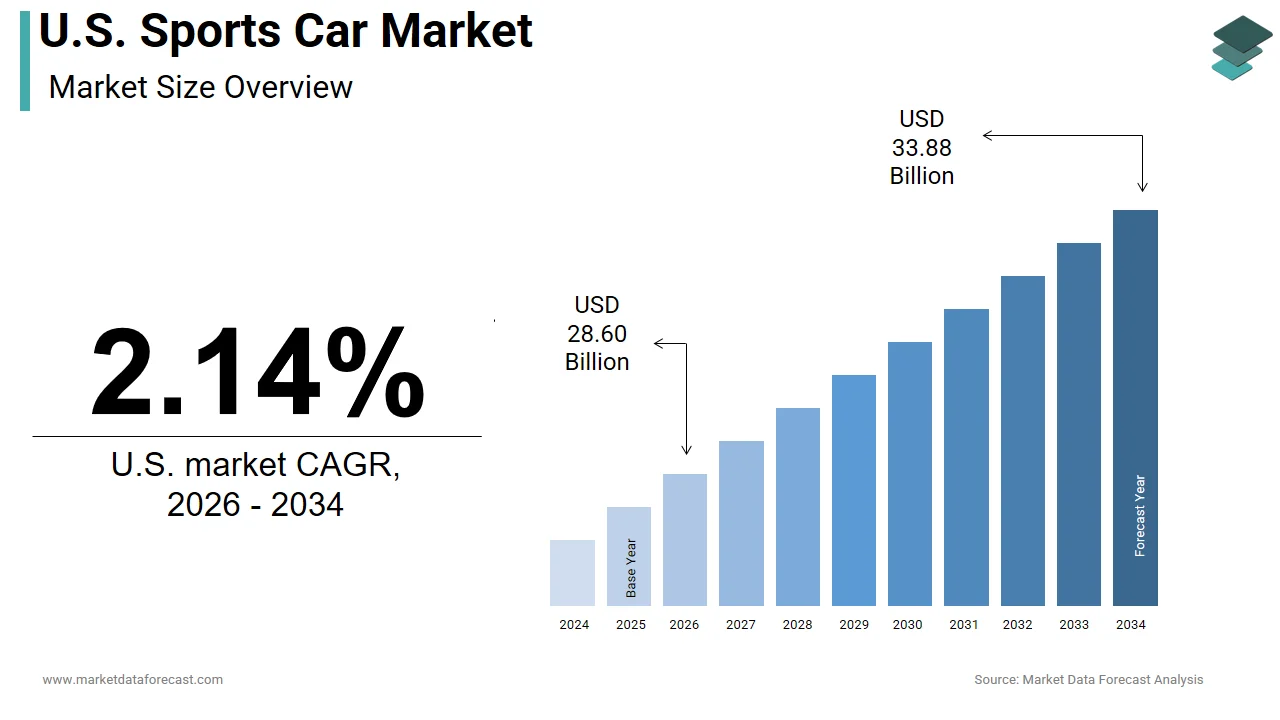
A sports car is a vehicle built for dynamic performance, emphasizing handling, agility, and the thrill of driving. These vehicles are characterized by low centers of gravity, optimized power-to-weight ratios, and advanced aerodynamic designs that distinguish them from standard passenger cars. The sector includes a diverse range of configurations from entry-level Rear Wheel Drive coupes to high-end supercars and track-focused machines. According to the Bureau of Transportation Statistics, there are over 297 million registered vehicles in the United States, with the majority categorized as passenger cars and light trucks. Federal Highway Administration data indicate that average vehicle miles traveled (VMT) fluctuate with economic conditions, with higher-income households generally showing higher VMT and vehicle ownership rates. The Environmental Protection Agency sets stringent, technology-neutral emissions standards that have led manufacturers to widely adopt technologies like turbocharging and hybridization to meet regulatory limits while maintaining vehicle performance. Moreover, the National Highway Traffic Safety Administration enforces Federal Motor Vehicle Safety Standards (FMVSS) that dictate mandatory safety performance, directly influencing chassis design and active safety systems for all passenger vehicles. Consumer preferences in this segment are heavily influenced by brand heritage, technological innovation, and the emotional appeal of driving dynamics. The market serves as a showcase for automotive engineering advancements that often trickle down to mainstream vehicle platforms. This segment is less sensitive to fuel price volatility compared to mass market segments, but highly responsive to economic cycles affecting disposable income.
MARKET DRIVERS
Rising Disposable Income Among Affluent Demographics
The expansion of wealth among high-net-worth individuals in the country accelerates the growth of the United States sports car market. Sports cars are largely discretionary purchases that require significant financial capacity not only for acquisition but also for maintenance, insurance, and upkeep. According to the Federal Reserve Board’s Distributional Financial Accounts, U.S. household net worth has grown substantially, with the top 10% of income earners continuously holding a disproportionate share of aggregate national wealth. This concentration of capital enables a larger pool of consumers to engage in luxury and performance vehicle ownership. As per the Bureau of Economic Analysis, personal consumption expenditures on durable goods, specifically motor vehicles and parts, historically reflect strong demand fluctuations mapped across distinct household income quintiles. The psychological association between sports cars and status success further drives demand as these vehicles serve as tangible symbols of achievement. Additionally, the availability of favorable financing options and leasing structures tailored for luxury vehicles lowers the barrier to entry for qualified buyers. The proliferation of exclusive automotive clubs and track day events creates a community ecosystem that reinforces ownership desire. As wealth continues to accumulate at the upper end of the income distribution, the addressable market for premium sports cars expands. This economic foundation ensures consistent demand for high-performance vehicles regardless of broader market fluctuations.
Technological Advancements in Performance and Connectivity
Rapid technological innovation in powertrain efficiency, handling dynamics, and digital connectivity significantly propels the US sports car market. These advancements enhance the driving experience. Modern sports cars integrate advanced materials such as carbon fiber and aluminum alloys to reduce weight while maintaining structural rigidity, which improves acceleration and cornering capabilities. Technical literature published via the Society of Automotive Engineers (SAE) demonstrates that the integration of electric and hybrid powertrains delivers high torque and horsepower enhancements while optimizing thermal and fuel efficiency. The integration of sophisticated driver assistance systems and adaptive suspension technologies enables drivers to customize vehicle behavior for different conditions, ranging from daily commuting to track use. National Science Foundation-funded research supports fundamental advancements in artificial intelligence and machine learning, which are subsequently applied by the private sector to advanced vehicle automation and chassis control systems. These systems analyze driving inputs in real time to optimize traction stability and performance. Furthermore, the rise of connected car features allows owners to monitor vehicle health, access performance data, and participate in digital communities. This blend of mechanical prowess and digital sophistication appeals to a new generation of enthusiasts who value both tradition and innovation. The continuous evolution of technology ensures that sports cars remain at the forefront of automotive engineering, attracting buyers seeking cutting-edge performance.
MARKET RESTRAINTS
Stringent Emissions and Safety Regulatory Frameworks
The increasingly rigorous regulatory environment concerning emissions and safety is a major hindrance to the development and sale of these cars in the country, which hampers the expansion of the United States sports car market. Government agencies impose strict limits on greenhouse gas emissions and pollutants which challenge the traditional high-displacement internal combustion engines that define many sports cars. According to the Environmental Protection Agency, Tier 3 emission standards require severe reductions in vehicle fleet tailpipe emissions, including nitrogen oxides and particulate matter, forcing tighter tolerance requirements on automotive exhaust design. These additions can compromise the performance characteristics that enthusiasts value, such as throttle response and sound quality. Additionally, the National Highway Traffic Safety Administration has finalized rules mandating automatic emergency braking (AEB) on all light-duty passenger vehicles by 2029, requiring deep integration of active sensors and safety code into vehicle architectures. Compliance with these regulations increases production costs and extends development timelines, reducing profit margins for low-volume manufacturers. The California Air Resources Board sets state-level emissions requirements that can legally be adopted by other states, requiring vehicle manufacturers to monitor multi-state compliance pathways across the United States. Manufacturers must balance performance goals with legal requirements, often resulting in compromises that may dilute the purity of the driving experience. This regulatory pressure limits the variety of available models and discourages smaller niche players from entering the market due to high compliance burdens.
High Ownership Costs and Insurance Premiums
The substantial total cost of ownership associated with sports cars acts as a major restraint limiting market accessibility to a narrow segment of consumers, which in turn slows down the expansion of the United States sports car market. Beyond the initial purchase price, sports cars incur elevated expenses for insurance, maintenance, tires, and fuel, which deter potential buyers. According to the Insurance Information Institute, insurance premiums for high-performance and specialty vehicles are typically elevated, reflecting the higher underlying costs associated with vehicle replacement parts and collision risk profiles. Actuarial market data indicate that insuring a high-performance vehicle can, depending on driver demographics and vehicle performance tier, cost significantly more than insuring a standard family sedan. The complexity of modern sports car engineering requires specialized service technicians and proprietary parts, leading to higher maintenance bills and longer repair times. Data from the Bureau of Labor Statistics shows that the consumer price index for motor vehicle maintenance and repair services has risen steadily, frequently outpacing the rate of general consumer inflation. Additionally, sports cars typically offer limited practicality with reduced cargo space and seating capacity, making them unsuitable as primary vehicles for many households. This lack of versatility necessitates the ownership of a second vehicle for daily tasks, doubling transportation costs. Economic downturns or inflationary pressures often lead consumers to prioritize essential spending over discretionary luxury items, causing demand for sports cars to contract. These financial barriers restrict market growth and limit the customer base to those with substantial disposable income.
MARKET OPPORTUNITIES
Electrification and Hybrid Powertrain Integration
The transition towards electrification offers a transformative opportunity for the US sports car market. This enables unprecedented performance metrics and appeals to environmentally conscious consumers. Electric motors provide instant torque delivery, which enhances acceleration and responsiveness, key attributes for sports cars. According to the Department of Energy, strategic investments in high-energy-density battery technologies are driving down manufacturing costs while improving driving range and charging speeds for the broader electric vehicle market. Manufacturers are leveraging hybrid systems to combine the emotional appeal of internal combustion engines with the efficiency and power boost of electric motors. This approach allows brands to maintain their heritage while adapting to future regulatory landscapes. The Union of Concerned Scientists highlights that widespread transition to electrified vehicles provides a scientifically verified pathway to drastically lower transportation sector carbon emissions and combat climate change. New entrants and established marques are introducing fully electric sports cars that challenge traditional notions of performance with superior handling characteristics derived from low center of gravity battery placements. Federal tax credits for qualifying plug-in hybrids and electric vehicles stimulate demand by lowering effective purchase prices, though these incentives are restricted by strict manufacturer's suggested retail price (MSRP) and consumer income limits. As charging infrastructure expands nationwide, range anxiety diminishes, opening new markets for electric sports cars. This technological shift allows manufacturers to redefine performance standards and attract a younger demographic interested in sustainability and innovation.
Expansion of Experiential Marketing and Track Events
The growing popularity of experiential marketing and organized track events opens the door for manufacturers to engage directly with enthusiasts and drive sales, which is likely to promote the expansion of the United States sports car market. Sports car buyers often seek validation of performance claims through real-world driving experiences, which track days and driving schools provide. According to the Sports Car Club of America (SCCA), registration and participation in amateur track-day programs and high-performance driving schools reflect sustained grassroots interest in closed-course automotive activities. Manufacturers are increasingly hosting exclusive driving experiences at renowned racetracks, allowing potential customers to test vehicles under professional guidance. These events foster brand loyalty and create emotional connections that translate into purchase decisions. The National Motorists Association advocates for advanced driver education and realistic traffic engineering principles to improve safety and protect motorists' rights on public roadways. Digital platforms and social media amplify the reach of these events, showcasing vehicle performance to wider audiences. Partnerships with racing series and automotive festivals enhance brand visibility and credibility among core enthusiasts. By creating communities around their brands, manufacturers can sustain interest and generate word-of-mouth advocacy. This experiential approach differentiates sports cars from commoditized transportation and reinforces their value proposition as sources of joy and excitement. It also provides valuable feedback for engineering teams to refine vehicle dynamics based on user interaction.
MARKET CHALLENGES
Supply Chain Disruptions and Semiconductor Shortages
Persistent supply chain vulnerabilities, particularly regarding semiconductor chips and specialized components, are a critical challenge to the United States sports car market. Modern sports cars rely heavily on complex electronic systems for engine management, safety features, and infotainment, making them susceptible to chip shortages. Historical data from the Alliance for Automotive Innovation documents that past global semiconductor supply shocks severely disrupted automotive manufacturing schedules and depleted dealership inventories across the United States. Sports car manufacturers often face lower priority in chip allocation compared to high-volume mainstream brands, exacerbating delivery wait times. Bureau of Economic Analysis data historically illustrate how macroeconomic supply chain disruptions correspond directly with spikes in the automotive consumer price index and shifts in vehicle inventory values. Dependence on single-source suppliers for critical components such as carbon fiber bodies or specialized transmissions increases risk exposure. Geopolitical tensions and trade restrictions further complicate the sourcing of raw materials and parts. These disruptions force manufacturers to halt production lines or build incomplete vehicles that await final components, tying up capital and resources. The unpredictability of supply availability undermines planning and customer satisfaction as delivery dates become uncertain. Resilience building through diversified sourcing and inventory buffering requires significant investment, which strains profitability. The market will continue to face constraints until supply chains stabilize. These issues will limit growth and frustrate demand.
Competition from High-Performance SUVs and Sedans
The rising capability and popularity of high-performance sport utility vehicles and sedans are a formidable impediment to the traditional sports car segment within the United States sports car market. Consumers increasingly favor vehicles that offer a blend of performance, utility, and comfort, which SUVs and four-door sedans provide more effectively than two-seat coupes. According to J.D. Power automotive retail data, market share for performance-tuned SUVs and crossovers has expanded significantly, capturing consumers who balance utility requirements with high-output engine configurations. These vehicles benefit from advanced All Wheel Drive systems and adaptive suspensions that deliver competent dynamics in various weather conditions. The convenience of additional seating and cargo space makes them more suitable as primary vehicles for families and professionals. Traditional sports cars struggle to justify their limitations in practicality when competitors offer similar performance metrics with greater versatility. Marketing budgets for mainstream performance models often overshadow those for niche sports cars, reducing visibility. The perception that SUVs are safer and more comfortable further erodes the appeal of low-slung sports cars. Manufacturers are responding by launching SUV variants of their sports car brands, but this cannibalizes core model sales. The shift in consumer preference towards multifunctional vehicles threatens the long term viability of pure sports car segments, requiring brands to adapt their product strategies to remain relevant.
REPORT COVERAGE
| REPORT METRIC | DETAILS |
| Market Size Available | 2025 to 2034 |
| Base Year | 2025 |
| Forecast Period | 2026 to 2034 |
| Segments Covered | By Fuel Type, Body Style, Drive Type, Engine Type, Performance, and Country. |
| Various Analyses Covered | Global, Regional, and Country-Level Analysis, Segment-Level Analysis, Drivers, Restraints, Opportunities, Challenges; PESTLE Analysis; Porter’s Five Forces Analysis, Competitive Landscape, Analyst Overview of Investment Opportunities |
| Countries Covered | New York, Massachusetts, Pennsylvania, Illinois, Ohio, Michigan, Texas, Florida, Georgia, California, Washington, Colorado. |
| Market Leaders Profiled | Ferrari, Porsche, Ford Motor Company, Lamborghini, McLaren, Chevrolet General Motors, Aston Martin, Bugatti, Lotus, Nissan, and Others. |
SEGMENTAL ANALYSIS
By Fuel Type Insights
The gasoline segment maintained the majority share of the United States sports car market in 2025. This supremacy of the segment was supported by the established refueling infrastructure and deep-seated consumer familiarity. The extensive network of gas stations across the country ensures convenient access to fuel for long-distance travel and daily commuting. Also, the infrastructure advantage eliminates range anxiety and refueling downtime, which are still concerns for alternative fuel vehicles. The auditory and sensory experience of internal combustion engines, including exhaust note and vibration, is deeply ingrained in sports car culture and highly valued by enthusiasts. The availability of high-performance gasoline formulations allows for optimized engine tuning and maximum power output. The resale market for gasoline sports cars is robust due to high demand and established valuation metrics. This combination of convenience, cultural significance, and technical maturity ensures that gasoline remains the dominant fuel type in the US sports car market.
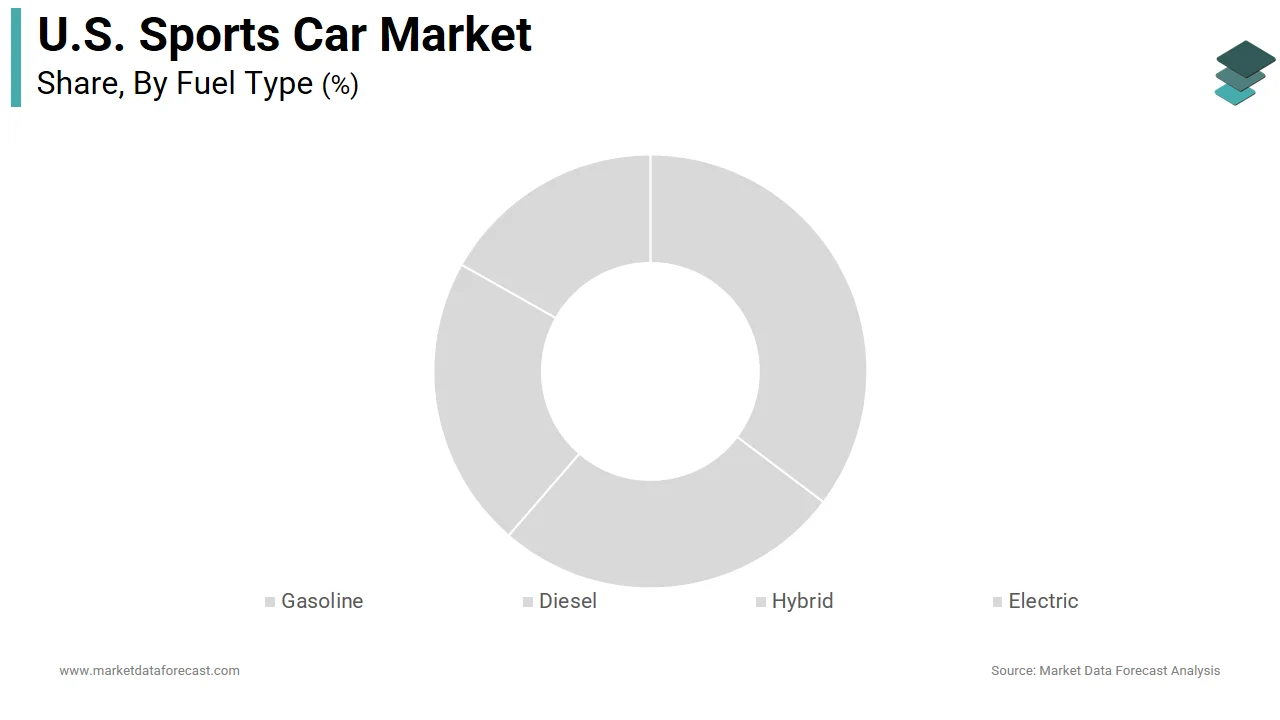
In addition, the performance heritage and emotional appeal of gasoline engines drive their continued dominance in the United States sports car market. Internal combustion engines have a long history of innovation and competition in motorsports, creating a strong emotional connection with enthusiasts. The sound and character of a gasoline engine are considered integral to the sports car experience, providing sensory feedback that electric motors cannot replicate. Moreover, the tradition of high-revving naturally aspirated and turbocharged engines defines the identity of many iconic sports car brands. This cultural legacy sustains demand for gasoline vehicles despite the rise of alternatives. Manufacturers continue to refine gasoline engines to deliver exhilarating performance and distinctive character. The emotional satisfaction derived from driving a gasoline sports car remains a powerful motivator for buyers. This deep-seated passion for internal combustion engineering ensures that gasoline retains its leading position in the market.
However, the electric fuel type segment is predicted to witness the highest CAGR of 13.2% between 2026 and 2034. This swift expansion is propelled by the imperative for zero emissions and corporate sustainability goals. Electric vehicles produce no tailpipe emissions, aligning with stringent environmental regulations and consumer demand for cleaner transportation. Major automotive manufacturers have committed to electrifying their portfolios, with several announcing plans to phase out internal combustion engines in the coming decades. Government mandates and incentives encourage the adoption of electric vehicles, accelerating market penetration. The prestige associated with owning a cutting-edge electric sports car appeals to early adopters and environmentally conscious buyers. The silence and smoothness of electric powertrains offer a new dimension of luxury and refinement. This shift towards sustainability is reshaping the sports car landscape and driving the rapid growth of the electric segment.
In addition, innovation and technological leadership are key drivers of the rapid growth of the electric segment in the United States sports car market. Electric sports cars represent the forefront of automotive technology, showcasing advancements in battery chemistry, software, and connectivity. These innovations enhance the practicality and performance of electric sports cars, making them more competitive with traditional vehicles. The integration of autonomous driving features and over-the-air updates adds value and convenience for owners. Tech companies entering the automotive space are disrupting traditional norms and raising expectations for digital integration. The novelty and exclusivity of electric sports cars create strong brand differentiation and customer loyalty. As technology matures and costs decline, electric sports cars are becoming more accessible to a broader audience. This cycle of innovation and adoption fuels the sustained growth of the electric segment.
By Body Style Insights
The coupe segment dominated the United States sports car market and accounted for a substantial share in 2025. This dominance of the segment was driven by its superior structural rigidity, which is essential for high-performance handling and dynamics. The fixed roof design of a coupe allows engineers to optimize the chassis stiffness without the need for additional reinforcement required in convertible models. Technical literature from the Society of Automotive Engineers (SAE) demonstrates that increased chassis torsional rigidity directly prevents structural deflection, optimizing suspension alignment and handling precision during cornering. This engineering advantage enables manufacturers to deliver a purer driving experience that appeals to the core demographic of performance buyers. National Highway Traffic Safety Administration (NHTSA) safety evaluations assess rollover risk using vehicle dimensions and center-of-gravity calculations, meaning a vehicle's body style class does not automatically dictate its comparative star rating. Furthermore, the aerodynamic efficiency of a fixed roof design reduces drag and lift, contributing to higher top speeds and stability at highway velocities. The majority of iconic sports car models, such as the Porsche 911 and Chevrolet Corvette, are predominantly sold as coupes, reflecting consumer preference for performance over open-air motoring. The cost-effectiveness of producing coupes compared to complex convertible mechanisms also allows manufacturers to offer competitive pricing while maintaining high profit margins. This combination of performance, safety advantages, and economic efficiency solidifies the coupe as the leading body style in the US sports car market.
Furthermore, consumer demand for all-weather usability and practicality significantly drives the dominance of the coupe segment in the United States sports car market. Unlike convertibles, which are often perceived as seasonal vehicles limited to fair weather conditions, coupes provide year-round versatility that aligns with the diverse climate zones across the country. National Oceanic and Atmospheric Administration data tracks widespread seasonal climate variances across the United States, including heavy precipitation and extreme temperatures, which influence the regional operating environments of consumer vehicles. According to the Bureau of Transportation Statistics, light-duty passenger vehicles make up the vast majority of personal transit options, with data focusing heavily on total annual vehicle miles traveled and fleet registration metrics. Coups offer better insulation against noise and temperature fluctuations, enhancing comfort during long-distance travel. Additionally, the perception of enhanced security and privacy provided by a fixed roof appeals to urban drivers who park in public spaces. The resale value of coupes tends to be more stable than convertibles due to lower maintenance costs associated with roof mechanisms and seals. This practical advantage, combined with the emotional appeal of sporty aesthetics, ensures that coupes remain the preferred choice for a broad spectrum of buyers. The ability to enjoy performance driving regardless of seasonal constraints makes the coupe an indispensable format in the US market.
But the convertible segment is likely to experience the fastest CAGR of 6.2% from 2026 to 2034 due to the enduring consumer desire for an immersive open-air driving experience. The sensory connection to the environment, including sound, wind, and scenery, enhances the emotional appeal of sports car ownership. Also, the Specialty Equipment Market Association (SEMA) shows that while the broader automotive specialty-equipment market has grown, the primary drivers are pickups, SUVs, and crossovers rather than traditional car body styles. The psychological benefit of open-air motoring is often cited by owners as a key factor in their purchase decision, providing a sense of freedom and luxury that closed cars cannot replicate. The warm climate regions of the United States, such as California, Florida, and Arizona, provide ideal conditions for convertible usage for a significant portion of the year. U.S. Census Bureau data documents ongoing population growth and positive migration shifts toward Sunbelt states, establishing shifting demographic and regional consumer bases across the country. Manufacturers have responded by improving the speed and reliability of retractable hardtops and soft tops, making them more convenient to operate. Modern convertible designs also offer improved structural integrity and noise insulation when the roof is closed, addressing previous concerns about practicality. This blend of emotional satisfaction and technological improvement is accelerating the adoption of convertibles among sports car enthusiasts seeking a unique driving sensation.
In addition, technological innovations in roof mechanisms and materials are propelling the growth of the convertible segment by addressing historical drawbacks such as weight penalty and reliability issues. Modern retractable hardtops and advanced soft tops are lighter and more durable, allowing for better performance and longevity. According to the American Chemistry Council, ongoing advancements in lightweight polymer composites and performance textiles have enhanced the thermal, structural, and weather-resistant properties of modern automotive components. These advancements enable manufacturers to design convertibles that closely match the performance characteristics of their coupe counterparts. The integration of automated systems allows for roof operation at higher speeds and in various weather conditions, enhancing user convenience. A comprehensive crash statistics study by the Insurance Institute for Highway Safety (IIHS) indicates that modern convertibles do not present a higher risk of driver fatality than conventional hardtop vehicles, largely due to structural reinforcements like strengthened A-pillars. This parity in safety and performance has reduced consumer hesitation and expanded the appeal of convertibles to a wider audience. Additionally, the aesthetic appeal of sleek roof designs when retracted contributes to the visual attractiveness of the vehicle. As technology continues to evolve, the gap between coupes and convertibles narrows, making the open-top experience more accessible and desirable. This technological progress is a key driver of the segment's rapid growth in the US market.
By Engine Type Insights
In 2025, the turbocharged engine segment led the United States sports car market and captured a 58.2% share. This leading position of the segment was attributed to its ability to deliver high power output while maintaining fuel efficiency and complying with emissions regulations. Turbocharging allows manufacturers to downsize engine displacement without sacrificing performance, a strategy known as downsizing. According to Environmental Protection Agency (EPA) trends, manufacturers utilize downsized turbocharged engines to meet federal CAFE standards, aiming to maintain performance metrics while reducing displacement and theoretical fuel consumption. This efficiency is crucial for meeting Corporate Average Fuel Economy standards, which impose strict penalties on manufacturers for non-compliance. Technical literature from the Society of Automotive Engineers (SAE) confirms that turbocharging significantly increases an engine's specific power output by compressing intake air, allowing for greater torque density compared to naturally aspirated engines of the same displacement. This technology enables sports cars to accelerate rapidly while remaining practical for daily driving. The widespread adoption of turbocharging across various segments, from entry-level sports cars to high-end supercars, demonstrates its versatility and effectiveness. Consumers benefit from the dual advantage of thrilling performance and reduced operating costs. The availability of high-octane fuel in the United States further supports the optimization of turbocharged engines for maximum performance. This balance of power efficiency and regulatory compliance ensures that turbocharged engines remain the dominant choice in the US sports car market.
Moreover, the cost-effectiveness of manufacturing turbocharged engines compared to larger naturally aspirated or supercharged units drives their dominance in the United States sports car market. Producing smaller displacement engines requires less material and reduces overall vehicle weight, which lowers production and logistics costs. Turbocharging allows companies to utilize existing engine architectures and scale them for different performance levels, reducing research and development expenses. The modular nature of turbocharged engines facilitates easier integration into various vehicle platforms, enhancing manufacturing flexibility. This affordability expands the addressable market for sports cars, attracting younger buyers and first-time performance car owners. Additionally, the maintenance costs for modern turbocharged engines are comparable to those of naturally aspirated units, making them attractive to budget-conscious enthusiasts. The economic advantages of turbocharging thus reinforce its position as the leading engine type in the US sports car market.
On the other hand, the electric engine segment is on the rise and is expected to be the fastest-growing segment in the market by witnessing a CAGR of 12.7% during the forecast period, owing to the inherent performance advantages of electric motors, including instant torque delivery and precise control. Electric vehicles can accelerate from zero to sixty miles per hour in under three seconds, surpassing many traditional internal combustion engine sports cars. According to the Department of Energy, electric motors provide maximum torque from standstill, eliminating the lag associated with turbochargers or gear shifts. This immediate power response enhances the driving experience and appeals to performance enthusiasts seeking cutting-edge technology. The National Renewable Energy Laboratory states that electric powertrains offer superior efficiency, converting over 85 percent of electrical energy into motion compared to approximately 30 percent for gasoline engines. This efficiency translates into consistent performance without the heat soak issues that affect traditional engines during track use. The low center of gravity provided by floor-mounted battery packs improves handling and stability, further enhancing the sports car's dynamics. As battery technology advances, the weight penalty associated with electric vehicles is decreasing, making them more agile and responsive. The novelty and innovation of electric sports cars attract a new demographic of tech-savvy buyers. This combination of superior performance metrics and technological allure drives the rapid growth of the electric segment.
Also, government incentives and growing environmental awareness are accelerating the adoption of electric sports cars in the United States. Federal and state tax credits significantly reduce the purchase price of electric vehicles, making them more competitive with traditional sports cars. Several states, including California and New York, offer additional rebates and access to carpool lanes, further enhancing the value proposition. Major automotive brands are investing heavily in electric sports car development to meet corporate sustainability goals and regulatory mandates. The expansion of charging infrastructure nationwide reduces range anxiety and increases the practicality of electric sports cars for daily use. These regulatory and social factors create a favorable environment for the growth of the electric segment, positioning it as the future of high-performance automotive engineering.
By Drive Type Insights
The rear-wheel-drive segment remained the largest by occupying 54.5% of the United States sports car market in 2025 because of its superior handling dynamics and traditional appeal among driving enthusiasts. Also, the separation of steering and propulsion functions in Rear Wheel Drive vehicles allows for more balanced weight distribution and predictable handling characteristics. Automotive engineering principles recognized by the SAE indicate that rear-wheel drive platforms decouple steering forces from tractive forces, optimizing suspension geometry for superior handling balance and cornering response. This configuration enables drivers to induce controlled oversteer, a desired trait for many sports car purists who value engagement and feedback. Performance driving organizations and racing schools historically utilize rear-wheel drive platforms for training, as these vehicles demonstrate distinct oversteer and weight-transfer characteristics essential for advanced driver control techniques. The heritage of iconic sports cars such as the Mazda MX-5 Miata and Porsche 911 is rooted in Rear Wheel Drive architecture, reinforcing its status as the gold standard for driving purity. Manufacturers continue to prioritize this layout for their flagship performance models to maintain brand identity and enthusiast loyalty. The mechanical simplicity of rear wheel drive systems compared to all wheel drive counterparts also contributes to lower weight and improved efficiency. This combination of dynamic excellence and cultural significance ensures that Rear Wheel Drive remains the dominant choice in the US sports car market.
Furthermore, the weight reduction and mechanical efficiency associated with rear wheel drive systems contribute significantly to their leadership in the United States sports car market. Rear wheel drive drivetrains typically involve fewer components than All Wheel Drive systems, resulting in lower overall vehicle weight. The absence of front drive axles and differentials allows for more optimized packaging of engine and suspension components, enhancing spatial efficiency. Moreover, the lower rotational mass of rear wheel drive systems improves throttle response and agility, making the vehicle feel more nimble and responsive. Maintenance costs for Rear Wheel Drive vehicles are generally lower due to the simpler mechanical layout and reduced complexity of components. This economic and performance advantage appeals to both manufacturers and consumers who prioritize driving dynamics and value. The continued focus on lightweight engineering in the sports car sector reinforces the prevalence of Rear Wheel Drive configurations. As manufacturers strive to maximize performance within regulatory constraints, the efficiency of Rear Wheel Drive remains a key asset.
On the contrary, the All Wheel Drive segment is expected to exhibit a noteworthy CAGR of 8.4% between 2026 and 2034. This quick surge of the segment is propelled by the demand for enhanced traction and all-weather capability. All Wheel Drive systems distribute power to all four wheels, improving grip and stability in adverse conditions such as rain, snow, and ice. National Oceanic and Atmospheric Administration (NOAA) data records an increase in the frequency of extreme weather events, a factor that automotive market analysts correlate with rising consumer demand for all-weather vehicle capabilities. While All-Wheel Drive (AWD) improves acceleration traction on slippery surfaces, safety organizations like the IIHS emphasize that tires and Electronic Stability Control (ESC) are the primary factors in braking and cornering safety, rather than the drivetrain configuration alone. This safety benefit appeals to buyers who live in regions with harsh winters or unpredictable weather patterns. The versatility of All Wheel Drive allows sports cars to be driven year-round, expanding their utility beyond fair-weather seasons. Manufacturers have developed sophisticated All Wheel Drive systems that can vary torque distribution dynamically, enhancing both safety and performance. The ability to launch with minimal wheel spin improves acceleration times, making All Wheel Drive sports cars faster in real-world conditions. This combination of safety, versatility, and performance is driving the rapid adoption of All Wheel Drive in the sports car segment.
Furthermore, technological advancements in torque vectoring and electronic control systems are propelling the growth of the All Wheel Drive segment in the United States sports car market. Modern All Wheel Drive systems can actively distribute torque between individual wheels, optimizing handling and cornering performance. This capability enhances the driving experience by making All Wheel Drive sports cars feel more agile and responsive than traditional layouts. The integration of artificial intelligence and sensor data allows these systems to anticipate driving conditions and adjust power delivery proactively. Manufacturers are leveraging these technologies to create All Wheel Drive sports cars that offer the best of both worlds: traction and performance. The perception of All Wheel Drive as a premium feature adds value to the vehicle, appealing to luxury buyers. As technology continues to evolve, the performance gap between All Wheel Drive and Rear Wheel Drive narrows, making All Wheel Drive an increasingly attractive option for enthusiasts. This technological sophistication is a key driver of the segment's rapid growth.
COUNTRY ANALYSIS
U.S. Sports Car Market Analysis
The United States outperformed other countries in the global sports car market and occupied a 18.1% share in 2025. This growth of the US market was supported by a mature and diverse ecosystem, supported by a strong car culture, and robust economic fundamentals. According to data compiled by the Bureau of Transportation Statistics, the United States consistently ranks among the highest nations globally in per-capita motor vehicle registrations, reflecting a massive domestic automotive consumer market. The presence of major domestic manufacturers such as Ford, Chevrolet, and Tesla alongside imported brands creates a competitive and dynamic market environment. Federal Highway Administration data tracks annual vehicle miles traveled (VMT), confirming that American motorists drive significant distances each year, which heavily impacts infrastructure usage and vehicle wear. Regional variations in climate and terrain influence preferences, with sunbelt states favoring convertibles and northern states preferring All Wheel Drive configurations. The National Highway Traffic Safety Administration mandates Federal Motor Vehicle Safety Standards (FMVSS) that vehicle manufacturers must legally comply with, directly influencing automotive design, crashworthiness, and mandatory safety features. Consumer trends towards personalization and experiential ownership drive demand for limited edition and high-performance models. The integration of digital technologies and connectivity enhances the appeal of modern sports cars to younger demographics. This comprehensive national framework ensures that the United States remains a pivotal market for global sports car manufacturers, driving innovation and setting trends. The sheer scale and diversity of the US market provide ample opportunities for growth and segmentation.
COMPETITIVE LANDSCAPE
The competition in the United States sports car market is intense and characterized by a mix of domestic legacy manufacturers and international luxury brands vying for enthusiast attention. Domestic players like Ford and Chevrolet compete on value and heritage, offering high performance at accessible price points while European marques such as Porsche and Ferrari dominate the premium segment with exclusivity and engineering prestige. The market sees fierce rivalry in terms of technological innovation as brands race to integrate electrification and autonomous features without compromising driving purity. Performance metrics such as acceleration and handling serve as key differentiators, but brand identity and emotional appeal often drive purchasing decisions. The rise of electric sports cars has introduced new competitors from the technology sector, disrupting traditional hierarchies. Pricing strategies vary widely, with entry-level models targeting younger buyers and limited editions catering to collectors. Regulatory pressures force all participants to innovate rapidly, balancing sustainability with performance. Overall, the market rewards brands that can successfully blend tradition with modernity while delivering exceptional driving experiences.
KEY MARKET PLAYERS
Some of the companies that are playing a dominating role in the U.S. sports car market include
- Ferrari
- Porsche
- Ford Motor Company
- Lamborghini
- McLaren
- Chevrolet General Motors
- Aston Martin
- Bugatti
- Lotus
- Nissan
TOP PLAYERS IN THE MARKET
- Ford Motor Company maintains a formidable presence in the United States sports car market through its iconic Mustang lineage, which defines the pony car segment. The company consistently innovates by integrating advanced powertrain technologies, including high-performance V8 engines and hybrid systems, to meet evolving consumer demands. Ford recently expanded its performance portfolio with the introduction of specialized track-focused variants that appeal to driving enthusiasts seeking extreme capabilities. The brand leverages its rich motorsport heritage to enhance brand loyalty and engage directly with customers through racing events and driving experiences. By balancing traditional internal combustion performance with emerging electrification strategies, Ford ensures its relevance in a transitioning automotive landscape. Their commitment to delivering accessible performance vehicles solidifies their position as a key player in the domestic sports car sector.
- Chevrolet, a division of General Motors, contributes significantly to the US sports car market with the Corvette, which serves as a benchmark for American performance engineering. The mid-engine layout of the latest Corvette model represents a strategic shift that aligns the vehicle with global supercar standards while maintaining competitive pricing. Chevrolet focuses on delivering exceptional power-to-weight ratios and advanced aerodynamics to attract performance-oriented buyers. The company actively participates in professional racing series to validate technology and build brand prestige among enthusiasts. Recent investments in manufacturing capabilities ensure high-quality production and consistent supply to meet strong domestic demand. Chevrolet continues to evolve its sports car offerings by incorporating cutting-edge digital interfaces and driver assistance features that enhance the overall ownership experience.
- Porsche AG holds a prestigious position in the United States sports car market by offering a diverse range of high-performance vehicles that blend luxury with engineering excellence. The brand is renowned for its 911 model, which remains a symbol of automotive heritage and continuous innovation. Porsche has aggressively expanded its electric vehicle lineup with the Taycan, demonstrating its commitment to sustainable performance without compromising driving dynamics. The company strengthens its market position through exclusive customer experiences such as track days and personalized customization programs that foster deep brand loyalty. Porsche invests heavily in research and development to maintain technological leadership in areas such as chassis control and battery efficiency. Their ability to cater to both traditional enthusiasts and modern eco-conscious buyers ensures sustained growth and influence in the competitive US landscape.
TOP STRATEGIES USED BY KEY MARKET PARTICIPANTS
Key players in the United States sports car market primarily employ product differentiation and technological innovation to maintain a competitive advantage. Companies focus on developing unique powertrain solutions, including hybrid and electric systems, to comply with emissions regulations while preserving performance characteristics. Brand heritage and motorsport involvement are leveraged to create emotional connections with enthusiasts and justify premium pricing strategies. Manufacturers also prioritize direct customer engagement through exclusive driving events and personalized customization options that enhance loyalty. Strategic partnerships with technology firms enable the integration of advanced digital features and connectivity solutions. Expansion into niche segments, such as track-focused variants, allows brands to capture high-margin sales. Additionally, firms invest in lightweight materials and aerodynamic enhancements to improve vehicle dynamics. These multifaceted approaches enable companies to adapt to changing consumer preferences and regulatory landscapes while sustaining growth.
MARKET SEGMENTATION
This research report on the U.S. sports car market has been segmented and sub-segmented into the following categories.
By Fuel Type
- Gasoline
- Diesel
- Hybrid
- Electric
By Body Style
- Coupe
- Convertible
- Targa
- Shooting Brake
By Drive Type
- Front-wheel Drive
- Rear-wheel Drive
- All-wheel Drive
By Engine Type
- Naturally Aspirated
- Turbocharged
- Supercharged
- Electric
By Performance
- 0-60 mph in Under 4 Seconds
- Top Speed Over 155 mph
- Lateral Acceleration Over 1 g
By Country
- New York
- Texas
- Florida
- Georgia
- California
- Rest of U.S.