- Product Description Description
- Table of Contents TOC
- List of Table & Figure LOT
- Get Free Sample PDF Sample PDF
Market Size, 2025
$60.27 BnMarket Estimate, 2026
$62.38 BnMarket Forecast, 2034
$82.14 BnCAGR, 2026–2034
3.5%Executive Summary: Global Car Modification Market
- Market Scope: Comprehensive analysis of the global car modification market covering vehicle types, modification categories, sales channels, and regional performance.
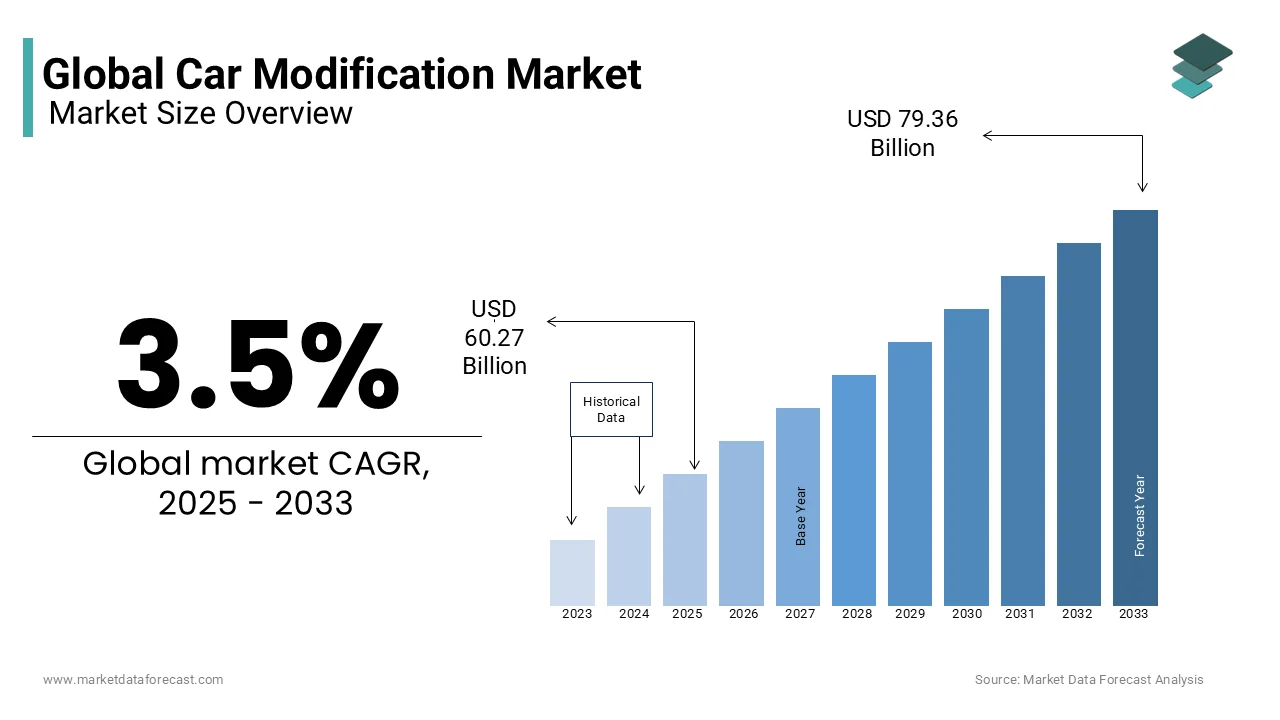
- Market Valuation: Valued at USD 60.27 billion in 2025, estimated at USD 62.38 billion in 2026, and projected to reach USD 82.14 billion by 2034, expanding at a steady CAGR of 3.5% from 2026 to 2034.
- Primary Growth Drivers: Rising consumer preference for personalization and individual expression, alongside technological advancements in performance tuning and ECU software integration.
Key Market Segment Metrics (2026–2034)
| Category | Leading Segment (Base Position) | Fastest-Growing / High-Growth Segment |
|---|---|---|
| By Vehicle Type | Sport Utility Vehicles (SUVs) (led with a 38.2% share in 2025 due to massive global fleet popularity and utility space) | Electric Vehicles (EVs) (predicted to witness the highest CAGR of 18.5% driven by software tuning and EV customization culture) |
| By Sales Channel | Retailers (dominated with a 56.6% share in 2025 via extensive brick-and-mortar networks, expert advice, and part availability) | Online Direct-to-Consumer (estimated to register the fastest CAGR of 12.8% fueled by e-commerce expansion and home delivery) |
| By Modification Type | Performance Upgrades (largest segment capturing a 44.8% share in 2025 for engine tuning, exhausts, and driving dynamics) | Eco-Friendly Modifications (anticipated to register the fastest CAGR of 14.2% due to green regulations and fuel efficiency tech) |
| By Region | North America (top-performing region with a 35.5% share in 2025 supported by high disposable income and car culture) | Asia-Pacific (high-growth market propelled by rapid urbanization, massive vehicle production, and vibrant tuning hubs in China and Japan) |
Major Market Players & Industry Landscape
Market Structure: Competitive ecosystem combining established global tuning brands and specialized niche manufacturers focusing on advanced materials, performance software, and regulatory compliance.
Key Companies: Borla Performance Industries Inc., APEX Integration, Hennessey Performance Engineering, ABT Sportsline, Liberty Walk, Vorsteiner, Roush Performance, Brabus, Mansory, Akrapovič, KW Suspensions, BBS, and Bilstein.
Global Car Modification Market Size
The global car modification market was valued at USD 60.27 billion in 2025 and is anticipated to reach USD 62.38 billion in 2026 from USD 82.14 billion by 2034, growing at a CAGR of 3.5% during the forecast period from 2026 to 2034.
Current Market Definition and Scenario
Car modification refers to making any changes or alterations to a vehicle after it leaves the factory floor. This market includes mechanical upgrades such as engine tuning suspension enhancements and exhaust system replacements as well as cosmetic alterations like body kits custom paint jobs and interior refinements. The industry caters to a broad spectrum of enthusiasts ranging from casual owners seeking personalized styling to professional racers requiring high performance components. The cultural significance of automotive customization is deeply rooted in global communities where vehicles serve as expressions of individual identity and technical prowess. According to the Specialty Equipment Market Association (SEMA), the U.S. automotive aftermarket industry has a total economic output of $337 billion, directly supporting 1.3 million American jobs and generating $52.6 billion in annual specialty-equipment parts sales. Furthermore, as per official Eurostat data from the European Commission, the total passenger car fleet across the European Union exceeds 260 million cars, offering a massive baseline market for secondary automotive applications and vehicle modifications. The rise of digital platforms has further amplified this trend with social media channels showcasing modified vehicles to millions of users daily. This convergence of cultural passion technological accessibility and economic scale defines the current landscape of the car modification industry.
MARKET DRIVERS
Rising Consumer Desire for Personalization and Individual Expression
The profound desire for personalization drives the growth of the car modification market. This trend is driven by consumers increasingly viewing their vehicles as extensions of their personal identity. In an era where mass production dominates the automotive industry many owners seek to differentiate their vehicles through unique aesthetic and performance enhancements. Research shows that 71% of consumers expect personalized experiences from brands, establishing personalization as a baseline consumer demand that drives long-term customer loyalty across modern industries. This trend is particularly pronounced among younger demographics who prioritize uniqueness and self expression. The Society of Motor Manufacturers and Traders (SMMT) reveals that the average age of cars on UK roads has climbed to a record 9 years, leading to a more mature vehicle population that relies heavily on aftermarket upgrades to sustain vehicle longevity. Social media platforms play a pivotal role in driving this demand with Instagram and TikTok featuring billions of posts related to car customization inspiring owners to replicate or innovate upon trending styles. The availability of affordable aftermarket parts has lowered the barrier to entry allowing a broader audience to participate in customization culture. Additionally the rise of online configurators and virtual reality tools enables customers to visualize modifications before purchase enhancing confidence and satisfaction. This cultural shift toward individuality ensures sustained demand for bespoke wheels lighting systems body kits and interior accessories that allow owners to create distinct automotive identities.
Advancements in Performance Technology and Tuning Software
Technological advancements in performance tuning and software integration further propel the expansion of the car modification market. These advancements have significantly expanded the scope and accessibility of these modifications. Modern vehicles are increasingly controlled by complex electronic control units that manage engine performance fuel efficiency and handling characteristics. Aftermarket tuners leverage this digital architecture to unlock hidden performance potential through software remapping and hardware upgrades. Multiple studies demonstrate that optimizing Electronic Control Unit (ECU) parameters on turbocharged platforms alters combustion characteristics to maximize peak performance, though it introduces vital trade-offs between power output and emissions compliance. The proliferation of plug and play tuning devices has democratized access to performance enhancements allowing enthusiasts with limited mechanical expertise to achieve professional level results. MEMA Aftermarket Suppliers identifies advanced electrical and digital electronic components as one of the fastest-accelerating segments in the automotive aftermarket, fueled by an escalating consumer appetite for digital optimization and enhanced vehicle performance. Furthermore, advancements in materials science have led to lighter and stronger components such as carbon fiber intake systems and titanium exhausts which enhance both performance and sound quality. The integration of smartphone applications with vehicle diagnostics allows real time monitoring and adjustment of performance parameters creating a dynamic user experience. As electric vehicles gain market share the focus is shifting toward software based torque vectoring and battery management optimizations. This technological evolution ensures that car modification remains relevant and exciting offering tangible improvements in driving dynamics and efficiency.
MARKET RESTRAINTS
Stringent Emission Regulations and Legal Restrictions
Strict emission regulations and legal restrictions significantly impede the growth of the car modification market. This is especially true in regions enforcing rigorous environmental standards. Governments worldwide are implementing tighter controls on vehicle emissions to combat air pollution and climate change limiting the scope of permissible modifications. According to the Environmental Protection Agency in the United States tampering with emission control systems is illegal under the Clean Air Act subjecting violators to substantial fines and penalties. Similar regulations exist in Europe where the Euro 6 standards mandate strict limits on nitrogen oxide and particulate matter emissions. Official environmental profiles by the European Environment Agency (EEA) establish that the transport sector contributes nearly 25% of total EU greenhouse gas emissions, making road transit a primary focal point for strict governmental climate compliance policies. Modifications such as removing catalytic converters or installing non compliant exhaust systems are frequently targeted by enforcement agencies. Additionally many jurisdictions require modified vehicles to undergo rigorous inspection and certification processes which can be costly and time consuming. These regulatory hurdles discourage casual enthusiasts from pursuing performance upgrades and increase compliance costs for manufacturers of aftermarket parts. Governments are accelerating the transition to zero-emission vehicles, which will trigger more restrictive regulations on ICE modifications. As a result, market opportunities in the automotive aftermarket will shrink.
High Costs of Premium Aftermarket Parts and Installation
The high costs associated with premium aftermarket parts and professional installation services are a major limitation for the car modification market. High quality components such as forged wheels custom suspension kits and performance exhaust systems often command significant price premiums due to specialized manufacturing processes and brand value. Automotive consumer data profiles show that specialized component configurations can quickly scale from hundreds to several thousand dollars depending on structural application, though baseline consumer advocacy focuses on evaluating total out-of-pocket costs and vehicle reliability over time. For many enthusiasts this financial burden limits the extent of modifications they can undertake. Labor costs further exacerbate the expense as specialized technicians charge higher rates for complex installations involving engine tuning or structural alterations. Employment summaries from the U.S. Bureau of Labor Statistics (BLS) record steady upward wage adjustments for skilled automotive technicians, driven by a combination of macroeconomic inflation and the specialized training required to service modern electrical architectures. Additionally the risk of voiding manufacturer warranties discourages some owners from investing in extensive modifications. J.D. Power show that maintaining long-term vehicle dependability and safeguarding original manufacturer warranty coverage are critical pillars in maximizing a vehicle's residual value and sustaining owner satisfaction. Economic downturns and inflationary pressures also reduce disposable income available for discretionary spending on automotive enhancements. As supply chain disruptions continue to affect the availability of raw materials prices for aftermarket parts remain volatile. These financial barriers restrict market participation to affluent enthusiasts and limit the frequency of upgrades among the broader consumer base.
MARKET OPPORTUNITIES
Expansion into Electric Vehicle Customization Sector
The rapid adoption of electric vehicles offers a lucrative opportunity for the car modification market. This is because manufacturers are developing specialized products for EV platforms. Unlike internal combustion engines electric vehicles offer unique customization possibilities focused on aerodynamics weight reduction and software enhancement. According to the International Energy Agency global electric car sales reached 14 million units in 2023 representing 18 percent of all cars sold creating a substantial new customer base for aftermarket suppliers. Modifications such as lightweight alloy wheels low rolling resistance tires and aerodynamic body kits can significantly extend driving range and improve efficiency. Interior customization is another growing segment with demand for sustainable materials ambient lighting and advanced infotainment integrations. The modular nature of EV platforms allows for easier installation of aftermarket components compared to traditional vehicles. Additionally software based modifications such as unlocking faster charging speeds or enhancing acceleration profiles through over the air updates offer new revenue streams for tech focused modifiers. As major automakers release dedicated EV models the aftermarket industry is responding with tailored solutions ensuring relevance in the evolving automotive landscape. This transition opens new avenues for innovation and growth beyond traditional mechanical upgrades.
Growth of Online Marketplaces and Direct to Consumer Sales
The proliferation of online marketplaces and direct to consumer sales channels unlocks potential for expansion in the car modification market. Digital platforms enable manufacturers and retailers to reach a global audience bypassing traditional distribution intermediaries and reducing costs. Websites like Amazon eBay and specialized forums provide enthusiasts with access to rare and customized parts that may not be available locally. Social media integration allows brands to engage directly with customers through tutorials reviews and live demonstrations fostering community and trust. Direct to consumer models also enable companies to gather valuable data on customer preferences facilitating product development and personalized marketing. Subscription services for regular maintenance parts and exclusive accessories further enhance customer loyalty. The ability to compare prices read user feedback and view installation videos empowers consumers to make informed decisions. As digital payment security improves and logistics networks expand the online channel will continue to dominate sales driving market penetration in underserved regions and demographic segments.
MARKET CHALLENGES
Supply Chain Disruptions and Raw Material Shortages
Supply chain disruptions and raw material shortages slow down the growth of the car modification market. This affects production timelines and product availability. The global semiconductor crisis which began in 2020 has had ripple effects on the aftermarket sector as many modern performance components rely on electronic chips for functionality. Additionally geopolitical tensions and trade disputes have disrupted the supply of critical materials such as aluminum carbon fiber and rare earth metals used in high performance parts. Manufacturers face difficulties in forecasting demand and maintaining inventory levels leading to stockouts and delayed deliveries. The reliance on single source suppliers for specialized components exacerbates vulnerability to disruptions. Small and medium sized enterprises in the aftermarket sector often lack the bargaining power to secure priority allocation from suppliers. These logistical challenges result in increased lead times and higher prices for consumers dampening enthusiasm and purchase intent. Until global supply chains stabilize and diversify, the industry will remain susceptible to external shocks. These shocks hinder consistent growth and customer satisfaction.
Intellectual Property Issues and Counterfeit Products
The prevalence of counterfeit products and intellectual property violations is a serious challenge to the car modification market. This undermines brand integrity and consumer safety. Unauthorized replicas of popular aftermarket parts flood online marketplaces offering lower prices but inferior quality and performance. According to the Organisation for Economic Co-operation and Development (OECD) and EUIPO, counterfeit and pirated goods represent up to 2.3% of global trade (valued at $467 billion), with fake automotive spare parts highlighting a worrying threat to consumer safety. These fake components often fail to meet safety standards risking vehicle integrity and occupant safety. Legitimate manufacturers incur substantial costs in legal battles and anti counterfeiting measures diverting resources from innovation and development. The lack of stringent regulation in certain online marketplaces allows counterfeiters to operate with impunity damaging consumer trust in the aftermarket sector. Additionally the use of substandard materials in counterfeit parts can lead to premature failure and potential accidents resulting in liability issues for installers and sellers. Brand dilution occurs when consumers associate poor performance with reputable names due to counterfeit confusion. Addressing this issue requires collaborative efforts between manufacturers platforms and regulatory bodies to enforce intellectual property rights and ensure product authenticity.
REPORT COVERAGE
| REPORT METRIC | DETAILS |
| Market Size Available | 2025 to 2034 |
| Base Year | 2025 |
| Forecast Period | 2026 to 2034 |
| CAGR | 3.5% |
| Segments Covered | By Vehicle, Modification, Sales Channel Type, and Region. |
| Various Analyses Covered | Global, Regional & Country Level Analysis, Segment-Level Analysis, DROC, PESTLE Analysis, Porter’s Five Forces Analysis, Competitive Landscape, Analyst Overview of Investment Opportunities |
| Regions Covered | North America, Europe, APAC, Latin America, Middle East & Africa |
| Market Leaders Profiled | APEX Integration, Hennessey Performance Engineering, ABT Sportsline, Liberty Walk, Vorsteiner, Roush Performance, Brabus, Mansory, Akrapovic, KW Suspensions, BBS, Bilstein, and Others. |
SEGMENTAL ANALYSIS
By Vehicle Insights
The Sport Utility Vehicles (SUVs) segment led the car modification market and occupied a 38.2% share in 2025. This leading position of the segment was attributed to its immense popularity and versatile platform that accommodates a wide range of aftermarket enhancements. Moreover, the main driver for this position is the global shift in consumer preference away from sedans toward larger vehicles that offer utility space and rugged aesthetics. The International Energy Agency (IEA) shows that SUVs have reached an unprecedented 46% to 48% of global car sales, forming a massive, high-riding fleet that commands a substantial share of the automotive consumer base. This high volume translates directly into robust demand for customization options such as lift kits off road tires roof racks and protective body armor. Research reports that light trucks, SUVs, and utility vehicles consistently command the largest share of specialty automotive equipment sales, outpacing traditional passenger sedans in consumer spending on exterior and off-road customization. Furthermore, the modular design of modern SUVs allows for easier integration of performance parts without compromising daily drivability. The rise of overlanding and outdoor recreational activities has further fueled this trend. The Outdoor Industry Association (OIA) tracks surging post-pandemic participation in outdoor sports, adding over 14.5 million new participants to the outdoor recreation space and naturally stimulating secondary markets for rugged vehicle upgrades. The versatility of SUVs enables them to serve both urban commuting and weekend exploration roles, making them ideal candidates for comprehensive modification packages that blend style functionality and performance.
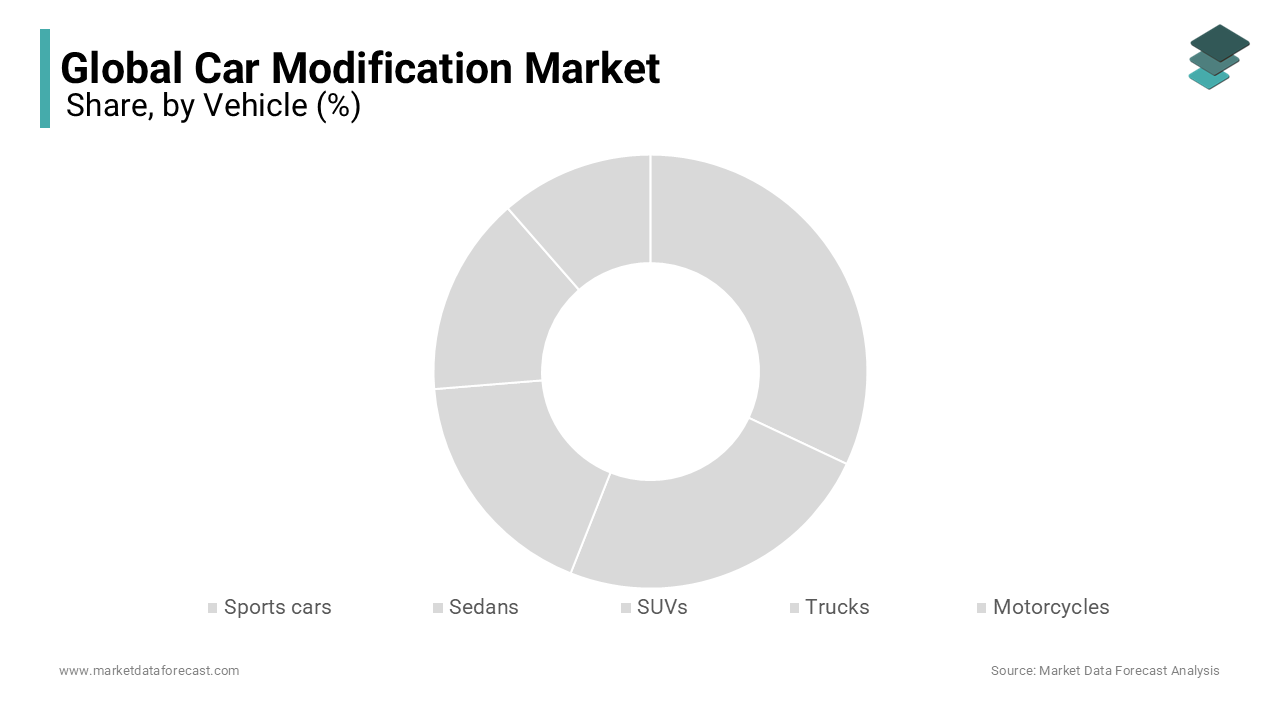
The electric vehicles (EVs) segment is predicted to witness the highest CAGR of 18.5% over the forecast period. This rapid expansion of the segment is propelled by the increasing adoption of electric platforms and the emerging culture of EV customization. According to the International Energy Agency, global electric car sales surpassed 14 million units in 2023, establishing a new and enthusiastic customer base for aftermarket suppliers. Unlike traditional internal combustion engines, EVs offer unique modification opportunities focused on software tuning aerodynamics and interior technology. A study suggests that EV owners are highly tech savvy and eager to personalize their vehicles through digital interfaces and smart accessories. The simplicity of electric powertrains lowers the barrier for performance upgrades such as torque vectoring and acceleration boosts via software remapping. Additionally, the demand for aesthetic enhancements like custom lighting wraps and aero kits is rising as owners seek to distinguish their vehicles in a homogenous market. Major automakers are releasing diverse EV models. Consequently, the aftermarket industry is rapidly developing specialized products to ensure electric vehicles become a central pillar of the future modification landscape.
By Sales Channel Insights
The retailers segment dominated the car modification market and accounted for a 56.6% share in 2025. This dominance of the segment was driven by its extensive reach diverse product offerings and ability to cater to both DIY enthusiasts and professional installers. The prominence is also driven by the convenience of one stop shopping and the availability of expert advice in physical stores. Joint tracking by MEMA Aftermarket Suppliers and the Auto Care Association confirms that traditional brick-and-mortar networks sustain the vast majority of aftermarket transactions, leveraging immediate part availability and regional hub distribution to anchor the market. Large retail chains offer a wide variety of products ranging from basic accessories to complex performance kits, allowing customers to compare options and make informed decisions. Furthermore, retailers often provide installation services or partner with local workshops, creating a seamless customer experience. The tactile nature of many modification products such as wheels and body kits encourages in person inspection before purchase. Additionally, retailers frequently host community events and car shows fostering brand loyalty and engagement. This combination of physical presence expert support and community engagement solidifies the retailer’s position as the primary conduit for aftermarket products.
The online direct to consumer channel segment is estimated to register the fastest CAGR of 12.8% from 2026 to 2034 due to the digitalization of commerce and changing consumer behaviors. This growth is further propelled by the convenience of home delivery wider product selection and competitive pricing available on e commerce platforms. Major platforms like Amazon and specialized aftermarket websites offer vast inventories that surpass local store capabilities, enabling enthusiasts to find rare and customized items. The availability of detailed product reviews installation videos and virtual configurators enhances consumer confidence in online purchases. Social media integration further drives traffic to online stores as influencers showcase modified vehicles and link directly to products. The COVID 19 pandemic accelerated this shift by normalizing remote shopping for technical goods. This digital transformation enables manufacturers to bypass intermediaries reduce costs and engage directly with customers, propelling the rapid growth of this channel.
By Modification Insights
The performance upgrades segment was the largest in the car modification market and occupied a 44.8% share in 2025 because of the enduring passion for enhanced driving dynamics, speed, and power. This segment includes engine tuning exhaust systems intake kits and transmission enhancements that deliver tangible improvements in vehicle capability. The primary driver is the desire for a more engaging driving experience and the cultural prestige associated with high performance vehicles. The availability of plug and play tuning devices has democratized access to performance gains allowing owners to achieve professional results with minimal effort. Additionally, the thrill of acceleration and improved handling appeals to a broad demographic including track day participants and street racers. The continuous development of advanced materials such as titanium and carbon fiber further enhances performance while reducing weight. This relentless pursuit of mechanical excellence ensures that performance upgrades remain the cornerstone of the car modification industry.
The eco friendly modifications segment is anticipated to witness the fastest CAGR of 14.2% during the forecast period owing to increasing environmental awareness and regulatory pressures. This segment covers fuel efficiency tuners lightweight components aerodynamic kits and conversions to alternative fuels or hybrid systems. According to the Environmental Protection Agency, transportation accounts for nearly 29 percent of greenhouse gas emissions, prompting consumers to seek ways to reduce their carbon footprint. The rise of electric vehicles has also spurred demand for eco conscious accessories such as solar powered chargers and sustainable interior materials. Government incentives for green technologies further encourage adoption of these modifications. Additionally, corporate fleet operators are investing in eco friendly upgrades to meet sustainability goals and reduce operational costs. The availability of biofuel compatible components and energy recovering systems offers practical solutions for environmentally conscious drivers. As climate change concerns intensify, the market for green modifications is expanding rapidly, offering innovative ways to align automotive passion with ecological responsibility.
REGIONAL ANALYSIS
North America Market Analysis
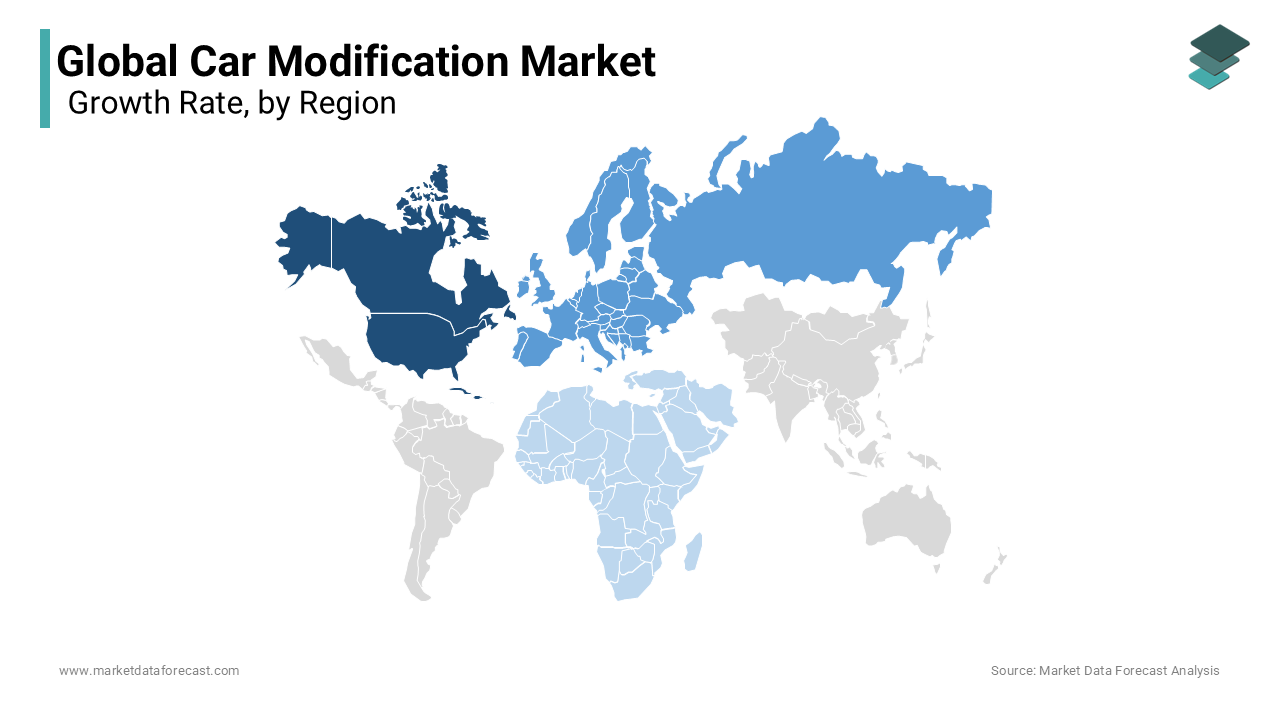
North America was the top performing region in the global car modification market and accounted for a 35.5% share in 2025. This supremacy of the segment was supported by a deeply entrenched car culture extensive highway infrastructure and high disposable income. The United States serves as the primary hub with a strong tradition of hot rod muscle car and truck customization. The Specialty Equipment Market Association (SEMA) establishes that while the specialty automotive aftermarket injects a $337 billion total economic impact into the U.S. economy, pure consumer retail parts sales track cleanly at $52.65 billion annually. The prevalence of large vehicles such as trucks and SUVs provides ample opportunity for modifications including lift kits and off road accessories. Additionally, the presence of numerous racing events car shows and enthusiast clubs sustains demand for performance and aesthetic upgrades. Canada contributes significantly with a growing interest in winter ready modifications and performance tuning. The regulatory environment in North America is relatively supportive of aftermarket innovations although emission standards are tightening. The combination of cultural passion economic strength and industrial capacity ensures North America remains the dominant force in the global modification landscape.
Europe Market Analysis
Europe followed closely behind in the car modification market and captured a 30.7% share in 2025. This growth of the regional market was fuelled by a focus on precision engineering and luxury customization. The region is home to prestigious automotive brands and a sophisticated enthusiast community that values high quality and subtle enhancements. According to the European Automobile Manufacturers Association, the EU has over 250 million passenger cars, providing a substantial base for aftermarket activities. Germany France and the United Kingdom are key markets driven by a strong motorsport heritage and demand for performance tuning. The popularity of hatchbacks and compact cars in Europe drives demand for lightweight wheels suspension upgrades and interior refinements. Additionally, the rise of electric vehicle adoption in Europe is spurring innovation in eco friendly modifications. The European Tuning Association reports a growing trend toward personalized luxury interiors and advanced audio systems. Despite regulatory challenges, the European market thrives on quality craftsmanship and technological innovation, maintaining its status as a critical region for high end car modifications.
Asia-Pacific Market Analysis
The Asia Pacific region is emerging as a high growth market for car modifications due to rapid urbanization rising incomes and a youthful population. Countries such as China Japan and Thailand are leading the charge with vibrant car cultures and increasing vehicle ownership. According to the International Organization of Motor Vehicle Manufacturers, Asia Pacific accounts for over 50 percent of global vehicle production, creating a massive potential customer base. Japan is renowned for its tuning culture including drift and stance styles, influencing trends globally. Also, the China Association of Automobile Manufacturers (CAAM) demonstrate that total automotive market demand has scaled aggressively, with annual production and sales surpassing 27 to 30 million units. The availability of affordable aftermarket parts and local manufacturing hubs supports market growth. Additionally, government initiatives to promote automotive tourism and racing events in countries like Malaysia and Indonesia are boosting demand. The rise of electric vehicles in China is also driving new modification trends focused on technology and aesthetics. This dynamic mix of cultural influence economic growth and industrial capacity positions Asia Pacific as a key driver of future market expansion.
Latin America Market Analysis
Latin America is moving ahead steadfastly in the car modification market, with Brazil and Mexico serving as the primary contributors. The region holds a modest share of the global market but exhibits strong growth potential due to increasing vehicle ownership and a vibrant car culture. Brazilian enthusiasts are known for their creativity in modifying older vehicles due to economic constraints, fostering a robust local aftermarket industry. The popularity of off road racing and rally events in countries like Argentina and Chile drives demand for performance and durability upgrades. Additionally, the influence of North American car culture through media and trade facilitates the adoption of trending modification styles. As economic stability improves and access to imported parts becomes easier, the Latin American market is expected to expand. Local workshops and distributors are increasingly partnering with international brands to offer higher quality products, enhancing the overall market maturity and consumer satisfaction.
Middle East and Africa Market Analysis
The Middle East and Africa region is a lucrative region in the car modification market owing to high wealth concentrations and a love for luxury and performance vehicles. The Gulf Cooperation Council countries, particularly the United Arab Emirates and Saudi Arabia, lead the market with a strong preference for high end SUVs and sports cars. The extreme climate conditions drive demand for specific modifications such as enhanced cooling systems tinted windows and durable exterior protections. In Africa, South Africa is the most developed market with a growing interest in off road and performance tuning. Cultural factors such as car meets and drifting competitions foster community engagement and demand for aesthetic and performance upgrades. As infrastructure improves and disposable incomes rise in select urban centers, the region offers unique opportunities for specialized high value modification services.
COMPETITIVE LANDSCAPE
The competitive landscape of the Car Modification Market is characterized by a mix of established multinational corporations and specialized niche manufacturers. Large players leverage their scale and brand recognition to offer comprehensive product portfolios while smaller firms focus on specific segments such as performance tuning or custom aesthetics. Innovation drives competition as companies strive to develop lighter stronger and more efficient components. Price sensitivity varies across segments with performance enthusiasts willing to pay premiums for quality while casual modifiers seek affordable options. The rise of electric vehicles introduces new competitors focused on software and digital enhancements rather than traditional mechanical parts. Regulatory compliance serves as a barrier to entry ensuring that only reputable firms can operate in strict markets. Collaboration between manufacturers and retailers strengthens distribution networks and enhances customer service. Intellectual property protection is critical as counterfeit products pose significant threats to brand integrity. Overall the market encourages continuous improvement agility and customer centricity to succeed in a rapidly evolving industry.
KEY MARKET PLAYERS
These are some of the major players involved in the global car modification market.
- APEX Integration
- Hennessey Performance Engineering
- ABT Sportsline
- Liberty Walk
- Vorsteiner
- Roush Performance
- Brabus
- Mansory
- Akrapovič
- KW Suspensions
- BBS and Bilstein
Top Players In the Market
- Borla Performance Industries Inc Borla Performance Industries Inc is a leading manufacturer of high performance exhaust systems and aftermarket automotive components. The company is renowned for its patented S Type and AT Series technologies that enhance engine sound and power output. Borla actively engages with racing communities and professional drivers to validate product performance under extreme conditions. Recent actions include expanding its manufacturing facilities to meet growing global demand and introducing eco friendly exhaust options for hybrid vehicles. The company strengthens its market position through strategic partnerships with major automotive retailers and direct engagement with enthusiast groups via social media platforms. By focusing on quality craftsmanship and innovative acoustic engineering Borla maintains a strong reputation among performance enthusiasts. Their commitment to research and development ensures continuous improvement in flow dynamics and material durability. This dedication to excellence allows Borla to command premium pricing and foster brand loyalty in the competitive aftermarket sector.
- Volkswagen AG Aftermarket Division Volkswagen AG leverages its extensive original equipment manufacturer heritage to dominate the car modification market through its dedicated aftermarket division. The company offers a wide range of genuine accessories and performance parts designed specifically for Volkswagen Audi and other group brands. Recent initiatives include the launch of digital customization tools that allow customers to visualize modifications before purchase. Volkswagen strengthens its position by integrating aftermarket solutions into dealership networks ensuring professional installation and warranty protection. The company also collaborates with tuning firms like ABT Sportsline to offer factory backed performance upgrades. By emphasizing compatibility and reliability Volkswagen appeals to owners seeking safe and certified enhancements. Their investment in electric vehicle accessories reflects a strategic shift toward sustainable mobility solutions. This comprehensive approach combines brand trust with technical expertise creating a unique value proposition in the global modification landscape.
- Magna International Inc Magna International Inc is a global automotive supplier that plays a significant role in the car modification market through its diverse portfolio of exterior and interior systems. The company provides advanced lighting solutions body panels and structural components that are widely used in aftermarket customization. Magna strengthens its market position by investing in lightweight materials such as carbon fiber and aluminum which are popular for performance upgrades. Recent actions include partnerships with technology firms to develop smart lighting systems that enhance vehicle aesthetics and safety. The company also focuses on sustainability by producing recyclable materials for aftermarket applications. Magna’s global manufacturing footprint enables efficient distribution and cost competitive pricing. By leveraging its original equipment manufacturing expertise Magna delivers high quality products that meet rigorous safety standards. This combination of innovation scale and reliability makes Magna a key player in the evolving car modification industry.
Top Strategies Used By Key Market Participants
Key players in the Car Modification Market primarily focus on product innovation and technological integration to meet evolving consumer demands. Companies invest heavily in research and development to create high performance lightweight and aesthetically pleasing components. Strategic partnerships with racing teams and influencers help build brand credibility and reach enthusiast communities effectively. Digital transformation is a central strategy with firms developing online configurators and virtual reality tools to enhance customer experience. Expansion into electric vehicle modifications allows companies to tap into emerging markets and stay relevant amidst industry shifts. Sustainability initiatives including the use of recycled materials and eco friendly production processes appeal to environmentally conscious consumers. Direct to consumer sales channels are prioritized to reduce costs and gather valuable customer data. Additionally manufacturers emphasize compliance with global safety and emission regulations to ensure product legality and market access. These combined strategies enable companies to differentiate their offerings and maintain competitive advantage in a dynamic marketplace.
RECENT MARKET NEWS
- In March 2024, Borla Performance Industries Inc launched a new line of eco friendly exhaust systems for hybrid vehicles to expand its product range and strengthen the Car Modification Market presence
- In June 2023, Volkswagen AG introduced an augmented reality customization app allowing users to visualize aftermarket parts on their vehicles and strengthen the Car Modification Market presence
- In September 2023, Magna International Inc partnered with a leading carbon fiber manufacturer to develop lightweight body panels for performance upgrades and strengthen the Car Modification Market presence
- In January 2024, Akrapovic d.d. expanded its production facility in Slovenia to increase capacity for titanium exhaust systems and strengthen the Car Modification Market presence
- In November 2023, Hella GmbH acquired a specialist lighting technology firm to enhance its portfolio of smart aftermarket lighting solutions and strengthen the Car Modification Market presence.
MARKET SEGMENTATION
This research report on the global car modification market has been segmented and sub-segmented based on vehicle, modification, sales channel, and region.
By Vehicle
- Sports cars
- Sedans
- SUVs
- Trucks
- Motorcycles
By Modification
- Performance Upgrades
- Body And Exterior Modifications
- Interior Customizations
- Audio And Entertainment Enhancements
- Suspension And Handling Modifications
- Eco-Friendly Modifications
By Sales Channel Type
- Retailers
- OEMs
- Repair Shops
- Wholesalers & Distributors
By Region
- North America
- Europe
- Asia-pacific
- Latin America
- Middle East and Africa