- Product Description Description
- Table of Contents TOC
- List of Table & Figure LOT
- Get Free Sample PDF Sample PDF
Market Size, 2025
$52.30 BnMarket Estimate, 2026
$55.16 BnMarket Forecast, 2034
$84.40 BnCAGR, 2026–2034
5.46%U.S. Sportswear Market Report Summary
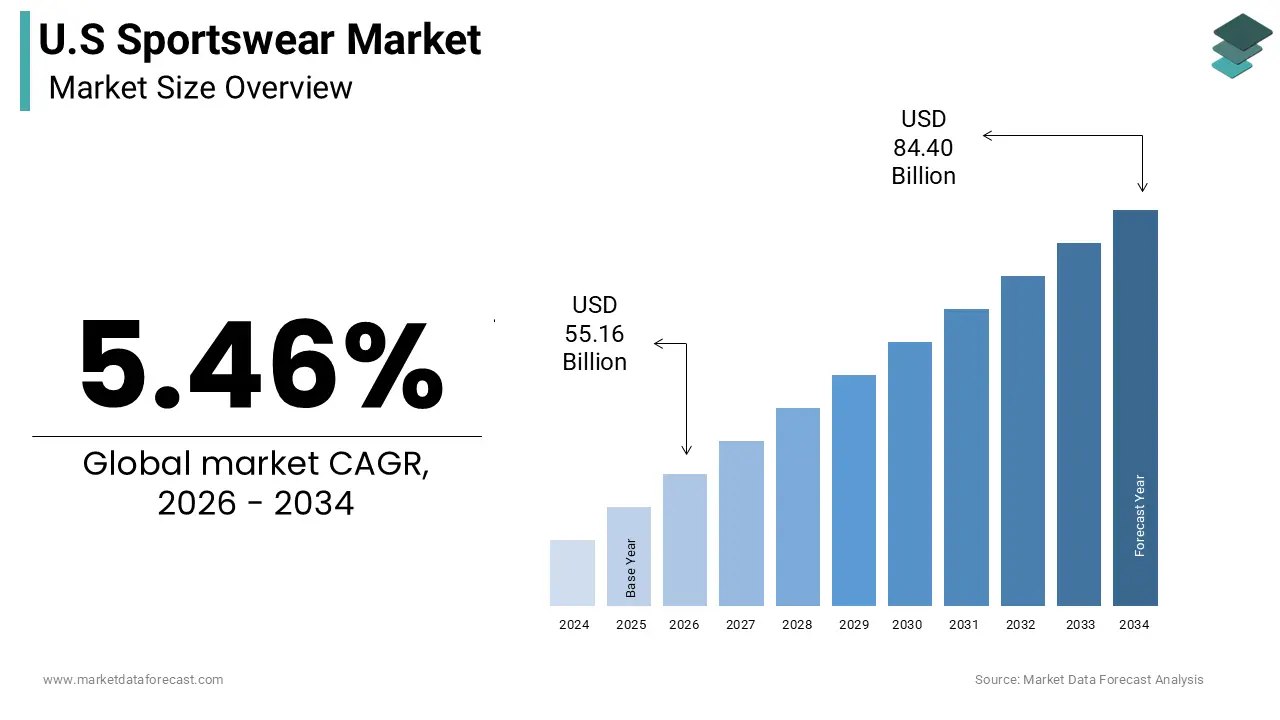
The United States sportswear market was valued at USD 52.30 billion in 2025 and is projected to reach USD 84.40 billion by 2034, growing from USD 55.16 billion in 2026 at a CAGR of 5.46% during the forecast period. Market growth is driven by increasing health awareness, rising participation in fitness and sports activities, and growing demand for athleisure apparel. Expanding e-commerce platforms, celebrity endorsements, and innovations in performance fabrics are further accelerating the growth of the U.S. sportswear market.
Key Market Trends
- Rising popularity of athleisure and fitness fashion
- Increasing demand for sustainable and eco-friendly sportswear
- Growth in smart and performance-enhancing apparel
- Expansion of direct-to-consumer and online retail channels
- Increasing consumer interest in outdoor and fitness activities
Segmental Insights
- Based on product type, the footwear segment dominated the U.S. sportswear market in 2025 by accounting for 44.3% of the market share, driven by high demand for athletic shoes, running footwear, and lifestyle sneakers
- Based on end user, the men segment held the leading share in 2025 by capturing 53.2% of the market share, supported by strong participation in sports and fitness activities
- Based on distribution channel, the retail stores segment led the market in 2025 due to strong brand presence, in-store customer experience, and wide product availability
Competitive Landscape
- The U.S. sportswear market is highly competitive, with companies focusing on product innovation, sustainable materials, and digital marketing strategies. Market players are investing in advanced fabric technologies, celebrity collaborations, and global brand expansion to strengthen their market position.
- Prominent players in the U.S. sportswear market include Nike, Adidas, Under Armour, PUMA, New Balance, Skechers, ASICS, Columbia Sportswear, Lululemon Athletica, VF Corporation, Reebok, Fila, Champion, Anta Sports, and Li-Ning.
U.S Sportswear Market Size
The U.S sportswear market size was calculated to be USD 52.30 billion in 2025 and is anticipated to be worth USD 84.40 billion by 2034, from USD 55.16 billion in 2026, growing at a CAGR of 5.46% during the forecast period.
The sportswear is apparel designed for athletic activities, exercise, and casual wear that incorporates performance enhancing features. The definition extends to include athleisure, a style that allows consumers to transition seamlessly from workout environments to social settings. Cultural shifts towards health consciousness have normalized the wearing of athletic attire in non-sporting contexts. The demographic profile of consumers is broadening, with increasing participation from older adults and diverse ethnic groups who prioritize comfort and versatility. According to the Bureau of Labor Statistics, the average American household spends approximately 1800 dollars annually on apparel, with a growing%age allocated to active wear. The rise of remote work has further accelerated this trend, as professionals seek comfortable yet presentable clothing options for home based environments. Innovation in fabric technology, such as sustainable materials and smart textiles, continues to redefine product offerings.
MARKET DRIVERS
Dominance Of Athleisure And Casualization Of Workplace Attire
The dominance of athleisure and the casualization of workplace attire is majorly fuelling the growth of the United States sportswear market. Consumers increasingly prefer clothing that offers comfort without sacrificing style by leading to the widespread adoption of athletic apparel in professional and social settings. This shift is particularly evident in industries that have embraced flexible dress codes following the pandemic induced remote work revolution. This change has expanded the usage occasions for sportswear beyond the gym by creating a consistent demand for versatile pieces such as polo shirts, blazers made from technical fabrics, and tailored joggers. The psychological comfort associated with flexible clothing also contributes to its popularity, as individuals seek to reduce physical constraints during long working hours. Fashion brands have responded by designing collections that mimic traditional business attire using performance materials, thereby blurring the lines between formal and active wear. The convenience of owning fewer but more multifunctional garments appeals to minimalist consumers who value efficiency. Additionally, the stigma previously associated with wearing sweatpants or leggings in public has largely dissipated, further normalizing this trend. The seamless integration of sportswear into daily routines ensures sustained growth, as consumers prioritize practicality and comfort in their purchasing decisions across various lifestyle segments.
Increasing Female Participation In Fitness And Sports Activities
Increasing female participation in fitness and sports activities is another attribute fuelling the growth of the United States sportswear market. Women are engaging in a wider variety of physical activities, ranging from high intensity interval training to yoga and running, which requires specialized apparel designed for their specific physiological needs. The surge has prompted brands to invest heavily in research and development to create products that offer better support, fit, and modesty. The introduction of inclusive sizing and adaptive designs has further broadened the customer base, making sportswear accessible to women of all body types. Social media influencers and female athletes play a crucial role in promoting these products by creating aspirational narratives that resonate with consumers. The emphasis on empowerment and body positivity in marketing campaigns has strengthened brand loyalty among female shoppers. Additionally, the rise of women specific sports leagues and events has increased visibility and demand for team uniforms and fan merchandise. Retailers are dedicating more floor space and online real estate to women’s collections, recognizing their higher purchasing frequency and brand engagement.
MARKET RESTRAINTS
Volatility In Raw Material Costs And Supply Chain Instability
The volatility in raw material costs and supply chain instability is restricting the growth of the United States sportswear market. The production of athletic apparel relies heavily on synthetic fibers, such as polyester and nylon, which are derived from petroleum based products. Fluctuations in oil prices directly impact the cost of these materials, creating uncertainty for manufacturers. As per the United States Energy Information Administration, crude oil prices experienced significant variability in 2024, leading to unpredictable input costs for textile producers. Additionally, the reliance on overseas manufacturing hubs exposes companies to logistical disruptions caused by geopolitical tensions or natural disasters. The Red Sea shipping crisis in early 2024, for instance, caused delays and increased freight costs for many retailers. These disruptions force brands to hold higher inventory levels as a buffer, tying up capital and increasing storage expenses. Labor shortages in key producing countries further exacerbate these issues, leading to longer lead times and potential quality inconsistencies. The inability to predict final landed costs makes it difficult for companies to set competitive retail prices while maintaining profit margins. Smaller brands with less bargaining power are particularly vulnerable to these pressures, as they lack the resources to diversify their supply chains.
Consumer Sensitivity To Price And Economic Uncertainty
The consumer sensitivity to price and broader economic uncertainty is another factor impeding the growth of the United States sportswear market. In periods of inflationary pressure, households prioritize essential expenditures over discretionary purchases such as premium athletic apparel. This disparity reduces disposable income by prompting shoppers to seek lower priced alternatives or delay purchases. The proliferation of discount retailers and private label brands offers viable substitutes for name brand sportswear, intensifying price competition. Consumers are becoming more strategic in their shopping behavior, utilizing coupons, waiting for sales, and purchasing off season items to maximize value. The perception of sportswear as a durable good means that replacement cycles may extend during financial downturns, reducing overall volume sales. High interest rates also affect consumer confidence, leading to cautious spending habits across non-essential categories. Brands that rely on premium pricing strategies face particular challenges in maintaining sales volumes without eroding brand equity through excessive discounting. The need to balance affordability with perceived quality creates a complex positioning challenge for marketers.
MARKET OPPORTUNITIES
Integration Of Circular Economy And Rental Models
The integration of circular economy principles and rental models is setting up new opportunities for the growth of the United States sportswear market. Consumers are increasingly concerned about the environmental impact of fast fashion by creating demand for sustainable consumption options. Rental services allow users to access high quality athletic apparel for short term needs, such as participating in a specific event or trying a new sport, without the commitment of ownership. The model reduces textile waste and extends the lifecycle of garments by aligning with corporate sustainability goals. Brands can leverage this trend by launching their own rental platforms or partnering with existing services to reach eco conscious customers. Resale markets also offer opportunities, with companies implementing take back programs to refurbish and resell used items. This approach not only generates additional revenue streams but also fosters brand loyalty by engaging customers in a continuous relationship. The use of recycled materials in new productions further enhances the appeal of circular initiatives. Technology plays a crucial role in facilitating these models, with digital platforms enabling easy tracking and management of inventory.
Expansion Into Adaptive And Inclusive Apparel Segments
The expansion into adaptive and inclusive apparel segments is also to enhance the growth opportunities for the growth of the United States sportswear market. There is a growing recognition of the need for clothing that accommodates individuals with disabilities and diverse body types, a segment that has been historically underserved. Adaptive sportswear features modifications such as magnetic closures, seamless designs, and adjustable fits that make dressing easier for people with limited mobility. Brands that invest in inclusive design demonstrate social responsibility and tap into a loyal community that values accessibility. The introduction of extended sizing ranges also appeals to plus size consumers who seek performance-oriented options that fit well and feel comfortable. Marketing campaigns that feature diverse models help normalize these offerings and build emotional connections with underrepresented groups. Collaborations with disability advocates and organizations ensure that products meet real world needs and function effectively during physical activity. This focus on inclusivity not only drives sales but also enhances brand reputation as a leader in equity and innovation. As awareness grows, the demand for adaptive and inclusive sportswear is expected to rise, providing a distinct competitive advantage for companies that prioritize accessibility in their product development strategies.
MARKET CHALLENGES
Regulatory Pressure On Sustainability Claims And Greenwashing
The regulatory pressure on sustainability claims and the risk of greenwashing is posing as a major challenge for the growth of the United States sportswear market. Consumers and regulators are scrutinizing environmental assertions made by brands, demanding transparency and verifiable evidence. The Federal Trade Commission has updated its Green Guides to provide stricter guidelines on marketing claims related to recyclability and biodegradability. Companies must invest in rigorous lifecycle assessments and third party certifications to substantiate their sustainability narratives, which involves significant time and financial resources. The complexity of global supply chains makes it difficult to track and verify every stage of production, increasing the risk of inadvertent misrepresentation. Failure to comply with these standards can result in legal penalties and severe reputational damage, eroding consumer trust. Additionally, the lack of standardized definitions for terms such as eco friendly or sustainable creates confusion among consumers and complicates compliance efforts. Brands must navigate a evolving regulatory landscape that varies by state and jurisdiction, adding layers of complexity to national marketing strategies. The need for absolute accuracy in communication restricts creative freedom in advertising and requires constant monitoring of claims.
Counterfeit Products And Brand Dilution In Digital Channels
The counterfeit products and brand dilution in digital channels is also to impede the growth of the United States sportswear market. The ease of establishing online storefronts on social media platforms and e commerce marketplaces allows counterfeiters to distribute fake athletic apparel with minimal oversight. These illicit goods often mimic popular designs but fail to deliver the performance and durability associated with authentic brands. The United States economy loses billions of dollars annually due to counterfeit goods, with apparel being a primary target. The presence of low quality fakes confuse consumers and damages brand equity, as negative experiences with counterfeits are often mistakenly attributed to the original manufacturer. Protecting intellectual property in the digital realm is difficult and costly by requiring continuous monitoring and legal action. The sheer volume of listings makes it impossible to remove all infringing content promptly, allowing counterfeiters to operate with relative impunity. This erosion of brand value limits the ability of companies to command premium prices and maintain exclusivity. Furthermore, counterfeit operations often fund other illegal activities, creating broader societal harms that reflect poorly on the industry. Brands must invest heavily in authentication technologies and consumer education to combat this issue, diverting resources from innovation and growth.
REPORT COVERAGE
| REPORT METRIC | DETAILS |
| Market Size Available | 2025 to 2034 |
| Base Year | 2025 |
| Forecast Period | 2026 to 2034 |
| CAGR | 5.46% |
| Segments Covered | By Product Type, End User, Distribution Channel, And Region |
| Various Analyses Covered | Global, Regional & Country Level Analysis; Segment-Level Analysis; DROC, PESTLE Analysis; Porter’s Five Forces Analysis; Competitive Landscape; Analyst Overview of Investment Opportunities |
| Regions Covered | New York, Massachusetts, Pennsylvania, Illinois, Ohio, Michigan, Texas, Florida, Georgia, California, Washington, Colorado. |
| Market Leaders Profiled | Nike, Adidas, Under Armour, PUMA, New Balance, Skechers, ASICS, Columbia Sportswear, Lululemon Athletica, VF Corporation, Reebok, Fila, Champion, Anta Sports, Li-Ning |
SEGMENTAL ANALYSIS
By Product Type Insights
The footwear segment was the largest by holding 44.3% of the United States sportswear market share in 2025 with the essential nature of athletic shoes for nearly every physical activity. The cultural significance of sneaker culture and collectibility is also boosting the growth of segment. In the United States, athletic shoes have transcended their functional purpose to become symbols of status, identity, and artistic expression. Limited edition releases and collaborations with high profile designers or celebrities create intense demand and hype, often resulting in immediate sell outs and high resale values. This robust secondary market incentivizes consumers to purchase multiple pairs, treating them as investment assets rather than just utility items. The influence of hip hop and streetwear fashion further embeds sneakers into daily attire, encouraging consumption beyond sports participation. Brands leverage this by creating scarcity through drop models, which fuels anticipation and brand loyalty. Social media platforms amplify this effect, where influencers showcase rare collections, inspiring followers to participate in the culture. The emotional connection consumers form with specific brands and models drives repeat purchases and willingness to pay premium prices.
The wearables segment is expected to register a fastest CAGR of 14.5% from 2026 to 2034. This rapid expansion is fueled by the integration of advanced technology into clothing and accessories, offering real time health monitoring and performance analytics. The integration of biometric monitoring and health data is a factor driving the rapid growth of the wearables segment. Consumers are increasingly interested in tracking vital signs such as heart rate, sleep patterns, and oxygen levels to gain insights into their health status. Smart fabrics and embedded sensors allow for continuous monitoring without the bulk of traditional devices. As per the Consumer Technology Association, shipments of wearable health devices in the United States reached 65 million units in 2024, reflecting widespread adoption. This data empowers users to make informed decisions about their lifestyle, exercise intensity, and recovery needs. Healthcare providers are also beginning to utilize this data for remote patient monitoring, expanding the utility of wearables beyond fitness. The accuracy of these sensors has improved significantly by making them reliable tools for medical and athletic purposes. Insurance companies are exploring incentives for policyholders who share health data from wearables, further encouraging usage. The ability to detect early signs of health issues adds value, positioning wearables as essential health tools rather than mere gadgets. This shift towards preventive healthcare drives demand for sophisticated apparel and accessories that seamlessly integrate technology.
By End-User Insights
The men segment was accounted in holding 53.2% of the United States sportswear market share in 2025 with the high participation rates in organized sports and a strong tradition of athletic consumption. Men are primary consumers of performance-oriented apparel and footwear, particularly for activities such as basketball, football, and running. Traditional sports, such as basketball, football, and baseball have deep cultural roots in the United States, with millions of men participating in leagues from youth through adulthood. This extensive involvement creates a consistent demand for team uniforms, practice gear, and specialized footwear. Adult recreational leagues also contribute significantly, with organizations like the Amateur Athletic Union hosting thousands of events annually. The social aspect of team sports fosters a sense of community and identity, often expressed through branded apparel. Men tend to replace their sports gear regularly to maintain performance standards and adhere to league regulations. Sponsorships and endorsements by male professional athletes further influence purchasing decisions, as fans aspire to emulate their idols. The requirement for specific equipment for different positions and roles within teams diversifies the product mix, driving volume sales.
The women segment is expected to witness a fastest CAGR of 8.2% from 2026 to 2034. Women are increasingly incorporating athletic apparel into their daily wardrobes, valuing the comfort and versatility it offers for various activities beyond the gym. This trend is supported by the flexibility of modern work environments, where casual attire is more accepted. The aesthetic appeal of sportswear has improved, with designs that are fashionable enough for social settings and professional environments. Women seek pieces that can transition seamlessly from yoga classes to coffee dates, maximizing the utility of their purchases. Social media influencers play a significant role in showcasing how to style athletic wear, inspiring consumers to adopt this lifestyle. The availability of coordinated sets and stylish accessories further enhances the appeal, encouraging bundle purchases. Brands are responding by launching collections that prioritize both form and function, using premium fabrics and trendy colors. This blurring of lines between activewear and casual wear expands the total addressable market for women’s sportswear.
By Distribution Channel Insights
The retail stores segment held a dominant share of the United States sportswear market in 2025. The importance of try on experience and fit assessment is a key driver for the dominance of the retail stores segment. Athletic wear requires precise fit to ensure performance and comfort, which is difficult to gauge online. Consumers value the ability to test the stretch, feel, and support of fabrics before purchasing. As per the National Retail Federation, 70% of shoppers prefer to try on clothes in store to avoid the hassle of returns. Physical stores provide fitting rooms and mirrors that allow customers to evaluate how garments look and feel on their bodies. For footwear, the ability to walk or run in shoes helps determine proper sizing and cushioning. Staff assistance in measuring and recommending sizes further reduces uncertainty and increases confidence in purchases. The immediate feedback loop of trying on multiple options facilitates quicker decision making and higher satisfaction. Returns due to fit issues are significantly lower for in store purchases, benefiting both consumers and retailers. The sensory experience of touching materials and seeing true colors also influences buying decisions. Consequently, retail stores remain the preferred channel for many consumers, sustaining their leading position in the distribution landscape.
The e-commerce stores segment is esteemed to grow at a fastest CAGR of 11.3% from 2026 to 2034. The convenience of home shopping and easy comparison is a primary factor fuelling the growth of the segment. Consumers value the ability to shop at any time without the constraints of store hours or travel. Online platforms allow users to compare prices, features, and reviews across multiple brands quickly. As per the United States Census Bureau, e commerce sales in the retail sector continued to rise, with sportswear being a significant contributor. The ease of filtering products by size, color, and price simplifies the search process, saving time and effort. Detailed product descriptions and customer images provide additional information that aids decision making. The ability to save items for later and receive price drop notifications enhances the shopping experience. Mobile apps offer seamless browsing and checkout, catering to on the go consumers. The elimination of crowds and parking hassles makes online shopping less stressful. Subscription services for recurring purchases add another layer of convenience.
COMPETITION OVERVIEW
The competition in the United States sportswear market is intense and characterized by the presence of established global giants alongside emerging niche brands. Major corporations leverage their extensive resources to dominate through aggressive marketing campaigns and continuous product innovation. These leaders invest heavily in research and development to create proprietary technologies that enhance athletic performance and consumer appeal. Brand loyalty plays a crucial role as companies strive to build emotional connections with consumers through sponsorships and community engagement. The rise of digital channels has lowered barriers to entry allowing smaller brands to reach specific audiences with specialized offerings. This fragmentation forces larger players to adapt quickly by adopting omnichannel strategies and personalized customer experiences. Price competition remains significant particularly in the apparel segment where private label brands from major retailers offer affordable alternatives. Sustainability has become a key differentiator as consumers increasingly prefer eco friendly options. Companies must balance innovation with cost efficiency to maintain profitability. The dynamic nature of consumer preferences requires constant adaptation and strategic agility.
KEY MARKET PLAYERS
A few major players of the U.S sportswear market include
- Nike
- Adidas
- Under Armour
- PUMA
- New Balance
- Skechers
- ASICS
- Columbia Sportswear
- Lululemon Athletica
- VF Corporation
- Reebok
- Fila
- Champion
- Anta Sports
- Li-Ning
Top Strategies Used by Key Market Participants
Key players in the United States sportswear market primarily employ digital transformation strategies to enhance direct to consumer engagement and sales. Companies invest heavily in e commerce platforms and mobile applications to offer personalized shopping experiences and exclusive product drops. Another major strategy involves sustainability initiatives where brands integrate recycled materials and eco-friendly manufacturing processes to appeal to environmentally conscious consumers. Collaborations with high profile athletes and celebrities are frequently used to generate hype and strengthen brand loyalty among younger demographics. Additionally, firms focus on supply chain optimization to improve agility and reduce lead times ensuring faster response to market trends. Innovation in product technology remains central as companies develop advanced materials that enhance performance and comfort. Retailers also adopt omnichannel approaches that seamlessly blend online and offline experiences allowing customers to browse digitally and pick up in store. These combined strategies enable market leaders to maintain competitive advantages and drive growth in a saturated environment by focusing on customer centric solutions and operational efficiency.
Leading Players in the US Sportswear Market
- Nike Inc maintains its leadership in the United States sportswear market through relentless innovation and powerful brand storytelling. The company focuses heavily on direct to consumer engagement by enhancing its digital platforms and mobile applications. Recent initiatives include the expansion of its membership programs which offer exclusive access to products and personalized experiences. Nike continues to invest in sustainable manufacturing processes such as its Move to Zero campaign to appeal to environmentally conscious consumers. The brand leverages high profile partnerships with elite athletes and major sports leagues to reinforce its cultural relevance. These strategic efforts strengthen its connection with consumers and drive sustained growth in the domestic market while maintaining its position as a trendsetter in athletic fashion and functional design for diverse demographic groups across the nation.
- Adidas North America strengthens its position by blending performance technology with streetwear aesthetics to capture the athleisure segment. The company focuses on high profile collaborations with celebrities and designers to create buzzworthy products that resonate with younger demographics. Adidas commits to sustainability by increasing the use of recycled materials in its product lines such as Primegreen. The brand actively engages with local communities through grassroots sports initiatives and digital fitness platforms. By balancing heritage styles with modern innovations, Adidas cultivates a loyal customer base that values both style and functionality. This approach allows the company to maintain competitive momentum and drive sales growth. The focus on inclusive marketing and diverse representation further enhances its appeal.
- Under Armour Inc focuses on delivering high performance apparel and footwear designed for serious athletes and fitness enthusiasts. The company emphasizes technical innovation through proprietary fabrics that offer superior moisture management and thermal regulation. Recent strategies involve streamlining its product assortment to focus on core categories such as running, training, and basketball. Under Armour enhances its digital ecosystem by integrating its MapMyRun application with product recommendations to create a holistic fitness experience. The brand invests in retail store optimizations that provide immersive testing environments for customers. These efforts help the company differentiate itself in a crowded market by appealing to consumers who prioritize function and quality. This targeted approach ensures sustained relevance and growth within the competitive United States sportswear industry.
MARKET SEGMENTATION
This research report on the US sportswear market has been segmented and sub-segmented based on product type, end user, distribution channel & region.
By Product Type
- Footwear
- Apparel
- Wearables
By End User
- Men
- Women
- Children
By Distribution Channel
- E-commerce Stores
- Retail Stores
By Region
- New York
- Texas
- Florida
- Georgia
- California
- Rest of U.S.