- Product Description Description
- Table of Contents TOC
- List of Table & Figure LOT
- Get Free Sample PDF Sample PDF
Market Size, 2025
$77.50 BnMarket Estimate, 2026
$92.85 BnMarket Forecast, 2034
$393.92 BnCAGR, 2026–2034
19.80%U.S. Telehealth Market Report Summary
The U.S. telehealth market was valued at USD 77.50 billion in 2025, is estimated to reach USD 92.85 billion in 2026, and is projected to reach USD 393.92 billion by 2034, growing at a CAGR of 19.80% from 2026 to 2034. Market growth is driven by increasing adoption of virtual healthcare services, rising demand for remote patient monitoring, and expanding digital healthcare infrastructure. Telehealth solutions are transforming healthcare delivery by improving accessibility, reducing healthcare costs, and enabling continuous patient engagement. Additionally, supportive regulatory policies, advancements in AI-powered healthcare technologies, and increasing smartphone and internet penetration are accelerating market expansion across the United States.
Key Market Trends
- Rising adoption of virtual healthcare and remote consultations.
- Increasing demand for remote patient monitoring solutions.
- Growth in AI-driven and cloud-based telehealth platforms.
- Expansion of digital healthcare infrastructure and interoperability.
- Strong government and regulatory support for telehealth services.
Segmental Insights
- Based on type, the services segment dominated the United States telehealth market in 2025, driven by increasing utilization of virtual healthcare services.
- Based on application, the telemedicine segment held the leading share in 2025 due to its broad applicability across medical specialties and its role as the primary interface for virtual care delivery.
- Based on modality, the real-time synchronous modality segment dominated the market in 2025, supported by rising adoption of live video consultations and instant communication technologies.
Country-Level Insights
- The United States is expected to maintain its global leadership in the telehealth market over the forecast period, driven by supportive legislation, expanding reimbursement frameworks, and a highly developed digital healthcare ecosystem.
Competitive Landscape
The U.S. telehealth market is highly competitive, with companies focusing on AI integration, virtual care platforms, and remote monitoring technologies. Strategic partnerships, acquisitions, and expansion of digital healthcare services are shaping the market landscape.
Prominent companies operating in the U.S. telehealth market include American Well, MDLIVE Inc., Amwell, Teladoc Health Inc., Doctor On Demand, Dictum Health Inc., Grand Rounds Inc., Included Health, Inc., and CirrU.S.MD.
 Download Free Sample Report
U.S. Telehealth Market Size
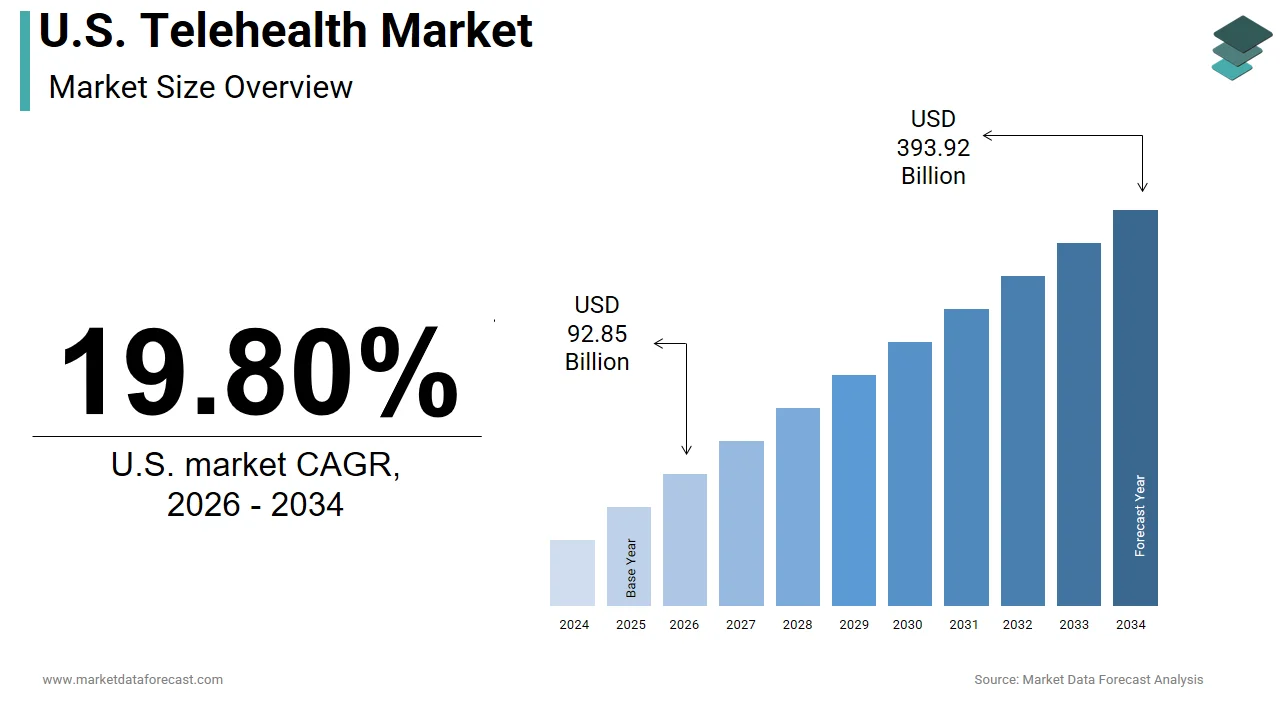
The U.S. telehealth market was valued at USD 77.50 billion in 2025, is estimated to reach USD 92.85 billion in 2026, and is projected to reach USD 393.92 billion by 2034, growing at a CAGR of 19.80% from 2026 to 2034.
Telehealth represents a transformative sector within the broader healthcare industry, facilitating the remote delivery of clinical services through digital communication technologies. This ecosystem encompasses synchronous video consultations, asynchronous store-and-forward transmissions, and remote patient monitoring systems that bridge the gap between patients and providers. The adoption of these technologies has shifted from a niche convenience to a fundamental component of care delivery due to regulatory changes and consumer acceptance. According to the Centers for Disease Control and Prevention, approximately 37% of adults in the U.S. used telehealth in 2021, which indicates a substantial integration into mainstream healthcare practices. Furthermore, according to the Federal Communications Commission, broadband internet access is available to 95% of the population, providing the necessary infrastructure for widespread virtual care deployment. The aging demographic profile of the nation further amplifies demand, as older adults require frequent medical attention for chronic conditions. As per the U.S. Census Bureau, the population aged 65 and older is projected to reach 80.8 million by 2040, creating sustained pressure on traditional healthcare facilities. Telehealth offers a scalable solution to manage this growing patient volume without compromising quality. The market is also influenced by the proliferation of smartphones and wearable devices that enable continuous health tracking. These technological advancements support real-time data exchange, allowing for proactive rather than reactive care models. Regulatory frameworks, such as the Health Insurance Portability and Accountability Act, ensure data privacy, while evolving reimbursement policies from the Centers for Medicare and Medicaid Services encourage provider participation. This dynamic environment fosters innovation and expands access to care across diverse geographic and socioeconomic landscapes.
MARKET DRIVERS
High Prevalence of Chronic Diseases Necessitates Continuous Remote Monitoring Solutions
The escalating prevalence of chronic diseases in the U.S. is one of the key factors driving the expansion of the U.S. telehealth market. Chronic conditions, such as diabetes, hypertension, and heart disease, require regular monitoring and frequent interactions with healthcare providers to prevent complications and hospitalizations. According to the Centers for Disease Control and Prevention, three in four American adults have at least one chronic condition, and over half have two or more, highlighting the magnitude of the health burden. This high incidence rate strains the traditional healthcare system, making remote monitoring an essential tool for maintaining patient health outside clinical settings. As per a study published in the Journal of Medical Internet Research, digital health monitoring helped to reduce hospital readmissions among heart failure patients to 10% compared with national readmission rates of approximately 25%, demonstrating the clinical efficacy of telehealth interventions. The ability to track vital signs, such as blood pressure, glucose levels, and oxygen saturation in real time, allows providers to adjust treatment plans promptly. As per the National Institutes of Health, telehealth interventions improve medication adherence and lifestyle modifications, which are critical for managing chronic illnesses. Furthermore, the aging population is disproportionately affected by these conditions, increasing the demand for accessible care options. Telehealth platforms enable elderly patients to receive consistent support without the physical burden of traveling to medical facilities. This convenience enhances patient satisfaction and engagement, leading to better health outcomes. Consequently, the need to manage chronic diseases effectively drives the adoption of telehealth technologies as a standard component of comprehensive care plans.
Regulatory Reforms and Expanded Reimbursement Policies Encourage Provider Adoption
Significant regulatory reforms and expanded reimbursement policies are further boosting the U.S. telehealth market growth. The Centers for Medicare and Medicaid Services have permanently extended several pandemic-era flexibilities, allowing for broader coverage of telehealth services, including mental health and preventive care. According to the Kaiser Family Foundation, over 90% of private insurers now cover telehealth visits at parity with in-person consultations, ensuring that providers are compensated fairly for remote services. This financial incentive encourages healthcare organizations to invest in telehealth infrastructure and train staff in virtual care protocols. According to the American Medical Association, 71.4% of physicians reported using telehealth in their practices weekly as of 2024, indicating a high level of provider engagement. Furthermore, the removal of geographic restrictions allows patients in rural areas to access specialists without traveling long distances. As per the Health Resources and Services Administration, telehealth utilization in rural communities has increased by 40% following policy updates. State-level licensure compacts also facilitate cross-state practice, enabling providers to serve patients across multiple jurisdictions. These regulatory adjustments create a supportive environment for telehealth expansion by aligning financial incentives with clinical needs. The stability of reimbursement policies reduces uncertainty for healthcare providers, encouraging long-term investment in digital health platforms. Consequently, the alignment of regulatory frameworks with modern care delivery models sustains the growth and integration of telehealth into the mainstream healthcare system.
MARKET RESTRAINTS
Digital Divide and Limited Broadband Access Restrict Equitable Service Delivery
The persistent digital divide and limited broadband access in certain regions are impeding the expansion of the U.S. telehealth market. Reliable, high-speed internet is a prerequisite for effective telehealth consultations, particularly for video-based interactions that require significant bandwidth. According to the Federal Communications Commission, approximately 24 million Americans lack access to fixed broadband speeds of at least 25 Mbps download and 3 Mbps upload, which are the minimum standards for basic telehealth functionality. This connectivity gap disproportionately affects rural and low-income urban populations, exacerbating existing health disparities. According to the Pew Research Center, 24% of adults with household incomes below $30,000 do not own a smartphone, limiting their ability to use mobile health applications. Furthermore, older adults, who are frequent users of healthcare services, often lack the digital literacy required to navigate telehealth platforms effectively. As per the National Telecommunications and Information Administration, nearly 30% of households with seniors do not have a desktop, laptop, or tablet computer. The absence of appropriate devices and technical support creates barriers to entry for vulnerable populations. Additionally, inconsistent internet reliability in remote areas leads to dropped calls and poor video quality, which compromises the quality of care. These technological limitations hinder the universal adoption of telehealth and prevent it from reaching those who may benefit most from remote care options. Until infrastructure gaps are addressed, the potential of telehealth to transform healthcare accessibility remains constrained by unequal digital access.
Reimbursement Inconsistencies and Regulatory Complexity Create Operational Uncertainties
Inconsistencies in reimbursement policies and complex regulatory requirements are further hampering the telehealth market growth in the U.S. While federal programs have expanded coverage, state-level regulations vary widely regarding licensure, prescribing practices, and payment parity. According to the National Conference of State Legislatures, only 30 states have enacted permanent payment parity laws requiring private insurers to reimburse telehealth services at the same rate as in-person visits. This fragmented regulatory landscape forces healthcare organizations to navigate a complex web of compliance requirements, increasing administrative burdens and costs. According to the American Hospital Association, varying state licensure laws restrict the ability of providers to offer cross-border care, limiting the reach of telehealth services. Furthermore, the temporary nature of some pandemic-era waivers creates uncertainty about future reimbursement levels, discouraging long-term investment in telehealth infrastructure. As per the Medical Group Management Association, 40% of practices cite regulatory uncertainty as a major barrier to expanding telehealth offerings. The lack of standardized protocols for data privacy and security across different jurisdictions also complicates compliance efforts. Providers must invest in legal and administrative resources to ensure adherence to diverse regulations, which strains operational budgets. These inconsistencies hinder the scalability of telehealth programs and limit their integration into standard care workflows. Consequently, the regulatory complexity acts as a brake on market growth, requiring sustained advocacy for uniform national standards to unlock the full potential of virtual care.
MARKET OPPORTUNITIES
Integration of Artificial Intelligence Enhances Diagnostic Accuracy and Efficiency
The integration of artificial intelligence into telehealth platforms is a promising opportunity for the U.S. market by enhancing diagnostic accuracy and operational efficiency. AI algorithms can analyze patient data in real time to identify patterns and predict health risks, enabling proactive interventions. According to the National Institutes of Health, AI-driven diagnostic tools can detect conditions, such as diabetic retinopathy, with accuracy rates exceeding 90%, supporting clinicians in making informed decisions. This technology reduces the workload on healthcare providers by automating routine tasks, such as triage and documentation. According to a study in the Journal of Medical Internet Research, AI-powered chatbots can handle up to 40% of initial patient inquiries, freeing up clinicians for complex cases. Furthermore, machine learning models can personalize treatment plans based on individual patient histories, improving outcomes and adherence. As per the American Medical Informatics Association, the use of predictive analytics in remote patient monitoring reduces emergency department visits by 20% by identifying deteriorating conditions early. The ability to process large volumes of data from wearable devices also enables continuous health assessment beyond periodic consultations. These advancements enhance the value proposition of telehealth by offering precise and timely care. Additionally, AI facilitates language translation and accessibility features, making telehealth more inclusive for diverse populations. By leveraging artificial intelligence, telehealth providers can deliver higher-quality care at lower costs, driving adoption and improving patient satisfaction. This technological evolution positions telehealth as a sophisticated and indispensable component of modern healthcare delivery.
Expansion into Mental Health and Behavioral Services Addresses Critical Care Gaps
The expansion of telehealth into mental health and behavioral services offers a substantial opportunity for the U.S. market by addressing critical gaps in access to care. Mental health disorders are prevalent, yet many individuals face barriers, such as stigma, transportation issues, and provider shortages, when seeking traditional therapy. According to the Substance Abuse and Mental Health Services Administration, 54.7% of adults with a mental illness did not receive treatment in the past year, as of 2022, highlighting the unmet need for accessible services. Telehealth platforms provide a discreet and convenient alternative, allowing patients to connect with therapists and psychiatrists from home. According to the American Psychological Association, 96% of psychologists believe the use of telehealth during the pandemic has proven its worth as a therapeutic tool, indicating strong consumer and professional acceptance. The flexibility of virtual sessions improves attendance rates and reduces no-shows, which are common challenges in outpatient mental health care. As per the National Alliance on Mental Illness, telehealth enables continuity of care for patients in rural areas where specialist availability is limited. Furthermore, the integration of digital therapeutic tools, such as cognitive-behavioral therapy apps, complements live sessions, enhancing treatment efficacy. The removal of geographic barriers allows patients to choose providers who best match their specific needs and preferences. This expansion not only improves access but also normalizes mental health care by integrating it into routine digital interactions. By capitalizing on this demand, telehealth providers can capture a growing segment of the market while contributing to public health improvements. This strategic focus on behavioral health drives sustainable growth and social impact.
MARKET CHALLENGES
Data Privacy and Cybersecurity Threats Undermine Patient Trust and Compliance
Data privacy and cybersecurity threats are primarily challenging the growth of the U.S. telehealth market. Telehealth platforms transmit sensitive personal health information over digital networks, making them attractive targets for cybercriminals. According to the Department of Health and Human Services, there were 725 reported healthcare data breaches in 2023, affecting millions of individuals and exposing vulnerabilities in digital systems. These incidents erode confidence in telehealth services, causing patients to hesitate in sharing critical health information. According to the IBM Cost of a Data Breach Report, the average cost of a healthcare data breach reached $10.93 million in 2023, reflecting the severe financial and reputational consequences for providers. The complexity of securing multiple devices and networks used in remote care increases the risk of unauthorized access. As per the Food and Drug Administration, medical devices connected to telehealth platforms may also be susceptible to hacking, posing direct safety risks to patients. Compliance with the Health Insurance Portability and Accountability Act requires robust encryption and access controls, which can be costly and technically challenging to implement. Furthermore, the rapid adoption of telehealth during the pandemic outpaced the development of comprehensive security protocols, leaving some systems vulnerable. The fear of data misuse discourages some patients from adopting telehealth, particularly among vulnerable populations. Addressing these security concerns requires continuous investment in advanced cybersecurity measures and staff training. Until robust protections are universally implemented, data privacy risks will remain a significant barrier to widespread telehealth adoption.
Limited Physical Examination Capabilities Constrain Clinical Effectiveness For Certain Conditions
The limited ability to perform physical examinations constrains the clinical effectiveness of telehealth for certain medical conditions, which further challenges the U.S. telehealth market expansion. Many diagnoses rely on tactile assessments, such as palpation, auscultation, and reflex testing, which cannot be replicated through video consultations. According to the American Academy of Family Physicians, approximately 20% of primary care visits require a physical examination to ensure accurate diagnosis and treatment planning. This limitation restricts the scope of telehealth to primarily consultative and follow-up services, reducing its utility for acute or complex cases. According to the Journal of General Internal Medicine, misdiagnosis rates are slightly higher in telehealth visits compared to in-person encounters due to the lack of physical cues. Furthermore, the inability to perform immediate diagnostic tests, such as blood work or imaging, delays treatment for conditions requiring prompt intervention. As per the National Quality Forum, certain specialties, such as dermatology and orthopedics, face challenges in assessing skin lesions or joint mobility remotely. Patients may also struggle to describe symptoms accurately without professional guidance, leading to incomplete clinical pictures. The reliance on patient-reported data introduces potential errors and biases, affecting decision-making. While remote monitoring devices are improving these gaps, they are not yet ubiquitous or standardized. Consequently, the clinical limitations of telehealth necessitate a hybrid model of care where virtual and in-person services complement each other. This constraint requires careful patient selection and provider training to ensure safe and effective outcomes.
REPORT COVERAGE
| REPORT METRIC | DETAILS |
| Market Size Available | 2025 to 2034 |
| Base Year | 2025 |
| Forecast Period | 2026 to 2034 |
| Segments Covered | By Type, Application, Modality, End-User, and Region. |
| VarioU.S. Analyses Covered | Global, Regional, and Country-Level Analysis, Segment-Level Analysis, Drivers, Restraints, Opportunities, Challenges; PESTLE Analysis; Porter’s Five Forces Analysis, Competitive Landscape, Analyst Overview of Investment Opportunities |
| Countries Covered | New York, Massachusetts, Pennsylvania, Illinois, Ohio, Michigan, Texas, Florida, Georgia, California, Washington, Colorado. |
| Market Leaders Profiled | American Well (U.S.), MDLIVE Inc. (U.S.), Teladoc Health Inc. (U.S.), Doctor on Demand Inc. (U.S.), Dictum Health Inc. (U.S.), Grand Rounds Inc. (U.S.), Included Health, Inc. (U.S.), CirrU.S.MD (U.S.) |
SEGMENTAL ANALYSIS
By Type Insights
The services segment led the market by capturing the largest share of the U.S. telehealth market in 2025. The growth of the services segment in the U.S. market is attributed to the critical need for direct clinical interactions and ongoing patient management, and the widespread adoption of virtual care models by healthcare providers seeking to expand access and improve efficiency. According to the American Telemedicine Association, over 80% of hospitals in the U.S. now offer some form of telehealth service, reflecting the institutional shift toward service-based delivery. According to the Centers for Medicare and Medicaid Services, telehealth services accounted for billions of dollars in reimbursement claims in 2023, highlighting the financial viability and scale of this segment. The ability to provide continuous care for chronic conditions without requiring physical visits enhances patient convenience and adherence. As per the Journal of Medical Internet Research, patient satisfaction rates for telehealth services exceed 75% due to reduced wait times and travel burdens. Furthermore, the integration of mental health services into primary care through telehealth platforms has expanded the reach of behavioral health professionals. The scalability of service delivery allows providers to manage larger patient panels effectively. These factors collectively establish services as the backbone of the telehealth ecosystem, driving consistent revenue and clinical impact across the healthcare landscape.
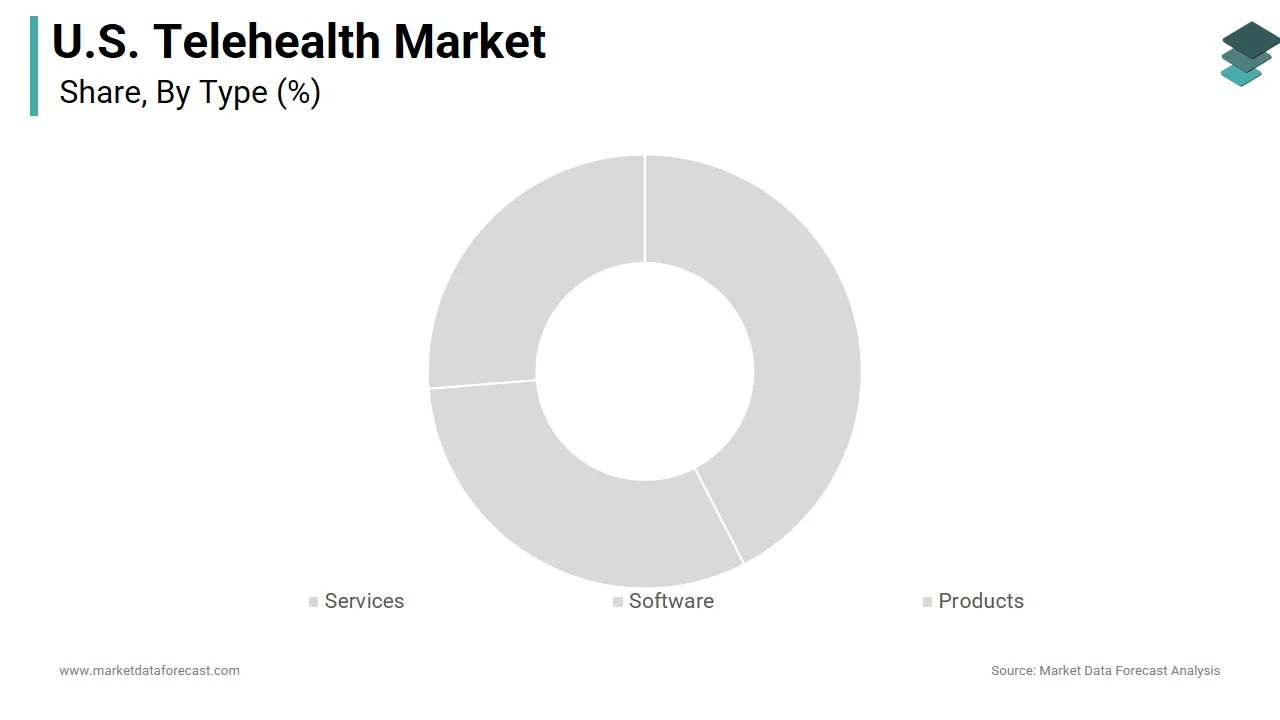
However, the products segment is estimated to expand at a promising CAGR of 17.4% during the forecast period in the U.S. market, owing to the increasing demand for hardware and software solutions that enable seamless virtual care delivery and the proliferation of connected medical devices and robust telehealth platforms. According to the Consumer Technology Association, sales of wearable health devices, such as smartwatches and fitness trackers, increased by 20% in 2023, reflecting consumer interest in personal health monitoring. The adoption of remote patient monitoring kits, which include blood pressure cuffs, glucometers, and pulse oximeters, allows for comprehensive data collection outside clinical settings. As per the Food and Drug Administration, the number of cleared digital health devices has doubled in recent years, providing a wider array of tools for clinicians. Furthermore, the development of artificial intelligence-powered diagnostic software enhances the capabilities of telehealth platforms, attracting significant venture capital. The need for secure and user-friendly interfaces drives continuous innovation in product design. These technological advancements position products as a high-velocity segment that supports the broader expansion of telehealth services.
By Application Insights
The telemedicine segment occupied the major share of the U.S. telehealth market in 2025 due to its broad applicability across various medical specialties and its role as the primary interface for virtual care. This application includes real-time video consultations between patients and providers for diagnosis, treatment, and follow-up care. According to the American Medical Association, nearly 90% of physicians use telemedicine for patient consultations, indicating its central role in modern practice. According to the National Center for Health Statistics, telemedicine visits for primary care increased by 50% in recent years, demonstrating its acceptance as a standard care modality. The convenience of accessing specialists without geographic constraints enhances patient access to expertise. As per the Health Resources and Services Administration, telemedicine reduces no-show rates by 30% compared to in-person appointments, improving overall healthcare efficiency. Furthermore, the integration of telemedicine with electronic health records ensures seamless documentation and continuity of care. The ability to prescribe medications and order tests remotely further expands its utility. These factors collectively establish telemedicine as the most widely used and impactful application in the telehealth sector, sustaining its leadership through consistent clinical adoption and patient reliance.
On the other hand, the patient monitoring segment is predicted to showcase a CAGR of 21.4% during the forecast period in the U.S. market, owing to the rising prevalence of chronic diseases and the need for continuous health tracking. This application involves the use of connected devices to collect and transmit patient data to healthcare providers for analysis and intervention. According to the Centers for Disease Control and Prevention, three in four American adults have at least one chronic condition, creating a vast population requiring regular monitoring. According to a study in the Journal of Medical Internet Research, remote patient monitoring can reduce heart failure readmissions by up to 50%, highlighting its clinical effectiveness. The aging population further accelerates demand, as older adults benefit from home-based monitoring that enhances safety and independence. As per the National Institutes of Health, the adoption of remote monitoring technologies has increased by 40% among senior citizens in recent years. Furthermore, advancements in sensor technology and data analytics enable more accurate and timely insights into patient health. Insurance coverage for remote monitoring services has also expanded, encouraging broader adoption. These dynamics position patient monitoring as a rapidly expanding application that transforms chronic disease management and improves health outcomes.
By Modality Insights
The real-time synchronous modality segment dominated the market with the leading share of the U.S. market in 2025. The growth of the real-time synchronous modality segment in the U.S. market can be credited to the rising preference for direct communication, which facilitates accurate diagnosis and builds trust. According to the American Telemedicine Association, over 70% of telehealth visits are conducted via synchronous video platforms, reflecting its widespread adoption. According to the Journal of Medical Internet Research, patient satisfaction scores are higher for synchronous visits compared to asynchronous methods due to the immediate feedback and personal connection. The ability to observe non-verbal cues and conduct visual examinations enhances clinical accuracy. As per the Centers for Medicare and Medicaid Services, reimbursement policies favor synchronous interactions for a wide range of services, encouraging provider utilization. Furthermore, the integration of high-speed broadband internet supports high-quality video streams, ensuring reliable connections. The familiarity of video conferencing tools among consumers also lowers barriers to entry. These factors collectively establish real-time synchronous modality as the standard for telehealth delivery, driving the majority of clinical interactions and ensuring effective patient-provider engagement.
On the other hand, the store-and-forward asynchronous modality segment is estimated to record a CAGR of 20.3% during the forecast period, owing to the flexibility it offers to both patients and providers, eliminating the need for simultaneous availability. According to the American Academy of Dermatology, store-and-forward technology is widely used for teledermatology, allowing patients to submit photos of skin conditions for expert review. According to the Health Information Management Systems Society, asynchronous consultations reduce provider workload by 25% by enabling batch processing of cases. The efficiency of this modality is particularly beneficial in rural areas where specialist access is limited. As per the National Rural Health Association, asynchronous telehealth has increased specialist consultation rates by 35% in underserved communities. Furthermore, the integration of artificial intelligence for preliminary analysis enhances the speed and accuracy of asynchronous diagnoses. The ability to handle large volumes of data without scheduling constraints makes it ideal for screening and triage. These advantages position store-and-forward modality as a rapidly expanding solution that enhances accessibility and operational efficiency in telehealth.
COUNTRY ANALYSIS
U.S. Telehealth Market Analysis
The United States is likely to maintain its global leadership in the telehealth sector through 2026 and beyond, fueled by legislative support and a maturing digital infrastructure. The U.S. stands as the largest and most advanced market for telehealth globally due to the robust healthcare infrastructure, favorable regulatory environment, and high levels of technological adoption. A primary driving factor for this leadership is the comprehensive reimbursement framework established by the federal and state governments. According to the Centers for Medicare and Medicaid Services, permanent expansion of telehealth coverage has ensured sustainable funding for virtual care services. According to the Kaiser Family Foundation, all 50 states have enacted laws requiring private insurers to cover telehealth visits, promoting widespread accessibility. Furthermore, the high prevalence of chronic diseases and an aging population create sustained demand for remote care solutions. As per the U.S. Census Bureau, the population aged 65 and older is projected to reach 80.8 million by 2040, necessitating scalable healthcare delivery models. The presence of leading technology companies fosters continuous innovation in telehealth platforms and devices. Additionally, the widespread availability of broadband internet supports reliable connectivity for virtual consultations. These structural and policy advantages solidify the U.S. as the central hub for telehealth innovation and market activity globally.
COMPETITIVE LANDSCAPE
The competition in the U.S. telehealth market is intense and characterized by a mix of established healthcare technology companies, emerging startups, and traditional health systems entering the digital space. Major players compete based on platform usability, clinical quality, breadth of services, and integration capabilities with existing healthcare infrastructure. Differentiation is achieved through specialized offerings such as mental health support, chronic disease management, and corporate wellness programs. Price competitiveness remains a factor, particularly for direct-to-consumer services, but value-based contracts with payers are increasingly common. Strategic acquisitions and partnerships are frequent as companies seek to expand their provider networks and technological capabilities. The rise of hybrid care models that combine virtual and in-person services adds complexity to competitive dynamics. Regulatory changes regarding reimbursement and licensure also influence market entry and expansion strategies. Large tech companies are increasingly investing in healthcare, creating new competitive pressures for traditional telehealth providers. Ultimately, success depends on the ability to deliver seamless, secure, and effective care experiences that meet the evolving needs of patients and providers while maintaining operational efficiency and financial sustainability in a rapidly evolving industry landscape.
KEY MARKET PLAYERS
Some of the companies that are playing a dominating role in the U.S. telehealth market include
- American Well (U.S.)
- MDLIVE Inc. (U.S)
- Amwell
- Teladoc Health Inc. (U.S.)
- Doctor on Demand Inc. (U.S.)
- Dictum Health Inc. (U.S.)
- Grand Rounds Inc. (U.S.)
- Included Health, Inc. (U.S.)
- CirrU.S.MD (U.S.)
TOP PLAYERS IN THE MARKET
- Teladoc Health Inc is a global leader in virtual care, providing comprehensive telehealth services across the U.S. The company offers on-demand medical consultations, mental health support, and chronic condition management through its integrated platform. Recent actions to strengthen its market position include the expansion of its whole-person virtual care model, which combines physical and behavioral health services. Teladoc has also invested heavily in artificial intelligence capabilities to enhance diagnostic accuracy and personalize patient experiences. The company partners with major health plans and employers to deliver scalable solutions that reduce healthcare costs. By focusing on clinical quality and user engagement Teladoc maintains its status as a preferred provider for millions of members. These strategic initiatives ensure continued growth and reinforce its leadership in the evolving digital health landscape.
- Amwell operates a leading telehealth platform that connects patients with healthcare providers through a unified digital interface. The company serves health systems, insurers, and employers by offering white-label solutions and direct-to-consumer services. Recent actions to strengthen its market position include the enhancement of its Converge Platform, which integrates electronic health records with virtual care tools. Amwell has expanded its network of specialty care providers to address complex medical needs beyond primary care. The company focuses on interoperability, allowing seamless data exchange between different healthcare systems. By prioritizing enterprise partnerships, Amwell enables large organizations to deliver branded virtual care experiences. These efforts improve access to care and streamline operations for healthcare providers. The continuous improvement of its technology infrastructure ensures reliable and secure consultations for users across the country.
- MDLive provides accessible and affordable telehealth services to individuals and organizations throughout the U.S.. The company specializes in urgent care, behavioral health, and dermatology consultations via video phone and chat. Recent actions to strengthen its market position include the integration of advanced triage algorithms to guide patients to appropriate care levels efficiently. MDLive has expanded its partnerships with retail pharmacies and health systems to increase point-of-care accessibility. The company emphasizes rapid response times, ensuring that patients receive timely medical attention. By focusing on user-friendly interfaces and broad insurance acceptance, MDLive attracts a diverse patient base. These strategies enhance customer satisfaction and loyalty. The commitment to high-quality clinical care and operational efficiency positions MDLive as a key competitor in the telehealth market.
TOP STRATEGIES USED BY KEY MARKET PARTICIPANTS
Key players in the U.S. telehealth market primarily employ strategic partnerships and technological innovation to maintain competitive advantages. Companies collaborate with health systems and insurers to integrate virtual care into existing workflows seamlessly. This approach enhances accessibility and drives adoption among diverse patient populations. Providers invest heavily in artificial intelligence and data analytics to improve diagnostic accuracy and personalize treatment plans. These technologies streamline operations and reduce administrative burdens for clinicians. Additionally, firms focus on expanding service offerings to include mental health and chronic disease management. Customer experience enhancement through intuitive platforms and twenty-four-seven support further differentiates market leaders. Regulatory compliance and data security remain top priorities to build trust and ensure patient safety. These multifaceted strategies enable participants to navigate complex market dynamics and sustain long-term growth in the digital health sector.
MARKET SEGMENTATION
This research report on the U.S. telehealth market has been segmented and sub-segmented into the following categories.
By Type
- Services
- Software
- Products
By Application
- Telemedicine
- Patient Monitoring
- Continuous Medical Education
- Others
By Modality
- Store-and-forward (Asynchronous)
- Real-time (Synchronous)
- Remote Patient Monitoring
By End User
- Healthcare Facilities
- Homecare
- Others
By Country
- New York
- Texas
- Florida
- Georgia
- California
- Rest of U.S.