- Product Description Description
- Table of Contents TOC
- List of Table & Figure LOT
- Get Free Sample PDF Sample PDF
Market Size, 2025
$9.68 BnMarket Estimate, 2026
$10.08 BnMarket Forecast, 2034
$13.97 BnCAGR, 2026–2034
4.16%U.S. Tequila Market Report Summary
The U.S. tequila market was valued at USD 9.68 billion in 2025, is estimated to reach USD 10.08 billion in 2026, and is projected to reach USD 13.97 billion by 2034, growing at a CAGR of 4.16% during the forecast period. Market growth is driven by increasing consumer preference for premium alcoholic beverages, rising popularity of tequila based cocktails, and growing demand for authentic agave spirits. Tequila consumption in the United States continues to expand due to premiumization trends, evolving drinking preferences, and strong demand among younger consumers. The increasing popularity of craft spirits, celebrity backed tequila brands, and luxury beverage experiences is further supporting market growth.
Key Market Trends
- Rising consumer preference for premium and ultra premium spirits is driving market growth.
- Increasing popularity of tequila based cocktails and mixology culture is boosting tequila consumption.
- Growing demand for authentic 100% agave tequila products is supporting market expansion.
- Expansion of premium retail and hospitality channels is enhancing product accessibility.
- Innovation in flavored tequila, aged variants, and celebrity backed brands is influencing market development.
Segmental Insights
- Based on product type, the blanco tequila segment accounted for the dominant share of the U.S. tequila market in 2025. This dominance is attributed to its versatility in cocktails, smooth taste profile, and growing popularity among consumers.
- Based on purity, the 100% agave tequila segment held the leading share of the U.S. tequila market in 2025, driven by rising consumer preference for authentic and high quality tequila products.
- Based on price range, the premium tequila segment accounted for the largest share of the U.S. tequila market in 2025, supported by premiumization trends and increasing spending on luxury alcoholic beverages.
Regional Insights
- The United States is expected to maintain its position as the world’s largest tequila consumption market during the forecast period, supported by strong demand for premium spirits, expanding cocktail culture, and rising consumer interest in authentic agave based beverages. The country continues to consume significantly higher tequila volumes compared to most global markets.
Competitive Landscape
The U.S. tequila market is highly competitive, with key players focusing on premium product launches, brand collaborations, and expansion of high quality agave spirit portfolios to strengthen their market position. Companies are investing in aged tequila variants, celebrity endorsements, and innovative marketing strategies. Prominent players in the U.S. tequila market include Bacardi and Company Ltd., Beam Suntory Inc, Diageo PLC, Pernod Ricard, Constellation Brands, Inc., Suntory Holdings Limited, Heaven Hill Distilleries, Inc., Campari Group, Casa Aceves, Sazerac Company Inc., and Brown-Forman Corporation.
U.S. Tequila Market Size
The U.S. tequila market size was valued at USD 9.68 billion in 2025, is estimated to reach USD 10.08 billion in 2026, and is projected to reach USD 13.97 billion by 2034, growing at a CAGR of 4.16% from 2026 to 2034.
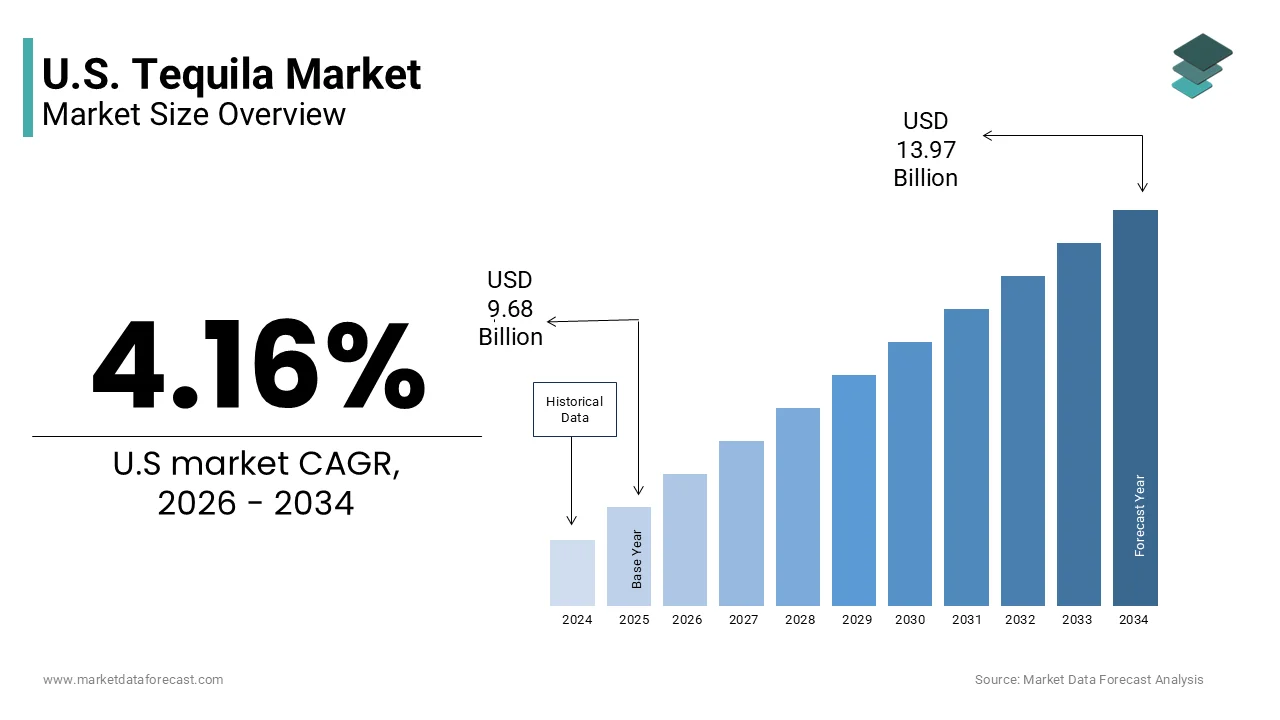
The U.S. is likely to see the tequila industry reach new heights over the next few years as it transitions from a traditional party spirit to a sophisticated sipping category. According to the Distilled Spirits Council of the U.S., tequila has emerged as one of the fastest growing spirit categories, with revenue for the agave-based segment rising by 7.9% to 6.4 billion dollars recently. The landscape is characterized by a transition from mixing spirits to sipping grades driven by increased consumer education and appreciation for craftsmanship. According to the U.S. Department of Agriculture, trade data indicates that the U.S. imports the vast majority of its tequila supply, highlighting a deep economic interdependence with Mexican producers. The regulatory environment involves strict labeling requirements enforced by the Alcohol and Tobacco Tax and Trade Bureau to prevent misrepresentation. Consumer behavior is increasingly influenced by transparency in sourcing and production methods. The market operates within a competitive alcoholic beverage sector where brand heritage and sustainability practices play pivotal roles in differentiation. This sector continues to evolve as manufacturers address demand for high quality artisanal products while navigating supply chain complexities and environmental considerations associated with agave cultivation.
MARKET DRIVERS
Rising Consumer Preference for Premiumization and Craft Spirits
The rising consumer preference for premiumization and craft spirits is a key factor propelling the growth of the U.S. tequila market. Modern drinkers are increasingly discerning, seeking high quality beverages that offer complex flavor profiles and authentic craftsmanship. As per the Distilled Spirits Council of the U.S., super premium and ultra-premium tequila segments have experienced consistent growth, with high-end brands growing their volumes by over 10% annually. This trend reflects a broader cultural shift toward mindful drinking where consumers prioritize quality over quantity. Aged tequilas such as reposado and anejo offer rich notes of vanilla, oak, and caramel that appeal to sophisticated palates accustomed to whiskey or cognac. According to industry surveys, millennials and Generation Z consumers are willing to pay higher prices for spirits with transparent sourcing and detailed production stories. This demographic values authenticity and heritage, driving demand for small batch and estate grown tequilas. The rise of mixology culture further amplifies this driver as bartenders and home enthusiasts seek high quality base spirits for crafting intricate cocktails. Premium tequila brands leverage this interest by emphasizing their distillation techniques and regional origins. Marketing campaigns often highlight the artisanal nature of production, appealing to consumers who view spirits as a form of culinary art. The availability of premium tequilas in specialized retail outlets and high end bars enhances visibility and accessibility. This focus on quality and exclusivity fosters brand loyalty and encourages repeat purchases sustaining long term market growth. The shift toward premiumization also allows manufacturers to command higher margins, supporting investment in innovation and brand building.
Influence of Hispanic Demographics and Cultural Integration
The growing influence of Hispanic demographics and the deep integration of tequila into American culture are further boosting the U.S. market expansion. The Hispanic population in the U.S. is expanding rapidly, bringing with it cultural traditions that celebrate tequila as a central element of social gatherings and festivities. As per the U.S. Census Bureau, the Hispanic population reached 63.7 million in 2022, creating a substantial base of consumers with inherent familiarity and preference for agave spirits. This demographic not only consumes tequila but also influences broader mainstream trends through cultural exchange and social media. According to market research, non Hispanic consumers are increasingly adopting tequila consumption habits driven by exposure to Latin cuisine, music, and lifestyle. The normalization of tequila in popular culture through music videos, celebrity endorsements, and television shows has reduced stigma and enhanced its appeal across diverse groups. Bars and restaurants are responding by featuring extensive tequila lists and hosting tasting events that educate consumers about different varieties and pairing options. The association of tequila with celebration and community reinforces its position as a staple in social drinking occasions. Furthermore, the rise of Latino owned brands adds authenticity and resonates with consumers seeking genuine cultural connections. This demographic dynamism ensures a steady and expanding consumer base, driving volume and value growth in the tequila sector.
MARKET RESTRAINTS
Environmental Sustainability and Agave Supply Volatility
Environmental sustainability concerns and volatility in agave supply are majorly hindering the expansion of the U.S. tequila market. Tequila production relies exclusively on blue agave, which requires seven to ten years to mature, making it susceptible to supply shocks. As per the Tequila Regulatory Council, agave prices can fluctuate wildly, with costs reaching as high as 30 pesos per kilo during peak shortage cycles. Climate change exacerbates these issues by altering rainfall patterns and increasing the frequency of extreme weather events in key producing regions. According to agricultural reports, water scarcity in Jalisco and surrounding states poses a threat to sustainable agave cultivation. The intensive water usage required for irrigation conflicts with local community needs, leading to social and regulatory pressures. Consumers are becoming increasingly aware of the environmental footprint of spirit production, demanding greater transparency and responsible practices. Brands face challenges in securing consistent raw material supplies while adhering to sustainability standards. The lack of diversified sourcing options limits flexibility in managing supply chain risks. Any disruption in agave availability can lead to product shortages and price increases affecting consumer demand. The industry must invest in sustainable farming techniques and water conservation technologies to mitigate these risks. Failure to address environmental concerns may result in reputational damage and regulatory scrutiny hindering market growth.
Regulatory Complexity and Labeling Standards
Regulatory complexity and stringent labeling standards impose significant constraints on the U.S. tequila market. The definition of tequila is protected by international agreements and domestic laws, requiring strict compliance with production and labeling guidelines. As per the Alcohol and Tobacco Tax and Trade Bureau, tequila must be produced in specific regions of Mexico using at least 51% blue agave to be legally imported and sold. Importers must navigate complex documentation and verification processes to ensure products meet legal definitions. Mislabeling or unauthorized use of the term tequila can result in severe penalties and product seizures. The distinction between tequila and other agave spirits such as mezcal often confuses consumers, leading to potential misrepresentation issues. According to industry analyses, varying state level regulations regarding alcohol distribution and sales add layers of complexity for national brands. The three tier system in the U.S. separates producers, distributors, and retailers, creating logistical hurdles and increasing costs. Compliance with health warnings and nutritional labeling requirements further burdens manufacturers. The need for constant monitoring of regulatory changes requires dedicated legal and compliance resources. Small and emerging brands often struggle to meet these demands, limiting market entry and innovation. The rigidity of the regulatory framework can stifle creativity in marketing and product development. Navigating this intricate legal landscape is essential for maintaining market access but remains a persistent barrier to efficient operations and expansion.
MARKET OPPORTUNITIES
Expansion into Ready to Drink Cocktail Segments
The expansion into ready-to-drink RTD cocktail segments presents a lucrative opportunity for the U.S. tequila market. Consumers increasingly seek convenience and portability, driving demand for pre mixed beverages that require no preparation. As per the Beverage Information Group, the RTD spirits category grew by 35.8% in volume recently, with tequila-based options like margaritas being a primary driver. These products appeal to younger consumers who value ease of use and consistent quality. Tequila brands can leverage their existing flavor profiles to create innovative RTD offerings that stand out in a crowded market. The use of natural ingredients and real fruit juices enhances the appeal of these products, distinguishing them from artificially flavored competitors. According to retail data, RTD cocktails are prominently featured in convenience stores and grocery chains, providing high visibility and impulse purchase opportunities. The portability of cans and bottles makes them ideal for outdoor activities, parties, and travel, expanding usage occasions beyond traditional bar settings. Manufacturers can collaborate with mixologists to develop unique recipes that capture current trends such as spicy or herbal variations. Packaging innovation, including sustainable materials and eye catching designs, further attracts attention on shelves. The growth of e commerce platforms facilitates direct to consumer sales, allowing brands to reach niche audiences and offer subscription services. By capitalizing on the convenience trend, tequila producers can diversify their product portfolios and capture a new segment of consumers who prioritize simplicity and enjoyment.
Innovation in Sustainable and Ethical Production Practices
Innovation in sustainable and ethical production practices offers a significant opportunity for the U.S. tequila market expansion. Consumers are increasingly concerned about the environmental impact of their purchases, seeking brands that prioritize sustainability and social responsibility. As per the Environmental Protection Agency, businesses that reduce waste and greenhouse gas emissions are more likely to attract the 60% of consumers who report sustainability as an important purchasing factor. Tequila producers can implement sustainable agriculture methods such as organic farming and water conservation to reduce their ecological footprint. The use of recycled materials for packaging and labels appeals to environmentally conscious buyers. According to industry reports, transparency in supply chains and fair labor practices resonates strongly with millennial and Generation Z consumers. Brands that certify their products as fair trade or carbon neutral can command premium prices and attract dedicated followers. Collaborations with local communities in producing regions support economic development and strengthen brand narratives. Marketing campaigns that highlight these initiatives educate consumers and build emotional connections. The adoption of renewable energy in distillation processes further demonstrates commitment to sustainability. By integrating ethical practices into core operations, tequila companies can differentiate themselves in a competitive market. This approach not only mitigates regulatory risks but also aligns with global sustainability goals. The opportunity to lead in corporate social responsibility positions tequila brands as forward thinking and responsible choices for modern consumers.
MARKET CHALLENGES
Intense Competition from Other Spirit Categories
Intense competition from other spirit categories such as whiskey, vodka, and gin poses a significant challenge to the U.S. tequila market. These categories have successfully marketed themselves as premium and versatile options, capturing substantial market share. As per the Distilled Spirits Council of the U.S., American Whiskey revenue rose by 3.8% to 5.3 billion dollars recently, showing that it remains a formidable competitor in the brown spirits space. Whiskey benefits from a perception of heritage and craftsmanship while gin appeals to those seeking botanical and artisanal experiences. Vodka remains a dominant force due to its neutrality and mixability. Tequila struggles to differentiate itself amidst this crowded landscape, often perceived as a party spirit rather than a sipping option. According to retail scanner data, shelf space allocation for competing spirits has increased, limiting visibility for tequila brands. Marketing budgets for major whiskey and gin players often exceed those of tequila producers, enabling more aggressive advertising and promotions. The rise of craft distilleries in other categories further fragments the market, offering unique and localized options. Tequila brands face the challenge of reshaping consumer perceptions and highlighting the diversity and complexity of their products. Without distinct positioning and compelling storytelling, tequila risks being overshadowed by more aggressively marketed competitors. The need to innovate in flavor, packaging, and engagement is critical to maintaining relevance. Failure to effectively compete for consumer attention and wallet share may result in stagnation or decline in market presence.
Supply Chain Vulnerabilities and Logistics Costs
Supply chain vulnerabilities and rising logistics costs are further challenging the expansion of the U.S. tequila market. Tequila production is concentrated in specific regions of Mexico, making it dependent on cross border transportation networks. As per the U.S. Department of Transportation, billions of dollars in goods cross the U.S.-Mexico border monthly, and congestion at crossings like Laredo can increase transportation times and costs significantly. The reliance on trucking and rail transport exposes the industry to fuel price volatility and labor shortages. According to logistics industry reports, domestic trucking rates have increased by double-digit%ages in recent years, impacting profit margins for distributors and retailers. The perishable nature of agave and the need for temperature controlled storage add complexity to supply chain management. Any disruption in the supply chain can lead to stockouts and lost sales opportunities. Political tensions or trade policy changes between the U.S. and Mexico can further exacerbate these risks. Manufacturers face the challenge of diversifying transportation routes and investing in resilient infrastructure. The need to maintain consistent product availability amidst logistical uncertainties requires strategic planning and contingency measures. Failure to address these vulnerabilities can result in operational inefficiencies and reduced competitiveness. Ensuring reliable and cost effective distribution is essential for maintaining market stability and meeting consumer demand in a dynamic economic environment.
REPORT COVERAGE
| REPORT METRIC | DETAILS |
| Market Size Available | 2025 to 2034 |
| Base Year | 2025 |
| Forecast Period | 2026 to 2034 |
| CAGR | 4.16% |
| Segments Covered | By Product Type, Purity, Price Range, Distribution Channel, and Region. |
| Various Analyses Covered | Global, Regional and Country-Level Analysis, Segment-Level Analysis, Drivers, Restraints, Opportunities, Challenges; PESTLE Analysis; Porter’s Five Forces Analysis, Competitive Landscape, Analyst Overview of Investment Opportunities |
| Countries Covered | California, Washington, Oregon, New York, United States |
| Market Leaders Profiled | Bacardi and Company Ltd., Beam Suntory Inc, Diageo PLC, Pernod Ricard, Constellation Brands, Inc., Suntory Holdings Limited, Heaven Hill Distilleries, Inc., Campari Group, Casa Aceves, Sazerac Company Inc., and Brown Forman Corporation. |
SEGMENTAL ANALYSIS
By Product Type Insights
The blanco tequila segment dominated the market by accounting for the highest share of the U.S. tequila market in 2025. The domination of Blanco tequila segment in the U.S. market is attributed to its exceptional versatility in mixology and its central role in contemporary cocktail culture. Bartenders and home enthusiasts prefer Blanco for its clean and crisp profile, which allows it to blend seamlessly with other ingredients without overpowering them. As per the Distilled Spirits Council of the U.S., tequila-based cocktails, specifically the Margarita, remain the #1 cocktail in the U.S., ensuring high baseline demand for Blanco. The neutral yet distinct agave flavor of Blanco makes it an ideal base for these classic and modern concoctions. According to industry surveys, a significant majority of consumers associate tequila primarily with mixed drinks rather than neat consumption, driving high volume sales of the unaged variety. The rise of craft cocktail bars has further elevated the status of Blanco as a premium mixing spirit, encouraging the use of high quality 100% agave options. The ability of Blanco to maintain its integrity when chilled or diluted ensures consistent taste in various serving styles. This widespread utility in social and dining settings ensures that Blanco remains the default choice for both casual drinkers and connoisseurs. The continuous innovation in cocktail recipes featuring Blanco reinforces its dominance and sustains robust demand across diverse consumer segments.
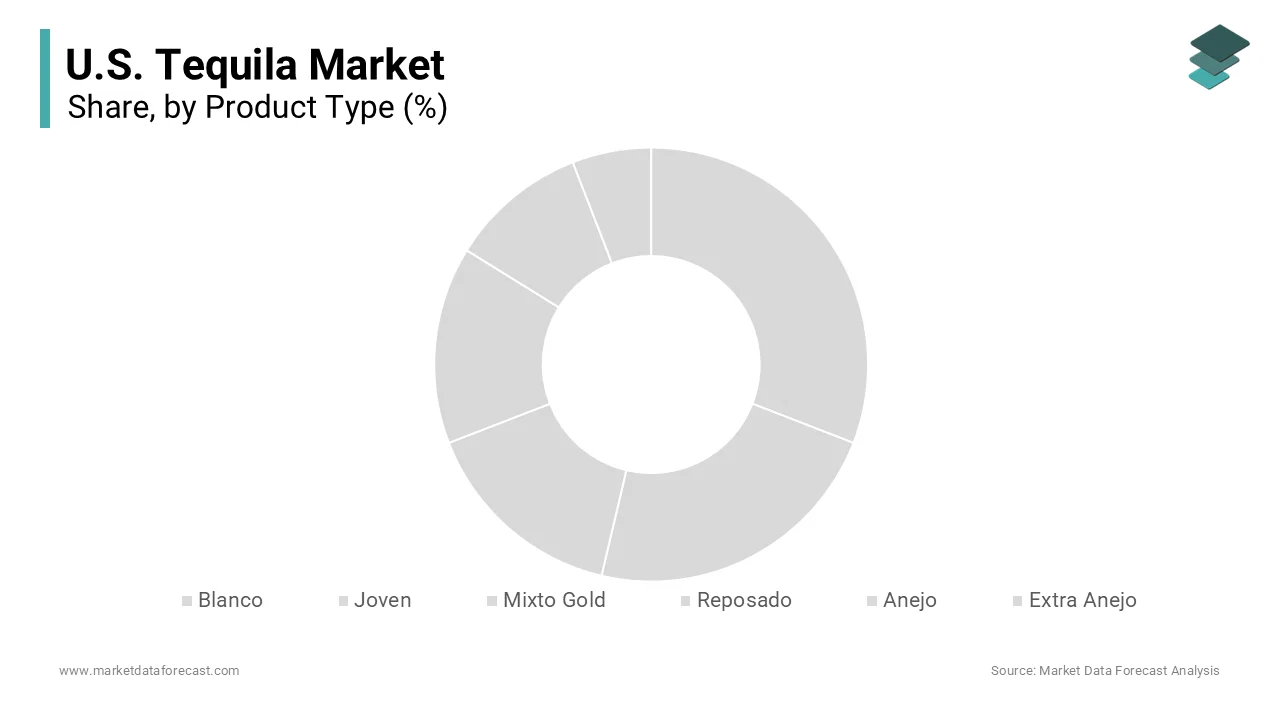
However, the extra anejo tequila segment is anticipated to showcase a CAGR of 13.4% during the forecast period in the U.S. market owing to the rising demand for ultra-premium sipping spirits among affluent and discerning consumers. As per the Distilled Spirits Council of the U.S., sales of luxury spirits (priced over $50) grew by 4% in volume recently, with Extra Anejo being a key contributor. Extra Anejo tequilas offer a sensory experience comparable to fine whiskeys and cognacs, with notes of chocolate, vanilla, and dried fruit that appeal to sophisticated palates. According to luxury market trends, there is a growing cohort of collectors and enthusiasts who view Extra Anejo as a status symbol and a worthwhile investment. The willingness to pay higher prices for aged spirits reflects a shift toward mindful drinking where individuals savor smaller quantities of higher quality products. Marketing efforts by premium brands emphasize the craftsmanship and time involved in producing Extra Anejo, enhancing its perceived value. The inclusion of Extra Anejo in high end bars and exclusive lounges further validates its prestige and attracts wealthy consumers. The association of Extra Anejo with special occasions and gifting drives seasonal spikes in sales. This trend toward luxury consumption ensures that Extra Anejo continues to outpace other segments in growth rate. The ability of Extra Anejo to command premium prices supports higher profit margins for manufacturers, encouraging increased production and promotion.
By Purity Insights
The 100% agave tequila segment captured the leading share of the U.S. tequila market in 2025 due to is the increasing consumer preference for authenticity and high quality in alcoholic beverages. Modern drinkers are more educated about production methods and seek products that offer pure and unadulterated flavors. As per the Tequila Regulatory Council, 100% agave tequila must be made with only agave sugars, whereas mixto can contain up to 49% other sugars, leading consumers to prefer the former for its quality. According to market research, a growing number of consumers actively avoid mixto tequilas due to concerns about added sugars and inferior quality. The perception of 100% agave tequila as a premium and healthier option drives its popularity among health conscious buyers. The transparency of labeling allows consumers to make informed choices, reinforcing trust in the brand. The rise of craft cocktail culture has further amplified demand for high quality base spirits that enhance the overall drinking experience. Bartenders prefer 100% agave tequila for its consistency and superior taste profile. The association of purity with luxury and sophistication appeals to affluent consumers who are willing to pay a premium for authentic products. This shift in consumer values ensures that 100% agave tequila remains the preferred choice for the majority of buyers. The continuous emphasis on quality and origin sustains the market leadership of this segment.
By Price Range Insights
The premium tequila segment led the market by holding the largest share of the U.S. tequila market in 2025. The dominance of Premium tequila segment in the U.S. market is attributed to the optimal balance it offers between quality and affordability, appealing to a broad demographic of consumers. As per consumer spending data, the premium spirit segment (ranging from $25 to $40) accounts for over 40% of the total spirits market, as Americans seek good value for money without sacrificing taste. Premium tequilas often feature 100% agave content and careful production methods, ensuring a smooth and enjoyable taste. According to retail analytics, this price point aligns with the budget constraints of middle income households who constitute the largest segment of the population. The availability of well known and trusted brands in this category reinforces consumer confidence and loyalty. Premium tequilas are frequently purchased for parties and gatherings where quality is important but cost is a consideration. The consistency in quality and flavor across major premium brands ensures a reliable experience for consumers. This reliability encourages repeat purchases and establishes these brands as household staples. The ability of premium tequilas to perform well in cocktails and neat servings further enhances their utility and appeal. The widespread distribution of these products in mainstream retail channels ensures easy access for consumers. This combination of acceptable quality, reasonable price, and broad availability solidifies the position of Premium tequila as the leading segment in the market.
However, the ultra-premium tequila segment is predicted to record a CAGR of 15.2% during the forecast period in the U.S. market owing to the increasing demand for luxury status symbols and exclusive experiences among affluent consumers and the growing demand for luxury and exclusivity among high net worth individuals. As per economic indicators, global ultra-high-net-worth individuals increased their wealth by 8% recently, enabling more individuals to indulge in high end spirits as a sign of sophistication and success. Ultra-Premium tequilas often feature extensive aging, rare agave sources, and elaborate packaging that appeal to consumers who value prestige. According to luxury market reports, the consumption of ultra-premium spirits is often associated with special occasions, gifts, and social signaling. The perception of Ultra-Premium tequila as a refined alternative to whiskey and cognac enhances its appeal among affluent drinkers. The emphasis on heritage, craftsmanship, and limited production creates a narrative of exclusivity that resonates with this demographic. The availability of Ultra-Premium tequilas in high end bars and exclusive clubs further reinforces their status as luxury items. Consumers are willing to pay a premium for the experience and the perceived quality associated with these brands. The influence of social media and celebrity endorsements also plays a role in driving demand for ultra-premium spirits. The desire to showcase unique and high value possessions encourages the purchase of Ultra-Premium tequilas. This aspiration for luxury and distinction ensures that the Ultra-Premium segment continues to grow at a faster rate than other price ranges.
COUNTRY LEVEL ANALYSIS
The United States is likely to maintain its position as the world's most critical tequila market over the next few years, consuming nearly double the volume of Mexico. As the largest importer and consumer of tequila globally, the country exhibits a mature and dynamic market characterized by high demand and diverse consumer preferences. The market status is defined by a strong cultural affinity for agave spirits and a robust distribution network that ensures widespread availability. The presence of major international brands and a growing number of craft producers contributes to a competitive and innovative landscape. The U.S. market is fundamentally driven by its large consumer base and the deep integration of tequila into American culture and social life. As per the Distilled Spirits Council of the U.S., tequila is the second best-selling spirit category by revenue in the U.S., only behind vodka, reflecting its widespread acceptance and popularity. The historical and geographical proximity to Mexico has facilitated the exchange of culinary and cultural traditions, embedding tequila in the American lifestyle. According to demographic data, the diverse population of the U.S. includes over 60 million people with strong ties to Latin America, driving consistent demand. The integration of tequila into popular cocktails and social rituals ensures its relevance across generations. The availability of tequila in various forms, from blanco to extra anejo, caters to a wide range of tastes and occasions. The strong presence of tequila in both on trade and off trade channels ensures easy access for consumers. The cultural acceptance of tequila as a versatile and enjoyable spirit supports its sustained growth and market leadership. The continuous influx of immigrants from Mexico also contributes to the preservation and expansion of tequila culture in the U.S.
COMPETITIVE LANDSCAPE
The competitive landscape of the U.S. tequila market is characterized by the dominance of a few multinational corporations alongside a growing number of craft and celebrity backed brands. Incumbent players leverage strong brand equity and extensive distribution networks to maintain market leadership while newer entrants differentiate through unique flavor profiles and niche positioning. Competition is driven by the trend toward premiumization as consumers seek high quality aged spirits with distinct characteristics. Price competition remains intense in the value segment but less so in the premium category where quality and heritage justify higher costs. Innovation in packaging and ready to drink formats serves as a key differentiator in attracting younger consumers. Marketing efforts focus on storytelling and cultural connections to build emotional resonance with buyers. The rise of health consciousness poses a challenge prompting brands to highlight natural ingredients and responsible production. Regulatory compliance and supply chain efficiency are critical factors influencing competitiveness. Overall the market favors companies that can balance scale with authenticity while adapting to evolving consumer trends and preferences.
KEY MARKET PLAYERS
Some of the companies that are playing a dominating role in the U.S. tequila market are
- Bacardi and Company Ltd.
- Beam Suntory Inc
- Diageo PLC
- Pernod Ricard
- Constellation Brands, Inc.
- Suntory Holdings Limited
- Heaven Hill Distilleries, Inc.
- Campari Group
- Casa Aceves
- Sazerac Company Inc.
- Brown-Forman Corporation
Top Players in the Market
- Beam Suntory Inc significantly influences the U.S. tequila market through its premium portfolio including Jose Cuervo and Sauza. The company leverages its extensive distribution network to ensure widespread availability across retail and hospitality sectors. Recent strategic initiatives include expanding production capacity in Jalisco to meet rising demand for high quality agave spirits. Beam Suntory has invested heavily in marketing campaigns that highlight the heritage and craftsmanship of its brands. The corporation focuses on innovation by launching new expressions such as extra anejo variants to capture the premium segment. By emphasizing sustainability and responsible sourcing Beam Suntory strengthens its brand reputation. These efforts aim to solidify its leadership position while adapting to evolving consumer preferences for authentic and premium tequila experiences in the competitive American landscape.
- Pernod Ricard SA contributes substantially to the market with its Olmeca Altos and Avion tequila brands which appeal to diverse consumer segments. The company utilizes robust marketing strategies that associate its brands with music culture and social connectivity. Recent actions involve launching limited edition releases and collaborating with artists to enhance brand visibility. Pernod Ricard has invested in sustainable agave farming practices to ensure long term supply chain stability. The organization focuses on expanding its presence in the ultra premium segment through targeted digital engagement and experiential marketing. By leveraging its global expertise in spirits Pernod Ricard maintains strong brand loyalty and drives growth. These strategies enable the company to compete effectively against established players while capturing the interest of younger demographics seeking authentic and stylish tequila options.
- Diageo plc plays a pivotal role in the U.S. tequila market with its Don Julio and Casamigos brands which are renowned for their premium quality. The company focuses on promoting the luxury aspect of tequila through high end partnerships and exclusive events. Recent strategic moves include acquiring additional distilleries in Mexico to secure raw material supplies and expand production capabilities. Diageo has strengthened its distribution channels to enhance accessibility in upscale venues and retail outlets. The organization emphasizes sustainability by supporting local communities and adopting eco friendly practices. By leveraging its expertise in premium spirits Diageo positions its tequila brands as sophisticated choices for discerning drinkers. These initiatives help the company differentiate itself in a crowded market and build a loyal customer base among affluent consumers.
Top Strategies Used by Key Market Participants
Key players in the U.S. tequila market primarily employ premiumization and brand storytelling strategies to sustain growth. Companies are increasingly launching aged and small batch tequilas to cater to discerning consumers seeking complex flavors and authenticity. This shift allows brands to command higher prices and differentiate themselves from value oriented competitors. Another major strategy involves expanding into ready to drink cocktail segments to address the demand for convenience and portability. Manufacturers invest in sustainable agave sourcing and environmental initiatives to appeal to eco conscious buyers. Strategic partnerships with celebrities and influencers enhance brand visibility and attract younger demographics. Digital marketing and experiential events foster community engagement and brand loyalty. By balancing tradition with innovation key participants strengthen their market positions and adapt to changing consumer preferences effectively.
MARKET SEGMENTATION
This research report on the U.S. tequila market is segmented and sub-segmented into the following categories.
By Product Type
- Blanco
- Joven
- Mixto Gold
- Reposado
- Anejo
- Extra Anejo
By Purity
- 100% Tequila
- 60% Tequila
By Price Range
- Premium Tequila
- Value Tequila
- Premium and Super-Premium Tequila
- Ultra-Premium Tequila
By Distribution Channel
- Off-Trade
- Supermarkets and Hypermarkets
- Discount Stores
- Online Stores
- Others
- On-Trade
- Restaurants and Bars
- Liquor Stores
- Others
By Country
- California
- Washington
- Oregon
- New York
- Rest of the United States