- Product Description Description
- Table of Contents TOC
- List of Table & Figure LOT
- Get Free Sample PDF Sample PDF
Market Size, 2025
$32.59 BnMarket Estimate, 2026
$34.88 BnMarket Forecast, 2034
$59.95 BnCAGR, 2026–2034
7.01%U.S. Tissue Market Report Summary
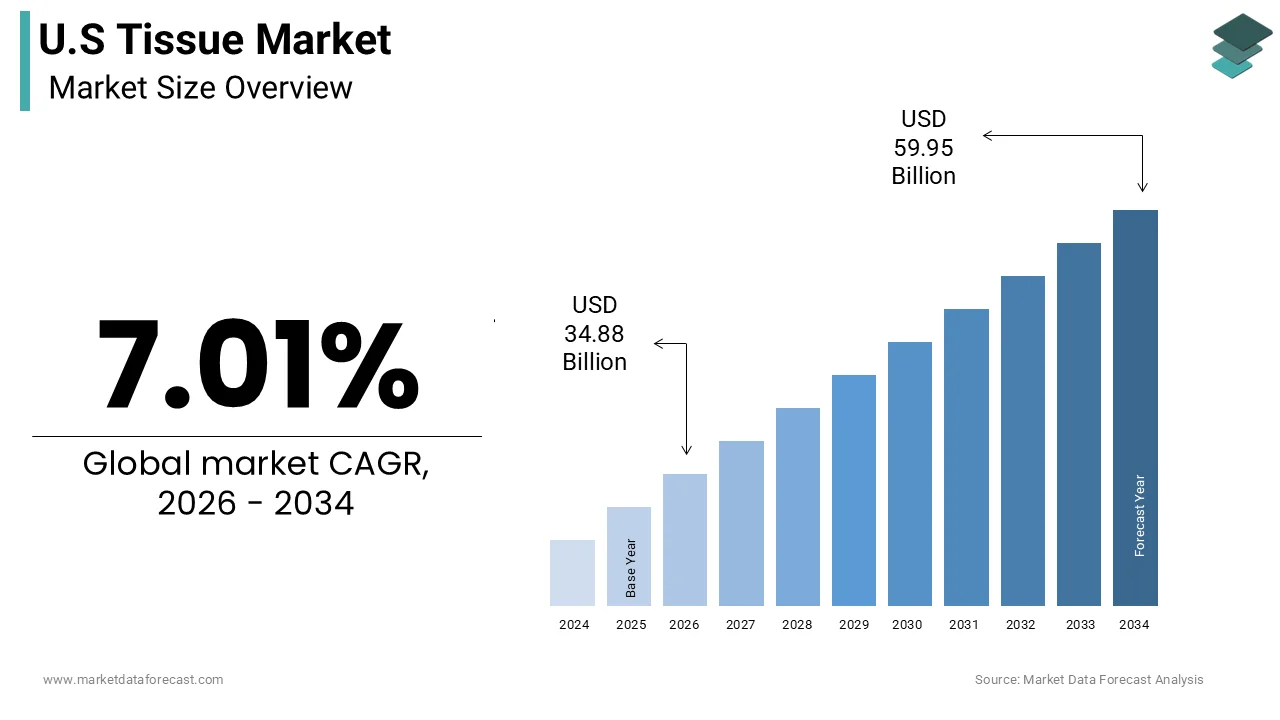
The United States tissue market was valued at USD 32.59 billion in 2025 and is projected to reach USD 59.95 billion by 2034, growing from USD 34.88 billion in 2026 at a CAGR of 7.01% during the forecast period. Market growth is driven by rising hygiene awareness, increasing household consumption, and growing demand for premium and sustainable tissue products. Expanding commercial infrastructure, hospitality services, and eco-friendly paper solutions are further supporting the growth of the U.S. tissue market.
Key Market Trends
- Increasing demand for premium and soft tissue products
- Rising consumer preference for sustainable and recycled tissue paper
- Growth in hygiene awareness across residential and commercial sectors
- Expansion of e-commerce and bulk tissue product sales
- Increasing adoption of biodegradable and eco-friendly packaging
Segmental Insights
- Based on product type, the bath and toilet tissue segment dominated the U.S. tissue market in 2025 by accounting for 45.2% of the market share, driven by high daily household consumption and strong retail demand
- Based on application, the household segment held the leading share in 2025 by capturing 33.6% of the market share, supported by growing residential usage and hygiene-focused consumer behavior
Competitive Landscape
- The U.S. tissue market is highly competitive, with companies focusing on product quality, sustainability, and supply chain efficiency. Market players are investing in recycled fiber technologies, premium tissue products, and environmentally friendly manufacturing processes to strengthen their market presence.
- Prominent players in the U.S. tissue market include Kimberly-Clark, Procter & Gamble, Georgia-Pacific, Essity, Cascades, Kruger Products, Clearwater Paper, Sofidel Group, Irving Consumer Products, and First Quality Enterprises.
U.S Tissue Market Size
The U.S tissue market size was calculated to be USD 32.59 billion in 2025 and is anticipated to be worth USD 59.95 billion by 2034, from USD 34.88 billion in 2026, growing at a CAGR of 7.01% during the forecast period.
The tissue is hygienic paper products, including facial tissues, toilet paper, paper towels, and napkins, designed for single-use disposal. The definition extends beyond mere utility to include premiumization trends, where consumers seek enhanced softness, strength, and aesthetic appeal in daily essentials. Consumer engagement is driven by habitual usage patterns that remain resilient despite economic fluctuations. According to the United States Census Bureau, the total number of households in the nation exceeds 130 million, providing a vast and stable base for recurring product demand. Furthermore, data from the Bureau of Labor Statistics indicates that average annual expenditures on household supplies per consumer unit reached approximately 650 dollars, demonstrating consistent financial allocation toward maintenance and cleanliness. The proliferation of health awareness initiatives has further intensified the importance of disposable hygiene products in preventing disease transmission. As per the Centers for Disease Control and Prevention, proper hand hygiene and the use of disposable paper products are critical in reducing the spread of infectious agents in both domestic and public settings. The shift toward remote work has also altered consumption dynamics with increased daytime usage in residential settings. Manufacturers are responding by innovating in sustainability and product quality to meet diverse consumer expectations.
MARKET DRIVERS
Heightened Health Hygiene Awareness and Sanitation Standards
The pervasive emphasis on health and hygiene for consumption across residential and commercial sectors. Consumers increasingly recognize the role of disposable paper products in maintaining sanitary environments and preventing cross-contamination. Regular hand washing and the use of disposable towels are among the most effective ways to prevent the spread of germs and illnesses. This public health guidance has ingrained a behavioral shift, where single-use tissues are preferred over reusable cloth alternatives in high-traffic areas. The aftermath of recent global health crises has permanently elevated hygiene standards, leading to sustained higher usage rates. This heightened awareness drives demand not only for toilet paper but also for facial tissues and paper towels used in cleaning protocols. Educational campaigns by health organizations reinforce the importance of disposable hygiene solutions in schools, offices, and healthcare facilities. The psychological association between tissue use and safety encourages bulk purchasing and stockpiling behaviors. Furthermore, the integration of antimicrobial treatments in some premium tissue products appeals to health-conscious consumers. This cultural shift toward proactive health management ensures that tissue products remain indispensable items in household budgets.
Population Growth and Urbanization Trends Driving Household Formation
The steady expansion of the US population and the continuous formation of new households are fuelling the growth of the United States tissue market. Each new household represents an independent unit of consumption requiring a baseline supply of essential hygiene products. According to the United States Census Bureau, the number of households has grown consistently, reaching over 130 million in recent years due to demographic shifts and migration patterns. Urbanization concentrates populations in dense living environments, where shared facilities and higher foot traffic increase the frequency of tissue usage. The rate of new housing completions remains robust, indicating a growing infrastructure for residential consumption. Larger family sizes in certain demographic segments also contribute to higher volume purchases, as multiple users generate increased waste and hygiene needs. Urban dwellers often rely on convenient disposable solutions due to limited space for laundry and storage of reusable items. The mobility of the modern workforce necessitates portable hygiene options such as pocket packs and travel-sized tissues. Additionally, the aging population requires specialized soft and gentle tissue products for sensitive skin, creating niche demand segments.
MARKET RESTRAINTS
Environmental Concerns Regarding Deforestation and Waste Generation
The significant scrutiny due to its reliance on virgin wood pulp, which contributes to deforestation and habitat loss, is limiting the growth of the United States tissue market. Consumers are increasingly aware of the ecological footprint associated with single-use paper products, leading to hesitation and reduced consumption. The environmental impact has sparked a backlash against brands that do not prioritize recycled content or sustainable sourcing practices. As per data from the Environmental Protection Agency, paper and paperboard materials constitute approximately 23% of municipal solid waste, highlighting the disposal challenge posed by disposable tissues. The non-biodegradable nature of some treated tissues further exacerbates landfill accumulation. Regulatory pressures are mounting as local governments implement stricter waste management protocols and bans on certain single-use items. Consumers are shifting toward reusable alternatives such as cloth towels and handkerchiefs to minimize waste. The lack of transparent labeling regarding fiber sources creates distrust and impedes brand loyalty. Greenwashing accusations against major manufacturers have eroded consumer confidence in corporate sustainability claims. This ecological consciousness forces companies to invest heavily in alternative fibers and recycling technologies.
Volatility in Raw Material Costs and Supply Chain Disruptions
The tissue manufacturing sector is highly sensitive to fluctuations in the prices of key raw materials, which are also impeding the growth of the United States tissue market. These input costs constitute a significant portion of production expenses, making profitability vulnerable to market volatility. The producer price index for pulp and paper products has experienced substantial swings due to global supply chain constraints and geopolitical tensions. Rising energy costs further inflate manufacturing expenses as tissue production is energy-intensive, involving drying and processing stages. The inflationary pressures have increased the cost of logistics and distribution, which is impacting final retail prices. Manufacturers often struggle to pass these increased costs onto consumers who are resistant to price hikes for commodity items. Supply chain disruptions caused by labor strikes, port congestion, or natural disasters can lead to inventory shortages and delayed deliveries. The dependence on imported pulp from specific regions exposes manufacturers to trade policy risks and tariff implications. Inventory management becomes challenging as businesses attempt to balance stock levels against uncertain supply conditions. Smaller producers with limited bargaining power are particularly affected by raw material scarcity. This economic instability constrains the ability of companies to maintain consistent pricing and product availability.
MARKET OPPORTUNITIES
Expansion of Sustainable and Recycled Fiber Product Lines
The growing consumer demand for eco-friendly products to innovate with recycled and alternative fiber sources is creating new opportunities for the growth of the United States tissue market. Brands that prioritize sustainability can differentiate themselves and capture the loyalty of environmentally conscious shoppers. As per the study, over 70% of consumers express willingness to pay a premium for products with sustainable packaging and sourcing credentials. This shift creates a niche for companies that utilize post-consumer recycled content or rapidly renewable resources like bamboo and wheat straw. The certification programs for responsible forestry are gaining traction, providing a verified label for ethical sourcing. Manufacturers can leverage these certifications to build trust and transparency with buyers. The development of chlorine-free bleaching processes further enhances the environmental profile of tissue products. Partnerships with environmental organizations can amplify brand credibility and reach. The introduction of plastic-free packaging aligns with broader waste reduction goals and regulatory trends.
Premiumization Through Enhanced Softness and Strength Technologies
The trend toward premiumization for manufacturers to introduce high-value tissue products with superior tactile qualities and performance features is also expected to enhance the growth of the United States tissue market. Consumers are increasingly willing to invest in luxury tissue experiences that offer exceptional softness, durability, and aesthetic appeal. The sales of premium personal care items have outpaced standard categories, indicating a shift toward quality over quantity. Advanced manufacturing technologies, such as air-laid processes and embossing techniques, enable the creation of thicker, softer, and more absorbent tissues. These value-added features appeal to consumers seeking comfort and sensory pleasure in daily routines. The rise of home spas and self-care rituals further fuels demand for hotel-quality tissue products. Brands can differentiate through elegant packaging designs and limited-edition collections that evoke luxury. The integration of skincare benefits, such as moisturizers and hypoallergenic materials, caters to sensitive skin needs. Direct-to-consumer channels allow for targeted marketing of premium lines to affluent demographics. Subscription models ensure recurring revenue and customer retention for high-end products.
MARKET CHALLENGES
Intense Price Competition and Private Label Penetration
The intense competition between established national brands and retailer private labels, which exerts downward pressure on prices and margins, acts as a barrier to the growth of the United States tissue market. Private label products have significantly improved in quality while maintaining lower price points, attracting budget-conscious consumers. This trend is exacerbated during economic downturns when shoppers actively seek cost-saving alternatives. National brands struggle to justify premium pricing without distinct functional or emotional differentiators. The retailer loyalty programs often promote private-label tissues through aggressive discounts and bundle deals. The commoditized nature of tissue products makes it difficult for brands to sustain long-term loyalty based solely on performance. Retailers wield significant power in shelf placement and promotional support, favoring their own higher margin brands. The ease of switching between brands means that consumers readily adopt cheaper options when available. Innovation cycles are rapid but easily replicated by competitors, limiting first-mover advantages.
Regulatory Compliance and Chemical Safety Scrutiny
The increasing regulatory scrutiny regarding the chemical composition of products, including bleaching agents, dyes, and fragrances, is expected to inhibit the growth of the United States tissue market. Several common chemicals used in tissue processing, such as formaldehyde and bisphenol A, have raised health concerns, prompting calls for bans. The recalls and warnings related to contaminated or unsafe paper products have increased visibility of these issues. Manufacturers must invest in rigorous testing and reformulation to meet evolving safety standards and avoid liability. The complexity of navigating varying state and federal regulations adds operational burdens and costs. The presence of per and polyfluoroalkyl substances PFAS in food service tissues has sparked legislative action in multiple states. Brands must proactively audit supply chains to eliminate controversial substances and ensure purity. Failure to comply can result in legal penalties, reputational damage, and loss of consumer trust. The demand for unbleached and dye-free options requires changes in production processes and sourcing. Educating consumers about safety improvements is challenging amidst widespread misinformation. The need for third-party certifications adds another layer of complexity and expense.
REPORT COVERAGE
| REPORT METRIC | DETAILS |
| Market Size Available | 2025 to 2034 |
| Base Year | 2025 |
| Forecast Period | 2026 to 2034 |
| CAGR | 7.01% |
| Segments Covered | By Product Type, Application, And Region |
| Various Analyses Covered | Global, Regional & Country Level Analysis; Segment-Level Analysis; DROC, PESTLE Analysis; Porter’s Five Forces Analysis; Competitive Landscape; Analyst Overview of Investment Opportunities |
| Regions Covered | New York, Massachusetts, Pennsylvania, Illinois, Ohio, Michigan, Texas, Florida, Georgia, California, Washington, Colorado. |
| Market Leaders Profiled | Kimberly-Clark Corporation, Procter & Gamble, Georgia-Pacific, Essity AB, Cascades Inc., Kruger Products, Clearwater Paper Corporation, Sofidel Group, Irving Consumer Products, First Quality Enterprises |
SEGMENTAL ANALYSIS
By Product Type Insights
The bath and toilet tissue segment was the largest by occupying 45.2% of the United States tissue market share in 2025, with its status as an absolute essential hygiene product with inelastic demand. According to the United States Census Bureau, there are over 130 million households in the nation, each requiring a consistent supply of toilet paper for basic sanitation. The average annual household expenditures on toilet paper remain stable, reflecting its priority in consumer budgets. The frequency of use is high, with individuals using toilet paper multiple times daily, leading to rapid depletion and frequent repurchase cycles. Major brands invest heavily in marketing campaigns that emphasize comfort and reliability. The widespread availability of toilet paper in all retail channels, from grocery stores to convenience outlets, ensures maximum accessibility. Furthermore, the aging population requires specialized, gentle tissues, increasing demand for premium variants.
The wipes segment is lucratively growing at an anticipated CAGR of 6.5% from 2026 to 203,4 with the increasing consumer preference for convenience, portability, and enhanced hygiene solutions beyond traditional dry tissues. The busy modern lifestyle, which demands quick and effective cleaning options for on-the-go situations. The sales of personal care wipes have surged as consumers integrate them into daily skincare and hygiene routines. The demand for flushable and biodegradable wipes has grown significantly, addressing environmental concerns while maintaining convenience. The rise in health awareness has also boosted the use of disinfecting wipes in homes and workplaces. The versatility of wipes for various applications, from makeup removal to surface cleaning, expands their utility.
By Application Insights
The household segment was the largest by holding 33.6% of the United States tissue market share in 2025, with the sheer volume of residential consumption and the central role of tissue products in daily domestic life. Homes are the primary site for tissue usage, encompassing personal hygiene, cleaning, and food service needs. The majority of tissue products are purchased by individual households for private use, reflecting the decentralized nature of consumption. The household spending on paper products constitutes a significant portion of overall supply expenditure,s indicating high prioritization. The trend toward remote work and increased time spent at home has further amplified residential demand for premium and bulk-sized packages. Consumers view tissue products as essential comforts, leading to regular replenishment and stockpiling behaviors. The influence of social media and home organization trends encourages the purchase of aesthetically pleasing and high-quality tissue items. Family size and composition also impact consumption rates, with larger households generating higher volumes of waste and hygiene needs.
The commercial segment is expected to witness the fastest CAGR of 5.8% from 2026 to 2034 with the recovery and expansion of public spaces, offices, healthcare facilities, and hospitality industries. The heightened emphasis on public hygiene and sanitation standards has been seen following recent global health events. The workplaces are required to maintain adequate supplies of hygiene products to ensure employee safety and health. The hospitality sector has increased its procurement of premium tissue products to enhance guest experience and meet elevated cleanliness expectations. Healthcare facilities require specialized medical-grade tissues and wipes, contributing to steady demand in this sector. The return to office work has revitalized demand for commercial restroom supplies, including paper towels and toilet paper. Schools and universities also contribute significantly to commercial consumption as students and staff utilize facilities daily. Regulatory requirements for public restrooms mandate the availability of disposable hygiene products, reducing the use of cloth alternatives. The expansion of retail and dining establishments further drives commercial purchases. Contracts with facility management companies ensure recurring revenue streams for suppliers.
COMPETITION OVERVIEW
The competitive landscape of the United States tissue market is characterized by intense rivalry among established multinational corporations and aggressive private label offerings. Large players leverage strong brand equity and extensive distribution networks to maintain dominance while competing on price and innovation. The market is mature with steady demand driven by essential hygiene needs rather than discretionary spending. Price competition is fierce as retailers promote their own brands to capture margin-sensitive consumers. Private label products have improved in quality, challenging national brands on value propositions. Innovation focuses on sustainability premiumization, and convenience to differentiate offerings. Supply chain efficiency is critical for maintaining profitability amidst fluctuating raw material costs. Regulatory pressures regarding environmental impact drive investments in green technologies.
KEY MARKET PLAYERS
A few major players of the U.S tissue market include
- Kimberly-Clark Corporation
- Procter & Gamble
- Georgia-Pacific
- Essity AB
- Cascades Inc
- Kruger Products
- Clearwater Paper Corporation
- Sofidel Group
- Irving Consumer Products
- First Quality Enterprises
Top Strategies Used by Key Market Participants
Key players in the United States tissue market employ diverse strategies to maintain a competitive advantage and drive growth. Product innovation remains central with companies developing softer, stronger, and more sustainable options. Brands focus on digital transformation by enhancing e-commerce platforms and offering subscription services. Strategic investments in recycling technologies and alternative fibers address environmental concerns effectively. Sustainability initiatives are increasingly important as consumers demand eco-friendly packaging and sourcing. Companies leverage data analytics to optimize supply chains and predict demand accurately. Omnichannel distribution ensures seamless access to products for both residential and commercial clients. Marketing campaigns emphasize brand trust and product performance to build loyalty. These strategies collectively help brands differentiate themselves and capture value in a mature market.
Leading Players in the United States Tissue Market
- Kimberly-Clark Corporation is a global leader in the United States tissue market, renowned for iconic brands such as Kleenex, Scott, and Cottonelle. The company contributes significantly by driving innovation in product softness, strength, and sustainability. Recent actions include investing heavily in recycled fiber technologies and launching plastic-free packaging initiatives to meet environmental goals. Kimberly-Clark has expanded its direct-to-consumer capabilities, enhancing digital engagement and personalized shopping experiences. The firm focuses on premiumization strategies, introducing lotion-infused and ultra-soft variants to capture higher value segments. The The The
- Procter and Gamble Company holds a strong position in the US tissue sector through its trusted Charmin and Bounty brands. The company drives growth by leveraging advanced manufacturing technologies to produce durable and absorbent products. Recent strategies involve expanding its sustainable sourcing practices and reducing water usage in production facilities. Procter and Gamble has enhanced its e-commerce presence, offering subscription services and bulk options for convenient home delivery. The firm actively engages consumers through digital marketing campaigns that emphasize product performance and family care. Investments in automation and data analytics optimize inventory management and distribution networks.
- Georgia Pacific LLC is a major contributor to the US tissue market with popular brands like Angel Soft and Sparkle. The company focuses on providing affordable and accessible hygiene products to a broad consumer base. Recent actions include upgrading manufacturing facilities to improve energy efficiency and reduce carbon emissions. Georgia Pacific has introduced new product lines featuring recycled content and sustainable packaging materials. The firm strengthens its market position through strategic partnerships with retailers, ensuring wide distribution and prominent shelf placement. Investments in workforce training and safety protocols enhance operational excellence.
MARKET SEGMENTATION
This research report on the US tissue market has been segmented and sub-segmented based on Product Type, Application & region.
By Product Type
- Facial Tissue
- Paper Towel
- Wipes
- Bath & Toilet Tissue
- Others
By Application
- Household
- Commercial
By Region
- New York
- Texas
- Florida
- Georgia
- California
- Rest of U.S.