- Product Description Description
- Table of Contents TOC
- List of Table & Figure LOT
- Get Free Sample PDF Sample PDF
Market Size, 2025
$5.47 BnMarket Estimate, 2026
$5.64 BnMarket Forecast, 2034
$7.25 BnCAGR, 2026–2034
3.18%U.S. Toothpaste Market Report Summary
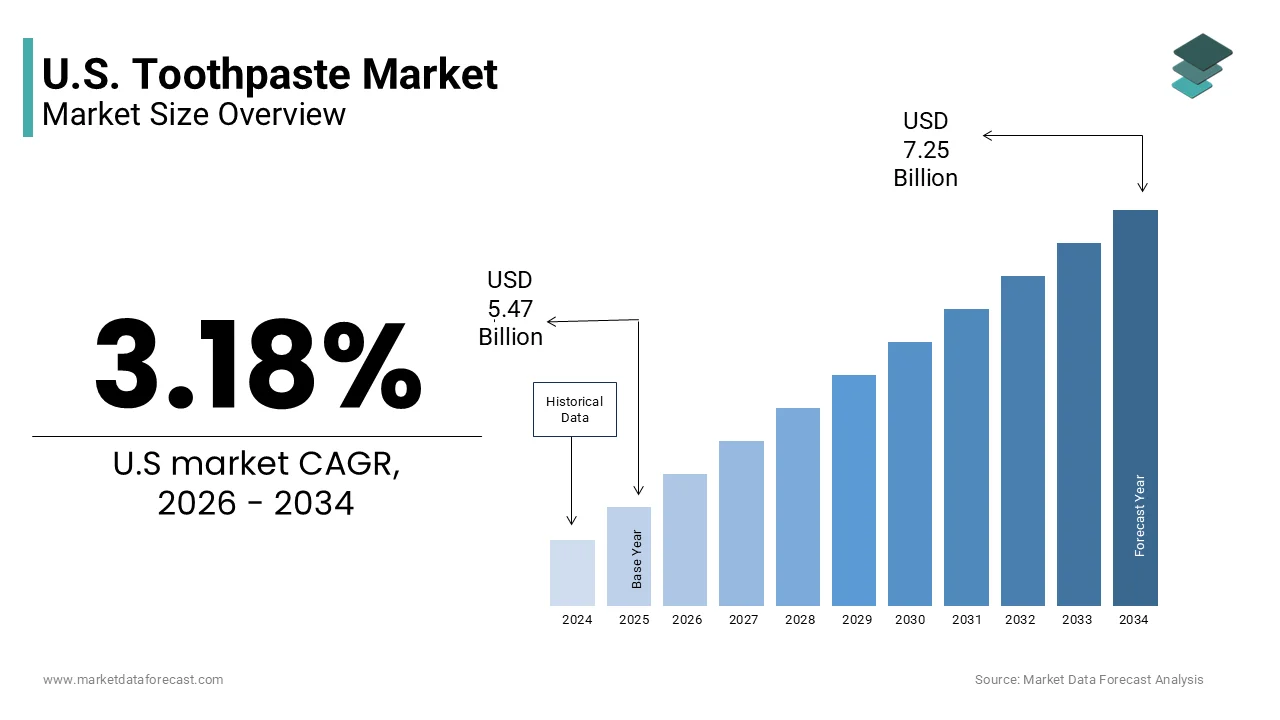
The U.S. toothpaste market was valued at USD 5.47 billion in 2025, is estimated to reach USD 5.64 billion in 2026, and is projected to reach USD 7.25 billion by 2034, growing at a CAGR of 3.18% during the forecast period. Market growth is driven by increasing awareness regarding oral hygiene, rising demand for specialized dental care products, and growing consumer preference for preventive healthcare solutions. Toothpaste remains an essential personal care product due to increasing focus on cavity prevention, teeth whitening, gum health, and sensitivity protection. Innovation in natural ingredients, premium oral care products, and functional formulations is further supporting market expansion across the United States.
Key Market Trends
- Growing awareness regarding oral health and preventive dental care is driving market growth.
- Increasing demand for specialty oral care products such as whitening and sensitivity relief toothpaste is boosting market expansion.
- Rising consumer preference for natural and clean label ingredients is supporting product innovation.
- Expansion of retail and e commerce distribution channels is enhancing product accessibility.
- Innovation in fluoride technology, herbal ingredients, and sustainable packaging is influencing market development.
Segmental Insights
- Based on type, the fluoride toothpaste segment accounted for 47.1% of the U.S. toothpaste market share in 2025. This dominance is attributed to proven effectiveness in cavity prevention and strong support from dental professionals.
- Based on distribution channel, the supermarkets and hypermarkets segment held a significant share of the U.S. toothpaste market in 2025, supported by strong retail accessibility and broad product availability.
Regional Insights
- The U.S. toothpaste market continues to experience stable growth supported by rising oral care awareness, strong healthcare education initiatives, and increasing demand for advanced oral hygiene products. Growing adoption of premium and natural toothpaste solutions continues to strengthen market development.
Competitive Landscape
The U.S. toothpaste market is highly competitive, with companies focusing on oral care innovation, premium product development, and expansion of specialty toothpaste portfolios to strengthen their market position. Manufacturers are investing in clean ingredient formulations, sustainability initiatives, and targeted dental care solutions. Prominent players in the U.S. toothpaste market include Colgate Palmolive, Procter and Gamble, Haleon, Church and Dwight, Tom's of Maine, Hello Products, Davids Natural Toothpaste, Dr. Bronner's, The Himalaya Drug Company, and Unilever.
U.S. Toothpaste Market Size
The U.S. toothpaste market was valued at USD 5.47 billion in 2025, is estimated to reach USD 5.64 billion in 2026, and is projected to reach USD 7.25 billion by 2034, growing at a CAGR of 3.18% from 2026 to 2034.
The toothpaste is oral hygiene products designed to clean teeth, prevent cavities, and maintain gum health. Oral care is deeply ingrained in daily hygiene routines with brushing being a universal habit. The definition of toothpaste has expanded beyond basic cleaning to include cosmetic benefits, such as enamel strengthening and breath freshening. As per the Centers for Disease Control and Prevention, approximately 92% of adults aged 20 to 64 have had toothpaste caries in their permanent teeth, underscoring the critical need for effective preventive care. This high prevalence of toothpaste issues drives consistent demand for therapeutic toothpaste variants. As per the American Toothpaste Association, nearly 80% of Americans visit a dentist regularly, where professional recommendations significantly influence product selection. Consumer awareness regarding the link between oral health and systemic conditions such as heart disease and diabetes has further elevated the importance of rigorous oral hygiene. Retail channels range from mass market supermarkets to specialized pharmacies and online platforms, ensuring widespread accessibility.
MARKET DRIVERS
Rising Prevalence Of Toothpaste Caries And Periodontal Diseases
The rising prevalence of toothpaste caries and periodontal diseases is fuelling the growth of the United States toothpaste market. Poor dietary habits, high sugar consumption, and inadequate oral hygiene contribute to widespread toothpaste issues among the population. As per the National Institute of Toothpaste and Craniofacial Research, about 42% of children aged 2 to 11 have had toothpaste caries in their primary teeth. This early onset of decay necessitates lifelong use of fluoride toothpaste to prevent further deterioration. Among adults, periodontal disease affects nearly 50% of those aged 30 and older, according to the Centers for Disease Control and Prevention. This significant health burden creates a sustained demand for therapeutic toothpaste formulations that target gum health and plaque removal. Dentists frequently recommend specific brands containing ingredients such as stannous fluoride or triclosan alternatives to manage these conditions. The chronic nature of these diseases ensures repeat purchases, as consumers rely on daily brushing to manage symptoms and prevent progression. Public health campaigns emphasizing the importance of twice daily brushing reinforce this behavior. Additionally, the aging population is more susceptible to root caries and gum recession, driving demand for sensitive toothpaste variants.
Increasing Consumer Awareness Of Oral Systemic Health Links
The increasing consumer awareness of the links between oral health and systemic conditions is propelling the growth of the United States toothpaste market. Scientific evidence connecting poor oral hygiene to diseases, such as diabetes, cardiovascular disease, and respiratory infections has heightened public attention. As per the American Heart Association, studies suggest that gum disease may be associated with an increased risk of heart disease and stroke. This knowledge prompts individuals to prioritize oral care as a component of overall wellness rather than just aesthetic maintenance. Consumers are actively seeking toothpaste formulations that offer comprehensive protection against bacteria and inflammation. The rise of holistic health trends encourages the adoption of products that support whole body health. Social media and health influencers play an important role in disseminating this information, educating millions about the importance of maintaining a healthy oral microbiome. The demand for antibacterial and anti-inflammatory ingredients has surged as a result. Furthermore, medical professionals increasingly integrate oral health screenings into general practice, reinforcing the message. Consumers are willing to invest in premium products that promise broader health benefits beyond cavity prevention.
MARKET RESTRAINTS
Availability Of Low Cost Private Label Alternatives
The availability of low-cost private label alternatives is limiting the growth of the United States toothpaste market. Major retail chains and pharmacy outlets offer store brand toothpaste at substantially lower prices than national brands. These generics often contain similar active ingredients such as fluoride by making them viable substitutes for budget conscious consumers. In times of economic uncertainty or inflation, shoppers are more likely to switch from premium brands to these affordable options to reduce household expenses. The perceived parity in efficacy between branded and private label products reduces the incentive to pay a premium. Retailers actively promote their own brands through strategic shelf placement and promotional pricing, further eroding the market share of established players. This price sensitivity limits the ability of manufacturers to raise prices or introduce high margin innovations without losing customers. The saturation of the market with low-cost options creates intense pressure on profitability for branded companies. Marketing efforts must work harder to justify higher prices through unique features or branding, which increases operational costs.
Consumer awareness towards chemical ingredients
The consumer awareness towards chemical ingredients is hampering the growth of the United States toothpaste market. A growing segment of the population prefers natural and organic products, avoiding synthetic additives, such as sodium lauryl sulfate, artificial colors, and preservatives. Many consumers express concern over the potential health risks associated with long term exposure to certain chemicals in personal care products. This apprehension leads to hesitation in purchasing conventional toothpaste brands that rely on these ingredients for foaming and stability. The demand for transparent labeling and clean formulations forces manufacturers to reformulate products, which can be costly and technically challenging. Some natural alternatives may lack the proven efficacy of traditional ingredients, leading to mixed consumer experiences. Misinformation spread through social media regarding ingredient safety further exacerbates consumer fears. Brands face the challenge of educating consumers while addressing their concerns without compromising product performance. The regulatory landscape for natural claims is also complex, requiring careful compliance to avoid misleading statements.
MARKET OPPORTUNITIES
Expansion Of Natural And Organic Product Lines
The expansion of natural and organic product lines is setting up new opportunities for the growth of the United States toothpaste market. Consumers are increasingly seeking products free from artificial ingredients, driven by health and environmental concerns. The trend creates a lucrative niche for brands that can formulate effective toothpaste using plant-based ingredients, such as neem, charcoal, and essential oils. Companies can differentiate themselves by obtaining certifications, such as USDA Organic or EcoCert, which build trust and credibility. The use of sustainable packaging materials further appeals to eco conscious buyers. Innovations in natural preservatives and flavoring agents allow for pleasant user experiences without synthetic additives. Brands that successfully combine natural ingredients with clinical efficacy can capture a loyal customer base willing to pay premium prices. The transparency of sourcing and manufacturing processes enhances brand reputation. Collaborations with holistic health practitioners and influencers can amplify reach within this segment. The growing availability of natural options in mainstream retail channels increases accessibility.
Integration Of Probiotics And Microbiome Friendly Formulations
The integration of probiotics and microbiome friendly formulations for innovation is likely to gear up new opportunities for the growth of the United States toothpaste market. As per the Journal of Toothpaste Research, probiotic strains such as Lactobacillus reuteri have shown promise in reducing plaque and gingivitis. Consumers are becoming aware that harsh antibacterial agents can disrupt this balance, leading to a demand for gentler alternatives. Toothpaste infused with beneficial bacteria or prebiotics supports the growth of healthy oral flora while inhibiting harmful pathogens. This scientific approach appeals to educated consumers seeking advanced preventive care. Brands can leverage clinical studies to validate claims and differentiate their products in a crowded market. The novelty of probiotic toothpaste attracts early adopters and health enthusiasts. Partnerships with toothpaste professionals can facilitate endorsements and recommendations. The potential for personalized oral care solutions based on individual microbiome profiles adds another layer of innovation.
MARKET CHALLENGES
Stringent Regulatory Compliance And Ingredient Restrictions
The stringent regulatory compliance and ingredient restrictions is one of the challenges for the growth of the United States toothpaste market. The Food and Drug Administration regulates toothpaste as an over-the-counter drug if it contains active ingredients such as fluoride. As per the Federal Register, recent updates to monographs require rigorous testing and documentation to prove safety and efficacy. Compliance with these standards involves significant time and financial investment, particularly for new product launches. The prohibition of certain ingredients such as triclosan in some contexts requires reformulation efforts. State level regulations may impose additional requirements regarding labeling and environmental impact. The complexity of navigating these rules hinders innovation and slows time to market. Small and medium sized enterprises struggle with the resources needed for compliance, limiting competition. Changes in international regulations also affect global brands operating in the United States, requiring harmonization of formulations. The risk of non compliance penalties and recalls damages brand reputation. Manufacturers must continuously monitor regulatory developments to ensure adherence. This bureaucratic burden increases operational costs and reduces flexibility. The need for extensive clinical trials to support claims further delays product introduction.
Environmental Concerns Regarding Plastic Packaging Waste
The environmental concerns regarding plastic packaging waste are likely to inhibit the growth of the United States toothpaste market. Traditional toothpaste tubes are made from multiple layers of plastic and aluminum by making them difficult to recycle. Millions of tons of plastic waste end up in landfills annually with personal care packaging contributing significantly. Consumers are increasingly demanding sustainable packaging solutions, which is pressuring brands to innovate. Developing recyclable or biodegradable tubes is technically challenging and often more expensive. Current recycling infrastructure is not equipped to handle multi material tubes effectively. Brands face scrutiny for greenwashing if their sustainability claims are not substantiated. The transition to alternative materials such as paper or glass requires changes in manufacturing processes and supply chains. These adjustments can compromise product integrity or shelf life. The cost of sustainable packaging is often passed on to consumers, potentially affecting sales volume. Regulatory pressures to reduce plastic usage are intensifying, with some states proposing bans on certain types of packaging.
REPORT COVERAGE
| REPORT METRIC | DETAILS |
| Market Size Available | 2025 to 2034 |
| Base Year | 2025 |
| Forecast Period | 2026 to 2034 |
| CAGR | 3.18% |
| Segments Covered | By Type, End User, Distribution Channel, and Region. |
| Various Analyses Covered | Global, Regional and Country-Level Analysis, Segment-Level Analysis, Drivers, Restraints, Opportunities, Challenges; PESTLE Analysis; Porter’s Five Forces Analysis, Competitive Landscape, Analyst Overview of Investment Opportunities |
| Countries Covered | California, Washington, Oregon, New York, United States |
| Market Leaders Profiled | Colgate Palmolive, Procter and Gamble (Crest), Haleon (Sensodyne and Parodontax), Church and Dwight (Arm and Hammer), Tom's of Maine, Hello Products, Davids Natural Toothpaste, Dr. Bronner's, The Himalaya Drug Company (Himalaya Wellness), and Unilever (Closeup). |
SEGMENTAL ANALYSIS
By Type Insights
The fluoride toothpaste segment was the largest by holding 47.1% of the United States toothpaste market share in 2025 with its proven efficacy in preventing toothpaste caries and strong endorsement by toothpaste professionals. Dentists and hygienists consistently recommend fluoride products, as the primary defense against tooth decay. The strong medical consensus builds trust among consumers, who rely on expert advice for health-related purchases. The extensive body of scientific literature supporting fluoride safety and effectiveness discourages substitution with unproven alternatives. Schools and community health centers distribute fluoride toothpaste, which is normalizing its use from a young age. The familiarity of fluoride as an ingredient reduces consumer hesitation and ensures consistent demand. Manufacturers leverage these endorsements in marketing campaigns to validate product claims. The reliability of fluoride in preventing costly toothpaste procedures makes it an economical choice for families.
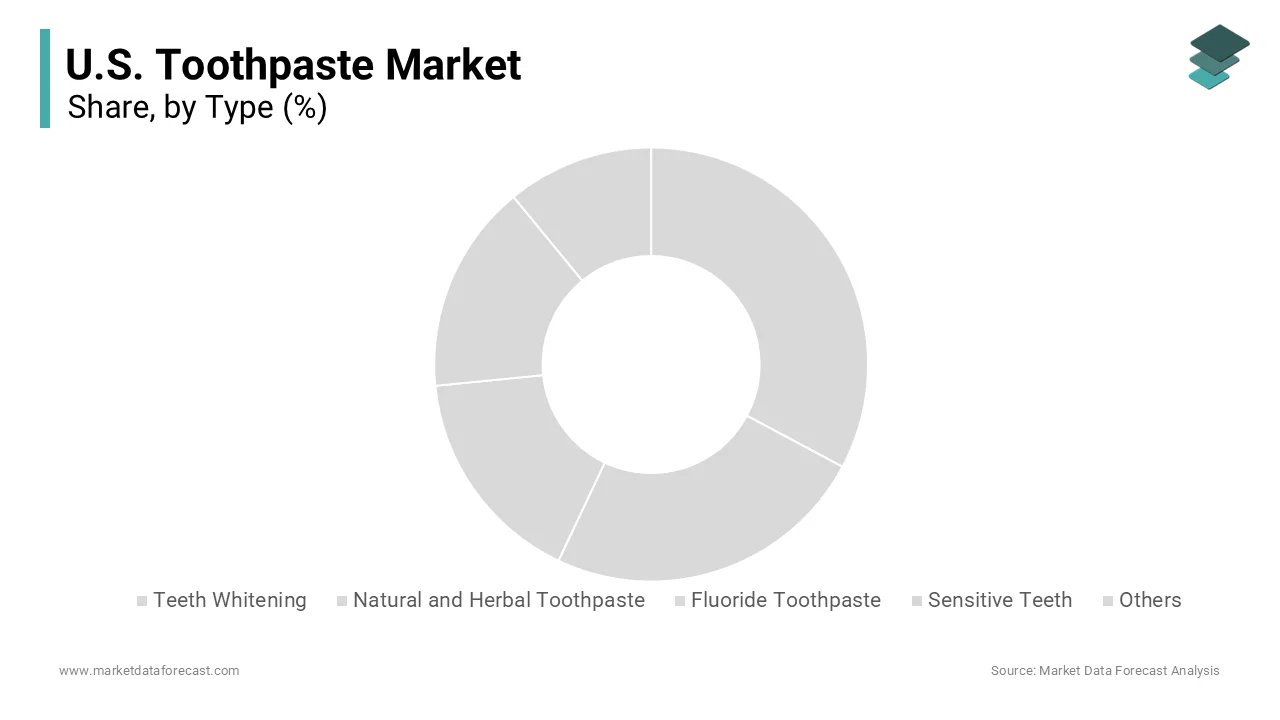
The natural and herbal toothpaste segment is expected to grow at an anticipated CAGR of 9.5% during the forecast period. Consumers are scrutinizing ingredient lists more closely by avoiding substances such as sulfates, parabens, and artificial sweeteners. Shoppers prefer ingredients derived from nature, such as baking soda, coconut oil, and essential oils. The perception that natural ingredients are safer and gentler on the body drives adoption. Certifications such as USDA Organic provide assurance of quality and purity, influencing purchase decisions. Social media influencers and wellness bloggers promote natural oral care routines, amplifying awareness. The availability of these products in mainstream retailers increases accessibility, moving them from niche health stores to everyday shopping destinations. Brands respond by launching transparent marketing campaigns that highlight sourcing and formulation processes. The desire for authenticity and simplicity resonates with modern consumers who value transparency. This shift in preference creates a fertile ground for natural toothpaste brands to capture market share.
By Distribution Channel Insights
The supermarkets and hypermarkets segment held a significant share of the United States toothpaste market in 2025. Consumers prefer to buy toothpaste during regular grocery trips to save time and effort. Toothpaste is often placed in high visibility aisles near checkout counters or personal care sections by encouraging spontaneous buys. The extensive distribution network of major chains ensures that products are available in both urban and rural areas. Promotional displays and bundle offer attract price sensitive shoppers looking for value. The familiarity of the shopping environment reduces decision fatigue, as consumers know where to find their preferred brands. Loyalty programs offered by supermarkets incentivize repeat purchases through points and discounts. The ability to compare prices and brands side by side facilitates quick decision making. For families, buying in bulk at hypermarkets offers economic advantages.
The online retail segment is likely to witness a fastest CAGR of 12.8% from 2026 to 2034 with the rapid growth of the online retail. Consumers appreciate the convenience of having toothpaste delivered regularly without the need to remember purchases. The subscription e-commerce has grown by more than 100% a year, over the past five years. Major retailers and direct to consumer brands offer subscribe and save options that provide discounts and free shipping. This model ensures consistent supply and reduces the hassle of shopping. It appeals to busy professionals and families who value efficiency. Auto replenishment algorithms predict usage rates and schedule deliveries accordingly, minimizing waste and stockouts. The ability to modify or pause subscriptions adds flexibility. Brands use these channels to build direct relationships with customers, gathering data on preferences. Personalized offers and loyalty rewards enhance retention. The predictability of recurring revenue benefits manufacturers and retailers. Consumers enjoy the peace of mind knowing their oral care needs are met automatically.
COMPETITIVE LANDSCAPE
The competition in the United States toothpaste market is intense and characterized by the dominance of a few multinational corporations alongside numerous niche players. Major companies leverage their established brand equity and extensive distribution networks to maintain leadership positions. These leaders invest heavily in advertising and promotional activities to influence consumer preferences and drive brand loyalty. Innovation plays a crucial role as companies strive to introduce new features such as natural ingredients, advanced whitening technologies, and sustainable packaging. The rise of private label brands from major retailers poses a significant threat by offering lower priced alternatives with comparable quality. This price pressure forces established brands to justify premium pricing through superior efficacy and brand trust. Digital channels have lowered barriers to entry allowing smaller direct to consumer brands to gain visibility through targeted marketing. Regulatory compliance regarding ingredient safety and labeling adds complexity to the competitive landscape. Companies must continuously adapt to changing consumer trends and regulatory requirements.
KEY MARKET PLAYERS
Some of the companies that are playing a dominating role in the U.S. toothpaste market include
- Colgate Palmolive
- Procter and Gamble (Crest)
- Haleon (Sensodyne and Parodontax)
- Church and Dwight (Arm and Hammer)
- Tom's of Maine
- Hello Products
- Davids Natural Toothpaste
- Dr. Bronner's
- The Himalaya Drug Company (Himalaya Wellness)
- Unilever (Closeup)
Top Players in the Market
- Colgate Palmolive Company maintains a formidable presence in the United States toothpaste market through its extensive portfolio of trusted brands and continuous innovation. The company focuses on developing advanced formulations that address specific oral health concerns such as sensitivity and gum disease. Recent initiatives include the launch of sustainable packaging solutions to reduce plastic waste and appeal to environmentally conscious consumers. Colgate invests heavily in professional endorsements by partnering with toothpaste associations to reinforce clinical credibility. The brand leverages digital marketing campaigns to educate consumers about proper oral hygiene practices. These strategic moves ensure that the company remains a preferred choice for households seeking reliable and effective oral care solutions while driving growth through product differentiation and strong brand loyalty across diverse demographic segments in the domestic market.
- Procter and Gamble strengthens its position in the United States toothpaste market by leveraging its powerful Crest brand which is synonymous with toothpaste health. The company emphasizes scientific innovation and clinical testing to deliver superior whitening and cavity protection benefits. Recent actions, include the introduction of smart brushing technologies that integrate with mobile applications to provide real time feedback on brushing habits. Procter and Gamble enhances its supply chain efficiency to ensure consistent product availability across retail channels. The company actively engages in community outreach programs that promote oral health awareness among underserved populations. These efforts help the company maintain a competitive edge by offering high performance products that meet the diverse needs of American consumers. The focus on technology integration and educational initiatives drives customer engagement and sustains long term growth in the highly competitive oral care landscape.
- GlaxoSmithKline Consumer Healthcare contributes significantly to the United States toothpaste market through its Sensodyne brand, which leads in the sensitive teeth category. The company focuses on specialized formulations that provide relief from pain and protect enamel erosion. Recent strategies involve expanding its product range to include daily protection variants that combine sensitivity relief with whitening benefits. GlaxoSmithKline invests in research and development to create novel ingredients that enhance therapeutic efficacy. The brand utilizes targeted marketing campaigns to reach consumers suffering from toothpaste sensitivity, often highlighting dentist recommendations. By prioritizing clinical evidence and patient testimonials, the company builds trust and credibility. These actions strengthen its market position by addressing a specific and growing consumer need. The commitment to innovation and professional endorsement ensures that GlaxoSmithKline remains a key player in the oral care sector.
Top Strategies Used by Key Market Participants
Key players in the United States toothpaste market, primarily employ product innovation strategies to differentiate their offerings and meet evolving consumer needs. Companies invest heavily in research and development to create advanced formulations that address specific issues such as sensitivity, whitening, and gum health. Another major strategy involves sustainability initiatives where brands introduce recyclable packaging and natural ingredients to appeal to environmentally conscious consumers. Collaborations with toothpaste professionals and associations are frequently used to build clinical credibility and trust among shoppers. Additionally, firms focus on digital marketing and e commerce expansion to reach wider audiences and offer convenient subscription services. Premiumization is also a key approach as companies launch high end products with unique benefits to capture higher margins.
MARKET SEGMENTATION
This research report on the U.S. toothpaste market is segmented and sub-segmented into the following categories.
By Type
- Teeth Whitening
- natural and herbal toothpaste
- fluoride toothpaste
- Sensitive Teeth
- Others
By End User
- Adults
- Children
By Distribution Channel
- Supermarket/Hypermarket
- Convenience Stores
- Pharmaceutical and Drug Stores
- Online
By Country
- California
- Washington
- Oregon
- New York
- Rest of the United States