- Product Description Description
- Table of Contents TOC
- List of Table & Figure LOT
- Get Free Sample PDF Sample PDF
Market Size, 2025
$23.58 BnMarket Estimate, 2026
$25.04 BnMarket Forecast, 2034
$40.42 BnCAGR, 2026–2034
6.17%U.S. Whiskey Market Size, Growth, Trends & Forecast (2026–2034)
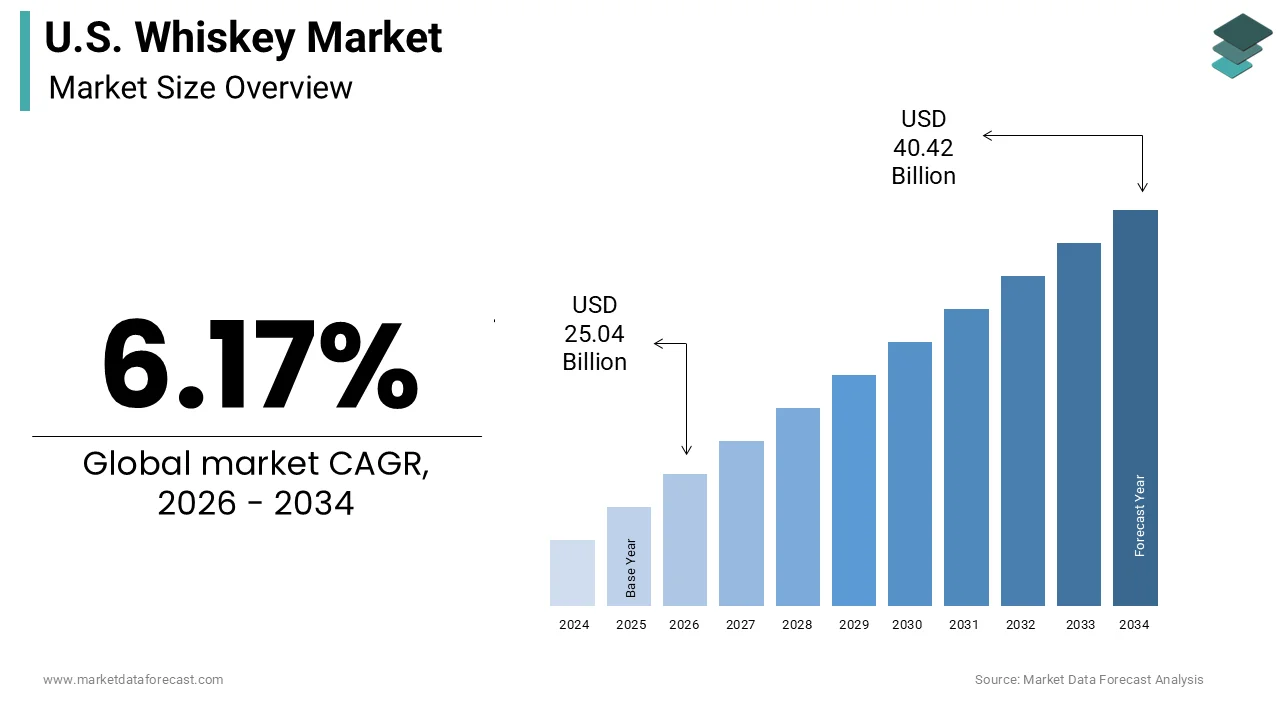
The U.S. whiskey market size was calculated to be USD 23.58 billion in 2025, is anticipated to reach USD 25.04 billion in 2026, and is projected to be worth USD 40.42 billion by 2034, registering a compound annual growth rate (CAGR) of 6.17% during the forecast period from 2026 to 2034. Driven by a consumer shift toward premiumization, appreciation for heritage brands, and the rising popularity of ready-to-drink (RTD) cocktail segments, the market continues to expand steadily.
Key Executive Metrics (At-a-Glance)
- 2025 Base Valuation: USD 23.58 Billion
- 2026 Current Valuation: USD 25.04 Billion
- 2034 Forecast Valuation: USD 40.42 Billion
- Compound Annual Growth Rate (CAGR): 6.17% (2026–2034)
- Dominant Product Segment: Bourbon whiskey segment (capturing the highest share in 2025 due to its protected status and rich cultural identity)
- Fastest-Growing Product Segment: Rye whiskey segment (anticipated to record a promising CAGR of 9.5%)
- Dominant Premium Segment: Premium whiskey segment (accounting for the highest share in 2025, balancing quality and mass-market affordability)
- Fastest-Growing Premium Segment: Super-premium whiskey segment (predicted to showcase a promising CAGR of 11.4% during the forecast period)
Core Market Drivers
- Cultural Heritage and Brand Authenticity: Deep emotional connections with consumers valuing traditional craftsmanship, where Kentucky produces roughly 95% of the world's bourbon.
- Premiumization and Craft Distillation Movement: Long-term consumer migration toward high-end, small-batch, and single-barrel expressions, with high-end spirits revenue surging significantly over the years.
Primary Market Restraints & Challenges
- Health Consciousness & Regulatory Complexities: Growing moderation and sober curious trends restricting daily volumes, coupled with intricate tax burdens, the three-tier distribution system, and aging inventory constraints.
U.S. Whiskey Market Segmentation Breakdown
| Segment Category | Leading Sub-Segment (Base Year) | Fastest-Growing Sub-Segment (2026–2034) |
|---|---|---|
| By Product | Bourbon Whiskey (highest share in 2025) | Rye Whiskey (fastest CAGR at 9.5%) |
| By Premium | Premium Whiskey (highest share in 2025) | Super-Premium Whiskey (fastest CAGR at 11.4%) |
| By Region | Key Hubs (New York, Texas, Florida, Georgia, California) | Rest of U.S. / Emerging State Markets |
Major Industry Players Profiled
Key market participants shaping the U.S. whiskey landscape include Brown-Forman Corporation, Diageo plc, Beam Suntory Inc., Sazerac Company, Pernod Ricard, Constellation Brands, Heaven Hill Brands, MGP Ingredients Inc., Jack Daniel’s, and Buffalo Trace Distillery.
 Download Free Sample Report
U.S. Whiskey Market Size
The U.S. whiskey market size was calculated to be USD 23.58 billion in 2025 and is anticipated to be worth USD 40.42 billion by 2034, from USD 25.04 billion in 2026, growing at a CAGR of 6.17% during the forecast period.
As per the Distilled Spirits Council of the U.S., whiskey has experienced a renaissance in recent years, driven by a consumer shift toward premiumization and appreciation for heritage brands. The landscape is characterized by a robust domestic production base, particularly in Kentucky and Tennessee, which serve as global hubs for whiskey manufacturing. According to the U.S. Department of Agriculture, the cultivation of corn and other grains provides a stable agricultural foundation for the industry, ensuring consistent raw material availability. Consumer behavior is increasingly influenced by transparency in sourcing, age statements, and craft distillation techniques. The market operates within a competitive environment where brand storytelling and exclusivity play pivotal roles in differentiation. This sector continues to evolve as manufacturers address demand for limited edition releases and high-proof expressions while navigating supply chain complexities and evolving regulatory landscapes.
MARKET DRIVERS
Cultural Heritage and Brand Authenticity
The deep-rooted cultural heritage and perceived authenticity of American whiskey are driving the growth of the U.S. whiskey market. Whiskey, particularly bourbon, is often regarded as America's native spirit, which creates a strong emotional connection with consumers who value tradition and craftsmanship. As per the Kentucky Distillers Association, the state produces approximately 95% of the world's bourbon, reinforcing its status as a geographic indicator of quality and authenticity. This regional pride translates into consumer loyalty as buyers seek products that reflect American history and industrial heritage. According to tourism data from the Kentucky Distillers Association, the Kentucky Bourbon Trail welcomed 2.7 million visitors in 2025, which underscores the experiential learning that deepens consumer appreciation for the product. The narrative of family-owned distilleries and multi-generational recipes resonates strongly with consumers seeking genuine stories behind their purchases. Marketing campaigns often emphasize the artisanal nature of production, highlighting the role of master distillers and traditional methods. The association of whiskey with masculinity, resilience, and sophistication further enhances its appeal across diverse demographic groups. This cultural embeddedness ensures that whiskey remains a staple in social rituals and celebrations. The enduring popularity of heritage brands provides a stable foundation for market growth as consumers continue to prioritize authenticity and provenance in their purchasing decisions.
Premiumization and Craft Distillation Movement
The trend toward premiumization and the proliferation of craft distilleries are also supporting the whiskey market expansion in the U.S. Modern drinkers are increasingly educated about flavor profiles, aging processes, and production techniques, leading them to seek high-end, small-batch, and single-barrel expressions. As per the Distilled Spirits Council of the U.S., high-end and premium spirits revenue increased by 274% since 2003, reflecting a long-term shift toward more upmarket categories. This shift reflects a broader cultural movement toward mindful drinking, where individuals prefer to consume less but higher-quality alcohol. Craft distilleries leverage local ingredients and innovative finishing techniques to create distinctive products that stand out in a crowded marketplace. According to industry surveys, millennials and Generation Z buyers are willing to pay a premium for whiskeys with transparent sourcing and compelling brand narratives. The emphasis on non-chill-filtered and cask-strength options appeals to enthusiasts who value intensity and complexity. Premium whiskey brands invest heavily in packaging design and limited edition releases to create a sense of exclusivity. The perception of premium whiskey as a collectible item encourages investment and hoarding behaviors. This elevation in status allows manufacturers to command higher margins and build strong brand loyalty. The continuous introduction of innovative finishes, such as wine or sherry casks, keeps the category dynamic and engaging for connoisseurs.
MARKET RESTRAINTS
Health Consciousness and Moderation Trends
The growing health consciousness and the trend toward moderation in alcohol consumption are hampering the U.S. market growth. Consumers are becoming more aware of the negative health effects associated with excessive alcohol intake, including liver disease, weight gain, and impaired cognitive function. As per the Centers for Disease Control and Prevention, current dietary guidelines recommend that adults of legal drinking age choose not to drink or drink in moderation by limiting intake to 2 drinks or less in a day for men and 1 drink or less in a day for women. This awareness has led to a rise in the sober curious movement, where individuals choose to reduce or eliminate alcohol consumption for wellness reasons. The popularity of low-alcohol and non-alcoholic beverages provides attractive alternatives for health-conscious consumers, diverting spending away from traditional spirits. According to market research, a growing segment of the population prefers functional beverages that offer hydration or nutritional benefits without the caloric load of alcohol. The stigma surrounding alcohol consumption in certain social and professional circles also influences purchasing behavior. Younger demographics in particular are prioritizing mental and physical well-being, leading to a decline in overall alcohol volume consumption. While premiumization helps offset volume declines by increasing value, the overarching trend toward moderation limits market expansion. Brands face the challenge of positioning whiskey as an occasional indulgence rather than a daily staple, requiring strategic marketing that aligns with healthy lifestyle values. This shift in consumer priorities necessitates innovation in lower-proof and responsibly marketed offerings to maintain relevance.
Regulatory Complexity and Taxation Burdens
Regulatory complexity and varying taxation policies across states impose significant constraints on the U.S. whiskey market. Alcohol distribution and sales are subject to complex federal and state laws, including the three-tier system that separates producers, distributors, and retailers. As per the Alcohol and Tobacco Tax and Trade Bureau, compliance with labeling, advertising, and reporting requirements adds operational costs and administrative burdens for manufacturers. State-level regulations differ widely, with some states controlling alcohol sales through government monopolies while others allow private retail. This fragmentation complicates distribution strategies and limits market access for smaller brands. High excise taxes on distilled spirits further impact pricing, making whiskey less competitive compared to other beverage categories. According to economic analyses, tax increases in certain states have led to reduced sales volumes and cross-border shopping where consumers purchase alcohol in lower tax jurisdictions. The legal drinking age of 21 years restricts the potential consumer base, limiting marketing opportunities and audience reach. Advertising restrictions prohibit targeting minors and impose limitations on content, hindering brand visibility. The complexity of navigating these regulatory landscapes requires significant legal and logistical resources, particularly for international brands entering the US market. These barriers increase the cost of doing business and can stifle innovation and market entry. The inconsistent regulatory framework creates uncertainty and inefficiencies that restrain overall market growth and profitability.
MARKET OPPORTUNITIES
Expansion into Ready-to-Drink Cocktail Segments
The expansion into ready-to-drink (RTD) cocktail segments is a lucrative opportunity for the U.S. whiskey market. Consumers increasingly seek convenience and portability, driving demand for pre-mixed beverages that require no preparation. As per the Distilled Spirits Council of the U.S., spirits-based RTD cocktails were a primary growth driver in 2025, with sales increasing by 16.4% to reach a value of 3.8 billion dollars. These products appeal to younger consumers who value ease of use and consistent quality. Whiskey brands can leverage their existing flavor profiles to create innovative RTD offerings that stand out in a crowded market. The use of natural ingredients and real fruit juices enhances the appeal of these products, distinguishing them from artificially flavored competitors. According to retail data, RTD cocktails are prominently featured in convenience stores and grocery chains, providing high visibility and impulse purchase opportunities. The portability of cans and bottles makes them ideal for outdoor activities, parties, and travel, expanding usage occasions beyond traditional bar settings. Manufacturers can collaborate with mixologists to develop unique recipes that capture current trends, such as spicy or herbal variations. Packaging innovation, including sustainable materials and eye-catching designs, further attracts attention on shelves. The growth of e-commerce platforms facilitates direct-to-consumer sales, allowing brands to reach niche audiences and offer subscription services. By capitalizing on the convenience trend, whiskey producers can diversify their product portfolios and capture a new segment of consumers who prioritize simplicity and enjoyment.
Innovation in Sustainable and Ethical Production Practices
Innovation in sustainable and ethical production practices is another potential opportunity for the U.S. whiskey market. Consumers are increasingly concerned about the environmental impact of their purchases, seeking brands that prioritize sustainability and social responsibility. As per the Environmental Protection Agency, industries that adopt eco-friendly practices often enjoy enhanced reputations and customer trust. Whiskey producers can implement sustainable agriculture methods, such as organic farming and water conservation, to reduce their ecological footprint. The use of recycled materials for packaging and labels appeals to environmentally conscious buyers. According to industry reports, transparency in supply chains and fair labor practices resonates strongly with millennial and Generation Z consumers. Brands that certify their products as carbon neutral or support local communities can command premium prices and attract dedicated followers. Collaborations with local farmers and distilleries support regional economies and strengthen brand narratives. Marketing campaigns that highlight these initiatives educate consumers and build emotional connections. The adoption of renewable energy in distillation processes further demonstrates a commitment to sustainability. By integrating ethical practices into core operations, whiskey companies can differentiate themselves in a competitive market. This approach not only mitigates regulatory risks but also aligns with global sustainability goals. The opportunity to lead in corporate social responsibility positions whiskey brands as forward-thinking and responsible choices for modern consumers.
MARKET CHALLENGES
Intense Competition from Other Spirit Categories
Intense competition from other spirit categories, such as tequila, vodka, and gin, is challenging the whiskey market growth in the U.S. These categories have successfully marketed themselves as premium and versatile options, capturing substantial market share. As per the Distilled Spirits Council of the U.S., while total spirit sales fell by 2.2% in 2025, tequila and mezcal still represent a massive portion of the market with 6.4 billion dollars in sales despite their own recent slight declines. Tequila benefits from a perception of heritage and craftsmanship, while gin appeals to those seeking botanical and artisanal experiences. Vodka remains a dominant force due to its neutrality and mixability. Whiskey struggles to differentiate itself amidst this crowded landscape, often perceived as a traditional or older person's drink. According to retail scanner data, shelf space allocation for competing spirits has increased, limiting visibility for whiskey brands. Marketing budgets for major tequila and gin players often exceed those of whiskey producers, enabling more aggressive advertising and promotions. The rise of craft distilleries in other categories further fragments the market, offering unique and localized options. Whiskey brands face the challenge of reshaping consumer perceptions and highlighting the diversity and complexity of their products. Without distinct positioning and compelling storytelling, whiskey risks being overshadowed by more aggressively marketed competitors. The need to innovate in flavor, packaging, and engagement is critical to maintaining relevance. Failure to effectively compete for consumer attention and wallet share may result in stagnation or decline in market presence.
Supply Chain Volatility and Aging Inventory Constraints
Supply chain volatility and the inherent constraints of aging inventory are further challenging the expansion of the U.S. whiskey market. Unlike other spirits that can be bottled immediately after distillation, whiskey requires years of aging in oak barrels, tying up capital and limiting supply flexibility. As per the U.S. Department of Agriculture, American whiskey inventories have reached record highs of nearly 1.5 billion proof gallons by 2024, creating pressure to manage aging stock amidst fluctuating demand. The reliance on specific types of oak for barrels creates bottlenecks as demand for high-quality casks exceeds supply. According to logistics industry reports, transportation disruptions and labor shortages have increased freight costs and delayed distribution. The long lead time for aged whiskey means that producers cannot quickly respond to sudden spikes in demand, leading to potential stockouts of popular expressions. This scarcity can drive up prices, alienating price-sensitive consumers. The risk of inventory loss due to fires, floods, or other disasters further exacerbates supply chain vulnerabilities. Manufacturers face the challenge of balancing current sales with future inventory needs, requiring sophisticated forecasting and resource management. The inability to scale production rapidly limits market expansion opportunities. Addressing these logistical and temporal constraints is crucial for maintaining consistent product availability and meeting consumer expectations in a dynamic market environment.
REPORT COVERAGE
| REPORT METRIC | DETAILS |
| Market Size Available | 2025 to 2034 |
| Base Year | 2025 |
| Forecast Period | 2026 to 2034 |
| CAGR | 6.17% |
| Segments Covered | By Product. Premium, And Region |
| Various Analyses Covered | Global, Regional & Country Level Analysis; Segment-Level Analysis; DROC, PESTLE Analysis; Porter’s Five Forces Analysis; Competitive Landscape; Analyst Overview of Investment Opportunities |
| Regions Covered | New York, Massachusetts, Pennsylvania, Illinois, Ohio, Michigan, Texas, Florida, Georgia, California, Washington, Colorado. |
| Market Leaders Profiled | Brown-Forman Corporation, Diageo plc, Beam Suntory Inc., Sazerac Company, Pernod Ricard, Constellation Brands, Heaven Hill Brands, MGP Ingredients Inc., Jack Daniel’s, Buffalo Trace Distillery |
SEGMENTAL ANALYSIS
By Product Insights
The bourbon whiskey segment captured the highest share of the U.S. whiskey market in 2025. The dominance of the bourbon segment in the U.S. market is driven by its legal definition and deep-rooted cultural identity as America's native spirit, which fosters strong consumer loyalty and national pride. As per the U.S. Congress, bourbon was officially recognized as a distinctive product of the U.S. in 1964, creating a protected status that distinguishes it from other whiskies globally. This legislative backing ensures that only whiskey produced in the U.S. can be labeled as bourbon, reinforcing its authenticity and heritage. According to the Kentucky Distillers Association, the state produces approximately 95% of the world's bourbon, making it a geographic indicator of quality and tradition. Consumers associate bourbon with American history, craftsmanship, and resilience, which enhances its emotional appeal. The narrative of family-owned distilleries and multi-generational recipes resonates strongly with buyers seeking genuine stories behind their purchases. Marketing campaigns often emphasize the artisanal nature of production, highlighting the role of master distillers and traditional methods. The association of bourbon with masculinity and sophistication further enhances its appeal across diverse demographic groups. This cultural embeddedness ensures that bourbon remains a staple in social rituals and celebrations. The enduring popularity of heritage brands provides a stable foundation for market growth as consumers continue to prioritize authenticity and provenance in their purchasing decisions.
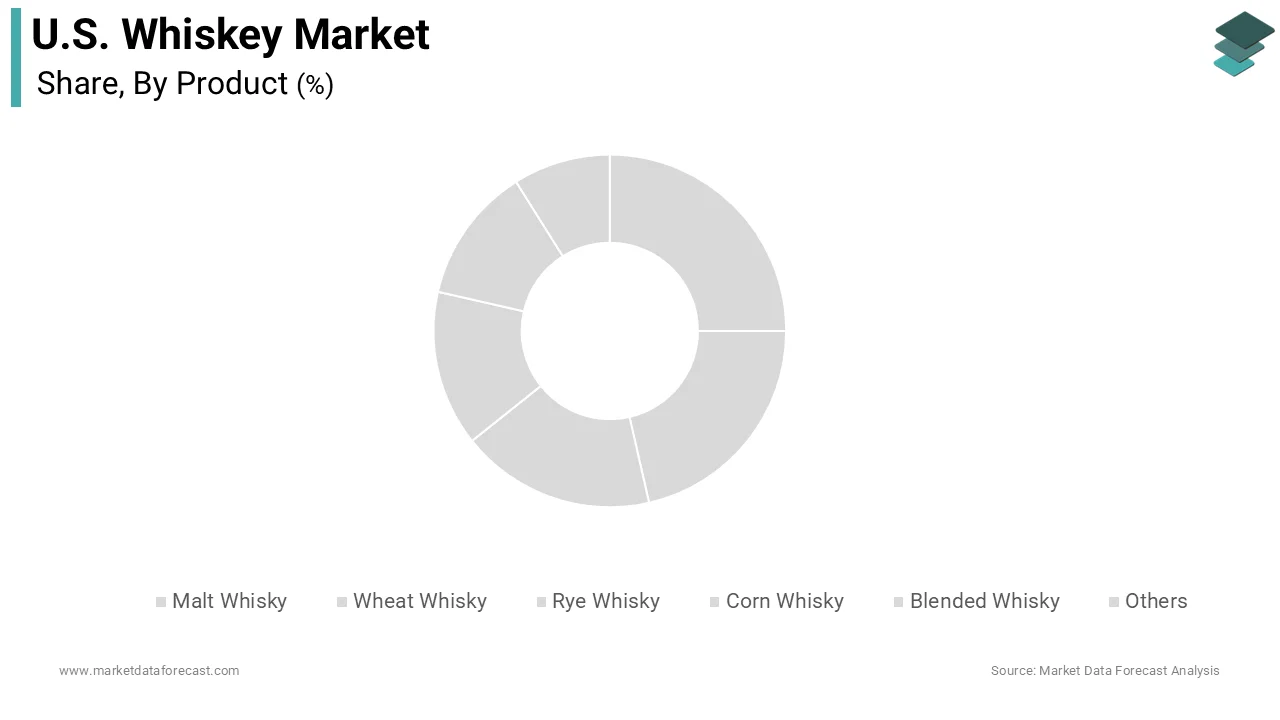
On the other hand, the rye whiskey segment is anticipated to record a promising CAGR of 9.5% during the forecast period in the U.S. market, owing to the rising consumer demand for spicy and complex flavor profiles that differentiate it from sweeter bourbons. Rye whiskey must contain at least 51% rye grain in its mash bill, which imparts distinct notes of pepper, cinnamon, and fruit. As per the Distilled Spirits Council of the U.S., rye whiskey has seen a massive resurgence, with production increasing by over 500% since 2009, as consumers are increasingly seeking bold and assertive tastes that challenge the palate. This trend is particularly strong among millennials and Generation Z buyers who value uniqueness and intensity in their spirits. According to industry observations, rye whiskey is perceived as a sophisticated alternative to bourbon, appealing to those who appreciate nuance and depth. The resurgence of pre-Prohibition era cocktails, such as the Manhattan and Sazerac, has further amplified demand for rye, as these recipes traditionally require its spicy character. Bartenders and mixologists play a crucial role in educating consumers about the distinct qualities of rye, encouraging trial and adoption. The positioning of rye as a premium and artisanal product enhances its appeal to affluent drinkers. The continuous introduction of high-proof and single-barrel expressions keeps the category dynamic and engaging for enthusiasts. This focus on flavor complexity ensures that rye whiskey continues to outpace other segments in growth rate.
By Premium Insights
The premium whiskey segment accounted for the highest share of the U.S. whiskey market in 2025. The dominating position of the premium whiskey segment in the U.S. market can be credited to the optimal balance it offers between quality and affordability, appealing to the broad mass market. Consumers in this segment seek spirits that provide a superior drinking experience compared to value brands without the high cost of luxury labels. As per consumer spending data, the majority of Americans prefer whiskey that offers good value for money, making the premium tier the sweet spot for regular purchases. According to retail analytics, this price point aligns with the budget constraints of middle-income households, who constitute the largest segment of the population. The availability of well-known and trusted brands in this category reinforces consumer confidence and loyalty. Premium whiskeys are frequently purchased for parties and gatherings where quality is important, but cost is a consideration. The consistency in quality and flavor across major premium brands ensures a reliable experience for consumers. This reliability encourages repeat purchases and establishes these brands as household staples. The ability of premium whiskeys to perform well in cocktails and neat servings further enhances their utility and appeal. The widespread distribution of these products in mainstream retail channels ensures easy access for consumers. This combination of acceptable quality, reasonable price, and broad availability solidifies the position of premium whiskey as the leading segment in the market.
On the other hand, the super-premium whiskey segment is predicted to showcase a promising CAGR of 11.4% during the forecast period in the U.S. market, owing to the increasing demand for luxury status symbols and exclusive experiences among affluent consumers. The rapid expansion of the super-premium whiskey segment is primarily fueled by the growing demand for luxury status symbols and exclusivity among high-net-worth individuals. As per the Distilled Spirits Council of the U.S., super-premium revenue has increased by a staggering 2,150% since 2003, as rising disposable incomes have enabled more individuals to indulge in high-end spirits as a sign of sophistication and success. Super-premium whiskeys often feature extensive aging, rare grain sources, and elaborate packaging that appeal to consumers who value prestige. According to luxury market reports, the consumption of super-premium spirits is often associated with special occasions, gifts, and social signaling. The perception of super-premium whiskey as a refined and collectible item enhances its appeal among affluent drinkers. The emphasis on heritage, craftsmanship, and limited production creates a narrative of exclusivity that resonates with this demographic. The availability of super-premium whiskeys in high-end bars and exclusive clubs further reinforces their status as luxury items. Consumers are willing to pay a premium for the experience and the perceived quality associated with these brands. The influence of social media and celebrity endorsements also plays a role in driving demand for ultra-premium spirits. The desire to showcase unique and high-value possessions encourages the purchase of super-premium whiskeys. This aspiration for luxury and distinction ensures that the super-premium segment continues to grow at a faster rate than other price ranges.
REGIONAL ANALYSIS
The U.S. is likely to maintain its dominant position within the global whiskey market for the next few years, bolstered by its robust export growth and a deeply entrenched domestic drinking culture. The U.S. holds the dominant position in the North American whiskey market. As the largest producer and consumer of whiskey globally, the country exhibits a mature and dynamic market characterized by high demand and diverse consumer preferences. The market status is defined by a strong tradition of whiskey consumption, particularly in regions such as Kentucky and Tennessee, which are renowned for their distilling heritage. The presence of major international brands and a growing number of craft distilleries contributes to a competitive and innovative landscape. The U.S. market is fundamentally driven by its large consumer base and the deep integration of whiskey into American culture and social life. As per the Distilled Spirits Council of the U.S., American whiskey exports reached a record value of 1.4 billion dollars in 2023, reflecting its widespread acceptance and popularity. The historical significance of whiskey in the U.S., dating back to colonial times, has established a lasting cultural connection. According to demographic data, the diverse population of the U.S. includes many communities with strong ties to whiskey-producing regions, driving consistent demand. The integration of whiskey into popular cocktails and social rituals ensures its relevance across generations. The availability of whiskey in various forms, from bourbon to rye, caters to a wide range of tastes and occasions. The strong presence of whiskey in both on-trade and off-trade channels ensures easy access for consumers. The cultural acceptance of whiskey as a versatile and enjoyable spirit supports its sustained growth and market leadership. The continuous influx of immigrants and the global influence of American culture further contribute to the preservation and expansion of whiskey consumption in the U.S.
COMPETITION OVERVIEW
The competitive landscape of the U.S. whiskey market is characterized by the dominance of a few large multinational corporations alongside a rapidly growing number of craft distilleries. Incumbent players leverage strong brand equity, extensive distribution networks, and significant production capabilities to maintain market leadership. However, the market is becoming increasingly fragmented as new entrants introduce unique flavor profiles and artisanal production methods. Competition is driven by the trend toward premiumization as consumers seek high-quality aged spirits with distinct characteristics. Price competition remains intense in the value segment but less so in the premium category, where quality and heritage justify higher costs. Innovation in packaging and limited edition releases serves as a key differentiator in attracting collectors and enthusiasts. Marketing efforts focus on storytelling and cultural connections to build emotional resonance with buyers. The rise of health consciousness poses a challenge, prompting brands to highlight responsible consumption. Regulatory compliance and supply chain efficiency are critical factors influencing competitiveness. Overall, ll the market favors companies that can balance scale with authenticity while adapting to evolving consumer trends.
KEY MARKET PLAYERS
A few major players of the U.S whiskey market include
- Brown-Forman Corporation
- Diageo plc
- Beam Suntory Inc
- Sazerac Company
- Pernod Ricard
- Constellation Brands
- Heaven Hill Brands
- MGP Ingredients Inc
- Jack Daniel’s
- Buffalo Trace Distillery
Leading Players in the US Market
- Beam Suntory Inc is a dominant force in the U.S. whiskey market with a portfolio that includes Jim Beam, Maker's Mark, and Knob Creek. The company leverages its extensive distribution network to ensure widespread availability across the retail and hospitality sectors. Recent strategic initiatives include expanding production capacity in Kentucky to meet rising global demand for bourbon. Beam Suntory has invested heavily in sustainability programs focusing on water conservation and renewable energy usage. The corporation emphasizes innovation by launching limited edition releases and high proof expressions to attract connoisseurs. By strengthening its direct-to-consumer platforms, Beam Suntory enhances customer engagement and loyalty. These efforts aim to solidify its leadership position while adapting to evolving consumer preferences for premium and authentic American whiskey experiences.
- Brown Forman Corporation contributes significantly to the market through its iconic Jack Daniel's brand, which is recognized globally for its Tennessee whiskey heritage. The company focuses on maintaining consistent quality and brand integrity through rigorous production standards. Recent actions involve expanding its distillery facilities in Lynchburg, Tennessee, to increase output and support long-term growth. Brown-Forman has launched new variants such as Jack Daniel's Single Barrel Select to cater to the premium segment. The organization invests in digital marketing campaigns that highlight the craftsmanship and history of its products. By prioritizing sustainable sourcing and community engagement, Brown Forman builds strong brand equity. These strategies enable the company to maintain its competitive edge and drive growth in both domestic and international markets.
- Sazerac Company plays a pivotal role in the U.S. whiskey market with a diverse portfolio including Buffalo Trace, Eagle Rare, and Weller. The company is renowned for its commitment to traditional distillation methods and aging processes. Recent strategic moves include acquiring additional warehousing space to manage inventory levels effectively amidst high demand. Sazerac has introduced new age stated products to provide transparency and value to consumers. The organization focuses on enhancing its visitor experiences at distilleries to foster brand loyalty and education. By leveraging its reputation for quality and scarcity, Sazerac positions its brands as highly desirable collectibles. These initiatives help the company differentiate itself in a crowded market and build a dedicated following among whiskey enthusiasts and investors alike.
Top Strategies Used by Key Market Participants
Key players in the U.S. whiskey market primarily employ premiumization and portfolio diversification strategies to sustain growth. Companies are increasingly launching aged and small-batch whiskeys to cater to discerning consumers seeking complex flavors and authenticity. This shift allows brands to command higher prices and differentiate themselves from value-oriented competitors. Another major strategy involves expanding into ready-to-drink cocktail segments to address the demand for convenience and portability. Manufacturers invest in sustainable production practices and eco-friendly packaging to appeal to environmentally conscious buyers. Strategic partnerships with bars and restaurants enhance brand visibility and encourage trial through expertly crafted cocktails. Digital marketing and direct-to-consumer channels foster deeper customer relationships. By balancing tradition with innovation, key participants strengthen their market positions and adapt to changing consumer preferences effectively.
MARKET SEGMENTATION
This research report on the US whiskey market has been segmented and sub-segmented based on product, premium & region.
By Product
- Malt Whisky
- Wheat Whisky
- Rye Whisky
- Corn Whisky
- Blended Whisky
- Others
By Premium
- Premium
- High End Premium
- Super Premium
By Region
- New York
- Texas
- Florida
- Georgia
- California
- Rest of U.S.