- Product Description Description
- Table of Contents TOC
- List of Table & Figure LOT
- Get Free Sample PDF Sample PDF
Market Size, 2025
$57 BnMarket Estimate, 2026
$67.17 BnMarket Forecast, 2034
$249.94 BnCAGR, 2026–2034
17.85%Executive Summary: Global Vehicle Diagnostics Market
- Market Scope: Comprehensive global vehicle diagnostics market analysis covering computerized tools, software suites, telematics platforms, onboard diagnostic (OBD) systems, application verticals, and cellular/local connectivity infrastructures.
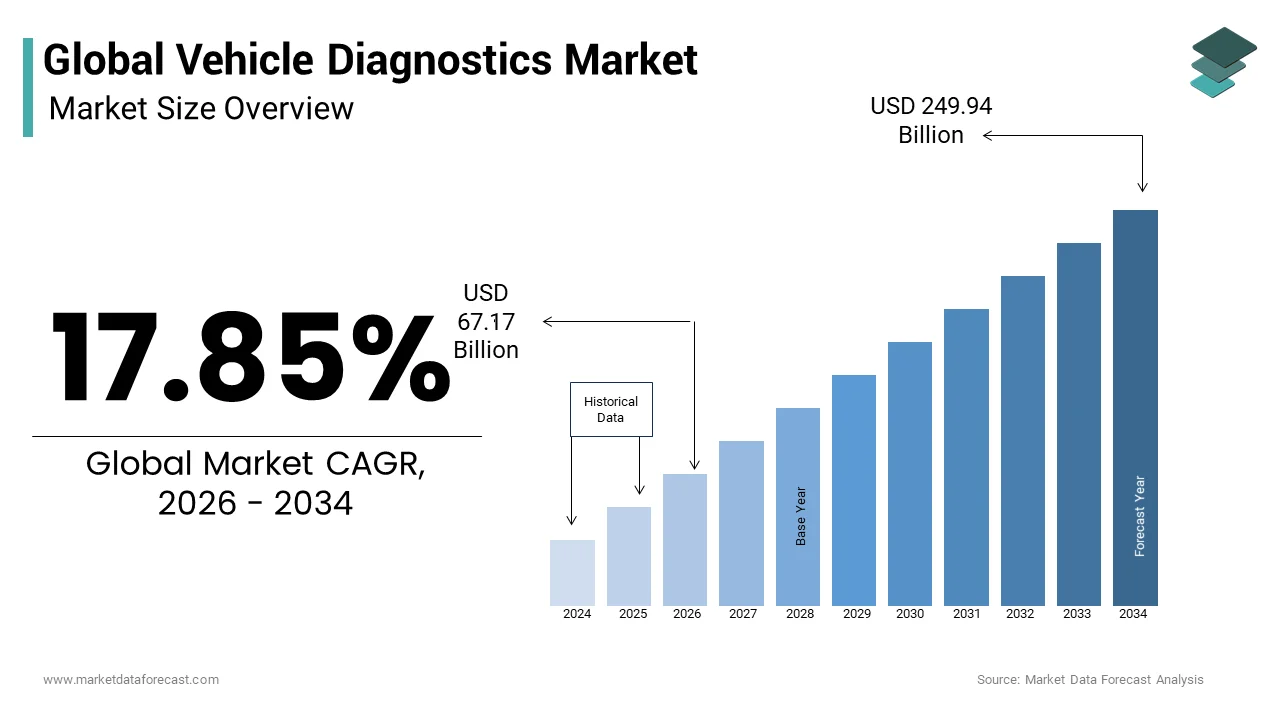
- Market Valuation: Valued at USD 57.00 billion (2025), estimated at USD 67.17 billion in 2026, and projected to reach USD 249.94 billion by 2034, registering a massive CAGR of 17.85% (2026–2034).
- Primary Growth Drivers: Escalating software complexity in modern vehicles (e.g., millions of lines of code per luxury unit), stringent global government regulations on vehicle emissions (OBD-II, Euro 6) and safety, the rapid adoption of AI-driven predictive maintenance, and the broad expansion of telematics and connected car ecosystems. Market challenges include the high cost of advanced diagnostic hardware/software subscriptions, a lack of universal manufacturing protocols, cybersecurity vulnerabilities, and a shortage of skilled automotive technicians.
Key Market Segment Metrics (2026–2034)
| Category | Leading Segment (Base Position) | Fastest-Growing Segment |
|---|---|---|
| By Application | Vehicle Health Alert (commanded a 34.1% market share in 2025, driven by proactive maintenance and real-time anomaly detection) | Automatic Crash Notification (projected at a rapid CAGR of 20.4%, propelled by safety mandates like eCall) |
| By Connectivity | 4G LTE Connectivity (held a majority 44.5% share in 2025 due to robust real-time data bandwidth and wide coverage) | Wi-Fi Connectivity (estimated at the fastest CAGR, driven by demand for over-the-air firmware updates and high-speed data drops) |
| By Function | Engine Control (largest functional segment at 28.6% share in 2025, anchored by critical emission regulations and check-engine checks) | Advanced Driver Assistance Systems (ADAS) and powertrain diagnostics |
| By Region | North America and Europe (significant regional revenue shares supported by mature vehicle parcs, strict OBD-II/Euro mandates, and telematics adoption) | Asia-Pacific (rapid expansion fueled by massive vehicle production scale and connected car growth) |
Major Market Players & Market Structure
Market Structure: Highly competitive ecosystem comprising automotive tier-1 suppliers, diagnostic tool developers, and technology corporations competing through cloud software subscriptions, AI analytics integration, and strategic OEM partnerships.
Key Companies: Robert Bosch GmbH, Delphi Automotive PLC, Continental AG, OnStar LLC, Voxx International Corporation, Snap-On Inc., Magneti Marelli S.p.A, Softing AG, and Vector Informatik GmbH.
Global Vehicle Diagnostics Market Size
The global vehicle diagnostics market size was valued at USD 57 billion in 2025 and is anticipated to reach USD 67.17 billion in 2026 from USD 249.94 billion in 2034, growing at a CAGR of 17.85% during the forecast period from 2026 to 2034.
MARKET OVERVIEW
Vehicle diagnostics is the process of using computerized tools and software to identify, analyze, and troubleshoot issues within a vehicle’s systems, such as the engine, brakes, and emissions, before they cause significant failure. These tools range from handheld code readers and onboard diagnostic scanners to advanced telematics platforms that facilitate real time data transmission. The primary function of these systems is to interpret error codes generated by the vehicle’s electronic control units thereby enabling precise identification of mechanical or electrical faults. As modern vehicles become increasingly complex with integrated connectivity and autonomous features the reliance on accurate diagnostic information has intensified. According to the International Organization of Motor Vehicle Manufacturers the global vehicle parc exceeded 1.4 billion units in recent years indicating a massive installed base requiring regular maintenance and repair. Furthermore, recent data indicates that the average age of light vehicles in operation in the United States has reached a record 12.8 years, highlighting a shift toward extended vehicle lifespans that necessitates consistent diagnostic oversight and aftermarket support. Regulatory mandates such as the On Board Diagnostics II standard in North America and similar regulations in Europe ensure that manufacturers incorporate standardized diagnostic ports. This regulatory framework supports aftermarket service providers and independent repair shops in accessing critical vehicle data. The integration of artificial intelligence and cloud computing into diagnostic tools further enhances predictive capabilities allowing for proactive maintenance strategies. Consequently the market is evolving from reactive fault detection to comprehensive health management systems that optimize vehicle longevity and safety.
MARKET DRIVERS
Increasing Complexity of Modern Vehicle Electronics and Connectivity
The escalating complexity of modern vehicle electronics and connectivity contributes to the expansion of the Vehicle Diagnostics Market. Contemporary automobiles are equipped with numerous electronic control units managing everything from engine performance to advanced driver assistance systems. According to the Society of Automotive Engineers a typical luxury vehicle contains over 100 million lines of code surpassing the complexity of many operating systems. This intricate network of sensors and processors generates vast amounts of data that require specialized diagnostic tools for accurate interpretation. The proliferation of electric vehicles further amplifies this demand as high voltage battery systems and power electronics necessitate precise monitoring to ensure safety and efficiency. The National Highway Traffic Safety Administration emphasizes that regular diagnostic checks are crucial for maintaining the integrity of safety critical systems such as braking and steering. As vehicles become more connected through Internet of Things technologies the need for remote diagnostic capabilities grows. Service providers must utilize advanced scanners capable of communicating with multiple vehicle protocols to address issues effectively. The inability of traditional mechanical tools to diagnose software related faults drives the adoption of digital diagnostic solutions. So, the technological sophistication of modern automobiles directly correlates with the increased utilization of advanced diagnostic equipment in both original equipment manufacturer facilities and independent repair shops.
Stringent Government Regulations on Vehicle Emissions and Safety
Stringent government regulations on vehicle emissions and safety accelerate the growth of the vehicle diagnostics market. Regulatory bodies worldwide have implemented rigorous standards to reduce environmental impact and enhance road safety compelling manufacturers and service providers to adopt comprehensive diagnostic protocols. According to the Environmental Protection Agency in the United States all light duty vehicles sold since 1996 must comply with On Board Diagnostics II requirements which monitor emission control systems and alert drivers to malfunctions. Similarly the European Union has enforced Euro 6 standards that mandate continuous monitoring of nitrogen oxide and particulate matter emissions. These regulations require vehicles to store fault codes that can only be accessed and cleared using certified diagnostic tools. The International Council on Clean Transportation notes that effective enforcement of these standards relies heavily on the availability of accurate diagnostic data during periodic vehicle inspections. In addition to emissions safety regulations such as the General Safety Regulation in Europe require advanced systems like tire pressure monitoring and emergency brake assist which also depend on diagnostic verification. Non compliance with these standards can result in significant fines and vehicle registration restrictions. Therefore the legal obligation to maintain vehicles within specified emission and safety parameters ensures a consistent demand for diagnostic services and equipment. This regulatory landscape creates a stable foundation for market growth as vehicle owners and fleet operators prioritize compliance to avoid penalties.
MARKET RESTRAINTS
High Cost of Advanced Diagnostic Equipment and Software Subscriptions
The high cost of advanced diagnostic equipment and recurring software subscription fees are the factors limiting the expansion of the vehicle diagnostics market. This hampers the widespread adoption of professional grade vehicle diagnostics. Modern diagnostic tools capable of interfacing with the latest vehicle models often require substantial initial investment which can be prohibitive for small independent repair shops and individual enthusiasts. According to industry analysis premium diagnostic scanners from leading manufacturers can cost several thousand dollars excluding the annual fees for software updates and access to proprietary databases. These ongoing costs are necessary to ensure compatibility with new vehicle releases and updated diagnostic protocols but they place a financial burden on service providers. The National Automobile Dealers Association highlights that maintaining up to date diagnostic capabilities is one of the largest operational expenses for repair facilities. Additionally the rapid pace of technological change means that equipment can become obsolete quickly requiring frequent upgrades. For smaller businesses in developing regions these costs may be unsustainable leading to reliance on outdated tools that cannot accurately diagnose modern vehicles. This limitation restricts the quality of service available to consumers and slows the overall penetration of advanced diagnostic solutions. While lower cost alternatives exist they often lack the comprehensive functionality required for complex repairs. Consequently the financial barrier associated with high end diagnostic technology impedes market expansion particularly among price sensitive segments of the automotive service industry.
Lack of Standardized Protocols Across Different Vehicle Manufacturers
The lack of standardized diagnostic protocols across different vehicle manufacturers is a considerable barrier to the efficiency and accessibility of the Vehicle Diagnostics Market. While basic On Board Diagnostics standards exist for emissions related issues manufacturers often employ proprietary communication protocols for other vehicle systems such as transmission infotainment and advanced driver assistance. According to the Alliance for Automotive Innovation each original equipment manufacturer develops unique software architectures and security measures that require specific diagnostic interfaces and software licenses. This fragmentation forces repair shops to invest in multiple specialized tools or subscribe to various manufacturer specific platforms to service a diverse fleet of vehicles. The Federal Trade Commission in the United States has noted that this lack of interoperability limits consumer choice by restricting access to independent repair facilities that cannot afford the extensive array of required equipment. Furthermore the constant evolution of these proprietary systems requires continuous training and adaptation by technicians increasing operational complexity. The absence of a universal diagnostic standard means that data retrieval methods vary significantly between brands making it difficult to develop all encompassing diagnostic solutions. This inconsistency hinders the development of streamlined aftermarket tools and increases the time required for troubleshooting. As vehicles become more integrated with manufacturer specific cloud services the disparity in diagnostic access widens. This regulatory and technical fragmentation restrains market growth by creating barriers to entry for smaller diagnostic tool developers and service providers.
MARKET OPPORTUNITIES
Integration of Artificial Intelligence for Predictive Maintenance
The integration of artificial intelligence into vehicle diagnostics sets the stage for the vehicle diagnostics market expansion. This is achieved by enabling predictive maintenance capabilities. Artificial intelligence algorithms can analyze real time data from vehicle sensors to identify patterns indicative of potential failures before they occur. According to the McKinsey Center for Future Mobility predictive maintenance can reduce vehicle downtime by up to 50 percent and lower maintenance costs by 10 to 40 percent. This technology allows fleet operators and individual vehicle owners to schedule repairs proactively thereby preventing costly breakdowns and extending vehicle lifespan. The use of machine learning models enables diagnostic systems to learn from historical data improving accuracy over time. Automotive manufacturers are increasingly incorporating these capabilities into connected car platforms allowing for remote monitoring and over the air updates. The Internet of Things ecosystem facilitates the seamless transmission of diagnostic data to cloud based analytics engines where it can be processed instantly. This shift from reactive to proactive maintenance creates new revenue streams for service providers who can offer subscription based health monitoring services. Additionally insurance companies are exploring usage based models that leverage diagnostic data to assess risk and offer personalized premiums. The ability to provide actionable insights through artificial intelligence enhances the value proposition of diagnostic tools. Connectivity is becoming ubiquitous, driving demand for intelligent diagnostic solutions that offer foresight rather than just hindsight. Consequently, this shift will drive substantial growth in the market.
Expansion of Telematics and Connected Car Services
The expansion of telematics and connected car services is a key area for growth of the Vehicle Diagnostics Market. This facilitates remote diagnostic capabilities and enhanced user engagement. Telematics systems enable the continuous transmission of vehicle health data to service centers and manufacturers allowing for real time monitoring and immediate issue detection. According to Berg Insight the number of connected cars in North America and Europe is expected to exceed 300 million by 2025 creating a vast network of data generating vehicles. This connectivity allows for over the air diagnostics where software issues can be identified and resolved without physical intervention. Service providers can utilize this data to offer personalized maintenance recommendations and schedule appointments automatically when faults are detected. The integration of diagnostic data with mobile applications empowers vehicle owners with greater transparency and control over their vehicle health. Fleet management companies benefit significantly from telematics by optimizing maintenance schedules and reducing operational inefficiencies. The growing consumer expectation for seamless digital experiences drives automakers to embed advanced diagnostic features into their connected ecosystems. Furthermore the convergence of telematics with insurance telematics programs opens new avenues for data monetization. As 5G networks expand the speed and reliability of data transmission will further enhance the capabilities of remote diagnostics. This technological evolution transforms vehicle diagnostics from a periodic service into a continuous integrated feature driving market growth.
MARKET CHALLENGES
Cybersecurity Risks Associated with Connected Diagnostic Systems
Cybersecurity risks associated with connected diagnostic systems negatively impact the Vehicle Diagnostics Market. Vehicles are becoming increasingly vulnerable to digital threats. The integration of diagnostic ports with wireless connectivity and cloud platforms creates potential entry points for malicious actors seeking to compromise vehicle systems. According to the Upstream Security Global Automotive Cybersecurity Report thousands of cybersecurity incidents involving connected vehicles were recorded globally in recent years highlighting the severity of the threat. Hackers can potentially exploit diagnostic interfaces to manipulate vehicle controls steal personal data or disable critical safety features. This vulnerability necessitates the implementation of robust encryption and authentication mechanisms which increase the complexity and cost of diagnostic tools. Original equipment manufacturers must balance accessibility for legitimate repair purposes with the need to secure vehicle networks against unauthorized access. The introduction of secure gateways and firewalls in modern vehicles restricts direct access to certain electronic control units complicating the diagnostic process for independent technicians. Regulatory bodies are beginning to impose stricter cybersecurity standards such as the United Nations Regulation No 155 which requires manufacturers to manage cyber risks throughout the vehicle lifecycle. Compliance with these regulations demands significant investment in security infrastructure. The fear of data breaches and vehicle hijacking erodes consumer trust in connected diagnostic services. Addressing these security concerns while maintaining functional accessibility remains a critical hurdle for market participants.
Shortage of Skilled Technicians Capable of Handling Advanced Diagnostics
The shortage of skilled technicians capable of handling advanced diagnostic technologies remains a hurdle to the effective utilization of the Vehicle Diagnostics Market. Modern vehicles require technicians to possess not only mechanical expertise but also proficiency in software analysis network communication and data interpretation. According to the Automotive Service Association there is a growing gap between the number of qualified automotive technicians and the increasing complexity of vehicle systems. Many existing workforce members lack the training required to operate sophisticated diagnostic equipment and interpret complex error codes accurately. This skills mismatch leads to prolonged repair times misdiagnoses and increased labor costs for consumers. Educational institutions and vocational training programs struggle to keep pace with the rapid technological advancements in the automotive industry. The Society of Automotive Engineers emphasizes the need for continuous professional development to ensure technicians remain competent in diagnosing hybrid electric and autonomous vehicles. The reluctance of younger generations to enter the automotive trade exacerbates the labor shortage. Without a adequately trained workforce the potential of advanced diagnostic tools remains underutilized. Service providers face difficulties in recruiting and retaining talent who can leverage these technologies effectively. This human capital constraint limits the scalability of diagnostic services and hinders the market's ability to meet the growing demand for precise and efficient vehicle maintenance solutions.
REPORT COVERAGE
| REPORT METRIC | DETAILS |
| Market Size Available | 2025 to 2034 |
| Base Year | 2025 |
| Forecast Period | 2026 to 2034 |
| CAGR | 17.85% |
| Segments Covered | By Function, Application, Connectivity, Sales Channel, and Region. |
|
Various Analyses Covered | Global, Regional & Country Level Analysis, Segment-Level Analysis, DROC, PESTLE Analysis, Porter’s Five Forces Analysis, Competitive Landscape, Analyst Overview of Investment Opportunities |
| Regions Covered | North America, Europe, APAC, Latin America, Middle East & Africa |
| Market Leaders Profiled | Robert Bosch GmbH (Germany), Delphi Automotive PLC (U.K.), Continental AG (Germany), OnStar LLC (U.S.), Voxx International Corporation (U.S.), Snap-On Inc. (U.S.), Magneti Marelli S.p.A (Italy), Softing AG (Germany), Vector Informatik GmbH (Germany), and Others. |
SEGMENT ANALYSIS
By Application Insights
The vehicle health alert segment dominated the Vehicle Diagnostics Market and accounted for a 34.1% share in 2025. This dominance of the segment was driven by the increasing consumer demand for proactive maintenance and real time monitoring of vehicle performance. These systems utilize onboard sensors to detect anomalies in engine performance tire pressure fluid levels and other critical components notifying drivers before a failure occurs. According to the American Automobile Association unexpected vehicle breakdowns cost drivers billions of dollars annually with mechanical failures being a primary cause. This financial burden drives vehicle owners to adopt diagnostic tools that provide early warnings thereby preventing costly repairs and enhancing safety. The National Highway Traffic Safety Administration emphasizes that regular monitoring of vehicle health significantly reduces the likelihood of accidents caused by mechanical malfunctions. As vehicles become more complex with integrated electronic systems the ability to interpret diagnostic trouble codes in real time becomes essential for maintaining operational integrity. Modern smartphones and connected car applications have made these alerts more accessible allowing users to receive notifications directly on their devices. The integration of these alerts into manufacturer specific apps further enhances user engagement and brand loyalty. Consumers are increasingly willing to pay for services that offer peace of mind and extend the lifespan of their vehicles. The widespread adoption of Internet of Things technologies in automobiles facilitates seamless data transmission from the vehicle to the user ensuring timely interventions. This shift towards preventive care rather than reactive repair solidifies the dominance of vehicle health alerts in the market. The integration of vehicle health alert systems with insurance telematics and fleet management solutions significantly reinforces their market leadership. Insurance companies are increasingly leveraging diagnostic data to offer usage based insurance policies where premiums are adjusted according to driving behavior and vehicle maintenance status. This economic incentive encourages drivers to install and maintain active diagnostic systems that monitor vehicle health continuously. For commercial fleets the ability to track the health status of multiple vehicles in real time is crucial for optimizing operations and reducing downtime. The Federal Motor Carrier Safety Administration mandates strict maintenance standards for commercial vehicles making automated health alerts indispensable for compliance. Fleet managers rely on these diagnostics to schedule maintenance during off peak hours thereby minimizing disruption to logistics and delivery schedules. The data generated by health alert systems also helps in predicting component lifecycles allowing for better budgeting and resource allocation. As the gig economy expands and last mile delivery services grow the demand for efficient fleet management tools intensifies. The synergy between diagnostic data and operational efficiency creates a compelling value proposition for both individual consumers and commercial operators sustaining the leading position of this segment.
On the other hand, the automatic crash notification segment is predicted to witness the highest CAGR of 20.4% over the forecast period. This rapid expansion of the segment is propelled by stringent regulatory mandates and evolving safety standards across global markets. Governments in Europe North America and Asia are increasingly requiring new vehicles to be equipped with emergency call systems that automatically alert authorities in the event of a severe accident. According to the European Commission the eCall system has been mandatory in all new passenger cars and light commercial vehicles sold in the European Union since 2018 significantly boosting the adoption of crash notification technology. This regulation has served as a model for other regions prompting similar legislative actions in countries such as Russia India and Brazil. NHTSA has researched the potential for advanced automatic crash notification systems to reduce response times, but these technologies currently remain voluntary features in the U.S. market rather than federally mandated equipment. Studies indicate that rapid notification can reduce mortality rates in serious accidents by up to 15 percent by ensuring that medical assistance arrives promptly. As vehicle connectivity improves through 4G and 5G networks the reliability and speed of these notifications have increased making them more effective. Automakers are integrating these systems with advanced sensor arrays that can detect the severity and type of collision providing detailed information to emergency responders. The combination of legal requirements and the proven life saving potential of these systems drives rapid market expansion. Technological advancements in sensor technology and the improvement of emergency response infrastructure are key factors contributing to the rapid growth of automatic crash notification systems. Modern vehicles are equipped with sophisticated accelerometers gyroscopes and impact sensors that can accurately determine the occurrence and severity of a crash. According to the Insurance Institute for Highway Safety the precision of these sensors has improved dramatically allowing for fewer false alarms and more reliable activation during genuine emergencies. The integration of Global Positioning System technology ensures that the exact location of the vehicle is transmitted to emergency services facilitating faster rescue operations. Furthermore the development of dedicated short range communications and cellular vehicle to everything technologies enables vehicles to communicate directly with infrastructure and other road users enhancing situational awareness. Emergency response centers are upgrading their capabilities to handle digital data streams from vehicles including video feeds and biometric information from occupants. This enhanced connectivity allows first responders to prepare appropriate resources before arriving at the scene. The rise of smart city initiatives also supports the deployment of interconnected emergency systems that prioritize crash notifications. As autonomous and semi autonomous vehicles become more common the need for automated crash reporting becomes even more critical since human intervention may not be possible. These technological and infrastructural developments propel the automatic crash notification segment as the fastest growing area in the vehicle diagnostics market.
By Connectivity Insights
The 4G LTE connectivity segment held the majority share of 44.5% of the Vehicle Diagnostics Market in 2025. This supremacy of the segment can be credited to its widespread availability and robust data transmission capabilities which are essential for real time diagnostic applications. Unlike earlier generations of cellular technology 4G LTE offers the bandwidth required to transmit large volumes of diagnostic data quickly and reliably ensuring that vehicle health information is updated instantaneously. The extensive coverage ensures that vehicles can maintain connectivity even in remote areas which is crucial for fleet management and roadside assistance services. The low latency of 4G LTE allows for immediate feedback from diagnostic systems enabling features such as remote troubleshooting and over the air updates. Automotive manufacturers prefer 4G LTE for its balance between cost and performance making it the standard for most connected car platforms currently in production. The maturity of the technology means that hardware costs have decreased making it accessible for a wider range of vehicle segments from economy to luxury. Service providers rely on the consistency of 4G networks to deliver dependable diagnostic services without interruption. As legacy 3G networks are being phased out globally 4G LTE has become the default connectivity option for new vehicle models. The established ecosystem of service providers and infrastructure support further cements its dominant position in the market. The compatibility of 4G LTE with existing diagnostic protocols and devices significantly supports its dominance in the Vehicle Diagnostics Market. Most modern onboard diagnostic systems and telematics control units are designed to operate seamlessly over 4G networks ensuring easy integration with current vehicle architectures. Through the standardization of diagnostic messaging (SAE J1939/J1979) and the adoption of flat IP-based LTE network architectures, SAE and 3GPP have enabled a more seamless development environment for connected vehicle diagnostic applications. This interoperability allows for a wide variety of diagnostic tools and applications to function effectively across different vehicle brands and models. The widespread adoption of 4G enabled dongles and embedded modules in the aftermarket sector further drives usage as consumers upgrade older vehicles with connectivity features. These devices leverage 4G networks to provide real time diagnostics navigation and entertainment services enhancing the overall user experience. The ability of 4G LTE to support multiple simultaneous connections allows vehicles to transmit diagnostic data while simultaneously handling voice calls and internet browsing. This multitasking capability is essential for comprehensive connected car experiences. Additionally the backward compatibility of 4G devices ensures that they can operate in areas with varying network qualities maintaining service continuity. The ease of deployment and broad device support make 4G LTE the preferred choice for automotive connectivity sustaining its leadership in the diagnostics sector.
The Wi-Fi segment is estimated to register the fastest CAGR of 16.2% from 2026 to 2034 due to the increasing demand for over the air software updates and high bandwidth diagnostic data transfer. As vehicles become more software defined the need to update electronic control unit firmware and infotainment systems remotely has surged. According to Strategy Analytics over the air updates are becoming a standard feature in new vehicles requiring high speed connections that Wi-Fi provides more efficiently than cellular networks for large data packages. Wi-Fi allows for the rapid transmission of gigabytes of data necessary for complex software patches and map updates without incurring high cellular data costs. This cost effectiveness is attractive to both manufacturers and consumers who seek to minimize data subscription fees. The use of Wi-Fi for diagnostics also enables detailed logging and analysis of vehicle performance data which can be uploaded when the vehicle is parked at home or in a service center. This capability supports predictive maintenance models by providing engineers with comprehensive data sets for analysis. The integration of Wi-Fi Direct technology allows smartphones and tablets to connect directly to the vehicle for diagnostic purposes enhancing convenience for technicians and owners. Vehicle software complexity is increasing rapidly. Therefore, the reliance on Wi-Fi for efficient data management will continue to accelerate. The expansion of smart home and vehicle integration ecosystems is a significant factor contributing to the rapid growth of Wi-Fi in the Vehicle Diagnostics Market. Modern consumers increasingly expect their vehicles to interact seamlessly with their home networks and smart devices creating a unified digital experience. According to the Consumer Technology Association the number of smart homes equipped with connected garages and charging stations is rising steadily facilitating automatic Wi-Fi connections when vehicles are parked. This connectivity enables continuous background diagnostics where the vehicle can upload health reports and receive software updates while connected to the home network. The integration with electric vehicle charging infrastructure is particularly relevant as Wi-Fi allows for synchronized charging schedules and energy management based on diagnostic data. Home energy management systems can communicate with the vehicle to optimize charging times based on grid load and vehicle battery health. This level of integration requires the high throughput and stability that Wi-Fi offers. Furthermore the prevalence of Wi-Fi hotspots in urban areas and shopping centers provides additional opportunities for vehicles to connect and update diagnostics while parked. The growing ecosystem of Internet of Things devices in both homes and vehicles fosters an environment where Wi-Fi is the preferred protocol for local high speed data exchange. This trend drives the accelerated adoption of Wi-Fi enabled diagnostic solutions.
By Function Insights
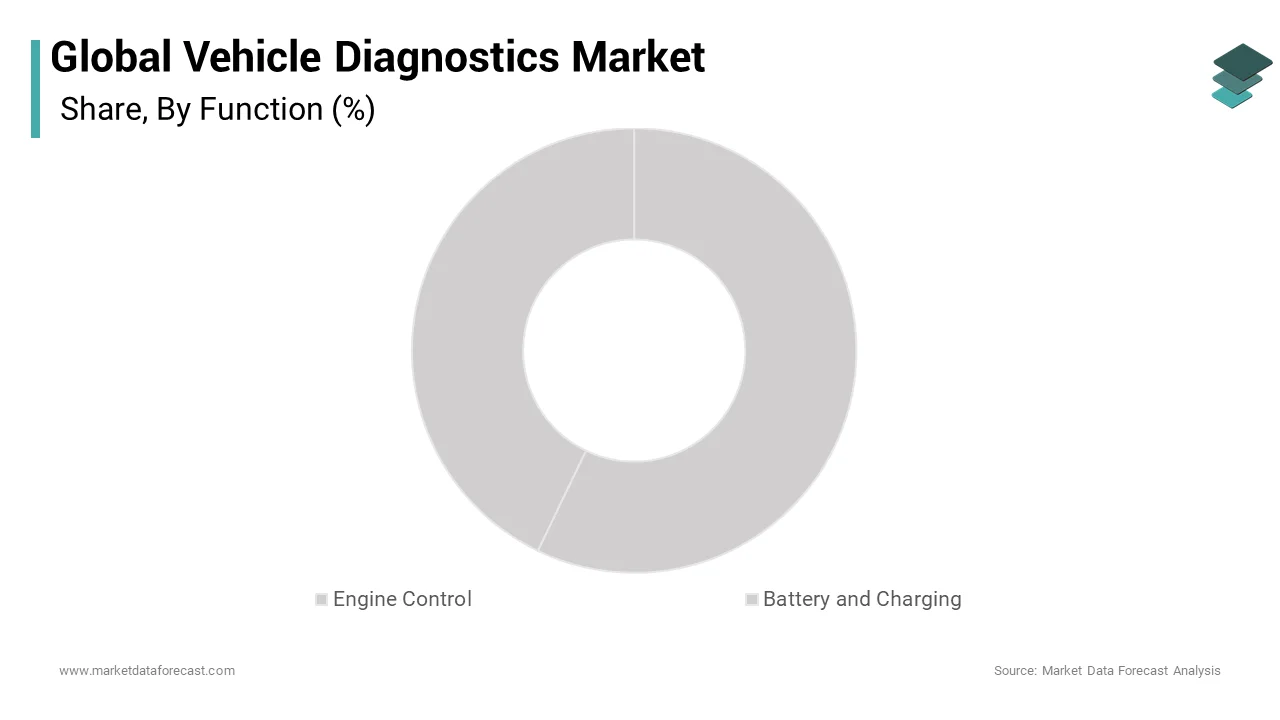
The engine control segment was the largest in the Vehicle Diagnostics Market and occupied a 28.6% share in 2025. This prominence of the segment is supported by the critical importance of engine performance and strict emission compliance regulations. The engine is the most complex and vital component of a vehicle and any malfunction can lead to significant performance issues safety hazards and environmental violations. According to the EPA, the Check Engine light is triggered when a vehicle's On-Board Diagnostic (OBD-II) system detects a malfunction in the emission control system, most commonly faulty sensors, requiring prompt diagnostic attention to maintain compliance and fuel efficiency. Regulatory frameworks such as Euro 6 in Europe and Tier 3 in the United States mandate continuous monitoring of engine parameters including fuel injection ignition timing and exhaust gas recirculation. These regulations require sophisticated diagnostic tools to detect and report even minor deviations from optimal performance. The high frequency of engine maintenance and repair needs ensures a consistent demand for diagnostic services. Independent repair shops and dealerships rely heavily on engine diagnostic scanners to identify issues accurately and efficiently. The complexity of modern engines with turbocharging direct injection and variable valve timing necessitates advanced diagnostic capabilities. Consumers are also highly motivated to address engine issues promptly to avoid costly repairs and maintain fuel efficiency. The centrality of the engine to vehicle operation and regulatory compliance sustains the dominance of this functional segment in the market. In addition, the vast number of internal combustion engine vehicles currently in operation globally significantly supports the leading position of engine control diagnostics. Despite the rise of electric vehicles internal combustion engines still power the majority of the world’s vehicle parc. According to the International Organization of Motor Vehicle Manufacturers there are over 1.4 billion vehicles on the road worldwide with the overwhelming majority relying on gasoline or diesel engines. This massive installed base generates a continuous and substantial demand for engine diagnostic services throughout the vehicle lifecycle. Older vehicles in particular require more frequent diagnostic checks as components wear out and emissions systems degrade. The average age of vehicles in many developed markets exceeds 12 years meaning that a significant portion of the fleet is in the phase where engine issues are more prevalent. The aftermarket for engine diagnostic tools is robust catering to both professional mechanics and do it yourself enthusiasts. The availability of affordable handheld scanners allows vehicle owners to perform basic engine diagnostics themselves driving volume in the consumer segment. The enduring presence of internal combustion technology ensures that engine control remains the primary focus of vehicle diagnostics for the foreseeable future. The sheer scale of the existing fleet guarantees steady market demand for engine related diagnostic solutions.
The battery and charging segment is anticipated to witness the fastest CAGR of 17.8% between 2026 and 2034 owing to the rapid surge in electric vehicle adoption and the increasing complexity of battery management systems. The number of electric vehicles on the road is expanding exponentially. This is driven by a shift towards electrification from both governments and consumers. According to the International Energy Agency global electric car sales reached 14 million in 2022 representing a significant increase from previous years. Each electric vehicle contains a high voltage battery pack consisting of thousands of cells that require precise monitoring to ensure safety performance and longevity. Battery management systems generate extensive data regarding cell voltage temperature and state of charge which must be analyzed using specialized diagnostic tools. The risk of thermal runaway and battery degradation makes accurate diagnostics critical for preventing fires and maintaining vehicle range. Service centers are investing in new equipment and training to handle these high voltage systems creating a booming market for battery diagnostic solutions. The complexity of charging infrastructure also requires diagnostic oversight to ensure compatibility and efficiency between the vehicle and the charger. The electric vehicle market is maturing, which is driving demand for sophisticated battery health assessments. This demand will continue to grow at a rapid pace. The growing focus on battery health assessment and second life applications is a key factor driving the rapid growth of battery and charging diagnostics. As electric vehicle batteries age their capacity diminishes affecting vehicle range and performance. According to BloombergNEF the residual value of an electric vehicle is heavily dependent on the state of health of its battery making accurate diagnostics essential for resale and leasing markets. Diagnostic tools that can precisely measure battery degradation and predict remaining useful life are becoming increasingly valuable for insurers lenders and used car dealers. Furthermore the emerging market for second life battery applications such as stationary energy storage requires rigorous testing and certification of used battery packs. Diagnostics play a crucial role in determining which modules are suitable for repurposing and which need recycling. This circular economy approach adds a new layer of demand for detailed battery analysis. Regulatory guidelines are also beginning to emerge regarding battery transparency and reporting requiring manufacturers to provide detailed health data. The development of standardized diagnostic protocols for batteries is facilitating wider adoption of these tools. The electric vehicle ecosystem is expanding beyond transportation into energy storage. Therefore, the importance of comprehensive battery diagnostics will continue to accelerate this segment's growth.
REGION LEVEL ANALYSIS
North America Market Analysis
North America was the top performer in the global Vehicle Diagnostics Market and accounted for a 35.1% share in 2025. This leading position of the North American market is driven by the high penetration of connected vehicles stringent regulatory requirements and a well established automotive aftermarket industry. According to the Bureau of Transportation Statistics the United States has one of the highest vehicle ownership rates in the world with millions of vehicles requiring regular maintenance and diagnostic services. The implementation of On Board Diagnostics II standards has been mandatory for decades creating a mature ecosystem for diagnostic tools and services. The presence of major automotive manufacturers and technology companies in the region fosters innovation in diagnostic technologies such as artificial intelligence and cloud based analytics. The Federal Communications Commission’s efforts to expand broadband connectivity also support the growth of telematics and remote diagnostics. Consumer awareness regarding vehicle safety and maintenance is high driving demand for both professional and consumer grade diagnostic products. The robust infrastructure of independent repair shops and dealership networks ensures widespread availability of diagnostic services. Additionally the early adoption of electric vehicles in states like California creates a niche market for advanced battery diagnostics. The combination of regulatory support technological leadership and high vehicle parc sustains North America’s leading position in the global market.
Europe Market Analysis
Europe was the second largest region in the Vehicle Diagnostics Market and captured a 30.5% share in 2025. The demand for vehicle diagnostics in Europe is propelled by strict environmental regulations and a strong emphasis on vehicle safety and emissions control. According to the European Automobile Manufacturers Association the region has implemented rigorous Euro emission standards which mandate continuous monitoring of vehicle performance and immediate reporting of faults. The mandatory eCall system across the European Union has further accelerated the adoption of connected diagnostic technologies. The presence of premium automotive brands such as BMW Mercedes Benz and Volkswagen drives demand for sophisticated diagnostic tools capable of handling complex electronic architectures. The European aftermarket is highly regulated with right to repair legislation ensuring that independent workshops have access to diagnostic information. This legal framework promotes competition and innovation in the diagnostic tool sector. Consumer preference for sustainable mobility and the rapid growth of electric vehicle sales in countries like Norway and Germany contribute to the demand for battery and charging diagnostics. The dense urban infrastructure supports the development of smart city initiatives that integrate vehicle diagnostics with traffic management systems. The combination of regulatory pressure technological advancement and a strong automotive heritage positions Europe as a key market for vehicle diagnostics.
Asia Pacific Market Analysis
Asia-Pacific is moving faster than any other region in the Vehicle Diagnostics Market owing to rapid industrialization increasing vehicle production and rising consumer income levels. According to the International Organization of Motor Vehicle Manufacturers China and India are among the largest automotive markets in the world with millions of new vehicles added to the parc annually. The expanding middle class is leading to higher vehicle ownership rates and greater awareness of vehicle maintenance and safety. Governments in the region are implementing stricter emission norms similar to European standards which necessitates the use of advanced diagnostic tools. The rapid adoption of electric vehicles in China supported by government subsidies and infrastructure development is creating a significant demand for battery diagnostics. The presence of major manufacturing hubs for automotive electronics and diagnostic devices lowers production costs and enhances accessibility. The proliferation of smartphone usage facilitates the adoption of mobile based diagnostic applications among consumers. Additionally the growth of ride hailing and fleet services in Southeast Asia drives demand for commercial vehicle diagnostics. The combination of market size regulatory changes and technological adoption fuels the dynamic growth of the vehicle diagnostics sector in Asia Pacific.
Latin America Market Analysis
Latin America grew steadily in the Vehicle Diagnostics Market due to economic fluctuations but supported by an aging vehicle parc and increasing urbanization. According to the International Organization of Motor Vehicle Manufacturers Brazil and Mexico are the largest automotive markets in the region with significant numbers of vehicles in operation. The average age of vehicles in Latin America is relatively high leading to a greater need for maintenance and repair services which drives demand for diagnostic tools. Economic constraints often lead consumers to prioritize repair over replacement extending the lifespan of vehicles and increasing the frequency of diagnostic checks. The adoption of connected car technologies is slower compared to North America and Europe but is gradually increasing in urban centers. Government initiatives to improve air quality in major cities are leading to the introduction of emission testing programs that require diagnostic compliance. The growth of the aftermarket sector and the presence of international diagnostic tool manufacturers are improving product availability. As internet connectivity improves and smartphone penetration rises the potential for mobile diagnostic solutions expands. The region offers opportunities for cost effective diagnostic solutions tailored to the specific needs of the local market.
Middle East and Africa Market Analysis
The Middle East and Africa region is likely to expand notably in the Vehicle Diagnostics Market over the forecast period. The market status is diverse with the Gulf Cooperation Council countries showing higher adoption rates due to wealth and infrastructure development while other areas face challenges related to economic stability. According to industry reports the United Arab Emirates and Saudi Arabia are investing heavily in smart city projects and intelligent transportation systems which include vehicle diagnostics and monitoring components. The extreme climate conditions in the region place significant stress on vehicle components particularly engines and cooling systems increasing the need for regular diagnostic checks. The luxury vehicle segment is prominent in the Gulf states driving demand for advanced diagnostic tools capable of handling high end electronics. In Africa the market is largely driven by the need for basic diagnostic tools to support the large number of used vehicles imported from other regions. Limited infrastructure and lower vehicle ownership rates restrict market growth in some areas. However the expansion of mobile networks and the increasing availability of affordable diagnostic devices present opportunities for future expansion. As economic development continues and vehicle standards improve the demand for professional diagnostic services is expected to rise gradually in the region.
COMPETITIVE LANDSCAPE
The competition in the Vehicle Diagnostics Market is intense and characterized by the presence of established global leaders and innovative niche players who strive for differentiation through technology and service quality. Major corporations compete by offering comprehensive ecosystems that integrate hardware software and cloud services to provide holistic diagnostic solutions. The market sees significant rivalry in the development of artificial intelligence driven analytics that enhance predictive maintenance capabilities. Companies differentiate themselves by focusing on ease of use and compatibility with a wide range of vehicle brands and models. Regulatory compliance and data security are critical competitive factors as manufacturers must ensure their tools meet stringent standards for accessing vehicle networks. Supply chain reliability has become a key differentiator with firms investing in localized production to mitigate disruptions. Strategic collaborations with telecommunications providers and software developers help companies navigate the complexities of connected car technologies. This dynamic environment encourages continuous innovation and customer centric approaches to maintain relevance and growth in the rapidly evolving global vehicle diagnostics sector.
KEY MARKET PLAYERS
These are some of the major players in the vehicle diagnostics market. The companies mentioned above have been concentrating on new product development and collaborating with key local organizations to expand their global market presence. OnStar LLC is currently the market leader and has adopted expansion as a critical strategy to gain traction in emerging markets. For instance, in 2016, the company entered the Argentinian market to expand its South American presence.
- Robert Bosch GmbH (Germany)
- Delphi Automotive PLC (U.K.)
- Actia Group
- Continental AG (Germany)
- OnStar LLC (U.S.)
- Voxx International Corporation (U.S.)
- Snap-On Inc. (U.S.)
- Magneti Marelli S.p.A (Italy)
- Softing AG (Germany)
- Vector Informatik GmbH (Germany)
Top Players In The Market
- Robert Bosch GmbH stands as a global leader in the vehicle diagnostics market by providing comprehensive diagnostic solutions for both original equipment manufacturers and the independent aftermarket. The company leverages its extensive expertise in automotive electronics to develop advanced scanning tools and software that support a wide range of vehicle makes and models. Recent strategic initiatives include the expansion of its cloud based diagnostic platform which enables remote troubleshooting and over the air updates for connected vehicles. Bosch actively collaborates with repair shops to provide training and technical support ensuring proper utilization of their diagnostic equipment. The company also invests heavily in research and development to integrate artificial intelligence into its diagnostic algorithms enhancing accuracy and speed. These efforts reinforce its position by addressing the growing complexity of modern vehicle systems and meeting the evolving needs of service providers worldwide.
- Snap on Incorporated is a prominent player in the global vehicle diagnostics market known for its high quality handheld diagnostic scanners and software solutions. The company serves professional technicians and automotive enthusiasts with user friendly devices that offer deep system access and real time data analysis. Recent actions include the launch of next generation diagnostic platforms that feature enhanced connectivity and intuitive interfaces to improve workflow efficiency. Snap on has strengthened its market position by acquiring specialized software firms to expand its coverage of electric and hybrid vehicles. The company also focuses on continuous software updates to ensure compatibility with the latest vehicle models and protocols. By prioritizing customer support and educational resources Snap on builds strong loyalty among professional users. These strategies enable the company to maintain its reputation for reliability and innovation in the competitive diagnostic tools sector.
- Actia Group is a key contributor to the global vehicle diagnostics market specializing in embedded diagnostic solutions and telematics systems for commercial and passenger vehicles. The company provides original equipment manufacturers with integrated diagnostic modules that facilitate real time monitoring and predictive maintenance. Recent strategic moves include partnerships with major automakers to develop customized diagnostic architectures for electric and autonomous vehicles. Actia has expanded its production capabilities in Europe and Asia to meet increasing demand for connected car technologies. The company also invests in cybersecurity solutions to protect diagnostic data and ensure secure communication between vehicles and service centers. By focusing on innovation and sustainability Actia supports the transition towards smarter and safer mobility solutions. These efforts strengthen its position as a trusted supplier of advanced diagnostic technologies in the global automotive industry.
Top Strategies Used By The Key Market Participants
Key players in the Vehicle Diagnostics Market primarily employ strategies such as product innovation and strategic partnerships to strengthen their market position. Companies invest heavily in research and development to create advanced diagnostic tools that support electric and autonomous vehicles. Collaborations with original equipment manufacturers ensure early access to vehicle data and protocols enabling faster product launches. Expansion into cloud based diagnostics and over the air update services allows firms to offer continuous value to customers. Additionally, companies focus on enhancing user experience through intuitive interfaces and comprehensive training programs for technicians. Mergers and acquisitions are common tactics used to acquire specialized technologies and expand product portfolios. These strategic initiatives enable participants to address the increasing complexity of vehicle systems and meet the evolving demands of the global automotive industry effectively.
MARKET SEGMENTATION
This research report on the global diagnostics market is segmented and sub-segmented into the following categories.
By Function
- Engine Control
- Battery and Charging
By Application
- Automatic Crash Notification
- Vehicle Tracking
- Vehicle Health Alert
By Connectivity
- 3G
- 4G/LTE
- Wi-Fi
- Bluetooth
By Sales Channel
- OEMs
- Aftermarket
By Region
- North America
- Europe
- Asia Pacific
- Latin America
- Middle East and Africa